14 Toy Storage for Living Room Ideas That Keep Your Space Stylish and Organized
You clean the living room, fluff the pillows, light a candle… and five minutes later, toy chaos takes over again. Tiny cars under the sofa, stuffed animals everywhere, colorful blocks scattered across the floor. It can make even the most beautiful space feel stressful instead of relaxing. But creating a family-friendly home doesn’t mean sacrificing style. These toy storage for living room ideas are designed to help you hide clutter beautifully while still keeping toys easy for kids to access, use, and put away every day.
A well-organized living room should feel calm, cozy, and lived in — not overwhelmed by plastic bins and overflowing baskets.
1. Woven Baskets That Blend Into Decor
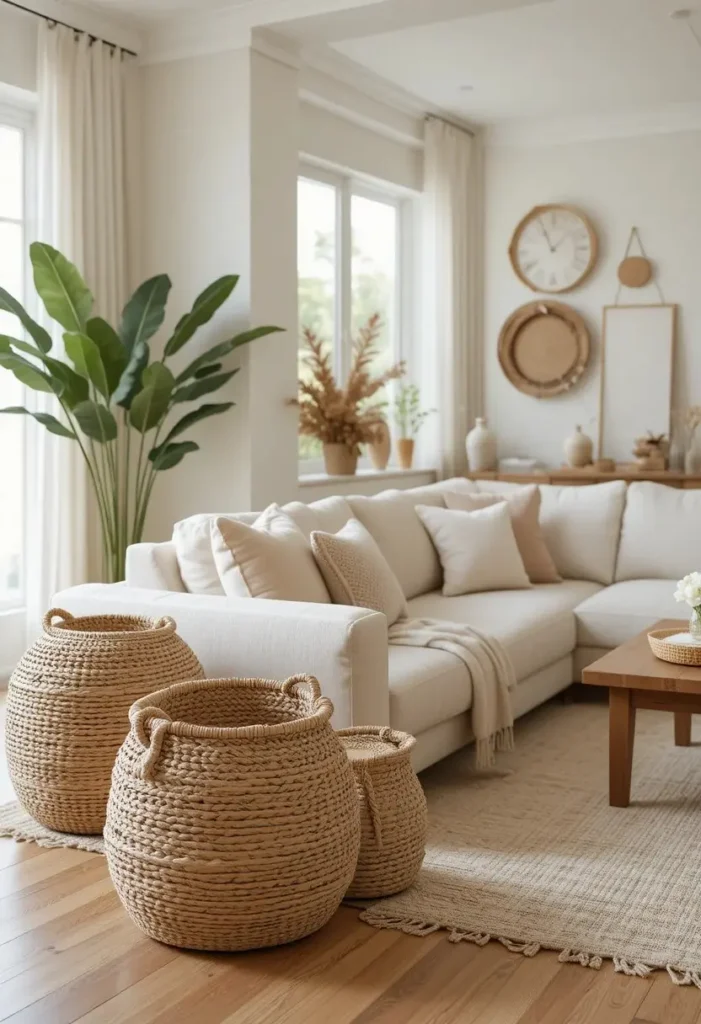
I reach for woven baskets first whenever a living room needs toy storage that does not shout “playroom”. A big seagrass or rattan basket swallows wooden blocks, soft toys and dress-up clothes, and once the lid is on, all you see is texture. I keep one beside the sofa for the everyday toys, and a larger one near the shelves for the rest. Matching the weave and colour to the room matters more than matching the baskets; two or three in the same natural tone look calm, while a jumble of colours feels busy. Lids are worth it in full view, and a weekly shake-out keeps crumbs and stray Lego from settling at the bottom.
How to do it: Measure the spot beside your sofa and choose a basket that fits it with a few centimetres to spare. Pick a sturdy weave with a lid if the basket will sit in full view. Put the toys your children reach for daily in the sofa-side basket and the rest in a larger one nearby. Label the inside rim if little ones need a reminder, and shake each basket out once a week.
2. Storage Ottomans with Hidden Space
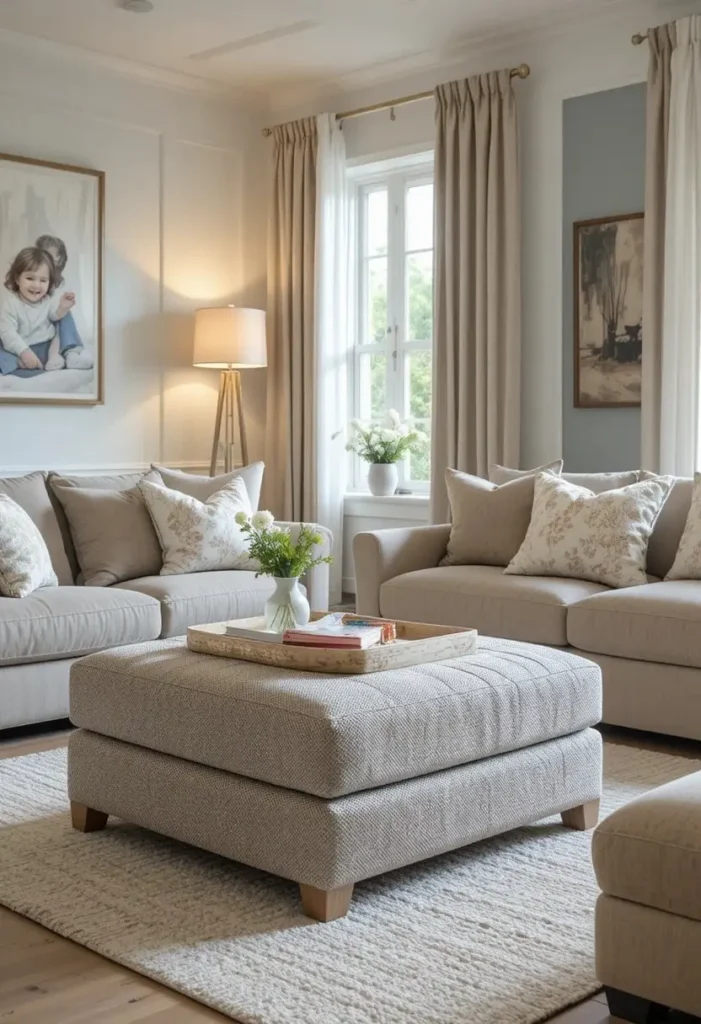
A storage ottoman is the piece I recommend when a living room has to work hard in a small footprint. Mine holds board games, colouring books and the soft toys my little ones reach for first, and it still does its proper job as a footrest and an extra seat when friends drop in. Bouclé and linen look far softer than a plastic box ever could, and a neutral shade means it will still suit the room when the cushions change. I keep small fabric bins inside so nothing turns into a jumble at the bottom, and I check the lid hinges now and then — a lid that slams shut is no friend to small fingers.
How to do it: Measure the space in front of your sofa and choose an ottoman that leaves about 45 cm of legroom. Look for a hinged lid that stays open on its own and closes softly. Sort toys into small bins by type before they go in, put the everyday favourites on top, and keep the ottoman in the same spot so tidy-up time becomes a habit.
3. Floating Shelves for Decorative Toy Storage
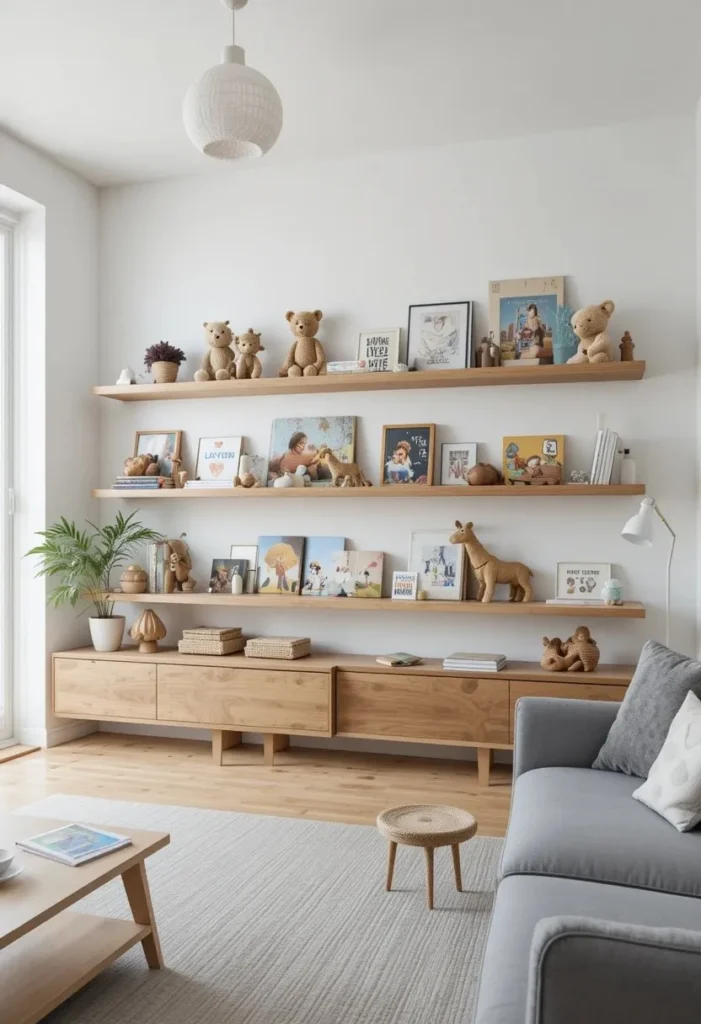
Floating shelves are my answer when the floor is already full but the walls are bare. A couple of light wood shelves turn a row of wooden toys, picture books and one or two soft animals into a display that actually suits the room, rather than a pile waiting to be tidied. I hang ours at a height the children can reach for the books they love, and keep the prettiest, least-played-with pieces higher up. The trick is restraint: three or four objects per shelf, with breathing space between them. Cram them full and the whole wall starts to feel noisy again.
How to do it: Fix the shelves into wall studs, or use proper plasterboard fixings so they hold real weight. Hang the lowest shelf at your child’s shoulder height. Stand books upright with a bookend, place one toy per gap, and leave a third of each shelf empty. Step back, then remove one thing from every shelf — it will look calmer instantly.
4. Built-In Cabinets for a Clean Minimal Look
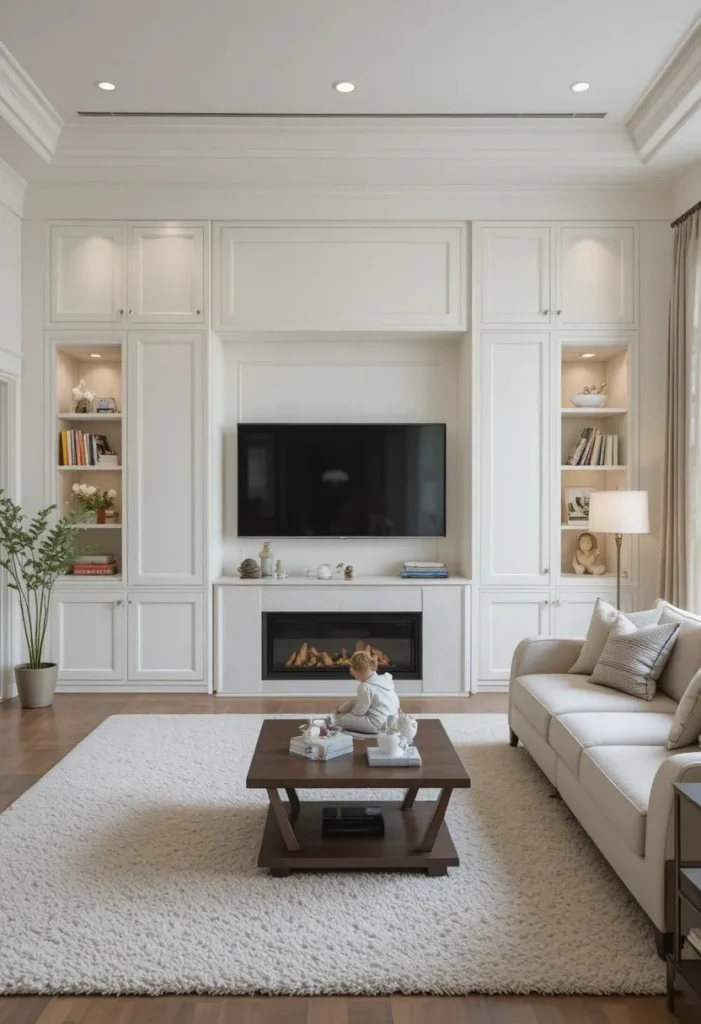
If you want the toys to vanish completely, nothing beats built-in cabinets. Behind closed doors, ours hide everything from train sets to craft supplies, and the room reads as a calm, grown-up space the moment the doors shut. I chose soft white cabinetry with simple handles so it feels like part of the architecture rather than a storage unit, and labelled bins inside mean the children can still find their own things without emptying every shelf. It is the dearest option on this list, and it is also the one that changes the room most. For a simpler version of the same idea, these built-in shelves living room ideas show how open shelving can sit beside closed cupboards.
How to do it: Measure the wall and plan a mix of cupboards below and open shelving above. Choose soft-close hinges and handles a child can grip. Fit labelled bins inside each cupboard, one per toy type, and keep the everyday toys at your child’s height. Leave one shelf free so new toys have a home from day one.
5. Stylish Cube Storage Units
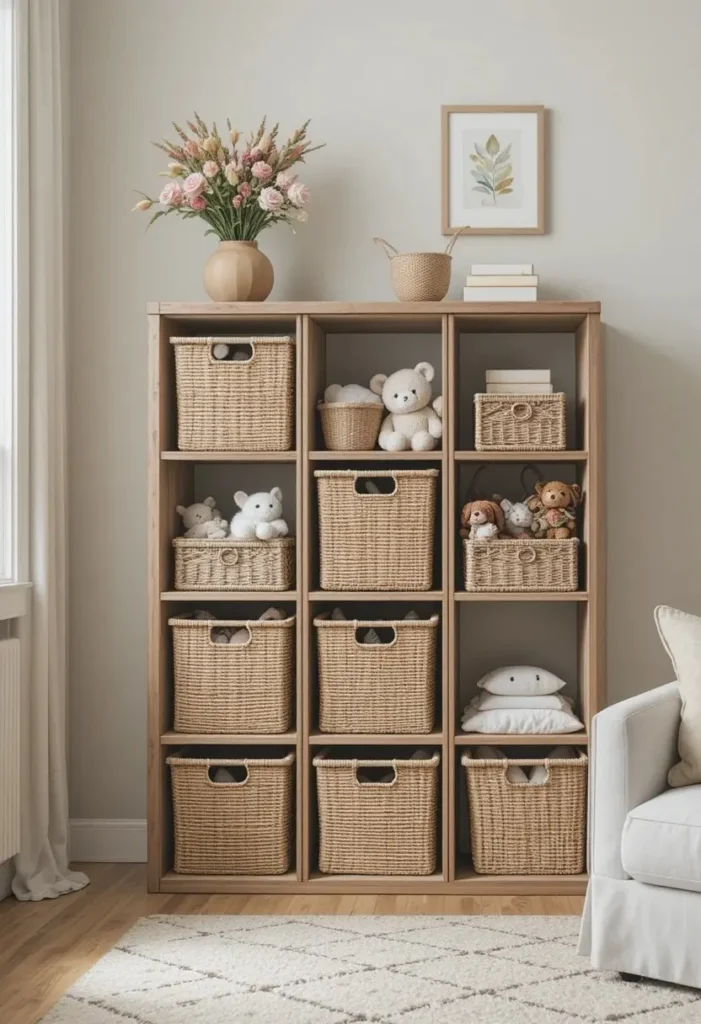
Cube storage is the workhorse of our living room, and it only looks good because I treat it like furniture rather than a toy dump. Matching fabric bins in calm neutrals hide the chaos, while the top becomes a proper surface for a lamp, a stack of books or a vase. Each cube has a job — one for building toys, one for soft toys, one for games — and the children know exactly where things belong, which makes the evening tidy-up genuinely quick. I rotate the bins every few months so the unit never starts to feel tired, and I keep the brightest, busiest bins on the bottom row where they draw the eye least.
How to do it: Choose a unit with cubes at least 33 cm square so standard bins fit. Buy matching bins in two neutral shades and label each one with a picture label for younger children. Assign one toy type per cube, style the top with three objects at most, and set a five-minute tidy-up timer each evening.
See More Ideas: 15 Sunken Living Room Ideas That Instantly Add Depth and Drama
6. Coffee Tables with Hidden Storage
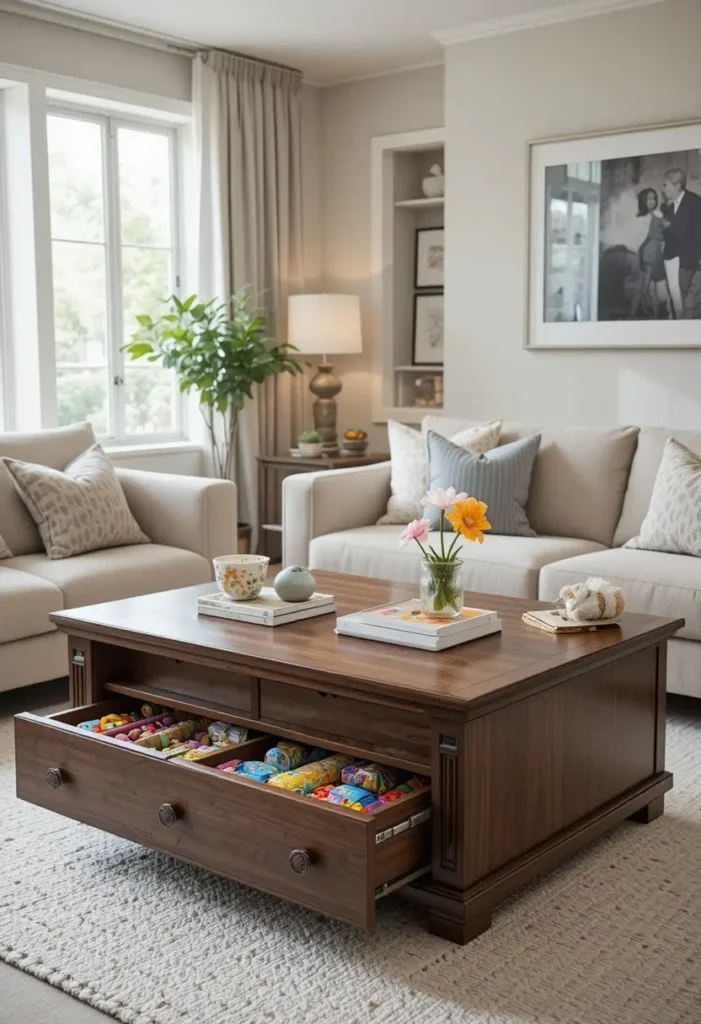
A coffee table with hidden storage is the quiet hero of a family living room. Ours holds puzzles, colouring books and the small fiddly toys that otherwise end up under the sofa, and nobody would guess from looking at it. A lift-top is my favourite version because it doubles as a little work surface for homework and drawing, while deep drawers suit families with lots of small pieces. I keep only the everyday toys inside — the rest lives elsewhere — because a table that is stuffed full is a table that never gets used. Wood finishes warm the room up, and a soft-close drawer stops the evening tidy-up from sounding like a drum roll. If you need somewhere for drinks beside the sofa too, these living room side table ideas pair beautifully with a storage coffee table.
How to do it: Measure your sofa seat height and choose a table within 5 cm of it. Test the lift-top or drawers in the shop — they should move smoothly with one hand. Fit drawer organisers inside, keep only the toys used most days in the table, and clear the top each evening so the room resets.
7. Bench Seating with Toy Storage Underneath
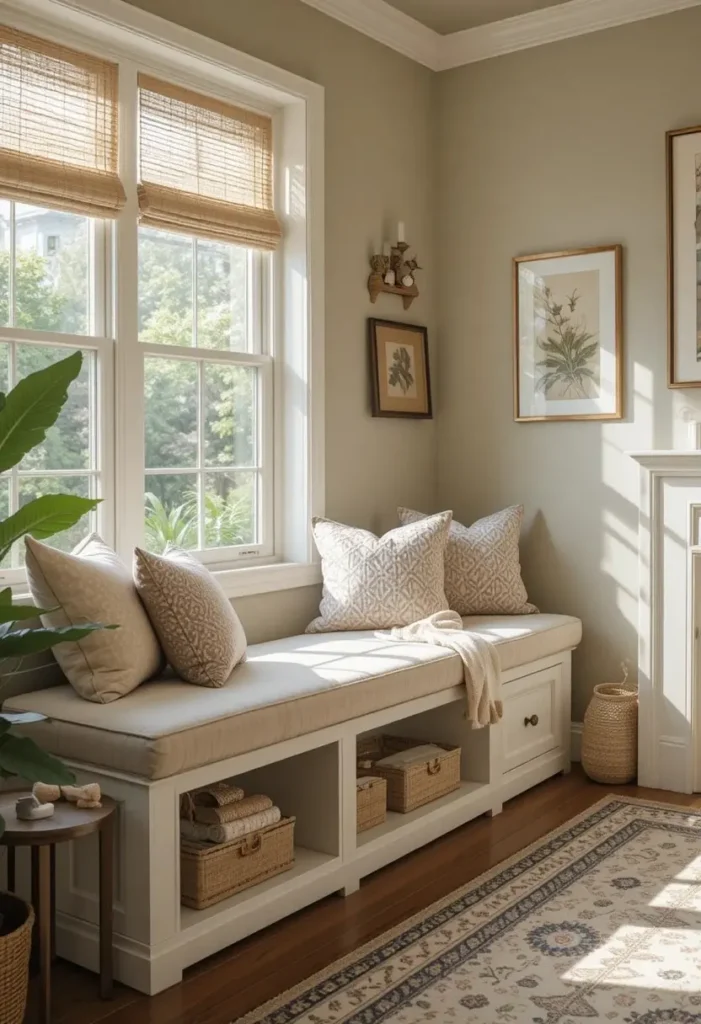
A storage bench tucked under a window or along a wall gives you seating, storage and a cosy corner in one go, and it is the piece guests always comment on. Ours holds the big, awkward toys — ride-ons, large soft animals, the wooden kitchen bits — that never fit neatly anywhere else. A thick cushion on top, a folded throw and a couple of pillows make it look like a reading spot rather than a toy box, and the children love having a place that is truly theirs. I chose a bench in pale wood with baskets inside so even an open lid looks tidy, and I check the hinges twice a year because a bench lid gets opened a hundred times a week.
How to do it: Measure the wall or window space and leave 10 cm clear at each end. Choose a bench with a soft-close, stay-open lid and a cushion at least 8 cm thick. Slide labelled baskets inside, one per toy type, and keep the heaviest toys at the bottom so the bench stays stable.
8. Decorative Bins for Quick Everyday Cleanup
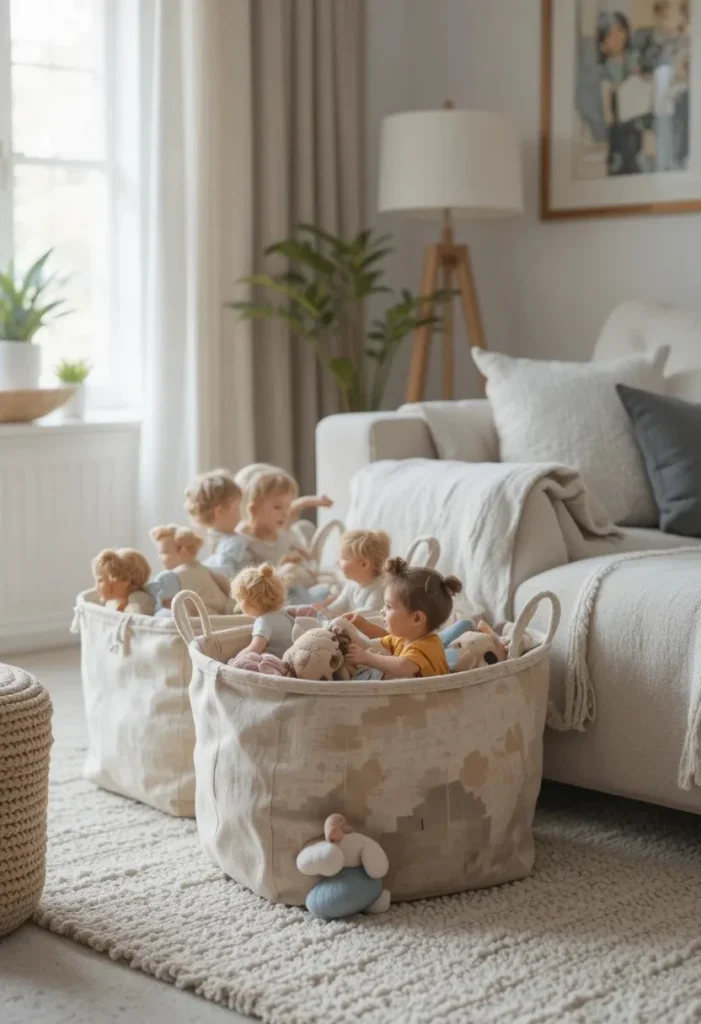
Some evenings you need the living room tidy in ten minutes flat, and that is exactly what decorative bins are for. I keep a soft canvas bin beside the sofa and a woven rope bin by the shelves, and everything — the cars, the blocks, the stray socks that are somehow always toy-adjacent — gets scooped in before supper. Neutral shades like cream, beige and soft grey matter here: a bright plastic tub reads as clutter even when it is tidy, while a calm fabric bin reads as decor. Handles are non-negotiable in my house, because the children carry the bins to the rug themselves and, just as importantly, carry them back.
How to do it: Pick two or three bins in matching neutrals with sturdy handles. Place one beside the sofa and one near the main play spot. Give each bin a loose job — blocks in one, soft toys in another — and empty them properly once a week so broken bits and odd socks do not collect at the bottom.
9. TV Consoles with Closed Storage
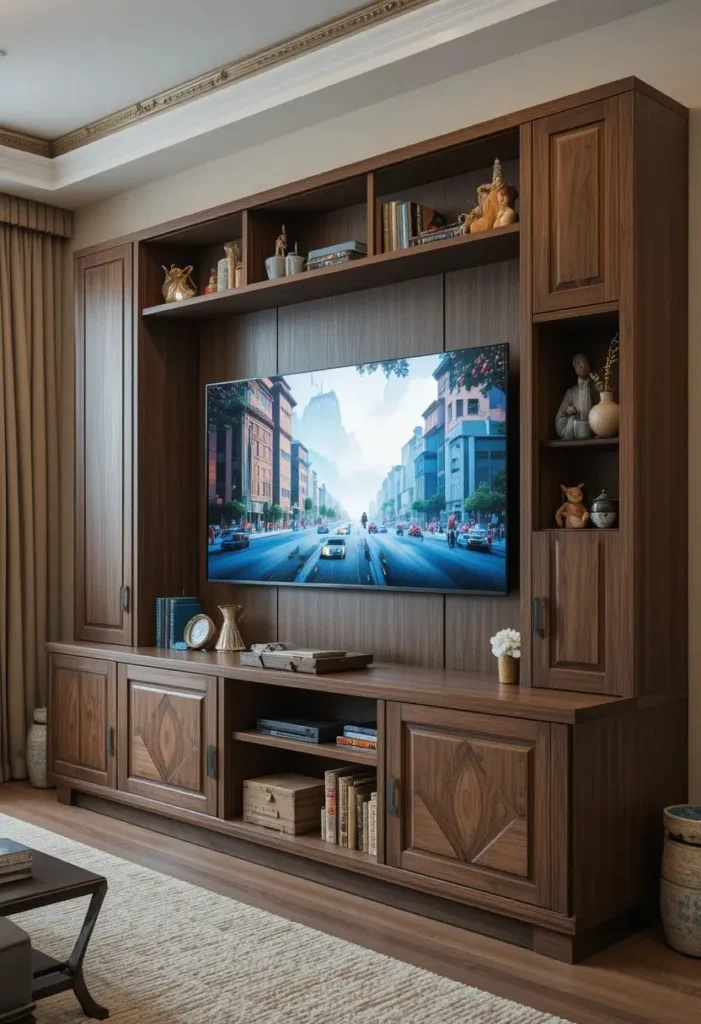
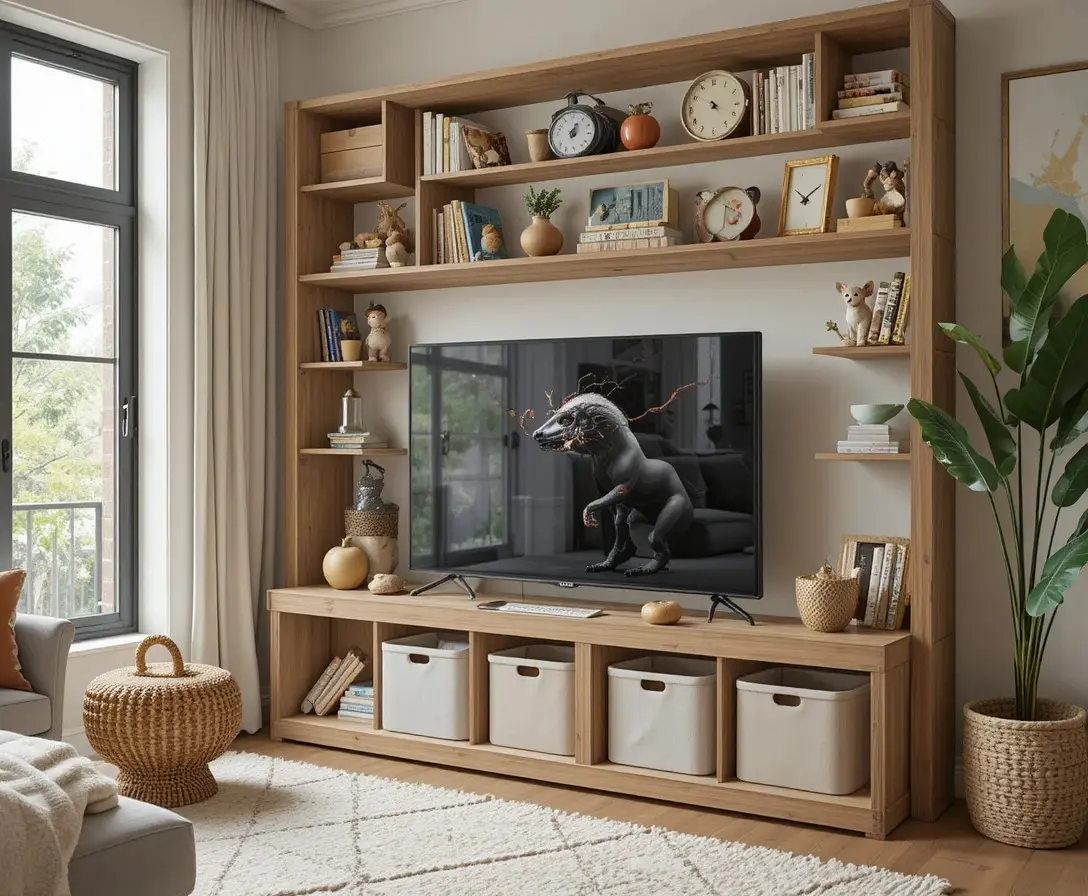
The TV console is the biggest piece of furniture in most living rooms, so it seems a shame to waste all that space on cables alone. Ours hides board games, consoles and the toy overflow in its cupboards, and the room looks far more grown-up for it. Warm wood or a matte neutral finish keeps it feeling like proper furniture, and I deliberately keep the top styled with just a lamp and a stack of books so the whole wall reads as calm. The lower shelves belong to the children — they can reach their own toys, and they can put them back without my help, which is the whole point.
How to do it: Choose a console at least as wide as your television, with a mix of drawers and cupboards. Put children’s toys in the lowest cupboards with labelled baskets inside. Thread cables through the back panel, keep remotes in one small tray, and wipe the top clear each night.
10. Rolling Carts for Flexible Toy Storage
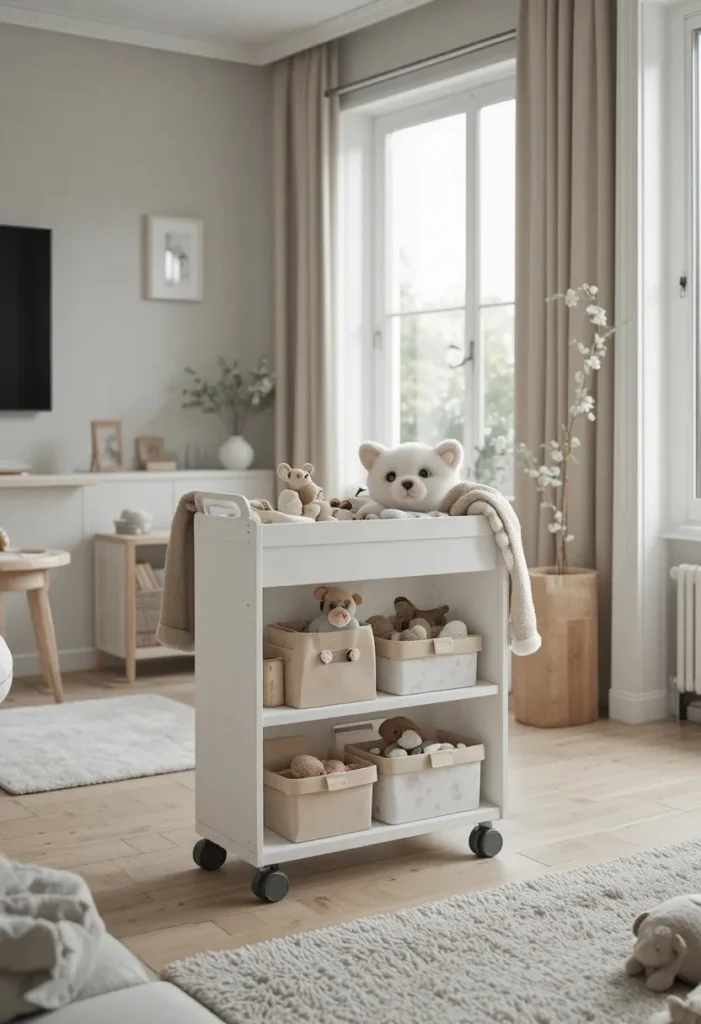
A rolling cart is the most flexible toy storage I own, and it earns its place because it moves with the day. During playtime it sits beside the sofa loaded with colouring books and small toys; when guests arrive, I wheel it into the corner or behind the door, and the room is instantly presentable. Slim metal or pale wood suits a modern or Scandinavian room best, and small baskets on each shelf stop the whole thing looking like a jumble on wheels. I would not choose a cart as our only storage — it holds less than a cupboard — but as a second spot for the toys in daily rotation, it is hard to beat.
How to do it: Choose a cart no wider than 45 cm so it fits beside the sofa, with lockable wheels. Add a small basket to each shelf and label them. Park the cart in the same corner every evening, lock the wheels, and swap its contents weekly from your main toy store.
11. Window Seat Storage for Cozy Functionality
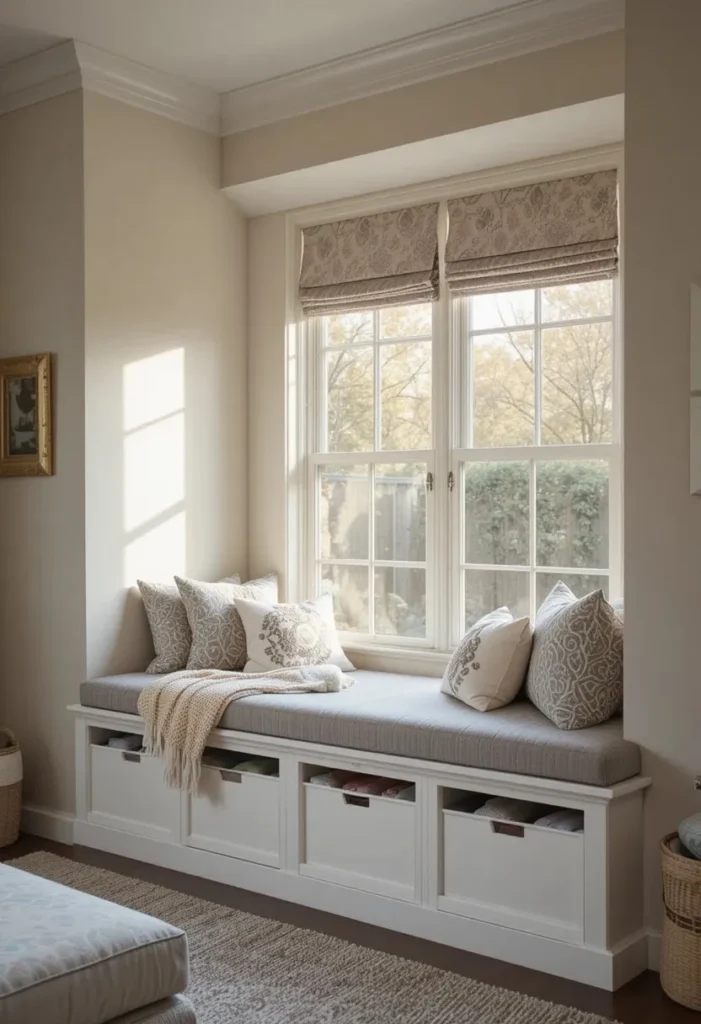
A window seat with storage underneath turns the draughtiest, most awkward corner of a room into the children’s favourite spot. Ours holds stuffed animals, board games and the picture books that get read every single day, and the cushion on top — with a folded blanket and a soft pillow — makes it feel like a proper little retreat rather than a cupboard with a lid. Natural light does half the work here: the whole corner glows in the afternoon, and the children gravitate towards it without being asked. If yours becomes a reading spot too, these kids reading nook ideas will help you style it so it feels cosy rather than cluttered.
How to do it: Measure the window recess and build or buy a seat that fits it exactly, with a cushion at least 8 cm thick. Fit soft-close, stay-open hinges for safety. Store books and soft toys inside in labelled baskets, keep the seat clear of clutter, and add a small basket beside it for the book being read right now.
See More Ideas: 16 Paint Colors for Living Room Ideas That Completely Transform the Mood
12. Ladder Shelves for Small Toy Displays
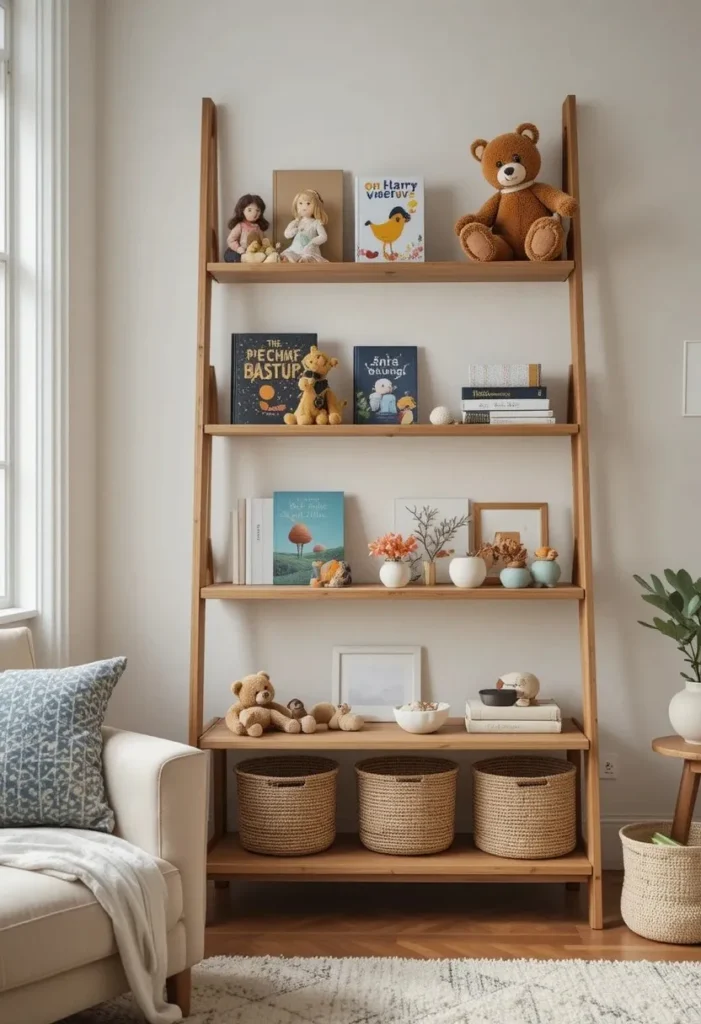
Ladder shelves suit a living room that needs storage without the weight of a bookcase. The open, leaning shape keeps the wall feeling light, and a mix of woven baskets, books and one or two favourite toys looks styled rather than stored. I keep the heavier baskets on the bottom rungs where they anchor the whole piece, and the top shelves hold plants and framed photos — the things little hands should not reach. It is a gentle piece of furniture, so I wall-fix ours for safety, and I only style a few toys at a time: a ladder shelf that is full to the brim is just a bookcase with worse posture.
How to do it: Fix the top of the ladder to the wall with a safety strap. Place the heaviest baskets on the lowest two rungs and lighter decor higher up. Style three objects per shelf at most, keep one shelf free for the toy of the week, and dust the rungs weekly — open shelves show dust fast.
13. Sideboards That Hide Larger Toys
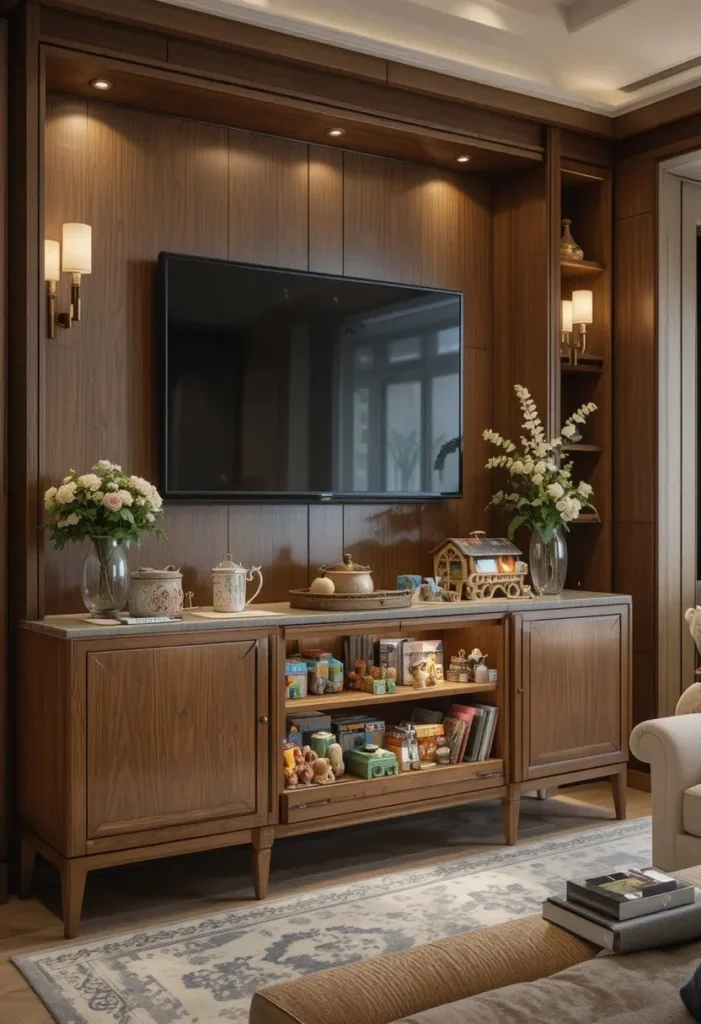
A sideboard is where the big toys go to hide in plain sight. Ours swallows the doll’s house furniture, the large building sets and the games with a hundred pieces, and with the doors closed it is simply an elegant piece of furniture with a lamp and a framed print on top. Rich wood, soft black or a calm neutral all work — the trick is choosing a finish that already appears elsewhere in the room, so it reads as part of the decor rather than a toy cupboard in disguise. Baskets or dividers inside keep everything findable, and I keep the top styled simply, because a sideboard piled high with clutter defeats its own purpose.
How to do it: Measure the wall and choose a sideboard with deep cupboards rather than shallow drawers. Fit baskets or adjustable dividers inside, one per toy type. Style the top with a lamp and one framed print, keep the everyday toys at your child’s reach, and do a quick sort inside once a month.
14. Minimal Toy Rotation for Less Clutter
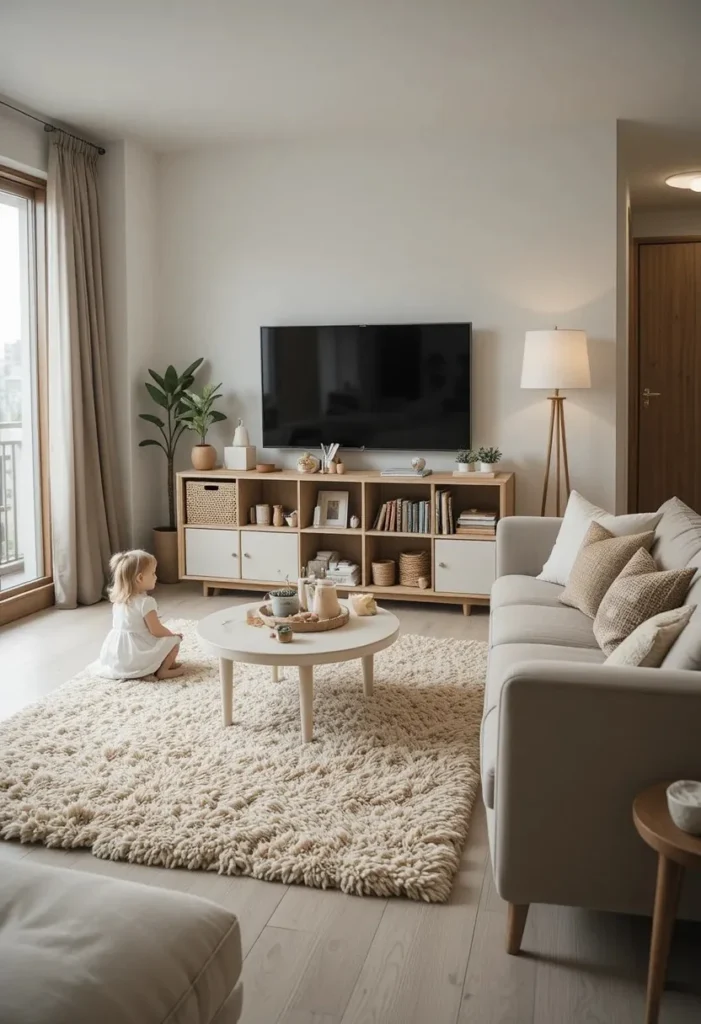
After years of buying more storage, I learned that the simplest fix is owning fewer toys in the living room at once. We keep a small, chosen set out — the favourites that get played with every day — and the rest lives in labelled boxes in a cupboard elsewhere. Every few weeks we swap a few things over, and the “new” toys get played with like they have just arrived. The room feels calmer with less on show, the children actually play more deeply with what they have, and the evening tidy-up takes five minutes instead of twenty. It costs nothing, and of the fourteen ideas here, it is the one I would start with.
How to do it: Gather every toy in the living room and sort it into keep-out, store-away and pass-on piles. Keep ten to fifteen favourites out in your baskets or cupboards. Box the rest in labelled containers in another room, set a reminder to rotate a few toys every two to three weeks, and let your child choose one swap each time.
Frequently Asked Questions
How do I hide toys in my living room without it looking like a playroom?
Choose furniture that does double duty, such as storage ottomans, coffee tables with drawers and sideboards, and keep the toy storage in the same colours and materials as the rest of the room. Closed storage hides the visual noise, while matching baskets and bins make what is visible look deliberate. A quick five-minute tidy-up each evening matters more than any single piece of furniture.
What is the best toy storage for a small living room?
Multifunctional pieces win in a small room: a storage ottoman, a lift-top coffee table or a bench with storage underneath each hide toys without taking extra floor space. Rolling carts and floating shelves help too, because they use corners and walls rather than the middle of the room. Start with one piece, live with it for a month, and add a second only if you still need it.
How can I get my kids to tidy their toys away?
Make tidy-up easy rather than nagging about it. Give every toy a visible home, use picture labels for younger children, and keep the bins low enough for them to reach. A short song or a five-minute timer turns it into a game, and praising the result — rather than criticising the mess — keeps the habit going.
Are open shelves or closed storage better for toys?
Closed storage suits most living rooms because it hides colour and clutter instantly, which is what makes a room feel calm. Open shelves work best for a small, chosen display of books and beautiful wooden toys, and for the few things your child reaches for every day. Most families do best with a mix: closed cupboards for the bulk, and one or two open shelves for display.
How many toys should I keep in the living room?
Far fewer than you think. Ten to fifteen well-chosen toys are plenty for daily play, and children usually play more deeply with a smaller set. Store the rest elsewhere and rotate a few items every two to three weeks so the selection feels fresh without the room filling up again.
Your Living Room Toy Storage Checklist
Tick each step off as you go — small steps, one at a time, and the whole room will feel calmer.
☐ Choose one storage spot for every type of toy
☐ Pick furniture that hides toys behind closed doors
☐ Match baskets and bins to your room’s colours
☐ Label every bin with words or pictures
☐ Keep everyday toys low enough for children to reach
☐ Put heavier baskets on the lowest shelves
☐ Add soft-close lids where little fingers reach
☐ Leave a third of each shelf empty
☐ Set a five-minute tidy-up time every evening
☐ Rotate a few toys every two to three weeks
☐ Store extra toys in another room or cupboard
☐ Live with your new setup for a week, then adjust one thing
Conclusion
Toy storage in a living room is never really about the furniture — it is about giving your family a room that can be a playroom at four o’clock and a calm place to sit with a cup of tea at nine. Start with the idea that fits your space and your budget, whether that is a pair of woven baskets, a storage ottoman or a simple toy rotation, and let the room change gradually rather than all at once. The goal is not a show home; it is a living room where the toys have a home, the tidy-up takes five minutes, and you can actually relax in the space you worked so hard to create.