
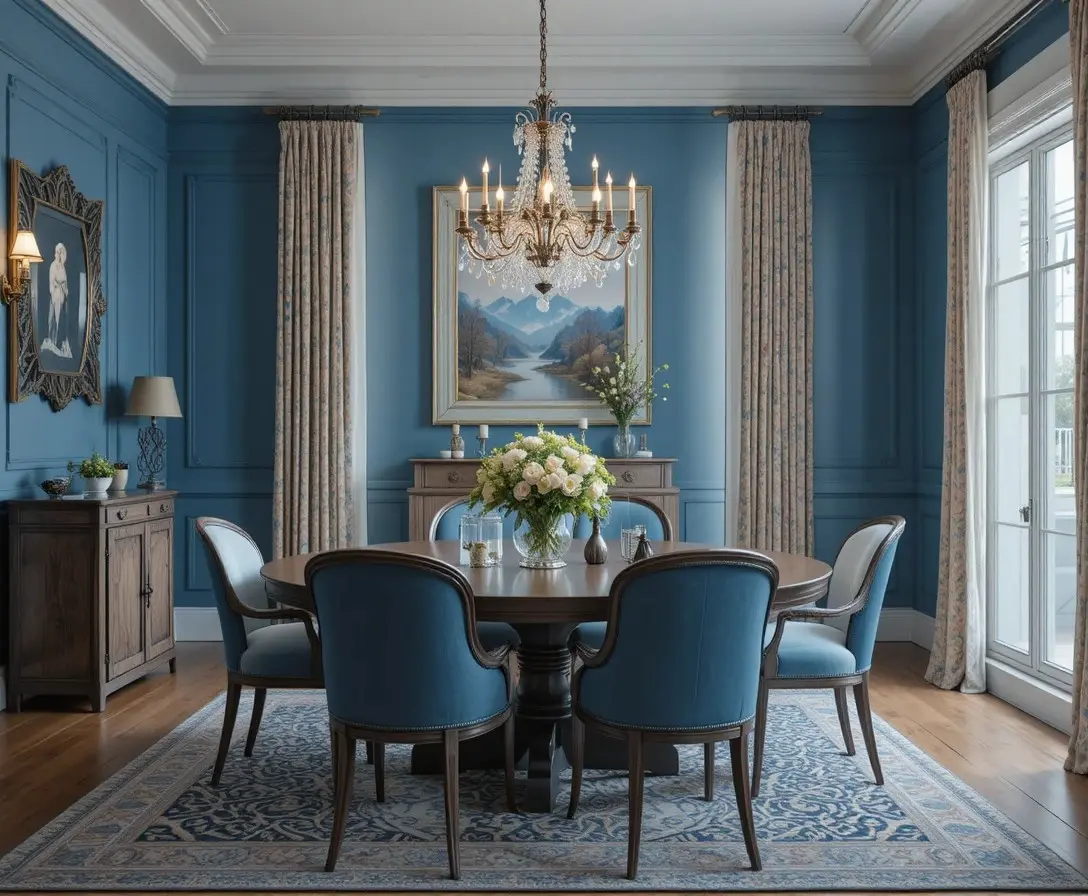
14 Blue Dining Room Ideas That Make Your Space Feel Calm, Stylish, and Inviting
Does your dining room feel a little plain, disconnected, or missing that “wow” feeling when you walk in? Sometimes, all it takes is the right color to completely transform a space. Blue is one of those colors that instantly changes the mood—calm, fresh, and effortlessly elegant. These blue dining room ideas will help you create a space that feels welcoming, balanced, and beautifully styled without feeling overwhelming or overly designed. These ideas will guide you in creating a dining room that feels intentional, cozy, and effortlessly stylish every single day.
1. Soft Blue Walls for a Calm Atmosphere
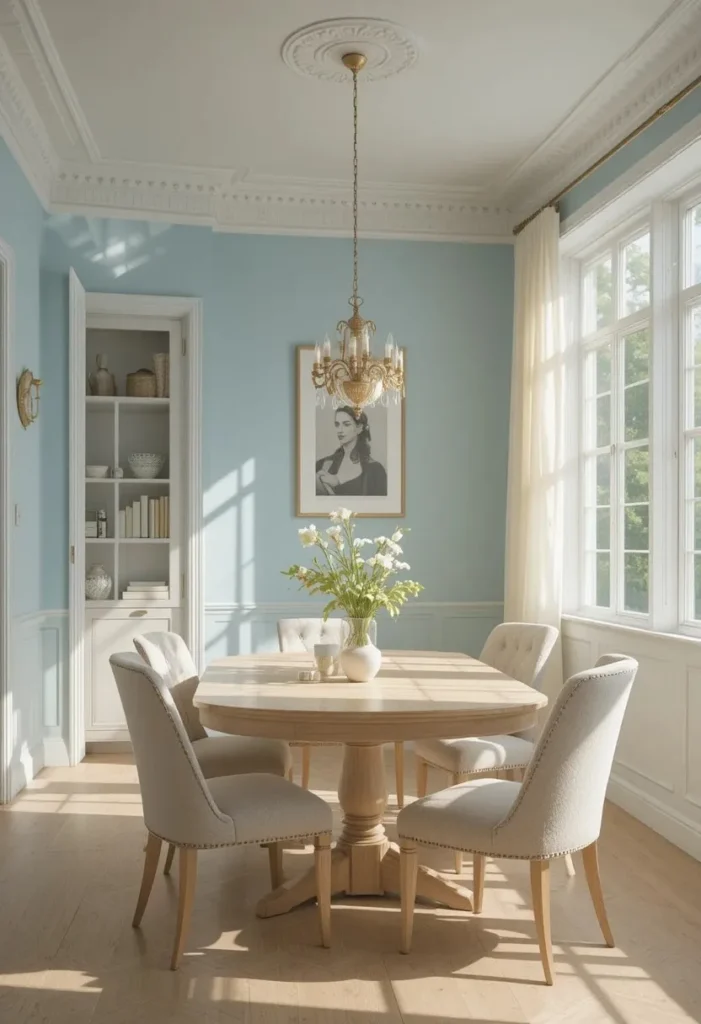
I have always thought soft blue walls are the gentlest way to change how a dining room feels. In my own home, a powder-blue wall turned hurried breakfasts into slower, calmer mornings, and evening meals felt less rushed too. Pale shades such as powder blue and sky blue bounce daylight around the room, so even a small dining area feels brighter and more open. I like pairing them with crisp white trim, a pale wood table and plain linen chairs, because the contrast stays fresh without feeling cold. Add cream candles, a simple vase of white flowers and warm bulbs, and the room keeps its softness after dark.
How to do it: Test a large swatch of powder blue or sky blue on the wall you face while eating, and look at it in morning and evening light before you commit. Paint the ceiling and trim a clean white, keep the table pale wood, and choose warm-white bulbs so the blue never feels chilly. Finish with cream candles and a simple vase, then live with it for a week before adding anything else.
2. Navy Blue Dining Room for Elegant Depth
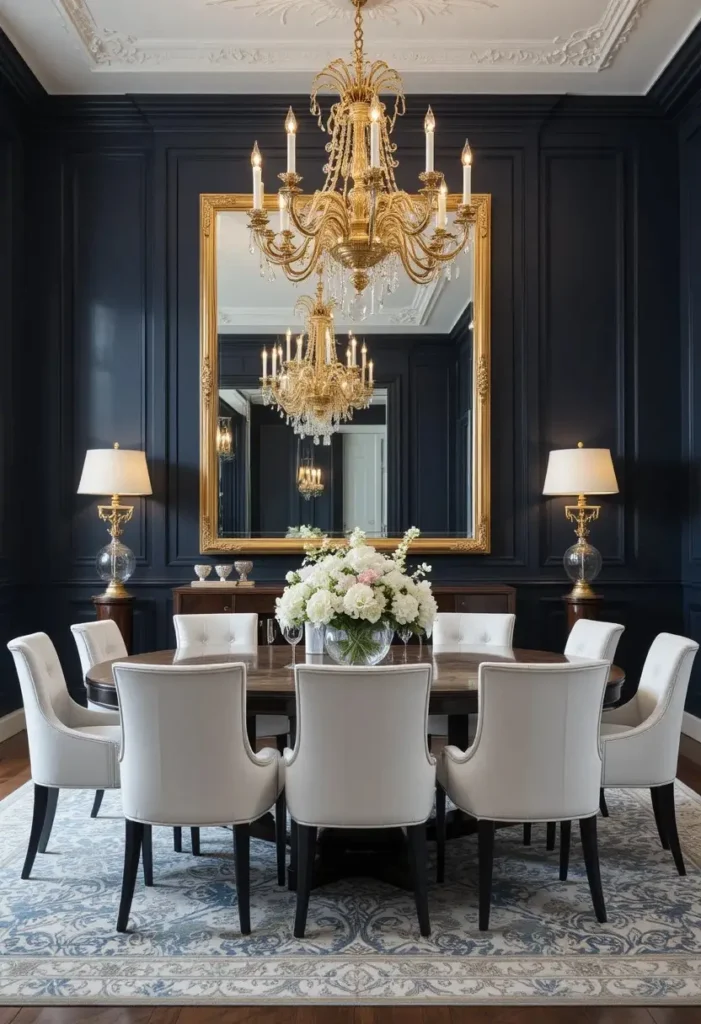
Deep navy has a way of making a dining room feel both grown-up and welcoming, and I reach for it whenever a room needs depth without feeling dark. In my home, navy walls turned ordinary suppers into occasions, especially with gold accents catching the candlelight and white chairs keeping the look fresh. The colour works beautifully with brass, warm wood and crisp white, so the room feels rich rather than heavy. I also love how navy hides everyday marks far better than pale paint, which matters when meals get lively. If you want drama that still feels calm, navy is a wonderful place to start.
How to do it: Paint one or two walls navy rather than the whole room if your light is limited, and keep the ceiling and woodwork white. Hang a mirror opposite a window to bounce light back, add gold or brass details in small doses, and choose white or pale chairs to lift the scheme. Test the navy at night too, as it deepens after dark.
3. Blue Accent Wall for a Subtle Statement
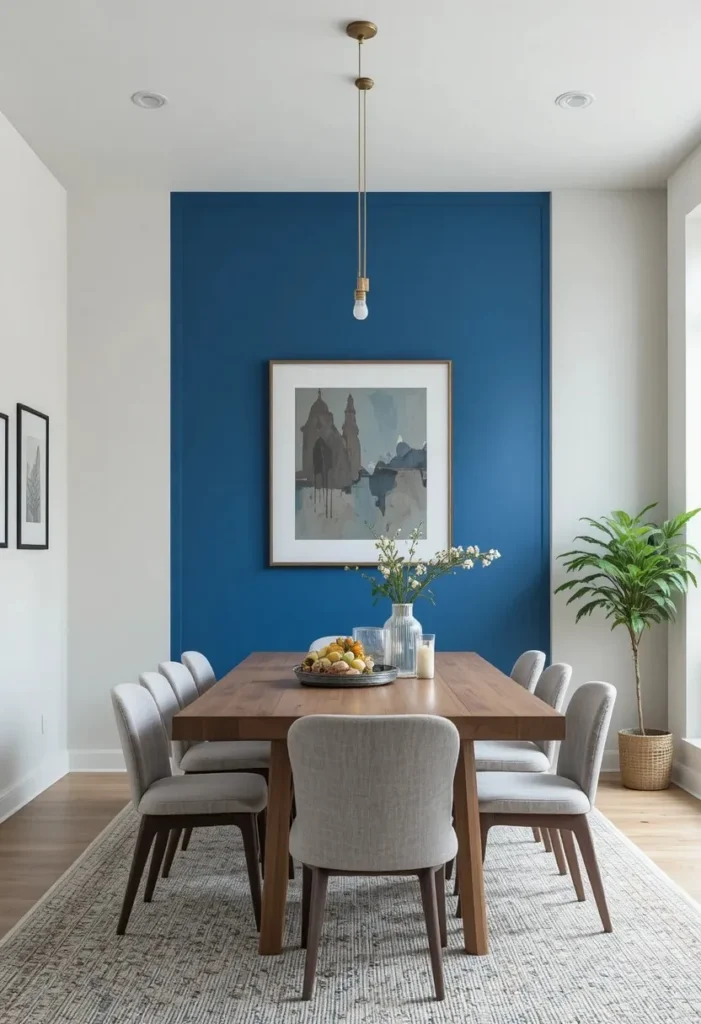
A single blue accent wall is my favourite way to make a statement without repainting the whole room, especially behind the dining table where everyone naturally looks. I once painted just that one wall a soft dusty blue in a rental, and it instantly gave our plain white room a focal point and a sense of occasion. The trick is choosing a shade that flatters your furniture rather than fighting it: dusty blue with oak, teal-blue with walnut, or a pale blue-grey with white chairs. Because only one wall carries the colour, you can be a little braver, and if you tire of it, one afternoon’s painting puts it right.
How to do it: Choose the wall behind the table, the one you see as you sit down, and paint it in a matte finish for a soft, modern look. Keep the other walls warm white, and pull the blue into a runner, napkins or a vase so the wall does not feel isolated. Live with it for a few evenings before deciding whether to add art.
4. Blue and White Dining Room for a Fresh Look
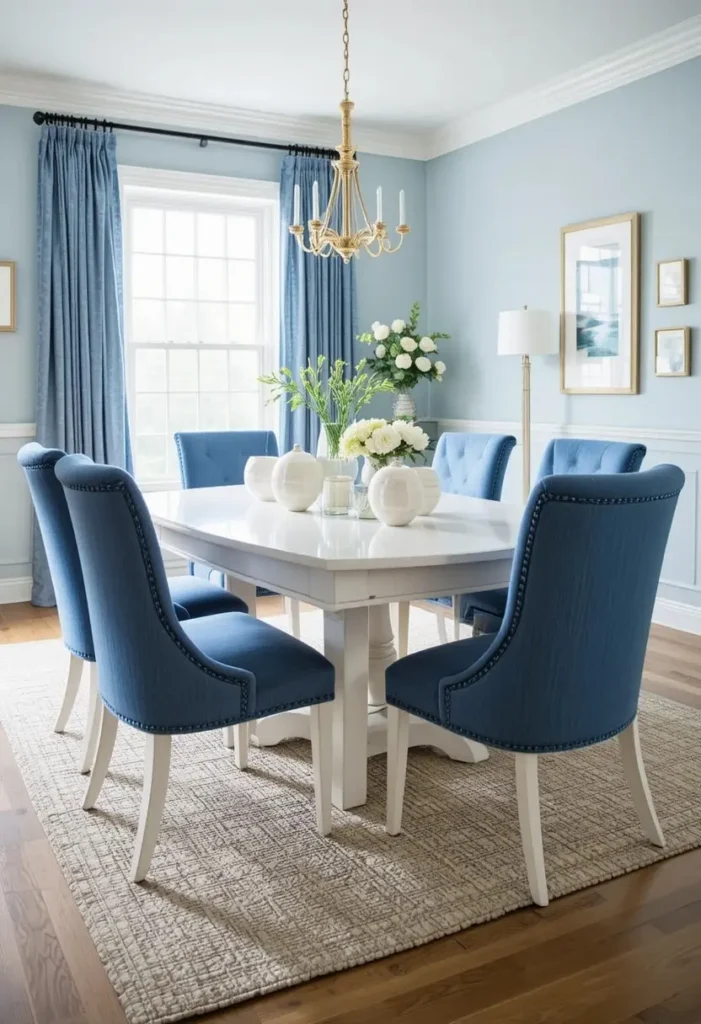
Blue and white is the combination I return to whenever I want a dining room to feel fresh, clean and timeless, and it rarely lets me down. I love how blue chairs against white woodwork feel bright, orderly and calm all at once. The pairing works in almost any home, from a seaside cottage to a city flat, because white keeps the blue feeling light while the blue stops the white feeling stark. I soften the contrast with natural wood, woven placemats and linen napkins, which add warmth and stop the room feeling too crisp. It is a look that suits both quiet breakfasts and lively Sunday lunches.
How to do it: Start with white walls and woodwork, then add blue through the chairs, a table runner or one painted wall. Bring in natural wood and woven textures to soften the contrast, and keep the blue to one or two shades so the scheme stays calm. A white vase of blue flowers on the table ties the two colours together.
5. Minimal Blue Dining Room Ideas with Clean Lines
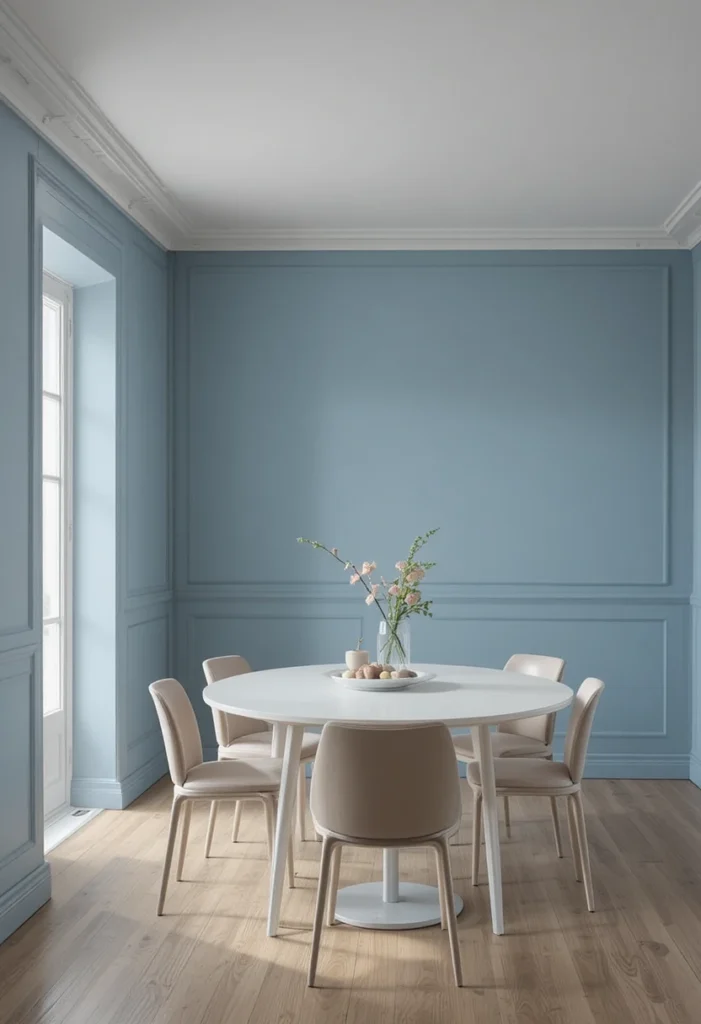
A minimalist blue dining room is my reset button when a space starts to feel noisy, and I find the calm it brings is worth more than any extra decoration. Soft blue tones, simple furniture and clean lines let the colour do the talking, so the room feels orderly even when life is busy. I keep the palette to two or three colours at most, choose chairs without fussy details, and leave the table mostly clear between meals. In an open-plan home, the same restraint helps the dining area sit comfortably beside the living area, and I often check living room and dining room combo ideas first before I change anything. The result feels modern, unhurried and easy to live with.
How to do it: Choose one soft blue and one neutral, then add a third colour only in small accents. Pick simple chairs and a plain table, keep surfaces clear, and let one piece, such as a pendant light, be the only decoration. If the room still feels busy, remove one thing rather than adding another.
See More Ideas: 21 Colorful Dining Room Ideas to Make Your Space Feel Alive and Joyful
6. Blue Dining Chairs for a Subtle Pop
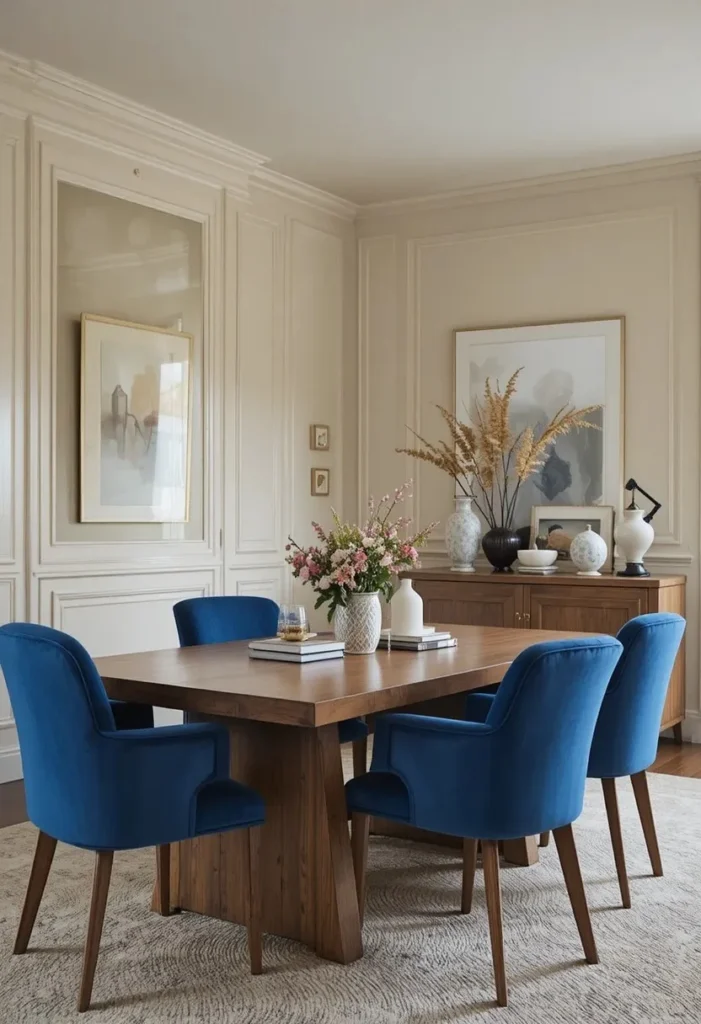
If you do not want to commit to blue walls, blue dining chairs are the easiest place to start, and they were my own first step into this colour. A set of dusty-blue or navy chairs against a neutral table and pale walls adds personality without overwhelming the room, and the chairs become a soft focal point every time you sit down. I like repeating the same blue in small touches, a cushion, a vase or a piece of art, so the chairs feel deliberate rather than random. Chairs are also easy to change: re-cover them, swap the cushions, or move them to another room when you fancy a change. It is a low-risk, high-reward way to test blue at home.
How to do it: Choose chairs in a blue you already love, then keep the table, walls and floor neutral so the chairs stand out. Repeat the blue in two or three small decor pieces, and try the chairs in daylight and lamplight before you commit. If the blue feels strong, add a cream cushion to soften it.
7. Blue Wallpaper for Texture and Interest
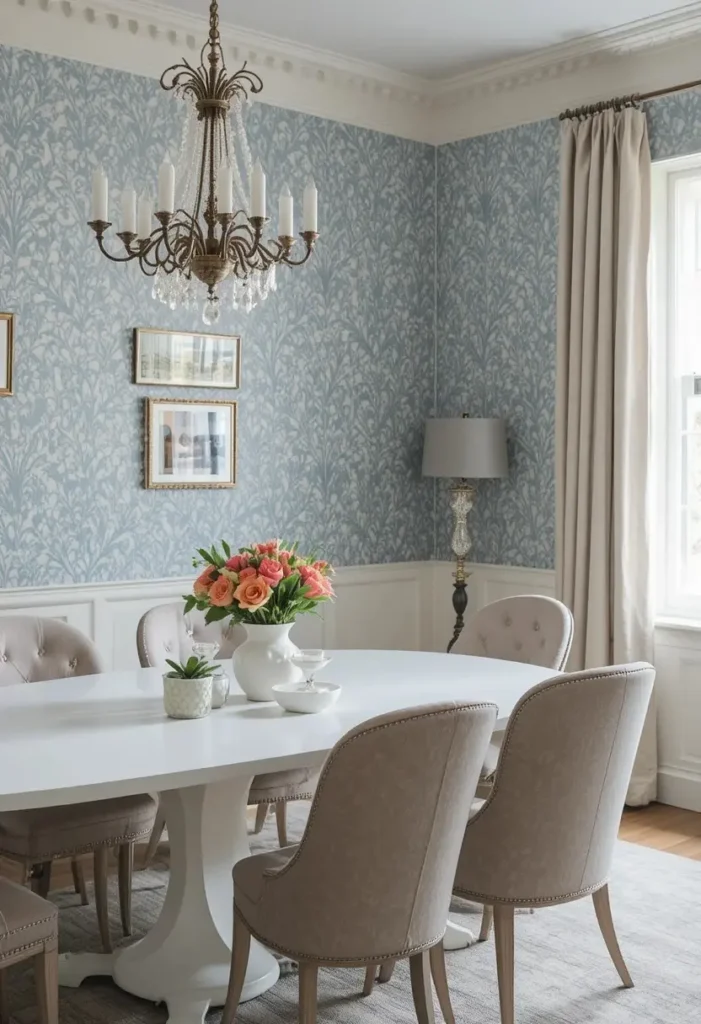
Blue wallpaper is how I add pattern and texture to a dining room without filling it with extra objects, and the effect still surprises me. Soft blue florals, stripes or abstract designs give plain walls depth, and the room feels finished even when the table is bare. I prefer subtle patterns in a dining room, because bold prints can compete with conversation and with the food on the table. A pale blue paper with a gentle motif also catches the light beautifully at dinner, which makes ordinary evenings feel a little special. If you are nervous, paper one wall and paint the rest to match the lightest tone in the pattern.
How to do it: Order samples and pin them to the wall for a few days, checking them in morning and evening light. Choose a subtle pattern in a blue you can live with, paper the wall you face while eating, and paint the remaining walls the lightest tone from the paper. Keep the table and chairs plain so the pattern stays the star.
8. Moody Dark Blue Dining Room for a Cozy Feel
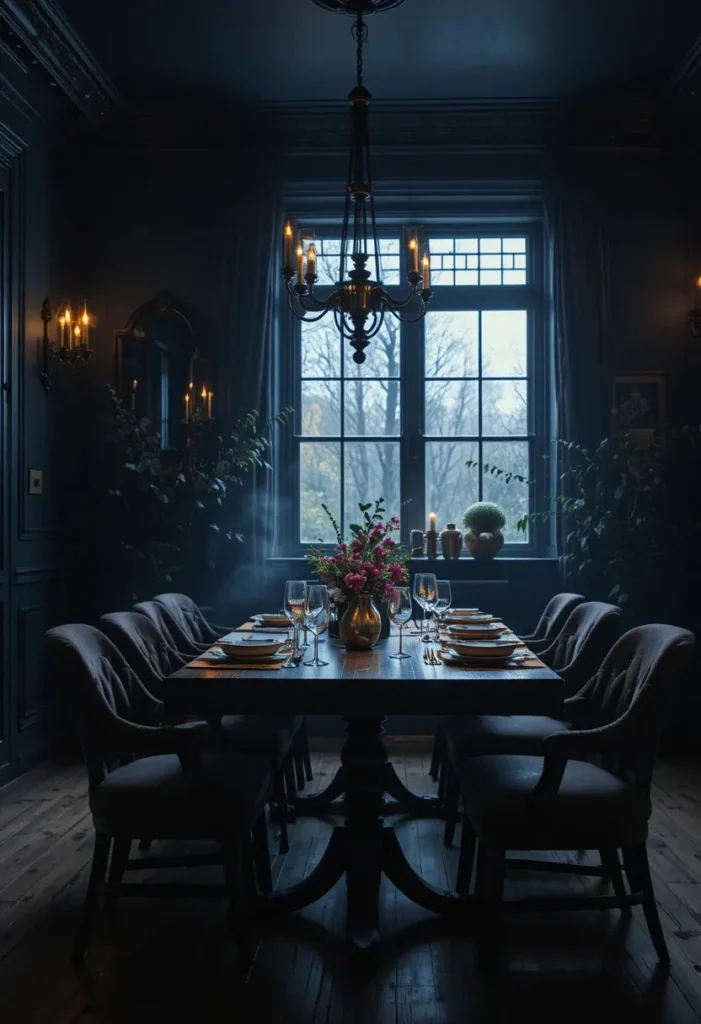
A moody dark blue dining room is my choice for long, slow dinners, because shades like midnight and indigo wrap the room in a cocoon-like calm. I love how darker blues absorb light and make the space feel grounded and intimate, rather than cold or gloomy, especially in the evening. The secret is warmth: warm bulbs, candlelight, brass details and a wooden table stop the blue feeling flat. I also keep the ceiling pale and the curtains light, so the room never feels like a cave. When friends linger at the table long after pudding, I know the colour has done its job.
How to do it: Paint the walls midnight or indigo, but keep the ceiling and trim a warm white. Use warm bulbs and candles, add brass or wood for warmth, and hang a mirror to catch what light there is. Try the room at night before you judge it, as dark blue changes completely after dark.
9. Blue and Wood Combination for Natural Warmth
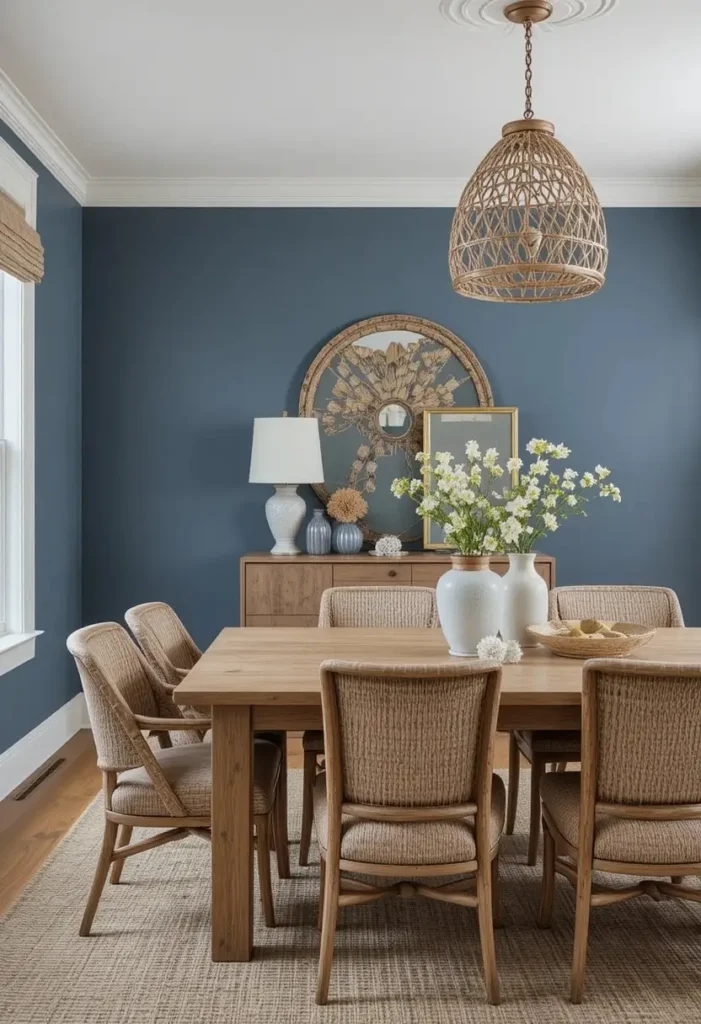
Pairing blue with natural wood is the combination I recommend most often, because wood warms blue in a way no other material quite manages. Oak and walnut soften the coolness of blue walls or upholstery, and together they feel organic, balanced and inviting rather than decorated. I keep to one consistent wood tone, a pale oak table with matching chairs, or a deep walnut sideboard, so the room feels calm instead of busy. A wooden bowl of fruit, a woven runner or a simple oak tray on the table adds the same warmth in miniature. It is a pairing that suits both modern homes and older ones, and it ages gracefully.
How to do it: Choose one wood tone, oak for a lighter feel or walnut for depth, and use it for the table and chairs. Pair it with a blue you love on the walls or upholstery, then add the same wood in a tray, bowl or sideboard. Keep other colours neutral so the blue and wood stay the focus.
10. Two-Tone Blue Dining Room Walls
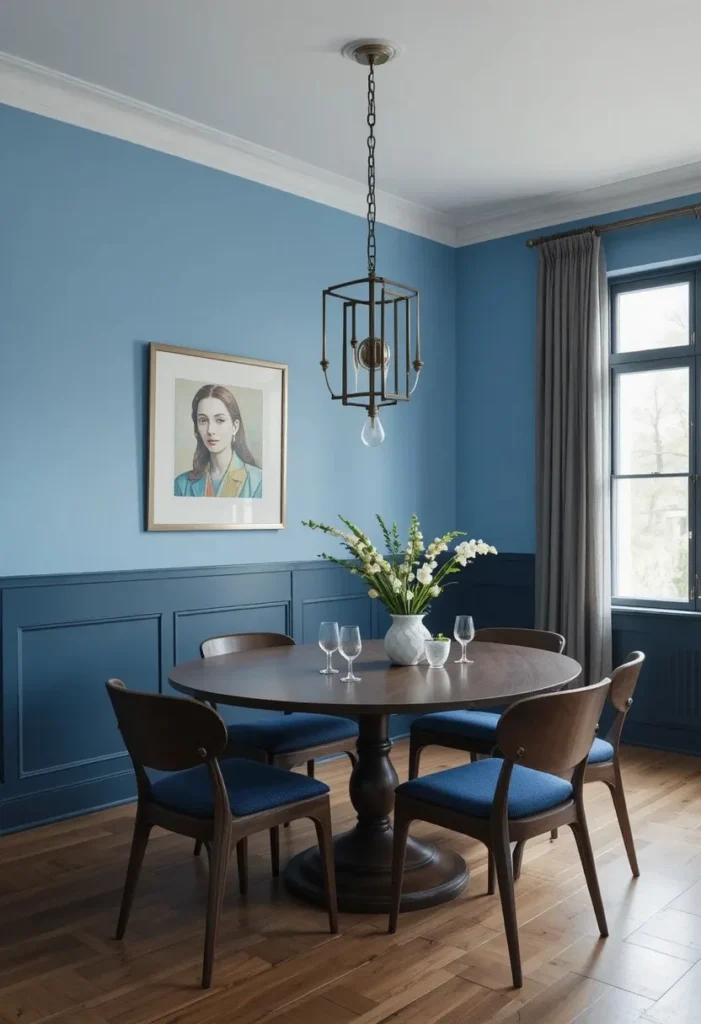
Two-tone blue walls add depth without a single extra object, and I love how layered they make a dining room feel. A pale blue above and a deeper blue below, or the reverse, creates a subtle contrast that feels modern and considered. I find the horizontal break also makes a low ceiling feel higher and a long room feel more balanced. The key is choosing two shades from the same colour family, so the change feels gentle rather than striped. With careful painter’s tape, the line stays crisp, and the result looks far more expensive than the cost of two tins of paint.
How to do it: Pick two blues from the same family, one light and one deeper. Mark the dividing line with a spirit level, apply painter’s tape carefully, and paint the deeper shade below the line for a grounded feel. Peel the tape while the paint is still slightly tacky for the sharpest edge, then repeat the deeper blue in a cushion or runner.
See More Ideas: 20 Dining Room Decor Ideas to Create a Warm and Stylish Space
11. Blue Built-In Cabinets for a Custom Look
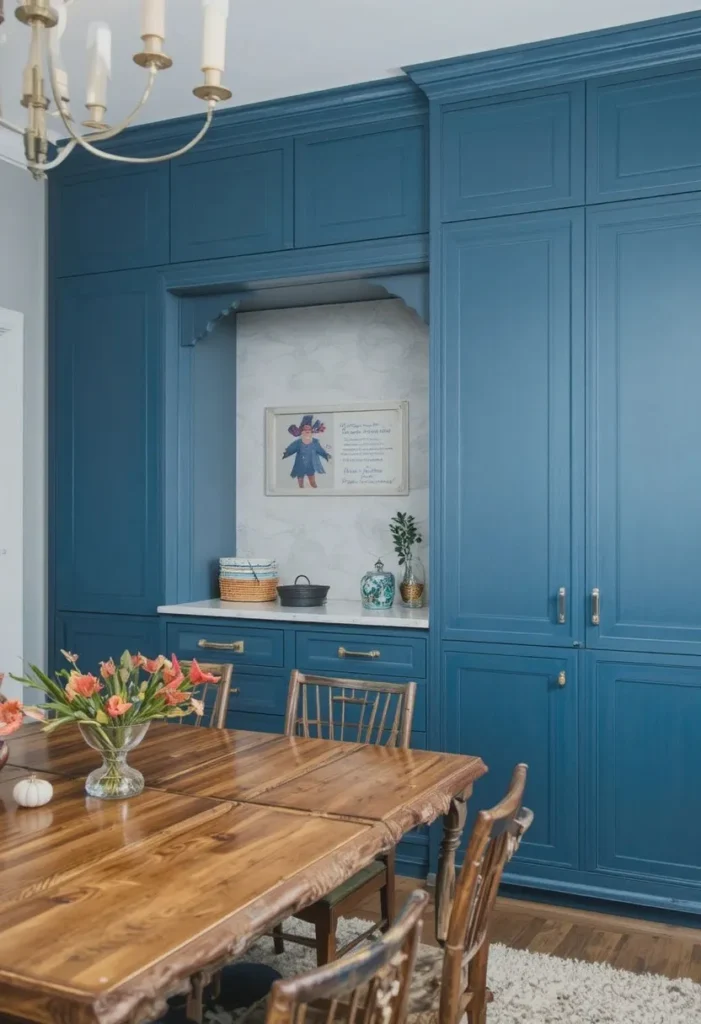
Built-in cabinets painted in a rich blue are one of the smartest upgrades I have made in a dining room, because they add storage and style in the same breath. A deep blue dresser or sideboard wall gives the room a custom, fitted feel, and it keeps tableware, linens and board games close at hand. I choose simple brass or black hardware so the blue stays the star, and I keep the shelves above the cabinets pale so the room stays light. The same idea works beautifully in kitchens too, which is why I often browse navy blue kitchen cabinet ideas when I want inspiration for the finish. It is practical, beautiful and hard to tire of.
How to do it: Paint existing built-ins a rich blue, or have a carpenter fit simple cabinets to an empty wall. Choose simple brass or black handles, keep the worktop pale wood, and leave some open shelving for display. If you are painting, use a durable cabinet paint and two coats for a finish that survives daily use.
12. Blue Dining Room with Statement Lighting
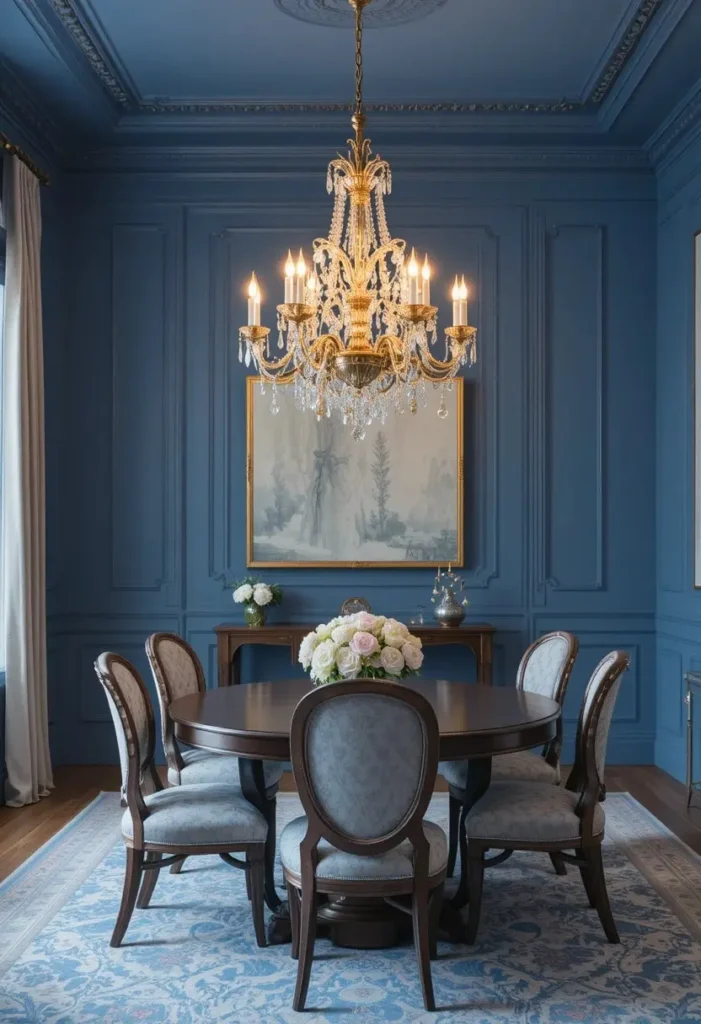
A bold chandelier or pendant light can transform a blue dining room in an evening, and it is the change I notice most when I walk into a room. Lighting adds height and drama, and it balances the depth of blue walls beautifully, especially when the fitting is warm brass or black metal. I choose a fitting that suits the table’s shape, a long linear pendant over a rectangular table, or a round chandelier over a circular one, and I hang it low enough to feel intimate but high enough to see across. A dimmer is essential, because the same light should work for homework, dinner and a late glass of wine. The same thinking applies to the rest of the house, and I often borrow ideas from living room aesthetics when choosing a finish.
How to do it: Measure the table and choose a fitting about half to two-thirds its length, hung about 75 to 90 centimetres above the tabletop. Fit a dimmer switch, use warm bulbs, and keep the rest of the room simple so the light stays the focal point. Test the height by sitting down and checking you can see the person opposite.
13. Blue Curtains for a Soft Touch
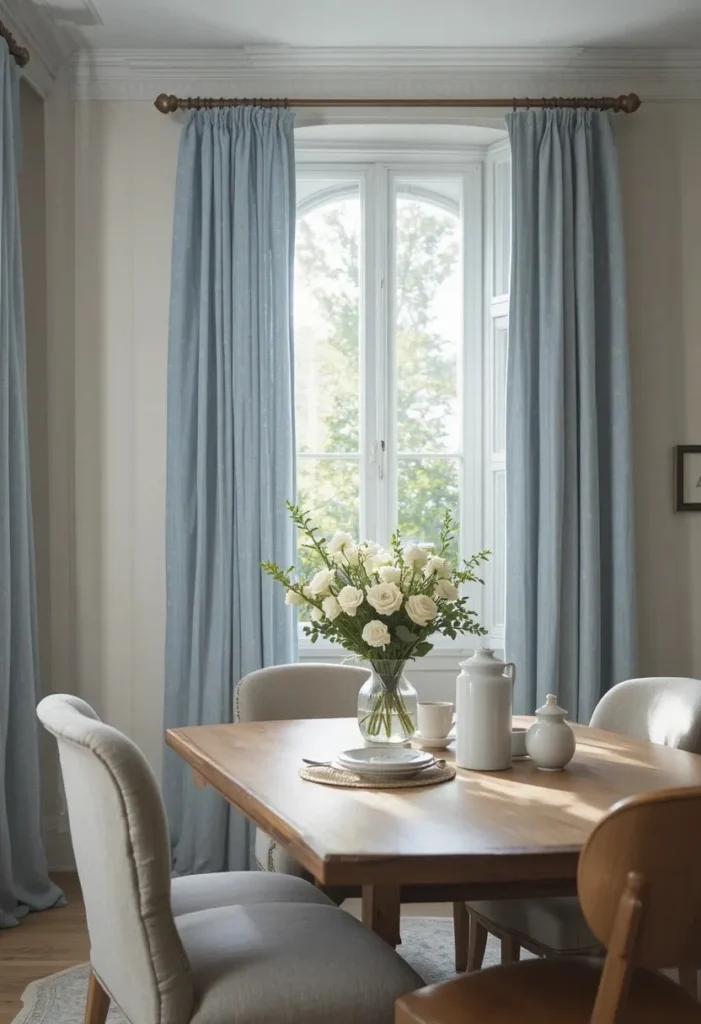
If painting feels like too much, blue curtains are the softest way to bring the colour in, and I reach for them in rented homes and in rooms I am still deciding about. Fabric adds movement and warmth, it softens hard edges, and it is easy to change when your taste moves on. I love a dusty blue linen in a dining room, because it filters daylight into a gentle blue glow at lunchtime and feels cosy after dark. Hanging the curtains higher than the window frame and letting them fall to the floor also makes the room feel taller, which is a welcome bonus. It is colour you can live with, and take down in an afternoon.
How to do it: Hang the curtain rail higher than the window frame and wider than the glass, so the curtains frame the window rather than covering it. Choose a dusty blue linen or cotton, let the fabric fall to the floor, and add a simple tie-back for daytime. If the blue feels strong, pair the curtains with cream walls and a pale table.
14. Blue Dining Room Ideas with Metallic Accents
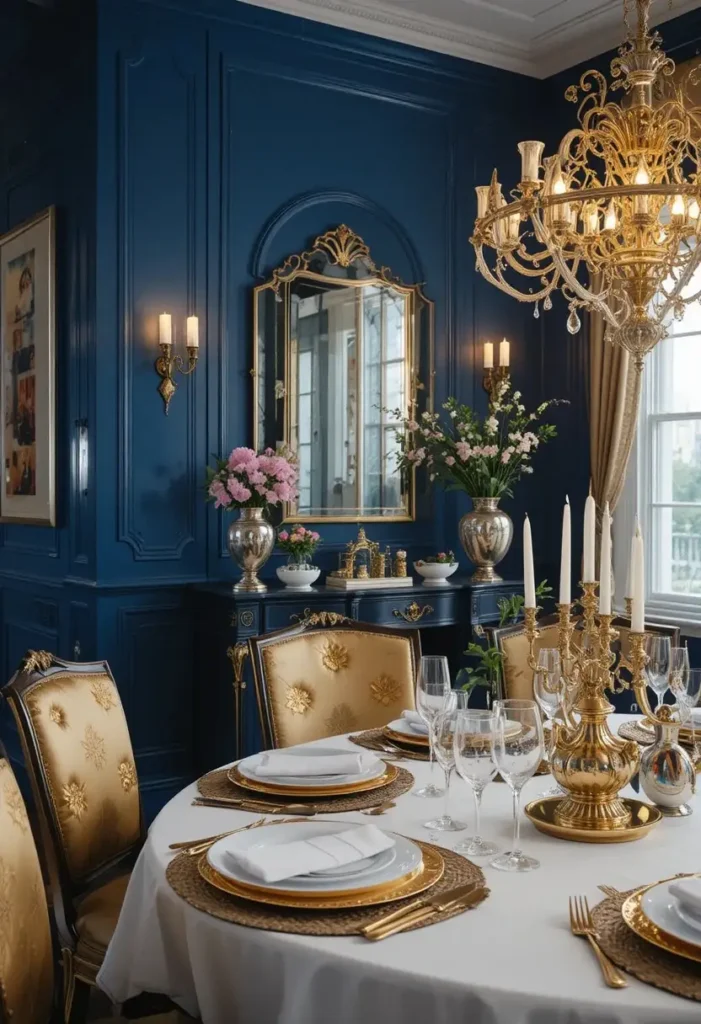
Metallic accents are the finishing touch that makes a blue dining room feel luxurious without feeling fussy, and a little goes a long way in my home. Gold, brass or brushed nickel reflect light and add warmth, which balances the coolness of blue and stops it feeling flat. I use one or two finishes at most, a brass pendant and gold picture frames, or nickel handles and a silver vase, so the room stays calm rather than glittering. A metallic tray, candleholders or the rim of a mirror are enough to lift the whole scheme. It is the easiest way I know to make an ordinary blue room feel considered and special.
How to do it: Choose one metal finish, brass for warmth or brushed nickel for a cooler look, and use it in three places: lighting, handles and one decorative piece. Keep the metal to small details, and repeat the same finish rather than mixing many. Step back and check the room in lamplight, where metallics shine best.
Frequently Asked Questions
What is the best blue for a dining room?
Soft powder blue suits small or north-facing rooms because it reflects light and feels airy. Navy and midnight blue suit larger rooms and evening dining, as they feel rich and intimate. If you are unsure, paint a large swatch and live with it for a few days in different lights before you commit.
Does a dark blue dining room feel too dark?
It can do if the room has little natural light, but warm bulbs, a pale ceiling, mirrors and wood or brass details keep it cosy rather than gloomy. Paint only one or two walls dark if you are worried, and keep the rest of the room light. Try the colour at night too, as that is when you will use the room most.
What colours go well with blue in a dining room?
White and cream keep blue feeling fresh, while natural wood adds warmth and stops it feeling cold. Brass, gold and warm metallics add a gentle glow, and soft greens or dusty pink work well in small accents. I would keep the palette to three colours at most so the room stays calm.
Can I use blue in a small dining room?
Yes, pale blues such as powder blue and sky blue can make a small dining room feel brighter and more open. Keep the furniture simple, use a mirror to bounce light around, and avoid too many competing patterns. A single blue accent wall or a set of blue chairs gives you the colour without closing the room in.
How do I stop a blue dining room feeling cold?
Add warmth through wood, warm-white bulbs, candles, linen and brass details. A wooden table, a woven runner and soft curtains all soften blue’s cool edge. I also find that choosing a blue with a warm undertone, rather than a sharp icy blue, makes the room feel welcoming from the start.
Your Blue Dining Room Checklist
- ☐ Choose your blue: pale for small rooms, navy for drama
- ☐ Test a large swatch in morning and evening light
- ☐ Keep one warm element: wood, brass or candlelight
- ☐ Repeat the blue in two or three small touches
- ☐ Hang curtains high and let them fall to the floor
- ☐ Add a dimmer so the light suits every meal
- ☐ Step back at night and check the room feels calm
Conclusion
A blue dining room does not need a big budget or a complete redesign to feel calm, stylish and inviting. Start with the change that appeals most, a soft blue wall, a set of blue chairs, or a pair of dusty-blue curtains, and let the room grow around it. Test your blue in morning and evening light, keep one warm element in the room, whether wood, brass or candlelight, and trust your own sense of what feels restful.
I hope these fourteen ideas have given you a clear starting point and the confidence to try blue in your own dining room. Pick one idea this week, make the change, and then sit down to a meal in the room you have created. When the light softens, the table is set and everyone lingers a little longer, you will know the blue was worth it.
4 Comments