
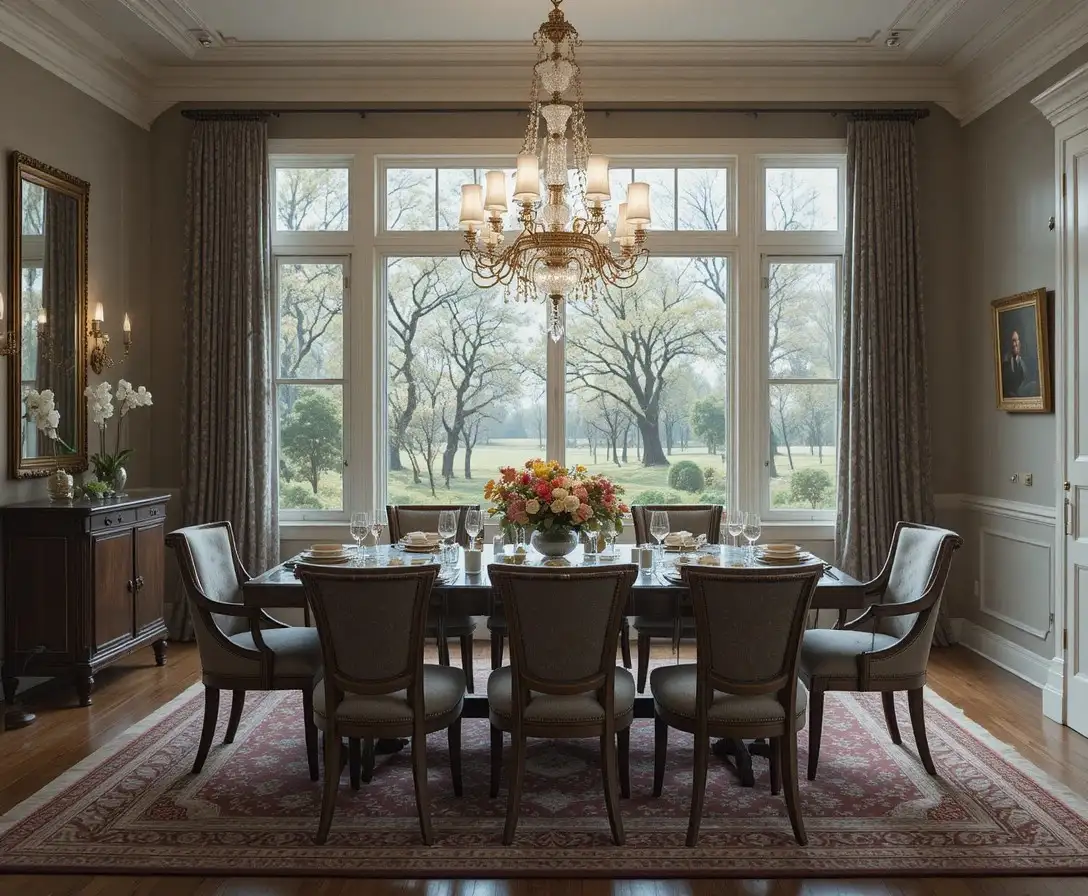
14 Dining Room Table Ideas That Make Your Space Feel Warm, Stylish, and Inviting
Does your dining area feel a little empty, mismatched, or like it’s missing that cozy “gather here” feeling? You’re not alone. A dining table isn’t just furniture—it’s where conversations flow, meals are shared, and everyday moments turn into memories. The right table can completely shift how your space looks and feels. These dining room table ideas will help you create a space that feels warm, functional, and beautifully put together without feeling overwhelming.
Your dining room should naturally invite people to sit, relax, and connect. Whether your style leans modern, rustic, or minimal, the table sets the tone. With the right shape, material, and styling, even a simple setup can feel intentional, balanced, and effortlessly beautiful every day.
1. Solid Wood Dining Table for Timeless Warmth
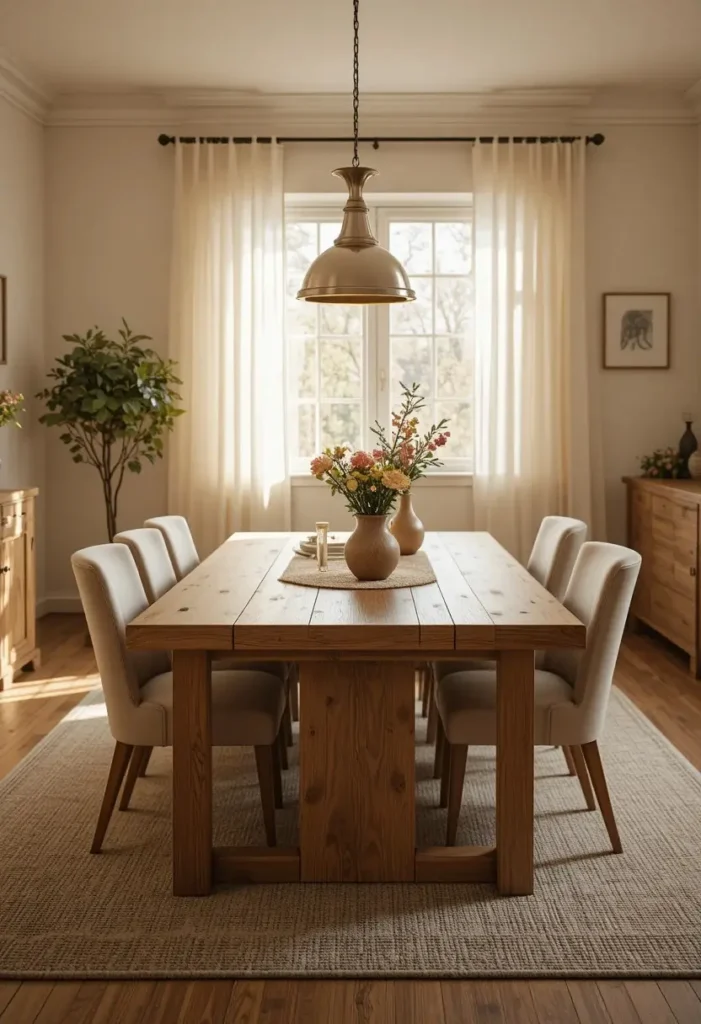
I have never regretted choosing solid wood for our dining table, because it seems to get better with every shared meal. Oak feels calm and pale, walnut brings a deeper note, and teak has a warm, honeyed glow in morning light. I love running my hand along the grain before I set the table, because no two boards ever look quite the same. That small variation is what makes the room feel lived in, rather than staged for a photograph. Scratches happen with children and homework, yet a quick oil usually brings the surface back to life. It will be here for birthdays and slow Sunday lunches for years.
How to do it: Choose oak for a pale, calm room, walnut for depth, or teak for warmth. Check the grain in daylight, sit at the table before buying, and leave 60 centimetres per person. Oil the top twice a year, use placemats for hot dishes, and wipe spills straight away.
2. Round Dining Table for Intimate Gatherings
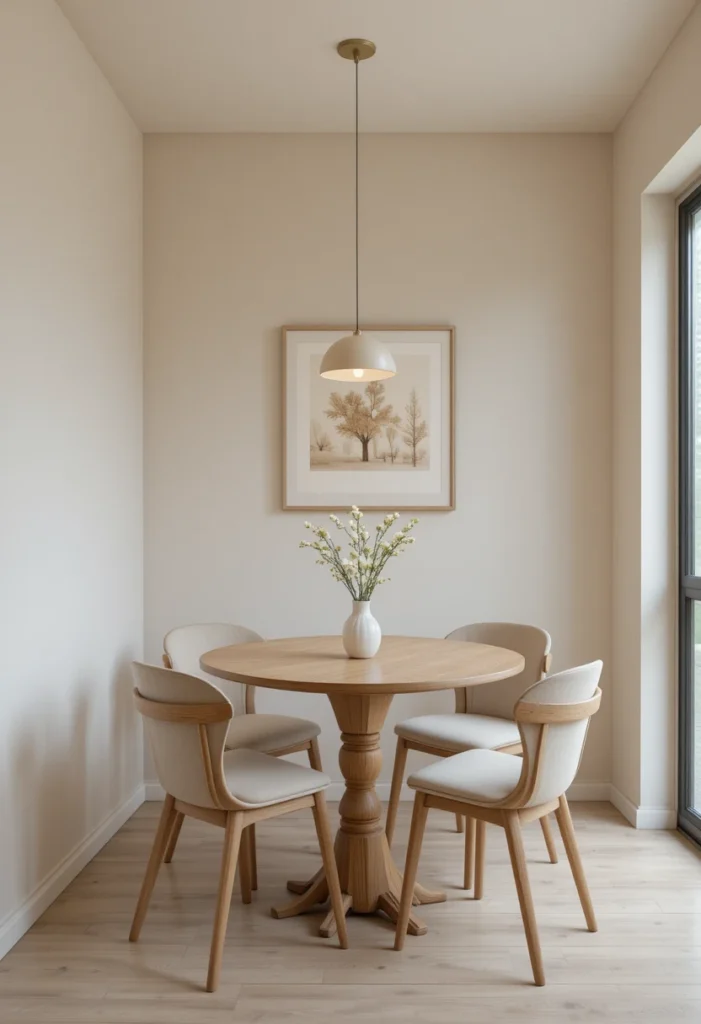
A round table changed how we eat together, because nobody sits at the head and nobody is tucked into a corner. Everyone can see everyone else, which makes conversation flow more easily, even on tired weeknights. I noticed it most at my daughter’s birthday, when eight of us squeezed round, passed dishes hand to hand, and nobody had to stretch across a corner. The soft curve also helps in a smaller room, because there are no sharp corners to bump into in the dark. If you love the shape as much as I do, these round dining table decor ideas will help you style the centre without crowding it.
How to do it: Measure the room and leave at least 75 centimetres behind each chair. Choose a 120-centimetre table for four people, or 150 centimetres for six. Keep the centrepiece low, under 25 centimetres, so faces stay visible. Pair it with curved or armless chairs, and add a round rug that extends 60 centimetres beyond the table edge.
3. Minimal Dining Room Table Ideas with Clean Lines
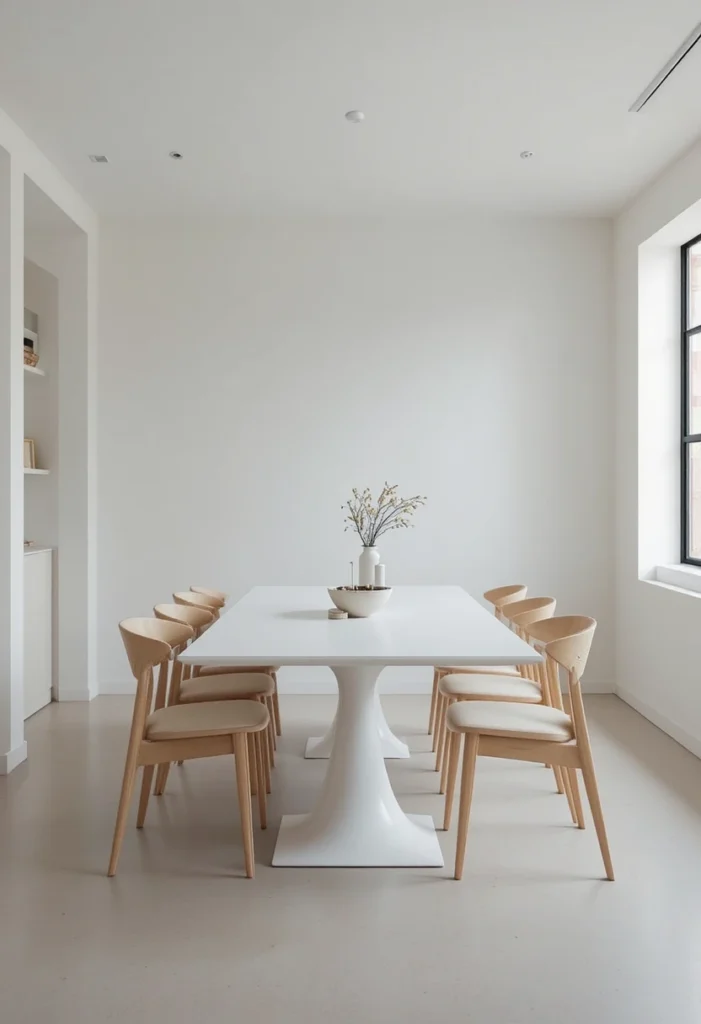
I used to think minimal meant cold, until I cleared our table and realised how much calmer breakfast felt. A table with clean lines and a quiet finish gives the eye somewhere to rest, and the room suddenly feels larger. Light wood, soft white, or pale grey all work, as long as the surface is not fighting the chairs, the floor, and the light for attention. I keep one vase, one candle, or one bowl on ours, and I put everything else away after each meal. That small habit stops clutter from creeping back, and it makes the table feel intentional every single day.
How to do it: Pick a table with straight legs, a flat top, and no extra carving. Match the finish to your floor or keep it one tone lighter. Choose one low centrepiece, store the rest out of sight, and wipe the surface each evening so the clean look lasts.
4. Glass Dining Table for a Light, Airy Feel
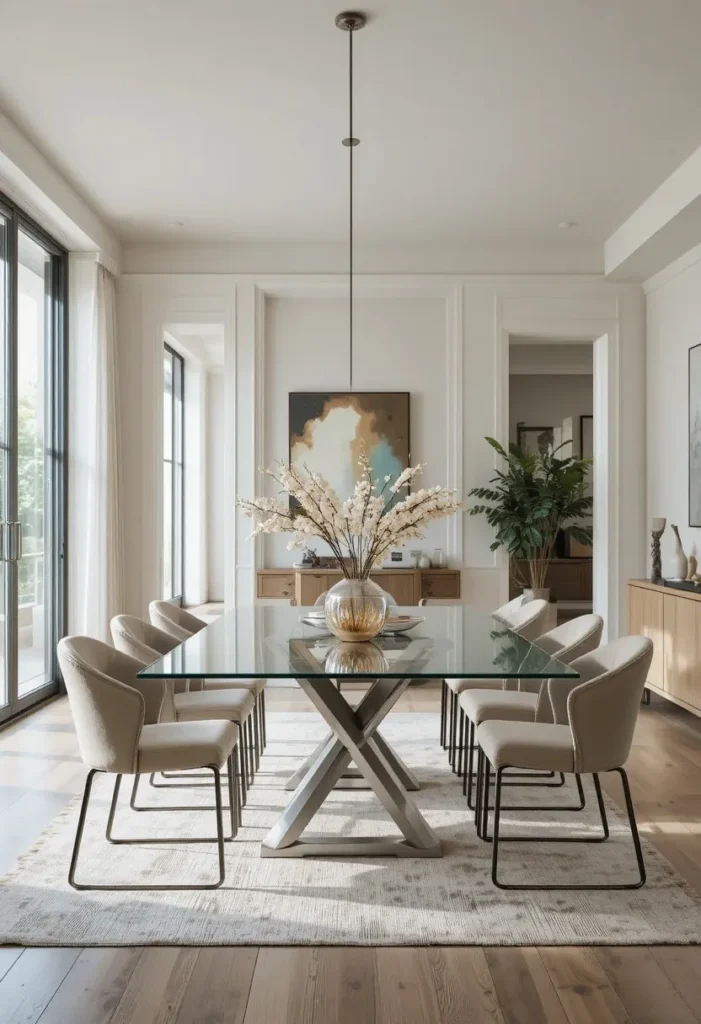
When our dining corner felt dark and cramped, a glass top was the first change that actually made a difference. Light passes straight through it, so the table almost disappears and the room feels wider than it really is. I was worried it would feel cold, but a woven rug underneath, linen placemats, and warm wood chairs soon softened it. It also shows every fingerprint, which I will not pretend is charming, so I keep a microfibre cloth in the sideboard drawer. For a small flat or a dining area borrowed from the living room, that lightness is worth the extra wiping.
How to do it: Choose tempered glass at least 10 millimetres thick, with a sturdy metal or wood base. Lay a textured rug underneath, keep the centrepiece low and light, and clean the top with glass spray and a microfibre cloth twice a week.
5. Extendable Table for Flexible Living
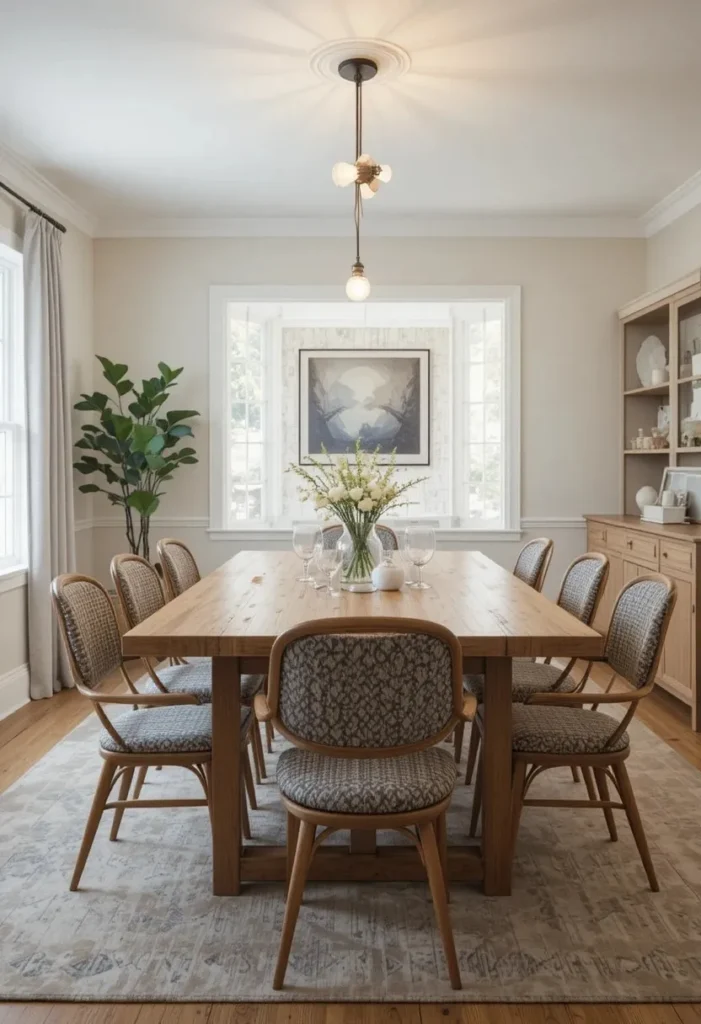
Our extendable table is the hardest-working piece of furniture we own, and I only truly appreciated it at Christmas. Most days it seats four of us comfortably, with room for homework, laptops, and a vase that never quite stays upright. When friends arrive, I pull out the leaves, add two chairs from the hallway, and suddenly we have space for eight. The trick is choosing a mechanism that one person can open easily, because a clever table is useless if it needs two strong adults and a manual. I test it in the shop, check that the leaves match the top exactly, and store them somewhere I can actually reach.
How to do it: Measure the table closed and fully open, and check both sizes fit with chairs pulled out. Test the leaf mechanism yourself, store spare leaves flat and dry, and keep two folding chairs nearby for surprise guests.
See More Ideas: 16 Color Drenched Dining Room Ideas That Make Every Meal Feel Like an Event
6. Rustic Farmhouse Table for Cozy Charm
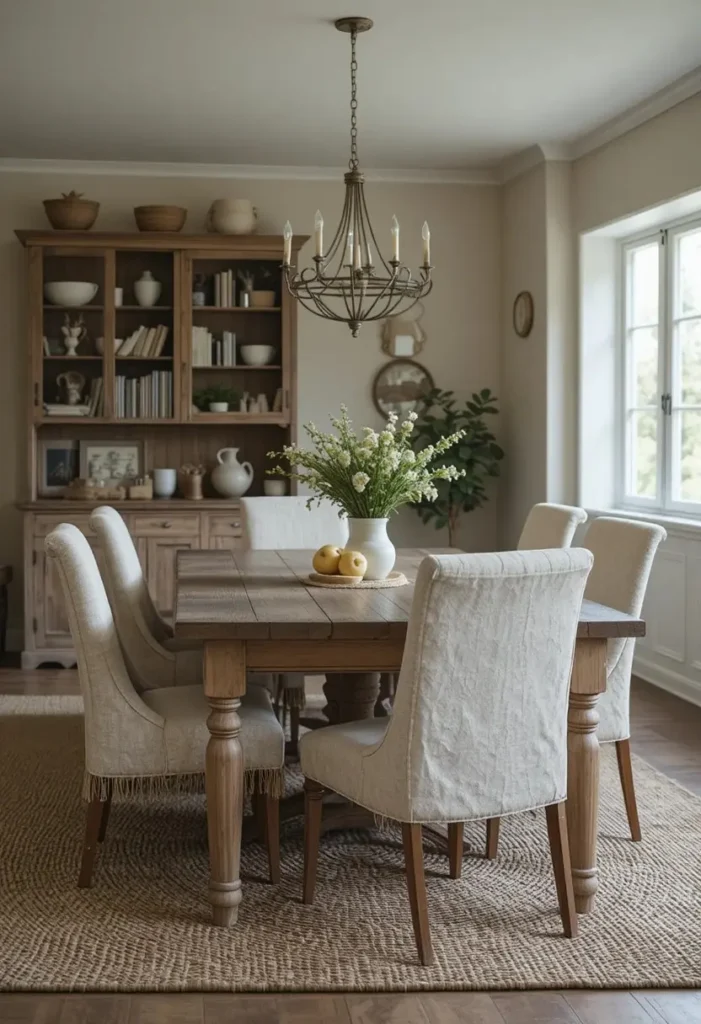
A farmhouse table reminds me of long lunches at my grandmother’s house, where nobody hurried and the table was always slightly sticky with jam. The slightly worn wood, the thick legs, and the honest, unpolished finish make a room feel relaxed the moment you walk in. I love how it forgives everyday life, because a new scratch simply joins the others and becomes part of the story. Linen chairs, a simple runner, and a jug of garden flowers keep it soft, while black metal details stop it feeling too sweet. It suits families best, in my experience, because nobody worries about coasters, elbows, or a little spilled soup.
How to do it: Look for solid pine or reclaimed wood with a distressed or matte finish. Pair it with linen or slipcovered chairs, add a cotton runner, and set the table with stoneware, wooden boards, and fresh flowers from the garden.
7. Marble Top Table for Elegant Style
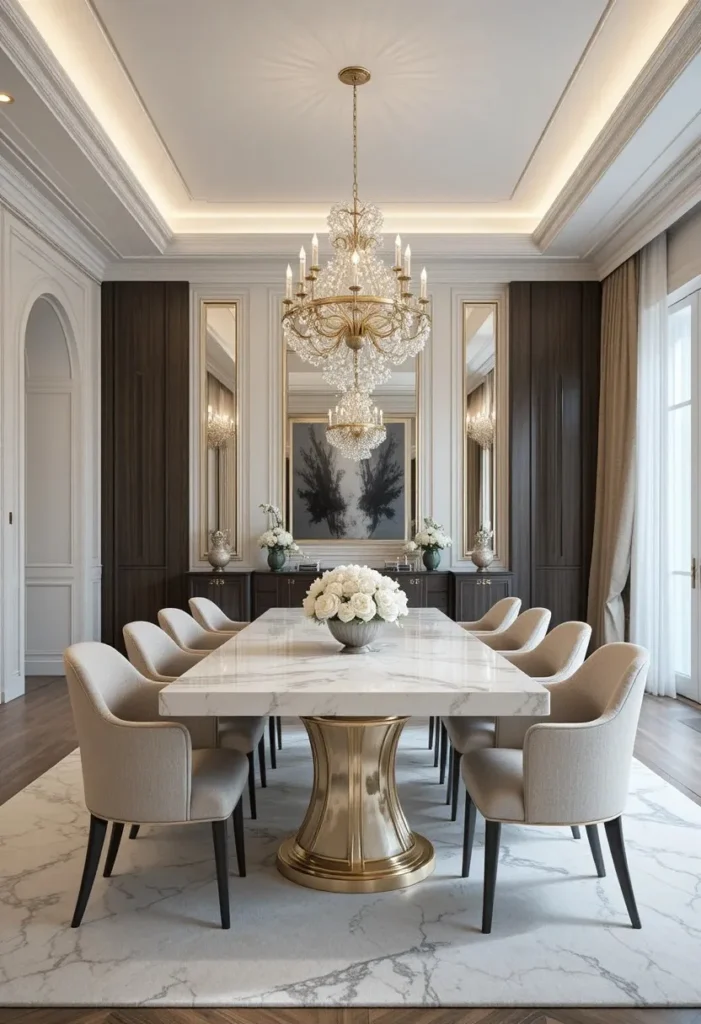
I fell for marble slowly, after seeing the same white table in a friend’s flat look elegant at breakfast, lunch, and a candlelit supper. The soft grey veining catches the light, and the cool surface feels luxurious under your hands, even on an ordinary Tuesday. I do treat it with respect, though, because red wine, lemon, and hot pans can all leave their mark if I am careless. That is why I use coasters without fail, wipe spills straight away, and keep a simple runner down the middle. Keep the chairs and the rest of the room quiet, and the marble can carry the whole look by itself.
How to do it: Choose white marble with soft grey veining for a timeless look. Seal the surface when it is new and again each year, use coasters and trivets every time, and keep the chairs plain so the stone stays the focus.
8. Dark Wood Dining Table for Depth and Drama
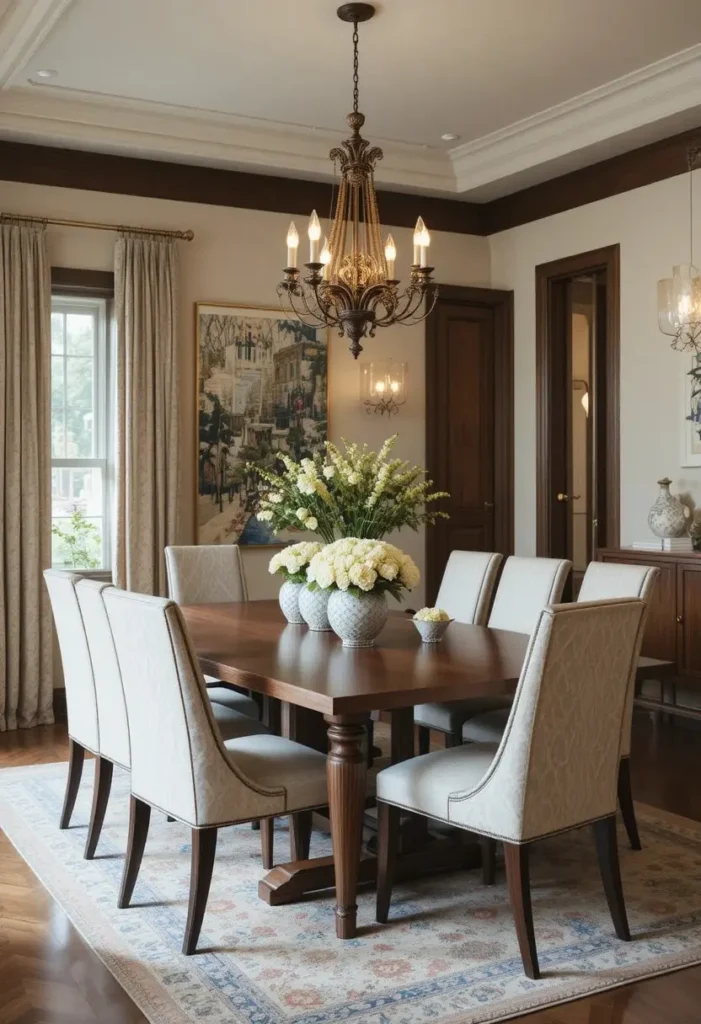
A dark wood table was my brave choice, and I still remember standing in the shop wondering if walnut would swallow our small room. It did the opposite, because the deep brown grounded the space, made the walls feel taller, and gave the room a quiet sense of occasion. I balance it with pale linen chairs, a cream runner, and soft lamplight, which keeps the mood cosy rather than heavy. I have also paired it with deep blue walls, and the blue dining room ideas I return to show how well that rich contrast can work. If your room feels pale, a dark table may be the anchor it needs.
How to do it: Choose walnut, espresso, or deep mahogany, and check the finish in your own light. Add pale chairs, a light runner, and warm lamps. Leave the wood mostly bare at mealtimes, and polish it once a month.
9. Mixed Material Table for a Modern Edge
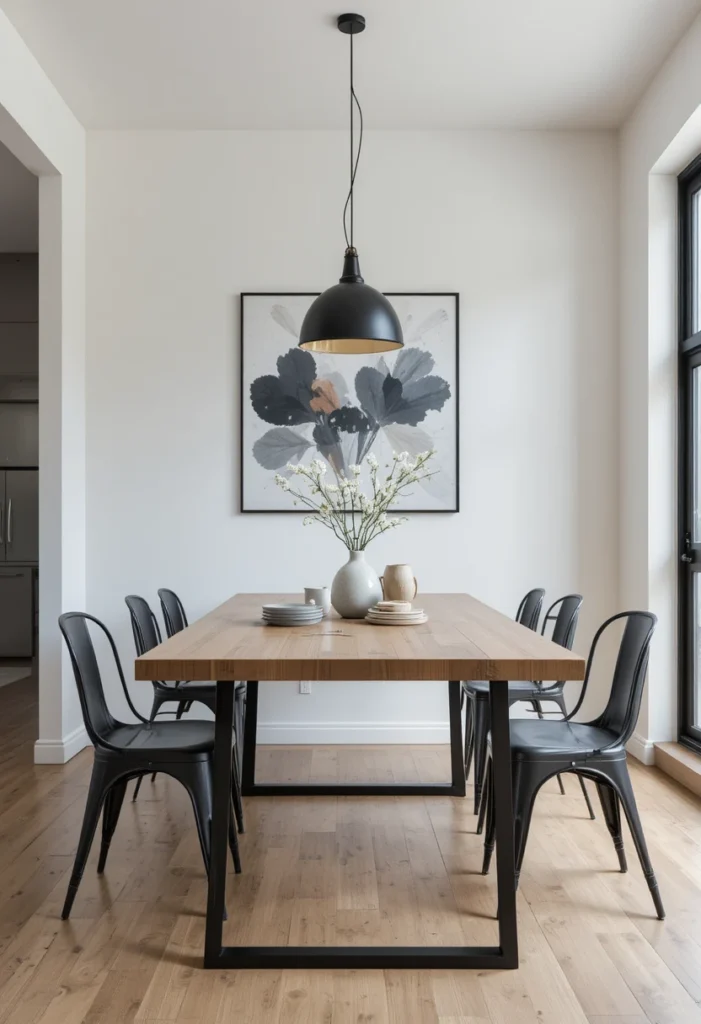
I like a mixed-material table because it lets me bring two styles together without the room feeling confused. A warm wood top on slim black metal legs, for example, feels both natural and modern, and it suits our house perfectly. The contrast does the decorating for you, so I keep everything else simple: plain chairs, one vase, and a linen runner. My one rule is to stop at two main materials, because a third metal, a third wood, or a patterned stone can quickly make the table look busy. Choose materials you already have elsewhere in the room, and the table will feel considered, not accidental.
How to do it: Pick two materials, such as wood and black metal, or stone and brushed steel. Repeat one of them in the chairs or light fitting, keep the tabletop clear, and check that the base is stable on your floor.
10. Small Space Dining Table Ideas That Save Room
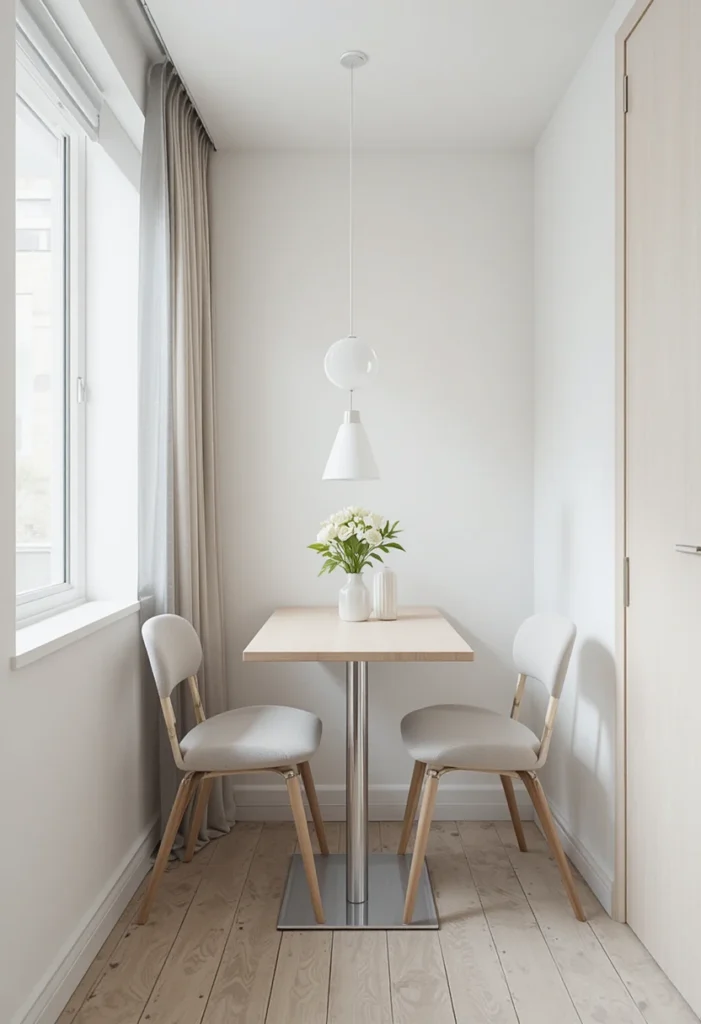
In a small flat, the table has to earn its floor space, and I learned that the hard way after buying one that was simply too wide. A slim rectangular or neat round table can seat four without blocking the walkway to the kitchen. I measure twice now, sit in the chair, pull it out, and check I can stand without hitting the wall. Light colours help, too, because a pale top reflects the light and makes the corner feel open rather than crowded. If your table shares a room with your sofa, these living room and dining room combo ideas can help you zone the space.
How to do it: Measure the space with chairs pulled out, and leave 75 centimetres behind each one. Choose a slim, light-coloured table, add armless chairs that tuck fully under, and use a wall mirror or pale rug to open the corner.
See More Ideas: 20 Green Dining Room Ideas to Create a Fresh and Inviting Space
11. Pedestal Base Table for a Clean Look
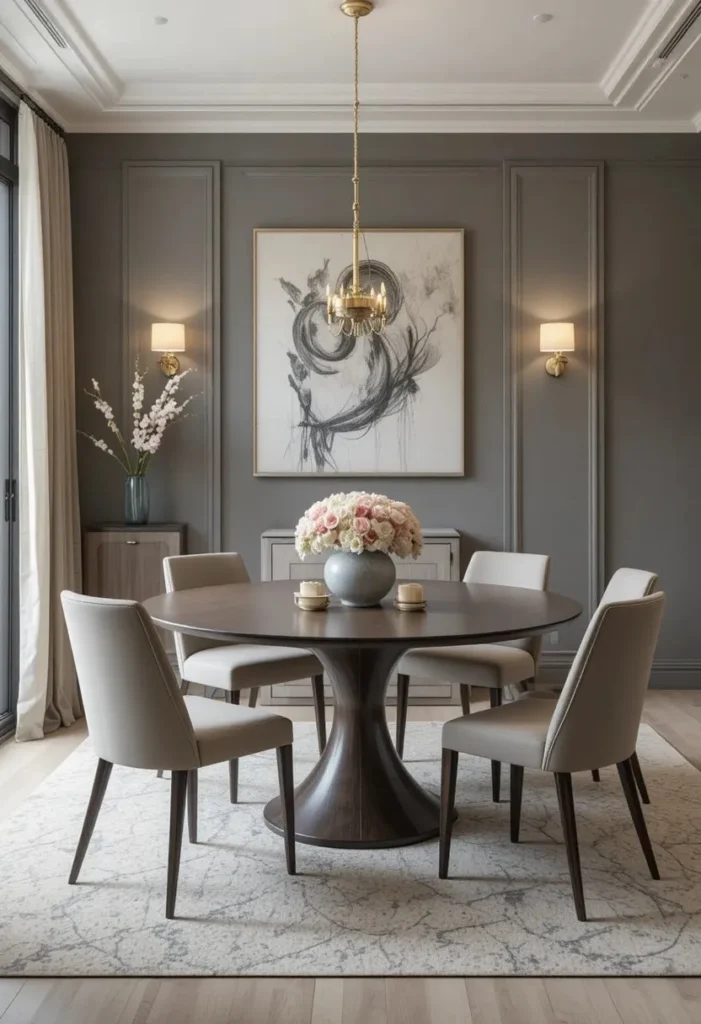
I chose a pedestal table after one too many bruised shins on corner legs, and I have never looked back. With a single central base, there is nothing to bump into, and I can slide chairs in from any side without a leg getting in the way. It also makes the floor look clearer, which matters in a small room, and it lets me squeeze in an extra guest at the end. Round and oval shapes suit it best, in my view, because the curve echoes the base and the whole table feels balanced. I keep the chairs simple, so the clean shape can speak for itself.
How to do it: Check that the base is heavy and wide enough to stop the table wobbling. Sit at every place and check your knees clear the base. Choose simple chairs, centre a low arrangement, and test the table with a full place setting.
12. Oval Dining Table for Soft Elegance
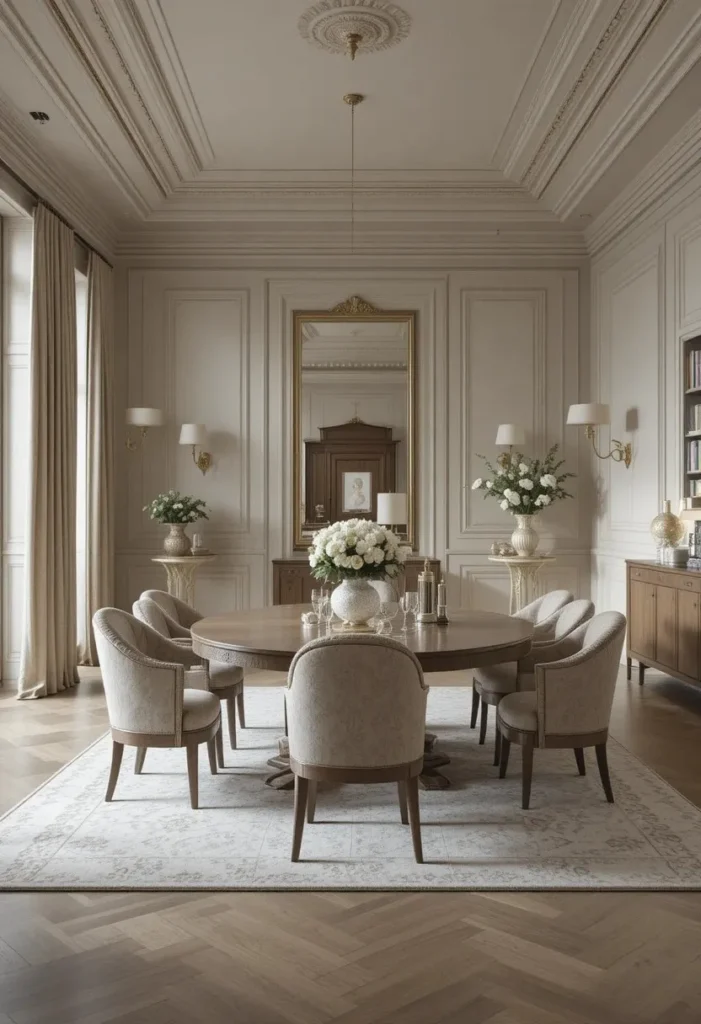
An oval table feels like the best of both worlds to me, because it has the softness of a round table and the length of a rectangle. There are no corners to catch your hip as you pass, yet there is still plenty of room for serving dishes down the middle. I first saw one at a friend’s house, where ten of us sat comfortably, and I remember thinking how relaxed the whole evening felt. It suits a medium or large room best, and it looks lovely with a long, low arrangement of greenery or candles running along the centre. If you host often, the extra length is a gift.
How to do it: Measure the room and leave space to walk all round the table. Centre the table under the light, keep the centrepiece long and low, and place serving dishes in the middle so everyone can reach them.
13. Two-Tone Dining Table for Subtle Contrast
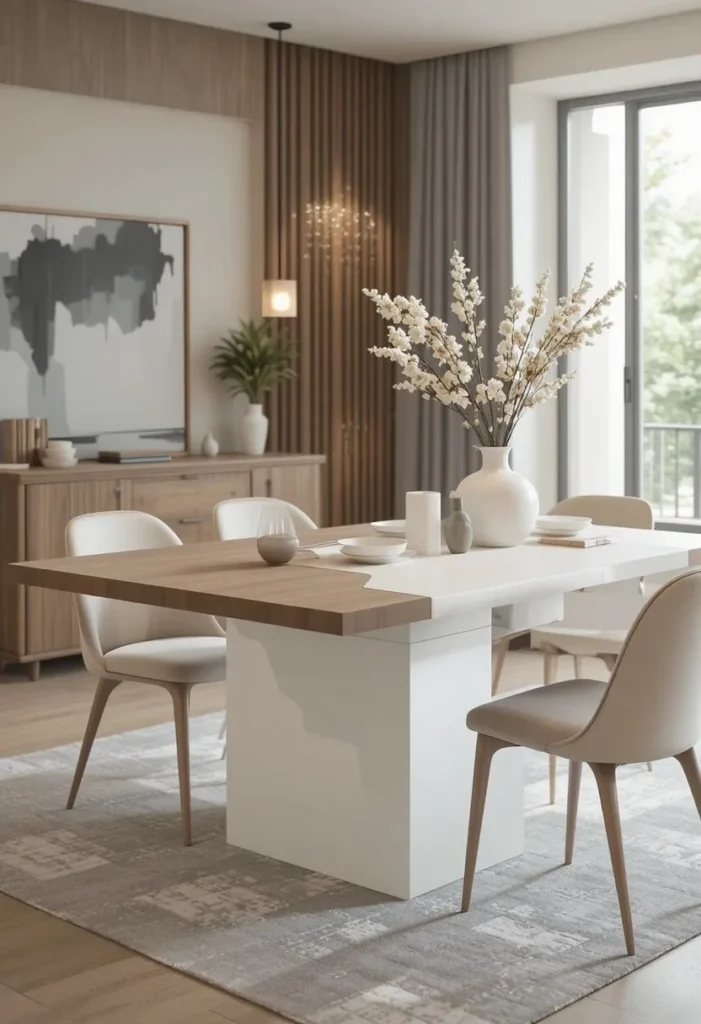
A two-tone table is my quiet way of bringing contrast into a room without painting a wall or buying a bold new sideboard. A white base with a wood top, for example, feels fresh and light, yet the wood keeps it warm and grounded. I repeat one of the tones elsewhere, usually in the chairs, the light fitting, or a picture frame, so the table feels connected to the room. It is a useful choice if you like a calm room but still want a little personality at the centre of it. Keep the rest of the palette simple, and the contrast will feel intentional rather than accidental.
How to do it: Choose one tone for the top and a contrasting tone for the base. Repeat one tone in the chairs or a nearby frame, keep the tabletop simple, and check both tones in daylight before you commit.
14. Statement Dining Table as a Focal Point
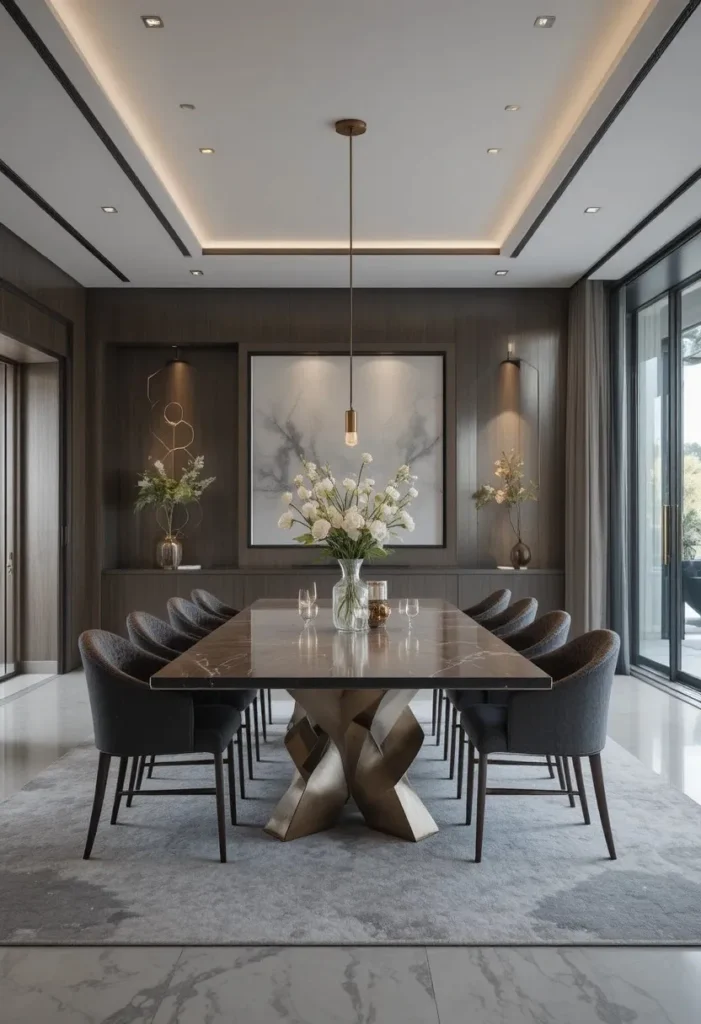
A statement table is not for everyone, but I love how one bold piece can carry a whole room, even when everything else stays quiet. A sculptural base, an unusual shape, or a striking stone top becomes the first thing guests notice, and it gives the room its character. I saw one with a curved, almost wave-like base in a showroom, and I stood there far longer than I meant to, just looking at it. The secret is restraint elsewhere, because simple chairs, a low centrepiece, and plain walls let the table do the talking. Choose the table first, then build the room gently around it.
How to do it: Choose the statement table first, then keep chairs plain and low. Leave the top mostly clear, add one low centrepiece, and check the table from the doorway, where guests will see it first.
Frequently Asked Questions
What size dining table do I need for my room?
Allow about 60 centimetres of table edge per person, and leave at least 75 centimetres behind each chair so people can pull out and stand up comfortably. A 120-centimetre round table seats four, while a 180-centimetre rectangular table usually seats six. Measure the room with the chairs in place before you buy, because a table that looks right in a showroom can feel very different at home.
What shape dining table is best for a small space?
A round or oval table often works best, because the curved edges improve flow and there are no corners to bump into. A slim rectangular table is also a good choice if it sits against a wall or in a narrow room. Whichever shape you choose, pick armless chairs that tuck fully under the table, and keep the centrepiece low.
How do I make a dining table feel warm and inviting?
Start with a warm material, such as solid wood, and add texture with linen placemats, a cotton runner, and a low arrangement of flowers or greenery. Soft, warm lighting makes a bigger difference than almost any decoration, so use a dimmer or candles in the evening. Finally, keep the table clear between meals, so it always looks ready for someone to sit down.
How can I protect a wood or marble dining table?
Use placemats, coasters, and trivets every time, and wipe up spills straight away, especially red wine, lemon, and hot food. Oil a wood table twice a year, and seal marble when it is new and again each year. A runner down the centre also helps, and it can be lifted off and washed after a messy meal.
Should the dining table match the chairs?
They do not need to match exactly, and a little contrast often looks more interesting. I like to repeat one element, such as the wood tone, the metal finish, or a colour from the chairs, so the set feels connected. Keep the seat height the same across the chairs, though, so everyone sits comfortably at the same level.
Your Dining Room Table Checklist
☐ Measure the room with chairs pulled out
☐ Allow 60 centimetres per person at the table
☐ Leave 75 centimetres behind each chair
☐ Choose a shape that suits how you eat
☐ Check the table in daylight before buying
☐ Test the leaf or pedestal base for wobble
☐ Use placemats, coasters, and trivets every time
☐ Keep the centrepiece low, under 25 centimetres
☐ Add one warm texture: linen, wood, or greenery
☐ Clear the table between meals
☐ Oil wood twice a year, or seal marble yearly
☐ Step back to the doorway and look at the whole table
Conclusion
A dining table is where so much of home life happens, from hurried weekday breakfasts to long, unhurried Sunday lunches, and the right one makes all of it easier. I would rather choose a table that fits how we actually eat, sit, and gather than one that simply looks good in a photograph. Measure the room, sit in the chairs, and picture your busiest evening, not just your quietest morning. When the size, shape, and material feel right, the rest of the room usually follows, one small, thoughtful choice at a time.
Start with one idea from this list, try it in your own room, and let the table earn its place at the centre of your home. Over time, it will hold far more than plates and glasses. It will hold homework, birthday candles, board games, and the everyday conversations that turn a house into a home.
2 Comments