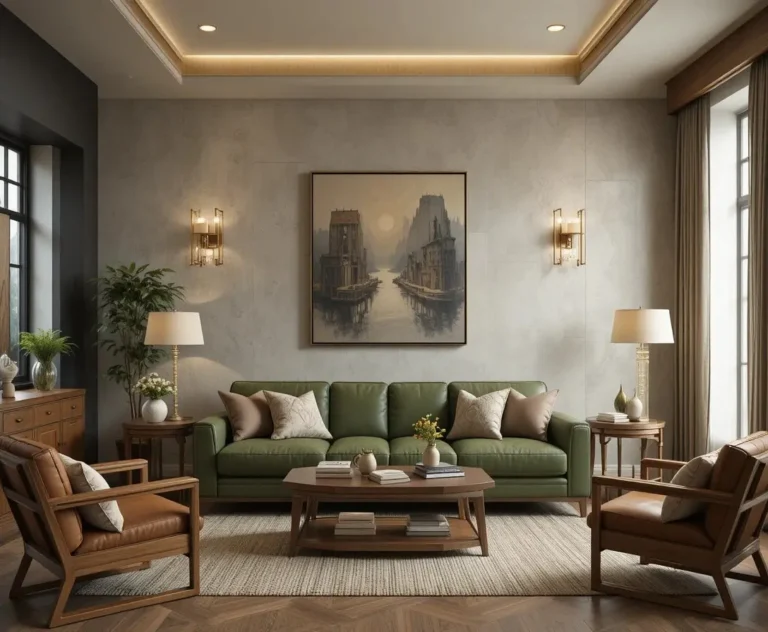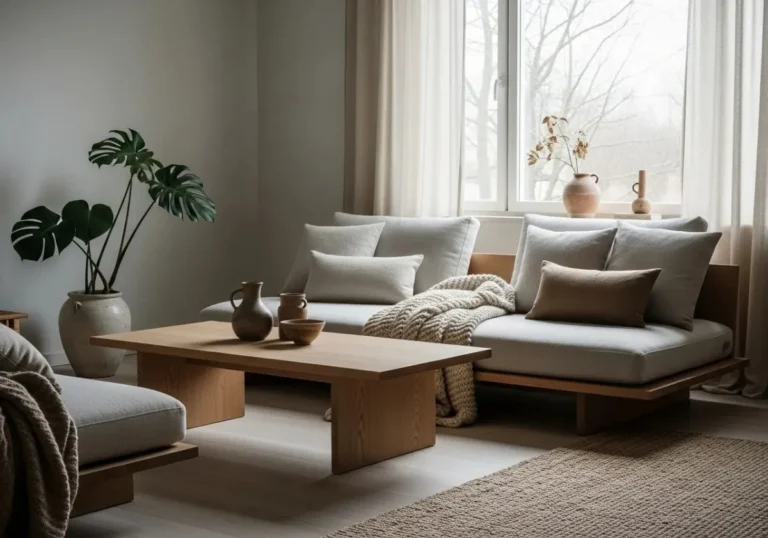
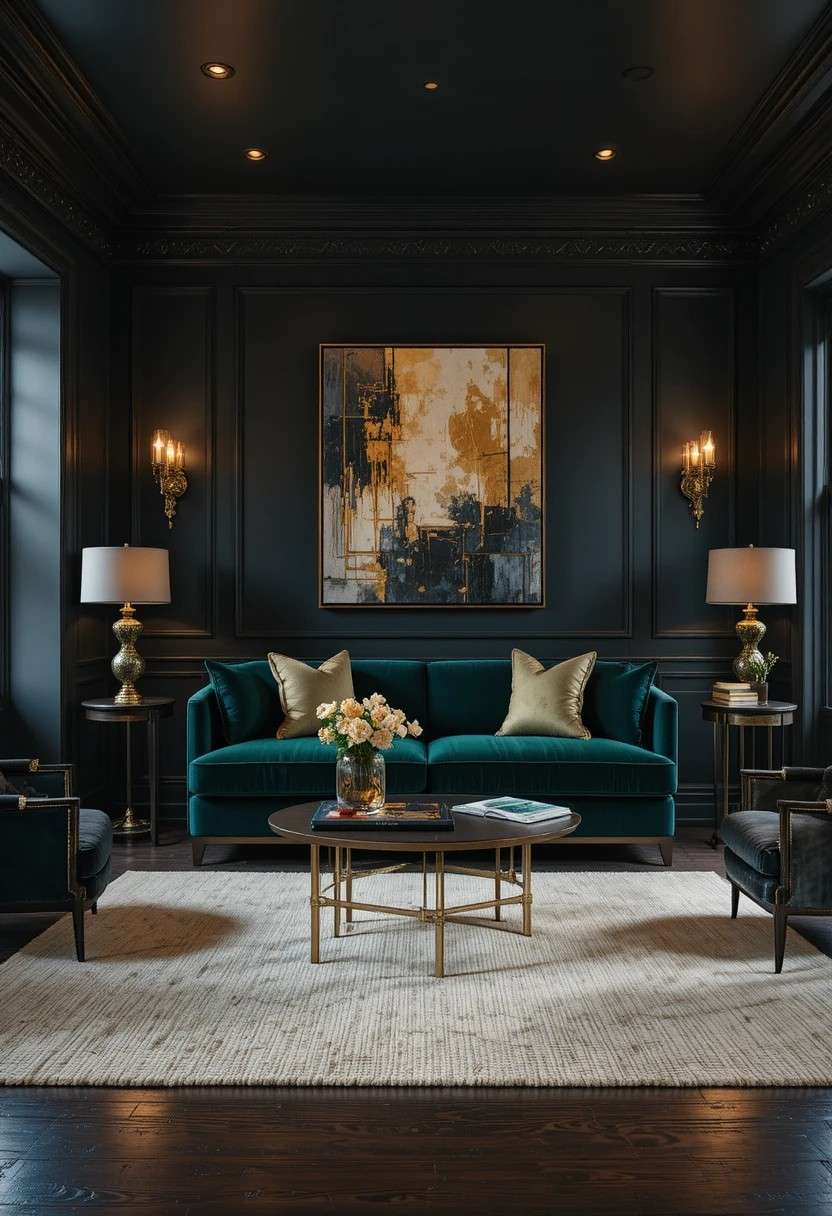
25 Modern Living Room Ideas That Will Transform Your Home completely
The modern living room is having its most exciting moment in a generation. After years in which the dominant interior design conversation was defined by restraint — minimalism, neutral palettes, the cult of the empty surface — the pendulum has swung powerfully and joyfully in the opposite direction. Pinterest data tells the story with precision: searches for eclectic maximalism are up 215%, vintage maximalism up 260%, Art Deco interiors up 805%, and hand-painted furniture up 135%. Across every major design publication and in every major trend report, the message is consistent: the beige era is over, the era of personality-driven, character-filled, boldly individual living room design has begun.
The 25 modern living room ideas in this guide cover the full range of contemporary living room aesthetics — from the quiet luxury of the neutral palette to the theatrical drama of the colour-drenched room, from the disciplined calm of Japandi to the joyful excess of the maximalist interior.
What Makes a Living Room ‘Modern’
The word ‘modern’ in interior design does not mean minimalist, neutral, or contemporary in the sense of new. A modern living room is defined by the following qualities:
- Intentionality — every object, every colour, every material has been chosen rather than defaulted to
- Personality — the room reflects the specific tastes and interests of the people who inhabit it
- Quality over quantity — fewer, better-chosen pieces rather than more, lesser ones
- Material honesty — natural materials celebrated for what they are, not disguised behind laminate and veneer
- Layering — texture, pattern, and light used in combination to create rooms with genuine depth and atmosphere
- Functionality — the room serves the life actually lived in it, not a idealised version of how a room should be used
- Sustainability awareness — an increasing preference for vintage, pre-loved, handmade, and natural-material objects over mass-produced new furniture
A modern living room can be maximalist or minimalist, dark or light, colourful or neutral, traditional in reference or contemporary in form. What it cannot be is anonymous, unconsidered, or assembled without genuine engagement with the question of what kind of room this specific person actually wants to live in.
The 25 Modern Living Room Ideas
1. The Neutral Palette Modern Living Room: Warm Whites, Greige, and Natural Linen
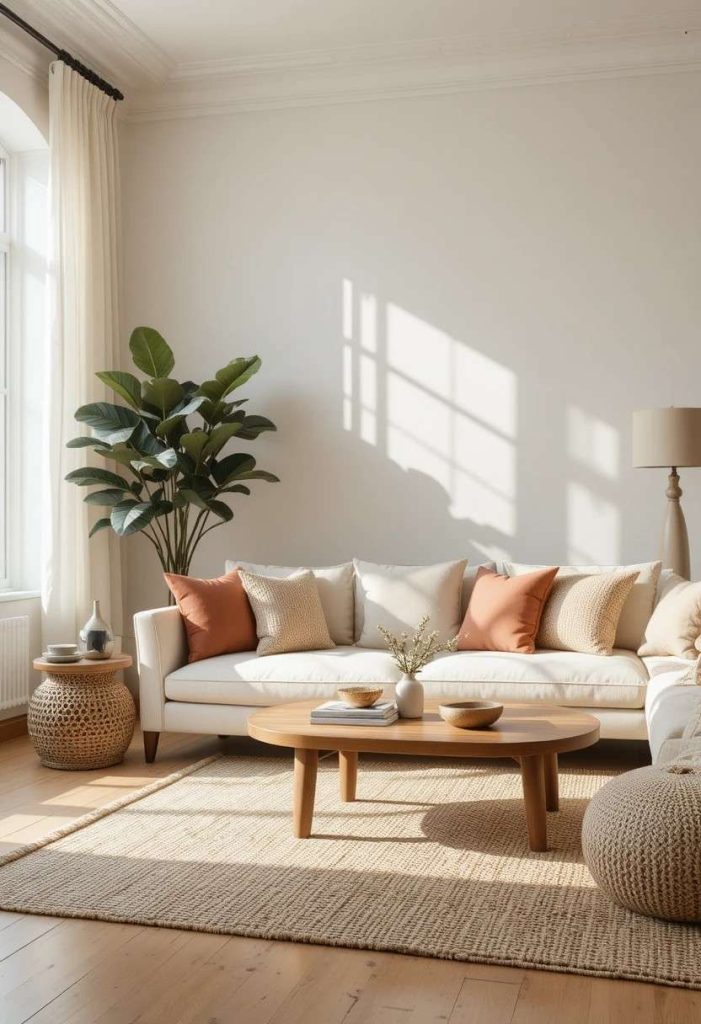
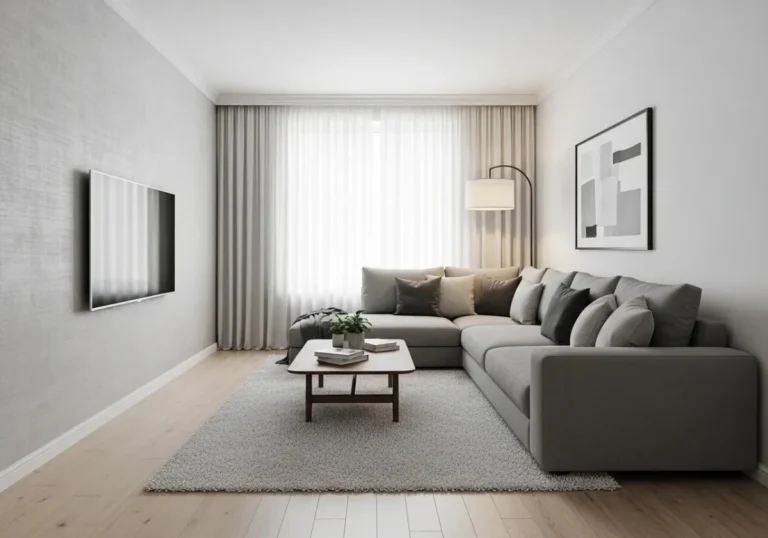
The neutral modern living room is not merely a safe default — it is a deliberate design philosophy that prioritises calm, clarity, and a quality of light that more saturated rooms can never achieve. When executed with attention to texture, tonal variation, and material quality, a neutral living room becomes one of the most sophisticated and enduringly beautiful spaces in contemporary interior design. The palette works by drawing attention to what truly matters: the architecture of the room itself, the quality of the furniture silhouettes, the interplay of natural and artificial light across surfaces, and the considered arrangement of objects that reveals a curator’s eye rather than a decorator’s budget.
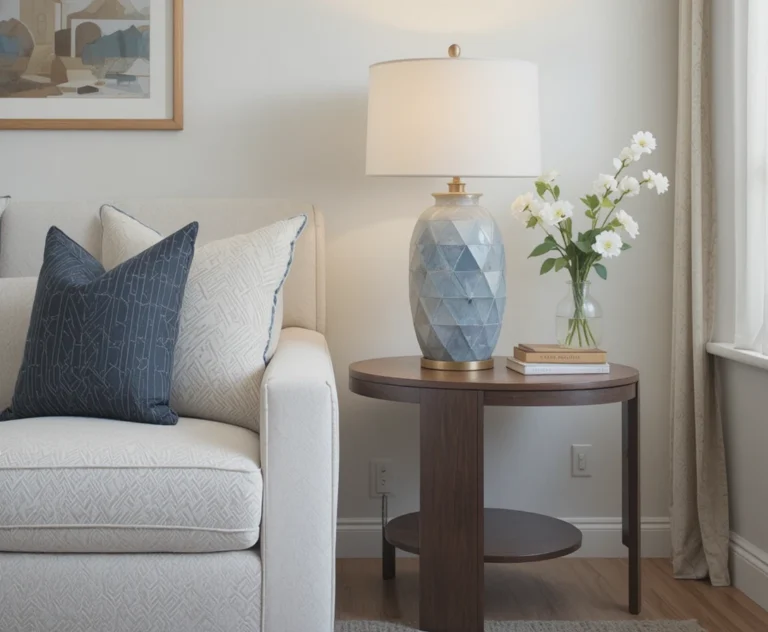
Style tip: In a neutral living room, invest in one sculptural statement piece — a handmade ceramic lamp, a large organic-form vase, or a piece of abstract art — as the single element that prevents the palette from feeling anonymous.
2. The Bold Colour Modern Living Room: Making a Statement With Saturated Walls
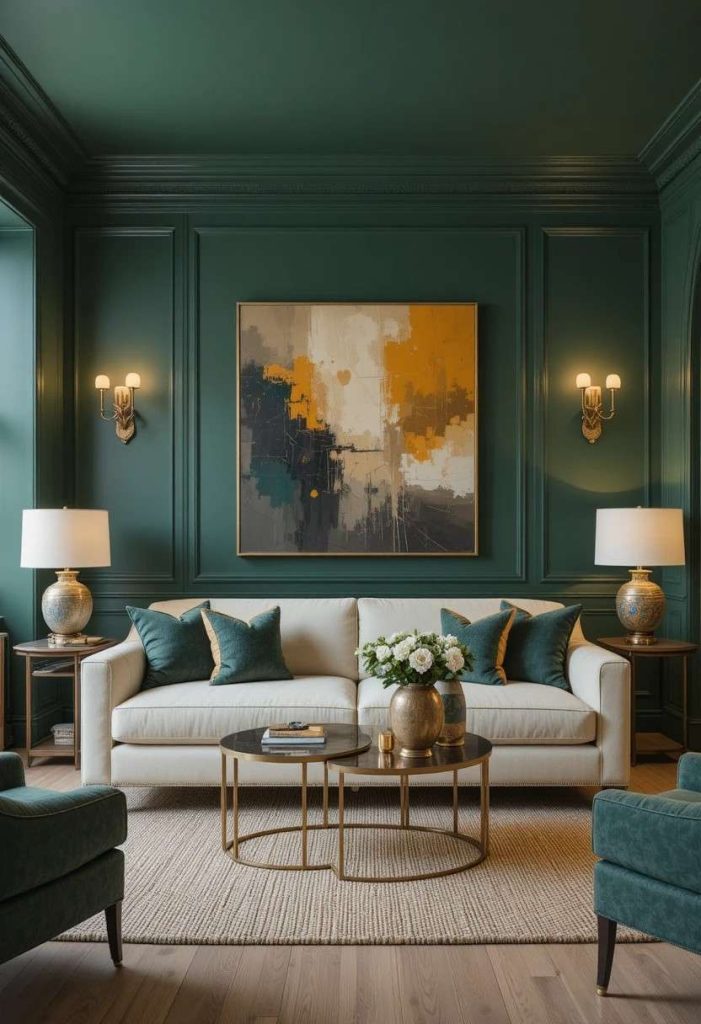
The bravest and most rewarding decision you can make in a modern living room is to commit fully to a bold, saturated wall colour. After years of the neutral palette dominating contemporary interior design, the cultural pendulum has swung powerfully toward colour — and Pinterest data confirms it, with searches for colourful living rooms, maximalist interiors, and personality-driven design surging dramatically in 2025 and 2026. A living room with deep forest green walls, rich navy, warm terracotta, or saturated plum communicates something that a neutral room never can: that the people who live here have opinions, tastes, and the confidence to express them.
Style tip: When committing to a bold wall colour, paint the ceiling, coving, and skirting in the same colour for a fully saturated, immersive effect — the fully painted-out room reads as far more intentional and design-forward than bold walls with white trim.
3. The Curved Furniture Modern Living Room: Organic Shapes for a Softer Aesthetic
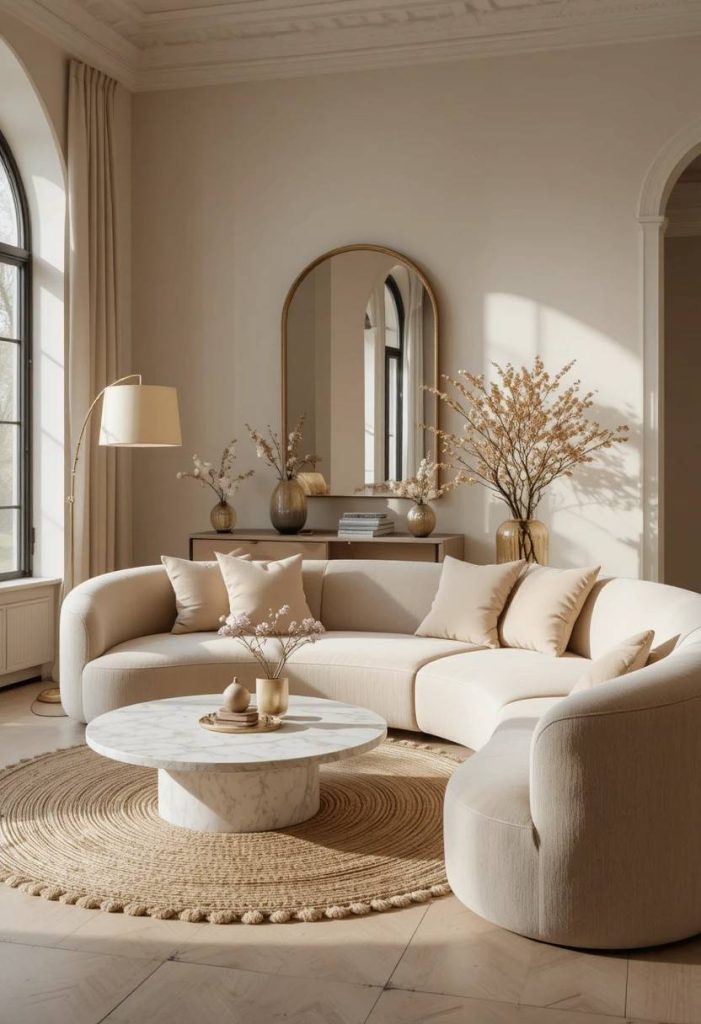
Curved and organic furniture forms have been the defining silhouette shift in contemporary living room design over the past two years, and their dominance shows no signs of diminishing as we move through 2025 and 2026. Where the previous decade’s living room aesthetic prioritised angular, linear forms — the square sofa, the rectangular coffee table, the boxy armchair — the current moment is characterised by a return to the curve. Rounded sofas with half-moon profiles, kidney-shaped coffee tables, arched floor lamps, circular occasional tables, and scalloped-edge furniture create rooms that feel simultaneously more human and more sculptural than their linear predecessors.
Style tip: Pair a curved sofa with an arched floor lamp on one side and an arched mirror on the facing wall — the repetition of the arch motif at different scales creates a visually coherent, architecturally considered room that feels designed rather than assembled.g
4. The Maximalist Modern Living Room: More is More, Done Beautifully
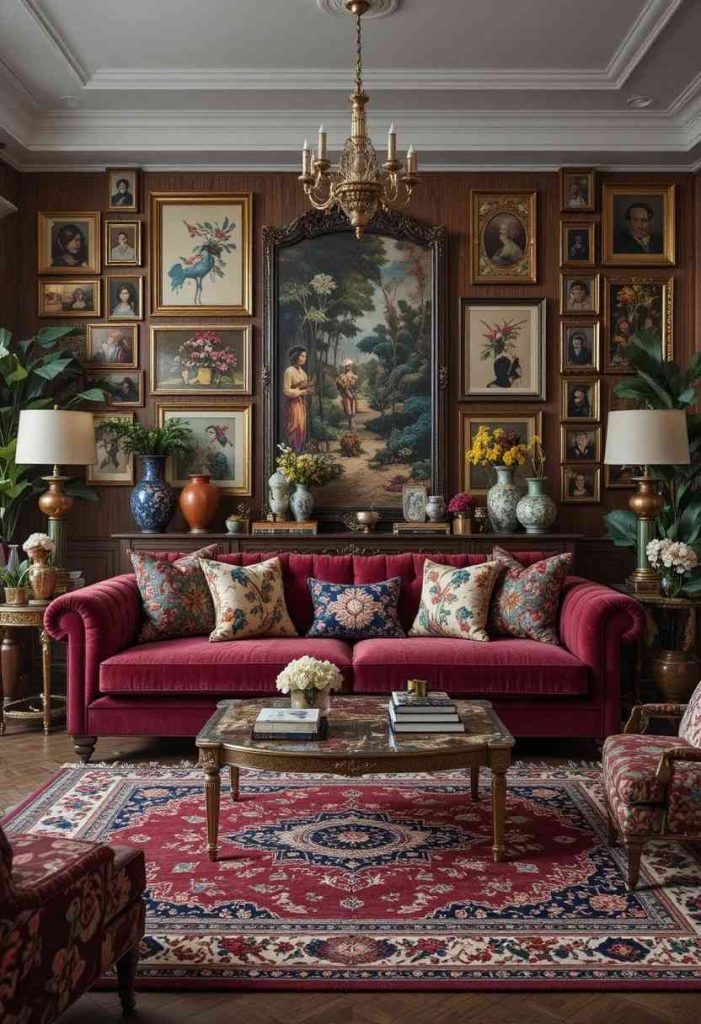
The maximalist living room is the definitive aesthetic statement of 2025 and 2026 — a fully committed, joyfully excessive, and deeply personal room that represents the most comprehensive rejection of the minimalist aesthetic that dominated interior design for the previous decade. Pinterest data shows searches for eclectic maximalism up 215%, vintage maximalism up 260%, and eclectic apartments up 630% in 2025, making maximalism not merely a design choice but a cultural movement with real momentum. The maximalist living room is not a room that has simply accumulated too much — it is a room where every object, every pattern, and every surface has been deliberately chosen for its contribution to a rich, layered narrative.
Style tip: Before adding anything new to a maximalist living room, ask: does this object speak to something already in the room? If it introduces a completely unrelated colour, pattern, or material without referencing anything else, it is clutter. If it echoes and extends something already present, it is maximalism.
5. The Biophilic Modern Living Room: Bringing Nature Fully Indoors
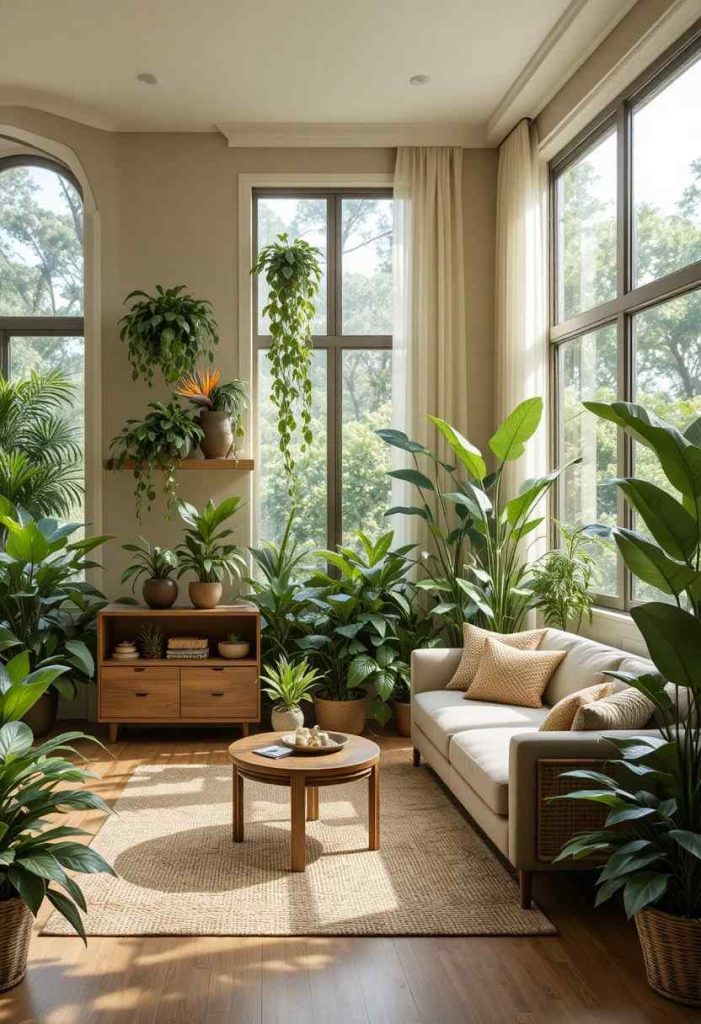
Biophilic design — the practice of incorporating living natural elements, natural materials, natural light, and nature-inspired forms into the built environment — has moved from architectural theory to mainstream interior design practice over the past several years, and the biophilic living room represents its most accessible and most beautiful domestic expression. The biophilic living room draws from the well-established psychological evidence that human beings are profoundly and physiologically affected by contact with the natural world: lower cortisol levels, reduced blood pressure, improved mood and cognitive function. Creating a living room that prioritises this kind of nature contact is not merely an aesthetic choice — it is an investment in the wellbeing of everyone who spends time in the space.
Style tip: Group plants in clusters of three, five, or seven — odd numbers — rather than placing them individually around the room. Clustered plants create a genuinely garden-like atmosphere, while isolated plants look like decorative accessories rather than a genuine living landscape.
6. The Gallery Wall Living Room: Turning Your Walls Into Personal Art Museums
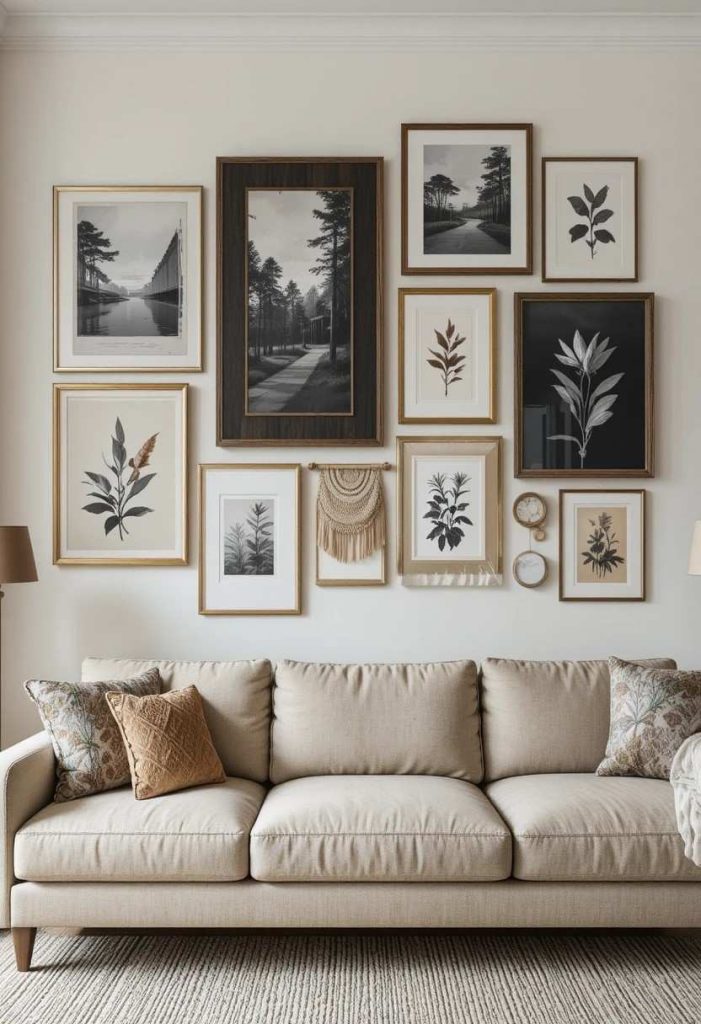
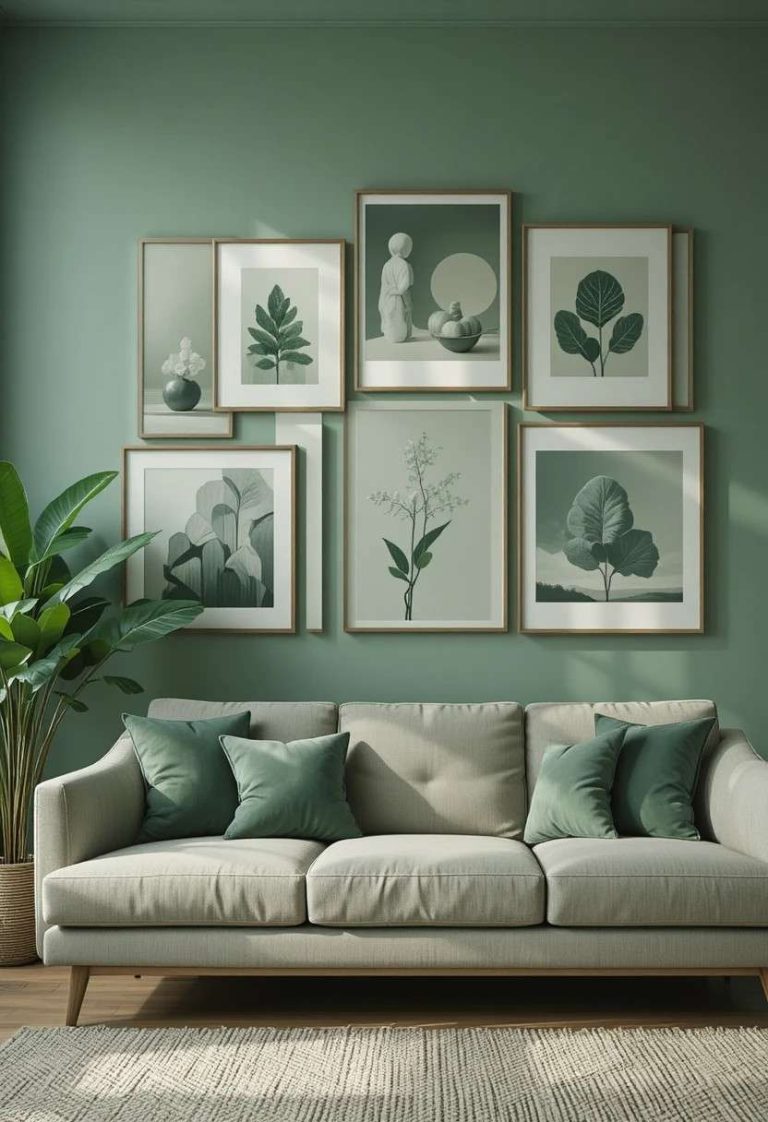
A well-curated gallery wall is one of the most powerful personalisation tools available in a living room — transforming a flat painted surface into a three-dimensional display of aesthetic identity, personal history, and artistic sensibility that communicates more about the inhabitants of a space than any other single decorating gesture. The gallery wall has been a Pinterest staple for years, but the approach has evolved significantly from the early Instagram era of matching white frames in a perfect grid. Contemporary gallery wall design is more eclectic, more personally meaningful, and more compositionally adventurous than its predecessors — and the results are consistently more impressive.
Style tip: Include one piece in your gallery wall that is at least twice the size of any other piece — this anchor piece gives the wall a visual hierarchy that prevents it from reading as a busy, undifferentiated collection of equal-sized frames.
7. The Mid-Century Modern Living Room: Timeless Elegance With Clean Lines
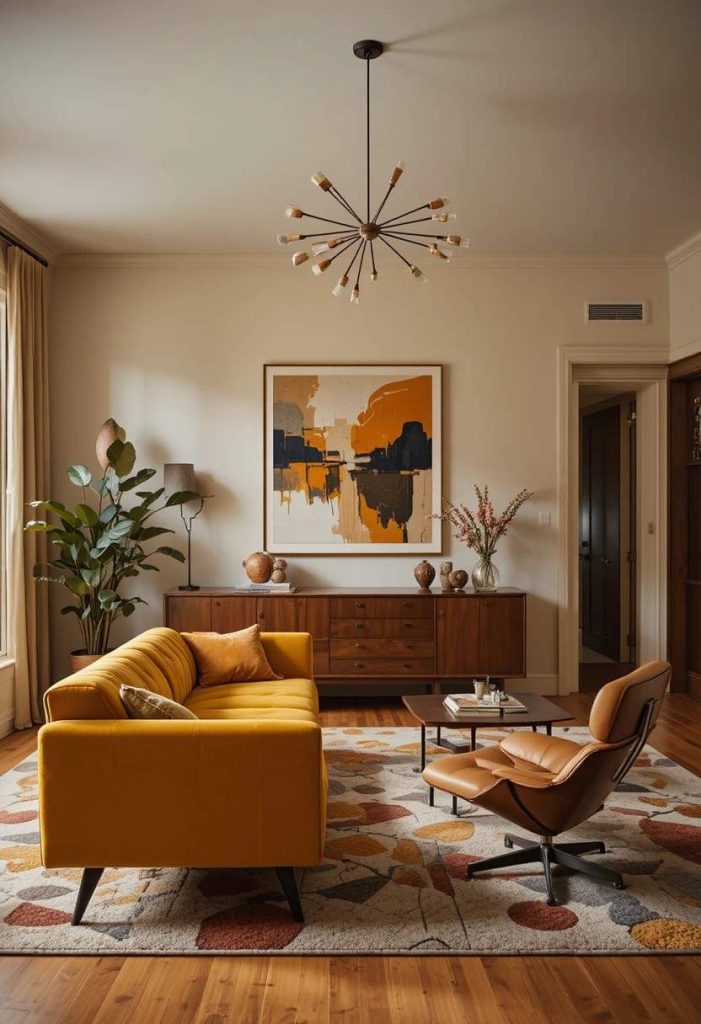
Mid-century modern design — the design aesthetic that emerged from the post-war optimism and material innovation of the 1950s, 60s, and early 70s — remains one of the most enduringly popular and most searched interior design styles on Pinterest, and its appeal is not difficult to understand. The mid-century modern living room offers a rare combination: visual sophistication achieved through simplicity, a warm and human quality that never tips into coldness, and a relationship between furniture form and function that feels simultaneously historical and genuinely contemporary. After nearly seventy years, mid-century modern furniture designs look as fresh and as relevant as they did when Charles and Ray Eames, Hans Wegner, and Arne Jacobsen first conceived them.
Style tip: In a mid-century modern living room, the lighting is as important as the furniture — a statement Sputnik chandelier, a tripod floor lamp, or a sculptural table lamp with an organic ceramic base reads as definitively mid-century and elevates the whole room.
8. The Dark and Moody Modern Living Room: Drama, Depth, and Intimate Atmosphere
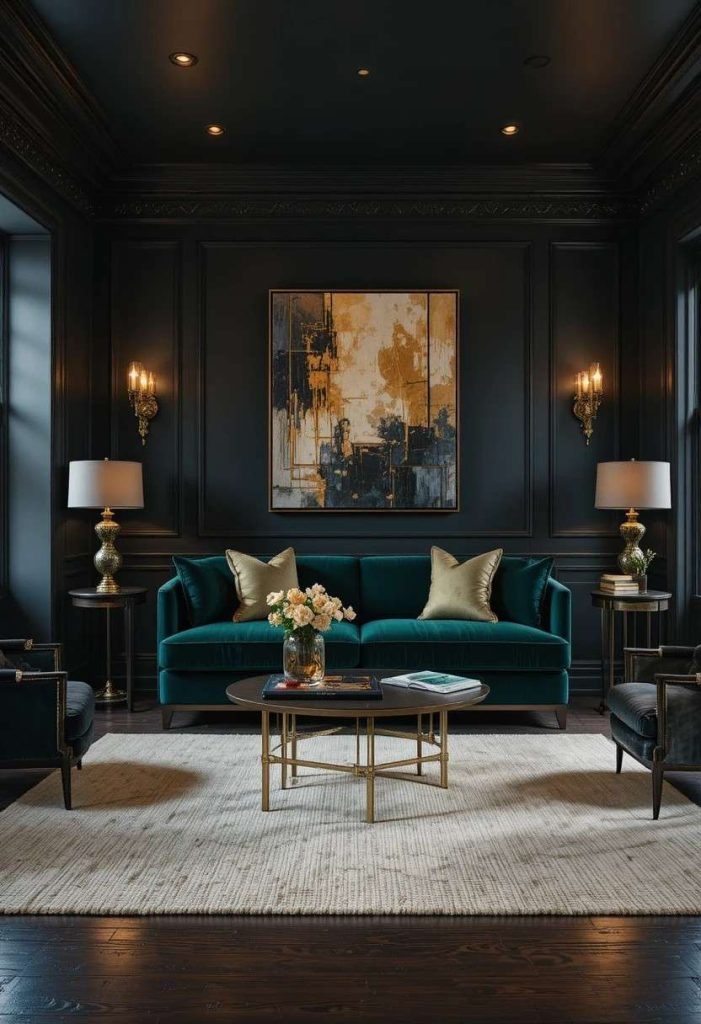
The dark and moody living room is the interior design choice that separates the truly confident from those who simply admire confidence in others’ spaces. It is also one of the most consistently jaw-dropping living room aesthetics available — a room with deep charcoal walls, dark-stained floors, rich jewel-toned upholstery, and warm amber lighting that creates an atmosphere of extraordinary intimacy, drama, and sophistication that lighter rooms, however beautifully executed, can never replicate. The dark living room at its best feels like a private club, a gentlemen’s library, or a jewel box — a room that holds you close rather than releasing you into blandness.
9. The Open Plan Modern Living Room: Zoning, Flow, and Connected Living
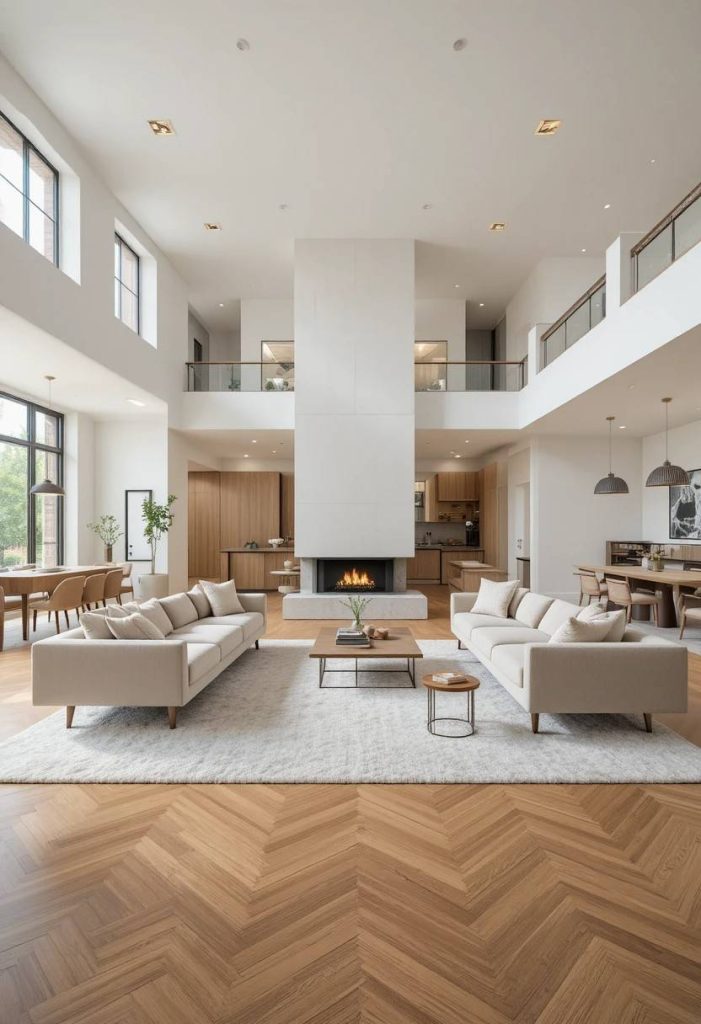
The open plan living room — connected to the kitchen, dining area, or home office in a single flowing space — has become the dominant residential layout in contemporary home design, and making it work beautifully requires a specific set of design skills that are distinct from those needed for a conventionally separated room. The challenge of the open plan space is definition without division: creating visual and functional zones that feel distinct and purposeful without the hard boundaries of walls, while maintaining the sense of spaciousness, light, and social connection that makes the open plan layout so appealing in the first place.
Style tip: Use a consistent colour — a specific warm white, a particular wood tone, or a recurring accent colour — across every zone of an open plan space to create visual coherence that makes the space read as a single, considered design rather than several rooms that happen to share a floor.
10. The Japandi Modern Living Room: Japanese Minimalism Meets Scandinavian Warmth
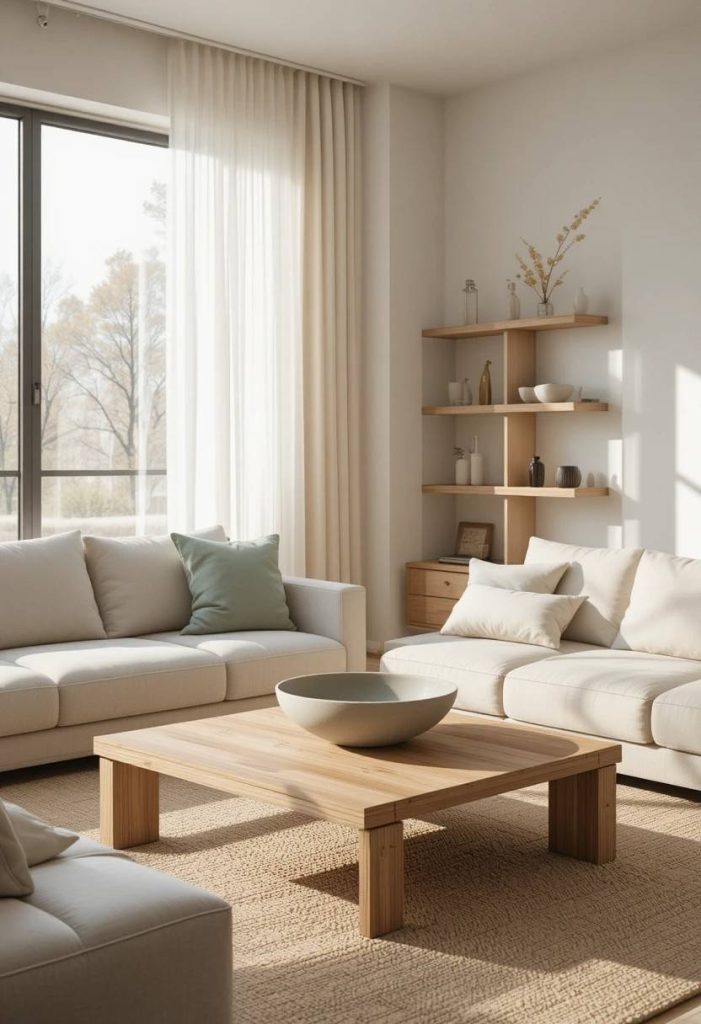
Japandi — the portmanteau design aesthetic that fuses the Japanese principles of wabi-sabi, ma (negative space), and material authenticity with Scandinavian hygge, functional simplicity, and the prioritisation of natural materials — has evolved from a design trend into a genuinely enduring aesthetic movement that consistently ranks among the most searched interior design styles on Pinterest. The Japandi living room is perhaps the most disciplined and most demanding living room aesthetic to execute well, requiring not only careful restraint in the selection of objects and materials but a genuine philosophical commitment to the idea that a room achieves its greatest beauty through the thoughtful removal of the unnecessary rather than the thoughtful addition of the beautiful.
Style tip: In a Japandi living room, introduce wabi-sabi intentionally — choose objects and materials that show their age, their handmade nature, or their natural imperfection. A handthrown ceramic cup with an asymmetric rim, a linen cushion with visible natural variations in the weave, a wooden side table with the natural grain celebrated rather than concealed.
11. The Industrial Chic Modern Living Room: Raw Materials, Exposed Elements, and Urban Edge
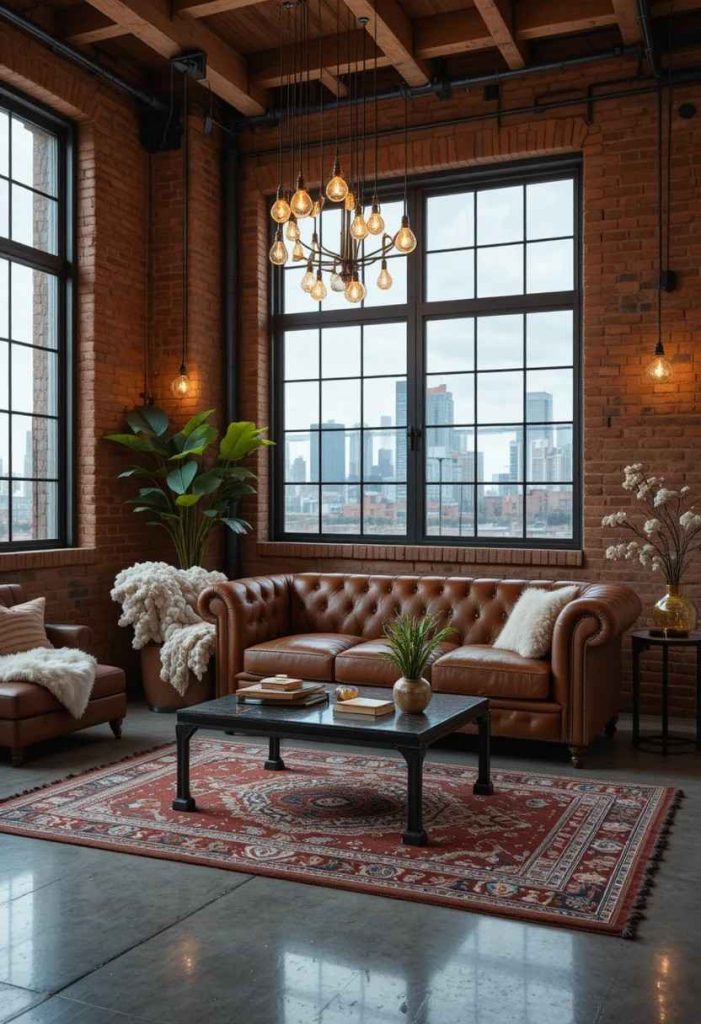
The industrial chic living room translates the aesthetic language of repurposed factories, converted warehouses, and urban loft spaces into a domestic interior that celebrates raw materials, honest construction, and the beauty of the unfinished. Exposed brick walls, concrete floors or concrete-effect surfaces, metal-framed furniture and light fixtures, reclaimed wood, and Edison bulb lighting are the hallmarks of this aesthetic — and when combined with the right textile warmth and personal accessories, the result is a living room of extraordinary character and visual interest.
Style tip: The most effective industrial chic rooms combine one genuinely industrial element — real exposed brick, a genuine concrete floor, real steel-framed windows — with the rest of the aesthetic suggested through materials, lighting, and accessories. You do not need to live in a warehouse to achieve the industrial aesthetic.
12. The Scandi Modern Living Room: Hygge, Functionality, and Beautiful Simplicity
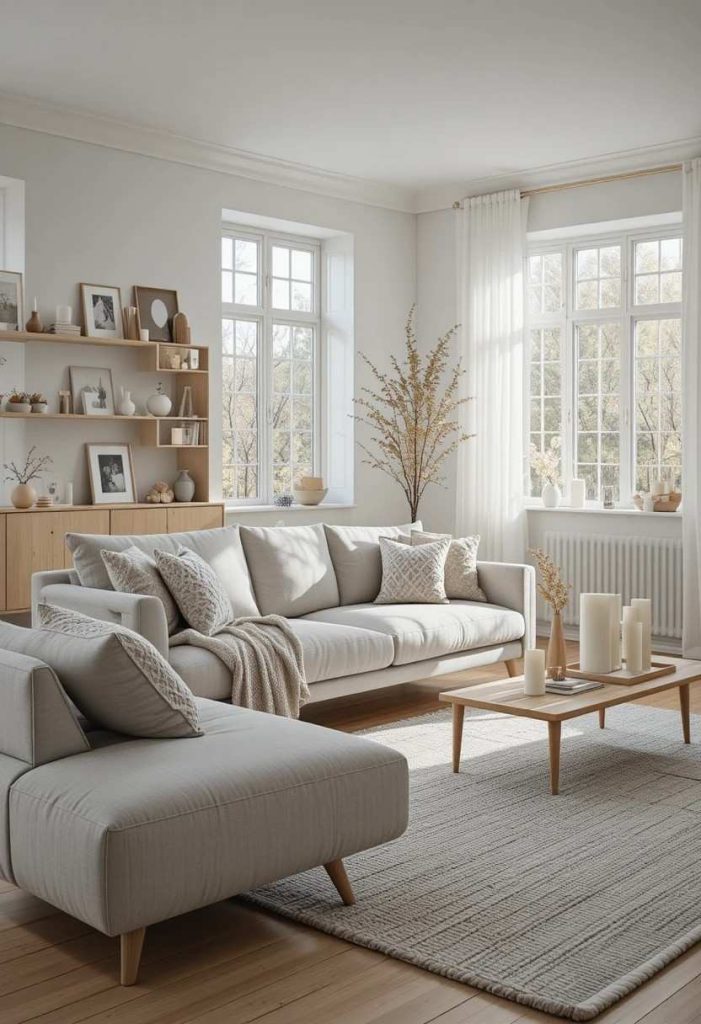
Scandinavian interior design has been one of the most consistently searched and most consistently reproduced aesthetics on Pinterest for over a decade, and its enduring popularity reflects the universal appeal of its core principles: that a home should be functional without sacrificing beauty, simple without becoming sterile, and warm enough to make long, dark winter evenings feel genuinely comfortable and cosy. The Scandi modern living room achieves all of these goals through the disciplined application of a small number of key principles that, when followed consistently, produce results of remarkable quality and longevity.
Style tip: The Scandi concept of ‘hygge’ is ultimately about creating conditions for togetherness and warmth — candles are the single most effective hygge tool available. A grouping of white pillar candles on a wooden tray, a cluster of taper candles in simple ceramic holders, or a row of tea lights on a windowsill transforms a Scandi living room from beautiful to genuinely warm and inviting.
13. The Art Deco Modern Living Room: Geometric Glamour and Opulent Revival
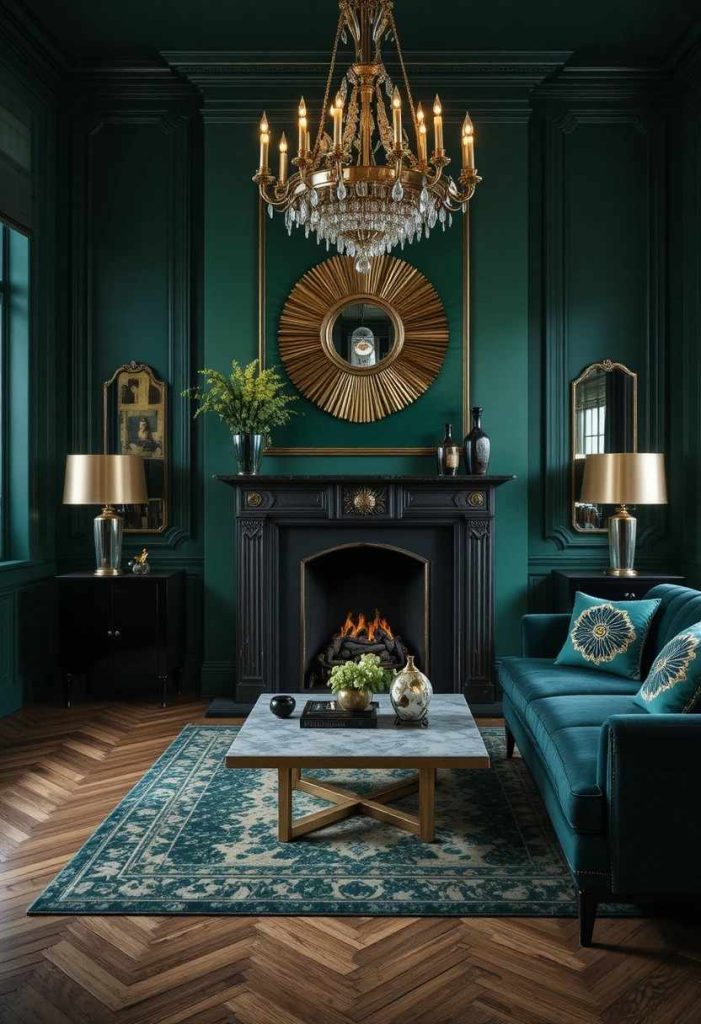
The Art Deco aesthetic — originating in the 1920s and defined by bold geometric forms, rich surface decoration, luxurious materials, and a confident embrace of glamour and theatrical visual impact — is experiencing one of its most powerful design revivals in contemporary interior design, with Pinterest data showing Art Deco interior searches up 805% in the 2024–2025 period. The contemporary Art Deco living room draws from the best of the original movement while filtering it through a current design sensibility that makes it feel entirely of the moment rather than historically costumed.
Style tip: A large Art Deco-inspired sunburst mirror is one of the most effective single objects you can add to a modern living room — its geometric form, metallic surface, and architectural presence instantly communicate the Art Deco aesthetic with authority.
14. The Bohemian Modern Living Room: Eclectic, Layered, and Full of Wanderlust
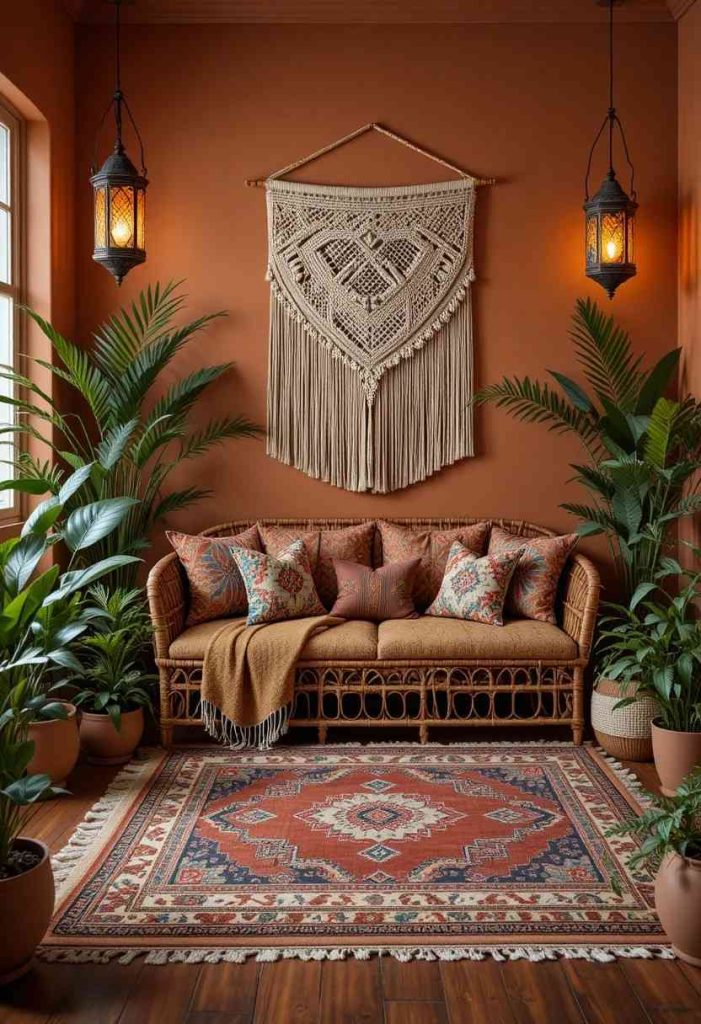
The bohemian living room is the most personal, most adventurous, and most richly layered of all the modern living room aesthetics — a space that grows over time through the accumulation of meaningful objects, travel souvenirs, handmade textiles, and natural materials into something that is entirely unique to the people who inhabit it. The boho living room cannot be purchased wholesale from a single shop; it must be assembled gradually, with the discernment that comes from a genuine aesthetic sensibility and a real enthusiasm for the beauty of things made by hand, found in unexpected places, and loved into character over time.
Style tip: The single most powerful boho living room gesture is a large, layered rug situation — a vintage kilim or Moroccan rug layered over a plain jute base rug, with an animal hide or sheepskin draped over the sofa beyond. The layering of rugs alone can transform a plain room into something genuinely bohemian.
15. The Statement Fireplace Modern Living Room: Making the Hearth the Hero
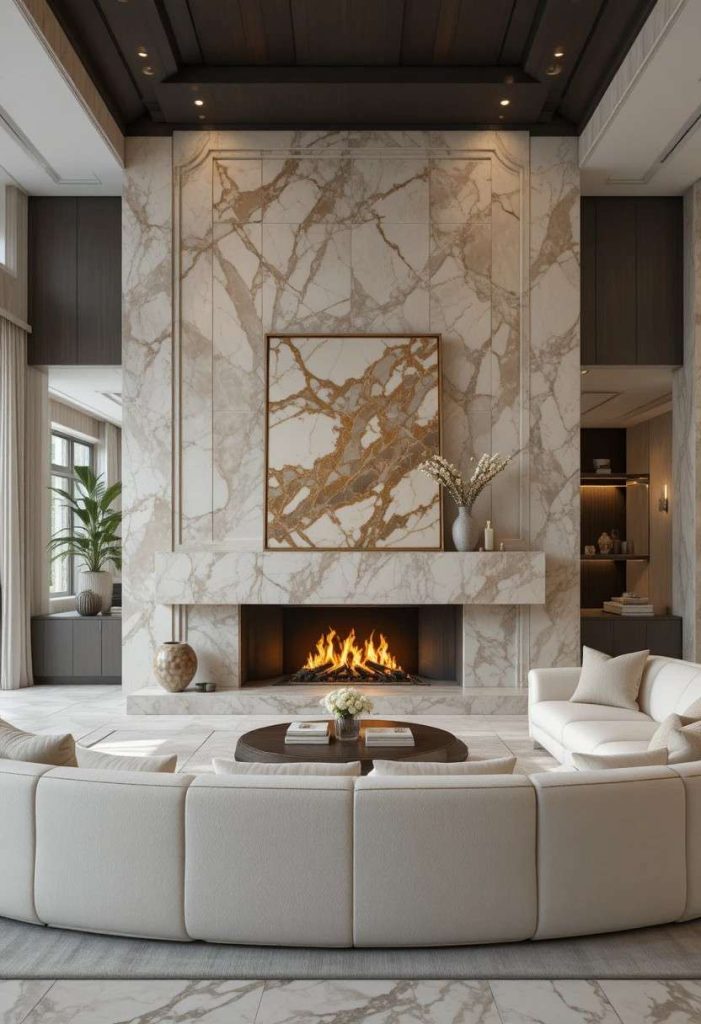
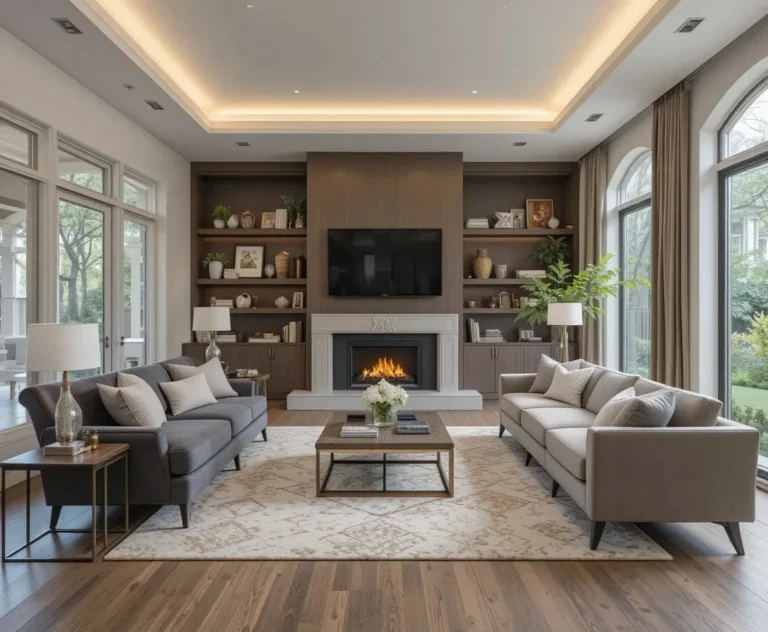
The fireplace has always been the natural focal point of the living room — the gathering place, the source of warmth and light, the architectural feature around which all furniture and activity is oriented. In the contemporary modern living room, the fireplace is experiencing a powerful design renaissance, evolving from a standard brick-and-mantle fitting into a genuine architectural statement: sculptural concrete fire surrounds in organic forms, floor-to-ceiling marble slabs as dramatic backdrops, minimalist flush-to-wall bioethanol fires framed by polished plaster, and dramatically proportioned cast iron wood burners set within architecturally considered chimney breasts.
Style tip: If you have a fireplace with a standard builder’s surround, replace it with a simple plastered or rendered surround in a monolithic form — a basic rectangular frame finished in polished plaster or smooth render transforms a standard fireplace into something that reads as architecturally considered.
16. The Vintage and Antique Modern Living Room: Old Pieces, New Perspective
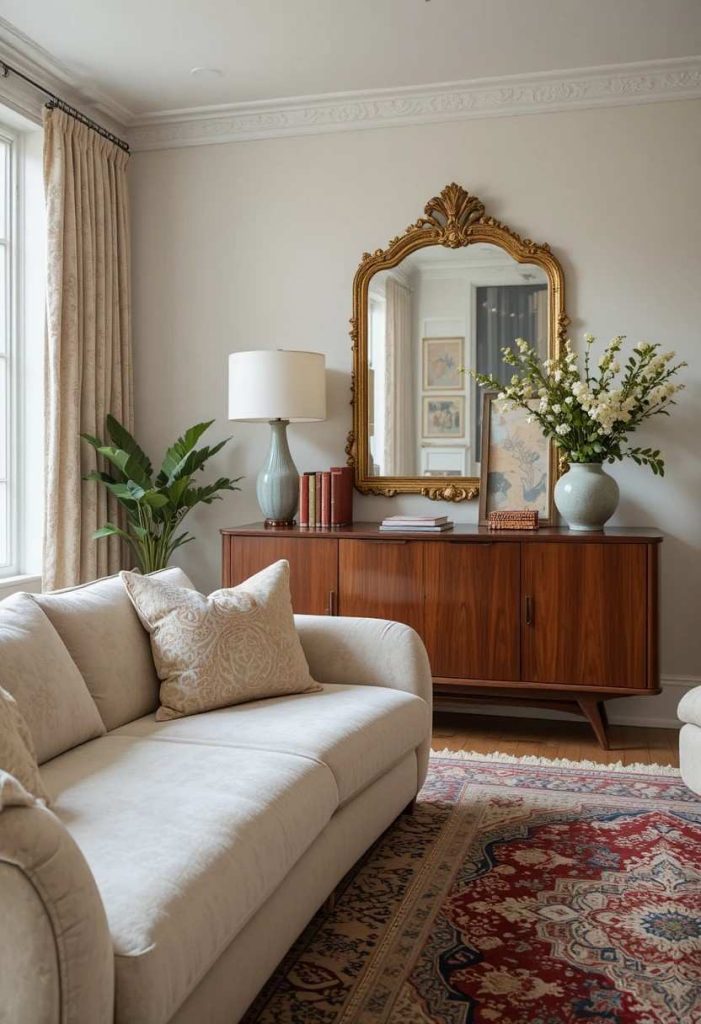
The contemporary design movement toward vintage, antique, and pre-loved furniture represents one of the most significant shifts in residential interior design in a generation — and one that is simultaneously aesthetically motivated, financially rational, and environmentally responsible. Pinterest data confirms the momentum of this movement with consistent surges in searches for vintage living room, vintage maximalism, and antique home decor, while designers consistently report that incorporating genuine vintage and antique pieces is the single most effective way to give a new living room the depth, character, and sense of history that newly purchased furniture can never replicate.
Style tip: When mixing vintage and contemporary in a living room, the 70/30 rule provides a useful starting framework: 70% of pieces in one era (whether vintage or contemporary) and 30% in the other. This ratio creates a clearly defined dominant aesthetic while the minority pieces provide the contrast and tension that give the room its interest.
17. The Statement Lighting Modern Living Room: Illuminating as Art
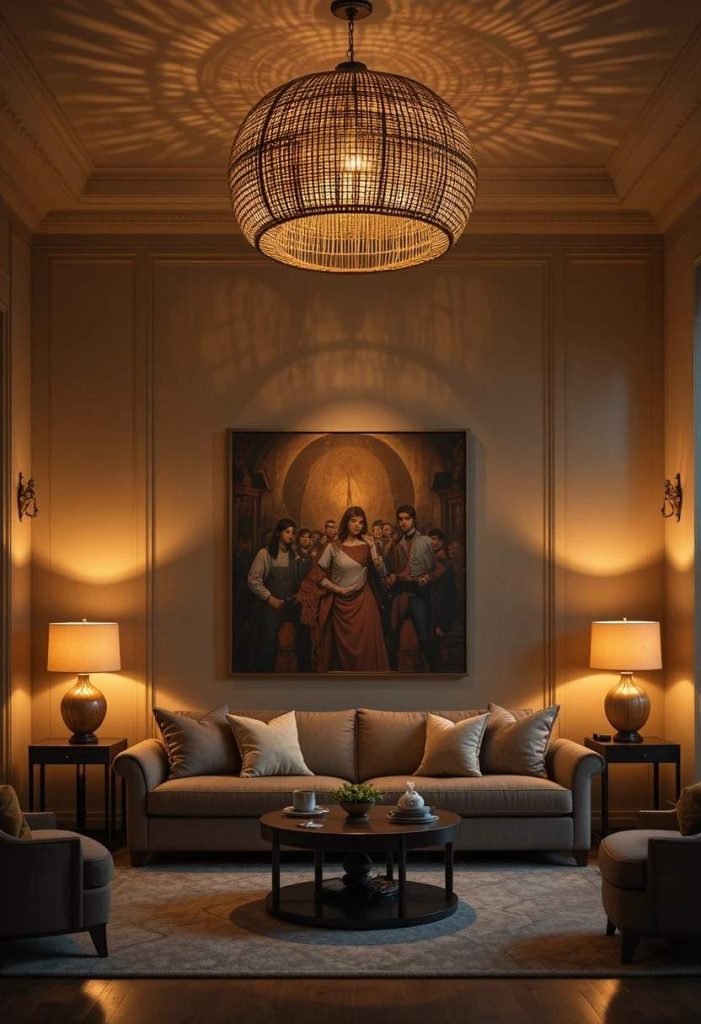
Lighting is the element of living room design that is most frequently treated as an afterthought and most consistently underestimated in its capacity to transform a space — and the living room that treats lighting as the primary design statement rather than a utilitarian necessity achieves a quality of atmosphere and visual drama that no amount of furniture or surface decoration can replicate. A well-lit living room feels genuinely different from a poorly lit one in ways that are felt before they are understood: more welcoming, more intimate, more beautiful, and more suited to the varied activities — conversation, reading, entertaining, relaxing — that the living room must serve.
Style tip: Install dimmer switches on every lighting circuit in the living room — the ability to precisely control the level of light at each time of day transforms the room’s atmosphere more effectively than any individual light fitting, and the investment is minimal.
18. The Sustainable Modern Living Room: Beautiful Design With a Conscience
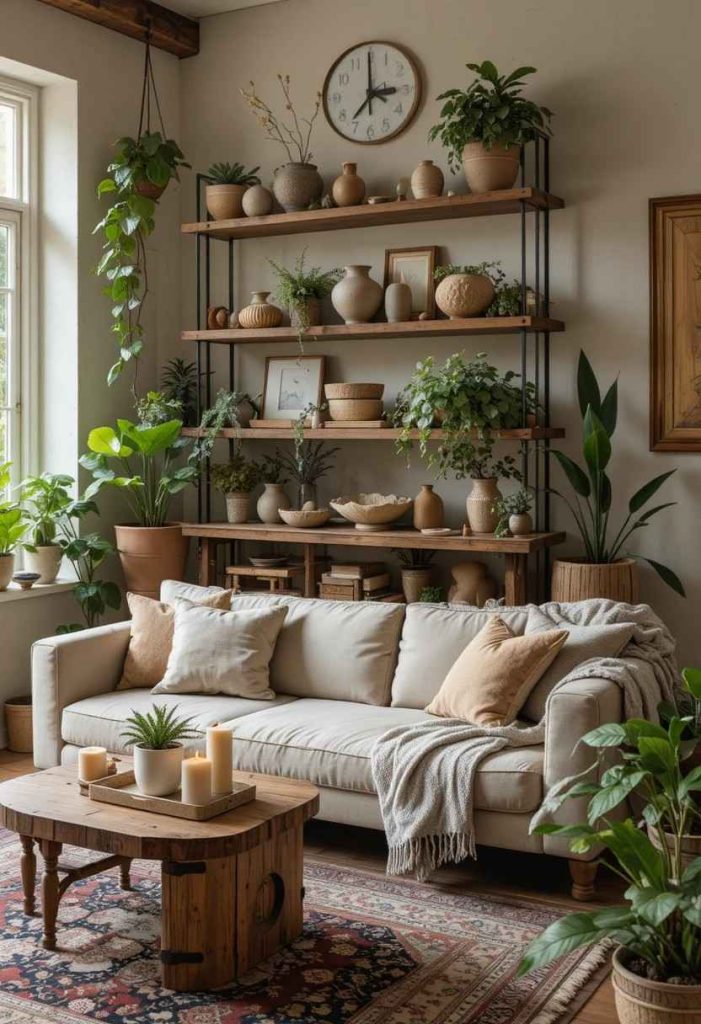
The sustainable modern living room makes no compromises between aesthetic aspiration and environmental responsibility — and the best examples of this genre prove definitively that the two are not merely compatible but that sustainability often produces the most beautiful and most characterful design outcomes available. Reclaimed timber, natural fibres, handmade ceramics, vintage and pre-loved furniture, low-VOC paint, natural beeswax and soy candles, organic linen and cotton — the materials of sustainable living room design are simultaneously the materials of the most respected and most beautiful contemporary interior aesthetics.
Style tip: One of the most beautiful and most sustainable living room decisions you can make is to have your existing sofa reupholstered rather than replaced — choose a natural, durable fabric like heavy linen, brushed cotton, or quality velvet, and the transformed piece will often look more beautiful and more personal than any new replacement could.
19. The Colour Drenched Modern Living Room: All-Over Colour for Maximum Impact
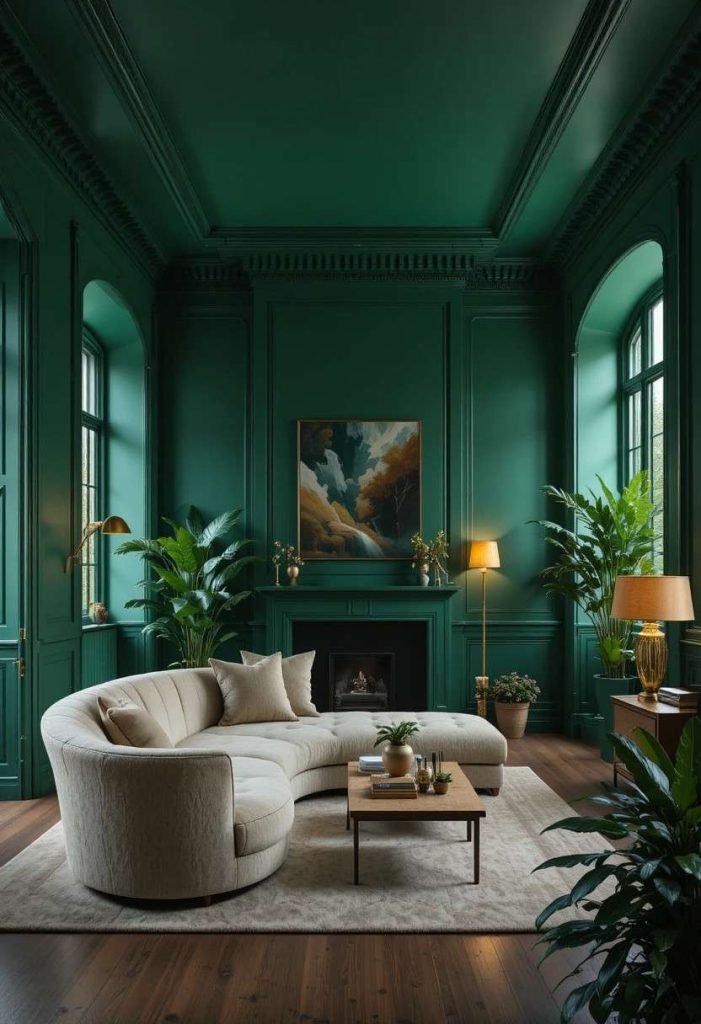
Colour drenching — the technique of painting every surface of a room in the same colour or tone, including walls, ceiling, coving, skirting, door frames, and even furniture — is one of the most dramatically effective and most psychologically immersive decorating techniques available in the modern living room, and one that has been championed by the world’s leading paint brands and most respected interior designers over the past several years. When a room is fully drenched in a single colour, the architecture becomes secondary to the experience of the colour itself: you are not in a room with green walls but in a green room, and the difference between those two experiences is profound.
Style tip: When colour drenching a living room, paint a large sample board (minimum A1 size) in the chosen colour and move it around the room over two to three days, observing how it reads in morning, midday, afternoon, and evening light. The fully drenched room will amplify every quality of the colour — good and bad — so full lighting due diligence before committing is essential.
20. The Small Modern Living Room: Making Every Square Metre Count
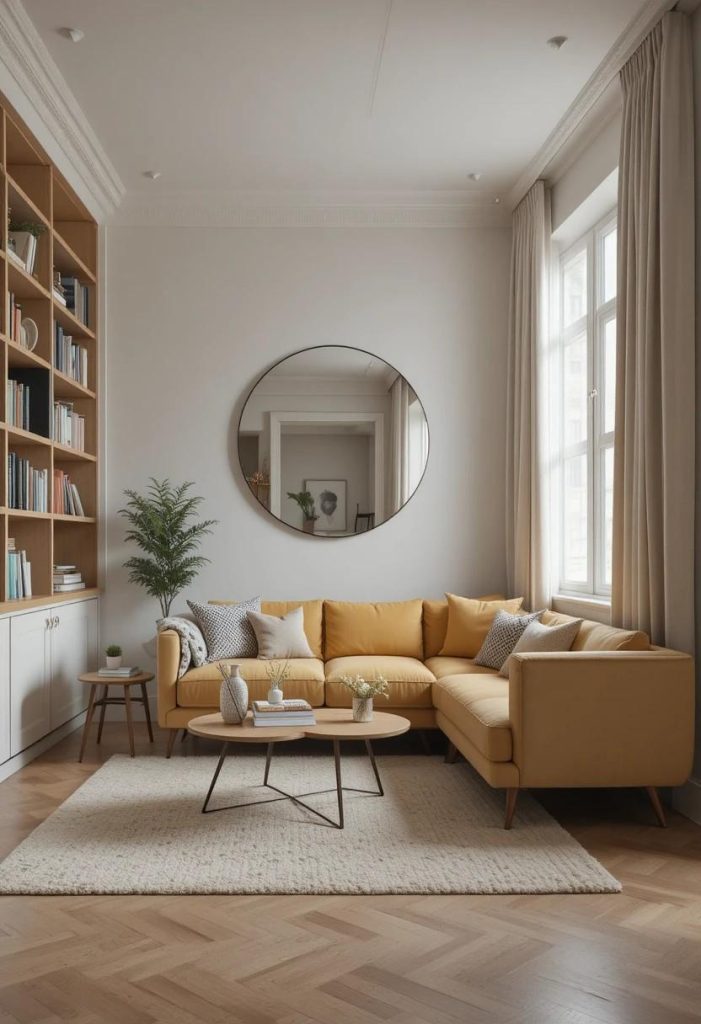
Designing a small living room beautifully is one of the most genuinely challenging tasks in domestic interior design — and one of the most rewarding when it is done well. The small living room that succeeds creates a sense of completeness, comfort, and personal identity that bears no relationship to its square footage; it feels exactly as intentional, exactly as considered, and exactly as beautiful as any large living room, simply in a smaller format. Achieving this requires a specific set of design principles that are distinct from those governing larger spaces, and a willingness to accept that some approaches that work magnificently in large rooms will fail in small ones.
Style tip: In a small living room, choose a sofa with legs rather than a skirt to the floor — the visible floor beneath the sofa creates a sense of space and lightness that skirted sofas eliminate completely. The higher the leg, the more floor is visible, and the more the room appears to breathe.
21. The Textured Modern Living Room: Bouclé, Velvet, Linen, and the Tactile Interior
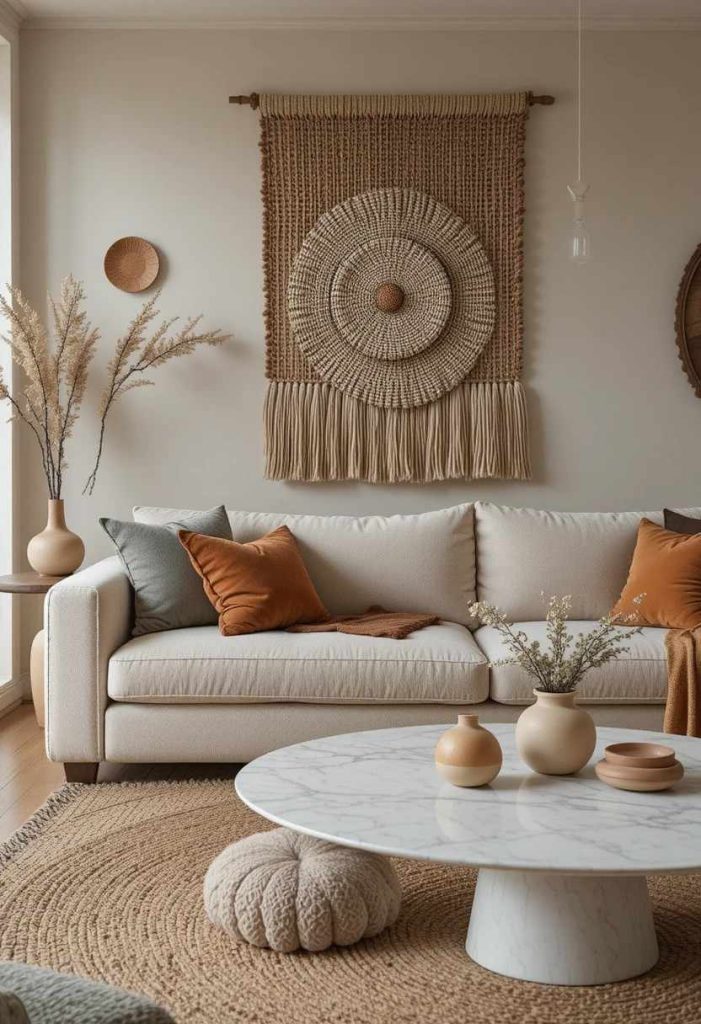
The most significant shift in contemporary living room design over the past several years has been the elevation of texture from a supporting role to a starring one. Where previous decades prioritised visual stimulation through colour and pattern, the current moment prioritises the tactile — the feel of surfaces as much as their appearance. Bouclé upholstery with its looped, wool-like texture. Velvet cushions that shift colour as the pile changes direction. Chunky knit throws in undyed natural wool. Rough-sawn timber coffee tables. Handthrown ceramic accessories with their organic irregularities. The contemporary modern living room is a room you want to touch as much as look at.
Style tip: Add a large woven wall hanging or a piece of textile art to the main wall of a textured living room — the tactile quality of woven textile at wall scale creates a genuinely different visual experience from any framed artwork and reinforces the room’s commitment to texture as its primary design language.
22. The Coastal Modern Living Room: Breezy, Light-Filled, and Effortlessly Relaxed
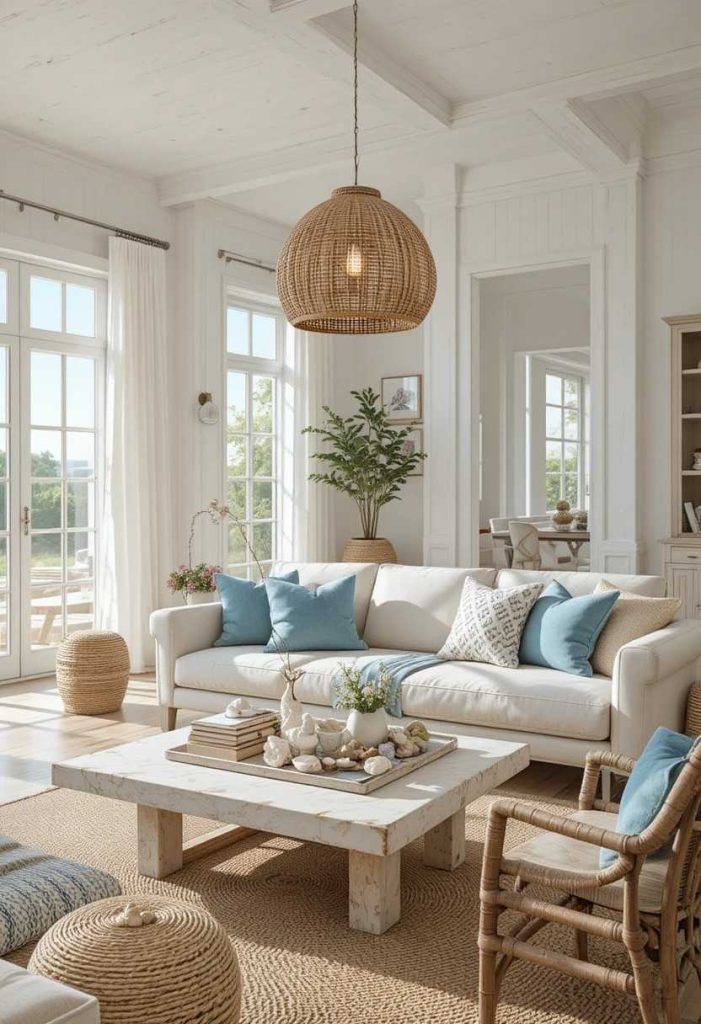
The coastal modern living room is an aesthetic of effortless relaxation — a room that seems to have been assembled without effort from whatever materials the sea and shore happen to provide, and yet is, when executed well, one of the most carefully considered and most technically demanding aesthetics in contemporary interior design. The challenge is to achieve the genuine quality of a seaside home — the particular whiteness of light reflected off water, the organic informality of natural textures, the absence of excess and formality — without resorting to the nautical clichés that reduce the coastal aesthetic to a costume rather than a sensibility.
Style tip: Use limewash paint on at least one wall of a coastal living room — the chalky, slightly uneven finish of limewash has a genuine quality of ocean-bleached plaster that no standard emulsion can replicate, and it changes character beautifully as the light moves through the day.
23. The Neo Deco Modern Living Room: 2026’s Most Exciting New Design Direction
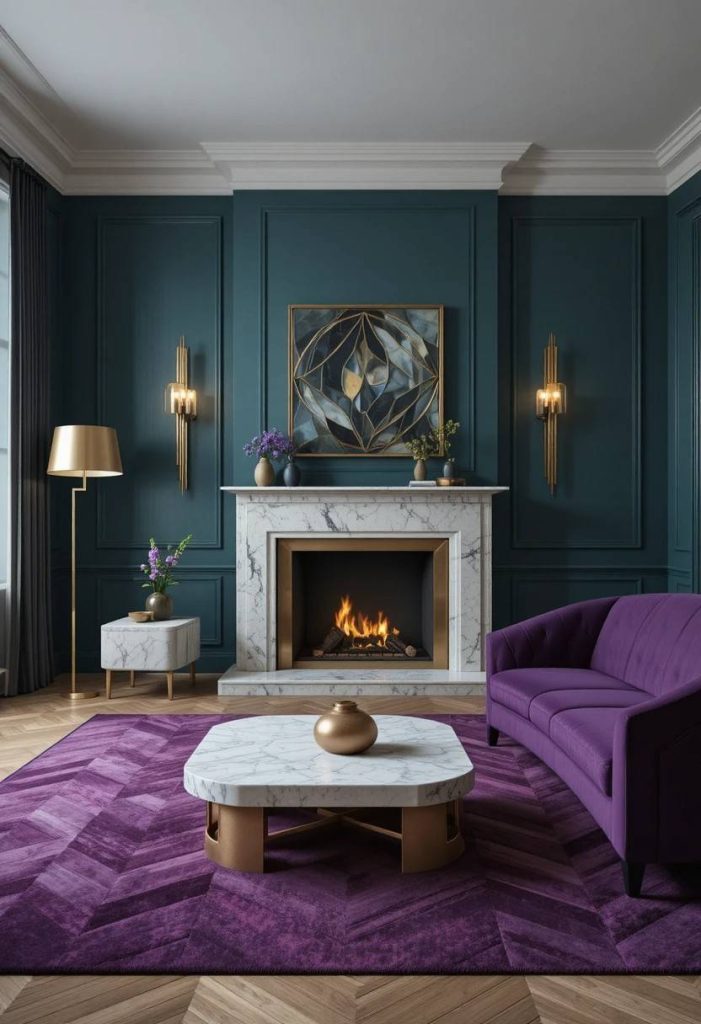
Neo Deco — one of Pinterest’s four named home interior trends for 2026 — represents the most sophisticated and most architecturally ambitious direction in contemporary living room design: a fusion of Art Deco’s geometric grandeur, the glamour and precision of modernist design, and the current moment’s embrace of bold colour, luxury materials, and personal self-expression. Neo Deco takes the visual language of the 1920s and 30s — the sunburst, the stepped form, the herringbone, the luxurious material palette — and reframes it through a contemporary lens that makes it feel genuinely forward-looking rather than retrospective.
Style tip: The most achievable entry point into a Neo Deco living room for those starting from scratch is wall panelling — geometric wall panels in a deep jewel tone, fitted below a simple chair rail, instantly create the architectural quality that defines the style without requiring major renovation.
24. The Grandmillennial Modern Living Room: Skirted Furniture, Florals, and Nostalgic Charm
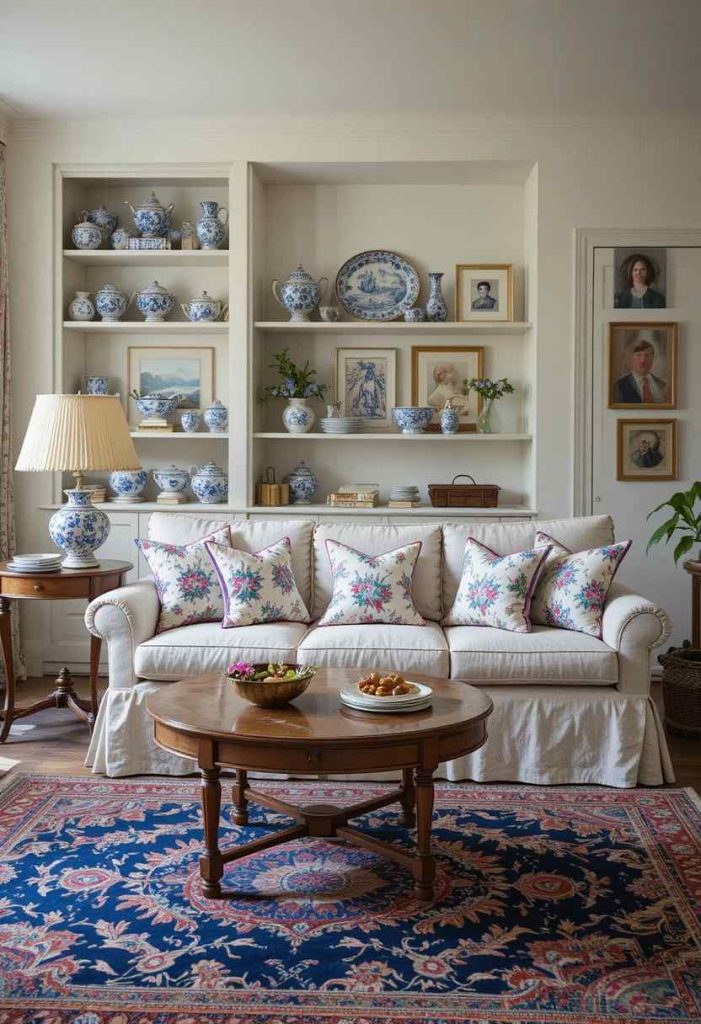
Grandmillennial design — the affectionate term coined for the millennial generation’s embrace of the decorating traditions of their grandparents’ era — has emerged as one of the most discussed and most influential aesthetic movements in contemporary living room design, and it represents a genuine, values-driven rejection of the cool, uncurated minimalism that preceded it. The grandmillennial living room is characterised by skirted furniture (armchairs and sofas with floor-length fabric skirts rather than exposed legs), floral patterns in English country-house prints, collections of china and ceramics displayed on open shelving, and the kind of layered, slightly formal room arrangement that prioritises conversation and comfort over photogenic minimalism.
Style tip: A collection of transferware china — the blue-and-white printed plates and serving dishes of the Victorian tradition — arranged on an open dresser or displayed on plate rails is one of the most characteristically grandmillennial living room gestures and one of the most inexpensive, as genuine pieces are widely available at charity shops and estate sales for very modest prices.
25. The Personalised Modern Living Room: Your Story, Beautifully Told
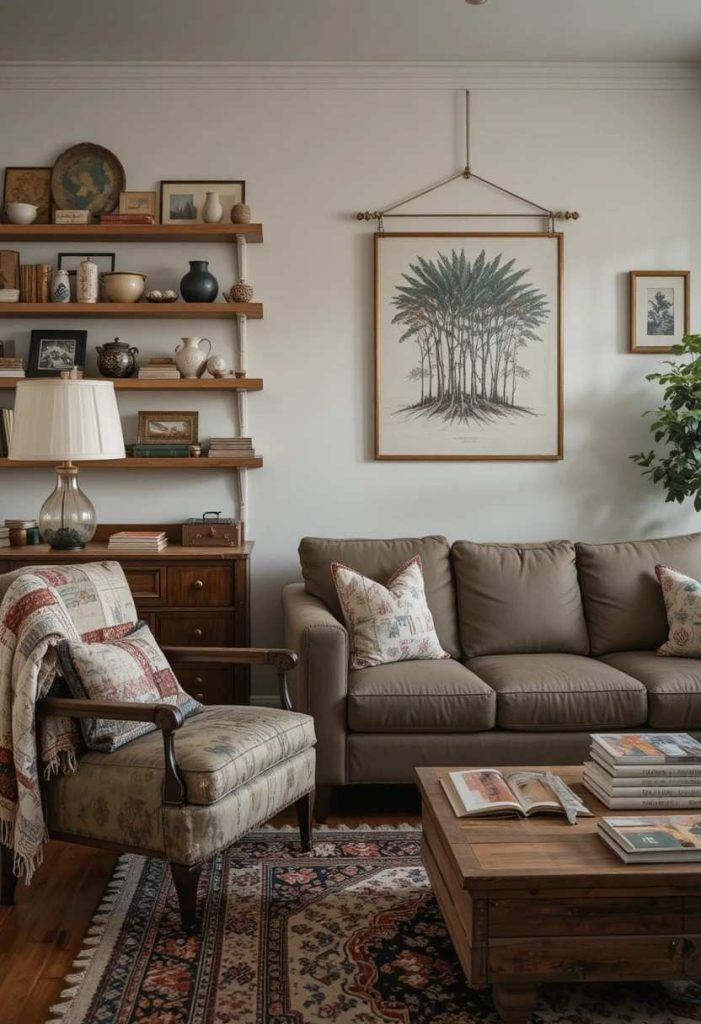
The most meaningful, most beautiful, and ultimately most valuable living room is not the one that most faithfully replicates a design trend or most impressively demonstrates a budget — it is the one that most authentically tells the story of the people who inhabit it. This seems obvious when stated plainly, and yet the pressure of aesthetic perfectionism, social media comparison, and the homogenising influence of mass-market interior design has produced an enormous number of living rooms that look professionally assembled but feel genuinely anonymous — rooms that could belong to anyone and therefore feel as if they belong to no one.
Style tip: Once a year, walk through your living room with fresh eyes and ask of every object: does this still tell my story? Does it still represent something I love, believe, or care about? The objects that no longer answer yes should leave the room — and the space they leave behind should be filled only by objects that do.
Frequently Asked Questions About Modern Living Room Design
What is the most impactful single change I can make to a modern living room?
The single most impactful change in almost any living room is improving the lighting. Installing dimmer switches, adding table lamps at sofa level, and introducing a statement pendant or floor lamp transforms the atmosphere of a room more profoundly than any furniture purchase. The second most impactful single change is window treatment: floor-to-ceiling curtains hung close to the ceiling immediately make any room feel taller, grander, and more finished.
How do I make a modern living room feel more personal?
Personalisation comes from the presence of objects with genuine meaning: original artwork (it does not need to be expensive), objects from significant travels, inherited pieces with family history, collections that reflect real interests, and books that have actually been read. The discipline is not collecting meaningful objects — most people already own them — but editing away the meaningless ones and giving the meaningful ones the space and context to read clearly.
What living room styles are trending most strongly in 2025–2026?
According to Pinterest trend data, the strongest-growing living room aesthetics in 2025–2026 are: maximalist and eclectic interiors (up 215–260%), Art Deco and Neo Deco revival (up 805%), vintage-forward and antique-mixed design, the grandmillennial aesthetic (skirted furniture, florals, nostalgia), and bold colour application including colour drenching. The universal overarching trend is a rejection of anonymous neutrality in favour of personality, character, and visual confidence.
How do I introduce bold colour to a living room without committing to a full repaint?
The most reversible bold colour interventions are: a large rug in a saturated colour, which defines the zone and introduces the colour without touching the walls; large cushion covers on the sofa in bold tones; a large-scale piece of original art with dominant bold colour; and floor-length curtains in a saturated fabric. Any of these can be changed relatively easily if the colour direction does not work, and together they can introduce significant colour character to a neutral room without any painting.
What furniture investment makes the biggest difference in a modern living room?
The sofa is almost always the highest-impact furniture investment in a living room — it occupies the most floor area, receives the most daily use, and most strongly defines the room’s visual character. Invest in the best sofa you can afford, in a natural fabric (linen, cotton, or quality velvet) in a tone that will work with your existing palette and any future changes to it. A well-chosen, well-made sofa should last fifteen to twenty years and look better, not worse, as it ages.
Conclusion: Design the Room You Actually Want to Live In
The modern living room, at its best, is not a showroom, a social media backdrop, or a demonstration of trend awareness. It is the room in which you spend more of your waking life at home than any other — the room where you receive guests, relax with family, read, think, and simply exist at the end of the day. Every design decision should ultimately serve the quality of that experience: the warmth of the light, the comfort of the seating, the beauty of the objects that surround you, and the sense that the room reflects who you are and what you love.
The 25 ideas in this guide are tools, not prescriptions. Take what serves your vision and leave what does not. Mix ideas from multiple styles if the result feels more authentically yours than any single style alone. Trust your instincts about what you find beautiful. Design with patience rather than haste. And remember that the most beautiful modern living room is the one that makes you want to spend time in it — regardless of what it looks like on Pinterest.
Design with intention. Live with beauty. Make it yours.