
25 Cheap DIY Patio Decor Ideas to Transform Your Outdoor Space
There is something wonderful about having a little outdoor space to call your own. A patio can be a morning coffee spot, an evening unwind corner, or a cozy place to gather with the people you love. The best part is that you do not need to spend a fortune to make it feel special.
So much of a beautiful patio comes from simple, handmade touches and clever budget finds rather than expensive furniture. A little paint, some soft lighting, a few plants, and a comfy spot to sit can turn even the plainest concrete square into a relaxing escape. With a bit of creativity, your outdoor space can feel like a true extension of your home.
Below you will find 25 cheap DIY patio decor ideas to help you transform your outdoor space on a budget.
1. String Up Warm Outdoor Lights
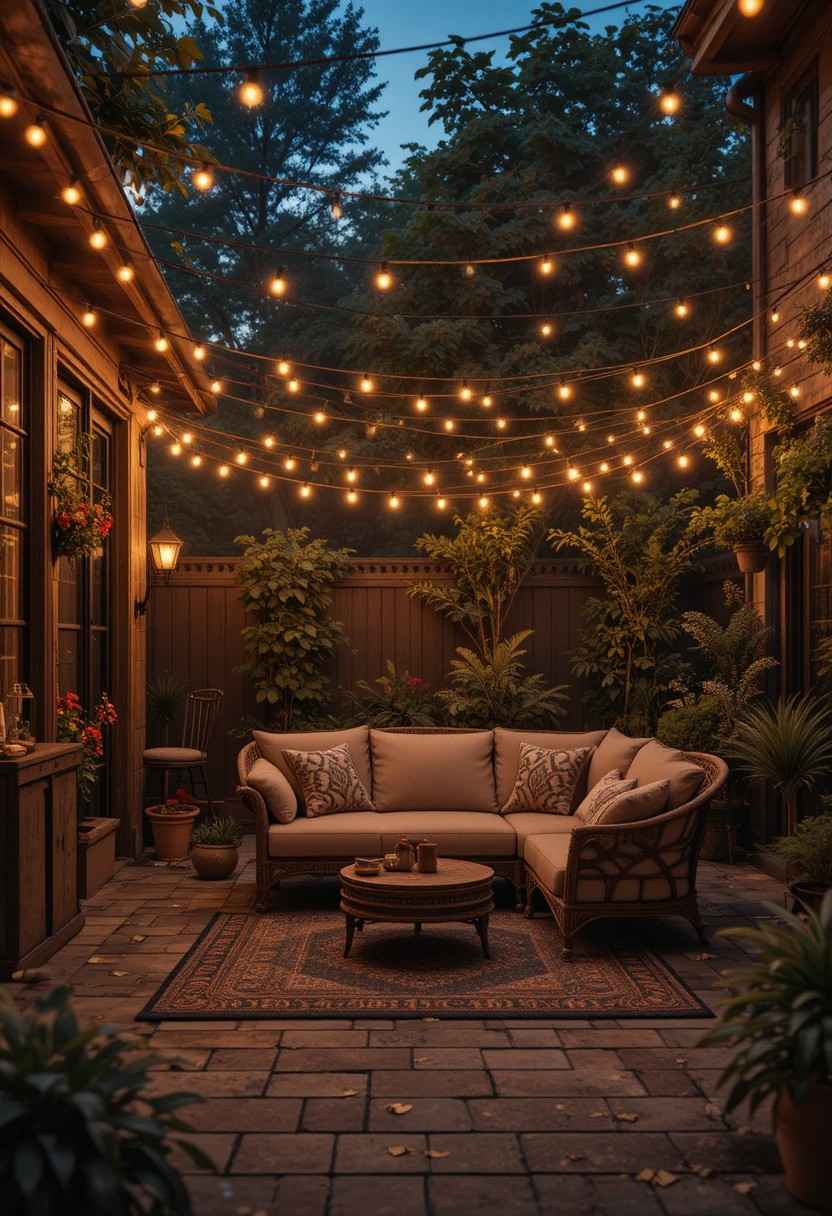
Few things change a patio as quickly as a string of warm lights overhead, and this was the first project I tried in our own garden. I hung a single strand along the fence one June evening, just to see what it would do, and by dusk the whole space felt like a different room — softer, calmer and far more inviting. Now I run a second strand across the seating area, and I still smile every time the bulbs flicker on at twilight. Warm white suits me best, because it flatters the plants and makes evening meals feel unhurried. Even a short, inexpensive strand can turn an ordinary concrete slab into the place everyone drifts towards after dinner.
How to do it: Measure the span you want to cover, then choose an outdoor-rated warm white strand a little longer than you need. Fix screw-in hooks or adhesive outdoor hooks along the fence, wall or pergola, keeping a gentle sag between fixings. Hang the strand, plug it into a weatherproof outdoor socket or a solar pack, and test it at dusk before tightening anything.
2. Make a DIY Pallet Sofa
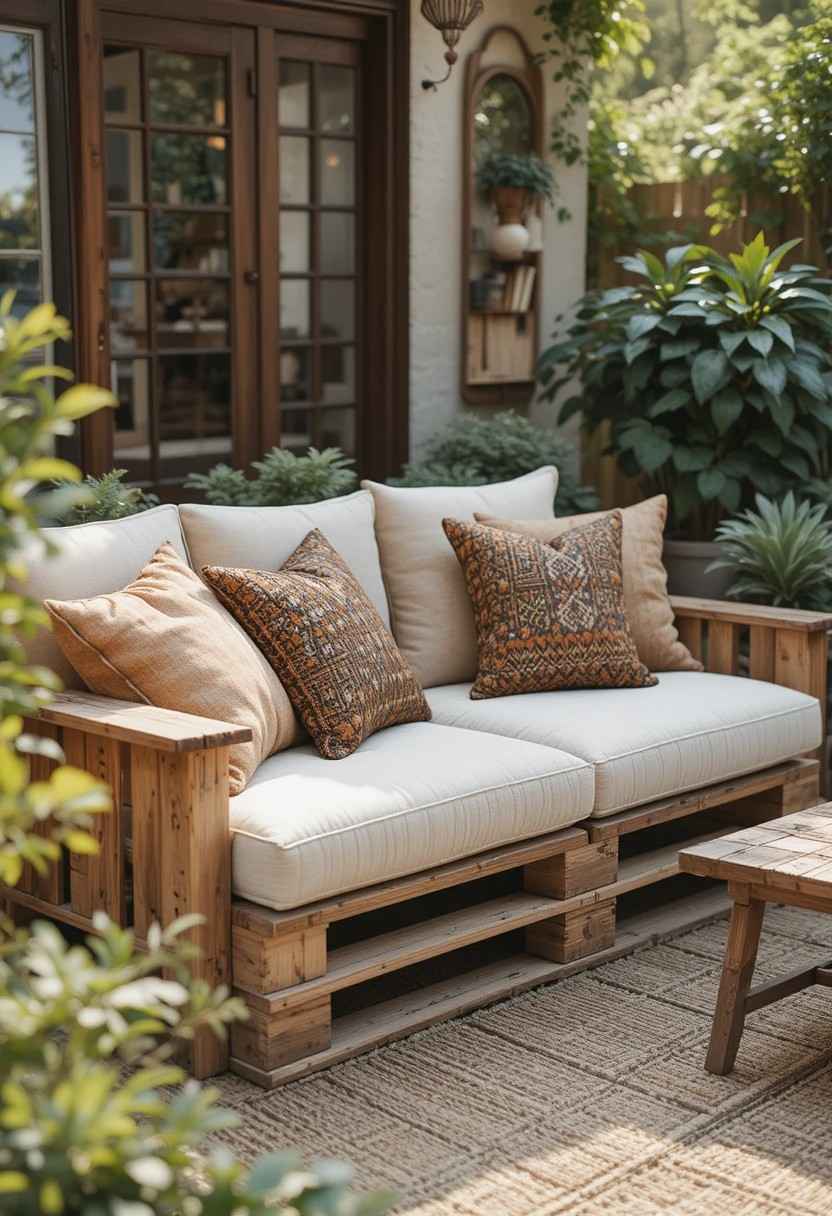
Our pallet sofa started life as two free pallets I spotted outside a local shop, and it is still the seat everyone reaches for on a sunny afternoon. I loved the idea of building something solid with my own hands, and pallets are wonderfully forgiving — a wonky edge here or there only adds to the charm. After a good sanding and a coat of outdoor paint, the frame looked so smart that friends assumed I had bought it. Deep cushions from an old sofa finished it off, and now it is the heart of our patio. If you can lift a pallet and hold a drill, you can honestly make this in a weekend.
How to do it: Choose two or three clean, sturdy pallets with no broken slats or chemical smell, then sand every surface smooth. Stack two for the base and one upright for the backrest, screwing them together with long wood screws. Paint or oil the frame for weather protection, then add outdoor cushions and a couple of throws.
3. Add Potted Plants and Greenery
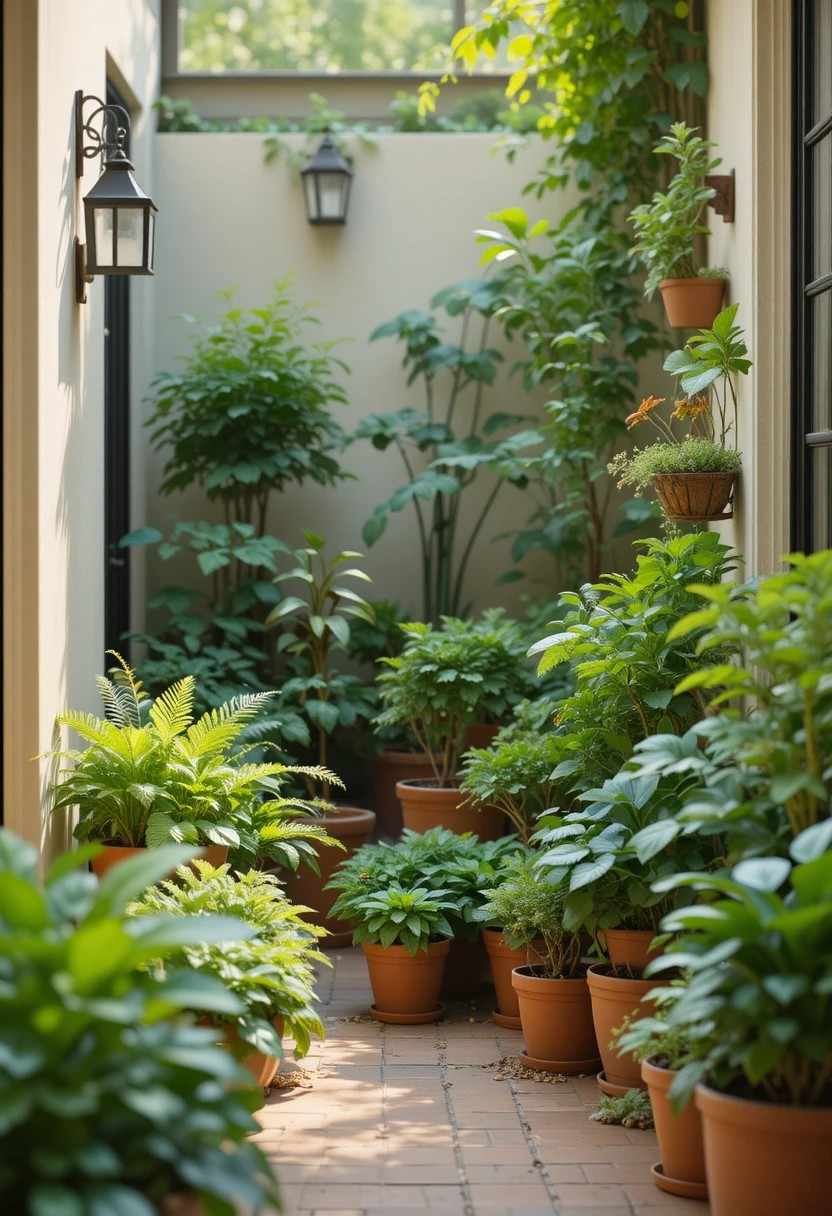
Plants are the quickest way I know to make a bare patio feel alive, and I never tire of rearranging mine. I started with three terracotta pots — rosemary, lavender and a trailing geranium — and the difference was instant: colour at eye level, scent when you brush past, and bees drifting in by mid-morning. Grouping pots in odd numbers works better than lining them up like soldiers, and mixing heights keeps the eye moving. I water mine in the early morning, which gives the leaves time to dry before the sun gets strong. Even one well-chosen pot beside the door can make the whole patio feel cared for.
How to do it: Pick three to five pots in different sizes and materials, making sure each has a drainage hole and a saucer. Fill them with a mix of compost and grit, then plant a combination of tall, trailing and upright varieties. Group them in clusters near the seating, water thoroughly, and feed fortnightly through the growing season.
4. Paint an Outdoor Rug on the Floor
When a proper outdoor rug felt too dear, I painted one straight onto our concrete instead, and it is still one of my favourite money-saving tricks. I sketched a simple border and diamond pattern in chalk first, then filled it in with masonry paint in soft sage and cream. The whole job took an afternoon, cost less than a takeaway, and it completely changed how the patio reads — suddenly there was a room, not just a slab. Rain has not shifted it, and a quick sweep keeps it looking fresh. If your floor is cracked or stained, this is honestly the kindest cover-up I know.
How to do it: Sweep and wash the concrete, then let it dry fully. Mark your design lightly in chalk and tape the edges with painter’s tape. Apply two thin coats of exterior masonry paint, letting the first dry before the second, then seal it with a clear outdoor sealant and leave it to cure for 24 hours.
5. Hang a Cozy Hammock or Swing
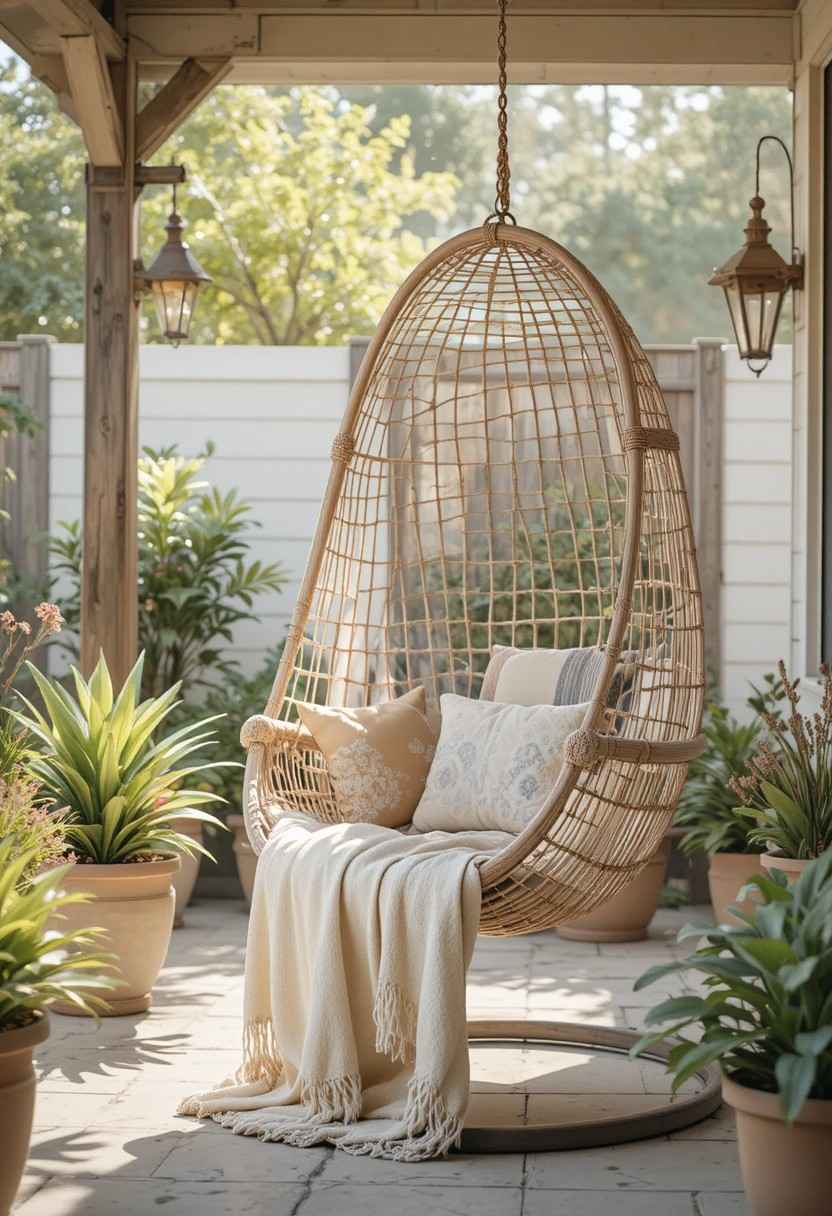
My hammock is where I go when the day has been long and I need ten quiet minutes, and I would not be without it now. I hung it between two sturdy posts at the end of the patio, and the gentle sway does something to my shoulders that no chair ever has. A small cushion and a light blanket live beside it in a basket, so it is always ready. If you have no trees or posts, a freestanding frame does the same job and can be moved with the sun. There is a particular pleasure in reading a chapter or two outside, rocked by the breeze.
How to do it: Find two solid anchor points, such as posts, a pergola beam or a tree, spaced to suit your hammock’s length. Fix heavy-duty eye bolts or wrap tree straps around each anchor, then clip the hammock on with carabiners and test it with your weight before relaxing. Keep a cushion and a folded blanket nearby in a weatherproof basket.
6. Repurpose Crates as Side Tables
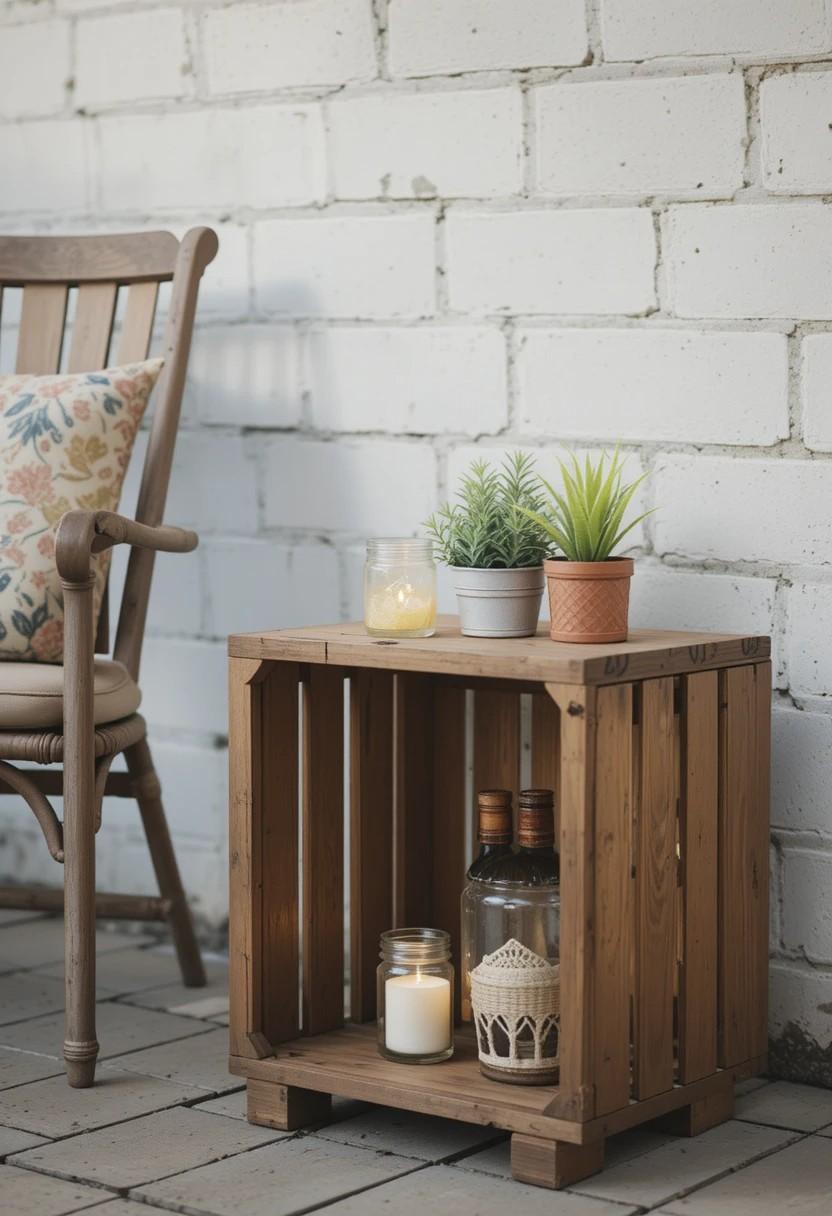
Wooden crates are my favourite kind of free furniture, because they ask for so little and give so much. I picked up four from a greengrocer who was glad to see them go, sanded the rough edges, and gave them a coat of pale grey paint. Two now sit beside our chairs holding mugs and books, one holds a potted fern, and the fourth stores cushions when rain threatens. Turned on their sides they become little shelves, and stacked they make a surprisingly sturdy table. I love that they can be rearranged in a minute whenever the seating moves around.
How to do it: Collect sturdy wooden crates with no rot or splinters and sand them smooth inside and out. Paint or oil them if you like, then stack two for a taller table or set one on its side beside a chair. Add small castor wheels underneath if you want to roll them around the patio.
7. Add Soft Outdoor Cushions and Throws
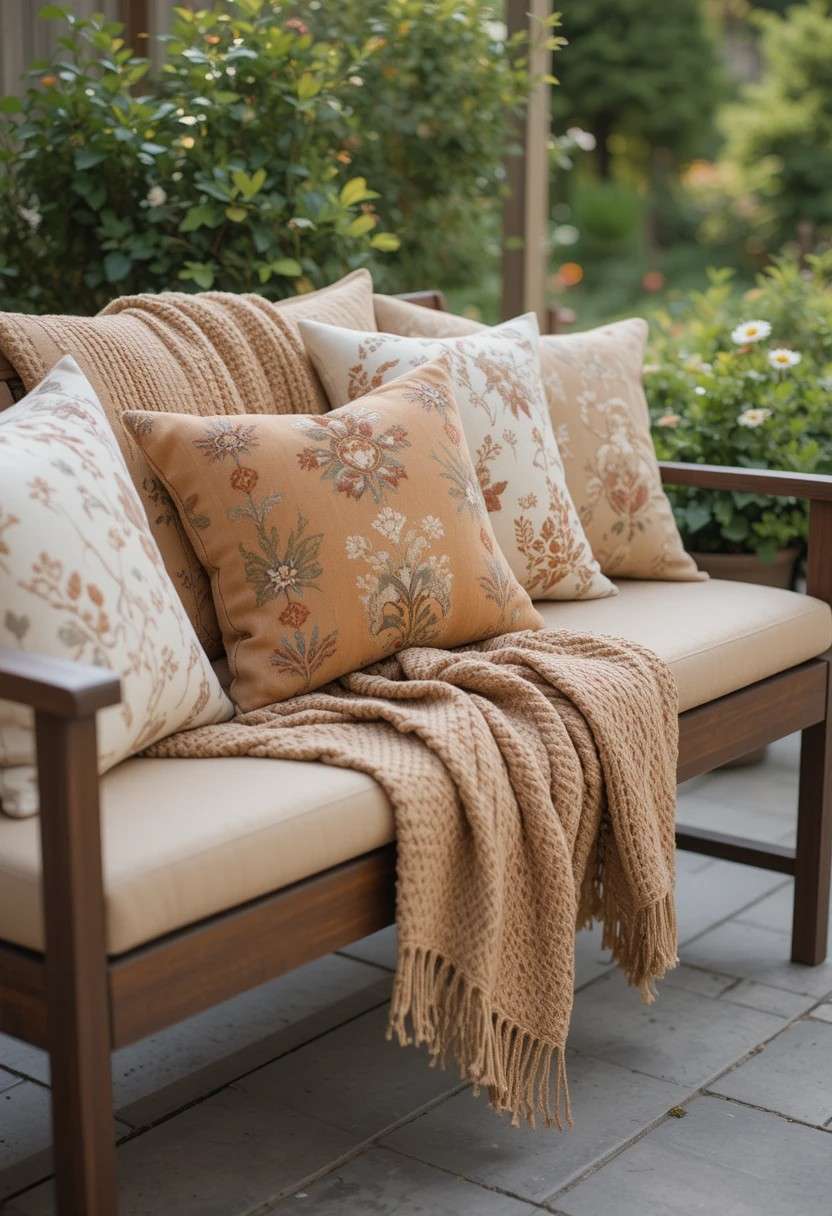
Hard patio chairs are nobody’s idea of relaxing, and cushions were the cheapest fix I found. I started with two thick seat pads in a warm ochre, then added a soft throw I could pull over my knees on cooler evenings, and suddenly our metal chairs felt like an indoor sofa. I choose covers I can remove and wash, because summer brings pollen, spilled drinks and the odd muddy paw. Mixing one pattern with plain colours keeps the look calm rather than busy. When autumn comes, the cushions live in a storage box by the door, ready for the first warm day of spring.
How to do it: Measure your seats and choose thick, weather-resistant cushions with removable, washable covers. Pick one pattern and one or two plain colours that echo your pots or rug. Add a soft outdoor throw folded over an armrest, and store everything in a dry box or bench when rain is forecast.
8. Create a DIY Fire Pit Corner
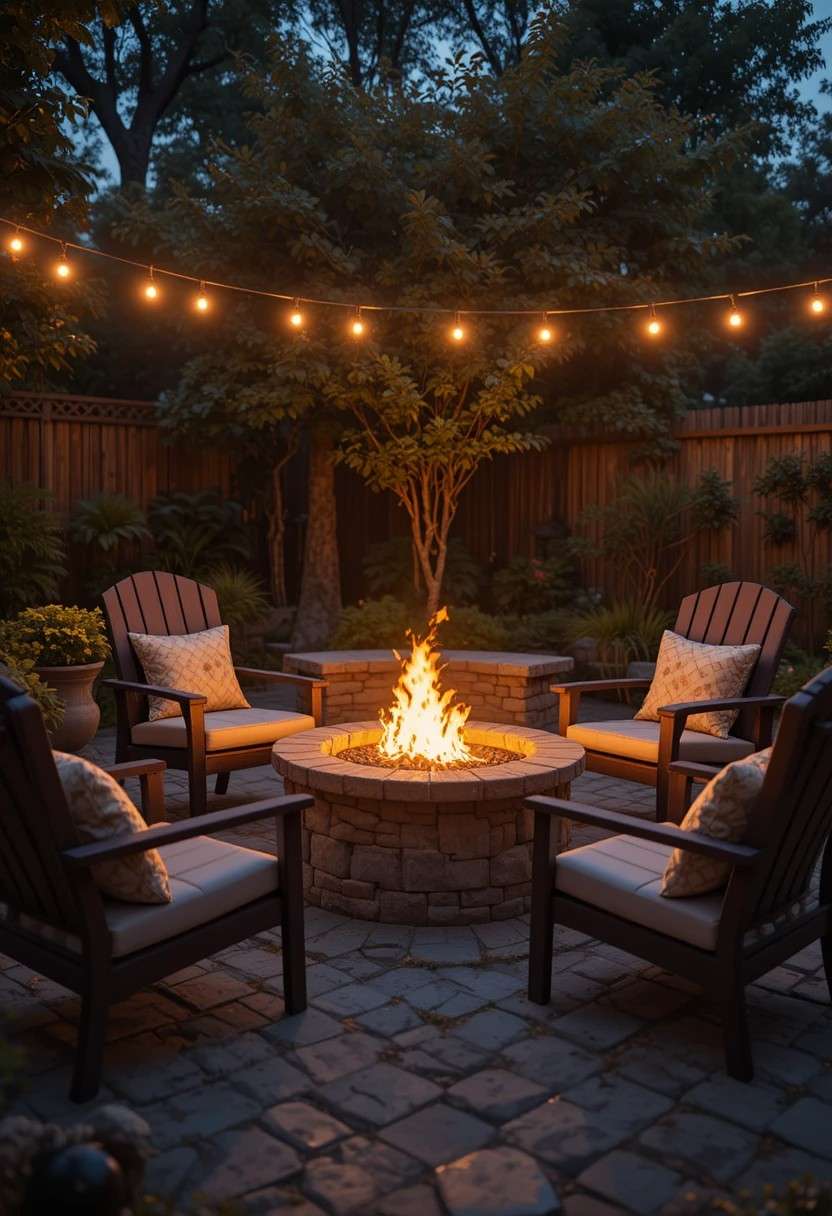
Our fire pit corner is where the best evenings happen — marshmallows with the children, long chats with friends, and quiet nights just the two of us watching the flames. I built it from a ring of old bricks on a patch of gravel, which cost almost nothing and took a single afternoon. A few low chairs pulled close and a basket of blankets make it feel like a proper outdoor room. I always keep a bucket of water nearby and never light it on a windy night, which keeps the whole thing relaxed rather than risky. There is something about firelight that makes everyone slow down.
How to do it: Choose a level spot away from the house, fences and overhanging branches. Lay a ring of bricks or pavers on gravel or bare earth, leaving a gap for air at the base. Set chairs a safe distance back, keep a bucket of sand or water beside the pit, and only burn dry, untreated wood.
9. Hang Lanterns for Soft Glow
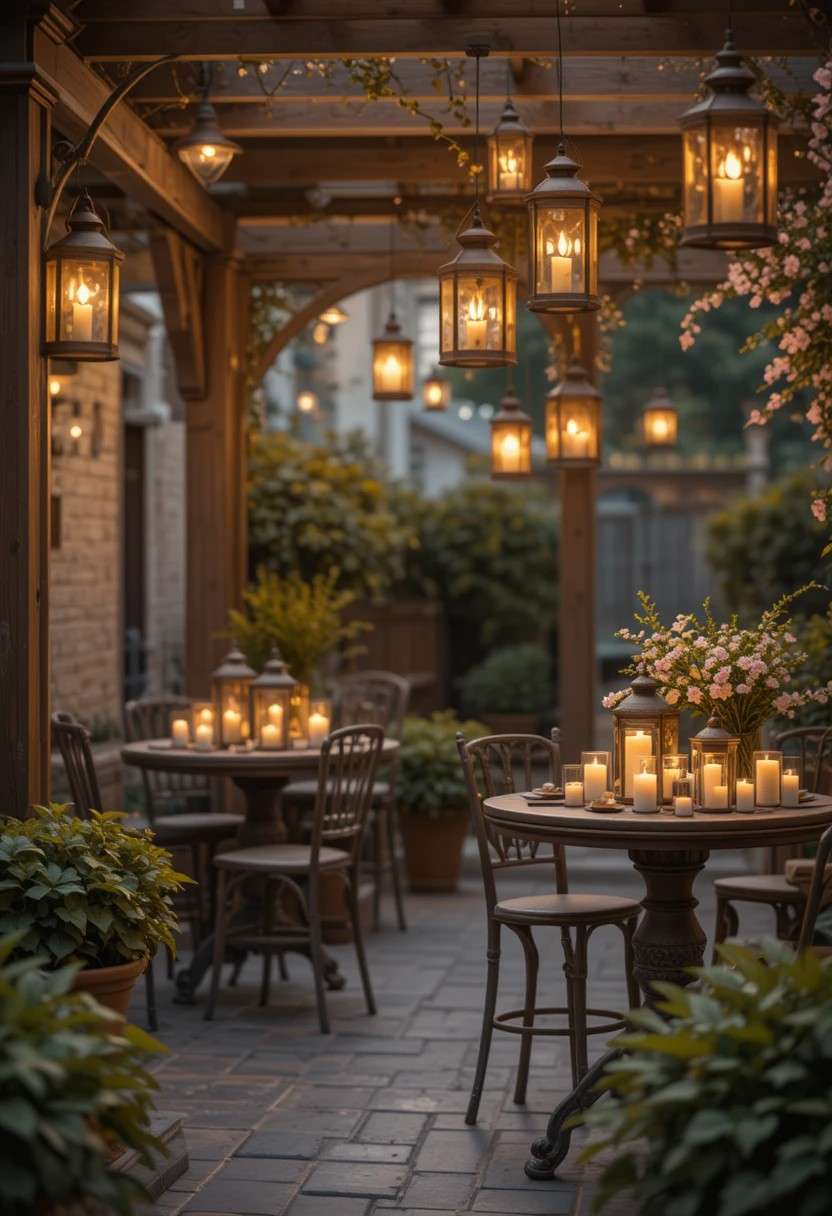
Lanterns were my answer to lighting the corners where string lights could not reach, and I love how they make the patio feel at dusk. I have a mismatched collection — one tall metal lantern from a charity shop, two small glass ones, and a solar lantern that charges itself all day. Clustered on a table or hung from hooks along the fence, they throw a gentle, flickering light that feels far more romantic than any bright bulb. On still evenings I use real tea lights; when the wind picks up, I swap in battery candles. A lantern by the door also makes coming home feel welcoming.
How to do it: Gather two or three lanterns in different heights and materials, then place the tallest near your seat and smaller ones along a table or step. Hang some from sturdy hooks on the fence or pergola. Use real tea lights on calm evenings and battery candles when it is windy, and keep a few spare candles in a drawer.
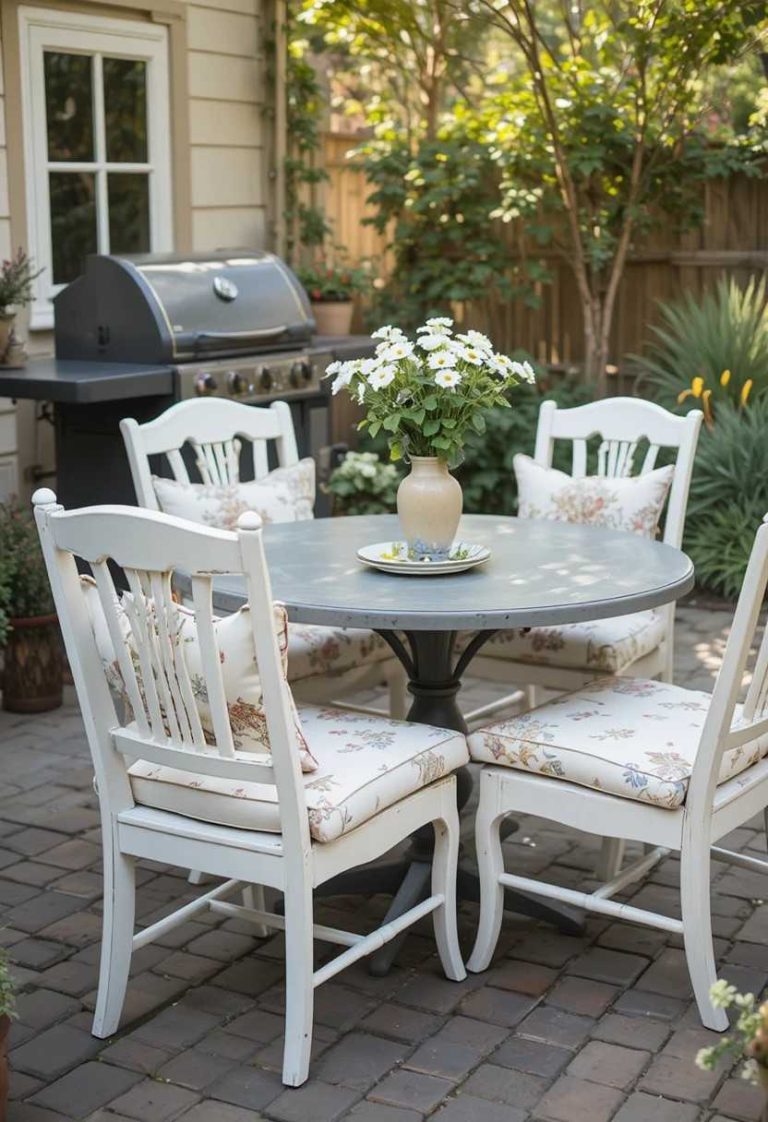
10. Upcycle Old Furniture With Paint
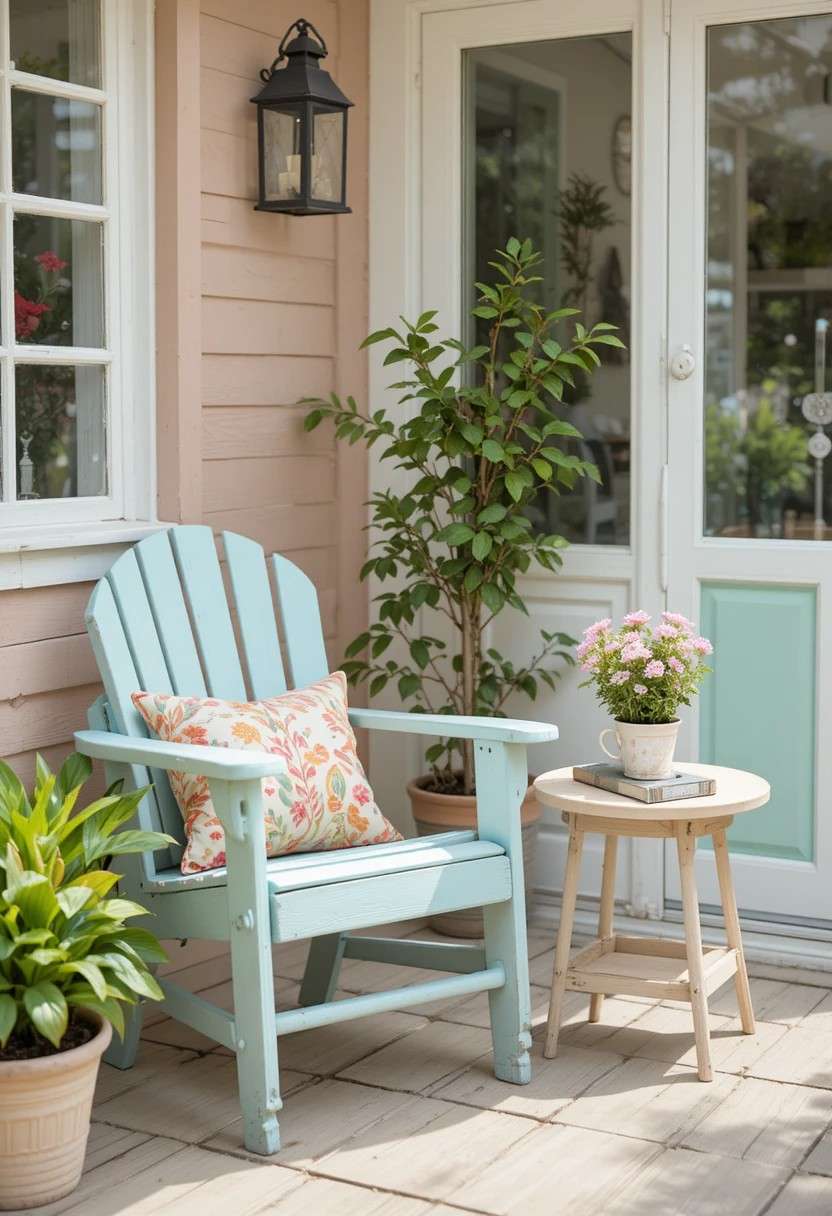
The chair I love most on our patio cost me nothing — it was a wobbly wooden chair from a neighbour’s clear-out, rescued with a sanding block and a tin of sage green paint. A coat of colour is honestly the fastest transformation I know: scuffs vanish, mismatched pieces suddenly belong together, and a tired table looks as if it came from a garden shop. I paint outdoors on a dry day, with a dust sheet underneath, and I always seal the finish so rain cannot undo my work. Charity shops and kerbside finds are full of solid wood waiting for exactly this.
How to do it: Find a sturdy piece with no wobble or broken joints, then clean it well and sand it lightly. Apply a coat of exterior primer, followed by two coats of weatherproof paint in your chosen colour. Finish with a clear outdoor sealant and let it dry fully before putting it outside.
11. Build a Vertical Garden
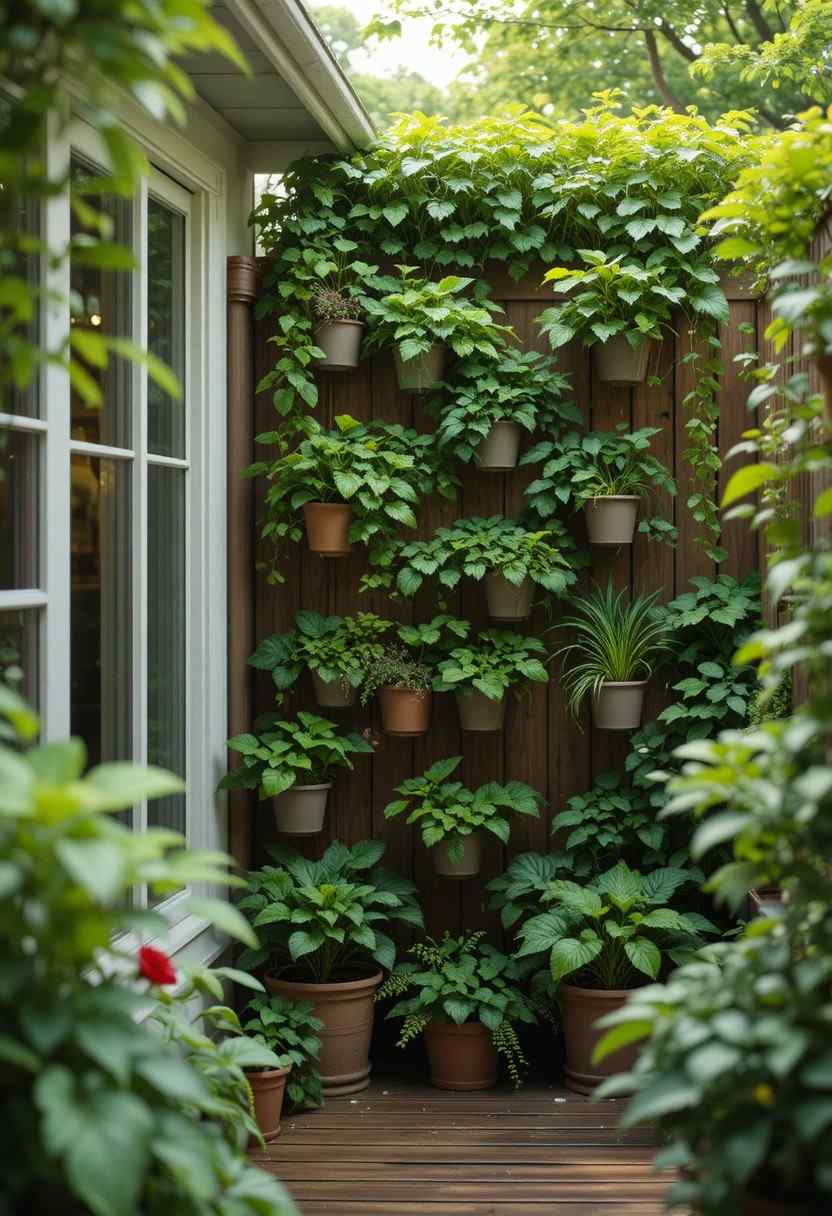
When our patio floor ran out of room, I looked up — and the fence became a garden. A vertical garden made from hanging planters and a simple trellis now holds herbs, trailing lobelia and a small fern, all at eye level where I can actually enjoy them. It is the same trick I would use on a tiny balcony, and these balcony garden ideas show how well planting upwards works when floor space is precious. I water from the top so the lower planters catch the drips, and I check the fixings every spring. A bare wall or fence is a wasted opportunity, in my view.
How to do it: Fix a trellis, a row of wall planters or a pocket planter to a sunny fence or wall, using screws and plugs that suit the surface. Fill each pocket with compost and plant trailing varieties at the top and upright herbs below. Water from the top down and feed monthly through summer.
12. Add a Budget Outdoor Rug
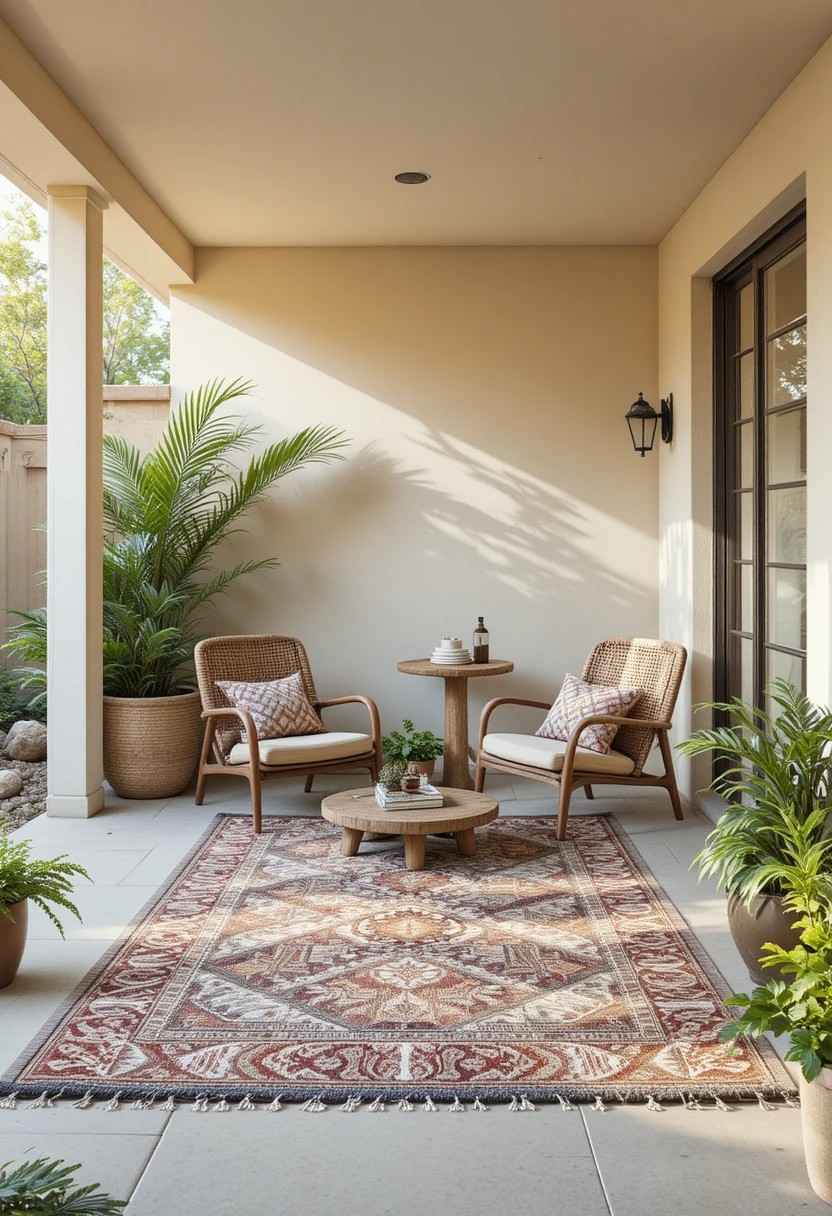
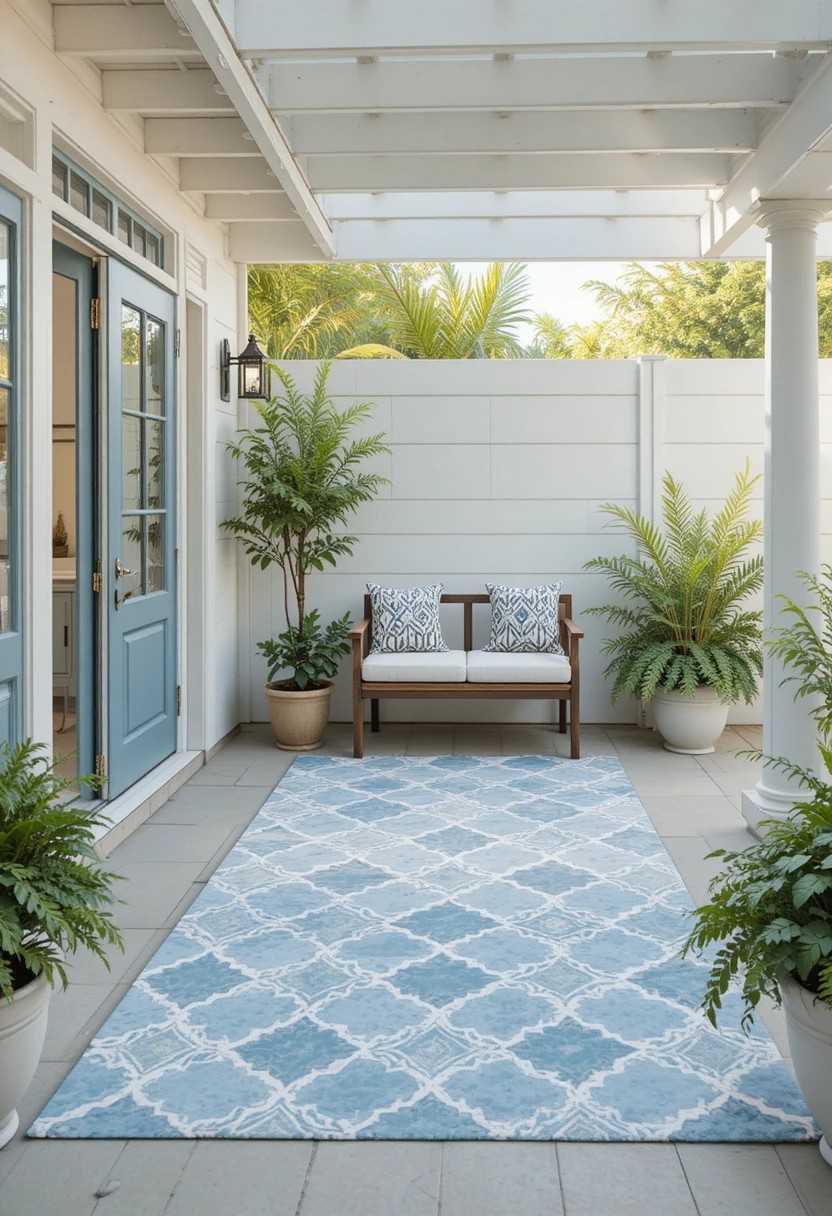
An outdoor rug is the fastest way I know to tell the eye that a patch of paving is a room, and ours cost less than a family takeaway. I chose a flat-weave rug in muted blues that hides muddy footprints, and I laid it under the chairs so the front legs sit on it and the back legs stay on the paving — a small detail that stops it bunching up. It softens hard concrete under bare feet, ties the cushions and pots together, and I can shake it out over the fence in a minute. On wet days I roll it up and lean it under cover, which has kept it looking fresh for years.
How to do it: Measure the seating area and choose a weatherproof rug slightly larger than the chairs. Sweep the patio clean, then lay the rug flat and set the chairs so their front legs rest on it. Shake it out weekly, hose it down when it looks dusty, and roll it up under cover in heavy rain.
13. Make DIY Tin Can Lanterns
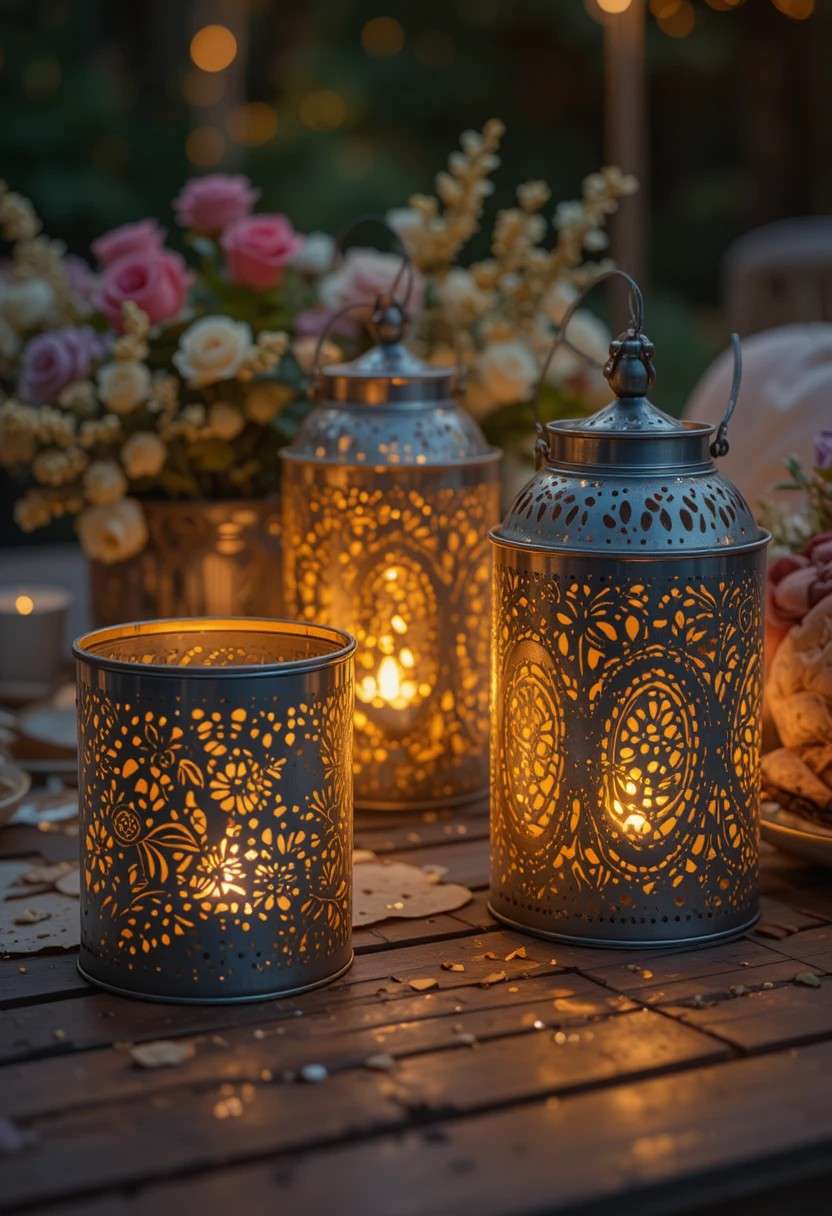
Tin can lanterns are the project I make with my children every summer, and they still delight me every time we light them. We save cans for a week, fill them with water and freeze them so the metal does not dent, then tap patterns of holes with a nail. Once the ice melts and the cans are painted, a tea light inside turns each one into a little glowing jewel. I line them along the steps or hang them from the pergola, and the patterns they throw on the wall are beautiful. It costs nothing, keeps small hands busy for an afternoon, and looks far dearer than it is.
How to do it: Wash empty tin cans and remove the labels, then fill them with water and freeze overnight. Draw a simple pattern on the frozen can and tap holes along it with a hammer and nail. Let the ice melt, dry the can, paint the outside, and place a tea light or battery candle inside.
14. Hang a Privacy Screen With Plants
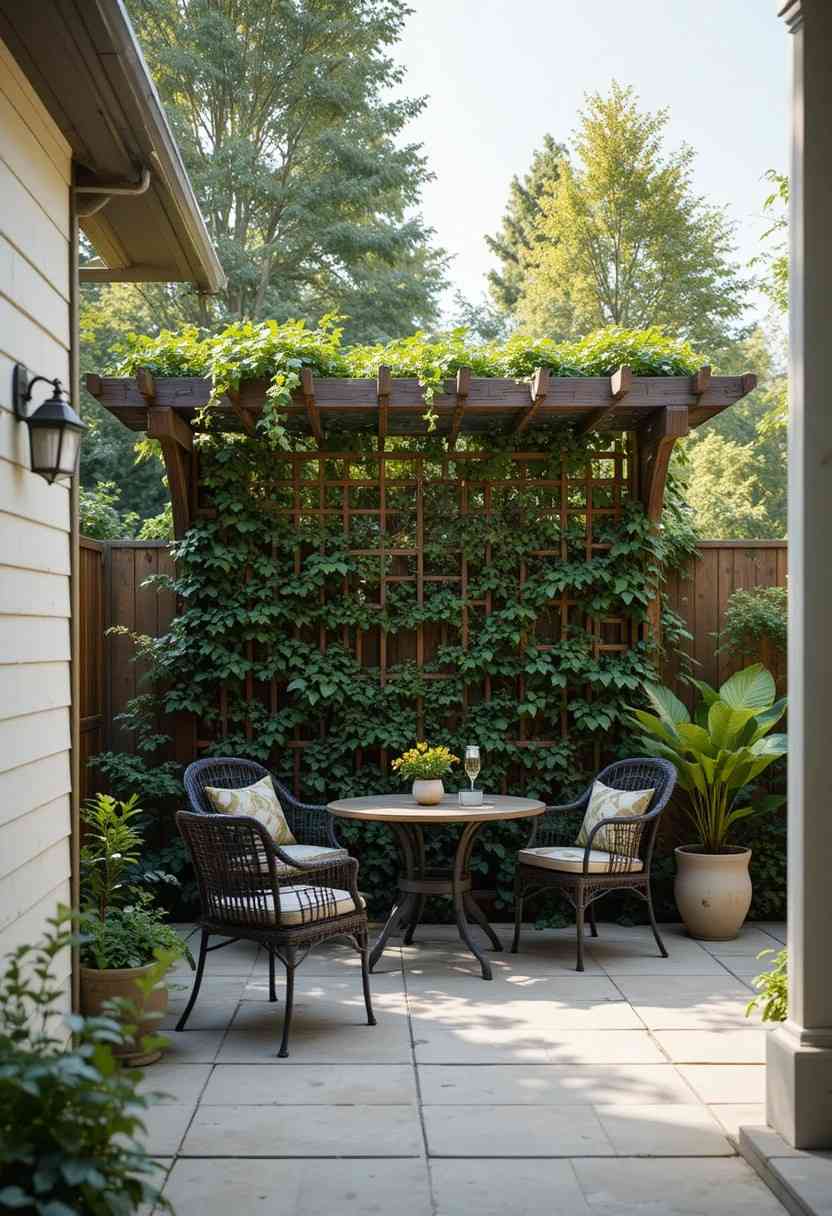
Our patio sits close to the neighbours, and a trellis covered in climbing plants gave us privacy without the coldness of a fence. I fixed two trellis panels to the boundary wall and planted jasmine and clematis at their base, and within a summer the green had softened everything. Even before the plants filled in, the trellis itself broke up the view and made the space feel sheltered. I also hang a length of outdoor fabric behind the climbers on the sunniest side, which filters the glare beautifully. Privacy, I have learned, is mostly about feeling enclosed rather than being hidden.
How to do it: Fix trellis panels or a freestanding frame to the boundary, leaving a small gap behind for air. Plant a fast climber such as jasmine or clematis at the base and tie the stems in as they grow. Add a length of outdoor fabric behind the trellis for instant screening while the plants establish.
15. Set Up a Cozy Coffee or Tea Spot
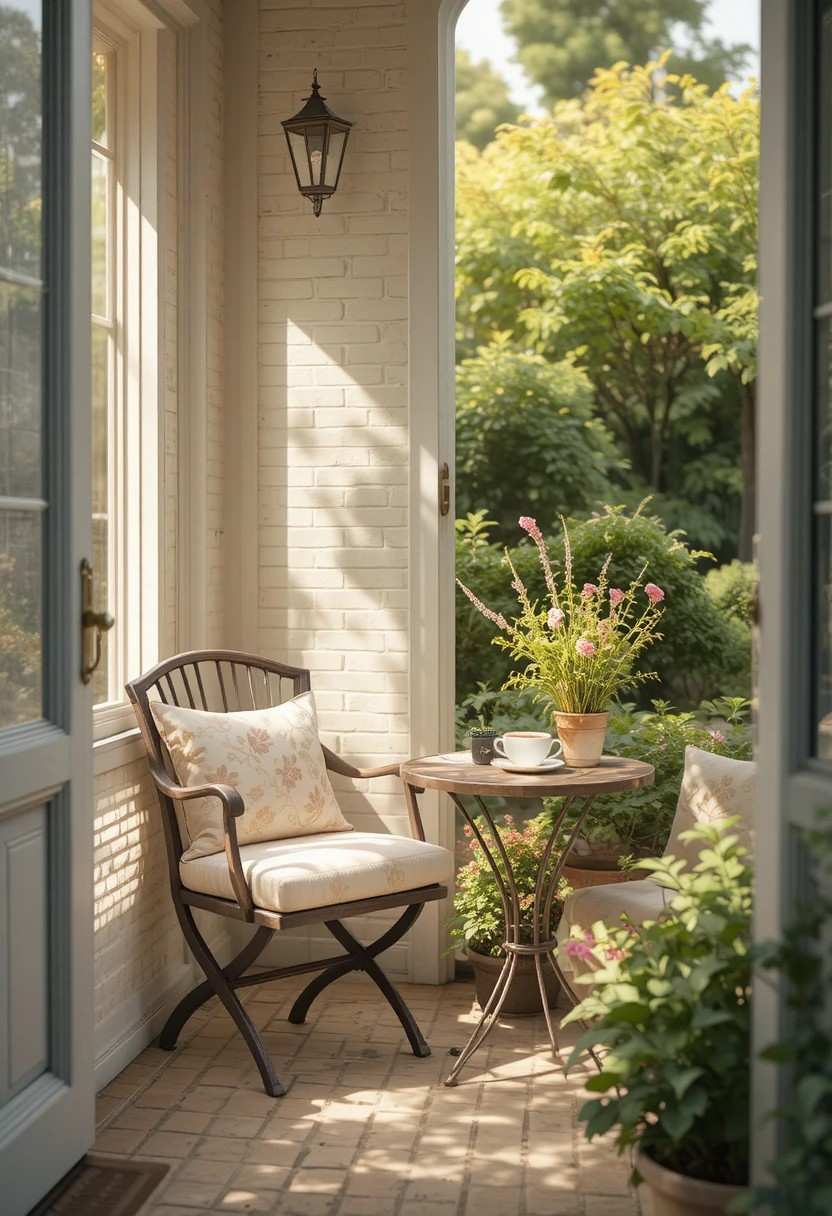
My favourite hour of the day happens at the small table tucked into the sunny corner of our patio, with a mug of tea and the morning still quiet. I set it up with a secondhand bistro chair, a tiny table just big enough for a book and a cup, and a pot of lavender that scents the air as the sun warms it. Nothing about it was expensive, but having a dedicated spot changed my mornings — I actually sit down now, instead of drinking my tea standing in the kitchen. A little tray keeps everything tidy, and a cushion means I linger longer than I planned.
How to do it: Choose the sunniest, most sheltered corner and set down a small table and one comfortable chair. Add a potted plant, a cushion and a tray for your mug and book. Keep a small watering can nearby so the plant stays happy, and store the cushion indoors in wet weather.
16. Use Solar Powered Garden Lights
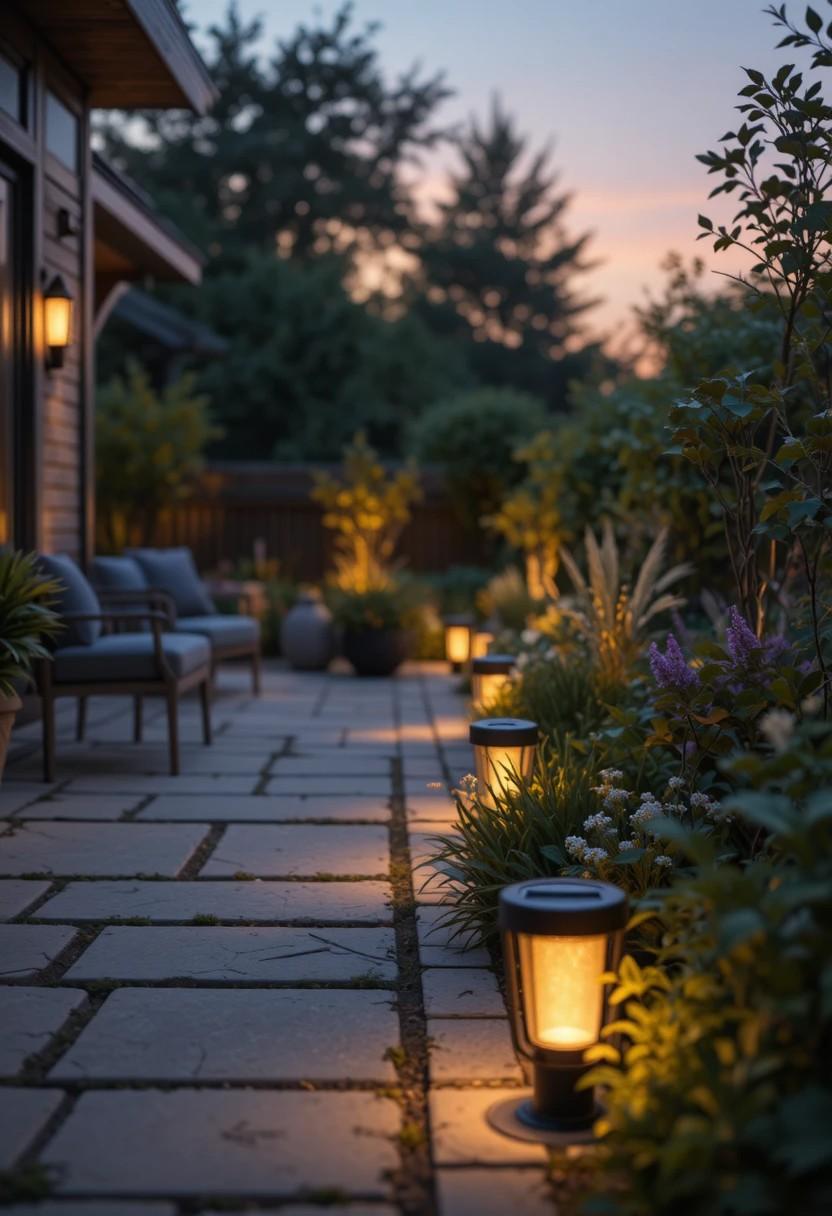
Solar lights were the first lighting I bought for our patio, because there was no wiring to worry about and no running cost at all. I pushed a row of small stake lights along the path to the back door, and added a few among the pots, and the effect at dusk still pleases me — a gentle line of warm light guiding you outside. They charge themselves all day and switch on as the light fades, which means I never have to remember them. I wipe the little solar panels every month or so, since a dusty panel charges poorly. For a few pounds, they are hard to beat.
How to do it: Place solar stake lights along paths and around the seating edge, spacing them evenly and pushing each spike firmly into soil or a pot. Make sure the panels face the sun for at least six hours a day. Wipe the panels clean monthly and replace rechargeable batteries when the glow fades.
17. Add a DIY Outdoor Bar Cart
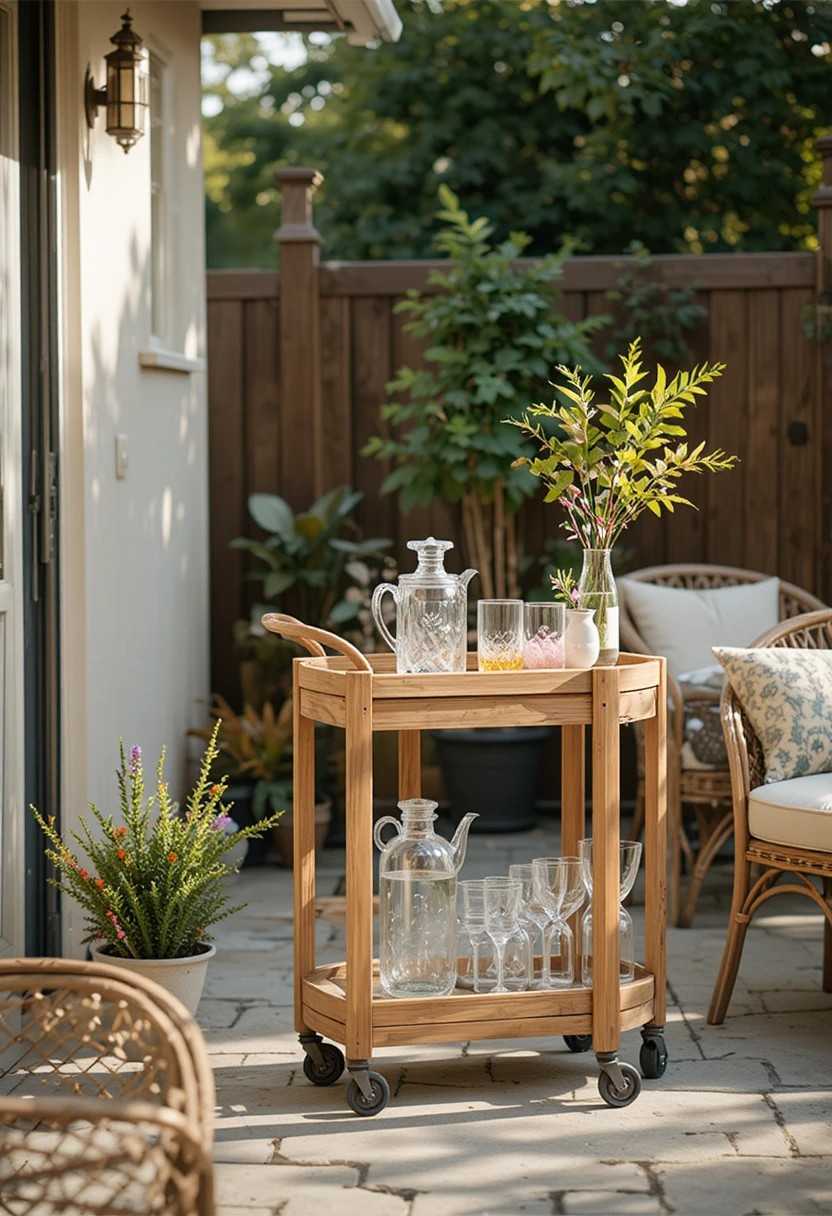
Our bar cart started as an old shelving unit on wheels that I found at a car boot sale, and it is now the hardest-working piece on the patio. I painted it a cheerful teal, added hooks for cups and a rail for a tea towel, and stocked it with glasses, a jug and a few bottles. When friends come round, I wheel it out beside the seating; when they leave, it tucks neatly against the wall. It pairs beautifully with a proper cooking corner, and these budget BBQ area ideas show how a cart like this can anchor a whole grilling set-up without spending much. A cart, I have found, makes hosting feel easy rather than an event.
How to do it: Hunt for a sturdy trolley or small shelving unit with wheels, then clean it and paint it with weatherproof paint. Add hooks along one side for cups and a rail for a cloth. Stock the top with glasses and a jug, keep bottles on the lower shelf, and wheel it under cover when rain is forecast.
18. Decorate With Hanging Planters
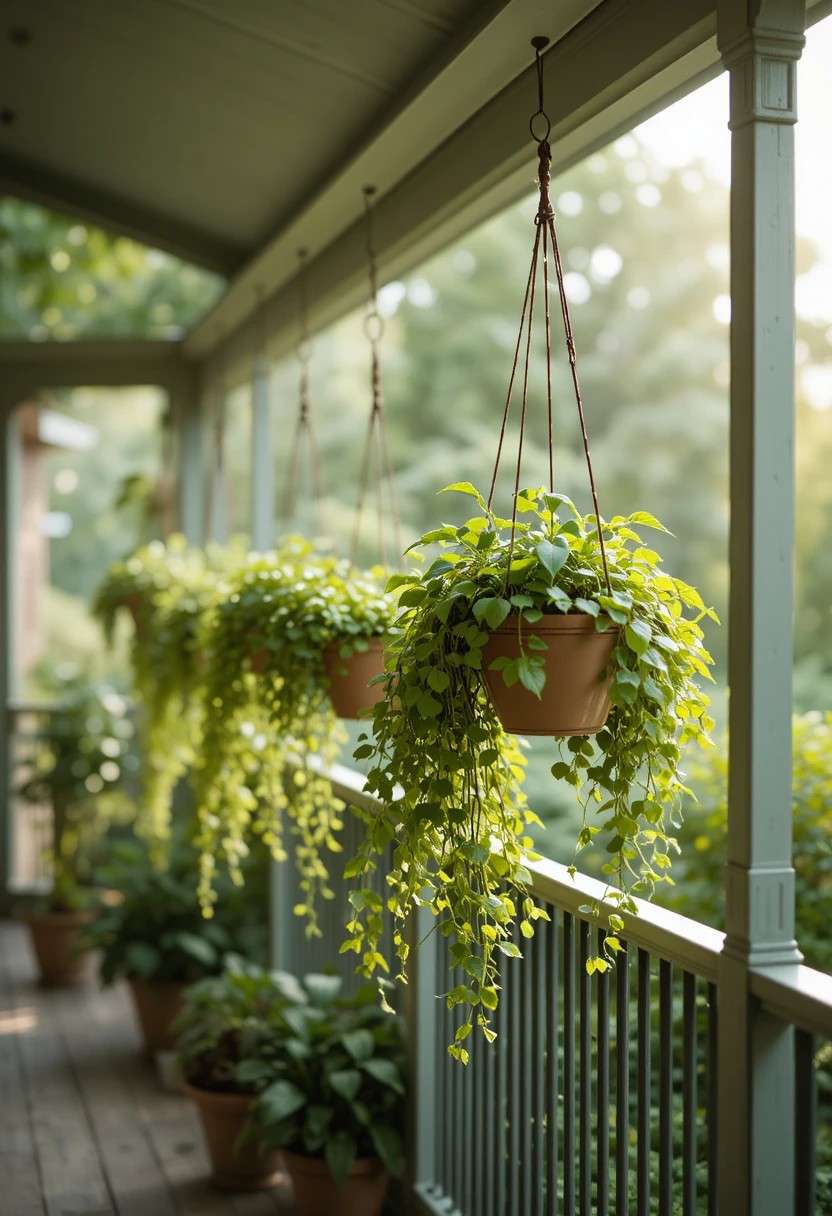
Hanging planters are how I filled the empty air above our patio without losing a single inch of floor, and the effect is lovely at eye level. I have a macramé hanger by the door with trailing ivy, a pair of metal baskets under the pergola, and a small herb planter that hangs within reach of the kitchen door. They sway gently in the breeze, which makes the whole patio feel alive, and they are easy to take down for watering. I always check the hooks can carry the weight when the soil is wet, because a soaked planter is far heavier than it looks.
How to do it: Choose planters with strong hangers and fix sturdy hooks into a pergola beam, wall bracket or fence. Fill them with light compost and trailing plants such as ivy or lobelia, leaving room for watering. Hang them at different heights, water slowly so the soil absorbs it, and check the hooks each spring.
19. Create a Pebble or Stone Border
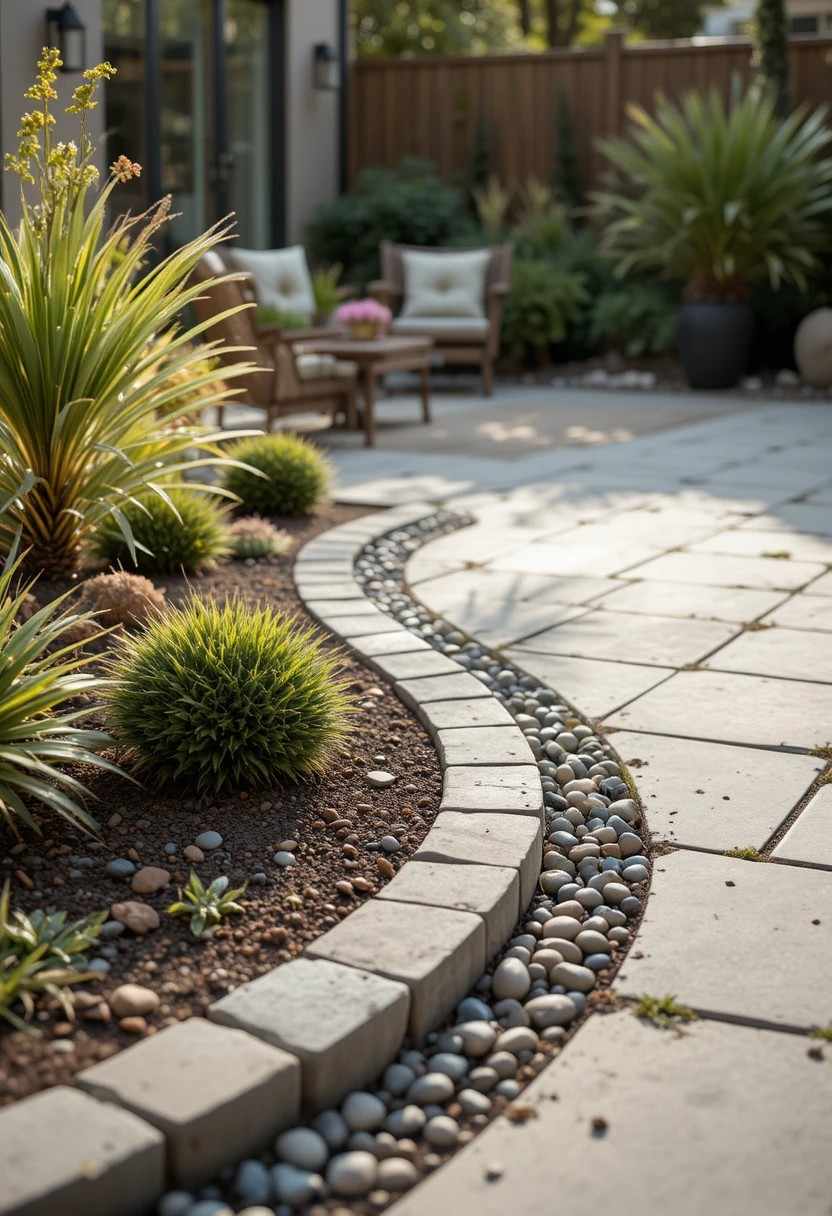
A pebble border was the finishing touch our patio needed, and it cost less than a bag of compost. I laid a shallow trench of pale stones along the edge where the paving meets the lawn, and suddenly the whole space looked deliberate rather than accidental. The stones stop soil washing onto the slabs when it rains, and they give the pots a neat frame. I used two sizes mixed together, which looks far more natural than a single uniform stone. The same low-maintenance thinking runs through these gravel garden ideas, which show how stone and gravel can shape a whole garden with very little upkeep.
How to do it: Mark the border line with string, then dig a shallow trench about 8 cm deep along the patio edge. Lay landscape fabric in the trench to stop weeds, then fill it with washed pebbles or stones in two mixed sizes. Rake them level, top up thin patches each spring, and sweep stray stones back after heavy rain.
20. Add an Outdoor Mirror for Space
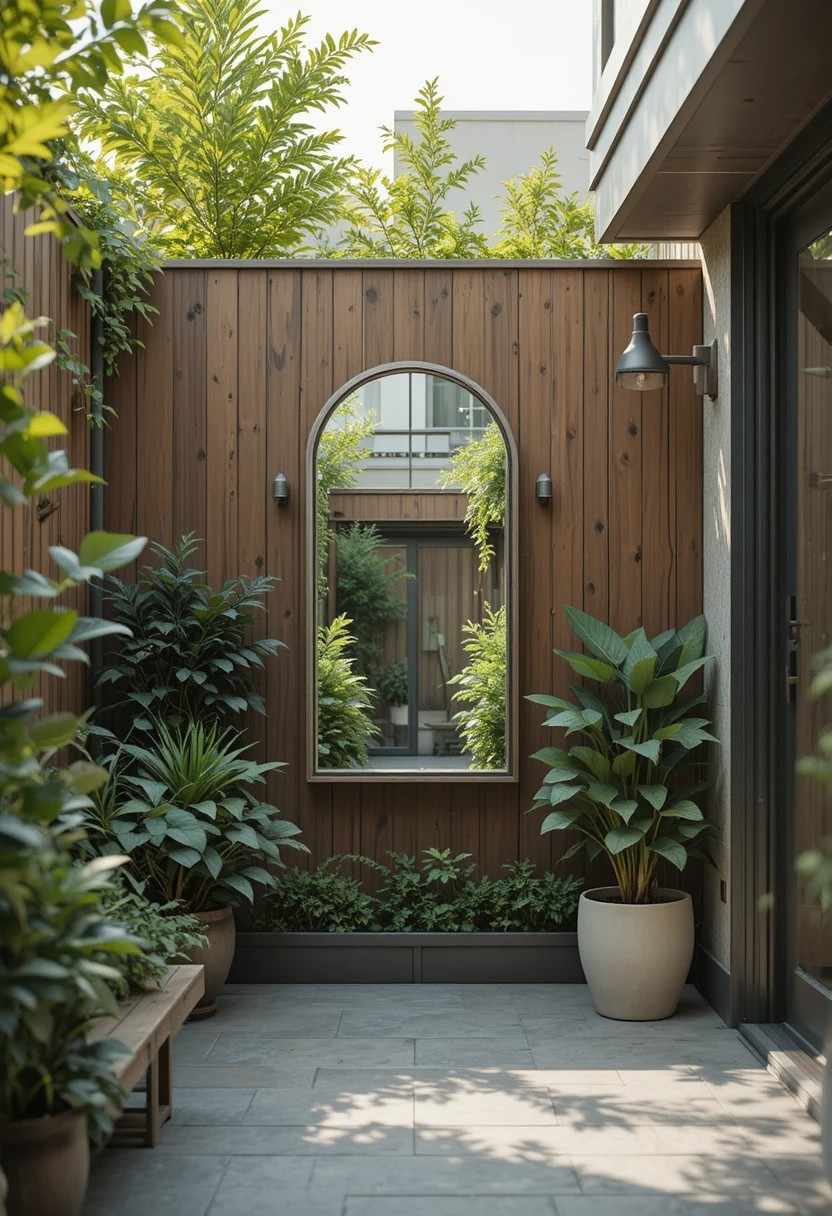
An old mirror on our fence is the trick that makes our small patio feel twice its size, and visitors always ask where it came from. I found a wooden-framed mirror at a charity shop, sealed the back and frame against damp, and hung it where it reflects the greenery rather than the house wall. Now the plants seem to double, the light bounces deeper into the seating area, and the fence itself almost disappears. I check the fixings regularly and wipe the glass after rain, but otherwise it asks for nothing. On a tiny patio, reflection is honestly cheaper than an extension.
How to do it: Find a mirror with a solid frame and seal the back and edges with outdoor sealant. Hang it securely on a fence or wall where it reflects plants and sky, not a blank wall. Fix it with heavy-duty screws and wall plugs, then wipe it clean after rain and check the fixings each season.
21. Make a DIY Wooden Planter Box
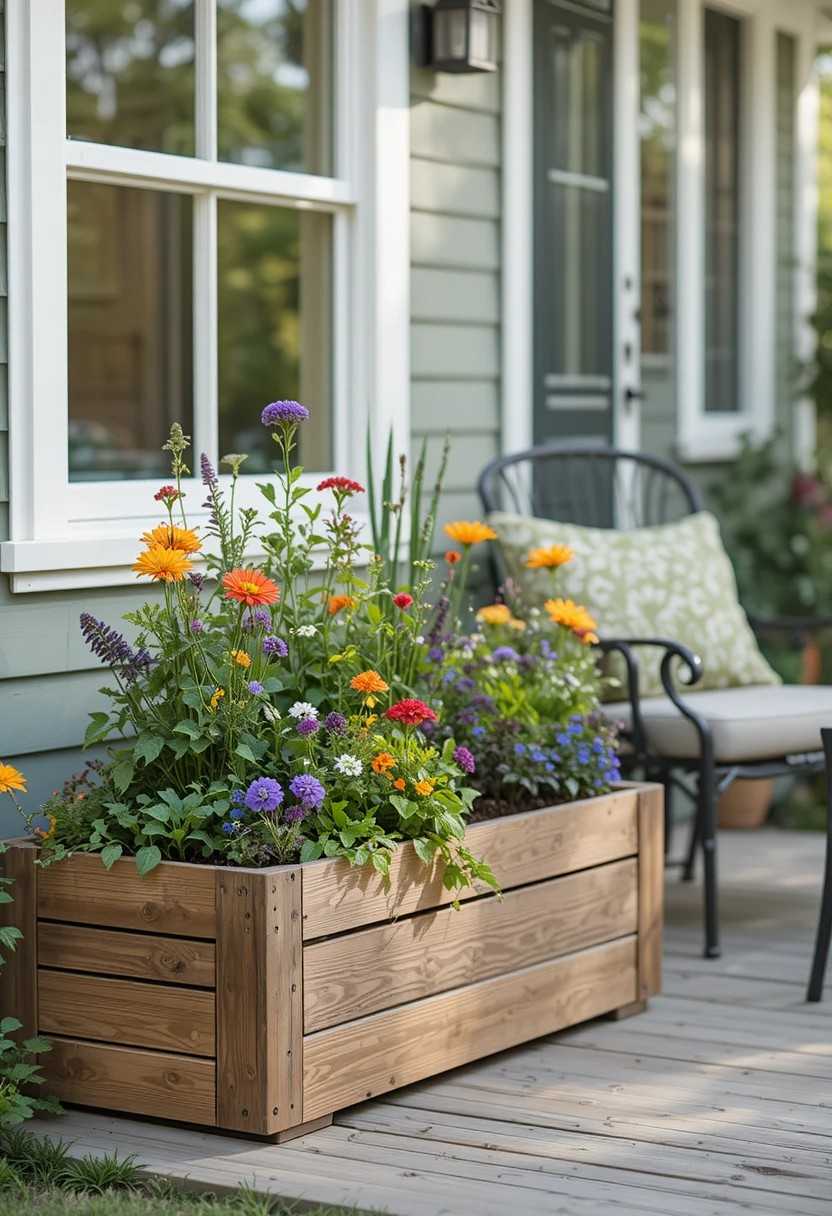
My wooden planter box is the most satisfying thing I have built for the patio, and it still stands straight after three winters. I made it from offcuts of decking board, screwed into a simple rectangle with a liner inside, and filled it with herbs I use almost daily — rosemary, thyme and a mint that has its own corner because it spreads so fast. Building it myself meant it fits the gap beside the door exactly, which no shop-bought planter would have done. It also raises the herbs to a height where I can snip them without bending, which my back appreciates.
How to do it: Cut decking offcuts or pallet wood into four sides and a base, then screw them together into a rectangle. Line the inside with landscape fabric and drill drainage holes in the base. Fill with compost, plant herbs or flowers, water well, and stand the box where it catches at least six hours of sun.
22. Add Cozy Outdoor Curtains
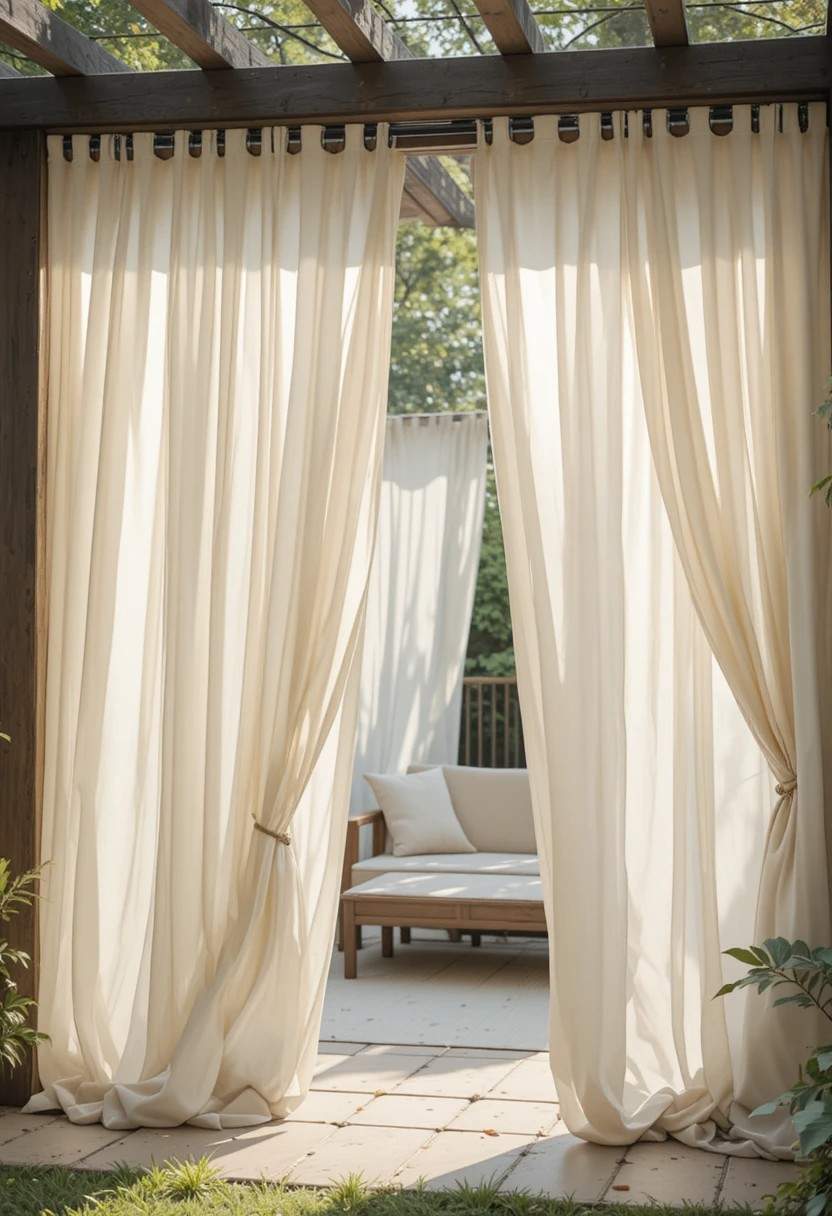
Outdoor curtains were my answer to a patio that caught the full afternoon sun, and they changed how long we stay outside. I hung two panels of lightweight outdoor fabric from a wire along the pergola, and now I can draw them across when the sun is fierce or the wind picks up. They soften the edges of the space, give a little privacy from the road, and billow gently in a way that feels almost holiday-like. I chose a pale, washable fabric and tie the panels back with simple rope ties on calm days. When a storm is forecast, they come down in a minute.
How to do it: Fix a wire or curtain rod along the pergola or frame, then thread lightweight outdoor fabric panels onto rings. Hang them so they just brush the floor and add tie-backs for calm days. Take the panels down in strong wind, wash them at the end of the season, and store them dry.
23. Style a Small Bistro Set
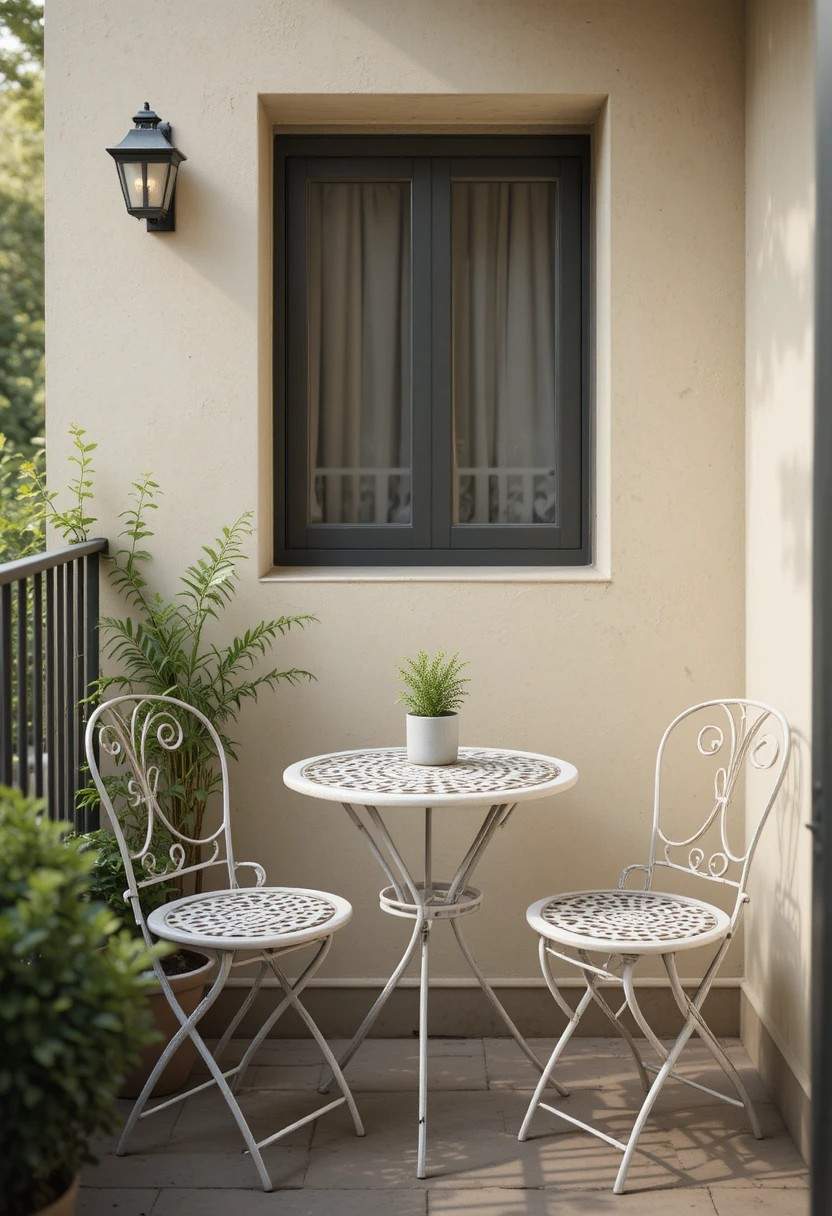
Our little bistro set — a round metal table and two folding chairs — is where most of our outdoor life actually happens. It is small enough to fit the sunniest corner of the patio, yet big enough for breakfast for two or a glass of wine at dusk. I painted the chairs a soft cream, added two thin cushions, and set a small potted geranium in the middle as a permanent centrepiece. It folds away in winter, which matters when space is tight, and it has survived three summers of daily use. Small, I have learned, is not the same as cramped.
How to do it: Pick a flat, sheltered corner and set down a small round table with two chairs. Add thin seat cushions and a small potted plant as a centrepiece. Check folding chairs lock open safely, keep a cloth handy for morning dew, and fold the set away under cover in winter.
24. Hang DIY Wind Chimes or Decor

Wind chimes are the sound of summer on our patio, and I made ours from things I already had at home. Old keys, a few smooth shells from a seaside walk, and some driftwood now hang from a branch by the back door, and they tinkle softly whenever a breeze passes. I love that the sound is gentle rather than constant — it marks the wind without demanding attention. My daughter added painted beads, which catch the light and make it hers as much as mine. It is a small, personal piece, and it reminds me that decoration does not have to be bought to be beautiful.
How to do it: Gather light items such as old keys, shells, beads or cutlery and tie them to lengths of twine at different heights. Fix the twine to a branch, a hoop or a piece of driftwood, then hang it from a sturdy hook where it catches the breeze. Keep it sheltered in storms and check the knots each spring.
25. Finish With Personal Cozy Touches
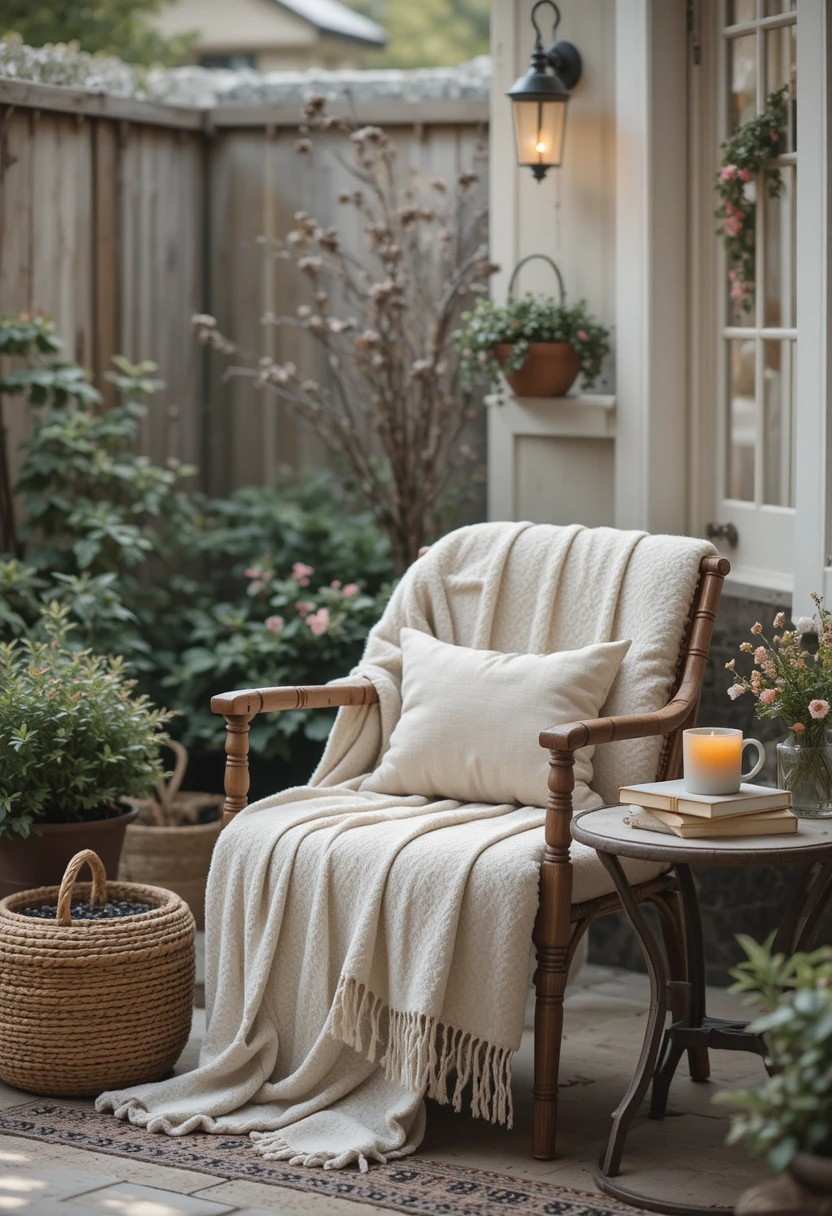
The final touches are the ones that make our patio feel like ours rather than a photograph from a catalogue. A favourite mug left by the chair, a soft blanket folded over the armrest for cool evenings, a little stack of books on the crate table, and the shells my children collected on holiday — these are the things I notice every day. I change them with the seasons: a lantern in autumn, a jug of fresh flowers in spring. None of it cost much, and none of it was bought all at once. A patio becomes personal slowly, one small beloved thing at a time, and that is exactly how it should be.
How to do it: Gather a few things you already love — a favourite mug, a soft blanket, a book or two, and something collected on a trip. Place one or two in each corner of the patio rather than crowding them together. Swap a couple of pieces each season so the space stays fresh, and bring fabric items indoors in wet weather.
Frequently Asked Questions
How much does it cost to decorate a patio on a budget?
Most of the ideas here cost very little, and several cost nothing at all if you use materials you already have. String lights, paint and secondhand furniture are the best places to start, because each one makes a visible difference for a small outlay. I would begin with lighting and seating, then add plants and textiles as you find them. A welcoming patio can honestly come together for the price of a weekly shop.
What is the cheapest way to make a patio feel cosy?
Soft textiles and warm light do more than anything else, and both are inexpensive. A washable outdoor rug, a couple of thick cushions and a strand of warm white lights can transform a bare slab in a single afternoon. Add a potted plant or two for life and colour, and the space will already feel like a room. Start with those three things before spending on anything bigger.
How do I decorate a small patio without crowding it?
Choose pieces that earn their space by doing more than one job, such as a crate that stores cushions and works as a table. Grow plants upwards on a trellis or in hanging planters, and keep the floor clear for moving around. A small bistro set and a mirror on the fence will make the space feel larger rather than fuller. If in doubt, take one thing away and see how the patio breathes.
Will DIY patio decor survive rain and winter?
Yes, as long as you choose weatherproof materials and store soft items under cover. Seal painted wood, use outdoor-rated lights and fabrics, and bring cushions and throws indoors when rain is forecast. Solar lights and sealed mirrors cope well outside all year, but a little seasonal care keeps everything looking fresh. I check fixings and seals each spring, which takes less than an hour.
What should I do first if my patio is completely bare?
Start with the floor and the seating, because everything else builds on those two. Sweep the paving, paint a rug or lay an inexpensive outdoor rug, then set out one comfortable chair with a cushion. Once you have somewhere pleasant to sit, add a strand of lights and a pot of greenery. After that, the rest of the ideas will fall into place one weekend at a time.
Your Cheap DIY Patio Checklist
☐ Sweep and wash the patio floor
☐ Hang a strand of warm outdoor lights
☐ Set out one comfortable seat with a cushion
☐ Lay or paint an outdoor rug to define the seating area
☐ Group three or five potted plants near the seating
☐ Add a side table from crates or a rescued piece
☐ Place lanterns or solar lights for evening glow
☐ Build or buy one planter box for herbs
☐ Hang a privacy screen or curtains where the patio feels exposed
☐ Add a small table for morning coffee
☐ Set up a fire pit corner with a bucket of sand nearby
☐ Finish with a throw, a favourite mug and one personal touch
Bringing It All Together
A beautiful patio does not ask for a big budget — it asks for a little imagination, a few honest materials, and the willingness to start with one small project. Whether you hang a single strand of lights, rescue a chair with paint, or build a planter from offcuts, each change makes the space more yours. Pick the idea that made you smile, gather what you already have, and give yourself one relaxed weekend to begin.
Then keep going slowly, one idea at a time, and let the patio grow with you. Add a cushion here, a pot there, a lantern for the evenings — and before long, the plain slab outside your back door will be the place everyone wants to sit. I hope these ideas help you make it so, and I would love to hear which one you try first.

2 Comments