16 Shoe Rack Ideas for Small Spaces That Actually Work (And Look Amazing)
Let’s be honest — shoes take over. One minute your entryway looks clean, the next it’s a chaotic pile of sneakers, sandals, and that one boot you’ve been searching for since Tuesday. If you’re living in a small apartment, condo, or cozy home, you know this struggle. But here’s the good news: you don’t need a massive mudroom to keep your shoes organized and your space looking beautiful. These shoe rack ideas for small spaces will change everything.
1. Over-the-Door Shoe Organizer
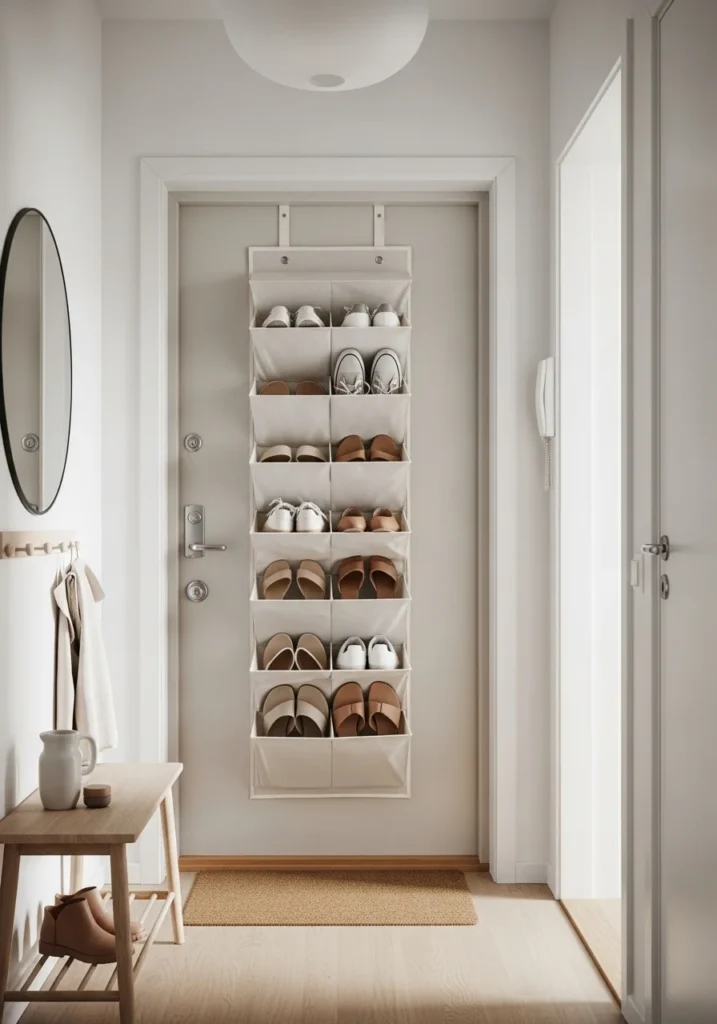
I first tried this in a flat where the front door opened straight into the living room, and there was nowhere — not a centimetre — for a rack. I hung a canvas organiser on the back of the door, and by morning every pair had a pocket of its own. Trainers went at eye level, sandals below, and the pair I reach for on wet days stayed at the bottom where I could grab them without thinking. It still surprises me how much calmer the room feels when the floor is clear. If you rent, try this one first, because it leaves no holes and no trace behind.
How to do it: Choose a sturdy over-door organiser with clear or fabric pockets, hang the hooks over the door, and check that the door still closes easily. Put everyday shoes at eye level, lighter pairs higher up, and heavier boots at the bottom. Leave one pocket free for keys, a spare pair of laces, or the dog lead, and wipe the pockets down once a month.
2. Floating Wall-Mounted Shoe Shelves
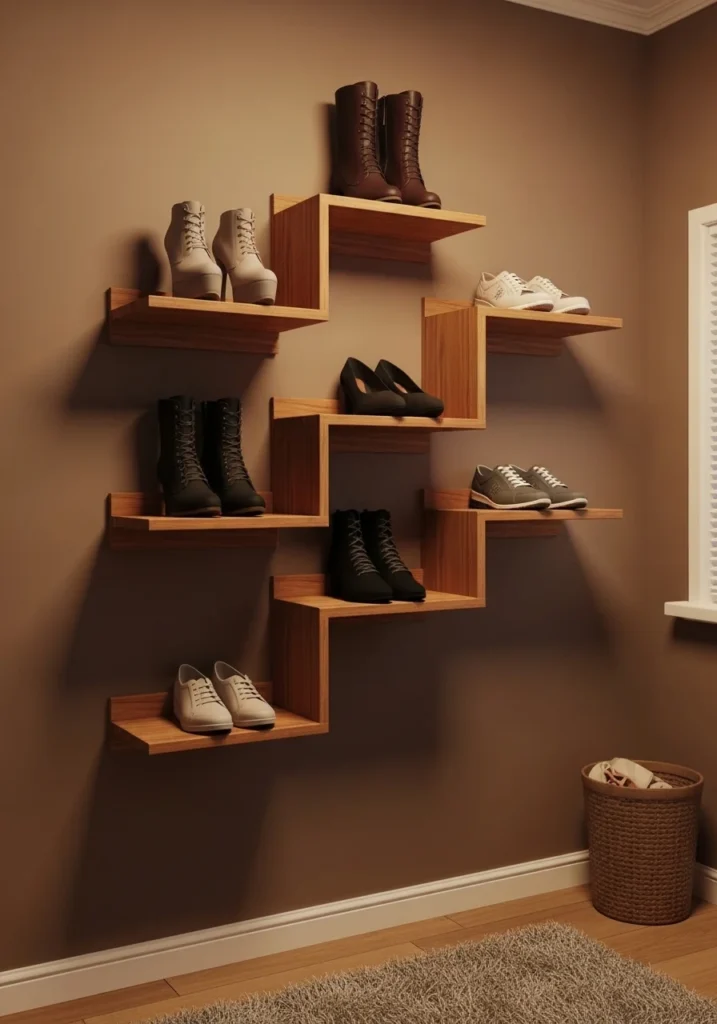
I love how these shelves make shoes look deliberate instead of dumped. In my hallway, a pair of slim oak shelves turned a blank white wall into the first thing guests notice — in a good way. I keep my favourite everyday pairs there, the ones with clean lines and colours I actually enjoy seeing. The floor stays completely clear, which makes sweeping take about thirty seconds, and the room feels taller somehow. If your hallway is narrow, this is the lightest-looking option of all, because nothing touches the floor.
How to do it: Measure the wall, mark studs or use strong plasterboard fixings, and fit two or three shelves about 30 centimetres apart. Angle them very slightly upward, test each one with a pair of shoes before loading it fully, and keep the top shelf for your best-looking pairs. Leave breathing room between pairs so the display stays calm.
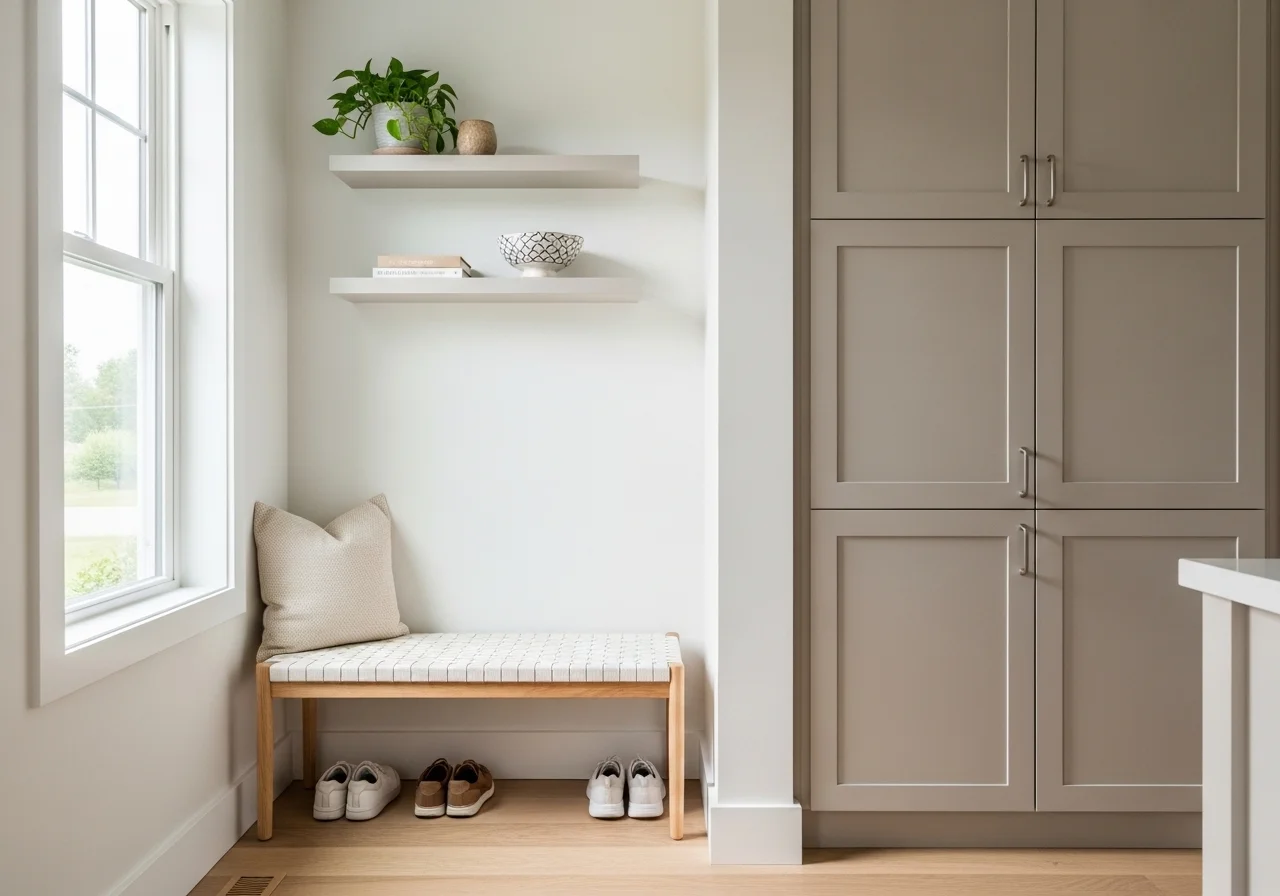
3. Slim Entryway Bench With Hidden Shoe Storage
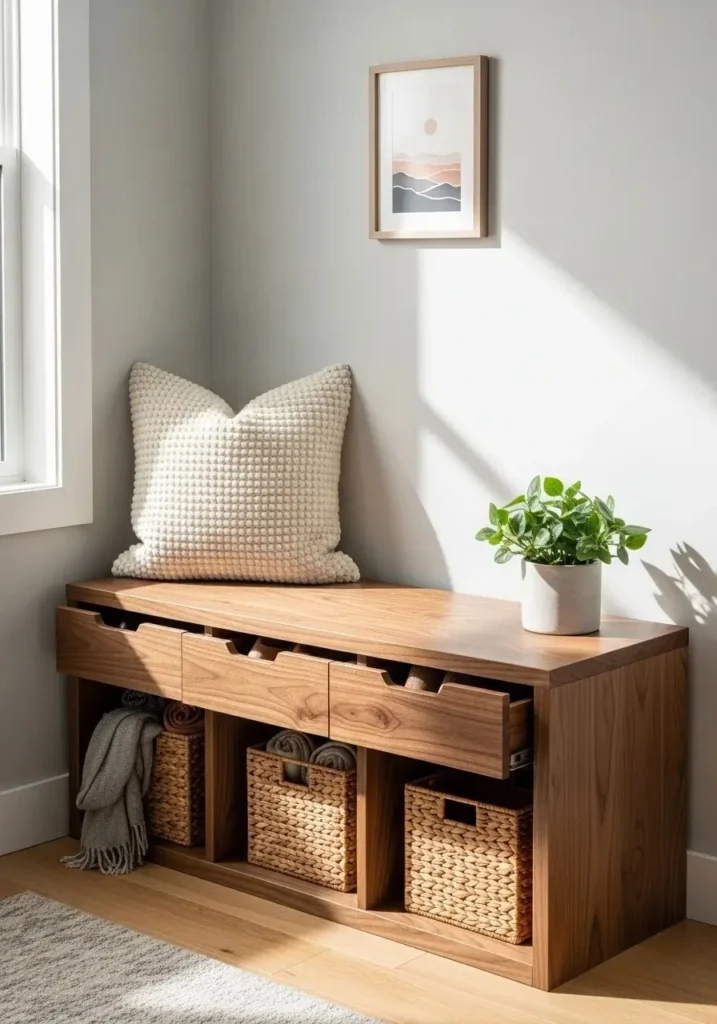
I still remember sitting on the floor to tie my laces in our old flat, with shopping bags on one side and a pile of shoes on the other. A slim bench changed that small daily moment completely. I could sit down, put my shoes on properly, and slide them straight underneath when I came home. The cubbies underneath hold four pairs easily, and a basket on one side swallows scarves, hats, and the odd glove. If you want the same calm, organised feeling on a slightly larger scale, these small mudroom ideas are worth a look before you choose your bench.
How to do it: Measure your wall, choose a bench no deeper than 35 centimetres, and place it where the door swings clear. Add a cushion for comfort, put a basket in one cubby for accessories, and assign each person one cubby so pairs stop migrating across the floor. Wipe the bench weekly and rotate seasonal shoes out.
4. Tension Rod Shoe Rack Inside a Cabinet
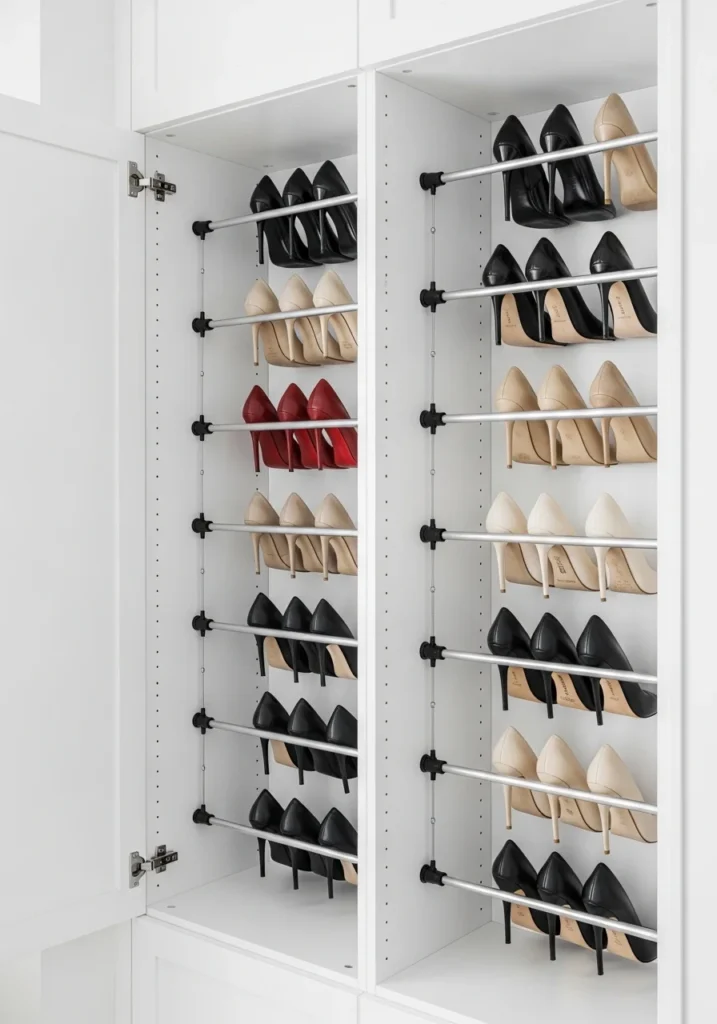
This is the cheapest fix in the whole list, and honestly one of the cleverest. I first saw it in a friend’s tiny kitchen cupboard, where two slim rods had doubled her storage overnight. Heels hook neatly over the rods by their toes, so they hang in a tidy row instead of toppling over each other. It costs less than a takeaway, takes about ten minutes, and needs no drilling at all. I now use the same trick inside a deep hallway cupboard for my own heels, and every time I open the door I wonder why I waited so long.
How to do it: Measure the inside width of the cabinet, buy two tension rods to fit, and twist them until they sit firmly at different heights. Hang heels by their toes over the rods, keep flats and trainers on the cabinet floor below, and test the rods with your heaviest pair first. Adjust the height until nothing slips.
5. Ladder Shoe Rack in the Corner
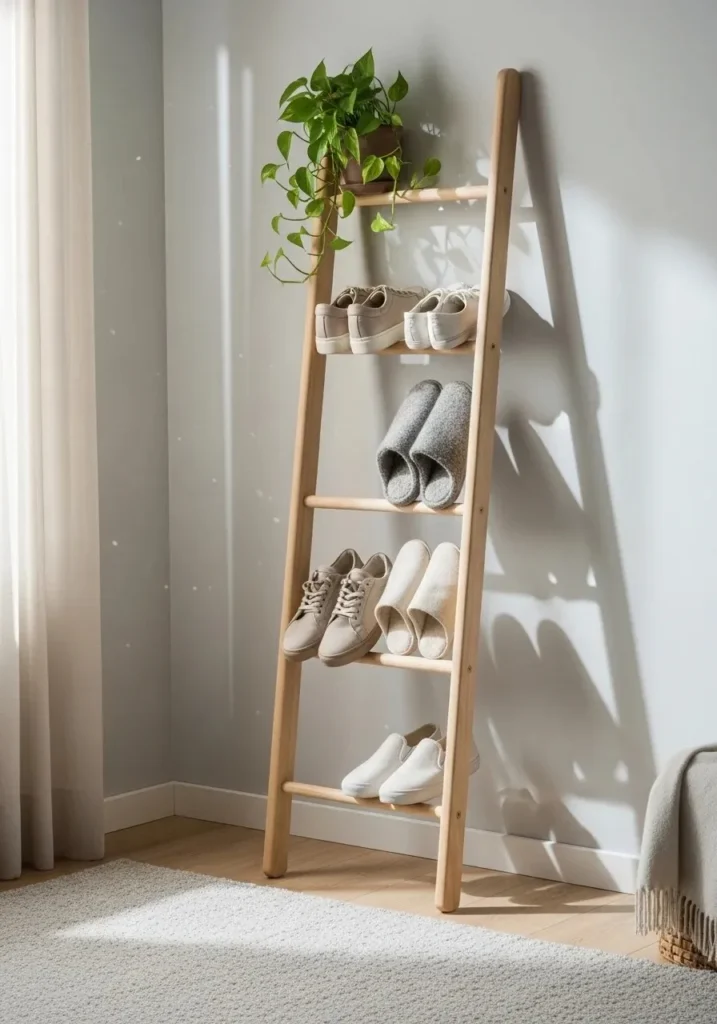
My corner used to be a dead zone — a bit of floor where nothing quite fit and everything got dumped. A leaning ladder rack changed it into my favourite corner of the room. I chose a pale birch ladder because it feels light and calm, and each rung holds two pairs without crowding them. Trainers sit on the lower rungs, sandals higher up, and the whole thing leans gently against the wall without any fixing. It takes up so little floor space that I almost forget it is there, until someone asks where I found it.
How to do it: Choose a ladder rack that fits your corner, lean it at a safe angle, and check it does not wobble. Put heavier shoes on the lower rungs, lighter pairs above, and keep the top rung free or use it for a small plant. Anchor it to the wall if you have small children or pets.
6. Stacked Milk Crate Shoe Storage
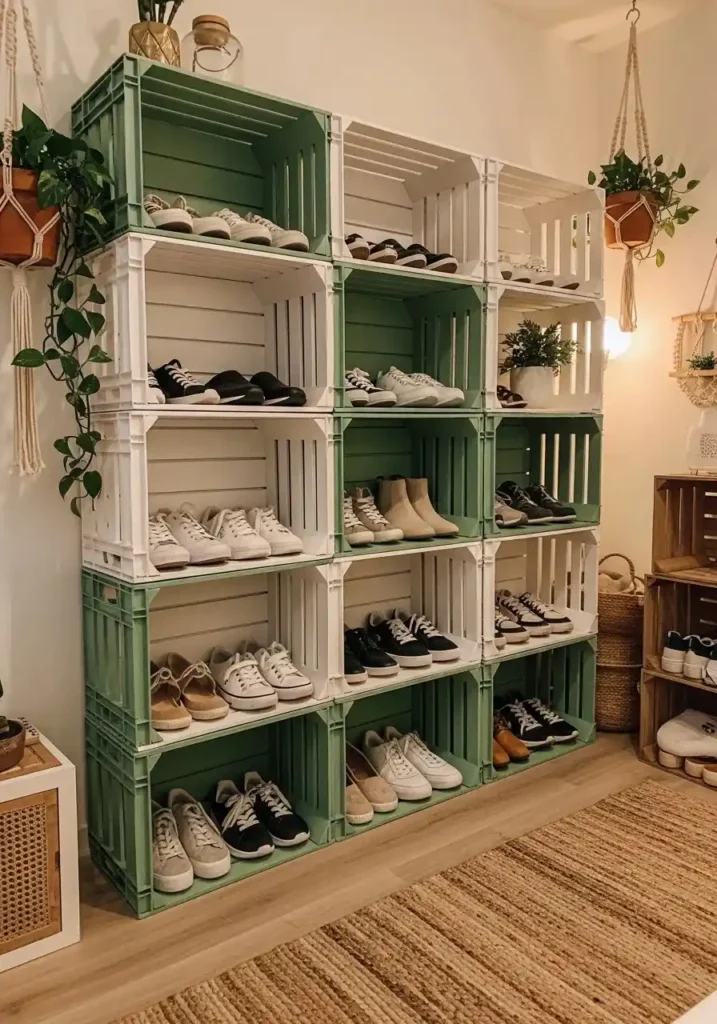
I was sceptical about milk crates at first — I worried they would look like student storage. Then I painted a stack of them warm white, and they looked surprisingly smart against our pale hallway wall. Each crate holds one or two pairs, and because they are open, I can see everything at a glance. I stacked six in a grid, three across and two high, and suddenly our shoes had a proper home. It is the kind of project you can finish in an afternoon, and rearrange later if your hallway changes.
How to do it: Clean the crates, paint them in one colour, and let them dry fully. Stack them in a grid, cable-tie or screw them together from the inside, and line the bottom of each crate with cork or felt. Put everyday shoes at waist height, seasonal pairs at the bottom, and keep one crate free for bags or hats.
7. Under-Bed Shoe Storage Drawers
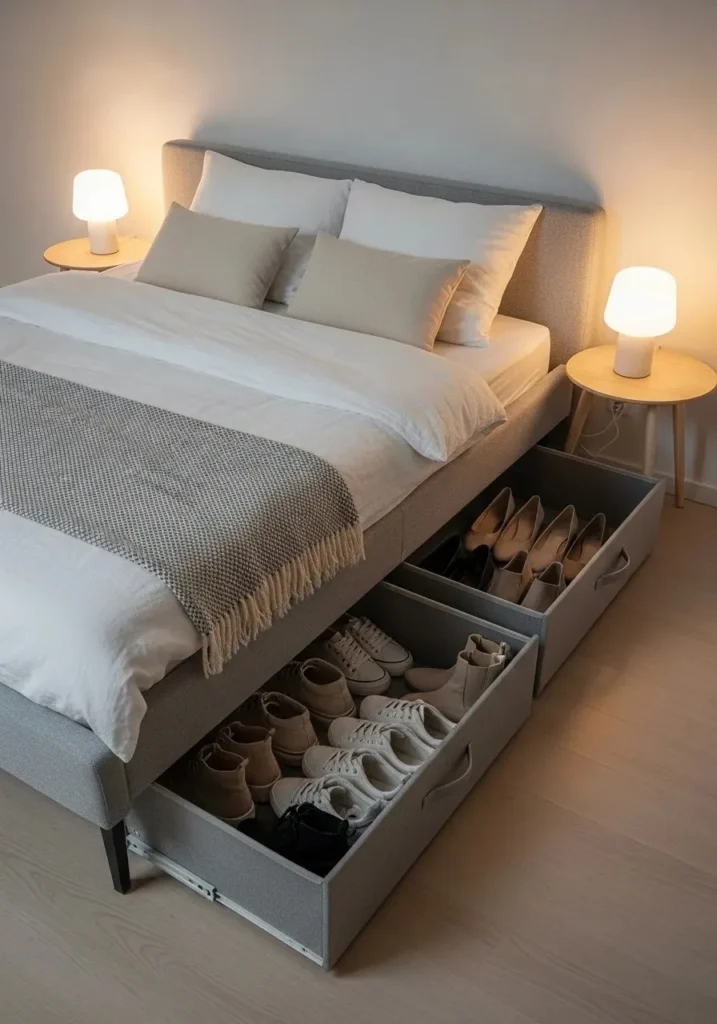
I used to forget about the space under my bed completely, until I realised it was the largest empty rectangle in the bedroom. Now two flat rolling drawers live there, holding the shoes I do not wear every day. Winter boots go in one, occasion shoes in the other, and my everyday trainers stay by the door where they belong. The bedroom floor looks clearer, the wardrobe is less crammed, and I no longer trip over a stray heel in the dark. It feels like finding a whole extra cupboard you already owned.
How to do it: Measure the clearance under your bed, choose flat drawers or fabric bins with lids that slide easily, and label each one. Put clean, dry shoes inside, add a small sachet to keep them fresh, and pull the drawers out fully once a month to air them. Keep everyday shoes out of these drawers so you are not dragging them out daily.
8. Repurposed Wooden Crate Stack
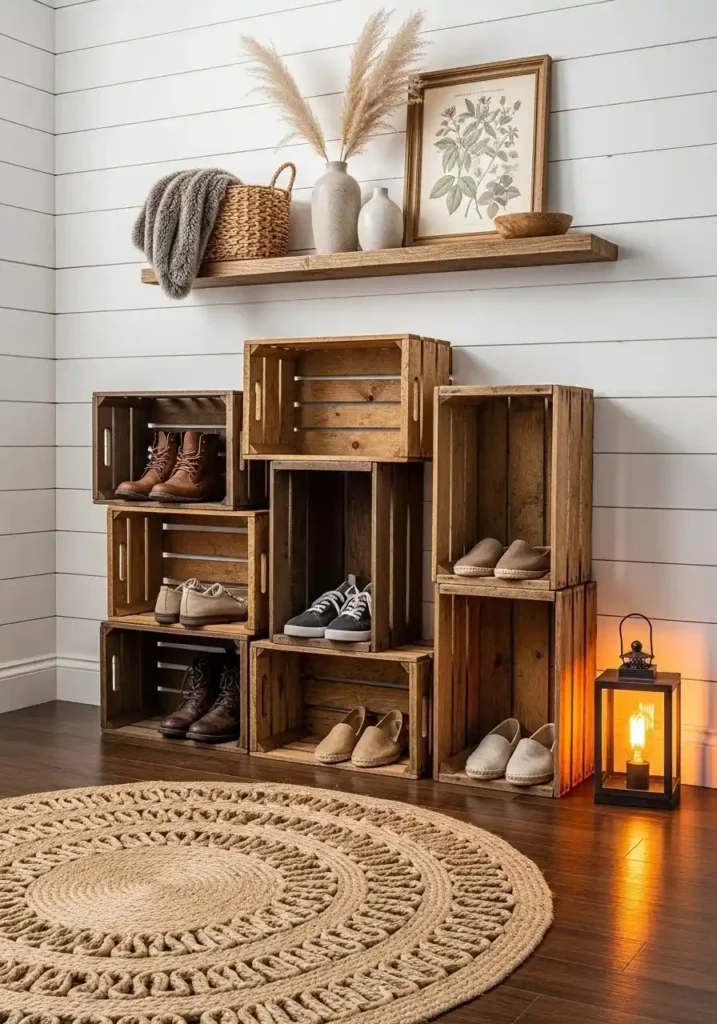
There is something about real wood that makes even a pile of trainers feel intentional. I found three old wine crates at a flea market, sanded them lightly, and stacked them on their sides in our hallway. The warm timber softens the whole entryway, and the different crate sizes mean boots fit in one and flats in another. I love that no two crates match perfectly — the slight variation is exactly what makes it feel like home rather than a shop display. It is sturdy, simple, and far cheaper than a new cabinet.
How to do it: Sand the crates, seal them with matte wax, and let them dry. Stack two or three on their sides, fix them together with L-brackets, and anchor the stack to the wall. Put boots in the largest crate, everyday shoes in the middle, and lighter pairs on top. Check the brackets every few months.
9. Pegboard Shoe Wall
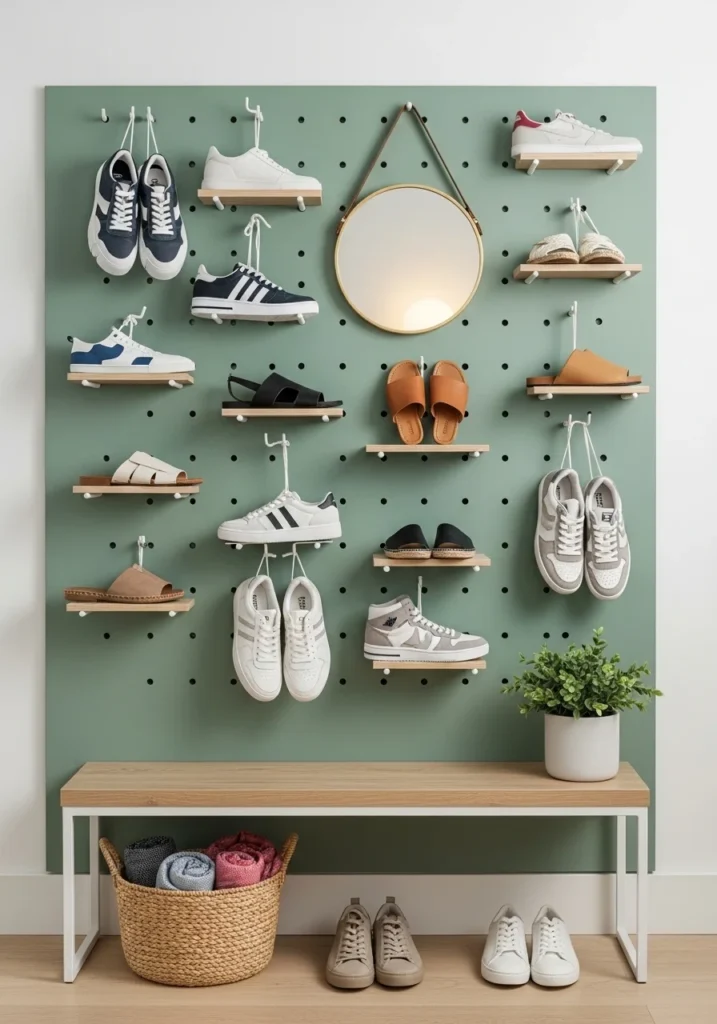
I hung a pegboard in our entryway expecting it to look practical, and I did not expect to love looking at it. Painted soft sage, it now holds shoes on hooks and small shelves, plus a tiny mirror and a hook for my keys. Everything I need before leaving the house is in one place, and I can move the hooks around whenever my shoes change with the season. It is the most flexible idea here — nothing is fixed forever, so the wall grows with you instead of fighting you.
How to do it: Cut or buy a pegboard to fit your wall, paint it, and fix it securely with wall plugs. Add hooks, small shelves, and a ledge, then hang shoes by their heels or place them on the shelves. Keep daily pairs at easy reach, move seasonal shoes higher up, and rearrange the hooks whenever your collection changes.
10. Shoe Rack Ideas for Small Spaces Using a Bookshelf
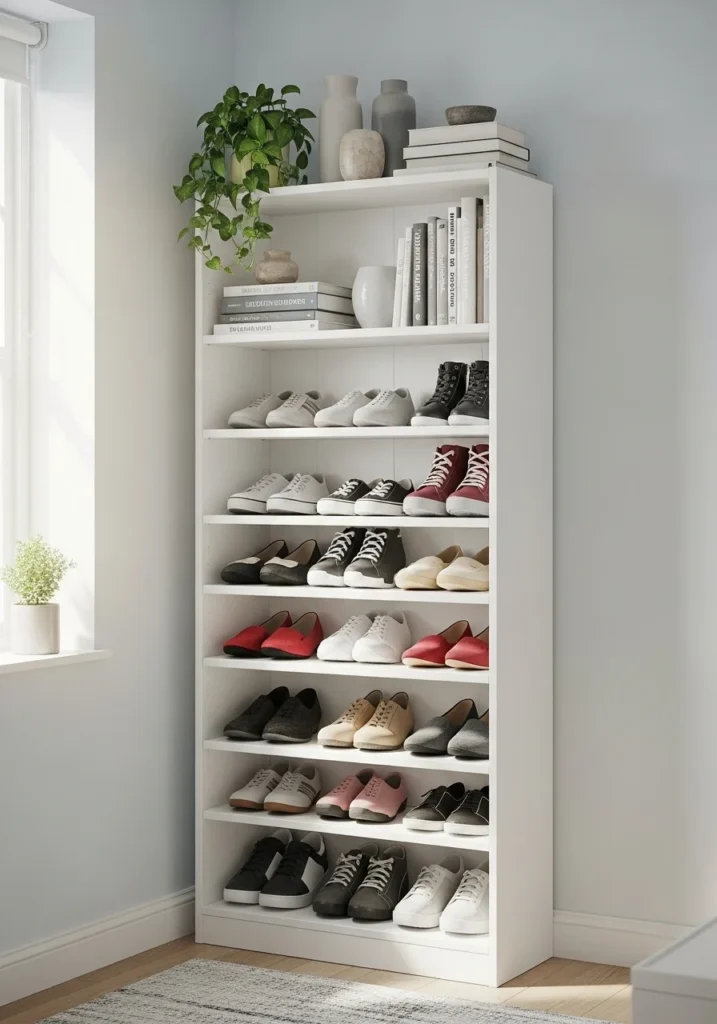
That narrow bookshelf in the corner was holding three books and a lot of dust, so I gave it a new job. Now it holds shoes, and I honestly prefer it that way. Each shelf is just deep enough for a pair, and because it is tall and slim, it fits in a gap where a proper rack never would. I keep trainers on the middle shelves, flats below, and a small basket on the bottom for sandals. It cost me nothing, it took ten minutes to repurpose, and the room finally feels finished.
How to do it: Choose a slim, sturdy bookshelf, anchor it to the wall, and clear a shelf for each type of shoe. Put heavier pairs low down, lighter pairs higher up, and add a small drawer or basket at the bottom for sandals. Keep one shelf free for bags or cleaning supplies, and wipe the shelves weekly.
11. Hanging Fabric Shoe Organizer in the Closet
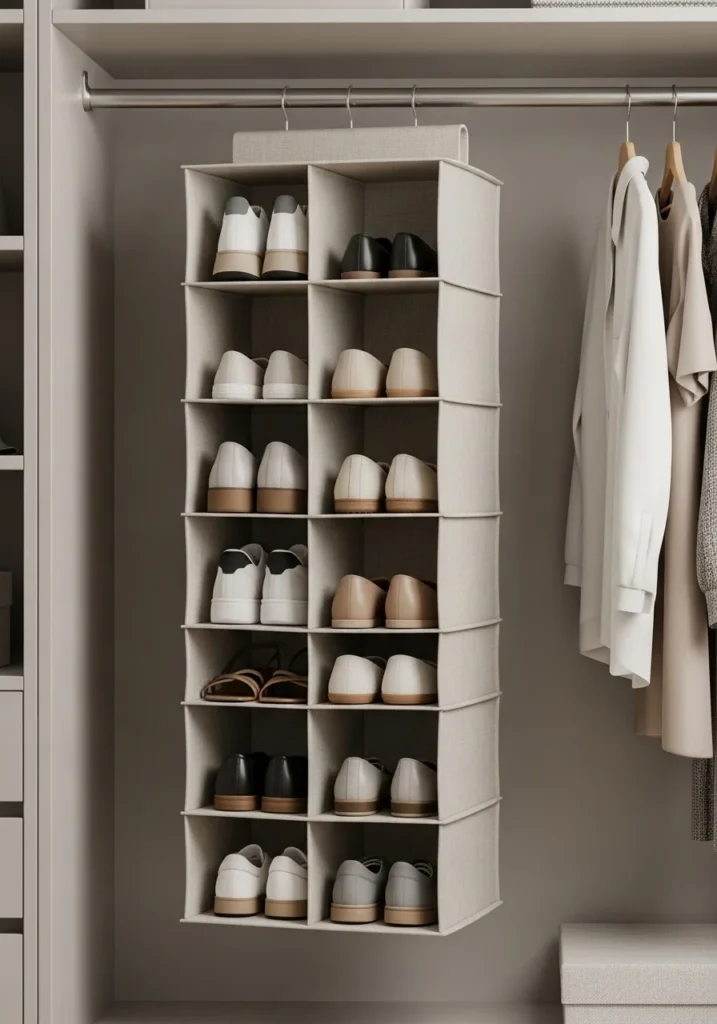
My wardrobe used to be a jumble of shoes at the bottom, with one of each pair always missing. A hanging fabric organiser sorted that in a single afternoon. It hangs from the wardrobe rail, and each pocket holds one pair, visible and easy to reach. I put my most-worn shoes at eye level and seasonal pairs at the bottom, and suddenly getting dressed takes half the time. If your wardrobe needs a fuller rethink, these shoe storage ideas closet show how to plan rails, shelves, and pockets together.
How to do it: Hang the organiser from a sturdy rail, check it hangs straight, and sort shoes by how often you wear them. Put everyday pairs at eye level, seasonal pairs at the bottom, and keep one pocket for shoe care — a brush, spare laces, and insoles. Shake the pockets out monthly so dust does not build up.
12. DIY PVC Pipe Shoe Rack
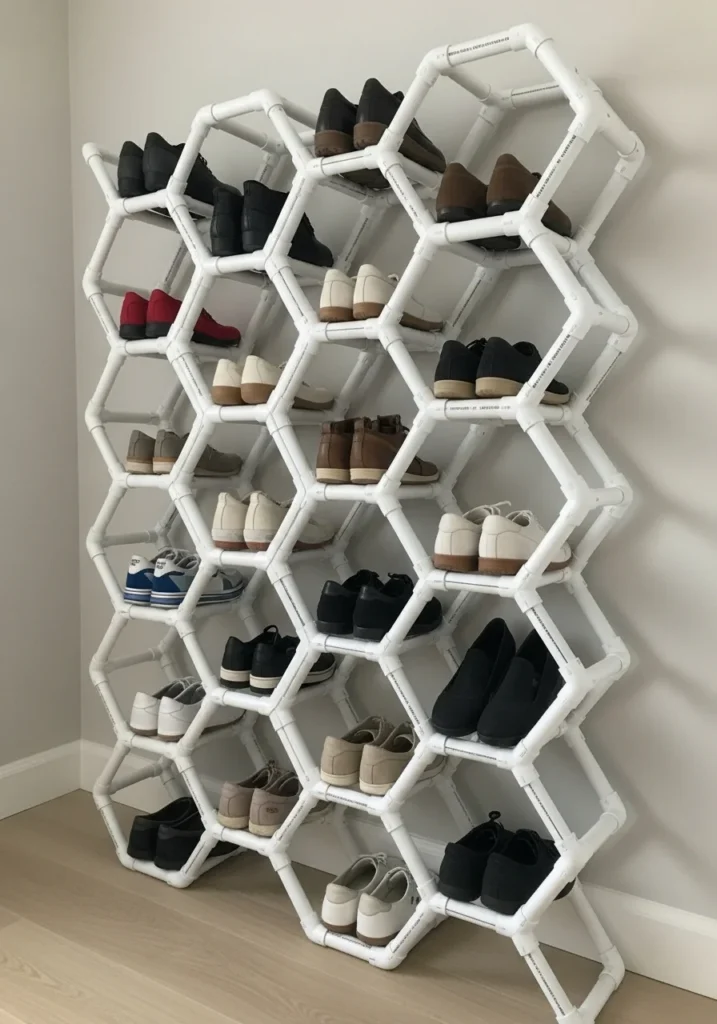
I will admit, cutting up drainpipe did not sound like home decor to me at first. Then I saw a finished version in matte white, and it looked like a piece of modern sculpture that happened to hold shoes. Each tube holds one pair, and the round openings make it easy to see what is inside. I made mine in an afternoon with a saw, some glue, and a tin of spray paint. It is light, it is cheap, and it fits neatly against a wall where a bulky rack never could.
How to do it: Measure your largest shoes, cut PVC pipes into equal lengths, and sand the cut edges smooth. Glue the pipes into a honeycomb stack, spray-paint them in one colour, and let them dry fully. Place the rack against a wall, put one pair in each tube, and use wider pipes for boots.
13. Tiered Plant Stand Repurposed as Shoe Rack
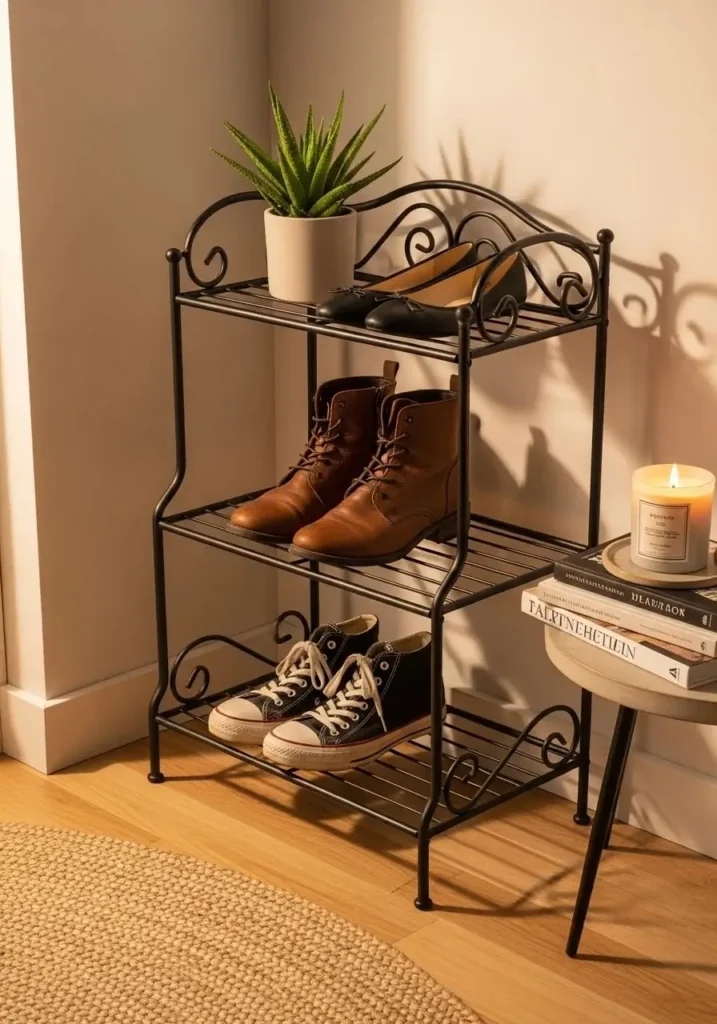
This is my favourite unexpected idea, because it started as a joke and ended up staying. I had a three-tier plant stand that my plants had outgrown, so I tried it for shoes — and it worked beautifully. The tiers are just the right depth for a pair, and the open metal frame means air flows around everything. I keep my prettiest sandals on the top tier, trainers in the middle, and everyday flats at the bottom. It looks light and a little bit playful, which is exactly what a small hallway needs.
How to do it: Choose a sturdy three-tier stand, check it does not wobble, and place it in a corner out of the main walkway. Put lighter shoes on the top tier, heavier pairs below, and keep one small plant on top if there is room. Wipe the tiers weekly and avoid overloading any single tier.
14. Shoe Cabinet With Closed Doors
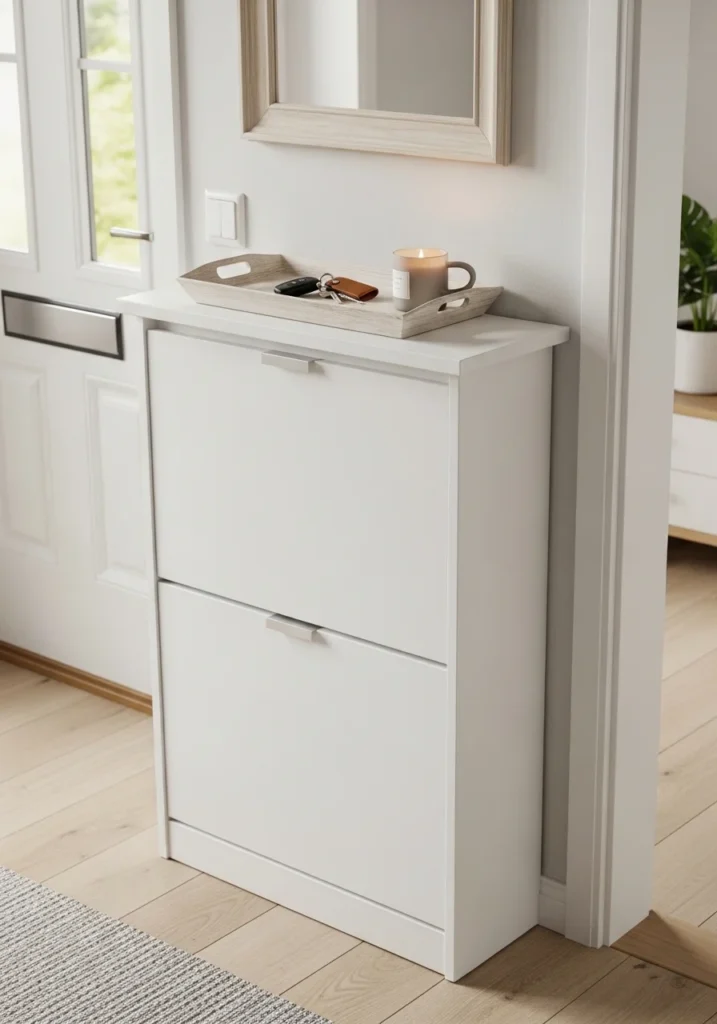
Some days I want to see my shoes, and other days I just want them gone. A closed cabinet gives me both — I open the doors when I need a pair, and the rest of the time the hallway looks calm and uncluttered. I chose a slim white cabinet that sits flush against the wall, and it holds eight pairs without sticking out into the walkway. The top is the perfect spot for keys, post, and a small vase. For a hallway that feels welcoming from the moment you step in, these foyer and entryway ideas pair beautifully with a closed cabinet.
How to do it: Measure your wall and door swing, choose a cabinet no deeper than 30 centimetres, and fix it to the wall. Put everyday shoes on the top shelf, seasonal pairs below, and leave space for air to circulate. Add a small tray on top for keys, and wipe the doors weekly to keep fingerprints away.
15. Shoe Drawer Built Into Stair Steps
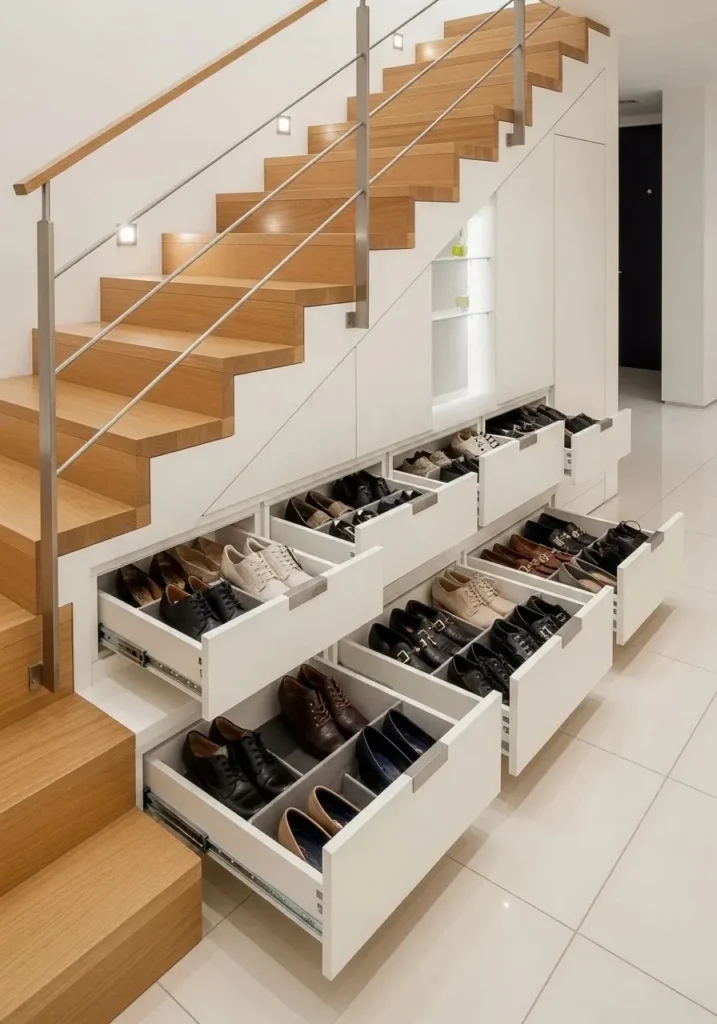
I first saw stair drawers in a friend’s narrow townhouse, and I stood there opening and closing them like a child. Each step pulled out to reveal two or three pairs, completely hidden when closed. It is a clever use of space that would otherwise be empty, and it keeps shoes right where you take them off — at the bottom of the stairs. This is not a weekend DIY job, I will be honest, but if you are renovating or building, it is worth asking your joiner about. The hallway stays clear, and the stairs do double duty.
How to do it: Talk to a joiner or carpenter before you start, and check the structure of your stairs first. Plan one drawer per step, choose smooth runners and sturdy handles, and label the inside of each drawer if several people share the stairs. Put everyday shoes in the lowest drawers, seasonal pairs higher up, and keep the runners clean so they glide easily.
16. Rotating Carousel Shoe Rack
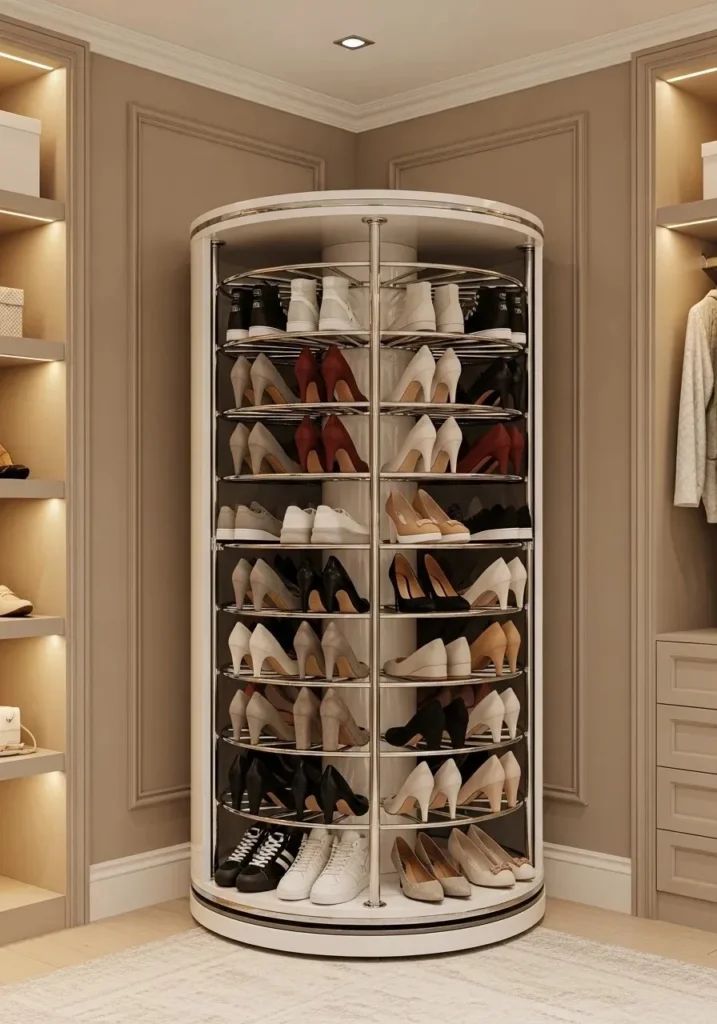
I bought a rotating carousel after years of digging through a pile at the bottom of the wardrobe, and I wish I had done it sooner. You spin it, you see every pair, you take the one you want — no more pulling out six pairs to find the seventh. Mine holds about twenty pairs in a footprint smaller than a bedside table, and it sits in the corner of the bedroom where nothing else quite fit. It feels a little bit fun every morning, which is not something I ever expected to say about shoe storage.
How to do it: Choose a carousel that fits your corner, assemble it on a flat surface, and test the spin before loading it. Sort shoes by type or colour, put everyday pairs at easy reach, and keep heavier boots on the lowest tier. Spin it slowly, avoid overloading one side, and tighten the fixings every few months.
Frequently Asked Questions
How many pairs of shoes can I store in a small space without it looking cluttered?
It depends on the rack and the space, but most small hallways hold eight to twelve pairs comfortably without looking crowded. Choose one pair per person for everyday use by the door, and store the rest in the bedroom or wardrobe. Rotate seasonal shoes out, and donate pairs you have not worn in a year.
What is the best shoe rack for a very narrow hallway?
A slim closed cabinet, floating shelves, or an over-the-door organiser usually work best, because none of them eat into the walkway. Measure the depth first — aim for 25 to 35 centimetres — and check that doors still open fully. If the hallway is very tight, wall-mounted options beat anything that stands on the floor.
How do I stop shoes from smelling in a closed cabinet or under the bed?
Let shoes dry fully before you put them away, and use breathable bins or cabinets with ventilation holes where you can. Sprinkle bicarbonate of soda inside overnight, or tuck in a small fabric sachet, and air the cabinet out once a week. Rotating pairs so no pair is worn two days running helps a lot too.
Can I store shoes in a small space on a budget?
Yes — tension rods, milk crates, wooden crates, and a repurposed bookshelf all cost very little and work well. Start with what you already own, measure the space before you buy anything, and add one good-quality piece later if you need it. A tidy system matters far more than an expensive rack.
How do I keep a shoe rack tidy when everyone comes home at once?
Give each person one shelf, cubby, or pocket, and keep a small tray by the door for the pair in use. Make the rule simple — shoes go in their spot as soon as you come in — and do a quick two-minute tidy each evening. When every pair has a named home, the pile stops forming.
Your Small-Space Shoe Rack Checklist
Tick each step off as you set up your shoe storage.
☐ Measure your hallway, doorway, and any cupboard or under-bed space before you buy anything.
☐ Count how many pairs you actually wear each week.
☐ Choose one everyday spot by the door and one overflow spot elsewhere.
☐ Pick a rack no deeper than 35 centimetres for a narrow hallway.
☐ Fix wall-mounted racks and tall shelves securely to the wall.
☐ Give each person their own shelf, cubby, or pocket.
☐ Put everyday shoes at eye level and seasonal pairs lower down or out of the way.
☐ Leave space for air to circulate around closed cabinets and under-bed bins.
☐ Add a small tray or mat for wet or muddy shoes.
☐ Keep a brush, spare laces, and shoe-care sachets in one pocket or basket.
☐ Do a two-minute tidy each evening and a fuller sort once a month.
☐ Donate or recycle pairs you have not worn in the past year.
You Deserve a Space That Feels Good
A small hallway does not have to mean a messy one. When every pair has a place — by the door for the shoes you wear daily, and tucked away for the ones you reach for less often — coming home feels calmer, and leaving the house feels easier. You do not need a bigger home, or a perfect one. You need a system that fits the space you actually have, and the life you actually live in it.
Start with just one idea from this list, the one that fits your hallway, your budget, and your shoes. Try it for a week, move things around until it feels natural, and then add another idea only if you need it. Your shoes will finally have a home, your floor will stay clear, and your small space will feel like it was designed for you — because, in this small way, it was.