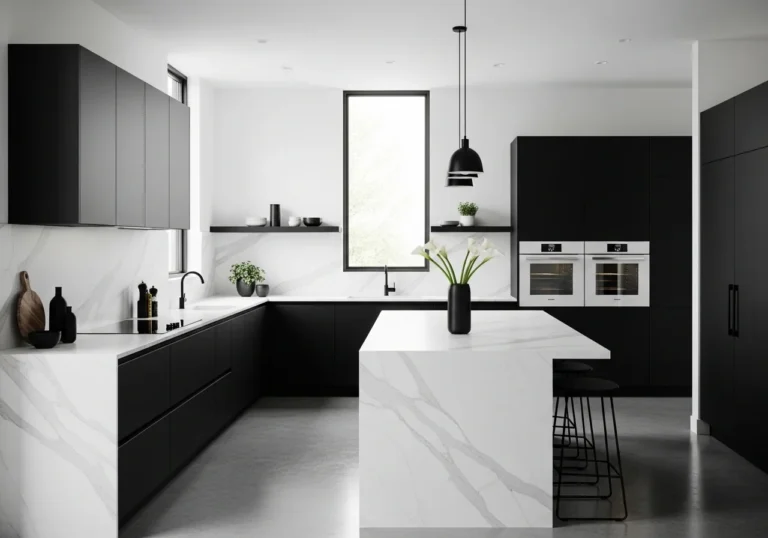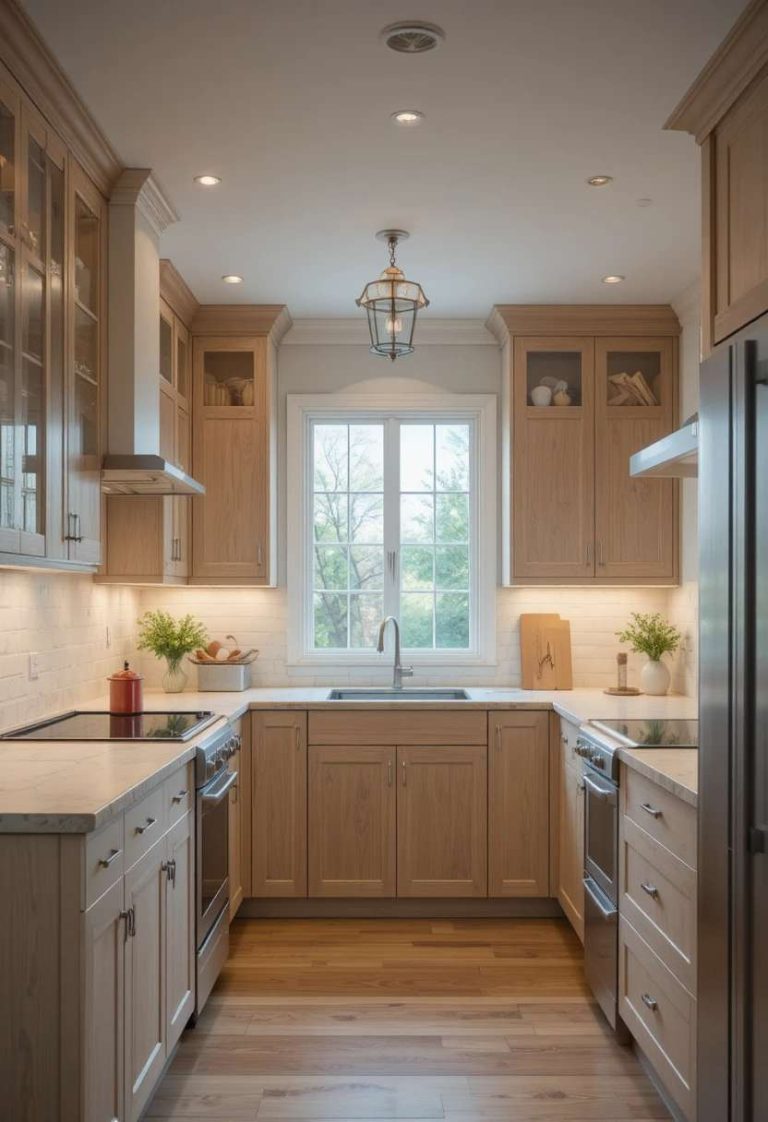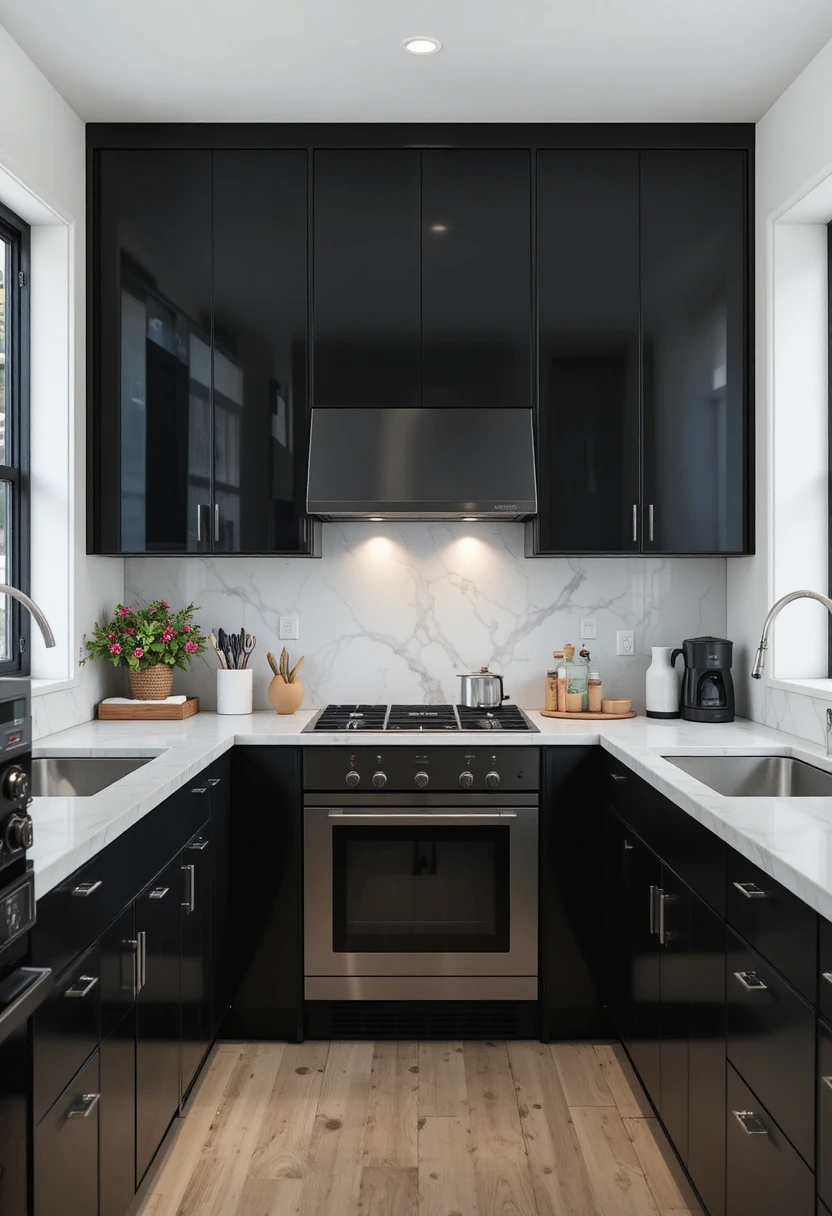
26 Kitchen Ideas With Black Appliances for a Sleek, Stylish Look
There is something effortlessly sleek about a kitchen with black appliances, where the deep finish adds quiet drama and modern style. Black appliances feel bold yet versatile, pairing beautifully with everything from crisp white cabinets to warm wood and soft greens. Far from feeling heavy, they bring a grounded, sophisticated edge that makes a kitchen feel polished and intentional. With the right balance of colour, light, and texture, black appliances become a stylish, cohesive part of a truly beautiful kitchen. Below are twenty six kitchen ideas with black appliances, shared with warmth and inspiration, to help you create a sleek, stylish look you will love.
1. Pair With Crisp White Cabinets
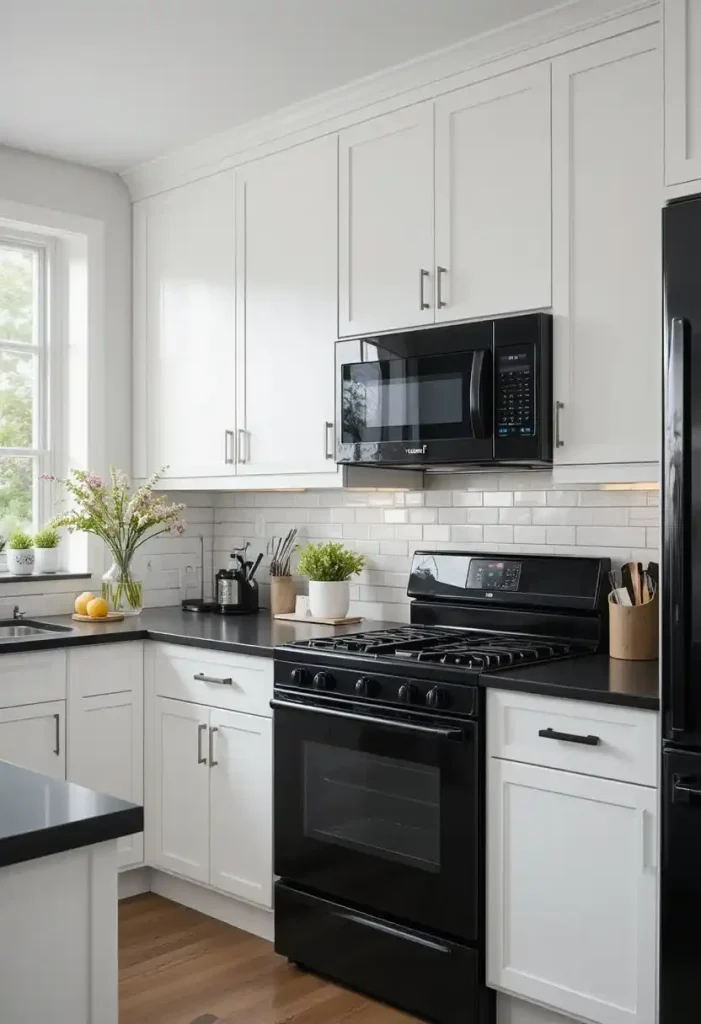
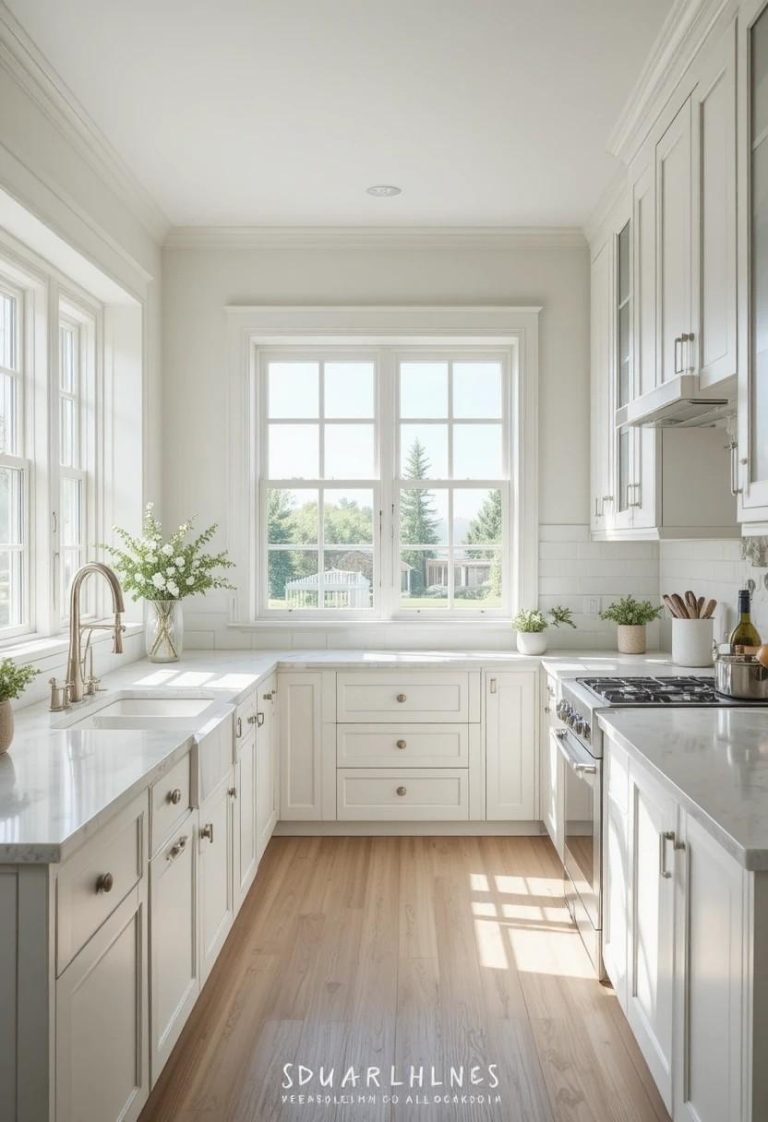
I love how black appliances look against crisp white cabinets, because the contrast does all the hard work for you. In my own kitchen I found the white kept the black from feeling heavy, while the black gave the white a smart, tailored edge that plain white alone never quite manages. Keep the cabinets a clean, warm white rather than a blue-white, and let the black fridge, cooker and dishwasher sit like neat punctuation marks across the room. A white worktop and a pale splashback help too, and I would keep handles simple so nothing competes with that fresh, timeless pairing.
How to do it: Choose a warm white for the cabinets and test a painted sample next to the fridge before you commit. Match the black across the main appliances so they read as a set, then keep the worktop pale and the splashback simple. Swap busy handles for slim black or brushed nickel pulls, and stand back in daylight to check the contrast feels crisp rather than stark.
2. Add Warm Wood Cabinets
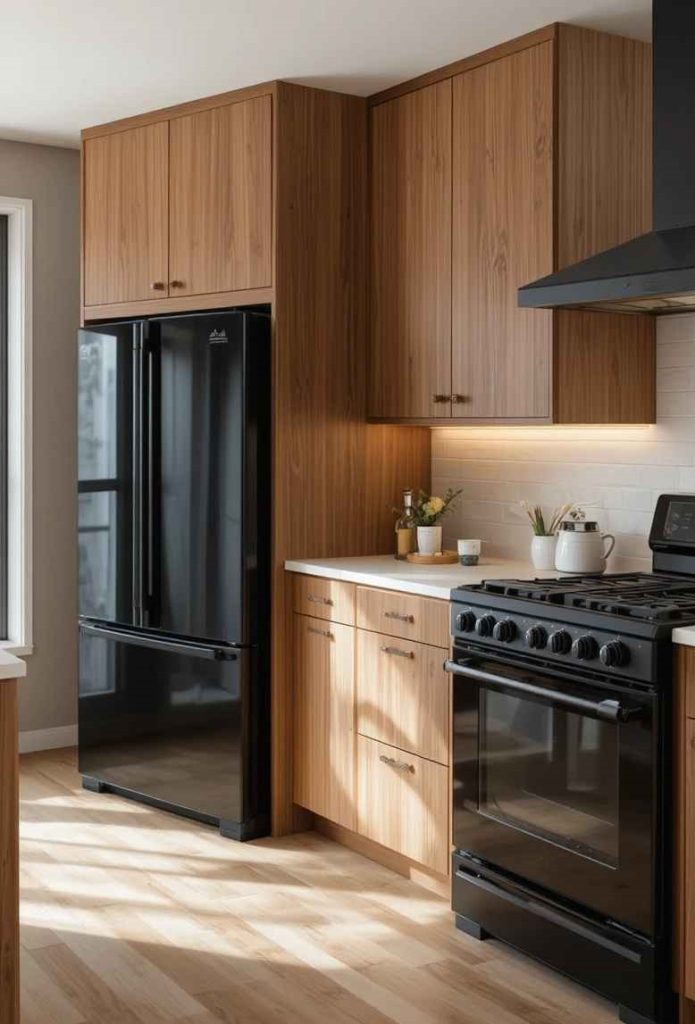
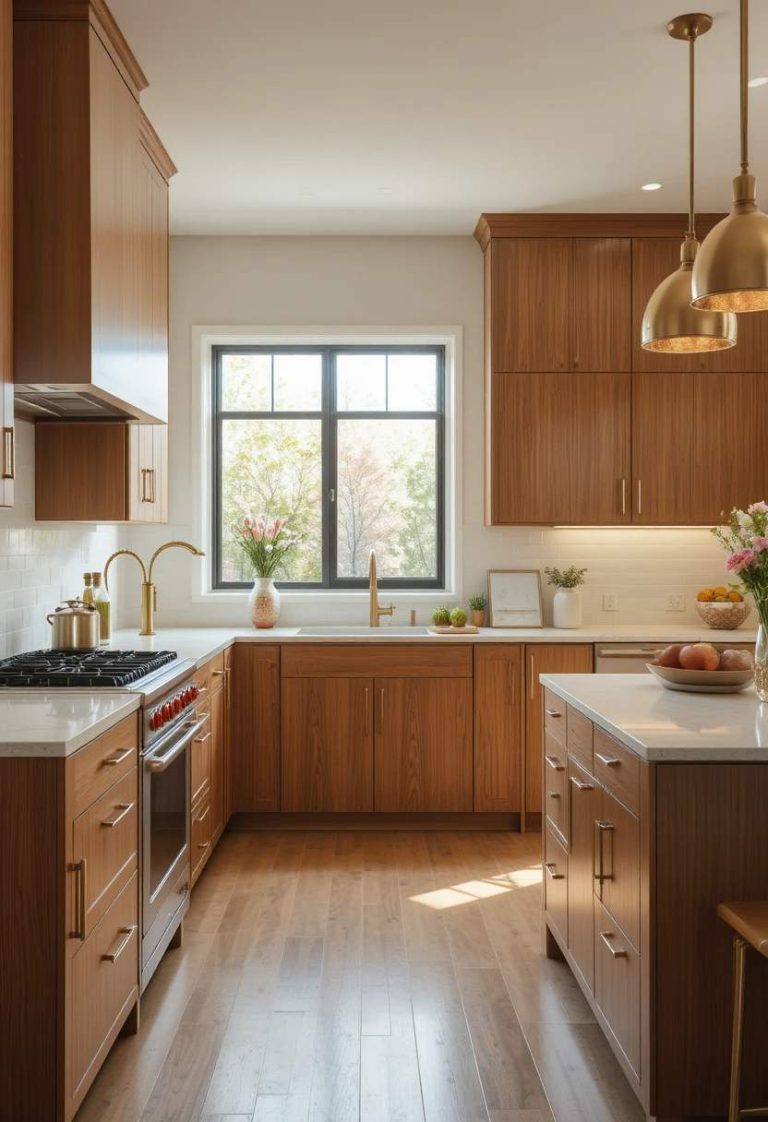
Warm wood cabinets are my favourite way to soften black appliances, because the grain brings a natural, lived-in warmth that flat painted cabinets never quite manage. I would choose oak or walnut with a clear, honeyed tone rather than anything orange or overly glossy, and let the black cooker and fridge ground the room like a quiet frame. Keep the wood the star and the black the accent, with simple matt black handles and a pale worktop so the two finishes can breathe. A wooden chopping board and a few open timber shelves echo the cabinets nicely, and the whole kitchen feels calm, earthy and welcoming rather than stark.
How to do it: Start by ordering wood samples and holding them beside a black appliance in daylight. Choose a warm, mid-tone timber with a matt or satin finish, then pair it with black handles, a pale stone worktop and a simple splashback. Add one wooden board or tray to tie the look together, and keep the rest of the surfaces clear.
3. Go Bold With Dark Cabinets
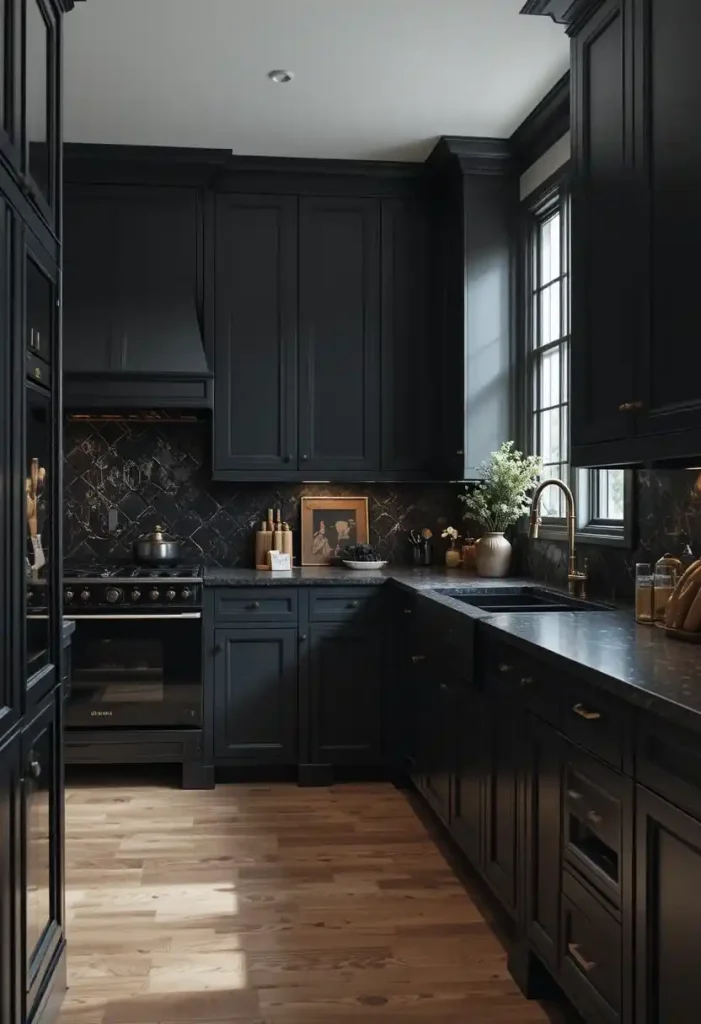
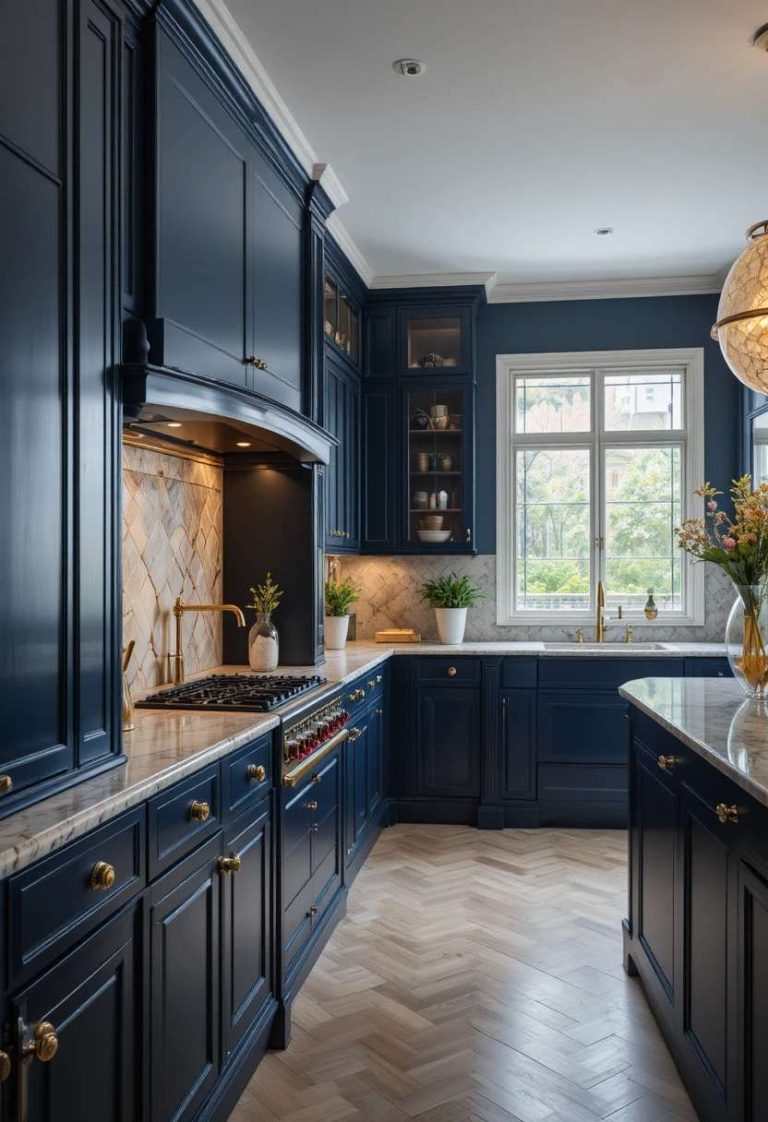
Going bold with dark cabinets is the quickest way I know to make black appliances look deliberate rather than just dark. I would paint the cabinets a deep charcoal or choose navy blue kitchen cabinets, then let the black fridge and cooker melt into the same moody palette so the whole wall reads as one confident sweep. Brass or gold handles lift the darkness beautifully, and a pale worktop or a light splashback stops the room from closing in. Keep the lighting warm, add a timber board or a woven basket for texture, and the kitchen feels rich and cocooning, more like a favourite restaurant than a showroom.
How to do it: Pick a charcoal or navy paint sample and test it on a large board beside the black appliance. Paint the lower cabinets first and keep the uppers or the worktop pale, then add brass handles and warm under-cabinet lighting. Live with it for a week before you choose the splashback, so the dark palette has time to settle.
4. Add a Light Backsplash
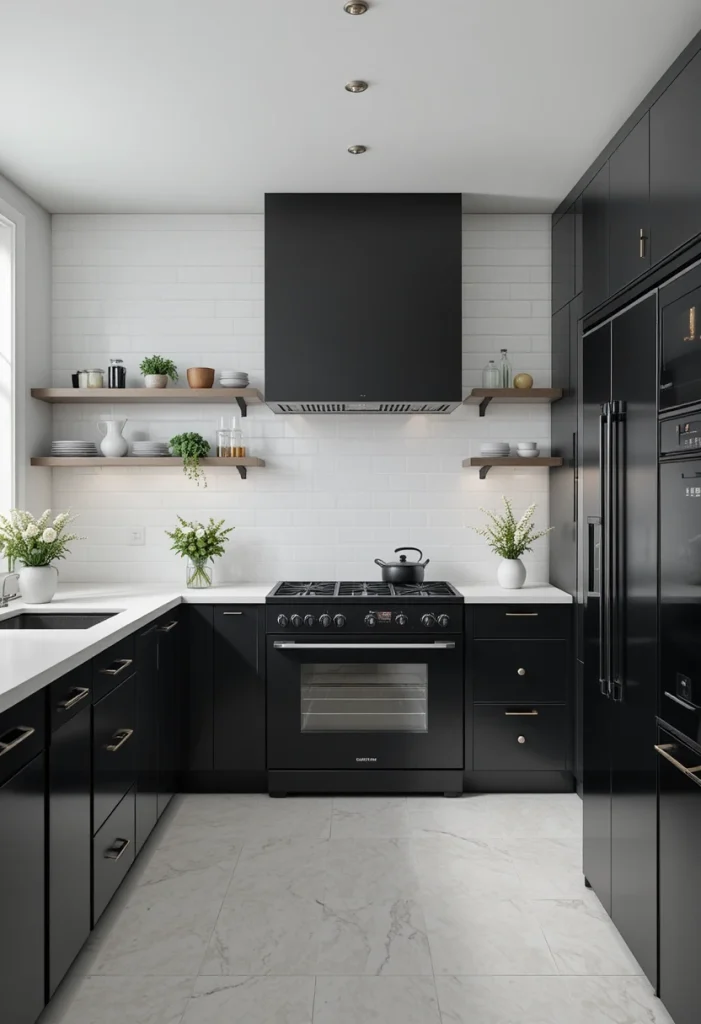
A light backsplash is the simplest fix I know when black appliances start to make a kitchen feel heavy. I would choose glossy white tile or a soft marble-look slab, because the pale surface bounces light back into the room and gives the black a clean, fresh frame to sit against. Keep the grout light and the pattern calm, a classic brick layout or a large-format slab works best, and run the tile right up to the cabinets so there is no dark gap in between. It is a small change, but it lifts the whole wall, makes the worktop feel brighter, and keeps the kitchen feeling open and airy even on grey days.
How to do it: Measure the wall between the worktop and the cabinets and order a few tile samples. Lay them beside the black appliance in daylight, choose the brightest one, then fit the tiles with pale grout and a simple brick or stacked pattern. Seal the grout and wipe the tiles with a damp cloth, and the pale surface will keep reflecting light.
5. Pair With Grey Cabinets
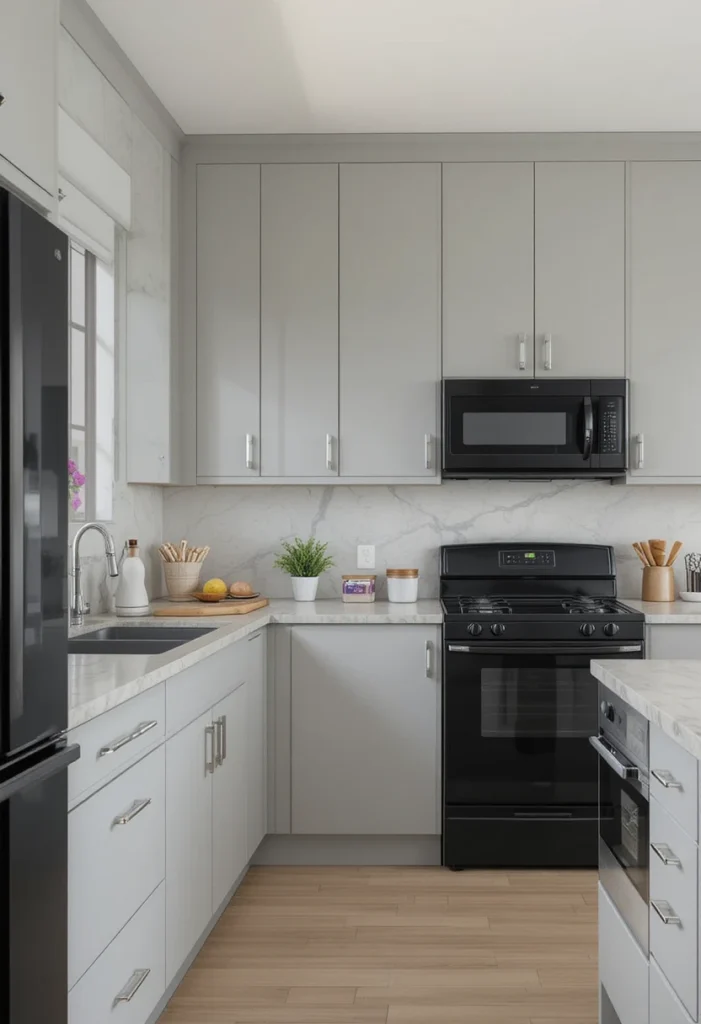
Soft grey cabinets are a gentle middle ground for black appliances, and I reach for them whenever a kitchen needs calm rather than drama. A warm mid-grey keeps the black from feeling stark, while the black stops the grey from looking flat or washed out, so the two settle into a quiet, balanced partnership. I would keep the worktop pale, choose slim matt black handles, and let a light floor or a white splashback add a little lift. Add a wooden board, a linen tea towel or a small plant for softness, and the whole room feels modern, composed and easy to live with.
How to do it: Choose a warm grey paint sample and hold it against the black appliance in daylight. Paint the cabinets, add matt black handles and a pale worktop, then bring in one warm texture, like wood or linen, so the grey never feels cold.
6. Add Brass or Gold Hardware
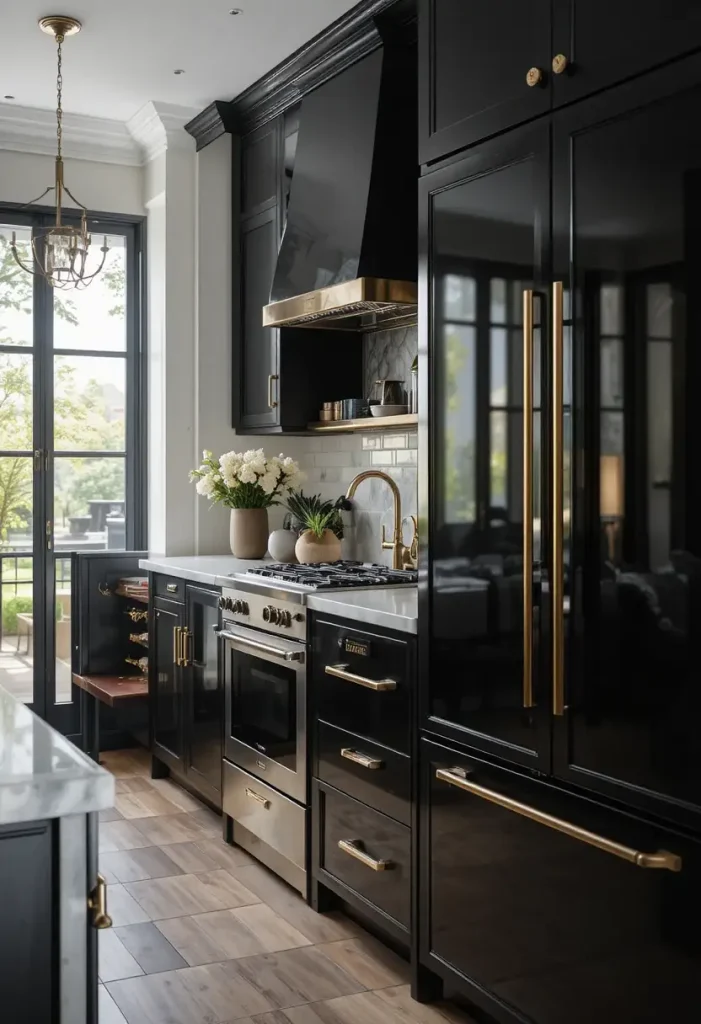
Brass or gold hardware is the jewellery of a black-appliance kitchen, and I love how a little warm metal lifts the whole room. Against matt black, polished brass knobs or slim gold pulls catch the light and add a soft, glamorous glow that black alone can never give. I would keep the finish consistent across the cooker, fridge handles and cupboard knobs, and choose a warm, brushed brass rather than a yellow, shiny gold so it feels expensive rather than flashy. A brass tap or a gold-framed mirror nearby echoes the metal nicely, and the kitchen suddenly feels dressed up, warm and quietly luxurious.
How to do it: Order brass and gold handle samples and hold them against the black appliance. Choose one warm finish and use it for knobs, pulls and the tap. Fit them with a template so the spacing stays even, then step back and check the metal reads as a warm accent, not a glare.
7. Brighten With Light Countertops
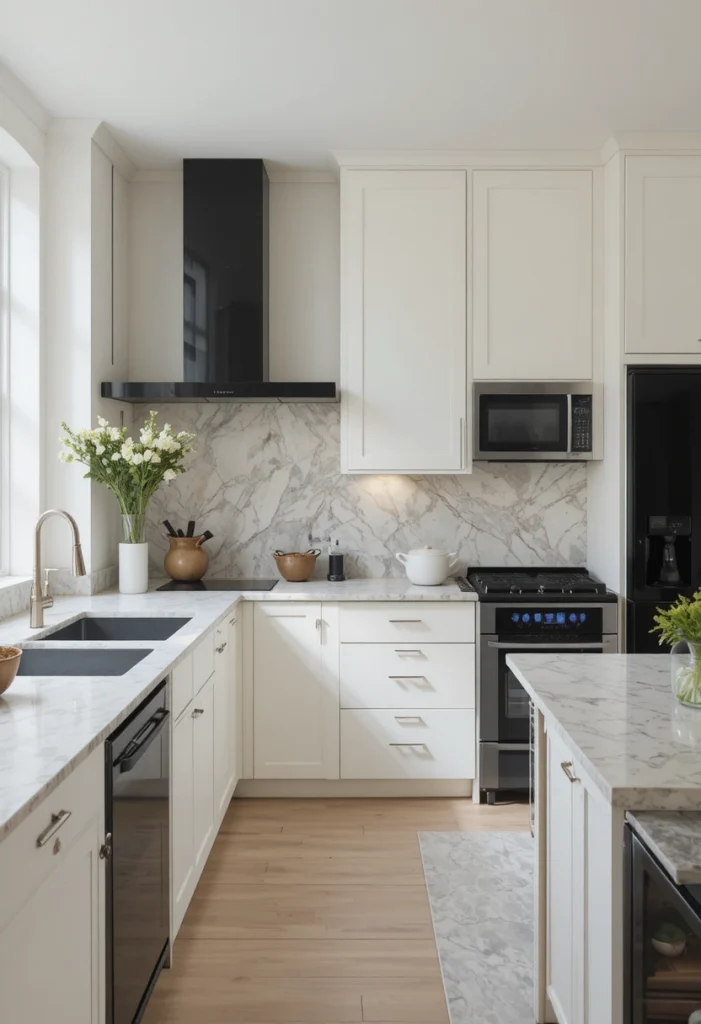
Light countertops are the easiest way to keep a black-appliance kitchen feeling airy, and I always start there when a room feels too dark. A white quartz or pale stone worktop gives the black a bright, clean surface to sit against, and the contrast makes both finishes look more intentional. I would keep the veining soft and the edge simple, and choose a finish that wipes clean easily because pale tops show every crumb. If you are tempted by the opposite direction, my black countertops ideas show how a dark worktop can work too, but for most kitchens the pale route is the calmer, brighter choice.
How to do it: Order white quartz and pale stone samples and lay them beside the black appliance. Choose the sample that stays bright in evening light, keep the edge square and simple, and seal stone tops once a year. Wipe them down daily so the pale surface stays fresh.
8. Add Greenery for Freshness
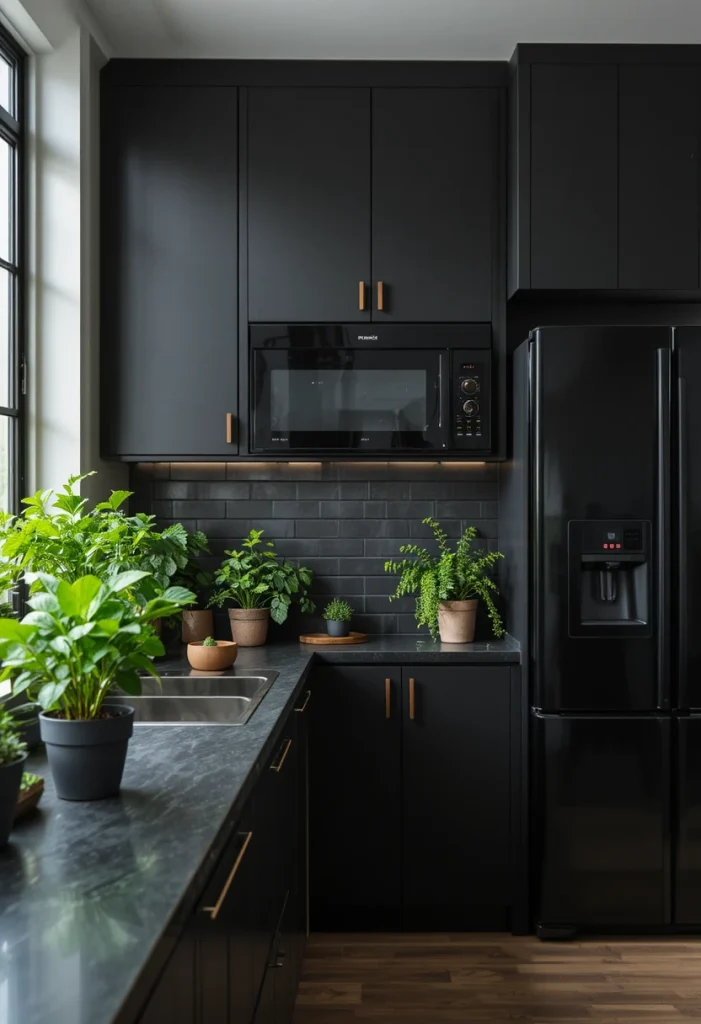
Greenery is my quickest rescue when black appliances make a kitchen feel a little stern. A trailing plant on top of the fridge, a pot of basil on the sill and a small eucalyptus stem in a jug bring a fresh green lift that softens all that dark, glossy black. I would keep the pots simple, terracotta, white ceramic or clear glass, so the plants do the talking, and choose herbs I actually cook with so they earn their place. Water them when I make my morning tea, snip what I need for dinner, and the kitchen feels alive, natural and welcoming instead of just sleek.
How to do it: Choose two or three plants that suit your light, such as basil, pothos or a small fern. Pot them in simple ceramic or terracotta, place one near the sink and one on a shelf, and water them on the same day each week. Snip herbs for cooking so they stay bushy and useful.
9. Pair With a Light Floor
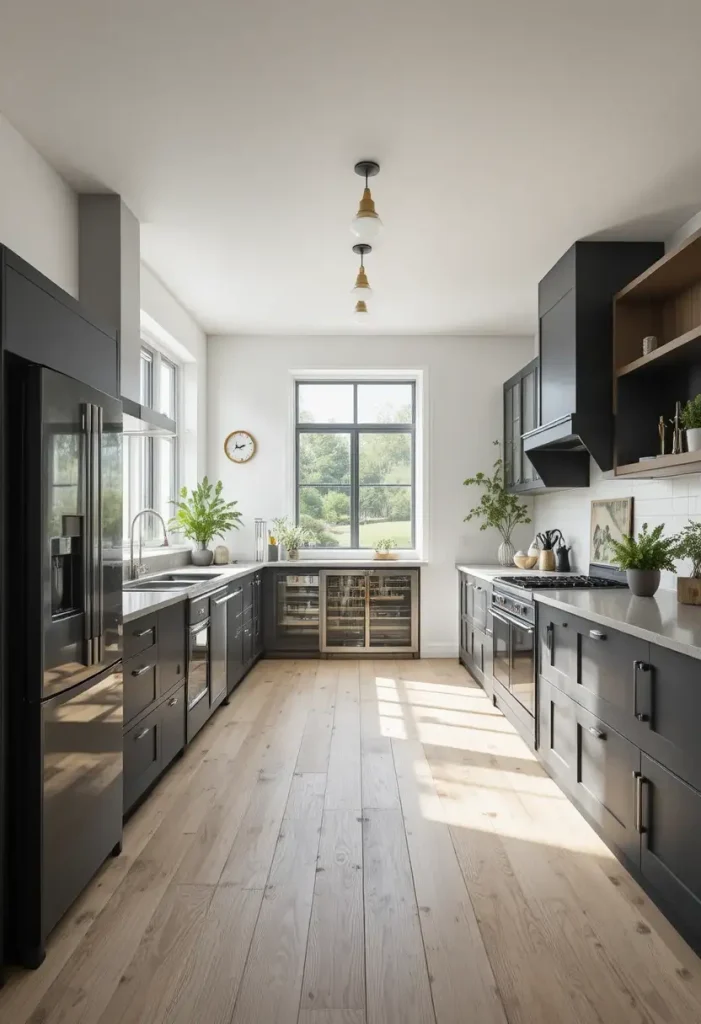
A light floor is the quiet hero of a black-appliance kitchen, because it stops the dark from pooling at the bottom of the room. I would choose pale oak boards or a soft stone tile, and let the light ground lift the black fridge and cooker so they read as accents rather than a heavy block. Keep the finish matt and the tone warm rather than grey, so the floor feels welcoming under bare feet, and run the same flooring into the dining area if you can so the space flows. A washable runner by the sink adds softness, and the whole kitchen feels open, bright and calm.
How to do it: Order pale oak and light stone samples and lay them beside the black appliance. Choose a warm, matt finish, run it through the kitchen and dining area, and add a washable runner by the sink. Mop weekly with a gentle cleaner to keep the pale tone bright.
10. Add Warm Pendant Lighting
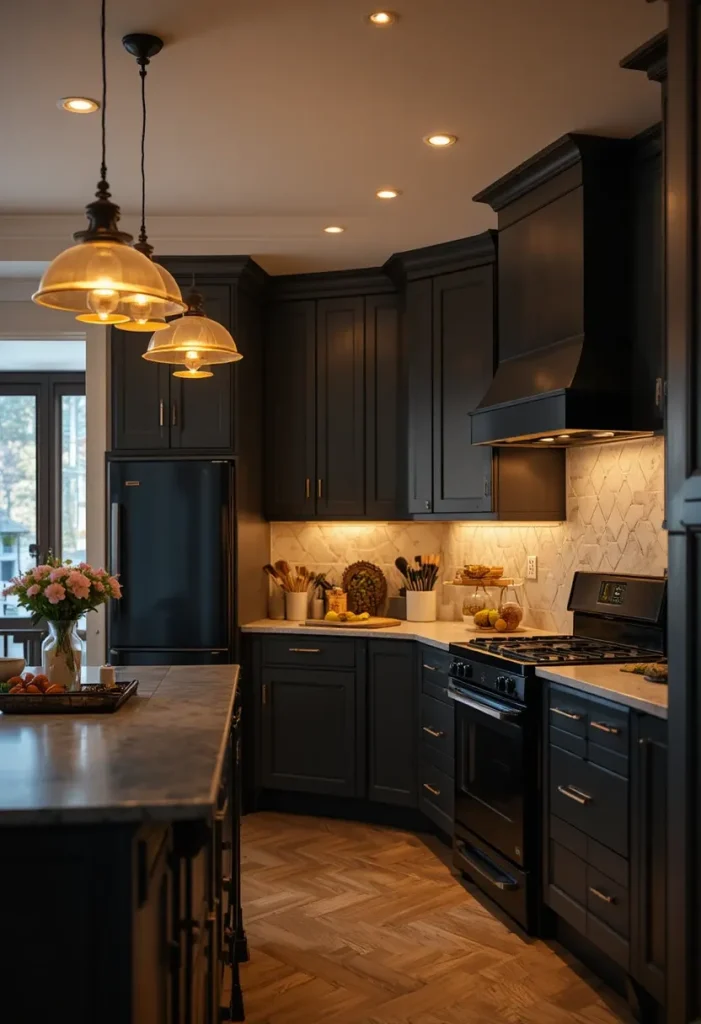
Warm pendant lighting is how I make black appliances glow instead of glare. A pair of pendants over the island, with a warm 2700K bulb and a brass or matt black shade, throws a soft pool of light that flatters the dark fronts and makes evening cooking feel cosy rather than clinical. I would hang them low enough to feel intimate but high enough to see across the island, and put them on a dimmer so the mood can shift from prep to supper. Add a simple linen or glass shade, keep the cords tidy, and the pendants become the warm heart of the whole kitchen.
How to do it: Choose two pendants with warm bulbs and hang them over the island, about 75 to 90 centimetres above the worktop. Fit a dimmer switch, use 2700K bulbs for a warm glow, and check from a seated position that the shades never block your view.
11. Pair With Sage Green Cabinets
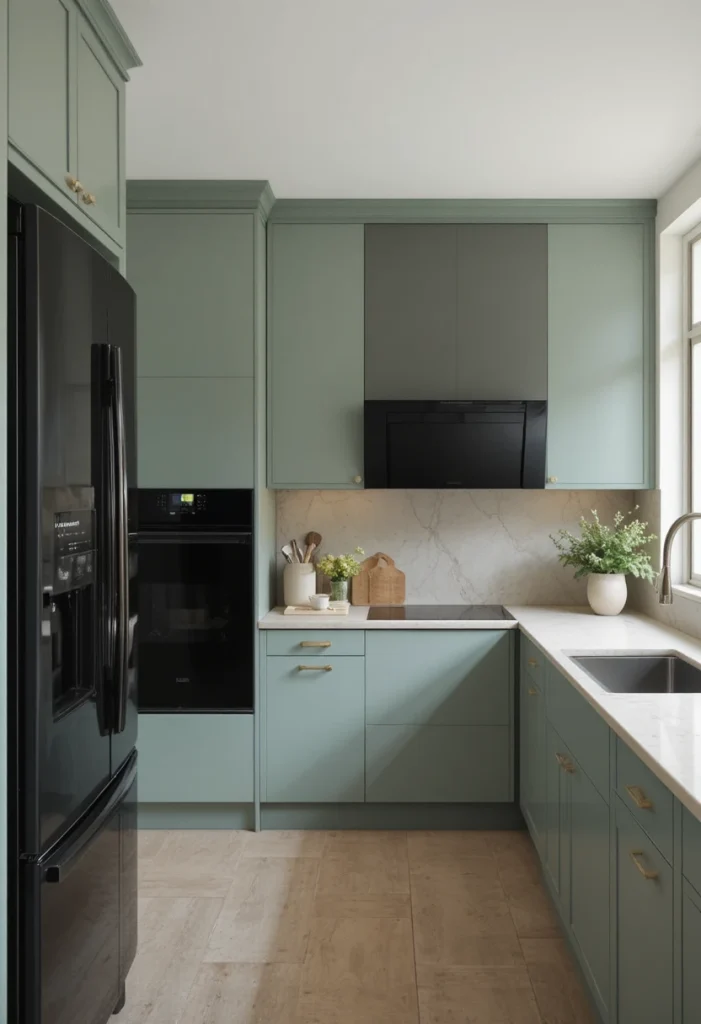
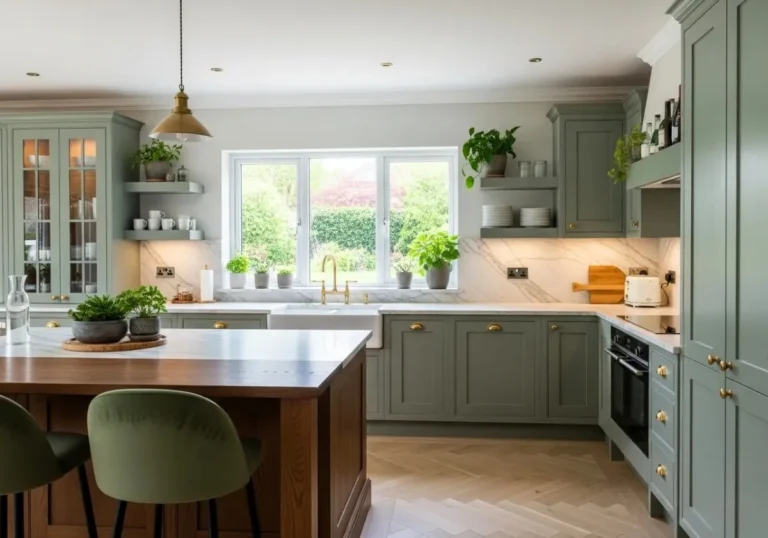
Sage green cabinets are a soft, earthy partner for black appliances, and I love how the gentle green takes the edge off the black without fighting it. A muted sage, rather than a bright or minty green, keeps the kitchen calm and grown-up, while the black cooker and fridge add the structure that stops the green from feeling wishy-washy. I would pair it with a pale worktop, warm brass handles and a light floor, and add a wooden board or a linen towel for texture. A small plant on the sill echoes the sage beautifully, and the whole room feels fresh, grounded and quietly modern.
How to do it: Order sage paint samples and test them beside the black appliance in daylight. Choose a muted, grey-green tone, paint the cabinets, add brass handles and a pale worktop, then bring in a plant and a wooden board to warm the green up.
12. Add Open Wood Shelving
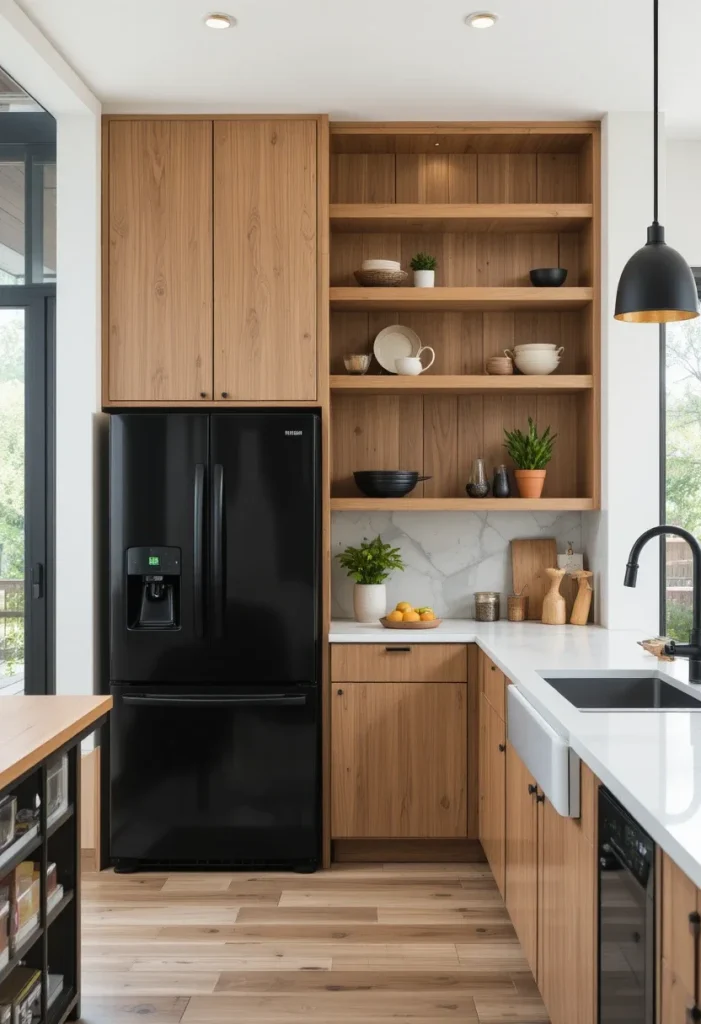
Open wood shelving is a lovely way to break up a wall of black appliances, because the warm timber and the gaps between shelves let the eye rest. I would fit two or three shelves in pale oak or warm walnut, and style them with everyday pieces I actually use, white plates, glass jars and a wooden board, so they feel honest rather than staged. Keep the shelves uncluttered, leave some breathing room between groups, and let the black fridge or cooker anchor the wall below. A small plant trailing from the top shelf softens the edge, and the kitchen feels warm, open and personal rather than boxed in.
How to do it: Fit two or three wooden shelves on the wall beside the black appliances, using brackets that suit the timber. Style them with plates, jars and one plant, leaving space between groups. Step back and remove anything that crowds the shelf, so the wood and the black can breathe.
13. Keep Countertops Clutter-Free
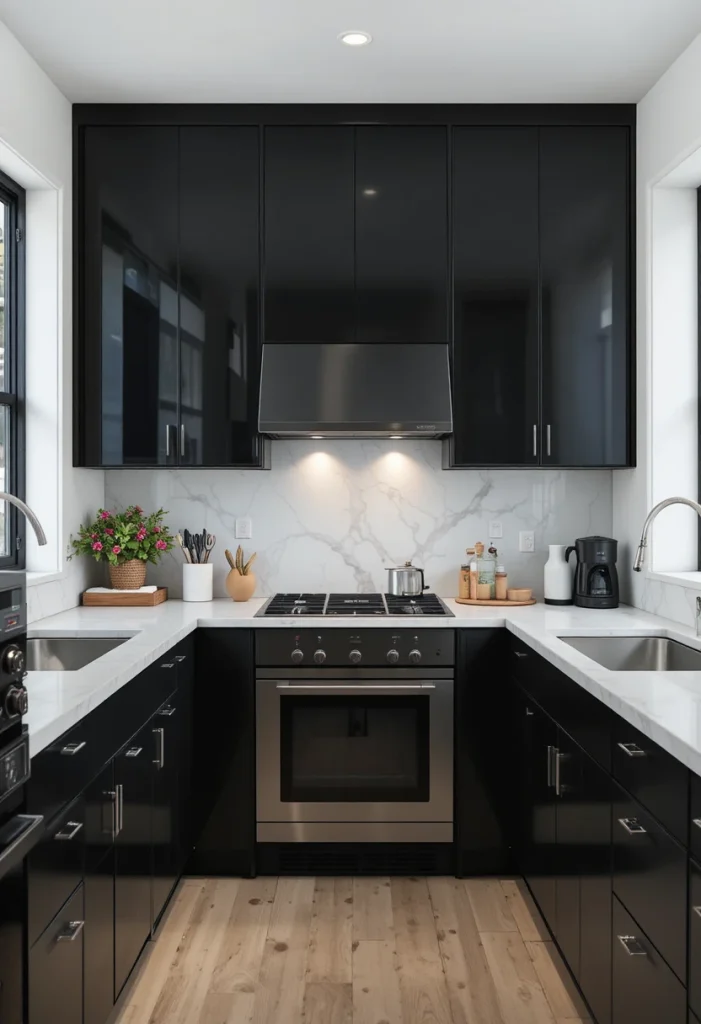
Clear countertops are the cheapest upgrade a black-appliance kitchen can get, because clutter is what makes black surfaces look busy and tired. I keep only the kettle, a wooden board and one small plant on the worktop, and everything else lives in a cupboard or a drawer so the black fronts can breathe. Wiping the tops down after each meal takes two minutes and keeps the whole room feeling sleek and calm, and cooking is simply easier when I can see the surface I am working on. A tray for oils and salt keeps the few things I do leave out looking tidy rather than scattered.
How to do it: Take everything off the worktops and put back only what you use daily. Give oils and salt a small tray, store the rest in cupboards, and wipe the tops after each meal. Repeat the clear-out once a week so clutter never creeps back.
14. Add a Subway Tile Backsplash
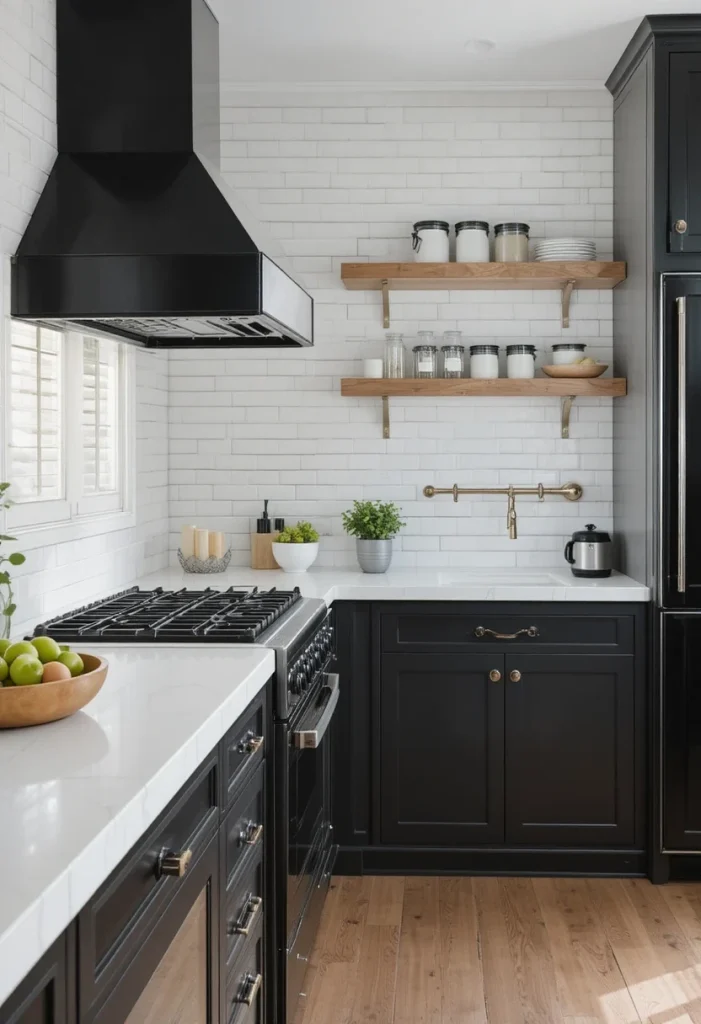
A white subway tile backsplash is the classic partner for black appliances, and I still love it because it never dates. The glossy brick pattern gives the wall a calm rhythm, the bright white lifts the black, and the whole kitchen feels fresh and tailored rather than trendy. I would keep the grout pale, run the tiles in a simple brick bond, and carry them up to the underside of the cabinets so the line stays clean. A matt black tap or a slim black shelf echoes the appliances nicely, and the tiles wipe clean in seconds after a busy cook.
How to do it: Order white subway tiles and a pale grout, then lay a test row beside the black appliance. Fit them in a brick bond up to the cabinets, seal the grout, and wipe the tiles with a damp cloth after cooking to keep the white bright.
15. Mix With Stainless Touches
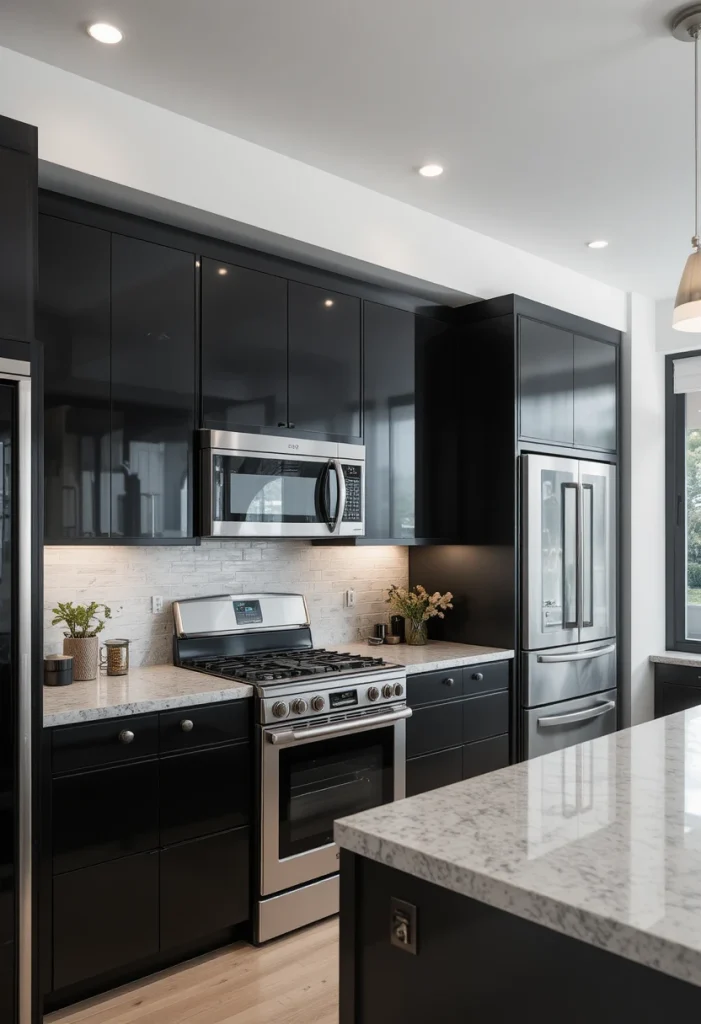
Mixing in a few stainless touches keeps black appliances from looking too flat or too matchy, and I like the layered feel it gives. A stainless tap, a steel kettle or a brushed-steel range hood adds a cool shine that plays nicely against the warm darkness of black, and the mix feels intentional rather than accidental. I would keep the stainless to two or three pieces at most, and let black stay the main finish so the kitchen still reads as a black-appliance kitchen. A steel fruit bowl or a metal tray ties the accents together, and the whole space feels modern, balanced and quietly polished.
How to do it: Pick two stainless pieces, such as the tap and the kettle, and keep the rest black. Choose brushed steel rather than mirror polish so the shine stays soft, then add one small steel tray or bowl to echo the metal across the room.
16. Add a Pop of Colour
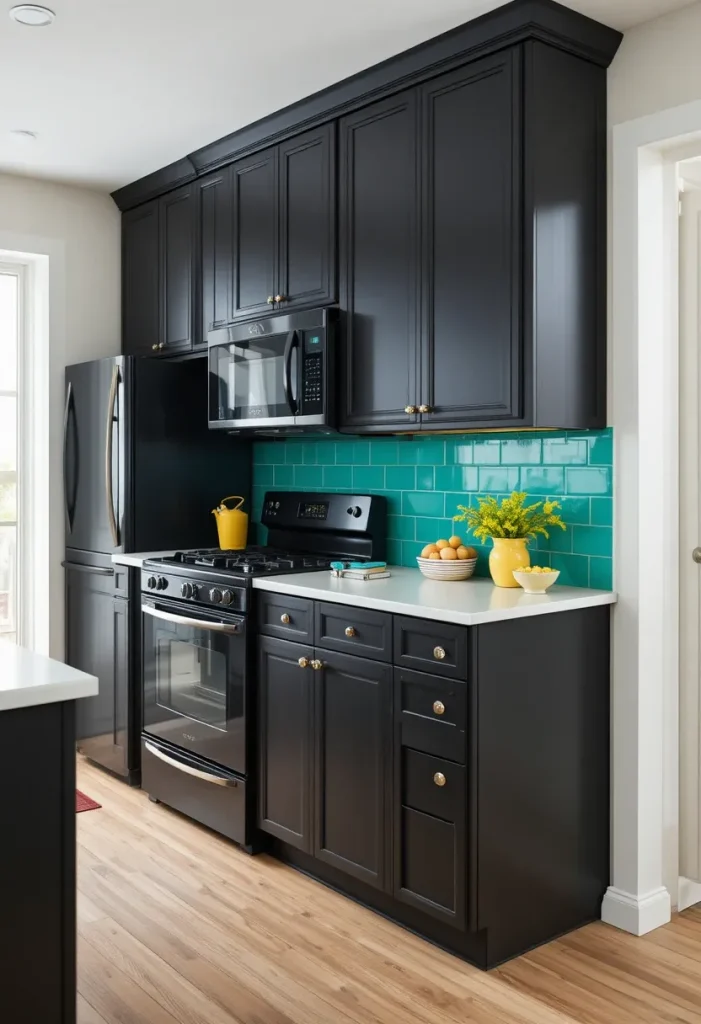
A pop of colour is the playful counterpoint a black-appliance kitchen needs, because the dark background makes even a small bright accent sing. I would choose one cheerful colour, a teal kettle, mustard stools or a bold piece of art, and let it be the star against the black, rather than scattering colour everywhere. Keep the rest of the room calm so the accent has room to breathe, and pick a colour you genuinely love, because you will see it every morning. A coloured kettle or a bright tea towel is an easy, cheap way to test the idea before you commit to painted stools.
How to do it: Pick one bright colour and buy one small accent in it, such as a kettle or a tea towel. Place it against the black appliances and live with it for a week. If you still love it, add one more piece in the same colour and stop there.
17. Keep Cabinets Handle-Free
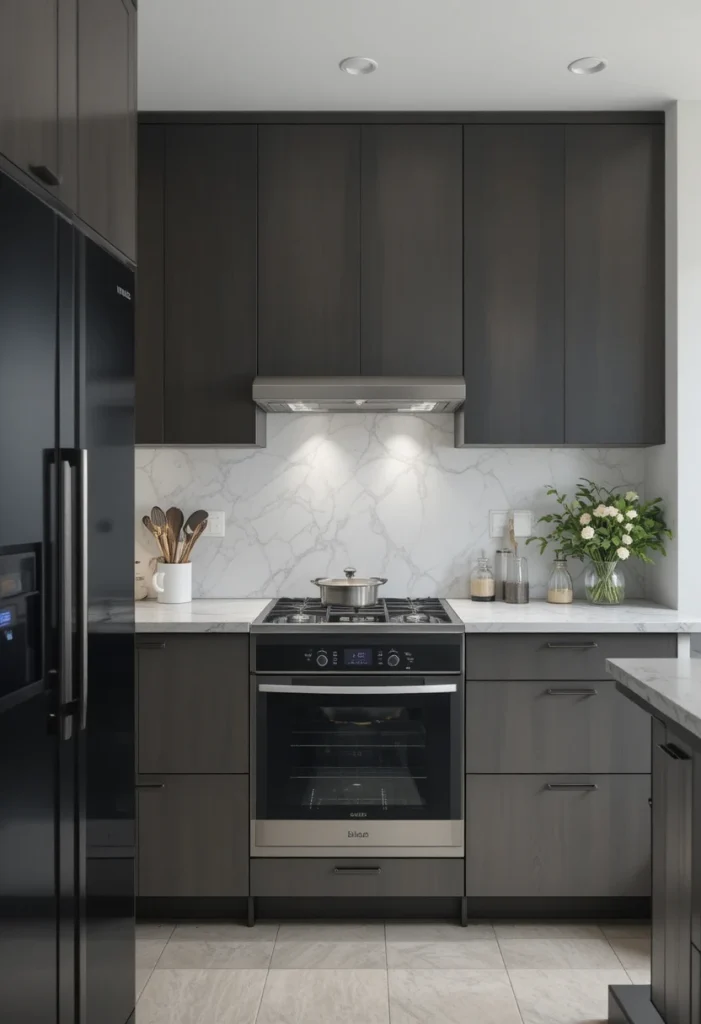
Handle-free cabinets are the cleanest partner for black appliances, because the smooth, unbroken fronts let the dark finish speak for itself. I would choose push-to-open doors or a slim J-pull channel, and keep the cabinet colour calm, white, pale grey or warm wood, so the black appliances provide the contrast. Without handles there is nothing to catch on aprons or tea towels, and cleaning the fronts is simply a wipe with a damp cloth. Add a slim recessed channel in the same finish as the cabinets, keep the lines straight, and the kitchen feels streamlined, modern and quietly expensive.
How to do it: Choose push-to-open doors or a J-pull channel and order a sample door to test the mechanism. Fit the channels in line with the cabinet finish, keep the fronts free of handles, and wipe them with a damp cloth to keep the smooth look.
18. Add Under-Cabinet Lighting
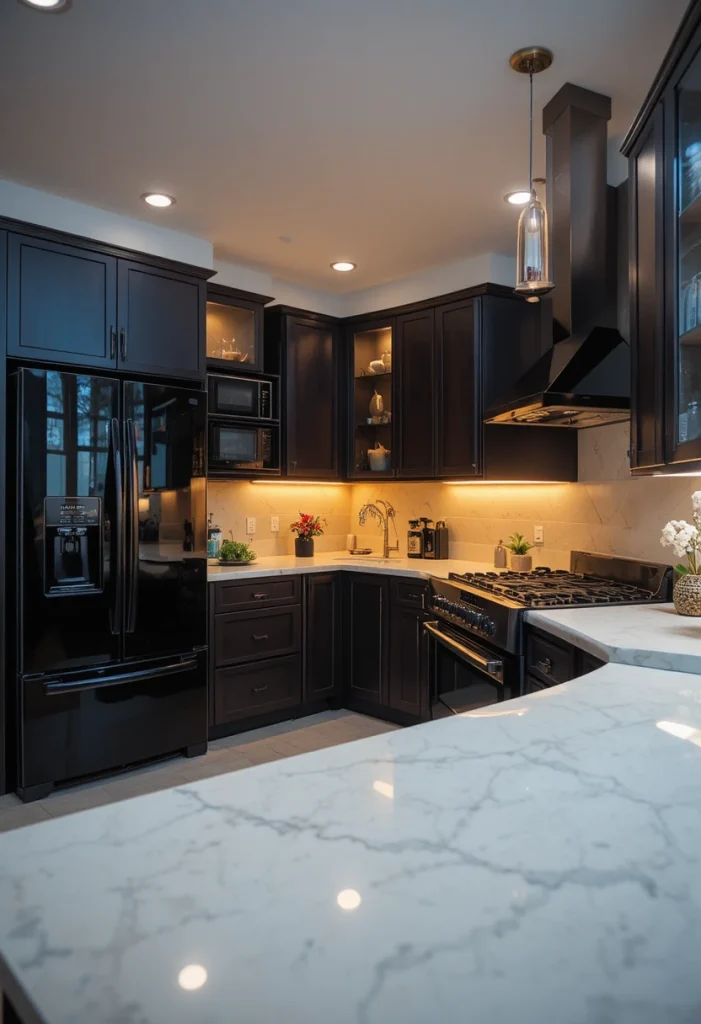
Under-cabinet lighting is the quiet trick that makes black appliances look expensive after dark. A warm LED strip tucked beneath the wall cabinets washes the worktop in a soft glow, so the black fronts stop swallowing the light and the whole cooking area feels warm and inviting. I would choose a warm white strip on a dimmer, hide the driver out of sight, and run the lights along the full length of the run so there are no dark patches. It makes chopping and reading recipes easier, and in the evening the kitchen glows like a favourite cafe.
How to do it: Measure the underside of your wall cabinets and buy warm white LED strips with a dimmer. Fix them toward the front edge so the light washes the worktop, hide the driver inside a cabinet, and test the glow at night before you fix the strips permanently.
19. Pair With Marble Accents
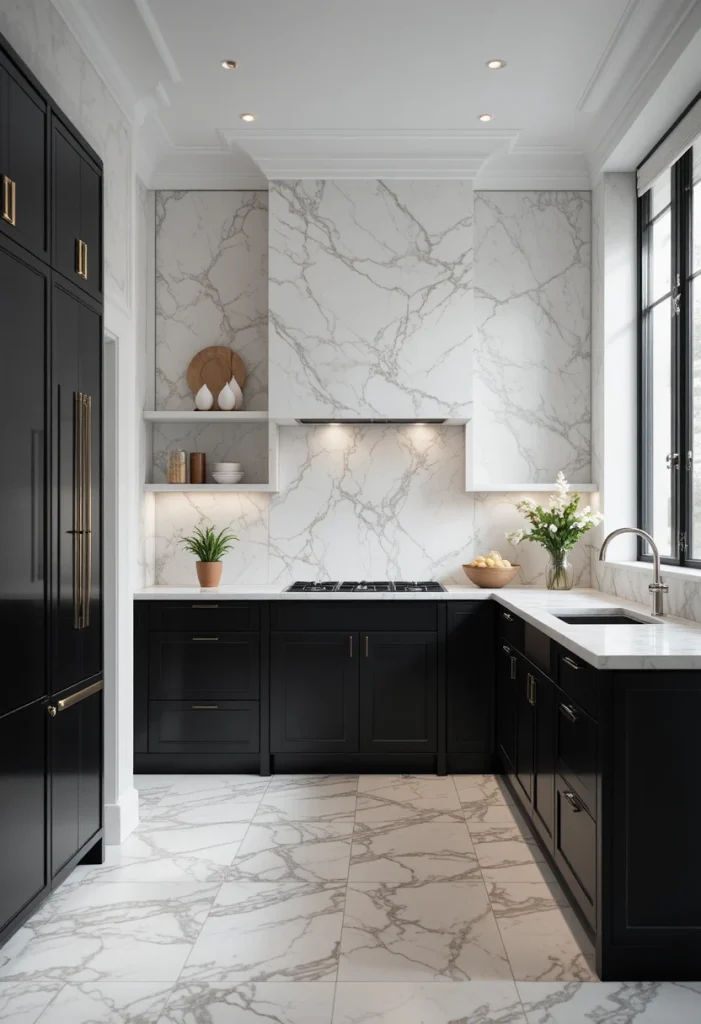
Marble accents bring a quiet luxury to black appliances that I find hard to resist. A marble worktop or a slab splashback with soft grey veining lifts the black from plain to polished, and the natural stone pattern means no two kitchens ever look quite the same. I would keep the veining gentle rather than dramatic, and let the marble do the talking while the cabinets stay calm and the handles stay simple. A marble chopping board or a small marble tray gives you the same feeling for far less money, and the whole kitchen feels elegant, bright and just a little bit glamorous.
How to do it: Order marble samples and lay them beside the black appliance to check the veining. Choose soft grey veining, seal the stone once a year, and wipe spills quickly. Start with a marble board or tray if a full worktop feels like too much.
20. Add a Warm Wood Island
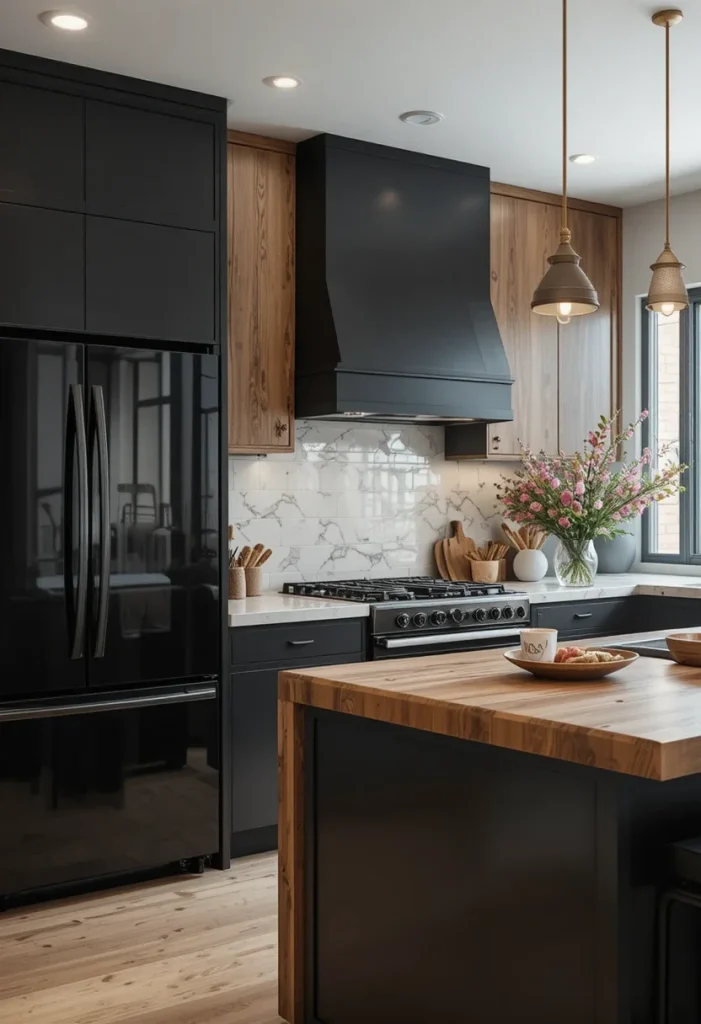
A warm wood island is the heart of a black-appliance kitchen for me, because the timber gives the room a natural centre that the black can orbit around. I would choose a honeyed oak or walnut top with a simple, chunky profile, and let the black cooker and fridge sit quietly beside it so the wood does the warming. Keep the island seating simple, two or three stools in wood or leather, and leave the top clear except for a board and a small vase. It is where I chop, chat and linger over coffee, and the wood makes the whole kitchen feel welcoming rather than just smart.
How to do it: Choose a warm wood for the island top and order a sample to hold beside the black appliances. Keep the profile simple, add two or three stools, and leave the top clear apart from a board and a vase. Oil the wood twice a year to keep it warm.
21. Keep It Bright With Big Windows
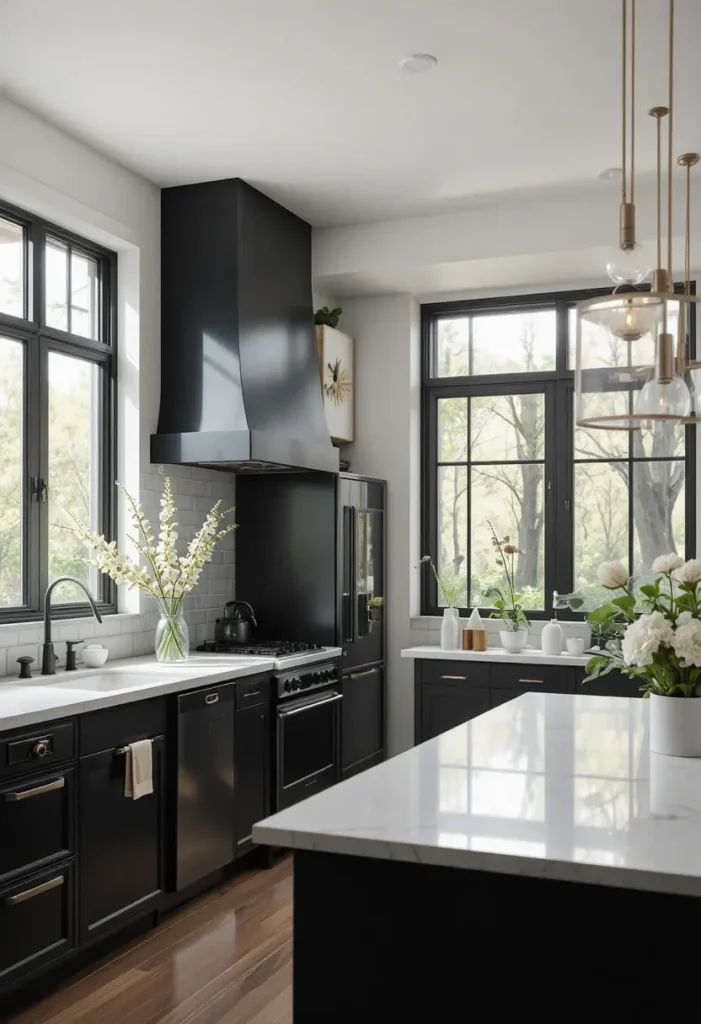
Big windows are the best friend of a black-appliance kitchen, because daylight does what no paint colour can, it keeps the dark finishes feeling fresh instead of heavy. I would keep the window dressings light, a sheer linen blind or a simple cotton curtain, so the light pours in and the black fridge and cooker catch a soft shine rather than sitting in shadow. If you can, keep the sill clear and the glass clean, and let the view outside become part of the room. On bright mornings the whole kitchen feels open and generous, and even on grey days the light lifts the black beautifully.
How to do it: Keep window dressings sheer and light, and clean the glass inside and out. Leave the sill clear apart from one plant, and check the light at different times of day. Add a mirror opposite the window if you want to bounce even more light around the room.
22. Add Glass-Front Cabinets
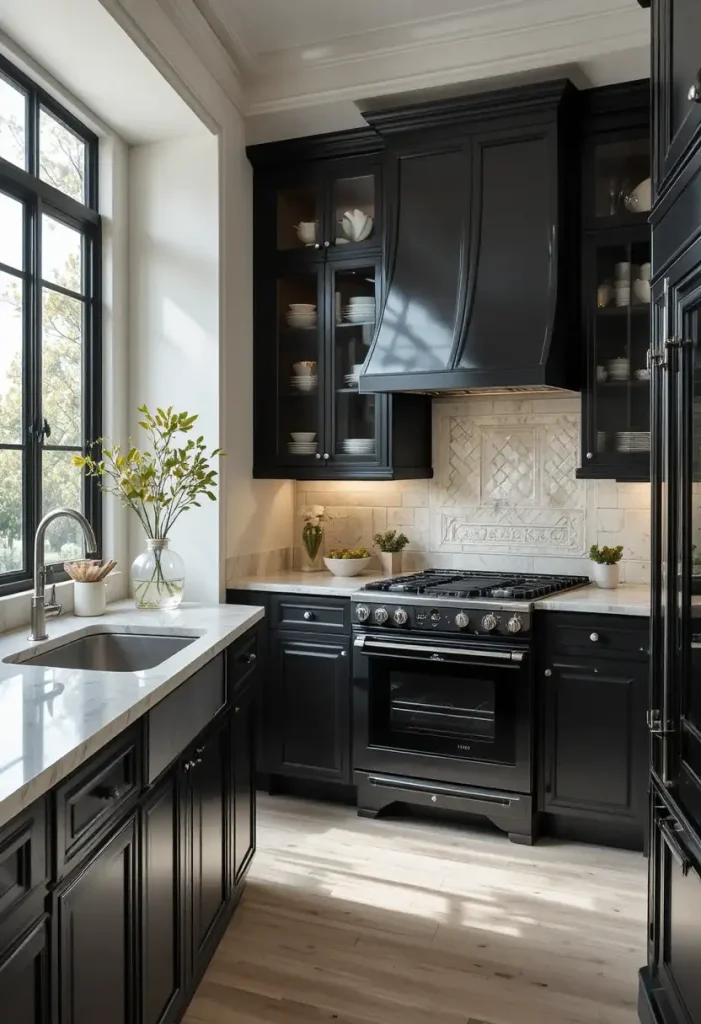
Glass-front cabinets are a gentle way to lighten a black-appliance kitchen, because they break up solid runs of dark fronts with a soft, see-through shimmer. I would use them on one or two upper cabinets and fill them with pieces I love, white plates, clear glasses and a few pretty bowls, so the display feels personal rather than staged. Keep the glass clean, the shelves tidy and the colours inside calm, so the cabinets read as a light, airy pause between the black appliances. A slim black frame around the glass ties them neatly back to the rest of the room.
How to do it: Choose one or two upper cabinets for glass fronts and fit clear or lightly frosted glass. Fill them with white plates and clear glasses, keeping the shelves tidy. Wipe the glass weekly so the display stays bright and the black frames stay sharp.
23. Embrace a Modern Monochrome Look
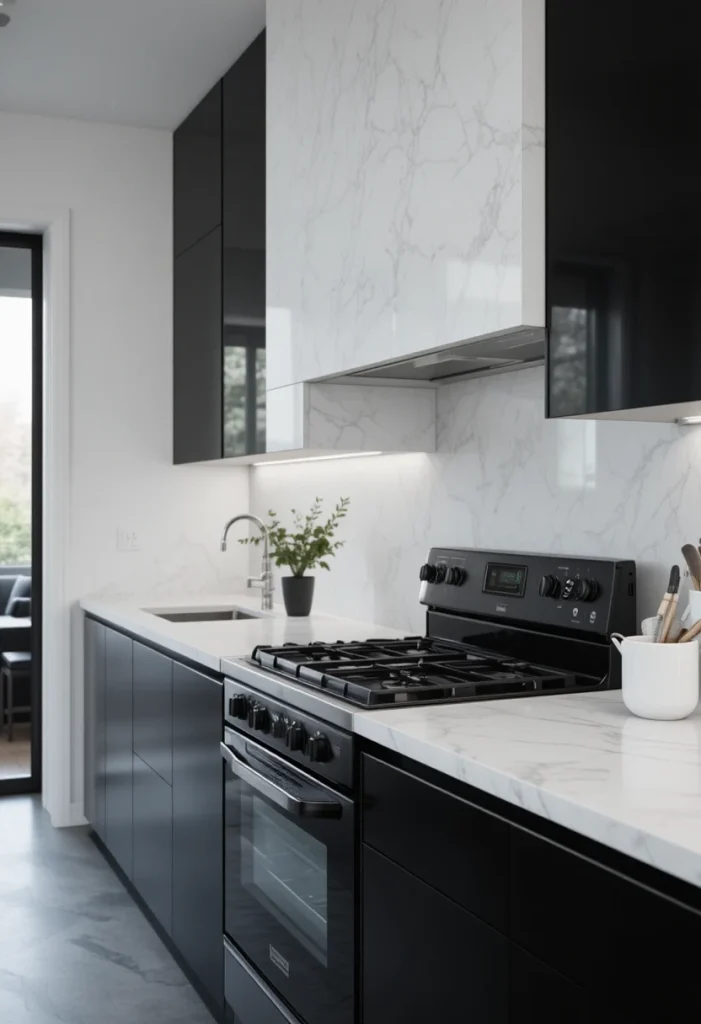
A modern monochrome look is the boldest way to style black appliances, and I love how confident it feels when it is done well. Black, white and grey in careful balance, black appliances, white walls and a grey floor or worktop, create a clean, graphic kitchen that never looks dated. I would keep the black to the appliances and one or two accents, let white do most of the lifting, and use grey as the bridge between them so the contrast feels soft rather than harsh. A single timber board or a green plant stops the palette from feeling cold, and the room reads as sleek, modern and striking without trying too hard.
How to do it: Paint the walls white, choose a mid-grey floor or worktop, and let the black appliances be the darkest note. Keep the palette to those three tones, add one timber board and one plant for warmth, and step back to check the balance feels calm, not stark.
24. Add Warm Bar Stools
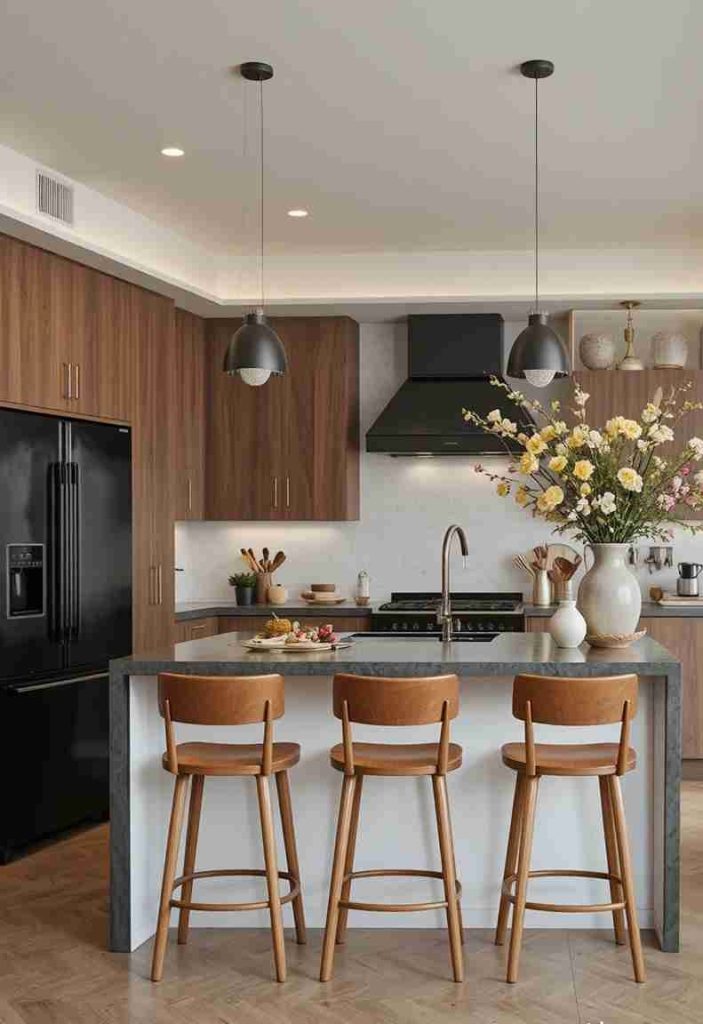
Warm bar stools are the finishing touch that makes a black-appliance island feel like somewhere to linger, not just somewhere to cook. I would choose stools with warm wood seats or slim black metal frames, and keep the height right so feet rest comfortably on the rail. Two or three stools are plenty for most islands, and a leather or woven seat adds a soft texture that balances the hard black fronts. Tuck them neatly under the overhang when they are not in use, and the island stays clear, welcoming and ready for a slow morning coffee or a quick homework session.
How to do it: Measure the island overhang and choose stools with a seat height about 25 centimetres below the worktop. Pick warm wood or slim black metal, add a leather or woven seat for softness, and keep the number to two or three so the island never feels crowded.
25. Keep Decor Minimal
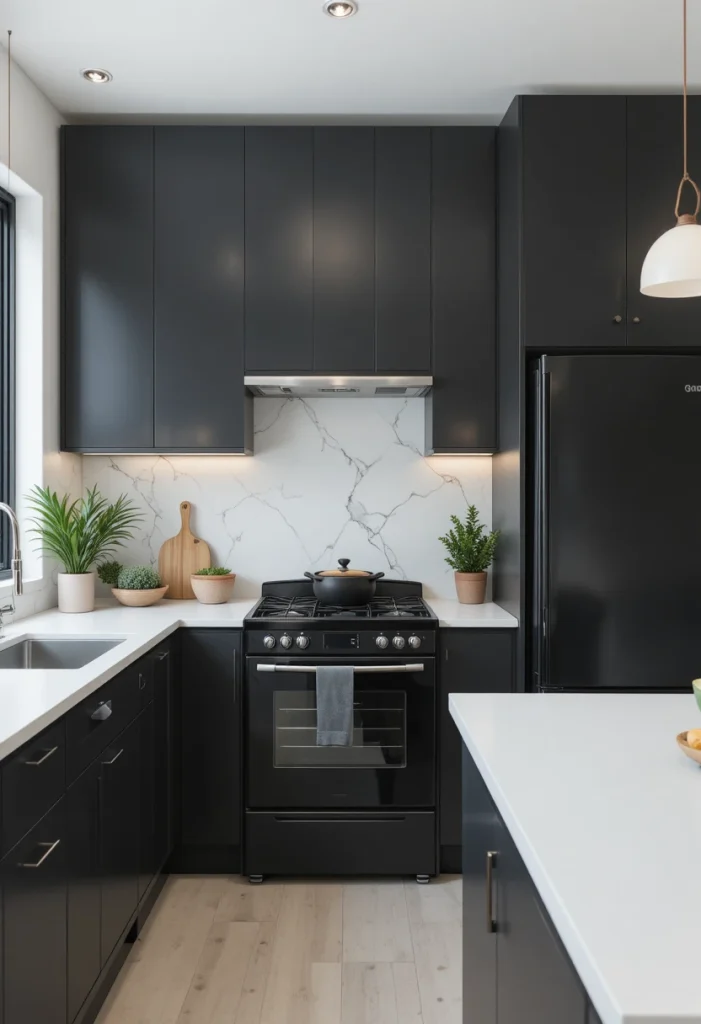
Keeping decor minimal is what lets black appliances shine, because every extra object competes with that strong dark finish. I would choose three or four pieces I truly love, a wooden board, a ceramic vase and a favourite cookbook, and give each one space to breathe on a shelf or a worktop. Everything else stays behind closed doors, so the kitchen reads as calm and uncluttered rather than bare. Clear surfaces reflect the light, the black looks richer, and the room feels sleek, settled and easy to keep tidy.
How to do it: Remove everything from the worktops and shelves, then put back only three or four favourite pieces. Give each one space, store the rest away, and repeat the edit once a month so the surfaces stay clear and the black can shine.
26. Add Gentle Personal Touches
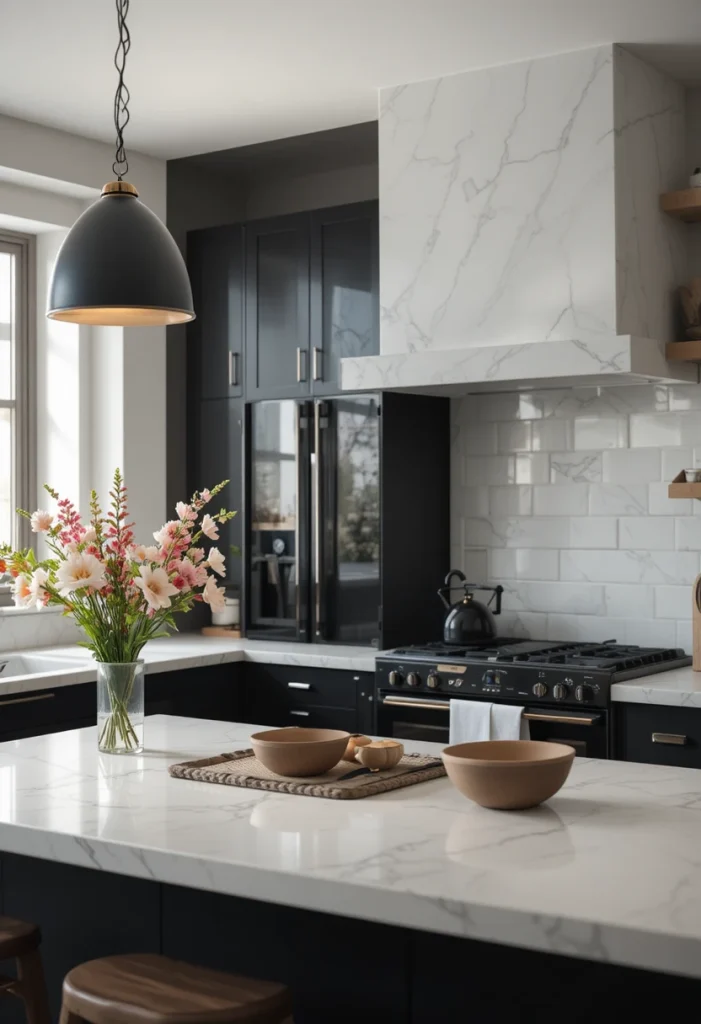
Finally, a few personal touches are what turn a sleek black-appliance kitchen into a home. I would add a favourite mug on a hook, a family photo on the sill and one handmade piece, a thrown bowl, a woven basket or a child’s drawing framed simply, and let those small, loved things soften the dark fronts. Keep them few and meaningful, so each one is noticed, and place them where you see them daily rather than tucked away. The black gives the room its polish, but the personal touches give it its heart, and that is what makes the kitchen feel truly yours.
How to do it: Choose three personal pieces, such as a favourite mug, a family photo and one handmade item. Place them where you see them daily, keep the rest of the surfaces clear, and swap one piece with the seasons so the kitchen always feels fresh and yours.
Frequently Asked Questions
Do black appliances show fingerprints?
Yes, they can, especially glossy black finishes, which show fingerprints and smudges more readily than matt ones. I wipe mine with a soft microfibre cloth and a little warm, soapy water, then buff dry, and they look smart again in a minute. Matt black and black stainless finishes hide marks far better, so they are worth choosing if fingerprints bother you.
Should I choose matt black or black stainless steel?
It depends on the look you want. Matt black is soft and modern, hides fingerprints well and suits calm, contemporary kitchens. Black stainless steel has a subtle metallic sheen, feels a little more high-tech and wipes clean easily, though it can show smudges in strong light. I would order a sample of each and hold them against your cabinets in daylight before deciding.
Can I mix black appliances with other finishes?
Yes, and a little mixing usually looks better than matching everything. I keep black as the main finish and add one or two accents, such as brushed stainless steel or warm brass, so the kitchen feels layered rather than flat. The trick is to repeat each accent at least twice, for example a steel tap and a steel kettle, so the mix looks deliberate.
Will black appliances make a small or dark kitchen feel smaller?
They can if the room is already dark, but they do not have to. Pair them with pale cabinets, a light worktop and a bright backsplash, keep the window dressings sheer, and add warm under-cabinet lighting. With enough light surfaces around them, black appliances read as a smart contrast rather than a heavy block, even in a small kitchen.
Do black appliances suit resale, or will buyers prefer stainless steel?
Black appliances appeal to many buyers because they look modern, hide marks well and suit a wide range of cabinet colours. Stainless steel is still a safe, classic choice, but a well-styled black kitchen photographs beautifully and can make a home stand out. If you plan to sell soon, keep the rest of the kitchen neutral so buyers can picture their own style in it.
Your Black Appliance Kitchen Checklist
- ☐ Choose your black finish — matt, gloss or black stainless
- ☐ Match the black across the fridge, cooker and dishwasher
- ☐ Pick a pale worktop to lift the dark finishes
- ☐ Add a light backsplash or white subway tile
- ☐ Bring in warm wood for balance
- ☐ Swap in brass or gold handles
- ☐ Fit warm under-cabinet lighting
- ☐ Hang warm pendant lights on a dimmer
- ☐ Keep the worktops clear and clutter-free
- ☐ Add two or three plants or fresh herbs
- ☐ Wipe fingerprints with a soft microfibre cloth
- ☐ Use a gentle cleaner made for black finishes
- ☐ Add one pop of colour you love
- ☐ Step back and check the balance in daylight
A Final Gentle Thought
Black appliances have given my kitchen a sleek, modern backbone, and the ideas above are simply the ways I have learned to soften, brighten and warm that dark finish. Start with the one that suits your room best, a pale worktop, warm wood or a little brass, and let the rest follow slowly. A kitchen does not need to change overnight to feel new. Add one thoughtful touch at a time, and it will soon feel like the stylish, welcoming heart of your home.