25 Living Room Carpet Ideas to Add Warmth, Color, and Style
There is a quiet magic in the way a beautiful carpet can transform a living room from the floor up. It softens hard edges, warms cold mornings, and gathers the furniture into one welcoming circle. In this post, I am sharing 25 living room carpet ideas to add warmth, colour, and style. From soft neutrals and plush textures to bold patterns and vintage charm, there is something here for every home and every mood. Let us find the one that makes your living room feel truly yours.
1. Choose a Soft Neutral for Calm
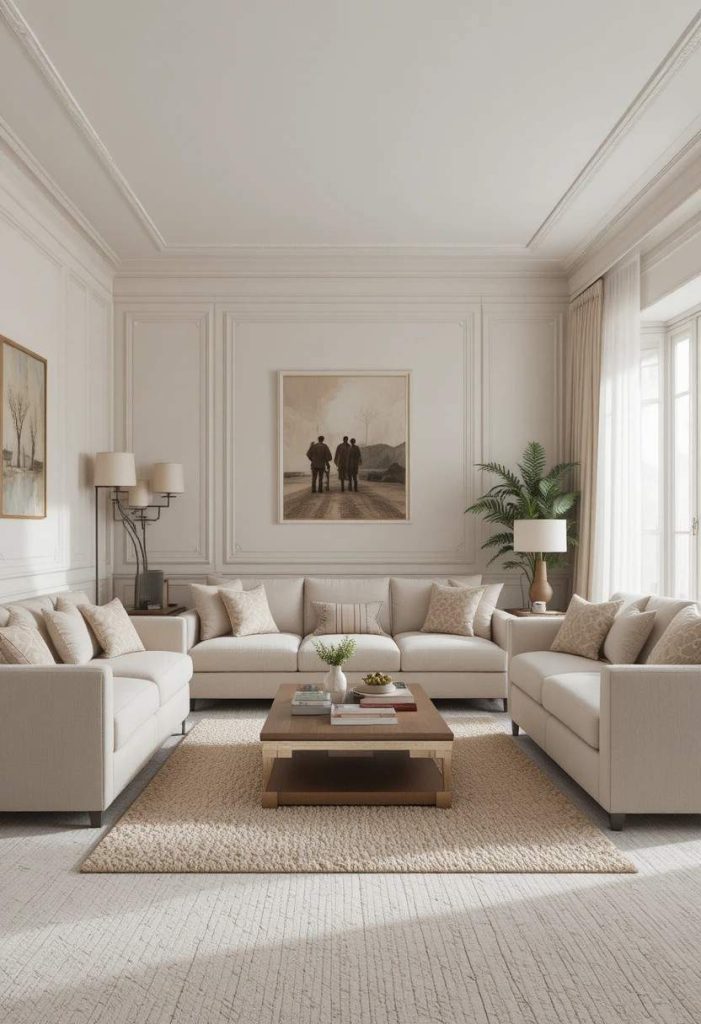
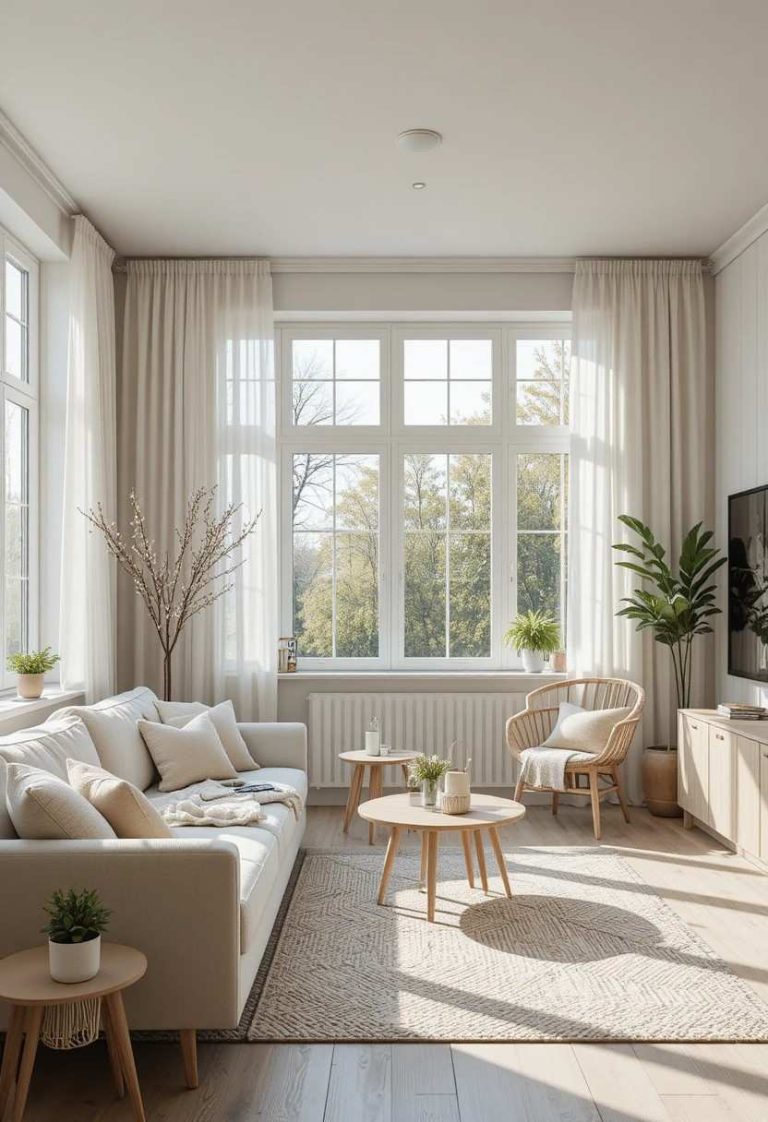
I have learned that a soft neutral carpet is the quietest kind of brave choice in a living room. Beige, cream or greige never shouts for attention, yet it changes everything underneath it: bare feet land softly on cold mornings, pale furniture stops looking stark, and the whole room seems to breathe more easily. I love how it lets a favourite armchair or a piece of art do the talking while the floor simply holds everything together. A warm pale tone also forgives more than people expect, hiding everyday dust far better than a cold, flat white. When I am unsure where to begin, I start here, because a calm floor lets me play with cushions, throws and colour elsewhere without the room ever feeling busy.
How to do it: Order large samples in beige, cream and greige, then lay them on the floor for a full day and check them in morning and evening light. Pick a warm undertone that sits happily with your wood and upholstery, and keep a small carpet cleaner or a plain white cloth nearby so the odd mark can be blotted away before it settles.
2. Add a Plush, Deep Pile Underfoot
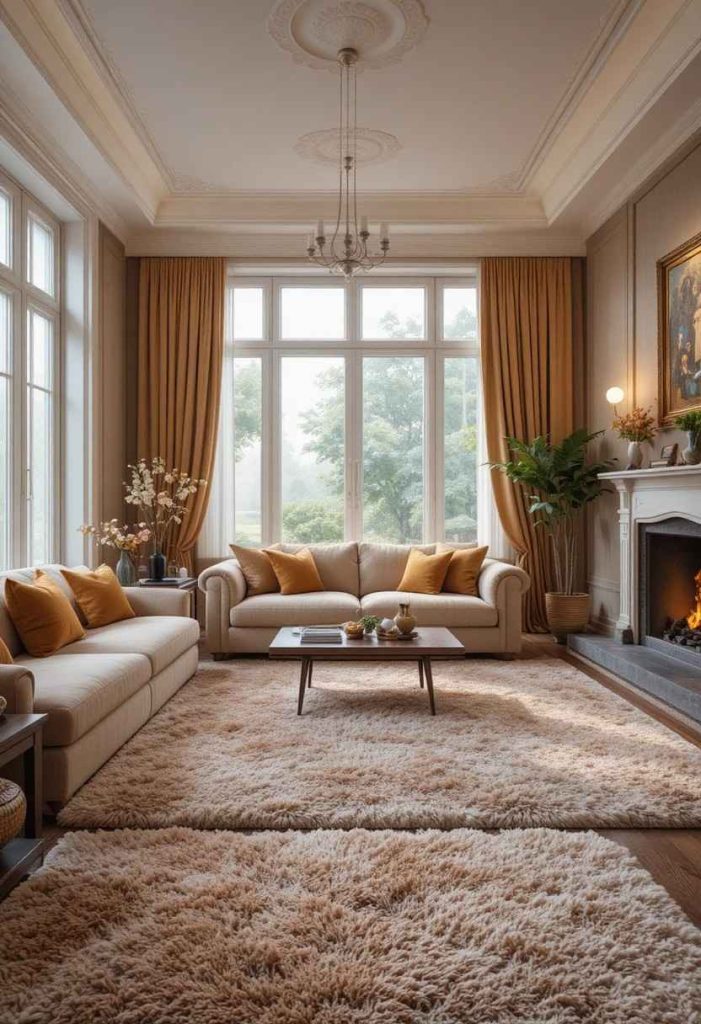
There is nothing quite like stepping out of bed on a winter morning and sinking your toes into a deep, plush pile instead of a cold, hard floor. I think of this carpet as the living room equivalent of a favourite jumper: soft, generous and impossible to hurry past without pausing for a moment. It hushes footsteps, makes the sofa feel even more inviting, and turns an ordinary evening of reading into something properly cosy. I would not choose it for a hallway where muddy shoes march through, but in a room made for sitting, talking and lingering, it earns its place. If comfort is what your living room is missing, this is the quickest way I know to find it.
How to do it: Feel samples with bare feet and compare pile heights, then choose a dense, resilient pile that springs back when you press it. Add a good underlay for extra softness, vacuum with the beater bar raised or switched off, and brush the pile back into shape after heavy furniture has sat on it.
3. Make a Statement With a Bold Pattern
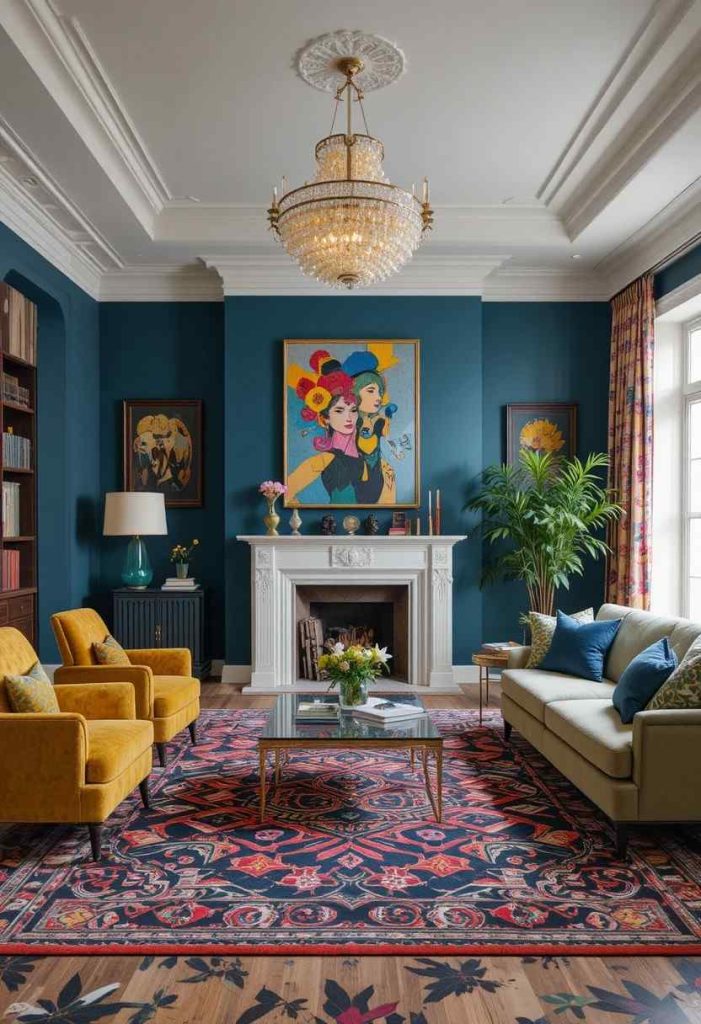
A bold patterned carpet is the bravest move on this list, and honestly, it is the one I enjoy most when it works. A strong geometric or a joyful floral turns the floor into a piece of art, so the room has a focal point before you have hung a single picture. I keep everything else calmer when the carpet is doing the talking: plain cushions, one strong colour picked out from the pattern, and wood or leather that does not compete. The trick is scale, because a pattern that looks charming on a sample can feel overwhelming across a whole room, or disappear entirely if it is too small. Live with a large sample for a week, and if you still smile every time you walk in, you have found your carpet.
How to do it: Borrow the largest sample you can and lay it under the coffee table for a few days. Choose a pattern whose scale suits the room, then repeat just one of its colours in cushions or a throw and keep the sofa and curtains plain so the floor stays the star.
4. Warm the Room With Earthy Tones
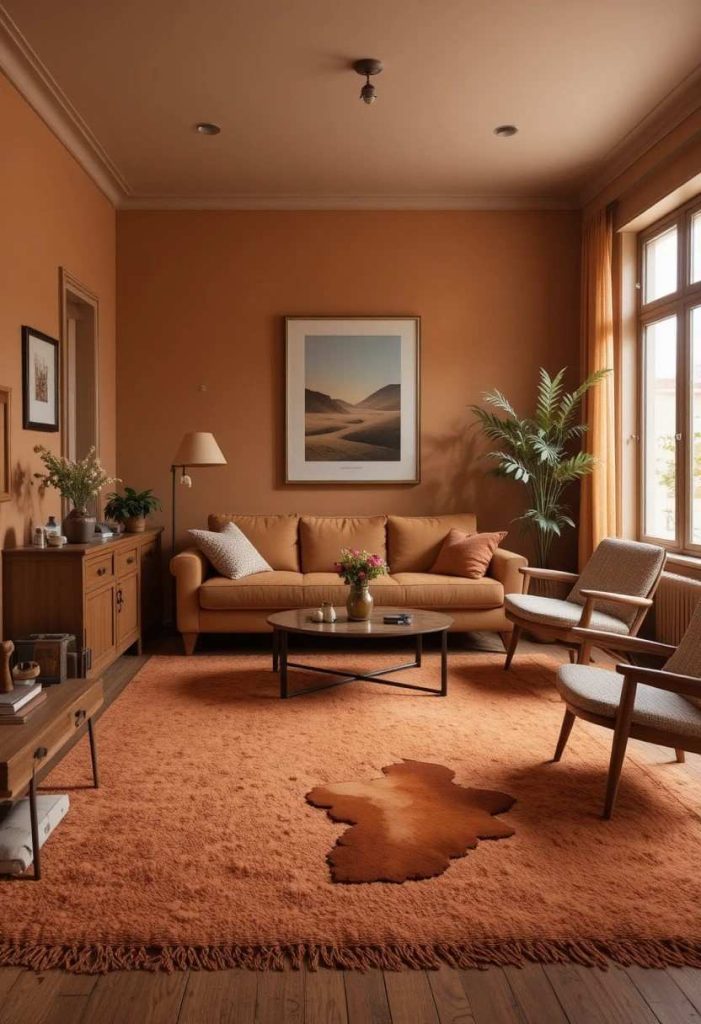
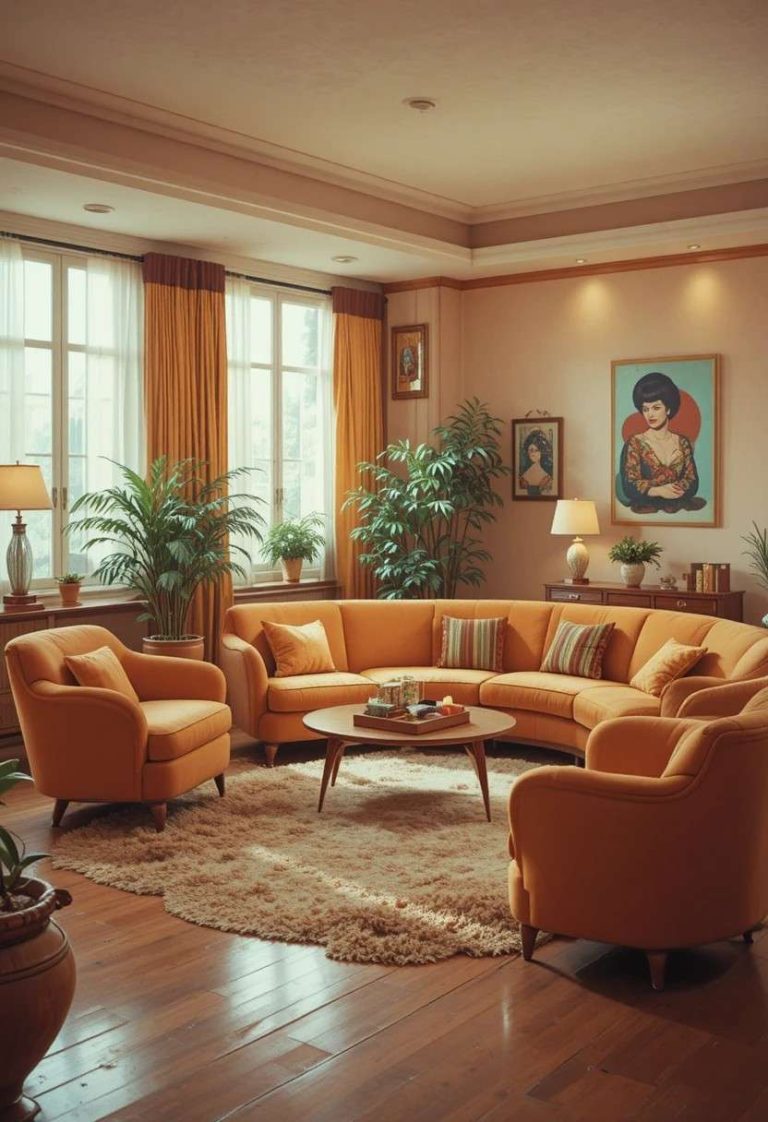
Terracotta, caramel and warm brown are the colours of autumn leaves and freshly baked bread, and they bring that same grounded, generous feeling into a living room. I reach for them when a room feels pale and chilly, especially in winter, because an earthy carpet warms the space before the heating has even caught up. It sits beautifully with honey-toned wood, worn leather and cream linen, and it makes candlelight in the evening feel richer. I also find these tones wonderfully forgiving, since they hide the odd crumb and the marks of everyday life. If your room needs warmth more than it needs brightness, an earthy carpet is a gentle, reliable answer.
How to do it: Compare terracotta, caramel and warm brown samples against your wood and leather in daylight. Choose the tone that feels warm without turning orange, then balance it with cream cushions, a pale throw and a plant or two so the room stays fresh as well as cosy.
5. Layer a Rug Over Your Carpet
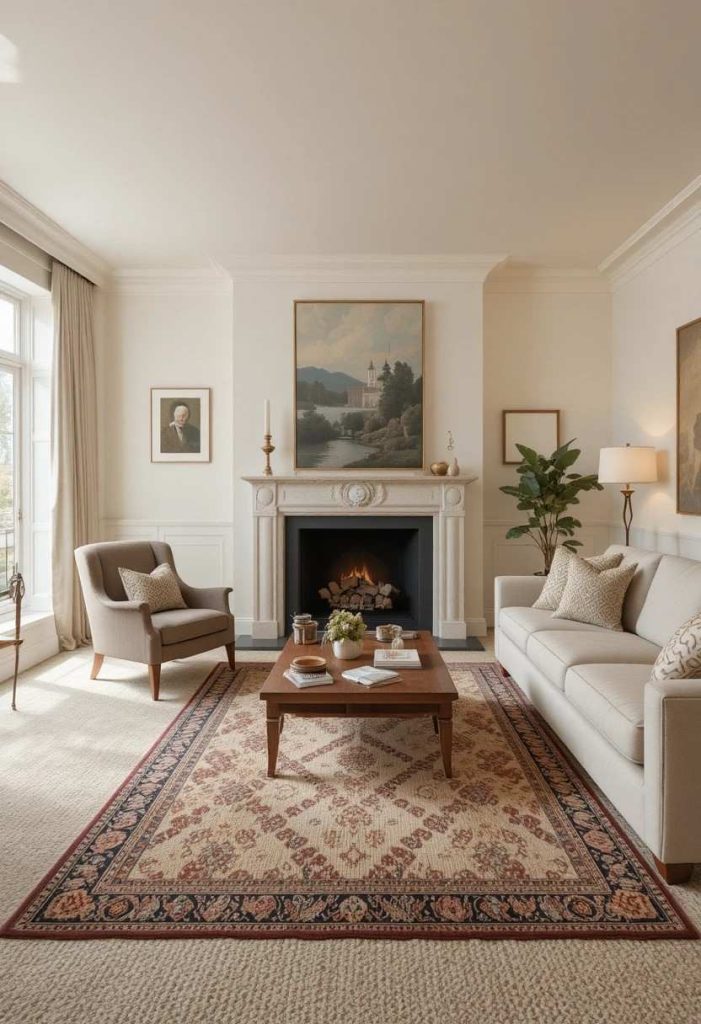
Layering a rug over a carpet used to feel like a rule I was supposed to break, until I tried it in a rented flat where the carpet was perfectly fine but completely forgettable. A smaller rug on top instantly defined the seating area, added a pattern I actually loved, and made the whole arrangement feel considered rather than inherited. I like a rug that is clearly smaller than the carpet beneath it, with a good handspan of carpet showing around the edges, so the layers read as deliberate. It is also a kind answer for renters and for anyone who wants a change without replacing a whole floor. Think of the carpet as the quiet base and the rug as the jewellery.
How to do it: Choose a rug at least 30 cm smaller on each side than the carpet area you want to frame, and place it so the front legs of the sofa sit on it. Use a non-slip pad made for carpet-on-carpet layering, and keep the rug pattern simpler if the carpet already has texture.
6. Choose Natural Wool for Lasting Comfort
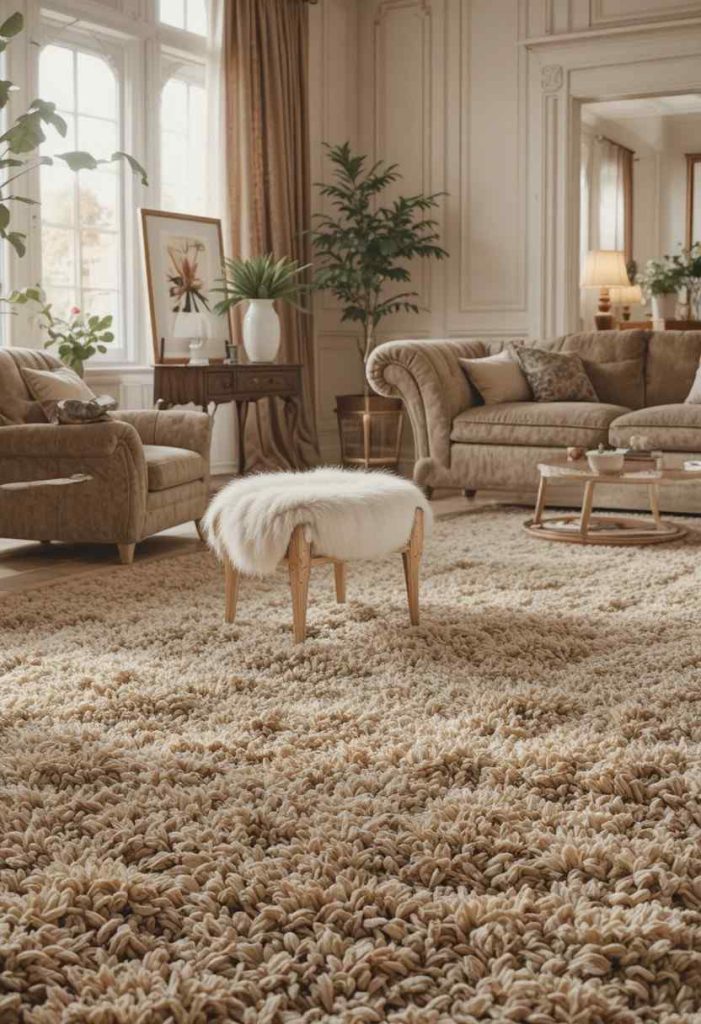
Wool is the carpet I recommend when someone asks me what will still look good in ten years, because it has a way of ageing gracefully that synthetic fibres rarely manage. It feels soft without being flimsy, holds its colour beautifully, and even helps regulate the air in a room, which I notice most in a house that gets damp in winter. Yes, it costs more at the start, and yes, it sheds a little at first, but I have watched wool carpets outlast two cheaper ones in the same house. There is also something reassuring about a natural fibre underfoot, especially where children play or bare feet wander. For me, wool is the slow, sensible luxury that quietly pays for itself.
How to do it: Ask for 100 percent wool or a high wool blend and check the pile density by bending a sample back on itself. Budget for a quality underlay, vacuum regularly with suction only, and blot spills with cold water before they dry so the fibres keep their natural resilience.
7. Add a Pop of Colour
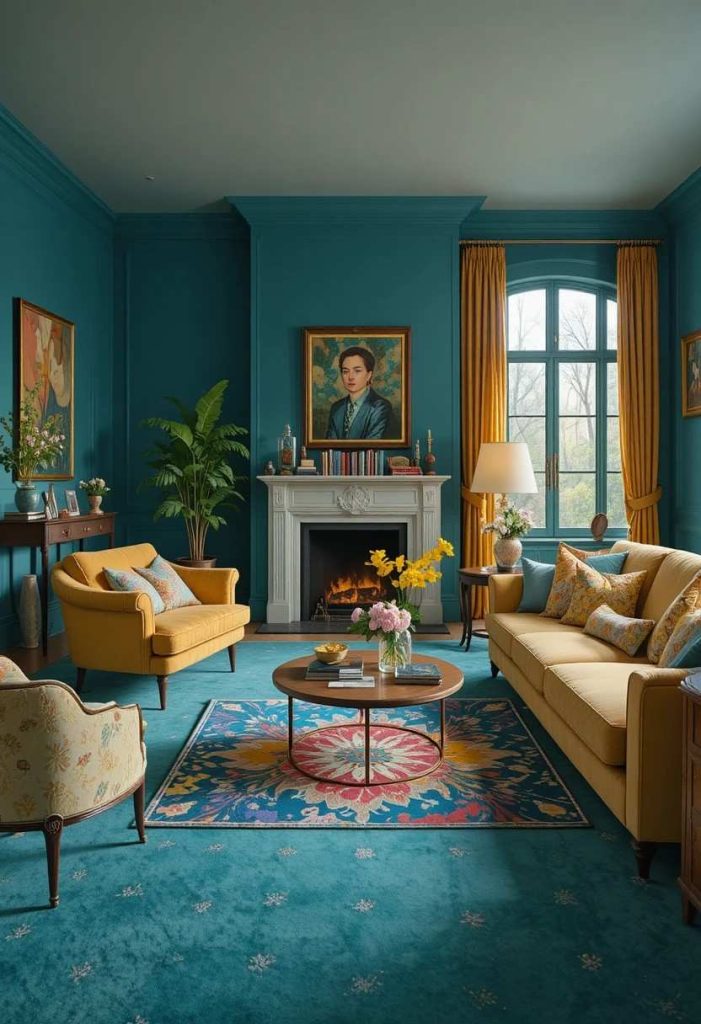
A cheerful carpet in teal, mustard or blush is like opening the curtains on a grey morning: the whole room wakes up. I love using one confident colour on the floor because it gives me permission to keep everything else simple, and the room still feels full of personality. The key, I have found, is choosing a colour you genuinely love rather than one that is simply fashionable this year, because you will be living with it far longer than any trend lasts. Teal feels calm and a little dramatic, mustard brings sunshine even in February, and blush softens a room without making it sugary. If your living room feels flat, one brave colour underfoot can lift it in a single afternoon.
How to do it: Live with large colour samples for a week and look at them in daylight and lamplight before deciding. Pick one accent colour from the carpet and echo it in a cushion or a vase, then keep the walls and sofa neutral so the colour feels joyful rather than overwhelming.
8. Keep It Light and Airy
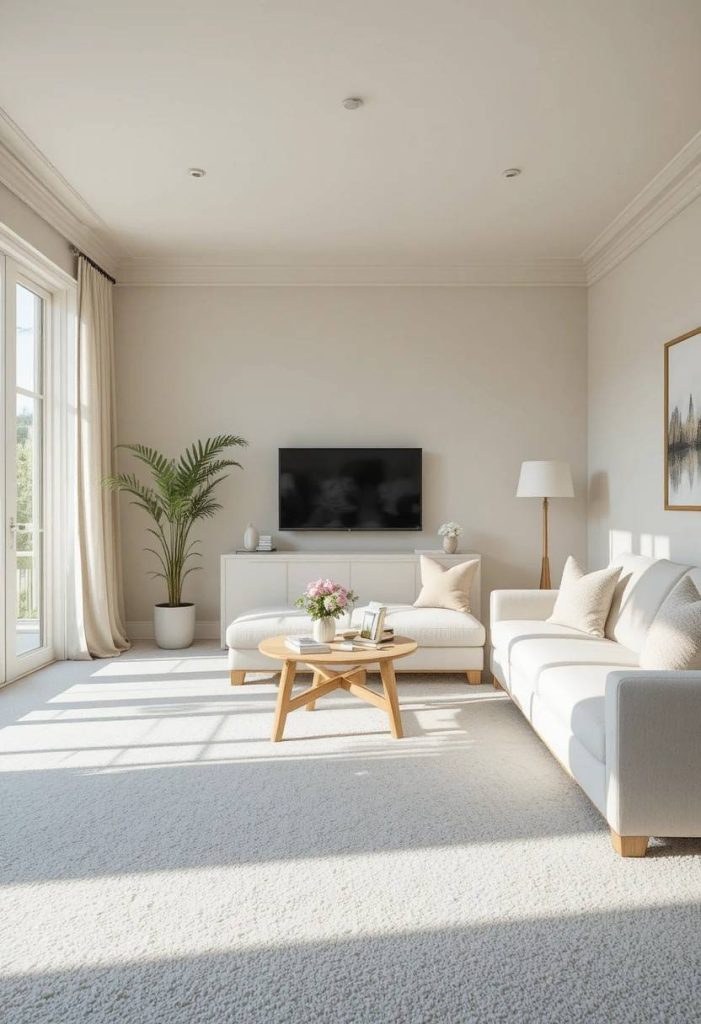
A pale carpet in soft white or light grey does for a small living room what a good haircut does for a face: it opens everything up. I have seen boxy, north-facing rooms feel twice as bright once the dark floor was replaced with something that bounces the light around instead of swallowing it. The trick is choosing a pale tone with a little warmth in it, because a cold, flat white can feel clinical rather than fresh. I also think pale carpets suit calm, uncluttered rooms best, where the floor can be part of the breathing space rather than a battleground for muddy paws. With a stain-friendly finish and a no-shoes habit by the door, a light carpet stays lovely for years.
How to do it: Choose a pale carpet with a warm or grey undertone and a stain-resistant treatment, then test a sample with a drop of tea or coffee to see how easily it cleans. Keep a doormat at every entrance, vacuum twice a week, and deal with spills the moment they happen.
9. Add Interest With Texture
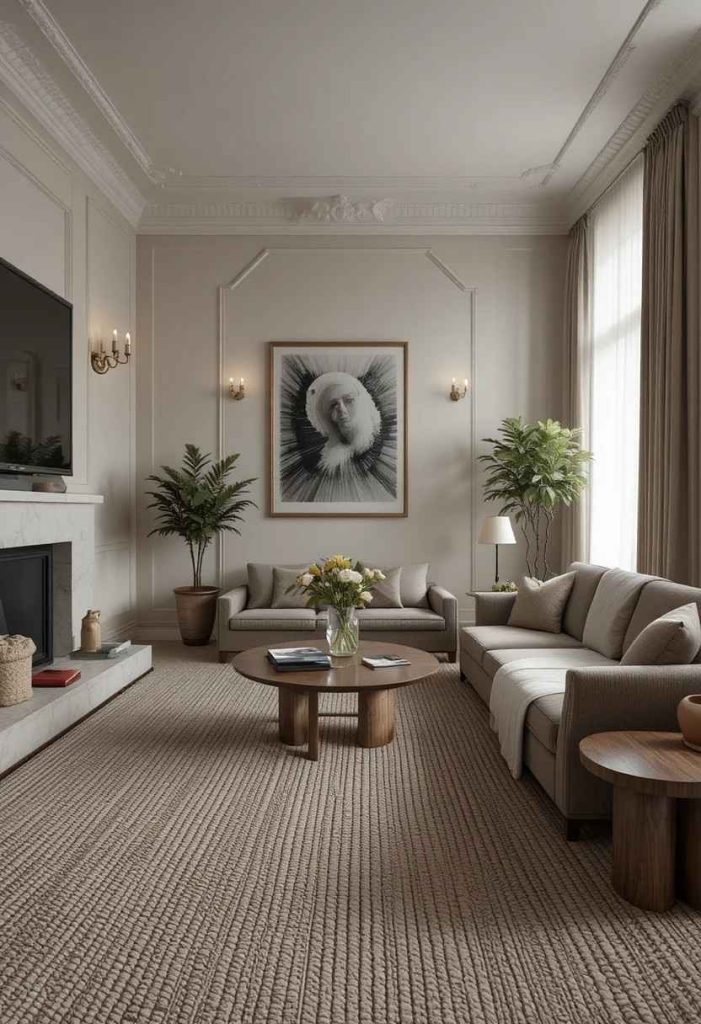
Texture is my favourite way to make a plain carpet feel designed, because it changes how a room feels without changing its colour at all. A loop pile, a ribbed weave or a gentle cut-and-loop pattern catches the light differently as you move around the room, so the floor seems to shift and breathe. I love running my hand across it and feeling that small, satisfying ridged surface, especially in a room where everything else is smooth and flat. Textured carpets are also practical: they hide footprints and vacuum marks far better than a flat, velvety pile. If you want depth without drama, texture is the quiet, clever choice I reach for first.
How to do it: Compare loop, ribbed and cut-and-loop samples by touch and by looking at them from across the room. Choose a texture that suits your traffic, since tight loops wear best in busy homes, then keep the rest of the room calm so the subtle pattern can be appreciated.
10. Match Your Carpet to Your Sofa
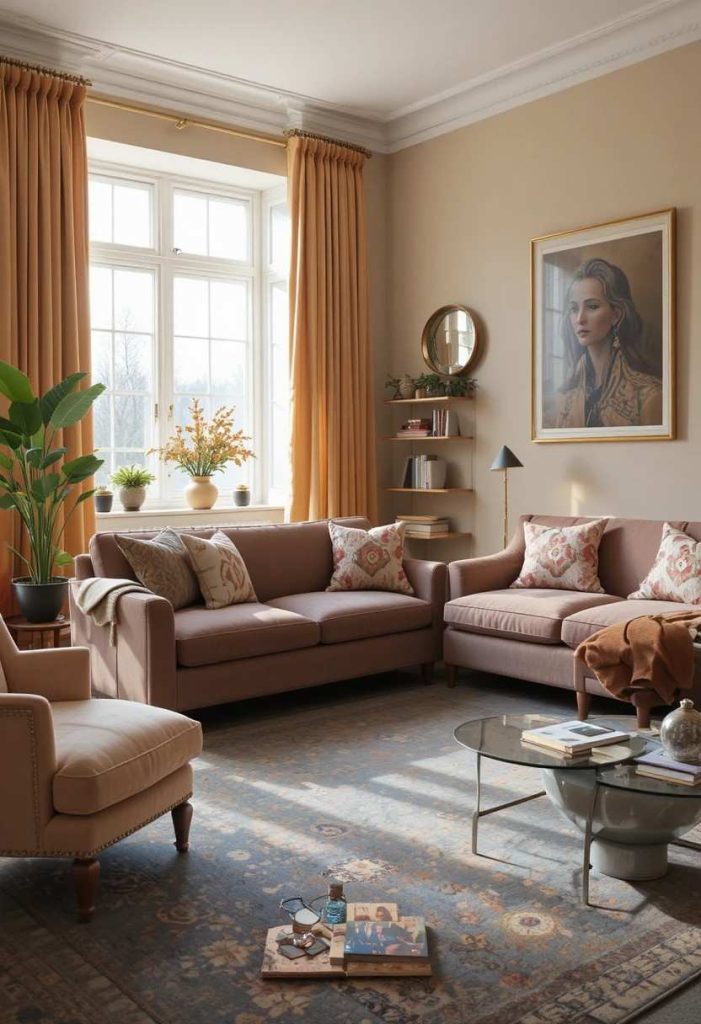
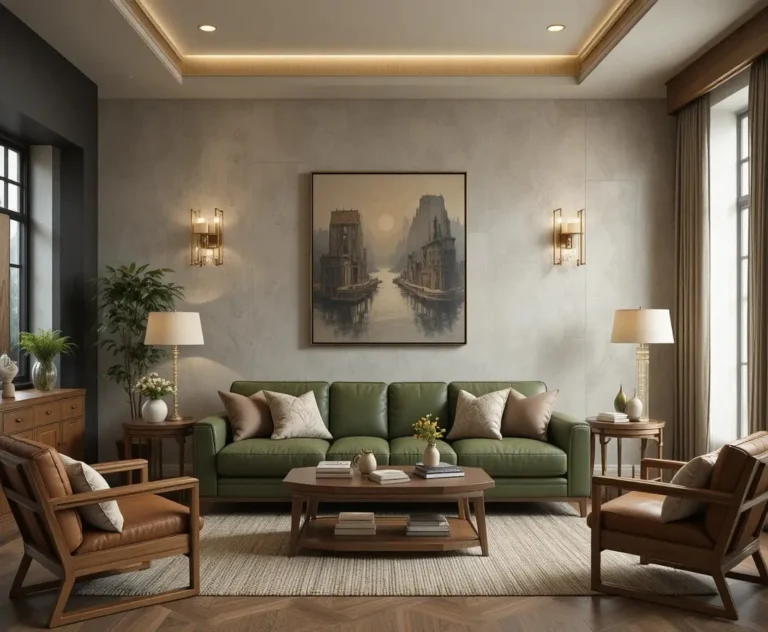
The sofa and the carpet are the two biggest pieces in most living rooms, so when they get along, the whole room relaxes. I do not mean they have to match exactly; in fact, I prefer a gentle conversation between them, like a sage sofa over a warm cream carpet, or a deep blue sofa grounded by a soft grey. What matters is that they share an undertone, warm with warm or cool with cool, so nothing jars when you look across the room. If you are still deciding on the wider mood of the space, browsing living room aesthetics can help you name the feeling you want before you commit to a colour. Once that feeling is clear, choosing the carpet becomes surprisingly easy.
How to do it: Take a cushion cover or a fabric swatch from your sofa when you shop for carpet, and lay samples right against it in daylight. Choose a carpet that shares the sofa’s undertone, then pick a rug or throw that bridges the two if the contrast still feels too strong.
11. Bring Classic Charm With Stripes
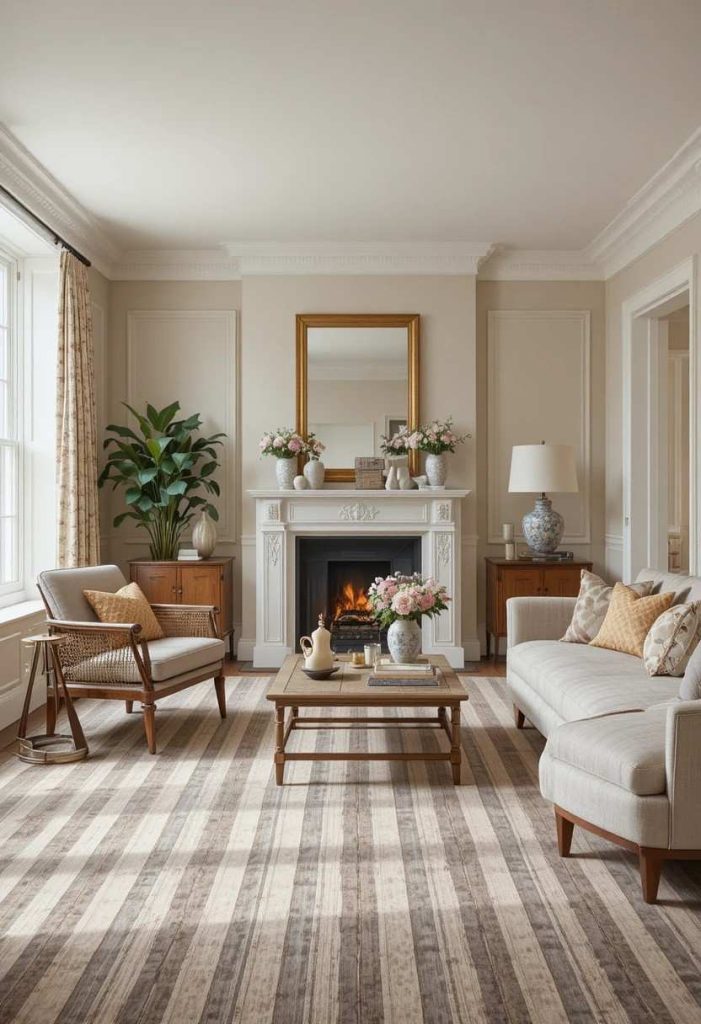
Stripes have a cheerful honesty I never tire of, and in a living room they do real work as well as looking pretty. Run them lengthways and a short room feels longer; run them across and a narrow room feels wider, which is a lovely trick for awkward layouts. I like a soft, low-contrast stripe in cream and pale grey for a calm room, and a bolder navy and cream stripe when I want a hint of seaside charm. The key is keeping the stripe in proportion to the room: a wide stripe suits a generous space, while a fine stripe is kinder to a small one. Stripes also hide the odd footprint, which is a small mercy in a busy household.
How to do it: Lay striped samples on the floor and look at them from the doorway to judge their direction and scale. Choose a stripe width that suits the room size, align the stripes with the longest wall to stretch the space, and keep cushions plain so the pattern stays crisp.
12. Go Dark and Dramatic
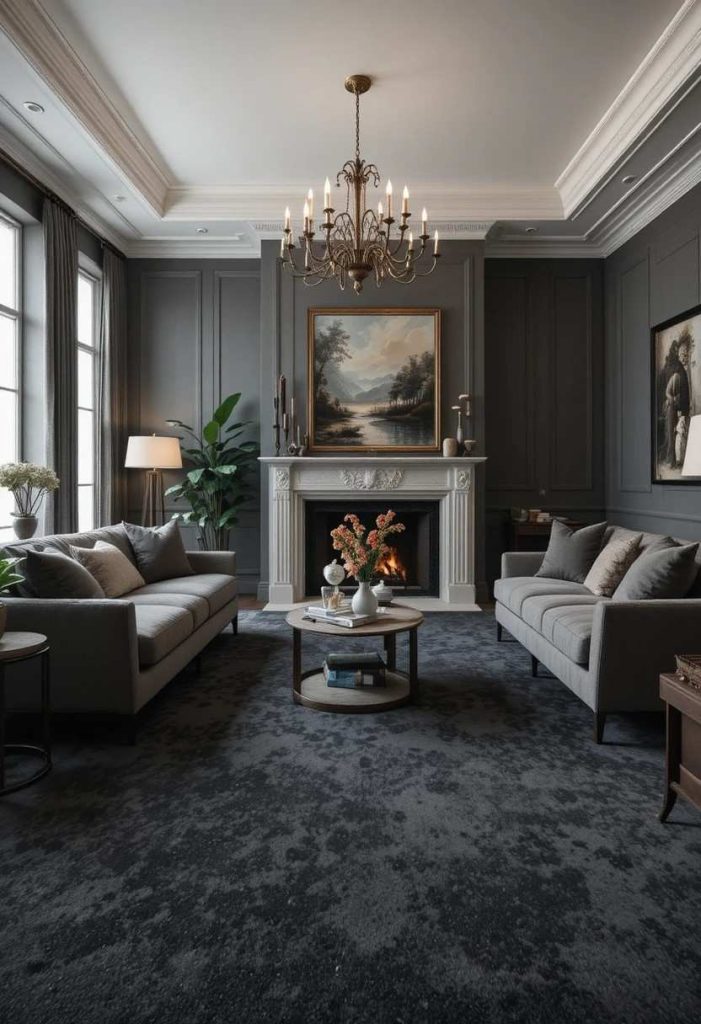
A deep charcoal or navy carpet is the living room equivalent of turning the lights down low and lighting a candle: everything feels closer, warmer and a little more grown up. I love it in rooms that get plenty of daylight, because the darkness grounds all that brightness and makes pale furniture and brass details glow against it. It also hides the marks of everyday life remarkably well, which is why I often suggest it to families with dogs. The balance matters, though, so I keep the walls lighter, add a lamp or two, and let a cream throw soften the sofa. Done well, a dark carpet does not make a room gloomy; it makes it feel like a proper evening room.
How to do it: Test charcoal and navy samples in your room and check them at night under lamplight, when dark carpets look their best. Keep walls and curtains light, add warm lighting and a pale throw, and choose a pile that does not show every footprint if the room gets heavy use.
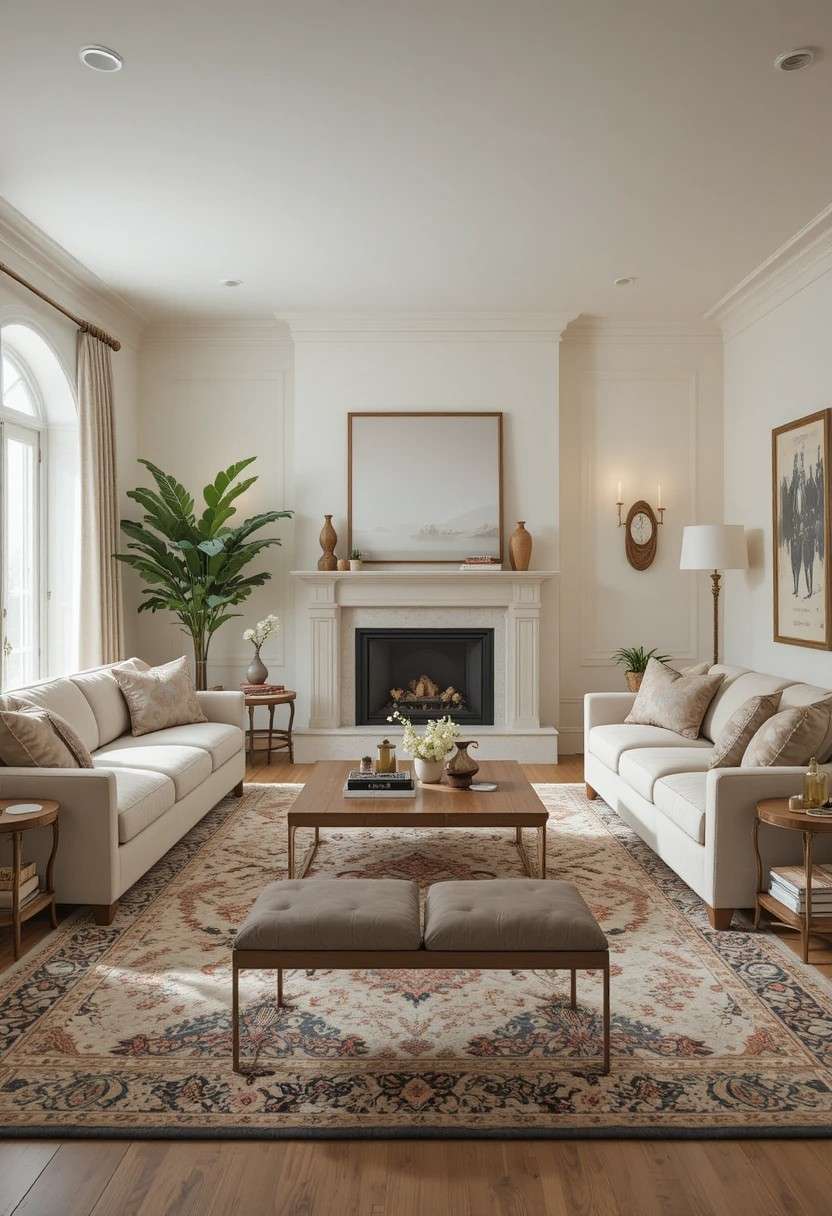
13. Add Vintage-Style Charm
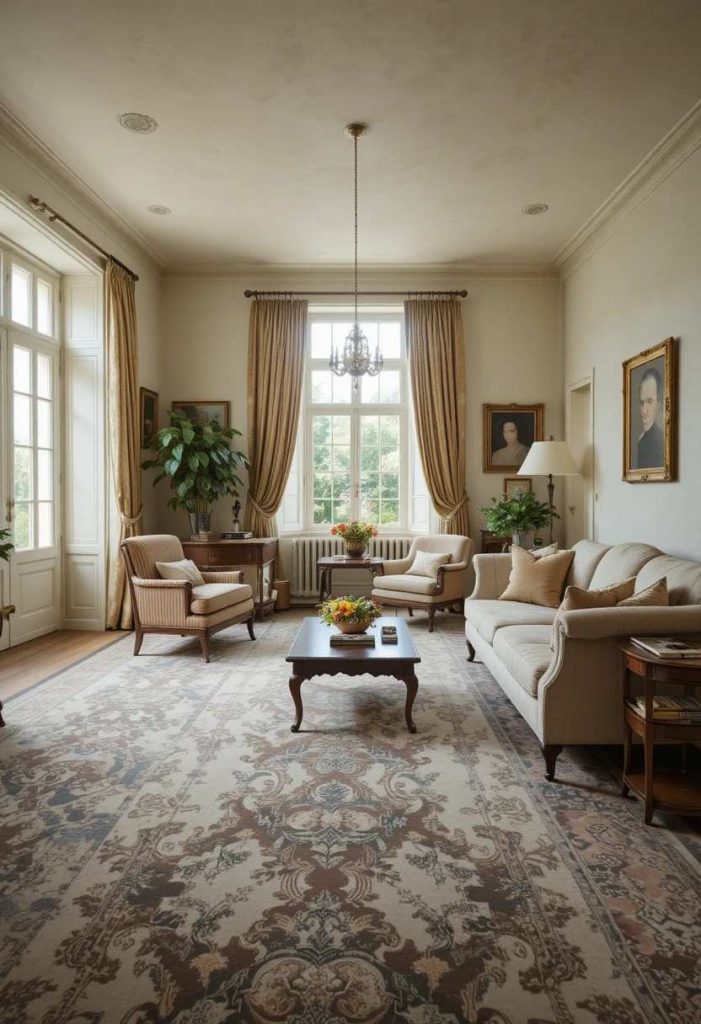
There is something deeply comforting about a carpet that looks as though it has already lived a little, with a faded, vintage-inspired pattern that softens the edges of a new room. I love how it brings instant character to a space that might otherwise feel too perfect, too new, or too much like a showroom. The worn look pairs beautifully with wooden furniture that has its own marks and stories, a linen sofa, and a lamp that has seen a few decades. I would not pair it with lots of other busy patterns, though, because the carpet deserves to be the one telling the story. In a modern home, it is the easiest way I know to add soul without adding clutter.
How to do it: Choose a faded pattern in muted tones that echo your wood and upholstery, and view a large sample in the room before ordering. Keep other patterns small and quiet, add one genuinely old piece nearby, and let the carpet’s soft, worn colours set the palette for the rest of the room.
14. Wrap the Room in Wall-to-Wall Carpet
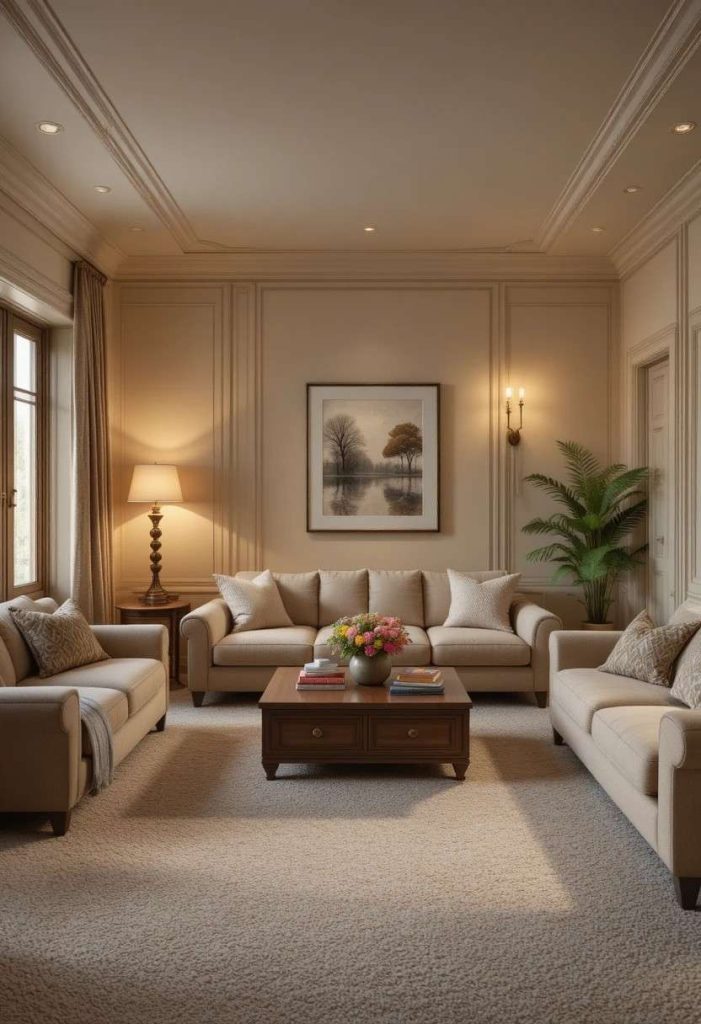
Wall-to-wall carpet wraps a living room in softness in a way no rug ever quite manages, because there are no hard edges, no cold borders, and nowhere for draughts to sneak in. I notice it most in the mornings, when the whole floor feels warm from wall to wall, and in the evenings, when footsteps are hushed and the room feels quieter. It is also a generous choice for a room with a step down or an awkward level change, since sunken living room ideas show how continuous carpet can soften the change in level and make a lower seating area feel deliberate rather than awkward. I would choose a mid-tone, a good underlay, and a professional fitting, because the seamless look only works when the edges are truly invisible.
How to do it: Measure the room carefully, including doorways and alcoves, and order a little extra for pattern matching and trimming. Choose a thick underlay for warmth and sound softening, book a professional fitter, and keep the tone mid-depth so the seamless floor feels cosy rather than overwhelming.
15. Try a Natural Fibre Carpet
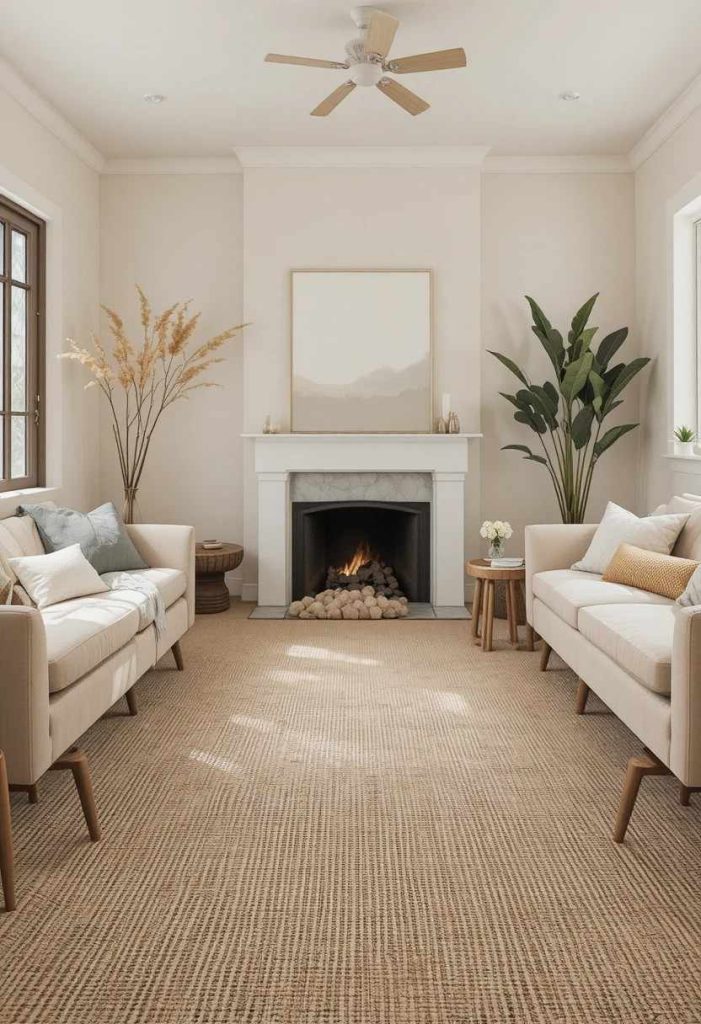
Jute and sisal bring the outside in, and I love the honest, earthy texture they add to a living room that has started to feel too smooth and polished. The natural weave feels grounding under bare feet, and it sits beautifully with linen cushions, worn wood and a basket or two by the fireplace. It is not the softest carpet on this list, so I usually layer it with a plush rug in the seating area, which gives me the best of both worlds. If that relaxed, natural feeling is what you love most, country living room ideas are full of jute, linen and worn wood to pair with it. Just remember that natural fibres and damp do not mix, so keep them dry and vacuum them often.
How to do it: Feel jute and sisal samples with bare feet, since sisal is firmer and jute is softer. Choose a tight weave for durability, layer a soft rug over the seating area, and blot any spill at once because natural fibres stain more easily when they stay wet.
16. Get the Size Right
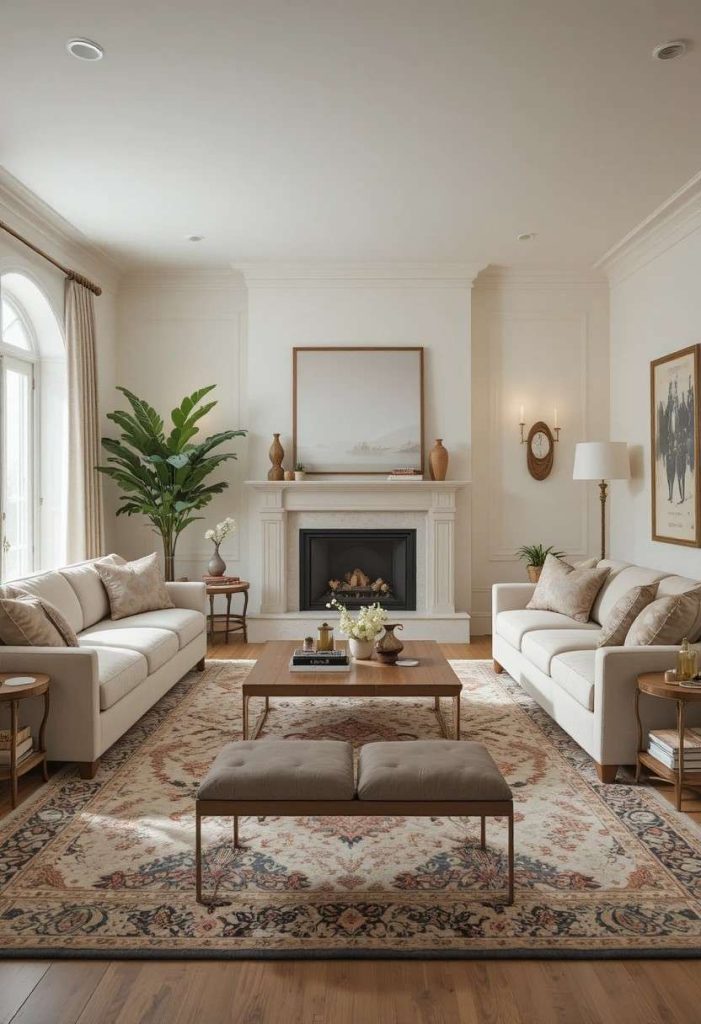
Of all the carpet mistakes I see, size is the most common, and it is also the easiest to fix once you know the rule. A carpet that is too small makes the furniture look as though it is floating, while the right size pulls the sofa, chairs and coffee table into one comfortable conversation. I aim for the front legs of the sofa and chairs to rest on the carpet, with enough of it showing around the edges to frame the group. Before ordering, I mark the outline on the floor with painter’s tape and live with it for a day or two, walking around it and sitting down to see how it feels. It takes ten minutes and saves the disappointment of a carpet that looked generous in the shop and tiny at home.
How to do it: Measure the seating area and mark the carpet outline on the floor with painter’s tape. Check that the front legs of the sofa and chairs sit on it, leave at least 15 cm of carpet showing beyond the coffee table, and go one size up if you are torn between two.
17. Soften the Room With Pastels
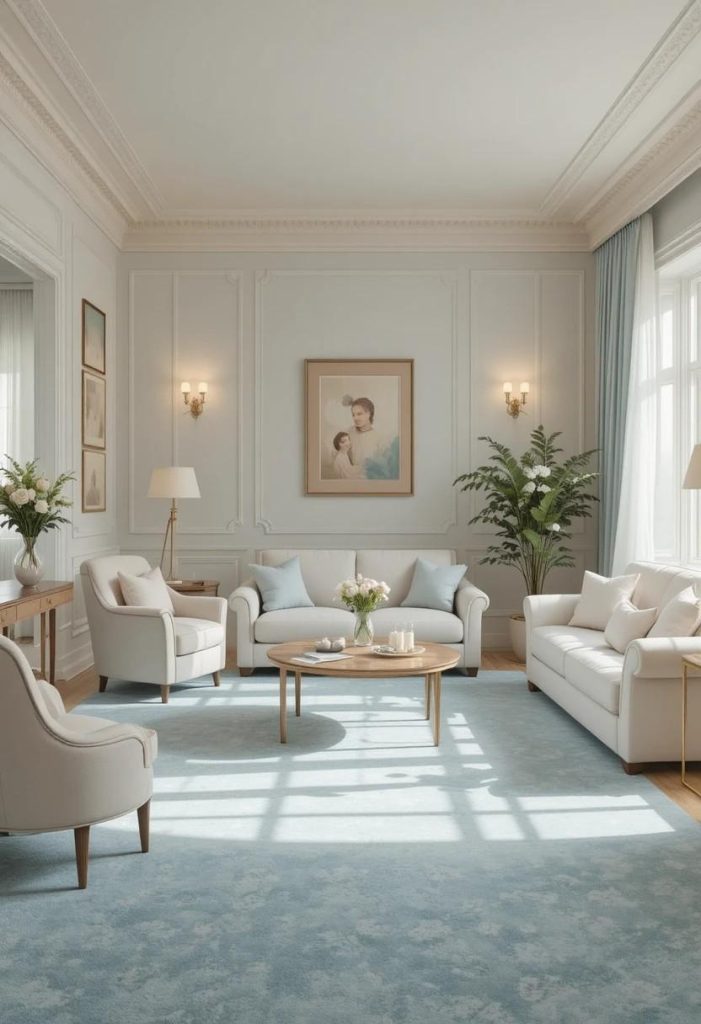
A carpet in gentle pastels, like soft blue or blush, gives a living room the feeling of a deep breath at the end of a long day. I reach for these colours when a room needs softness rather than energy, because they calm the space without making it feel washed out. They pair beautifully with light wood, cream linen and a touch of brass, and they make a room feel romantic without ever tipping into sweetness. I find pastels work best when the rest of the room stays pale and uncluttered, so the carpet can be the quiet colour note rather than one of many. In a bedroom-like living room, or a space where you read and rest, a pastel carpet is a dreamy, gentle choice.
How to do it: Choose a pastel with a slightly grey or warm undertone so it reads as soft rather than sugary. Test it against your sofa and curtains in daylight, then keep the walls pale and add texture through linen, boucle or a knitted throw rather than more colour.
18. Go Modern With a Geometric Pattern
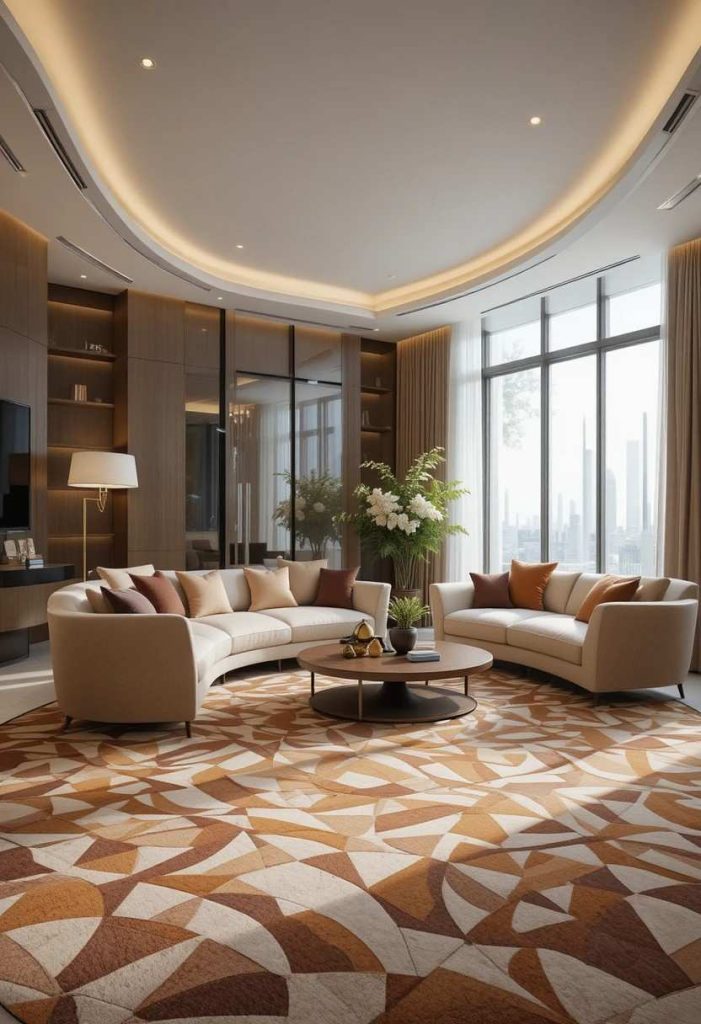
A sleek geometric carpet is my go-to when a living room feels a little too safe and needs a modern edge. Clean diamonds, arches or stepped shapes give the floor a designed, architectural feeling, and they pair beautifully with straight-lined furniture, black metal details and a single strong piece of art. I keep the pattern in two or three tones at most, because too many colours make the geometry feel noisy rather than crisp. Scale matters here too: a large, bold repeat suits an open-plan room, while a smaller, tighter pattern is kinder to a compact space. It is the carpet I choose when I want the room to feel current, clever and quietly confident.
How to do it: Pick a geometric pattern in two or three tones that echo your furniture and art. Lay a large sample under the coffee table and check it from the doorway, then keep cushions and curtains plain so the clean shapes stay the focus of the room.
19. Sink Into a Plush Shag Carpet
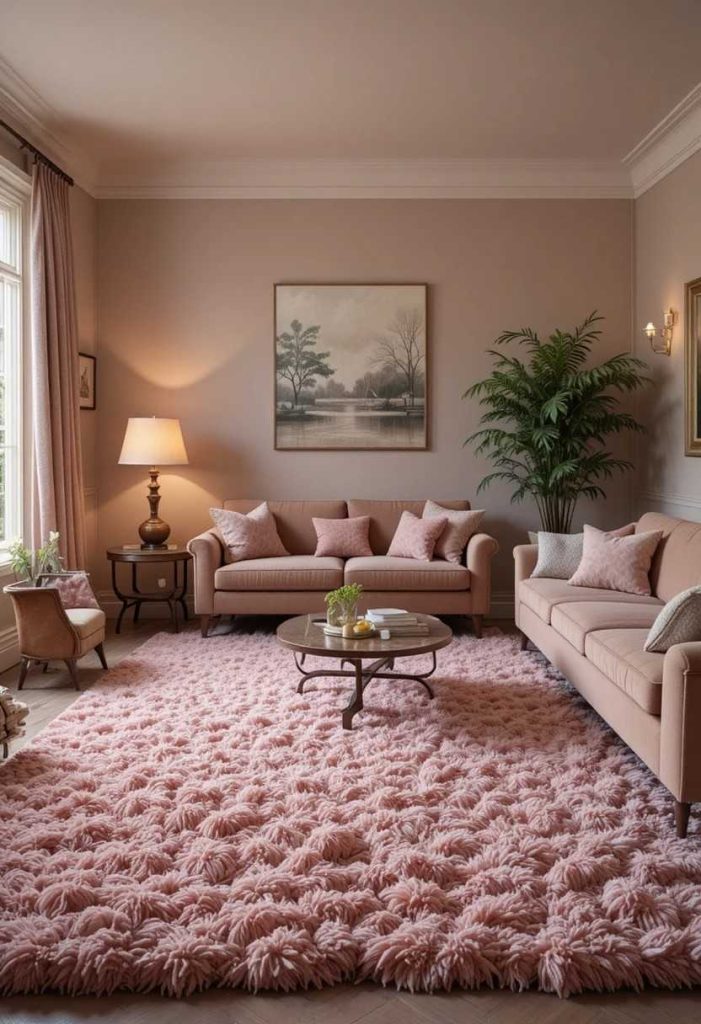
A plush shag carpet brings a little retro joy into a living room, and I have never met anyone who could walk across one without smiling. The deep, fluffy pile is wonderfully soft under bare feet, it hushes the room, and it makes a plain sofa feel like the best seat in the house. I think of it as a weekend carpet, made for slow mornings, board games on the floor and films with the lights low. It does need more care than a short pile, and it is not the friend of a dining table, but in a seating area it is pure comfort. If your living room is where everyone ends up on the floor, a shag carpet will be loved hard and often.
How to do it: Choose a dense shag in a mid-tone that hides everyday marks, and keep it in the seating area rather than under a dining table. Vacuum with suction only, shake out the pile with a carpet rake once a month, and blot spills straight away before they reach the base of the fibres.
20. Keep It Simple and Cohesive
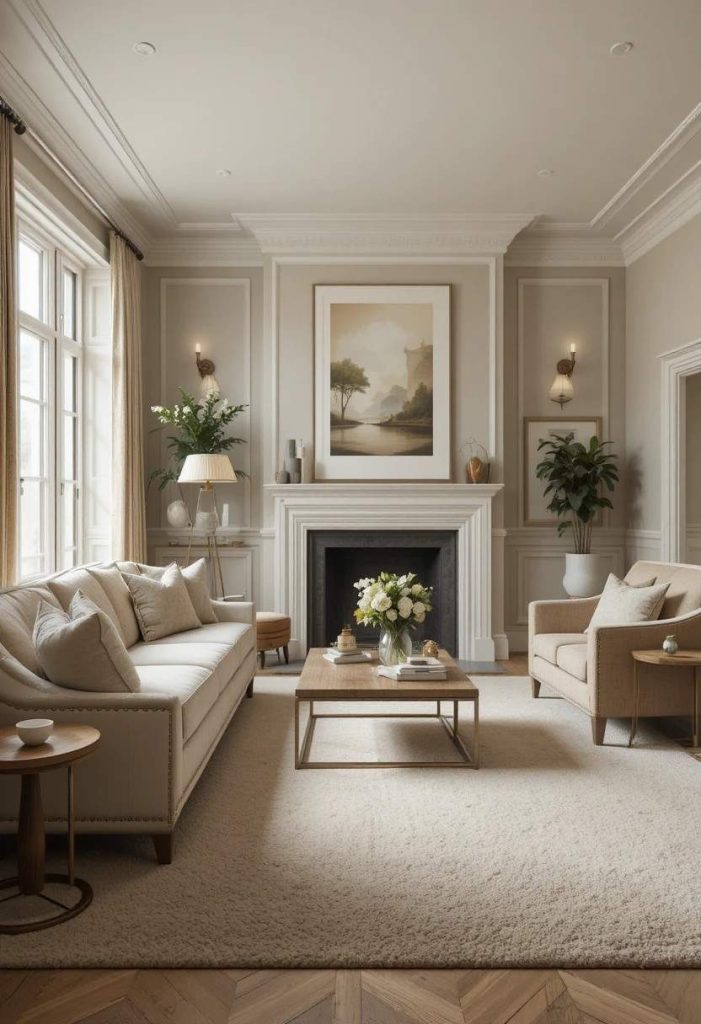
Sometimes the bravest choice is the simplest one: a solid carpet in a tone that suits your palette, with no pattern to argue with and nothing to date. I love this approach when a room already has a beautiful sofa, a piece of art, or a view that deserves the attention, because a quiet floor lets those things shine. The secret is in the tone, so I choose a colour that appears elsewhere in the room, even faintly, in a cushion, a curtain or the wood itself. It also makes changing the room later wonderfully easy, since a new throw or a different lamp can shift the mood without the floor fighting back. Simple, in my experience, is rarely boring; it is calm, and calm lasts.
How to do it: Pick a solid tone from your existing palette and check it against the sofa, curtains and wood in daylight. Choose a quality pile with a subtle texture so the plain surface still feels interesting, then add colour and pattern through cushions and throws that can be changed with the seasons.
21. Add Subtle Depth With Two Tones
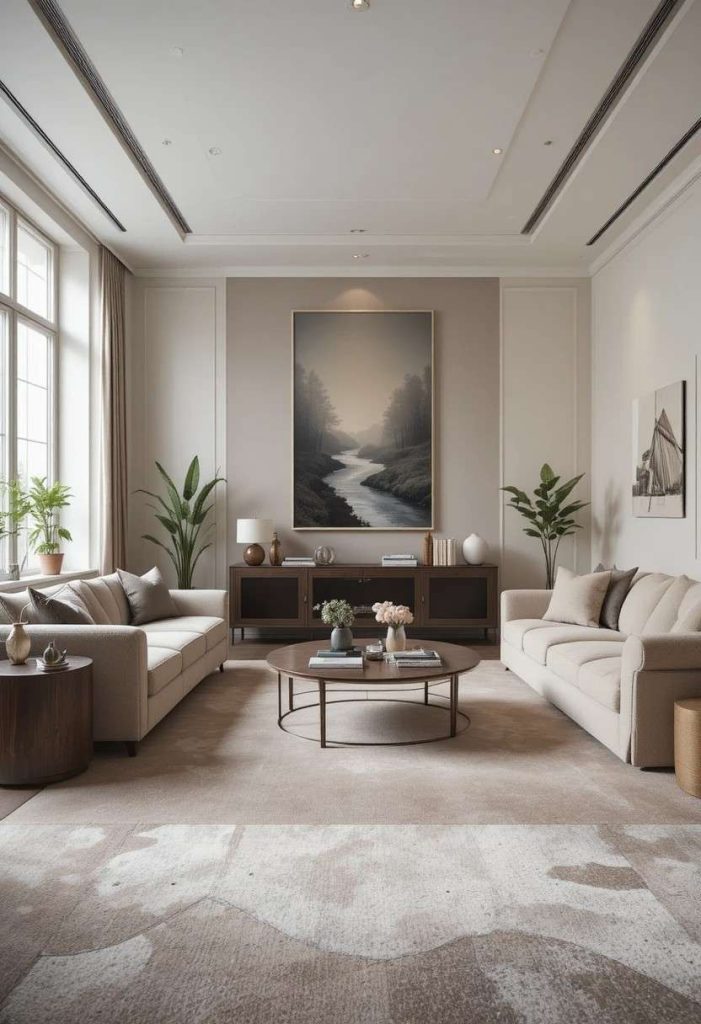
A carpet that blends two soft tones is the middle ground I recommend to friends who want interest without pattern. The gentle contrast, perhaps a warm grey melting into a soft cream, or a sage tone shading into stone, gives the floor a quiet sense of movement and depth. I love it in modern rooms where a bold pattern would feel too loud, and in open-plan spaces where the floor needs to feel designed rather than plain. It also hides footprints and the odd mark better than a single flat colour, which is a practical bonus I appreciate every day. If you like the idea of a patterned carpet but not the commitment, two tones are a graceful compromise.
How to do it: Compare two-tone samples in the room and look at them from a distance, since the blend should feel soft rather than stripy. Choose tones that both appear elsewhere in your palette, then keep the furniture simple so the gentle shading can be seen and enjoyed.
22. Choose a Stain-Friendly Carpet for Busy Homes
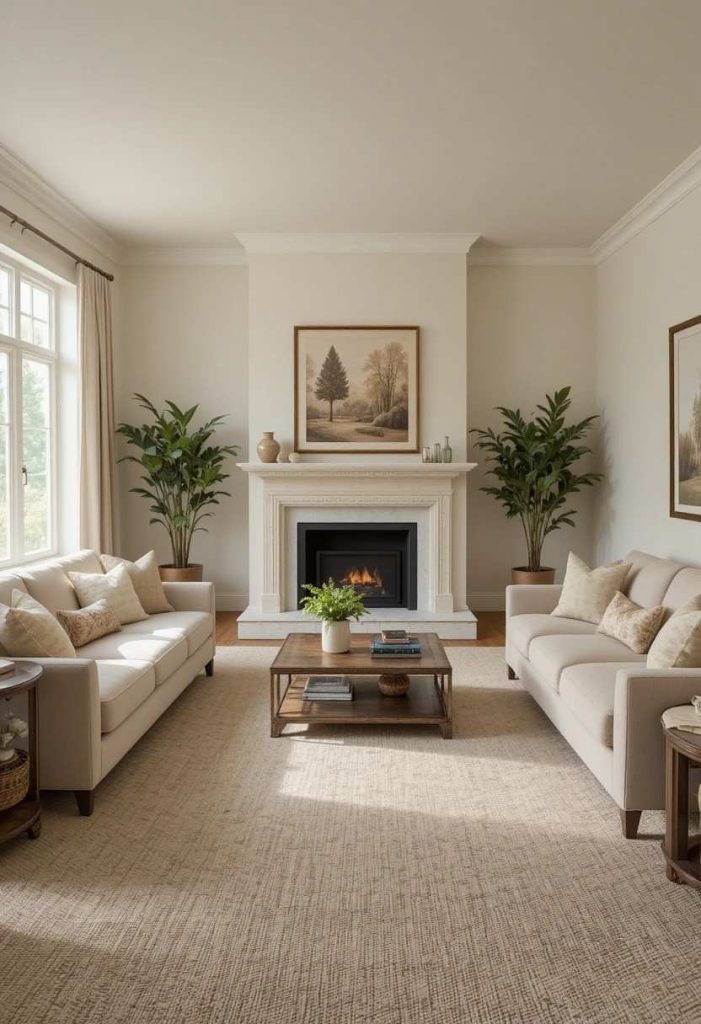
A beautiful living room still has to survive real life, and that is where a practical, stain-resistant carpet earns its keep. I have watched families with small children, muddy dogs and a much-loved red wine habit choose a carpet they actually enjoy living with, simply because it does not punish them for every spill. Modern stain-friendly fibres look and feel far softer than the stiff, shiny carpets I remember from years ago, and many are made to be cleaned again and again. I would still choose a forgiving mid-tone and a pattern or texture that hides the odd mark, because even the best treatment is not magic. Cosy should never mean fragile, and this carpet proves it.
How to do it: Ask for a stain-resistant fibre and test a sample with coffee, juice and mud, then clean it as the maker suggests. Choose a forgiving mid-tone or a subtle texture, keep a carpet cleaner and white cloths within easy reach, and blot spills at once instead of rubbing them in.
23. Frame the Seating With a Border
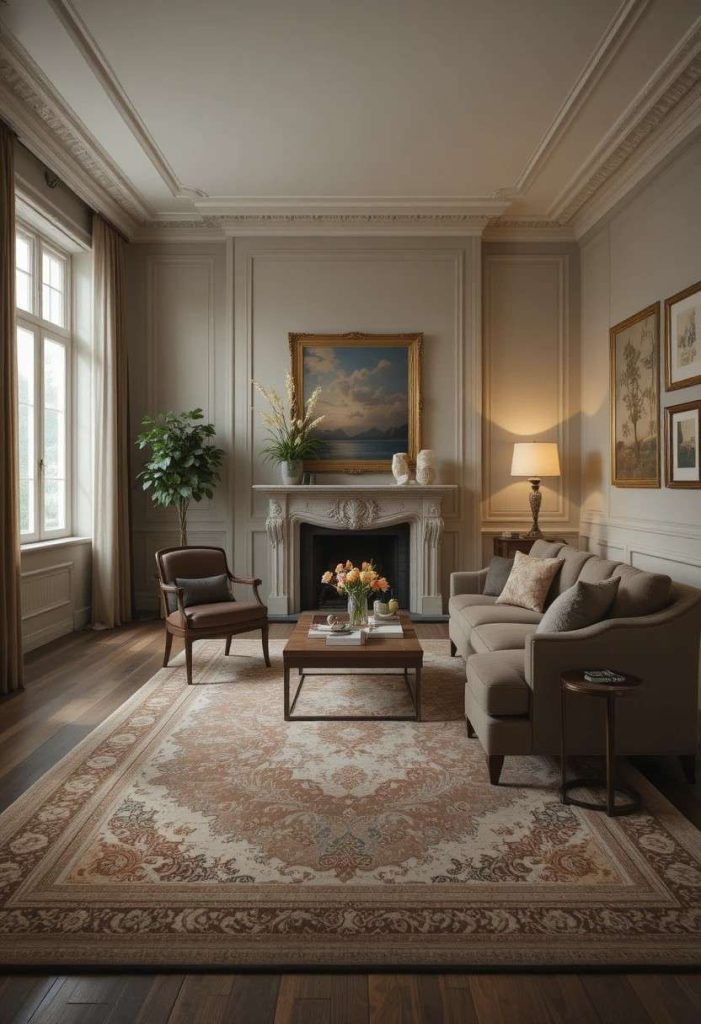
A carpet with a contrasting border is like a beautifully framed picture: it gives the seating area a clear edge and makes the whole arrangement feel finished. I love how the border draws the eye inwards, gathering the sofa, chairs and coffee table into one tidy group, even in an open-plan room where the living area can otherwise drift. It also adds a quiet sense of order that I find calming, especially in a room with lots of cushions, books and everyday clutter. I keep the border colour simple, often a deeper tone of the carpet itself or a classic navy, so it feels elegant rather than fussy. It is a small detail, but it is the one guests notice and ask about.
How to do it: Choose a border in a deeper tone of the carpet or a classic contrasting colour, and check the width against the room size. Centre the bordered carpet under the seating group, keep the surrounding furniture balanced, and let the border set the tone for one or two matching cushions.
24. Layer Soft Textiles Over Your Carpet
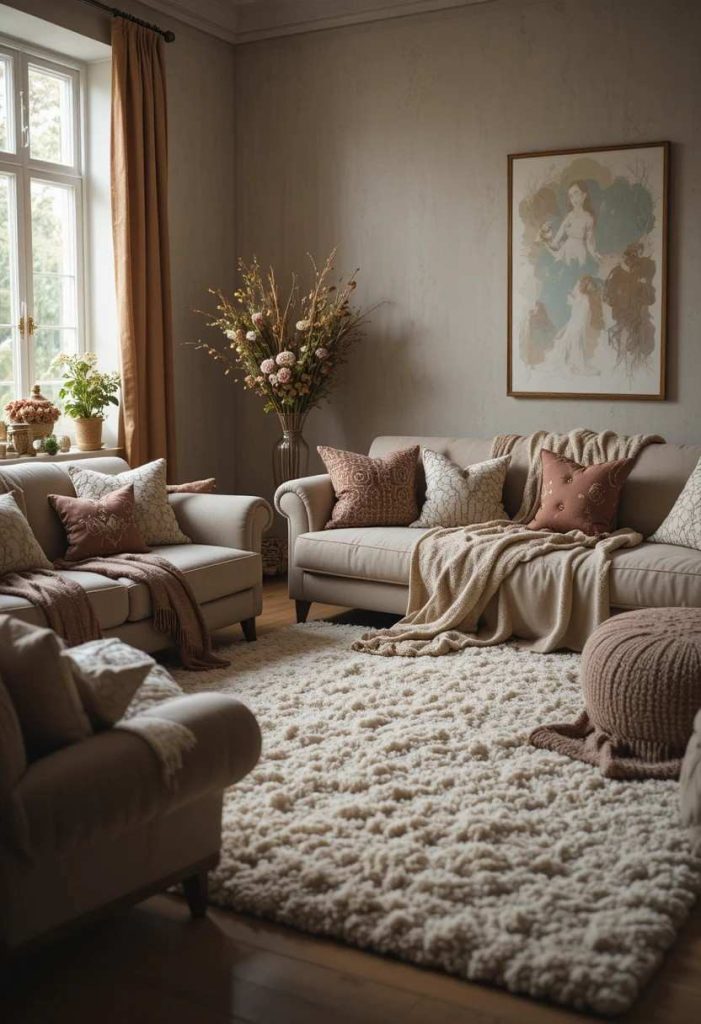
A carpet on its own is lovely, but a carpet layered with throws and cushions is where a living room starts to feel like a hug. I think of it as building warmth in stages: the carpet softens the floor, a knitted throw softens the sofa arm, and a velvet cushion softens the corner where you read. The textures do not have to match, and in fact I prefer it when they do not, because a little contrast between smooth wool, soft linen and a nubby knit makes the room feel rich and collected. I change the top layer with the seasons, lighter linen in summer and a heavier wool throw in winter, while the carpet stays constant underneath. It is the easiest way to make a room feel cared for.
How to do it: Start with the carpet as your base, then add a throw over one sofa arm and two or three cushions in contrasting textures. Mix wool, linen and velvet in tones drawn from the carpet, and swap the lightest layer each season so the room feels fresh without a big change.
25. Make It Personal and Warm
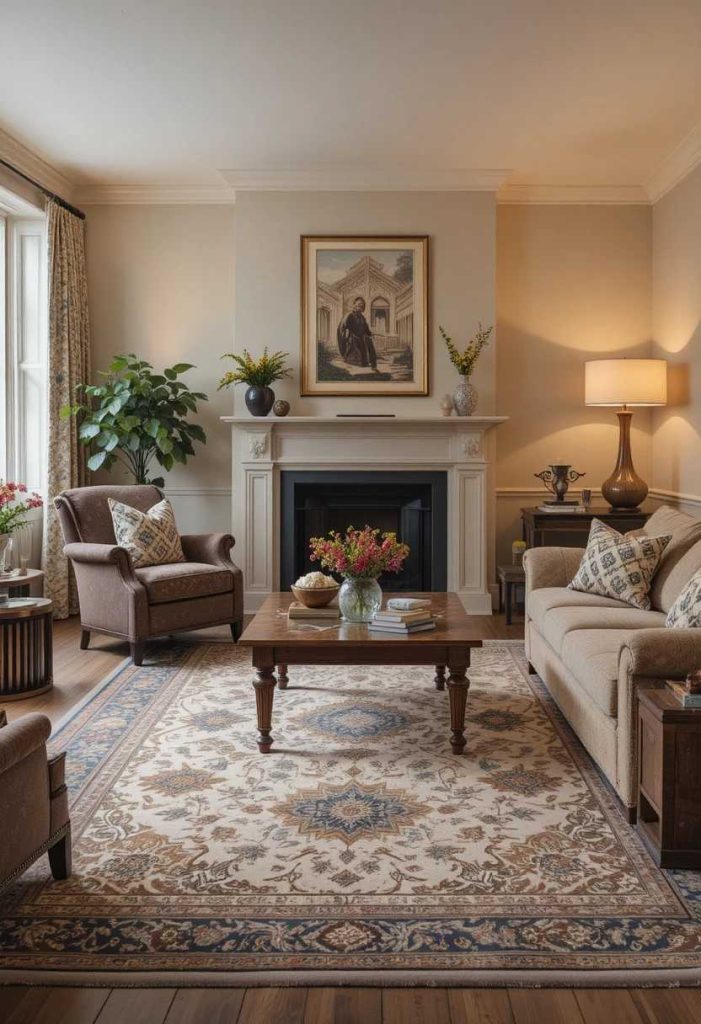
After all the samples, measurements and careful decisions, the most important carpet idea is also the simplest: choose the one that feels right for you. I have seen rooms that followed every rule and still felt cold, and rooms that broke them all and felt like home, because the person who lived there had chosen a colour they loved, a texture they reached for, or a pattern that reminded them of somewhere happy. Your living room is where you rest after long days, welcome friends, and watch the seasons change through the window, so the floor beneath it all should feel personal. Trust your instincts, live with the samples, and choose the carpet that makes you smile when you walk in.
How to do it: Shortlist two or three carpets you love, then live with large samples of each for a few days. Notice which one you keep returning to, check it against your sofa and light at different times of day, and choose the one that feels like home rather than the one that simply follows the rules.
Frequently Asked Questions
What colour carpet is best for a living room?
There is no single best colour, because it depends on your light, your furniture and how you live. Warm neutrals like beige and greige suit most rooms and stay timeless, while a deeper tone hides marks in busy homes. I always suggest living with large samples for a few days and checking them in morning and evening light before deciding.
Can I put a rug over a carpet?
Yes, layering a rug over a carpet works beautifully when it is done deliberately. Choose a rug that is clearly smaller than the carpet beneath it, place it so the front legs of the sofa sit on it, and always use a non-slip pad made for carpet-on-carpet layering. Keep the rug pattern simpler if the carpet already has a strong texture.
How do I choose the right size carpet for my living room?
Measure the seating area and mark the outline on the floor with painter’s tape before you order. As a rule, the front legs of the sofa and chairs should rest on the carpet, with at least 15 cm showing beyond the coffee table. If you are torn between two sizes, go larger, since a carpet that is too small makes furniture look as though it is floating.
How do I keep a light-coloured carpet clean with children or pets?
Choose a stain-resistant fibre in a warm pale tone, keep a doormat at every entrance, and vacuum twice a week. Blot spills straight away with a clean white cloth instead of rubbing, and keep a small carpet cleaner handy for muddy paws and juice. A subtle texture or two-tone blend also hides everyday marks far better than a flat, pale surface.
Does a dark carpet make a living room look smaller?
A very dark carpet can make a small, dim room feel cosier and a little more enclosed, but it rarely makes a bright room feel small. Keep the walls and curtains light, add warm lamps and a pale throw, and choose a dark carpet in a room with good daylight. In the right light, charcoal or navy grounds the room and makes pale furniture glow.
Your Living Room Carpet Checklist
Tick each step off as you choose, fit and style your new carpet.
☐ Choose your carpet’s job first: warmth, softness, colour or pattern
☐ Order large samples and live with them for a few days
☐ Check samples in morning and evening light
☐ Measure the seating area and mark the size with painter’s tape
☐ Make sure the front legs of the sofa and chairs sit on the carpet
☐ Pick a pile and fibre that suit pets, children and bare feet
☐ Choose an underlay that adds softness and insulation
☐ Test a stain-friendly finish if your home is busy
☐ Layer a rug over carpet only with a non-slip pad underneath
☐ Match the carpet to your sofa, curtains and wood tones
☐ Add throws and cushions to layer texture over the carpet
☐ Vacuum weekly and blot spills straight away
☐ Keep a spare sample for matching paint and fabric later
☐ Live with the room for a week, then move one thing until it feels right
A Final Gentle Thought
When I look back at every living room I have loved, the carpet is almost always the thing my feet remember first: the soft landing on a cold morning, the quiet hush under a late-night conversation, the way the whole room seemed to gather around it. So choose slowly, live with your samples, and trust the carpet that makes the room feel like yours. A good carpet will not shout about itself, but it will be there every day, warming the floor, softening the light and holding your home together. May your living room always feel soft underfoot, warm at heart, and ready for everyone you love to gather in it.