20 Vintage Kids Room Ideas That Will Make Every Parent and Kid Obsessed
The Ultimate Guide to Vintage, Retro & Nostalgic Children’s Room Design
Why Vintage Kids Rooms Are the Biggest Children’s Decor Trend
Something profound is happening in children’s interior design, and Pinterest’s data is making it impossible to ignore. Searches for ‘vintage kids bedroom’ are up 100% year-on-year. Searches for ‘1970s childhood toys’ have surged 280%. ‘Vintage baby clothes 90s’ is up 600%. And searches for ‘2000s kids’ toys’ — the playthings of millennial childhoods — have rocketed 610% in the twelve months to mid-2025.
This is not a passing aesthetic trend. It is a values movement. According to Pinterest’s 2026 Parenting Trend Report — the platform’s first ever dedicated parenting trends publication — parents across North America, Europe, and beyond are consciously and deliberately reaching for the past to create something better for their children’s present. The name Pinterest gave this movement is the ‘Throwback Kid’: a parent-driven desire to give children an analog, grounded, tactile childhood that feels more connected to the natural world, to family history, and to the pleasures of the physical and imaginative than to the screen-dominated, algorithmically curated childhood that modern technology has made the default.
The vintage children’s room is the physical expression of this intention. It is a room decorated not with what is newest or most on-trend in the mass market, but with what is most beautiful, most meaningful, and most enduring. Antique iron bed frames and hand-stitched patchwork quilts. Open shelves of wooden toys curated like a collector’s cabinet. Vintage wallpaper with botanical prints or storybook illustrations. Reading nooks with tufted cushions and illustrated children’s books. Chalkboard walls and rocking horses. Curiosity cabinets and macrame hangings.
Whether your design impulse comes from the warm earthy palette of the 1970s, the cheerful nostalgia of the 1990s, the timeless elegance of the Victorian and Edwardian nursery tradition, or simply a desire to create a room of genuine quality and character that will grow with your child and outlast every trend cycle, this guide has everything you need. The 20 ideas that follow are drawn from real Pinterest trend data, real design practice, and a genuine belief that children deserve beautiful, thoughtfully made spaces that celebrate craft, nature, and the enduring pleasures of childhood imagination.
How to Use This Guide
Each of the 20 vintage kids room ideas in this guide includes:
- A detailed design description covering the visual elements, materials, colour palette, and atmosphere of the idea
- Practical implementation advice including sourcing suggestions, fabric choices, and furniture guidance
- A styling tip that gives one specific, actionable piece of professional design advice
5 Foundational Principles of Vintage Kids Room Design
1. Prioritise quality over quantity
Vintage kids room design is fundamentally about owning fewer things of genuinely better quality. One beautiful antique wooden toy displayed with intention says more than a bin full of plastic alternatives. Edit rigorously and spend your budget on fewer, better pieces.
2. Layer textiles generously
The warmth and character of the best vintage children’s rooms comes overwhelmingly from layered textiles — patchwork quilts over cotton sheets over knitted blankets; rugs on top of rugs; cushions in coordinating but not matching patterns. Invest in beautiful, natural-fibre textiles and use them abundantly.
3. Incorporate the personal and the heirloom
The vintage kids room that works best is never entirely purchased — it incorporates inherited objects, handmade gifts, and personally meaningful pieces that give the room a narrative depth that no amount of shopping can replicate. A grandmother’s crocheted blanket, a parent’s childhood toy, a hand-embroidered sampler made by an aunt: these are the objects that make a room genuinely irreplaceable.
4. Choose natural materials throughout
Solid wood, natural linen and cotton, wool, clay, ceramic, leather, wicker, rattan — the vintage kids room is built from materials that come from the natural world and will return to it gracefully. Avoid plastic, MDF, and synthetic fabrics wherever possible; they undermine the quality and warmth that is the aesthetic’s entire foundation.
5. Design for the child’s development, not just appearances
The finest vintage children’s rooms are not merely beautiful to photograph — they are thoughtfully designed to support children’s physical, creative, cognitive, and emotional development. Open shelving that encourages independent play, reading nooks that make books irresistible, curiosity cabinets that foster observation and wonder, dress-up wardrobes that ignite imagination: great vintage kids room design is always in the service of childhood.
The 20 Vintage Kids Room Ideas
1. The Classic Wooden Toy Shelf Display: Turning Vintage Toys Into Wall Art
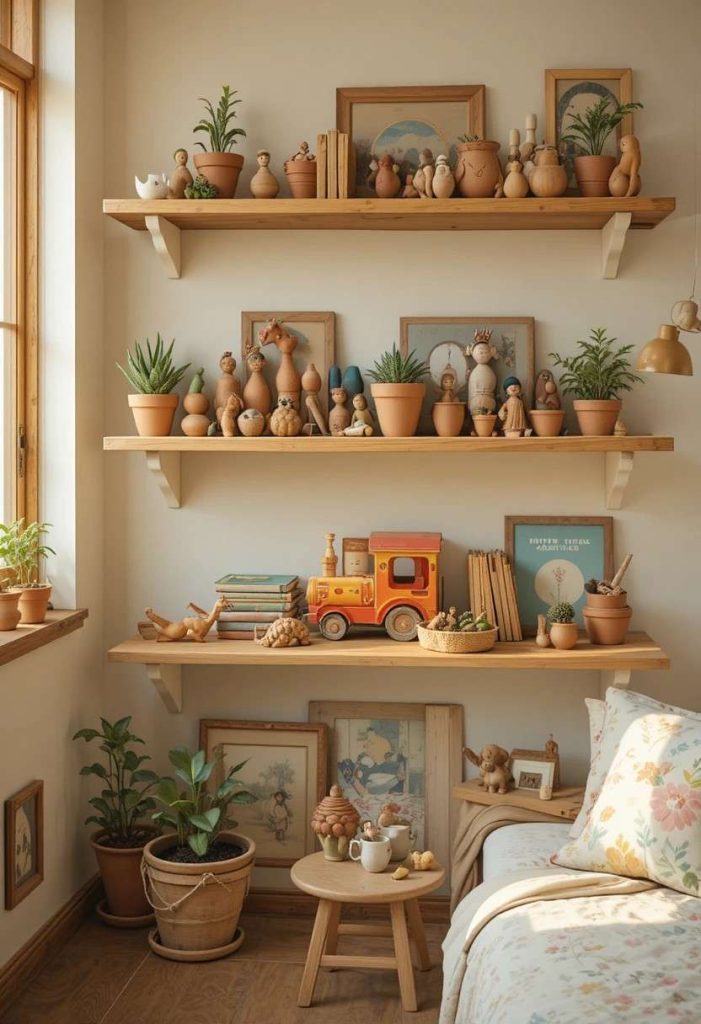
One of the easiest and most visually rewarding ways to introduce vintage character into a child’s room is to stop hiding toys inside bins and boxes, and start displaying them as deliberate, curated collections on open wooden shelving. Vintage wooden toys — hand-carved animals, painted wooden trains, stacking rings, peg dolls, and classic wooden blocks — have a warmth, craftsmanship, and tactile quality that no modern plastic toy can replicate. When arranged thoughtfully on natural wood floating shelves, they stop being playthings and become genuine decorative objects that tell the story of a childhood spent with beautiful, intentional things.
The key to making this look work is restraint and curation. Choose a cohesive palette for your toy display — warm wood tones, cream, soft red, and muted green work beautifully together. Mix sizes and heights: a tall stacking toy next to a small peg doll next to a flat wooden puzzle creates visual rhythm without chaos. Intersperse the toys with small plants in terracotta pots, a few vintage children’s books with beautifully illustrated spines facing outward, and small ceramic animals for a layered, considered look that feels like a collector’s cabinet rather than a toy dump.
Natural wood shelves in a simple floating style are the ideal display surface — avoid highly lacquered or painted shelves that will compete with the warmth of the toys. Pine, oak, and beech all work beautifully. Install shelves at varying heights so that even the smallest toys are visible from the child’s eye level, and the larger pieces can be appreciated from adult height. This approach teaches children from the youngest age to appreciate and care for beautiful objects — a habit of mind that will serve them well throughout life.
Style tip: Group toys by color family rather than type — all the warm-toned wooden animals together, the painted blocks in a cluster — for a display that looks professionally curated rather than randomly arranged.
2. Antique Iron or Brass Bed Frame for a Fairytale Bedroom
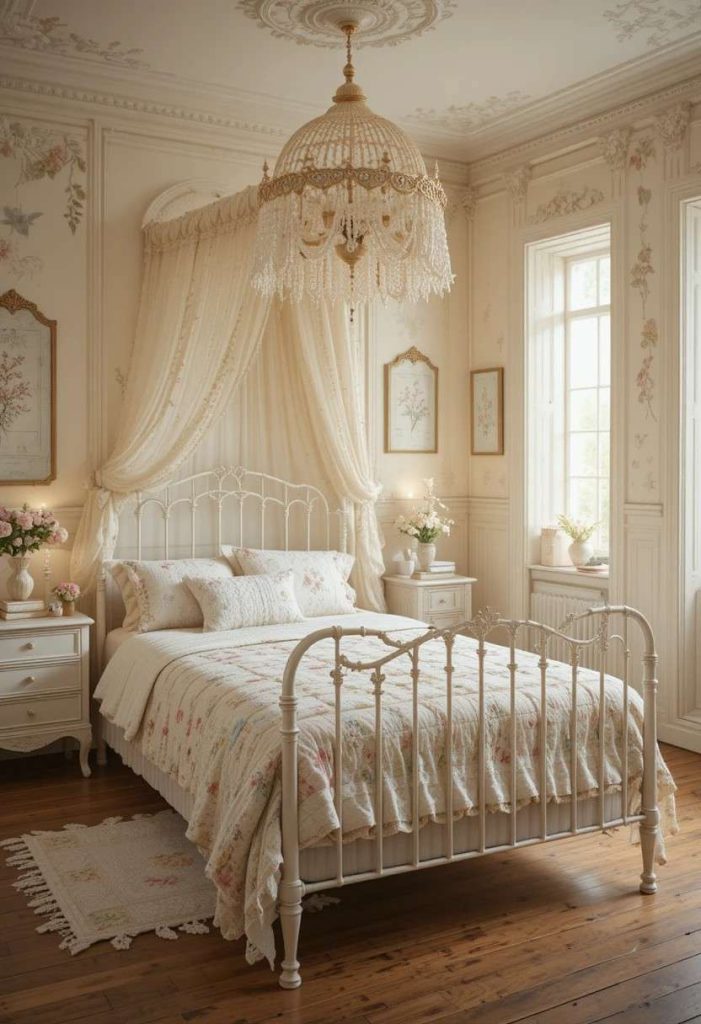
Nothing establishes the vintage character of a child’s room more immediately and powerfully than the bed frame itself — and nothing does this more beautifully than an antique iron or brass bed. Cast iron bed frames with their elegant curves, decorative finials, and hand-forged spindles were the standard of children’s bedrooms for generations, and their reappearance in modern homes feels both nostalgic and genuinely sophisticated. A well-chosen antique iron bed in a child’s room transforms the sleeping area from a functional necessity into the centrepiece of a fairytale story.
Sourcing antique iron or brass bed frames is easier than ever — estate sales, antique markets, online platforms like eBay and Etsy, and specialist reclamation yards all regularly stock children’s bed frames from the late Victorian through mid-twentieth century periods. Look for frames with intact side rails, no significant rust or structural damage, and clear markings of the period you are trying to evoke. Cast iron frames can often be repainted in period-appropriate colours — deep forest green, ivory, or soft black — to refresh their appearance while retaining all their original character.
The bedding chosen for an antique iron bed is as important as the frame itself. White cotton with eyelet trim, hand-stitched quilts in vintage patterns, patchwork coverlets, and lace-edged pillowcases all reinforce the period quality of the frame. Layer multiple textiles — a thin cotton sheet, a heavier quilt, and a folded vintage blanket at the foot of the bed — for the kind of lived-in, generously furnished look that characterises the very best vintage children’s bedrooms. Add a crocheted canopy or a simple muslin draped from a ceiling hook above the bed for a finishing touch of pure fairytale magic.
Style tip: Before buying an antique iron bed frame, measure your mattress carefully — antique bed sizes often do not match modern standard dimensions. Custom mattresses are available from specialist suppliers at reasonable cost.
3. Vintage Wallpaper Feature Wall: Bold Patterns With Nostalgic Charm
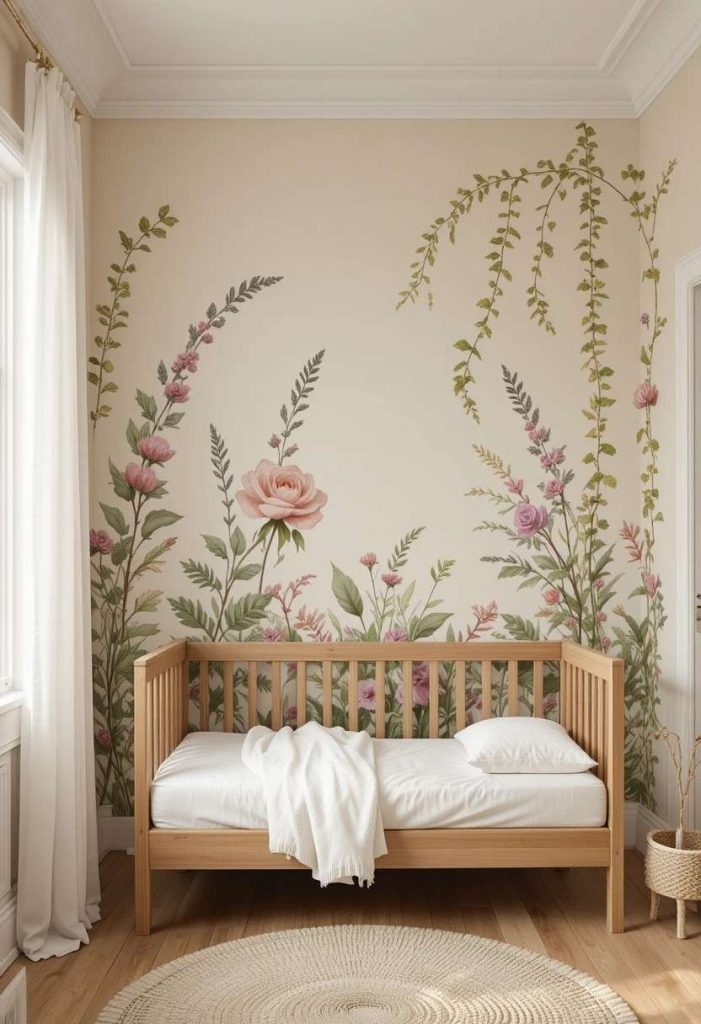
Wallpaper is one of the most transformative tools available in children’s room design, and vintage-inspired patterns — from classic botanical prints and storybook illustrations to traditional toile, gingham, and hand-block-printed florals — bring an unparalleled depth of character and narrative to a child’s space that painted walls simply cannot achieve. A single feature wall of vintage-inspired wallpaper behind the bed or on the most visible wall of the room can establish the entire tone and personality of the space, requiring very little additional decorating to feel complete and considered.
The most popular vintage wallpaper patterns for children’s rooms in 2025 and 2026 reflect the broader nostalgia movement driving Pinterest searches: classic woodland animal illustrations in the style of 1950s and 60s picture books; traditional English floral chintz patterns in soft pinks, greens, and creams; vintage circus and fairground imagery; hand-painted botanical prints featuring ferns, wildflowers, and climbing vines; and bold, graphic geometric patterns referencing the colour palette of the 1970s. Any of these applied to a single feature wall creates an instant focal point that gives the room an identity and a story.
For a fully committed vintage atmosphere, consider papering all four walls rather than a single feature wall — an approach that feels daring but almost always looks extraordinary in a child’s room. Children are naturally drawn to rooms with strong visual personalities, and a fully papered room with a well-chosen vintage pattern creates a genuinely immersive environment that children find deeply engaging and comforting. Choose a pattern with a large enough repeat to show properly at children’s height, and pair with simple, natural wood furniture that does not compete with the richness of the wall.
Style tip: Use peel-and-stick vintage wallpaper for a child’s room — the pattern impact is identical to traditional paste wallpaper but it can be removed easily as the child grows and their tastes evolve.
4. A Reading Nook With Vintage Books and a Tufted Cushion Corner
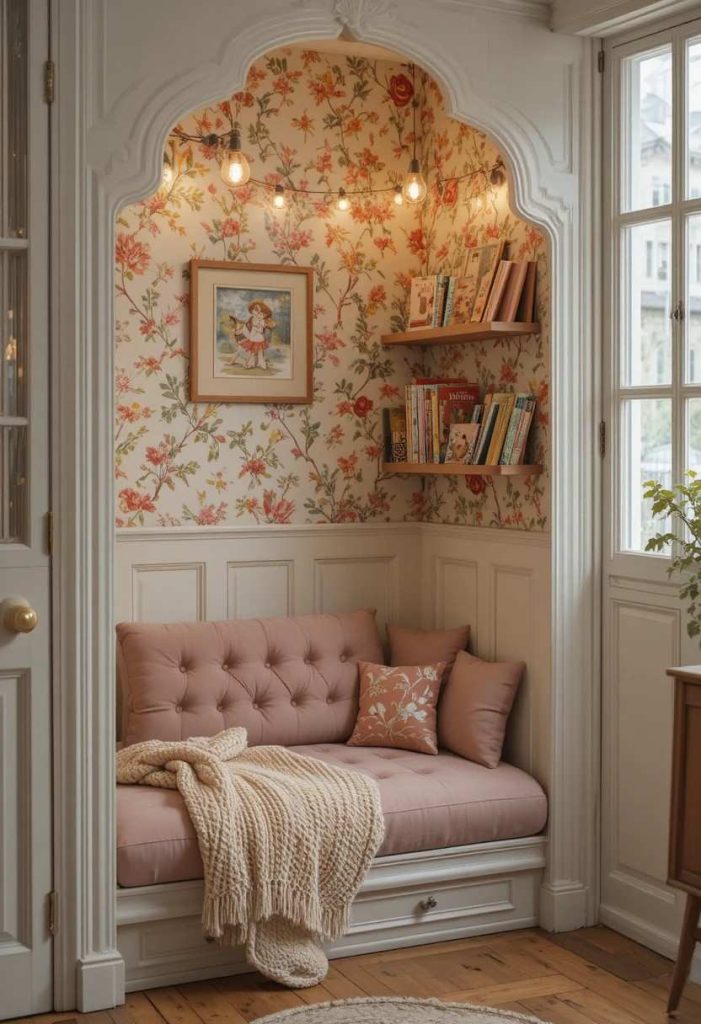
The reading nook is one of the most beloved features in any vintage-inspired children’s bedroom — a small, defined space carved out of a corner, an alcove, or even just a window bay, where a child can curl up with a book and feel genuinely enclosed and cocooned. In a vintage children’s room, the reading nook is an opportunity to layer together all the most characterful elements of the design: antique books with illustrated spines displayed on small shelves within reach, a deeply tufted cushion in a vintage floral or velvet fabric, soft string lights or a small vintage-style lamp for warm, close light, and a simple curtain or canopy that can be drawn closed for a private, secret-feeling space.
The cushion or seating element of the reading nook deserves particular attention in a vintage room. Button-tufted cushions in floral linen, velvet in dusty rose or forest green, or traditional striped ticking fabric all evoke the quality of seating found in well-loved Victorian and Edwardian homes. Size the cushion generously — it should be large enough for a child and a parent to sit together comfortably — and fill it with a high-loft insert for the kind of deep, sinking comfort that makes a reading nook irresistible. Layer with a knitted or crocheted blanket and a small collection of vintage-style cushion covers in coordinating patterns.
The books themselves are a design element as much as a reading resource. Look for vintage children’s books with illustrated cloth covers at charity shops, boot sales, and second-hand bookshops — the spines and covers of classic editions of Beatrix Potter, A.A. Milne, E. Nesbit, and Enid Blyton are genuinely beautiful objects that add as much visual warmth as any decorative accessory. Arrange them on small floating shelves within the nook, some face-out and some spine-out, for a naturally varied, well-read appearance.
Style tip: Line the back wall and ceiling of a reading nook alcove with the same vintage wallpaper used elsewhere in the room — the pattern wrapping around the small enclosed space creates an intensely immersive, den-like feeling children absolutely love.
5. Vintage Circus and Fairground Theme: Bold, Joyful, and Completely Magical
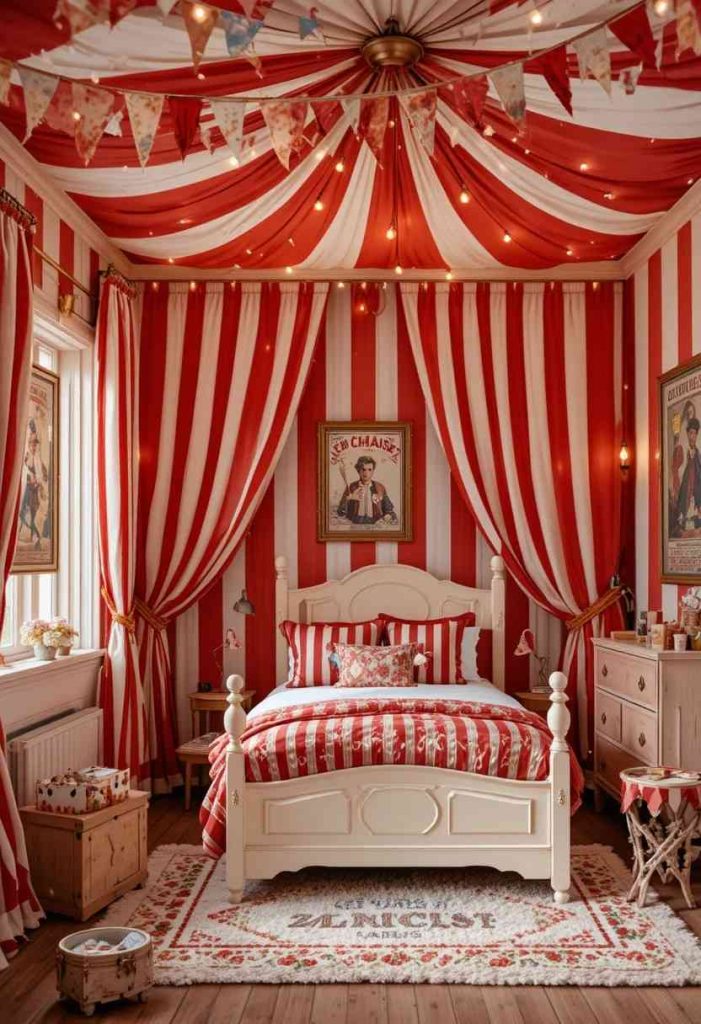
The vintage circus aesthetic is one of the most joyful and visually dynamic themes available for a child’s room, and one that Pinterest data shows is experiencing a significant surge in searches in 2025 and 2026. Searches for ‘circus nursery’ are up 50% and ‘circus interior’ is up 130% according to Pinterest Predicts, reflecting a broader cultural embrace of bold colour, maximalist pattern, and the kind of playful theatricality that the modern minimalist interior had temporarily suppressed. In a child’s room, the vintage circus theme offers something uniquely wonderful: a space that feels genuinely magical, stimulating, and full of the spirit of adventure and wonder.
The visual language of the vintage circus is rich and distinctive: bold red and white stripes on curtains, bunting, and bedding; warm golden yellows and deep navy blues; vintage-style poster artwork featuring acrobats, elephants, tightrope walkers, and big tops; pennant flags strung across the ceiling; and the warm glow of Edison-style bulb string lights that evoke the atmosphere of a fairground after dark. Vintage circus posters — available as art prints from specialist suppliers — make extraordinary wall art that establishes the theme instantly without requiring any additional decorating.
The furniture for a vintage circus room should be simple and functional, allowing the decorative elements to carry the visual weight. Painted wooden furniture in cream, red, or deep navy anchors the palette. A wooden toy box painted to resemble a travelling circus wagon is a wonderful focal piece. Bunting in red, white, cream, and gold strung from wall to wall across the ceiling creates the effect of being inside the big top itself — an incredibly effective and very inexpensive decorative gesture that children find absolutely thrilling.
Style tip: Commission a local artist to paint a simple circus mural directly onto one wall — a big top tent, a tightrope walker, a performing elephant — for a completely unique vintage circus room that exists nowhere else in the world.
6. Soft Vintage Colour Palette: Muted Pinks, Sage Green, and Butter Yellow
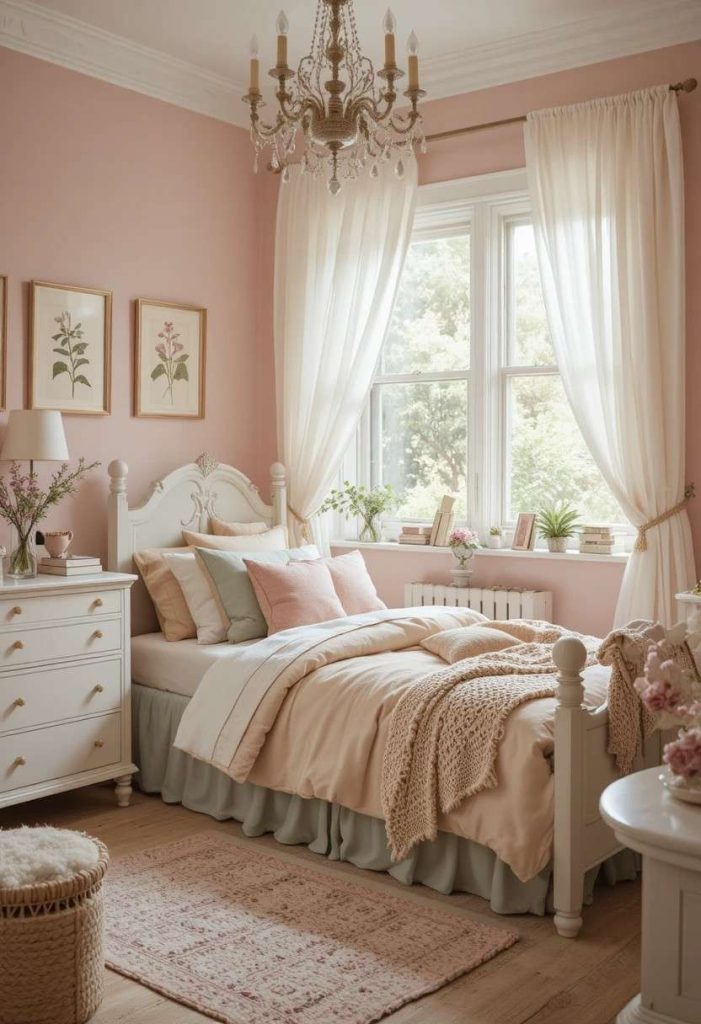
One of the defining characteristics of the finest vintage children’s room design is the colour palette — and the colours that best evoke genuine vintage quality are not the bright, saturated primary colours of modern children’s interiors, but rather the soft, slightly faded, almost chalky tones that characterise fabrics and pigments that have been loved and washed many times over the years. Dusty rose, sage green, butter yellow, soft cornflower blue, warm cream, and muted lavender are the colours of vintage childhood — and combining two or three of them in a single room creates an atmosphere of extraordinary warmth, gentleness, and timeless charm.
The muted vintage palette works beautifully in all combinations. Dusty rose and sage green together evoke an English country garden bedroom of the 1940s — feminine and fresh without being saccharine. Butter yellow and soft cornflower blue recall the sunny, optimistic colour sensibility of 1960s Scandinavian children’s design. Sage green and warm cream create a calm, nature-inspired atmosphere with a slightly more gender-neutral quality. Any of these combinations applied to walls, bedding, curtains, and accessories creates a room that feels genuinely cohesive and considered.
The key technical challenge with the muted vintage palette is avoiding colours that tip into looking simply grubby or faded rather than intentionally vintage. The solution is to choose paint colours with slight warm undertones — a dusty rose that leans slightly peach, a sage green that leans slightly yellow, a cream that is distinctly warm rather than cool. Test samples in the actual room in both natural and artificial light before committing, and pair with natural wood furniture and white accents to keep the palette feeling fresh and intentional rather than tired.
Style tip: Paint the walls in the lightest colour of your chosen palette and use the richer tones in the textiles — bedding, curtains, cushions, and rugs. This keeps the room feeling airy while allowing the vintage warmth of the palette to come through in the layered softgoods.
7. Upcycled and Painted Furniture: Giving Old Pieces a New Vintage Life
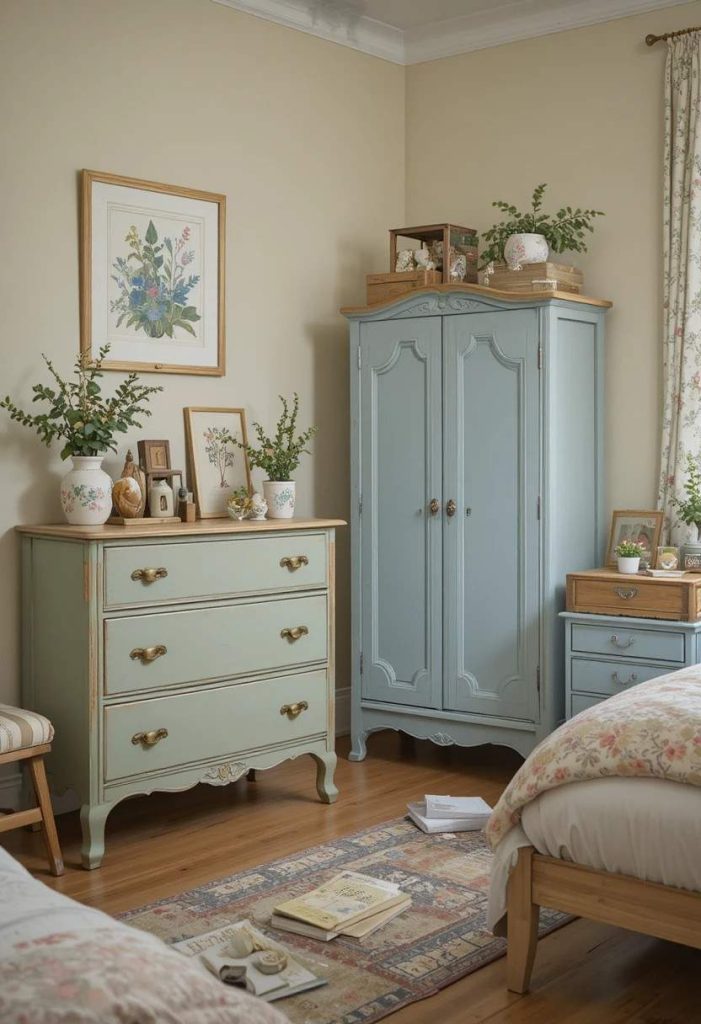
The upcycled furniture movement and the vintage children’s room aesthetic are perfect partners, and this combination is strongly reflected in rising Pinterest search trends that show parents actively seeking ways to transform second-hand and inherited furniture into beautiful, character-rich pieces for their children’s rooms. The fundamental appeal is straightforward: furniture from earlier eras was built to different standards, from different materials, and with different design intentions than contemporary flat-pack alternatives. An old solid pine wardrobe, a mid-century chest of drawers, or a Victorian washstand, repainted and given new hardware, has a quality and character that no newly purchased piece can replicate.
The most popular approach to upcycling furniture for a vintage kids’ room is chalk paint, which adheres to almost any surface without sanding or priming, dries to a soft matte finish that is inherently period in quality, and can be distressed with fine sandpaper after drying to reveal the wood or previous paint beneath — creating a genuinely aged appearance that looks as if the piece has been in the family for generations. Popular chalk paint colours for vintage children’s furniture include duck egg blue, old white, sage green, soft grey, and pale pink — all of which have excellent vintage resonance and coordinate beautifully with the muted vintage colour palette.
Beyond painting, personalisation and stencilling add another layer of vintage character to upcycled furniture. A stencilled botanical border around a wardrobe panel, a simple hand-painted initial on a chest of drawers, or a delicate floral motif on a bedside table transforms a plain painted piece into something that feels entirely unique and personal. Original ceramic or brass hardware — drawer pulls, knobs, and hinges — sourced from reclamation yards or specialist suppliers finishes the transformation and makes the piece look genuinely antique rather than recently painted.
Style tip: Source furniture for upcycling at estate sales, Facebook Marketplace, and charity shops rather than buying new — older solid wood construction is vastly superior to modern MDF and will outlast your child’s childhood by decades.
8. Vintage Nursery for Newborns: Timeless, Gentle, and Full of Heirloom Quality
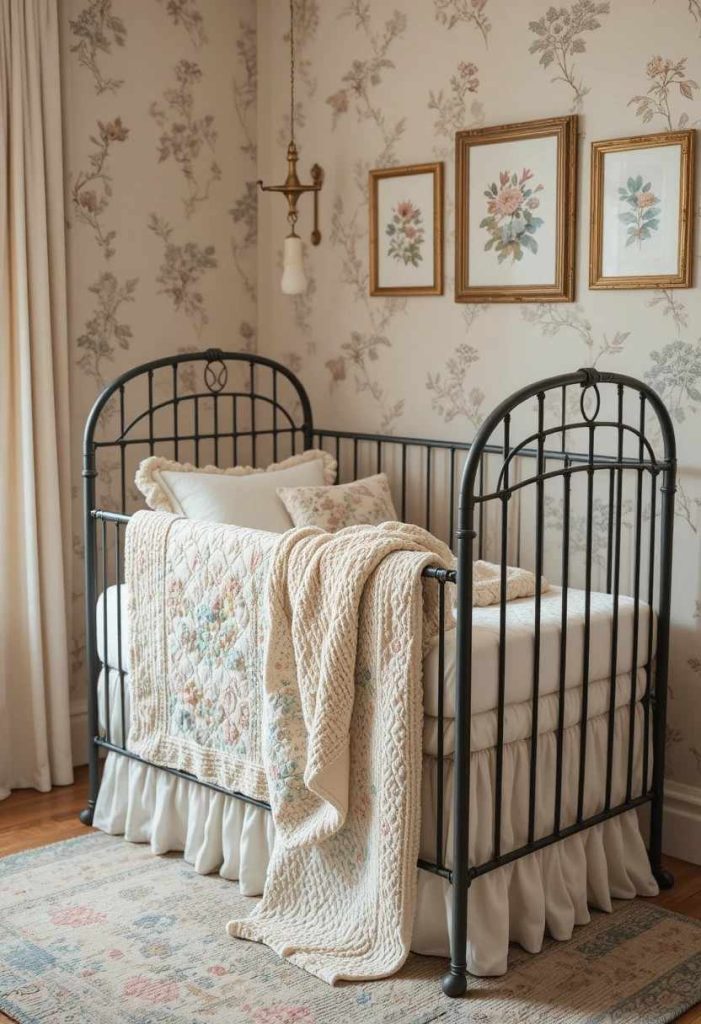
The vintage nursery for a newborn baby is one of the most searched and most pinned categories within the vintage kids’ room trend on Pinterest — and it is not difficult to understand why. Parents preparing a room for a new baby are uniquely motivated to create a space that feels timeless, beautiful, and full of meaning, rather than merely functional and on-trend. The vintage nursery aesthetic answers all of these desires simultaneously: it draws on the design traditions of the finest nurseries of the past hundred years, incorporates heirloom-quality materials and craftsmanship, and creates an environment that feels as if it has always existed and will continue to feel beautiful long after the baby who first occupied it has grown up.
The centrepiece of a vintage nursery is almost always the cot or crib, and the most beautiful choices are antique iron or solid wood cribs with simple, elegant detailing — spindle sides, curved hood, and a natural or painted wood finish. A family heirloom crib, if available, is the ultimate vintage nursery centrepiece, bringing genuine history and meaning to the room. Otherwise, specialist reproduction makers produce high-quality Victorian and Edwardian-style cribs and cots in solid wood that have excellent vintage character. Dress the crib in white cotton sheets with pin-tuck detailing, a patchwork or hand-stitched quilted coverlet, and a knitted or crocheted blanket for layered, heirloom textile quality.
The walls of a vintage nursery should feel soft, gentle, and full of quiet beauty. Pale botanical wallpaper in the softest possible tones, a hand-painted mural of woodland animals in a storybook illustration style, or simple whitewashed walls hung with framed vintage nursery prints and a collection of embroidered samplers all create the right quality of gentle visual richness. The lighting should be warm and dimmable — a ceiling fitting in a period style (a simple ceramic pendant, an aged brass fitting) supplemented by a small table lamp with a fabric shade for gentle night-time illumination.
Style tip: Display a collection of heirloom textiles — a hand-stitched quilt made by a grandmother, a set of embroidered bibs from a great-aunt — framed on the nursery wall. They add genuine family history and meaning that no purchased decoration can replicate.
9. 1970s Retro Kids Room: Groovy Colours, Macrame, and Natural Textures
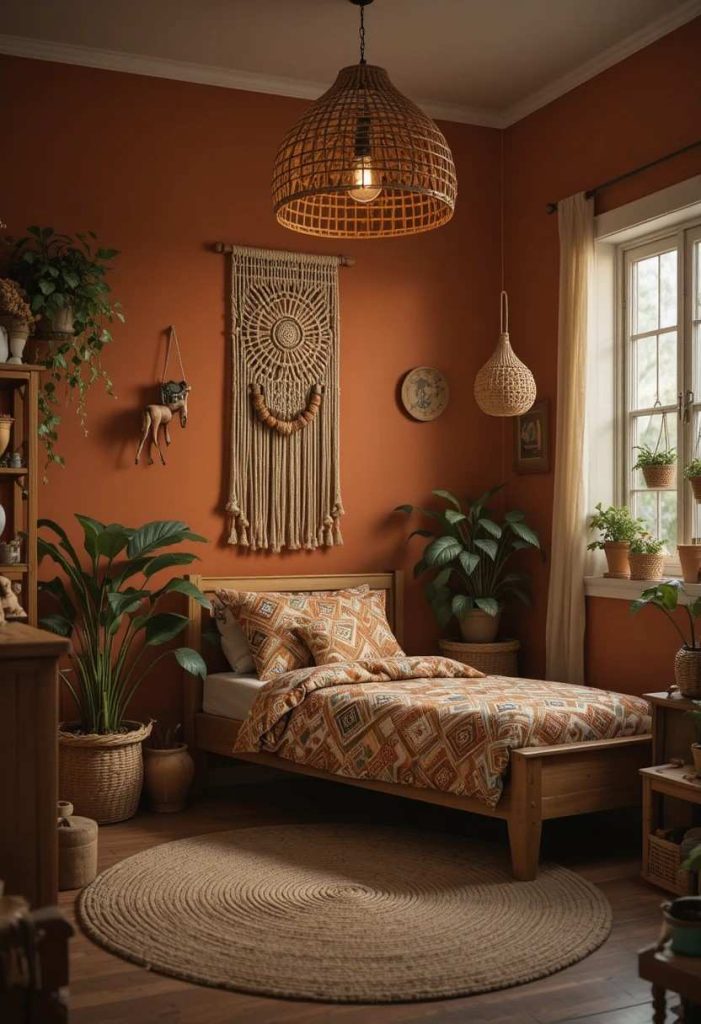
The 1970s are experiencing one of the most powerful design revivals in contemporary interior culture, and nowhere is this more evident or more joyful than in children’s rooms. Pinterest searches for ‘1970s childhood toys’ are up 280% in 2025–2026, reflecting a generation of parents — primarily older millennials and younger Gen X — who grew up surrounded by the warm, earthy, handcrafted aesthetic of the decade and who are now recreating versions of it for their own children, partly from nostalgia and partly from a genuine appreciation for the warmth, naturalism, and craft quality that characterised the best design of the period.
The visual language of the 1970s children’s room is immediately recognisable: warm terracotta, burnt orange, olive green, warm mustard, and deep brown are the dominant colours. Natural materials are everywhere — macrame wall hangings, wicker furniture, rattan lampshades, jute rugs, and wooden toys in warm-toned hardwoods. Geometric patterns in the earthy 70s palette appear on bedding, rugs, and curtains. Houseplants — particularly spider plants, pothos, and hanging string-of-pearls — are abundant. The overall atmosphere is warm, handmade, and deeply connected to the natural world.
For a child’s room with a 1970s vintage theme, the furniture should be simple and functional in warm wood tones — pine, teak, or stained oak — with clean lines and no unnecessary ornamentation. A vintage bean bag or floor cushion in a period-appropriate print creates an informal seating area that children love. Macrame wall art — available from craft markets and Etsy sellers, or achievable as a beginner DIY project — adds the tactile, handmade quality that defines the era. A collection of vintage wooden toys and early 70s picture books with their distinctive illustration styles completes the room’s narrative.
Style tip: Source genuine 1970s picture books — books by Eric Carle, Richard Scarry, and Tomi Ungerer have extraordinarily beautiful period illustration styles — for both reading and display. The cover artwork alone makes wonderful framed wall art.
10. Vintage Map and Explorer Theme: For the Curious, Adventurous Child
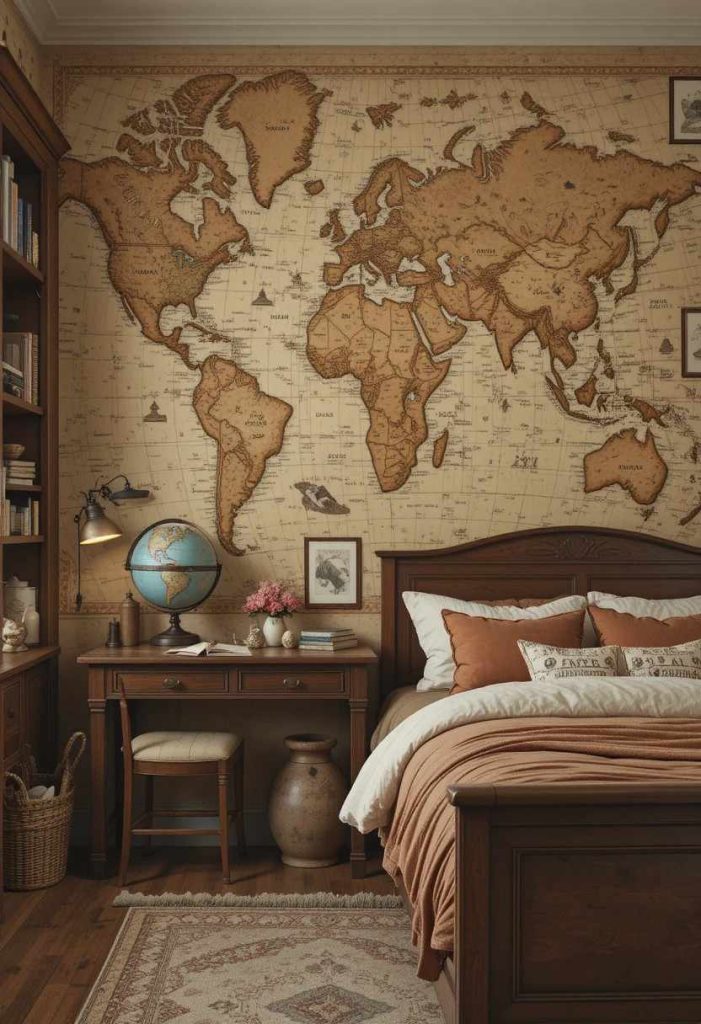
The vintage map and explorer theme is one of the most enduringly popular ideas for a boy’s or girl’s bedroom that aspires to vintage character — and one that grows gracefully with the child from toddlerhood through the teenage years. The visual elements of this theme are rich, immediately evocative, and instantly searchable on Pinterest: large-scale antique world maps as feature wall art or wallpaper, vintage globe lamps and desk globes, old compass motifs in wall art and textiles, wooden binoculars and telescopes as decorative props, warm leather accents, and the warm khaki and brown tones of vintage cartography.
The centrepiece of a vintage explorer room is almost always the map itself — and a large-format antique-style world map, either as a framed print, a peel-and-stick wall mural, or a traditional wallpaper, sets the entire narrative of the room instantaneously. Choose a reproduction of a genuine historical map — the rich engraved detail and aged amber tones of 17th and 18th century cartography are particularly beautiful — or commission a hand-painted custom map from an illustrator on Etsy for a completely unique piece. The map should be large enough to genuinely dominate the wall it occupies — at minimum 100cm wide, ideally larger.
Supporting the map theme with carefully chosen accessories builds the explorer narrative room by room. A vintage-style globe lamp on the desk or bedside table provides both practical illumination and a wonderful decorative object that children find endlessly fascinating. Open wooden shelves displaying a collection of natural history curiosities — shells, fossils, pine cones, feathers — reinforces the spirit of enquiry and exploration. Framing vintage botanical or natural history prints alongside the map creates a cabinet-of-curiosities atmosphere that is genuinely beautiful and deeply stimulating for an enquiring young mind.
Style tip: Mark significant places on the map with small gold pins — where the child was born, where they have travelled, where family members live — to make the map personally meaningful as well as decoratively powerful.
11. Vintage Floral and Botanical Bedroom for Girls: English Country Garden Charm
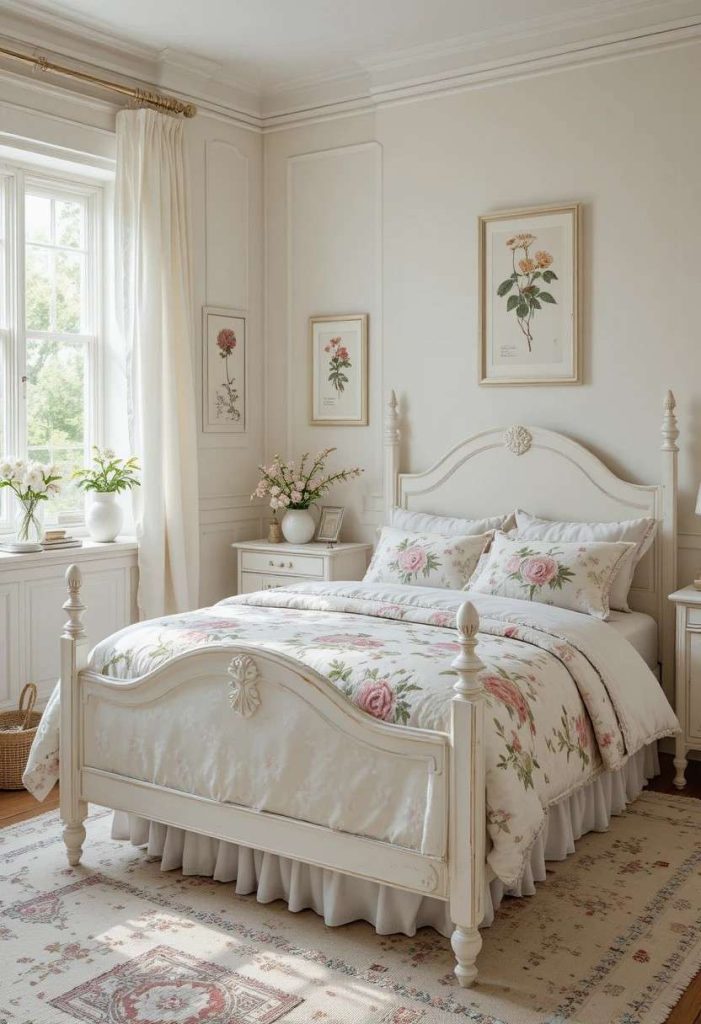
The vintage floral bedroom for girls draws on one of the most beloved and enduring traditions in English interior design — the English country house children’s room, with its generous, slightly faded floral chintzes, botanical prints, white-painted furniture with hand-painted floral details, and the gentle, unhurried quality of a space that has been thoughtfully assembled over many years rather than purchased from a single shop in an afternoon. This is the aesthetic that dominated children’s bedroom design in the mid-twentieth century and that is now experiencing a powerful nostalgic revival, particularly among parents who grew up in homes with this quality of considered, layered decoration.
The textiles are everything in a vintage floral girls’ bedroom. Begin with the bedding — a white cotton duvet cover with a vintage floral print in dusty pink, sage green, and cream is the starting point around which everything else is built. Layer over this a hand-stitched patchwork quilt in coordinating floral fabrics, a white cotton pillowcase with broderie anglaise trim, and a soft knitted throw in a complementary plain colour. At the window, full-length white or cream linen curtains with a floral trim, or alternatively a vintage floral print that picks up the colours of the bedding, complete the textile-rich atmosphere.
The walls and furniture of a vintage floral bedroom should be simple and pale to allow the textiles to lead. White or very pale cream walls hung with a curated selection of framed botanical prints, pressed flower specimens in clip frames, and vintage seed packet illustrations create a gentle botanical gallery that reinforces the floral theme without overwhelming it. White-painted wooden furniture with small hand-painted floral details — a rose on a drawer front, a delicate stem on a wardrobe panel — adds unique, personalised charm that transforms ordinary pieces into genuine heirlooms.
Style tip: Frame pressed flowers from your own garden — or from special occasions like a birthday bouquet — and hang them alongside botanical prints to add genuine personal meaning to the botanical gallery wall.
12. Vintage Chalkboard Wall: A Functional, Creative Feature Children Will Never Outgrow
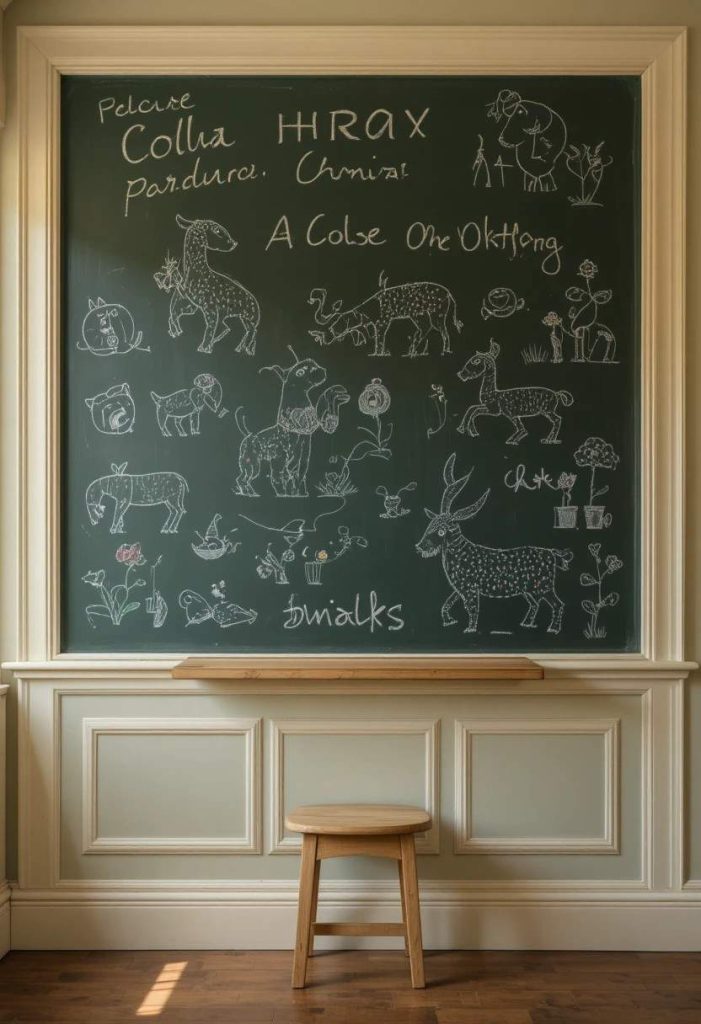
A vintage chalkboard wall is one of the most genuinely functional, consistently beloved, and perfectly period-appropriate features you can install in a child’s room — and one that will serve the child’s creative development from the moment they can hold a piece of chalk through to their teenage years. Chalkboards have been a fixture of children’s educational and domestic spaces since the nineteenth century, and their reappearance in contemporary children’s room design feels both nostalgically appropriate and genuinely useful in a world of screen-based entertainment.
The vintage chalkboard wall treatment works most effectively when it is framed and considered rather than simply a painted rectangle on the wall. For the most authentic vintage appearance, paint the chalkboard section in traditional chalkboard paint (available in the classic dark green-black of school and kitchen boards), and frame it with a simple wooden moulding painted in a contrasting colour — cream, white, or a warm wood tone. The framing effect transforms the chalkboard from a functional surface into a formal decorative element that feels intentional and designed. Alternatively, source a large genuine antique chalkboard — from a school or church auction, an architectural salvage yard, or an online reclamation platform — for a piece with genuine historical character.
The space around the chalkboard is as important as the board itself. Small wooden chalk ledges along the bottom edge provide a practical resting place for chalk and dusters while adding a period detail that looks authentically school-room. Vintage-style alphabet and number charts hung above the chalkboard reinforce the educational-vintage atmosphere. A small wooden stool or chair positioned in front of the chalkboard creates a child-sized workspace that encourages hours of creative and educational play.
Style tip: Use both traditional white chalk and coloured chalk for the vintage chalkboard wall — vintage-style chalk in soft, muted colours (dusty rose, sage, butter yellow) maintains the period quality far better than modern neon chalk.
13. Antique Rocking Horse: The Ultimate Vintage Kids Room Statement Piece
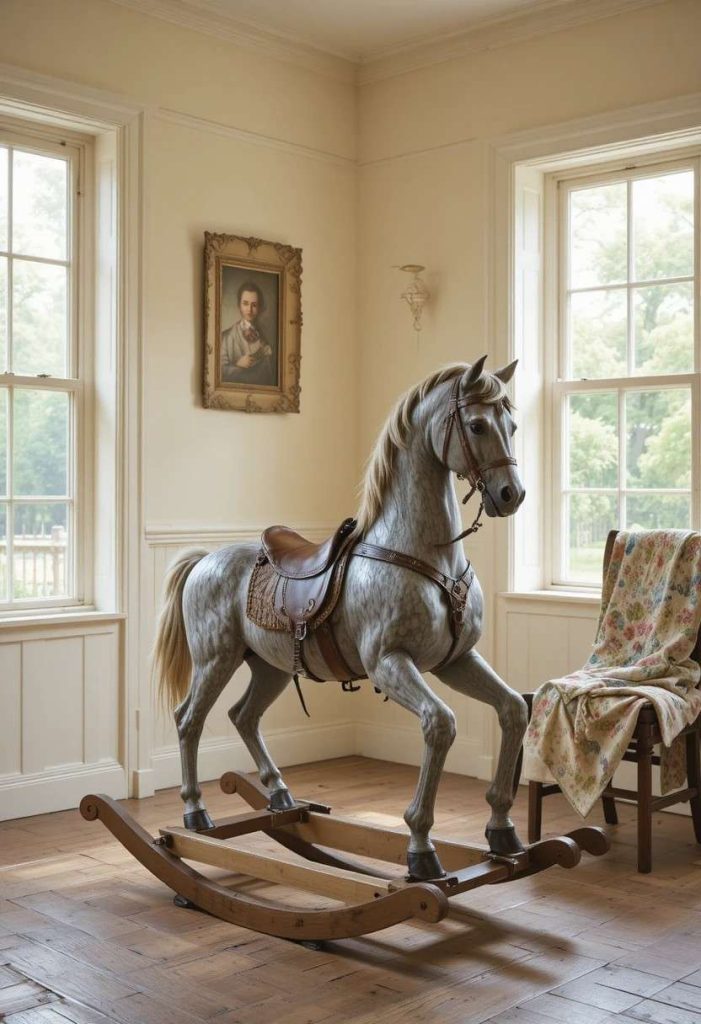
If there is a single object that more completely encapsulates the spirit of the vintage children’s room than any other, it is the antique rocking horse. These magnificent, individually crafted objects — dapple grey horses with real horsehair manes and tails, hand-carved wooden bodies, leather saddles and bridles, mounted on painted wooden or metal bow rockers — were the prestige toy of childhood for the entire Victorian and Edwardian period and well into the twentieth century. A genuine antique rocking horse in a child’s room is not merely a toy; it is a work of craft, a piece of history, and a connection to generations of children who rode before.
Authentic antique rocking horses of the finest quality were made by specialist manufacturers — G. & J. Lines, J. Collinson and Sons, and F.H. Ayres in Britain — and are available from specialist dealers and auction houses. Fully restored examples with original tack can be expensive, but less complete examples requiring restoration are available at far more modest prices, and the process of restoring a rocking horse is a rewarding project that produces a finished object of extraordinary personal meaning. For those who prefer a more affordable option, several craftspeople produce new rocking horses in traditional forms using traditional techniques that are virtually indistinguishable from genuine antiques.
The rocking horse should be positioned as a genuine centrepiece — not pushed into a corner but given a prominent position in the room where it can be appreciated from multiple angles. Position it near a window so that natural light catches the hand-carved detail of the face and the sheen of the horsehair. Keep the surrounding area clear of clutter so the rocking horse reads as the statement piece it is. A small basket of grooming tools nearby — brushes, a soft cloth — encourages children to develop a caring relationship with their horse that teaches responsibility and gentleness.
Style tip: Commission a personalised name plaque for your child’s rocking horse from a specialist woodcarver — a small brass or painted wooden plaque with the horse’s name (chosen by the child) transforms it from a toy into a named companion with its own identity.
14. Vintage Bunting, Fairy Lights, and Ceiling Decorations for Pure Magical Energy
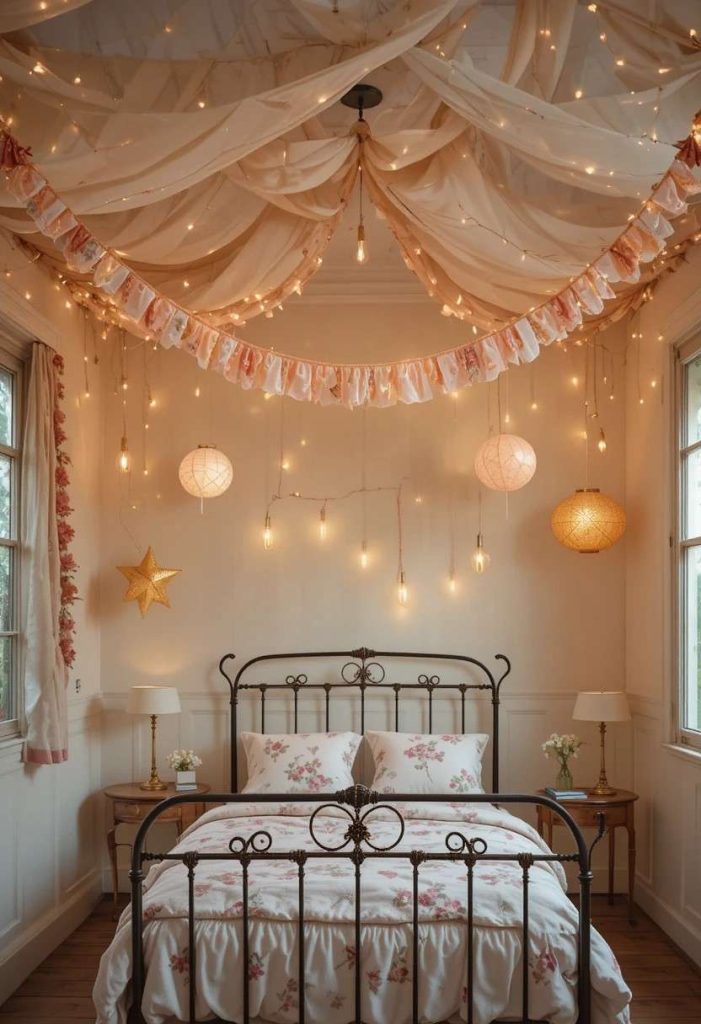
The ceiling and upper walls of a child’s bedroom are some of the most underused real estate in interior design, and in a vintage children’s room they offer an extraordinary opportunity to create an atmosphere of magical, festive enchantment that transforms the simple act of lying in bed and looking upward into a genuinely joyful experience. Vintage bunting, paper lanterns, fabric pennant flags, macrame ceiling hangings, and warm Edison or fairy lights strung across the ceiling space cost very little to execute but deliver a visual impact that no piece of furniture or wall art can match.
Vintage-style fabric bunting — sewn from small triangular pennants of vintage floral, ticking stripe, and plain cotton fabrics in a muted vintage palette — is the single most period-appropriate ceiling decoration for a vintage children’s room. The tradition of bunting in children’s spaces goes back generations, and a carefully sewn or sourced set of vintage-style bunting strung in graceful curves from wall to wall carries all of this history with it. For the most beautiful result, combine two or three different fabric patterns within the same colour palette — the variety of patterns is part of the charm.
Edison bulb string lights in a warm amber tone add a layer of magical illumination that is qualitatively different from any other light source in the room — they cast a warm, slightly yellow light that is enormously flattering to vintage colour palettes and textile collections, and they give the ceiling space a sense of festive occupation that makes the room feel permanently celebratory. Combine with paper star lanterns in cream, soft gold, or blush for a layered ceiling installation that is genuinely breathtaking when lit in the evening.
Style tip: Sew or commission vintage-style bunting from fabric remnants of the same textiles used elsewhere in the room — the same floral print as the bedding, the same stripe as the cushions — for a completely cohesive, professionally designed look.
15. 90s Throwback Kids Room: From Polly Pocket to Lisa Frank, Nostalgia Made Beautiful
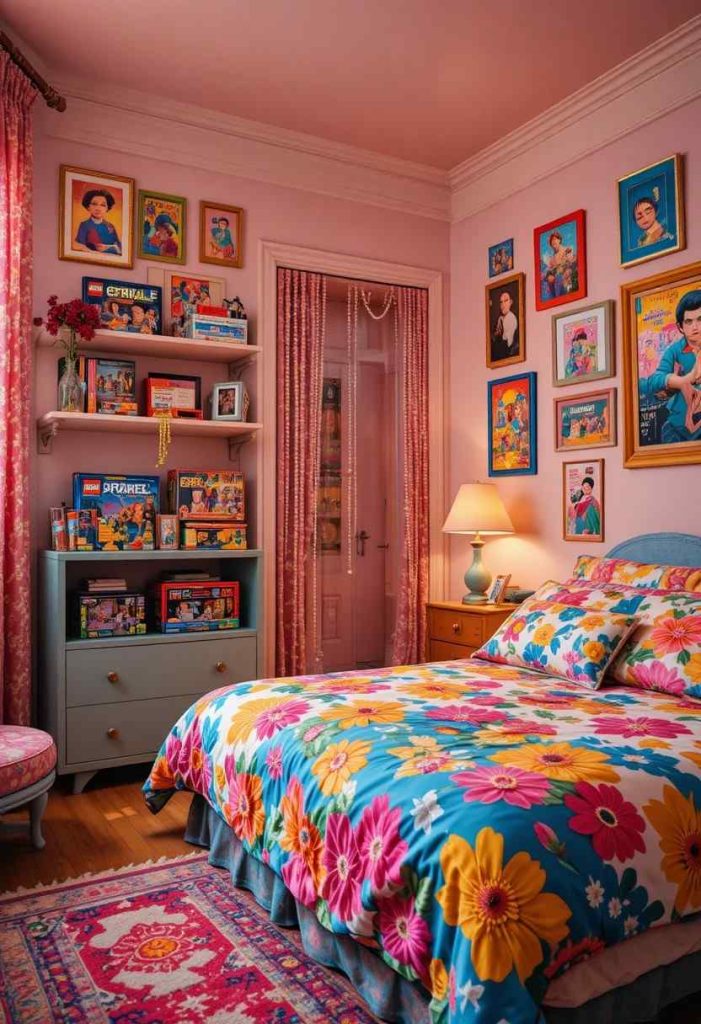
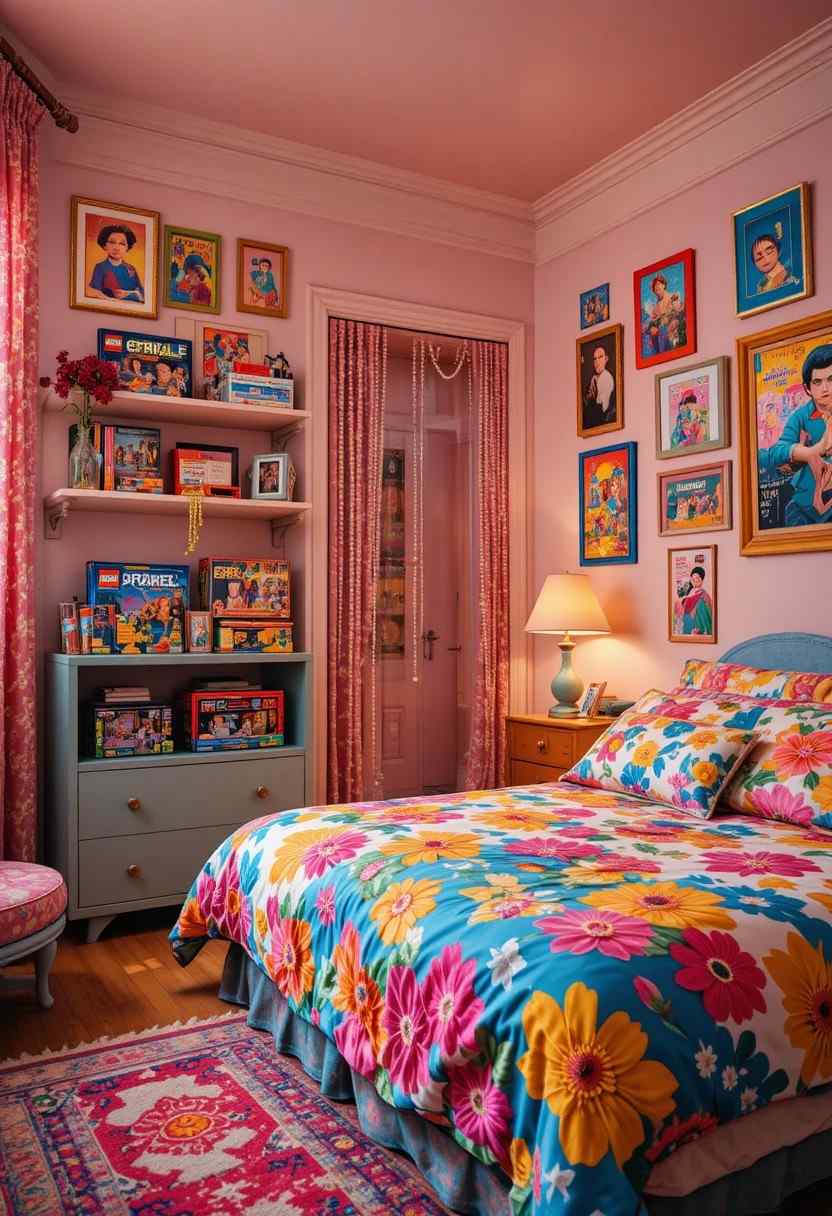
For millennial parents, the 1990s represent a period of childhood that is increasingly viewed through a warm nostalgic lens — one that Pinterest searches are reflecting powerfully, with 90s kids’ toys searches up 80% and 2000s kids’ toys searches up a staggering 610% in the 2025–2026 period. The 90s children’s room aesthetic is distinct from earlier vintage styles: brighter and more colour-saturated than the 70s or 80s, with a particular enthusiasm for bold patterns, playful graphics, and the kind of unabashedly cheerful colour combinations that characterised the decade’s most beloved toy brands and television programmes.
A thoughtfully designed 90s vintage kids’ room walks a careful line between genuine nostalgic reference and a design sensibility that stands as its own considered aesthetic. The key is to select the most visually beautiful elements of the decade’s children’s design — the bold floral patterns of vintage bedding sets, the saturated but harmonious colour combinations of early 90s graphic design, the playful shaped furniture that characterised the period — and combine them with higher-quality materials and more considered proportions than the originals. The result should feel like the best version of a 90s bedroom, as filtered through a contemporary design sensibility.
Specific 90s vintage elements that translate beautifully into a contemporary children’s room include: bold floral print bedding in the style of classic department store sets of the era; plastic-framed mirrors and picture frames in bright primary colours used sparingly as accent pieces; a collection of genuinely vintage 90s toys — original Game Boys, Polly Pockets, original Lego sets — displayed as collectibles on open shelving; posters from beloved 90s films and television shows in vintage-style frames; and a bead curtain in the doorway as a genuinely period detail that children find both fascinating and deeply satisfying to walk through repeatedly.
Style tip: Display a collection of genuinely vintage 90s toys in a glass-fronted display cabinet — they simultaneously function as decorative objects, conversation pieces, and a deeply personal expression of the parent’s own childhood that creates an intergenerational connection between parent and child.
16. Vintage Attic or Loft Kids Room: Sloped Ceilings, Exposed Beams, and Cosy Charm
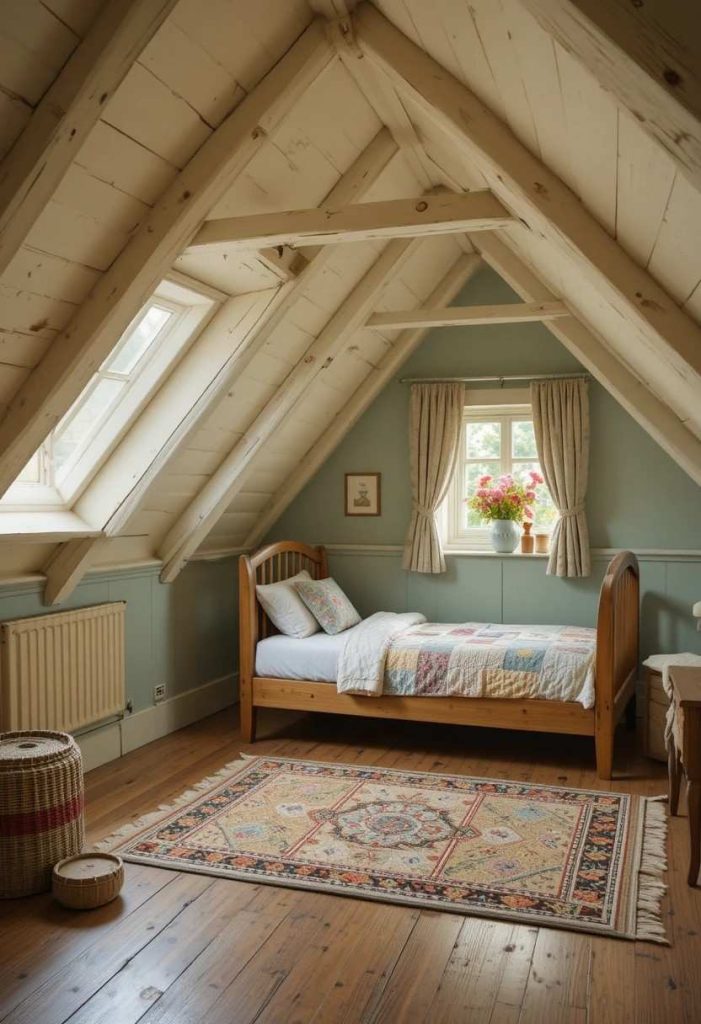
A converted attic or loft space, with its sloping ceilings, exposed wooden beams, dormer windows, and irregular geometry, is one of the most naturally sympathetic settings for a vintage children’s room design imaginable. The architectural features that can feel awkward or limiting in a conventionally furnished space become positive design assets when embraced and decorated in a vintage style — the low beamed ceiling creates the sense of enclosure that children love, the dormer window creates a perfect built-in reading nook, and the irregular floor plan encourages creative use of the available space.
In an attic or loft children’s room, lean into every period feature the structure offers. Expose and celebrate wooden beams rather than concealing them behind plasterboard — paint them in a warm cream or leave them in natural wood for maximum architectural character. The sloping walls on either side of the ridge are perfectly proportioned for low wooden beds tucked under the eaves, accessed from the flat central section of the room. Built-in wooden storage following the line of the slope makes use of space that would otherwise be inaccessible, and gives the room a bespoke, crafted quality that purchased furniture can never replicate.
The decoration of a vintage attic children’s room should work with the intimacy of the space rather than fighting it. A warm, rich colour on the sloping walls — a deep sage green, a warm terracotta, or a classic French grey — makes the low ceilings feel deliberately cosy rather than accidentally cramped. Vintage textiles with pattern and texture — patchwork quilts, hooked rugs, knitted throws — reinforce the attic’s inherently cosy quality. Skylights and dormer windows should be dressed with simple Roman blinds or tab-top curtains in a coordinating natural fabric to control light without reducing the sense of sky and space they provide.
Style tip: Paint the exposed wooden beams of an attic children’s room in the same colour as the walls rather than leaving them natural — the counter-intuitive approach of colour-matching beams to walls actually makes the architectural features read as an intentional design choice rather than a structural necessity.
17. Handmade and Heirloom Textiles: Quilts, Crochet, and Embroidery in a Kids Room
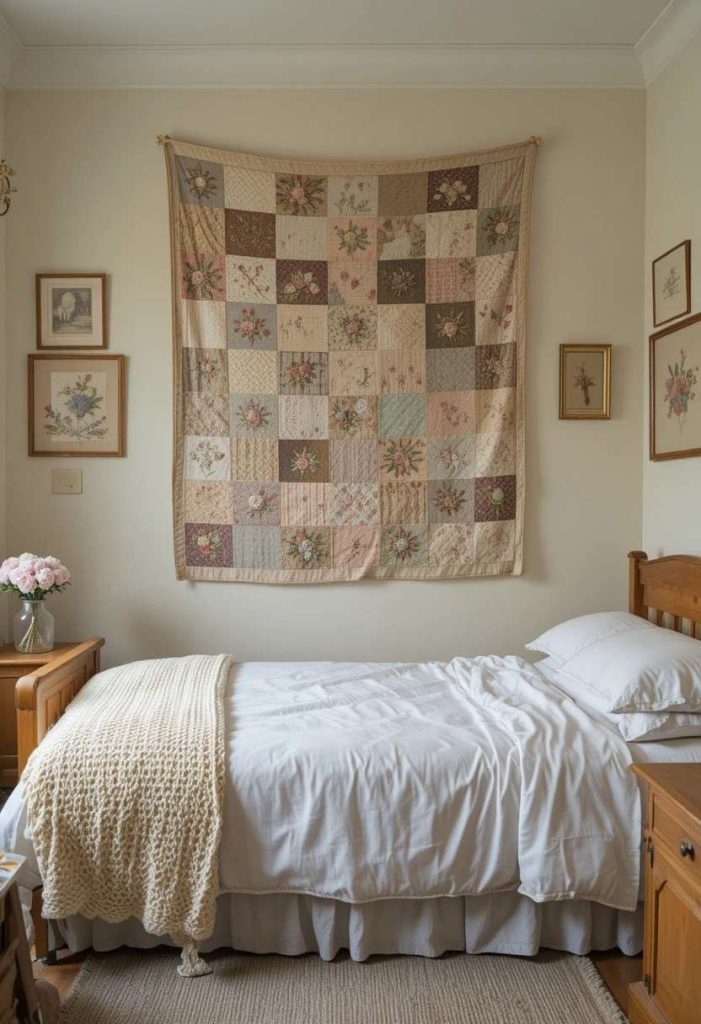
There is a category of textile that occupies a unique position in the vintage children’s room — one that is simultaneously the most personal, the most meaningful, and the most visually beautiful element of the design. Handmade textiles — quilts stitched by grandmothers from pieces of family clothing, crocheted blankets made during pregnancies, embroidered samplers created as gifts for a new baby, knitted toys that have passed between siblings — carry a weight of love and history that no purchased decoration can come close to matching. In a vintage children’s room, these heirloom textiles are not merely bedding or accessories; they are the room’s emotional core.
The patchwork quilt is the defining textile of the vintage children’s bedroom. A well-made patchwork quilt — whether genuinely antique, a family heirloom, or newly made in a traditional pattern using vintage or reclaimed fabrics — brings colour, pattern, texture, and narrative to a bed in a single object of extraordinary richness. Displayed as the primary covering on the bed, a patchwork quilt immediately establishes the vintage character of the room and communicates values of craft, care, and material quality that are increasingly rare in the world of mass-produced children’s interiors.
If you have access to a quilter or can commission one, a custom patchwork quilt incorporating fabrics of personal significance — pieces of the child’s first clothes, a parent’s old shirt, a grandparent’s dress fabric, fabric from a beloved toy — is one of the most meaningful things you can create for a child’s room. Displayed as the primary bed covering when the bed is made and used nightly for warmth and comfort, this quilt will become one of the child’s most important possessions and a treasured object that connects them to their family history.
Style tip: Hang a large, visually striking patchwork quilt on the wall as a textile artwork rather than using it on the bed — this protects it from daily wear while allowing its full visual beauty to be appreciated as the centrepiece of the room.
18. Vintage Toy Cabinet and Curiosity Display: Teaching Children to Value Beautiful Things
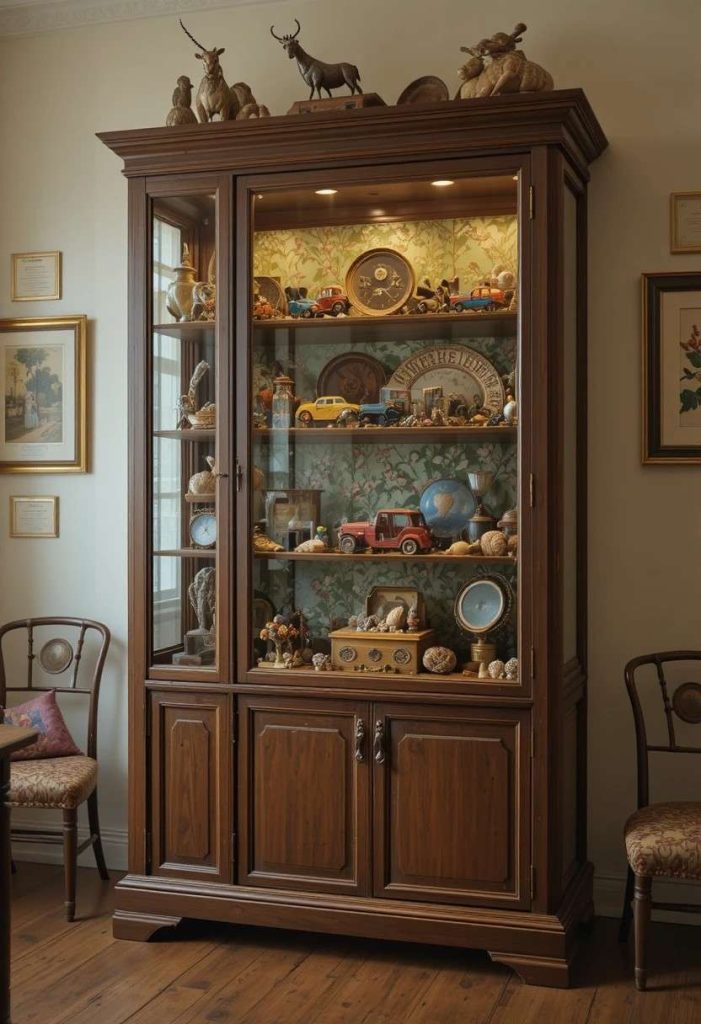
The vintage curiosity cabinet — a glass-fronted or open display case containing a carefully curated collection of beautiful, meaningful objects — is one of the most educationally valuable and aesthetically powerful features you can include in a child’s room. In a vintage children’s room context, the curiosity cabinet serves as both a display of beautiful vintage toys and objects and as a powerful daily demonstration of the value of curation, quality, and care. A child who grows up seeing beautiful objects displayed thoughtfully and treated with respect develops a relationship with material quality and aesthetic appreciation that will enrich their life in innumerable ways.
The objects displayed in a vintage children’s curiosity cabinet should be a genuine mixture of the beautiful and the personally significant. Vintage toy cars from a parent’s or grandparent’s collection alongside a child’s own favourite small toy. A small collection of antique marbles in their original tin. A family of hand-painted lead soldiers or wooden peg dolls. A collection of vintage tin badges or buttons in interesting shapes. A small antique magnifying glass. A handful of beautiful shells from a memorable beach visit. The mix of vintage curios and personally significant objects gives the cabinet a narrative quality — it tells a story that is part family history and part the child’s own accumulating adventure.
The cabinet itself should be in keeping with the vintage character of the room. A small glazed bookcase, a vintage apothecary cabinet with multiple small drawers, a simple wooden shadowbox frame, or a genuine antique display case from a reclamation yard all provide excellent settings for the curiosity display. Line the back of the cabinet with a vintage wallpaper remnant or a piece of vintage fabric for a decorative interior that makes the displayed objects read as genuinely precious and worth displaying.
Style tip: Involve the child in curating and arranging the curiosity cabinet from as young an age as possible — the act of choosing what is displayed, deciding on the arrangement, and explaining why each object matters develops skills of aesthetic judgement, narrative thinking, and material appreciation simultaneously.
19. Vintage Inspired Playroom: Where Imagination Rules and Screens Are Optional
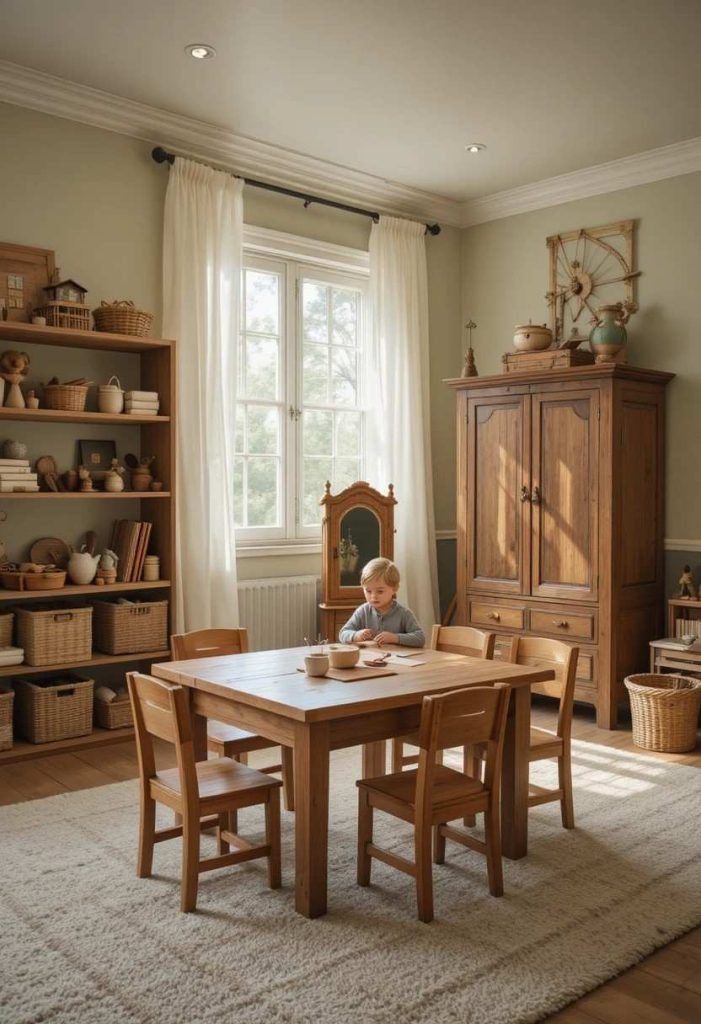
The vintage-inspired playroom is one of the most compelling expressions of the broader cultural movement that Pinterest’s 2026 Parenting Report identifies as ‘raising screen-smart kids who seek real-world adventure’ — a movement driven by parents who are consciously choosing to create play environments that prioritise physical, creative, and imaginative engagement over passive screen consumption. The vintage playroom aesthetic is a direct expression of this intention: by filling a child’s play space with beautiful wooden toys, open-ended craft materials, puppet theatres, dress-up wardrobes, and vintage board games, parents create an environment where imagination is not merely possible but inevitable.
The furniture and storage of a vintage playroom should be designed around accessibility, durability, and beauty in equal measure. Low open wooden shelves at children’s eye level make toys and materials visible and reachable without adult assistance, encouraging independent play and the development of organisational habits. Vintage-style storage solutions — painted wooden crates, wicker baskets with leather labels, small wooden drawers with ceramic knobs — provide the kind of tactile, characterful storage that is a pleasure to interact with. A large vintage wooden table at the centre of the room provides space for craft projects, puzzles, and group play.
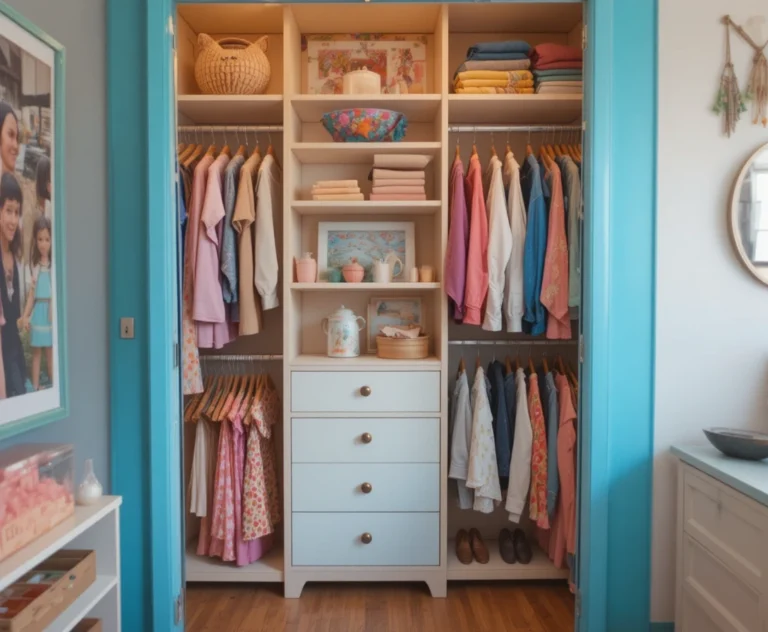
The most important piece of furniture in a vintage playroom may well be the dress-up wardrobe — a large wooden wardrobe or armoire filled with vintage-inspired dress-up clothes: capes, crowns, fairy wings, pirate hats, doctor’s kits, and all the costumes of childhood imagination. A full-length mirror with a painted vintage frame is positioned alongside so that children can see themselves in their chosen character. This simple arrangement — a wardrobe of imagination and a mirror to see oneself transformed — is one of the most powerful invitations to creative play that a children’s space can offer.
Style tip: Install a simple wooden puppet theatre at one end of the vintage playroom — a basic wooden frame with a curtain and a shelf for puppets creates hours of dramatic play and performance that develops language, confidence, and storytelling skills.
20. Outdoor-Indoor Vintage Kids Room: Bringing Nature, Garden, and Adventure Inside
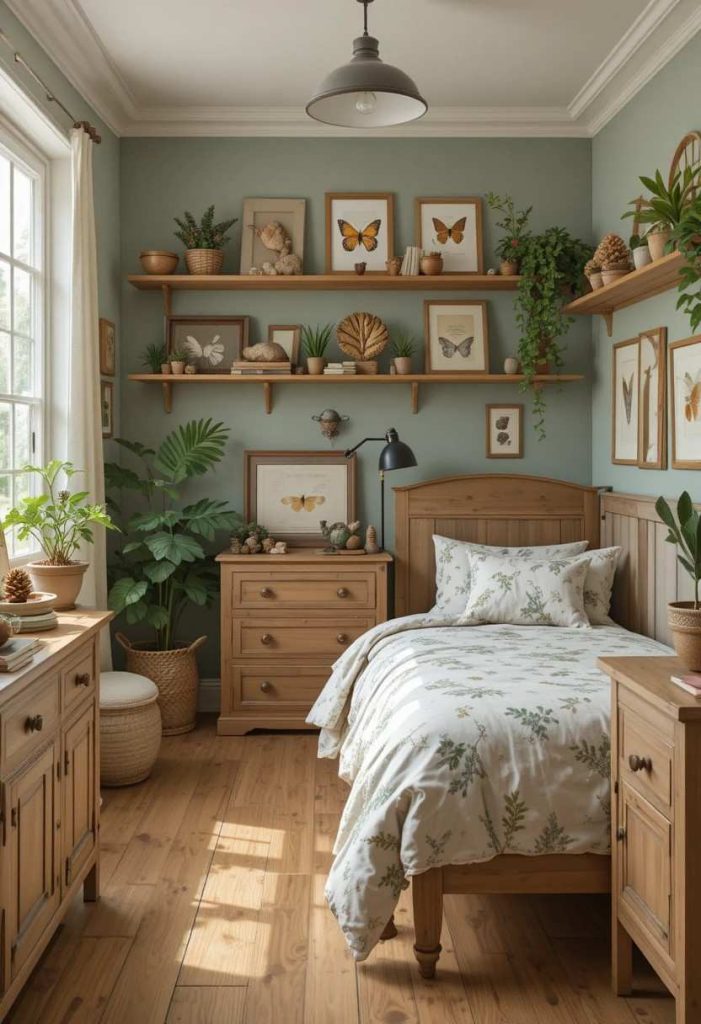
The most philosophically coherent and developmentally enriching expression of the vintage children’s room aesthetic is one that blurs the boundary between indoors and outdoors — bringing the natural world inside through living plants, natural materials, nature-collection displays, and outdoor-inspired furniture, while simultaneously opening the room outward to the garden, the sky, and the wider world of physical adventure. This approach reflects the deepest impulse behind the entire vintage children’s room movement: the desire to give children a childhood that is grounded, tactile, sensory, and connected to the natural world in ways that screen-dominated environments make increasingly difficult.
The outdoor-indoor vintage kids’ room begins with the materials: real wood throughout, from solid pine floorboards to hand-hewn wooden shelves; natural fibre textiles in linen, cotton, and wool; clay and ceramic accessories; wicker and rattan furniture. These materials bring the textures, tones, and sensory qualities of the natural world into the room without any artificial mediation. The colour palette follows naturally from the materials: warm wood tones, forest greens, earthy browns, cream, soft blue-grey — the palette of the landscape itself.
Nature collections displayed throughout the room extend the outdoor-indoor connection while simultaneously encouraging the habits of observation and curiosity that are the foundation of scientific thinking. A collection of pinecones, acorns, interesting stones, and pressed leaves arranged in wooden bowls and on shelves. Framed butterfly and moth specimens from reputable ethical suppliers. A vintage-style weather station or barometer. A jar of wildflower seeds ready for planting. A collection of beautifully illustrated field guides to birds, trees, and wildflowers. Together, these elements create a room that is not merely decorated in a natural style but genuinely oriented toward the natural world as the primary source of wonder, learning, and adventure.
Style tip: Install a simple wooden window box on the outside sill of the child’s bedroom window and involve them in planting and tending it — the direct, tangible connection between the room’s nature-inspired interior and the living growing plants just beyond the glass is one of the most powerful outdoor-indoor gestures available.
Frequently Asked Questions About Vintage Kids Room Design
How do I start creating a vintage kids room without spending a lot of money?
Start with what you have and with what you can source second-hand. A can of chalk paint can transform any piece of furniture you already own into a vintage-style centrepiece. A framed vintage print from a second-hand shop costs almost nothing and immediately establishes the room’s character. Charity shops, estate sales, and Facebook Marketplace are full of the wooden toys, vintage textiles, and period furniture that are the building blocks of the vintage kids room aesthetic — often at a fraction of the cost of new equivalents.
Is a vintage kids room suitable for a very young child? Are antique pieces safe?
Vintage toys and furniture should always be checked for safety before use with young children — repaint any pieces with old paint in a non-toxic modern paint, check for loose parts, sharp edges, or structural weakness, and ensure that any antique crib or cot meets current mattress and safety standards. A vintage aesthetic can be achieved entirely with new, safety-compliant pieces made in vintage styles — an antique-inspired iron crib, for example, is newly made to modern safety standards while looking authentically period.
What are the most important vintage kids room pieces to invest in?
Prioritise the bed frame, the textile collection, and one significant vintage statement piece — a rocking horse, a large antique wardrobe, or a magnificent patchwork quilt. These three elements establish the room’s vintage character more powerfully than any number of smaller accessories. Everything else can be built up gradually over time.
How do I make a vintage kids room that will grow with my child?
Choose a timeless vintage aesthetic — English country, 1970s natural, explorer-adventure — rather than a character-specific theme that the child will outgrow. Invest in quality pieces that will serve the child through multiple life stages. Build the room around the child’s developing interests, updating accessories as they grow, while retaining the foundational pieces — good furniture, beautiful textiles, quality wooden toys — that define the room’s vintage character.
Which vintage era works best for a kids room?
This depends entirely on your own aesthetic preferences and family history. The Victorian and Edwardian nursery tradition suits homes with period architectural features. The 1970s natural aesthetic suits families who value the connection to nature, craft, and warmth that the decade prioritised. The 1990s nostalgia theme is particularly powerful for millennial parents who want to share their own childhood with their children. The most successful vintage kids rooms often blend multiple eras, united by a coherent colour palette and shared commitment to quality materials and craftsmanship.
Where to Source Vintage Kids Room Pieces: A Practical Sourcing Guide
For antique and vintage furniture
Estate sales and house clearances are the single best source for quality vintage children’s furniture at reasonable prices. Online platforms including eBay, Etsy, and Facebook Marketplace are excellent for furniture within driving distance. Architectural salvage yards and reclamation centres often stock stripped and unrestored pieces at very low prices that are ideal for chalk paint projects.
For vintage textiles and bedding
Charity shops and thrift stores are consistently excellent sources for hand-stitched quilts, embroidered linens, crocheted blankets, and vintage fabric remnants. Etsy has an enormous marketplace of vintage and handmade textile sellers, including specialists in vintage-style patchwork quilts, hand-embroidered pillowcases, and period reproduction fabric.
For vintage and antique toys
Specialist vintage toy dealers and toy fairs are the best source for quality antique wooden toys, rocking horses, and period toys. General antique markets often have excellent selections of vintage tin toys, early plastic toys, and classic board games. The Etsy marketplace has hundreds of sellers offering high-quality reproduction vintage wooden toys made by contemporary craftspeople.
For vintage-style wallpaper and fabrics
Specialist wallpaper suppliers including Sanderson, Cole & Son, Morris & Co, and Liberty all produce excellent vintage-inspired wallpaper and fabric collections that are widely available online and through interior design suppliers. For genuine vintage wallpaper, specialist reclamation firms occasionally have period rolls available; alternatively, high-quality reproduction prints are available from Etsy’s specialist print and wallpaper sellers.
Conclusion: The Vintage Kids Room Is a Gift to Your Child’s Imagination
The vintage kids room is, at its deepest level, an act of love and intention. It is a parent saying: my child deserves a space of genuine beauty, real quality, and meaningful character — a space that honours the long tradition of beautiful childhood and that will nourish imagination, creativity, curiosity, and the simple, embodied pleasure of living among beautiful, well-made things.
The 20 ideas in this guide are starting points, not prescriptions. Take what resonates, leave what does not, and add what is uniquely yours — the inherited piece, the family textile, the hand-painted detail that exists nowhere else in the world. That is how the best vintage kids rooms are made: not purchased whole from a single source, but assembled slowly, lovingly, and with genuine personal meaning.
The children who grow up in these rooms will not remember the specific paint colour or the brand of the wallpaper. They will remember the feeling — of warmth, of enchantment, of being in a space that was made for them with care and imagination. That is the gift the vintage kids room gives. And it is a gift that lasts a lifetime.
Create with love. Design with intention. Give them a childhood to remember.