

14 Dark Gray Bedroom Ideas That Feel Cozy, Elegant, and Effortlessly Stylish
Does your bedroom feel flat, uninspiring, or just missing that cozy depth you crave? Light colors can feel safe—but sometimes they lack personality and warmth. That’s where dark gray bedroom ideas come in. This rich, moody shade creates a calm, cocoon-like space that feels both modern and timeless. When styled right, it doesn’t feel heavy—it feels comforting, elegant, and beautifully balanced. If you’re ready to transform your bedroom into a space you truly love, these ideas will guide you.
1. Dark Gray Walls with Soft White Bedding
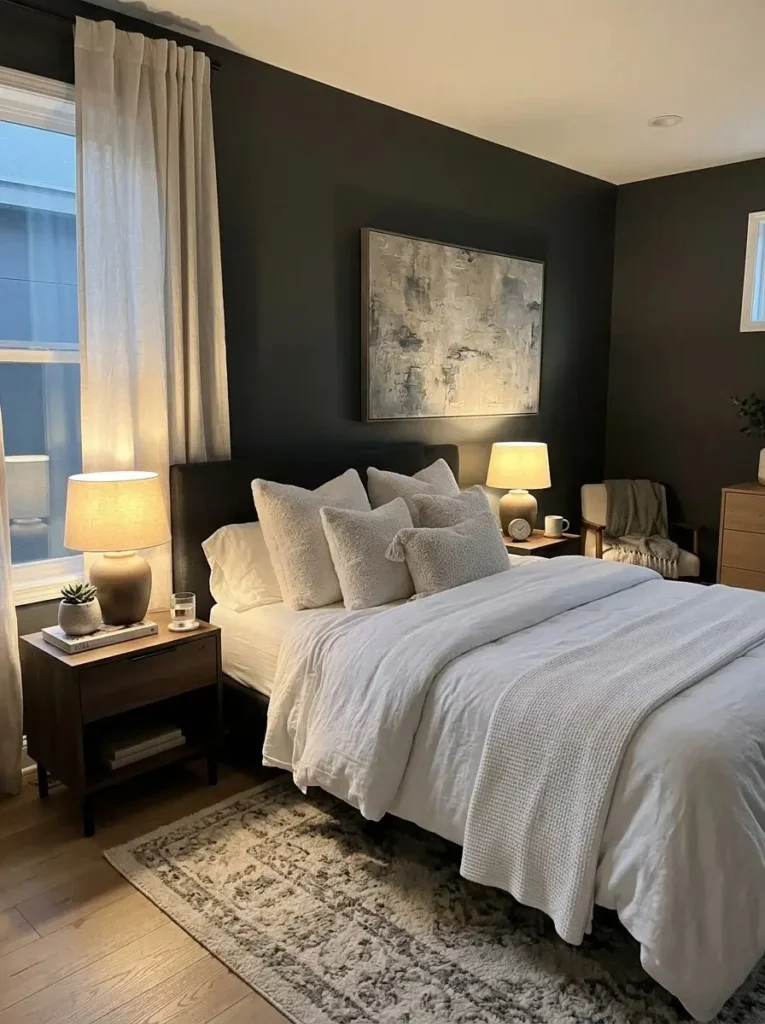
I fell for this combination the first time I saw it in a friend’s spare room, and I have recommended it ever since because it is the easiest way to make dark grey feel welcoming rather than heavy. Paint the walls in a soft charcoal with warm undertones, then let crisp white bedding do the lightening for you. I like a white duvet with a waffle or seersucker texture, because flat white can look stark against grey, while texture keeps it feeling soft. Add a folded throw at the foot of the bed, keep your bedside tables pale, and let the contrast do the work.
This works because the brightness of white balances the richness of gray, preventing the room from feeling too dark. The combination feels clean yet dramatic, offering a hotel-like comfort. It’s perfect for creating a restful and polished atmosphere.
Tip: Add warm bedside lighting to soften the contrast and keep the space inviting.
How to do it: Test two or three charcoal samples on the wall and live with them for a day, checking the colour in morning and evening light. Paint the wall behind the bed first, then decide whether to continue around the room. Dress the bed in white cotton or linen, add one textured throw, and finish with warm-toned bedside lamps so the white glows instead of glaring.
2. Layered Textures in a Dark Gray Bedroom
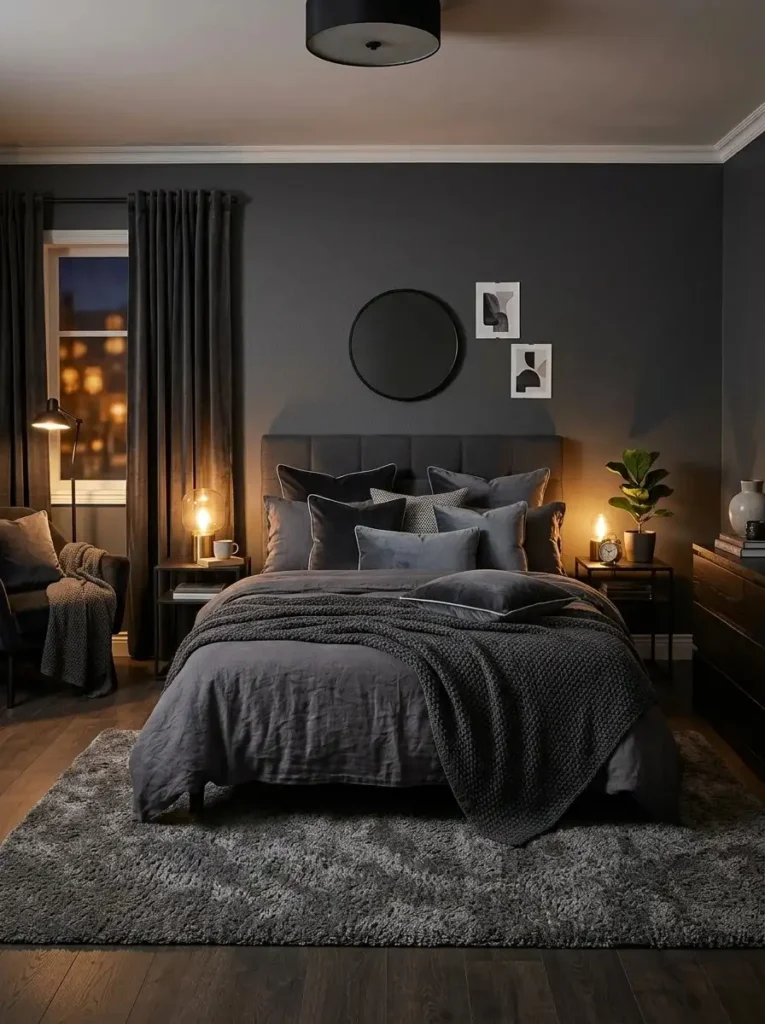
If there is one trick I would insist on in a dark grey bedroom, it is texture, because grey without texture can fall flat however lovely the paint is. I start with the bed: a linen duvet, a knitted throw folded across the corner, and two velvet cushions in slightly different greys. Then I look at the floor — a rug underfoot changes how the whole room feels in the morning. Curtains matter too; I prefer linen or a light weave that moves, because stiff fabric can make a dark room feel formal. When every surface offers something to touch, the grey feels rich and layered instead of plain.
This works because texture adds depth and dimension, making the room feel rich instead of flat. Even within the same color family, different materials create visual interest. The result feels warm, cozy, and intentionally styled.
Tip: Mix at least three textures to keep the space visually balanced.
How to do it: Gather three contrasting textures before you buy anything new — for example, smooth velvet, nubby knit, and washed linen. Layer them on the bed first, then repeat one of them on the floor or at the window so the room feels connected. Step back and check that no single texture dominates; if one does, swap it for something softer.
3. Dark Gray Accent Wall Behind the Bed
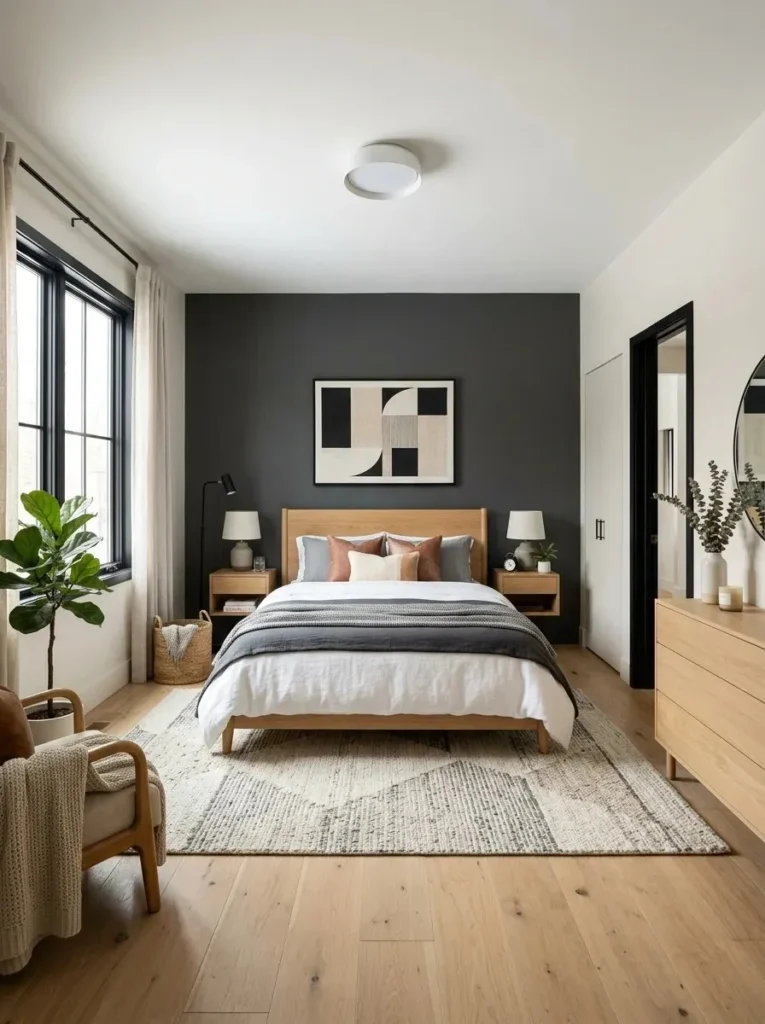
When I am nervous about going dark, I always suggest starting with one wall, because a single charcoal wall behind the bed gives you all the drama with none of the commitment of a fully dark room. It frames the bed, almost like a headboard painted straight onto the wall, and it makes everything in front of it look more considered. I keep the other three walls a warm white or pale greige so the room still feels bright in daylight. Then I hang one picture or a pair of sconces on the dark wall, because bare charcoal can look unfinished, while one detail makes it look designed.
This works because it adds depth while maintaining brightness in the space. It draws attention to your bed area, making it feel more designed. It’s a simple yet impactful update.
Tip: Use matte paint for a softer, more elegant finish.
How to do it: Choose the wall your bed sits against and paint it in a matte charcoal, leaving the ceiling and trims white. Hang the bed’s headboard against it, add a pair of matching lamps, and keep bedding pale so the dark wall reads as a backdrop rather than a cave. Live with it for a week before deciding whether to paint more.
4. Gold Accents for a Luxurious Touch
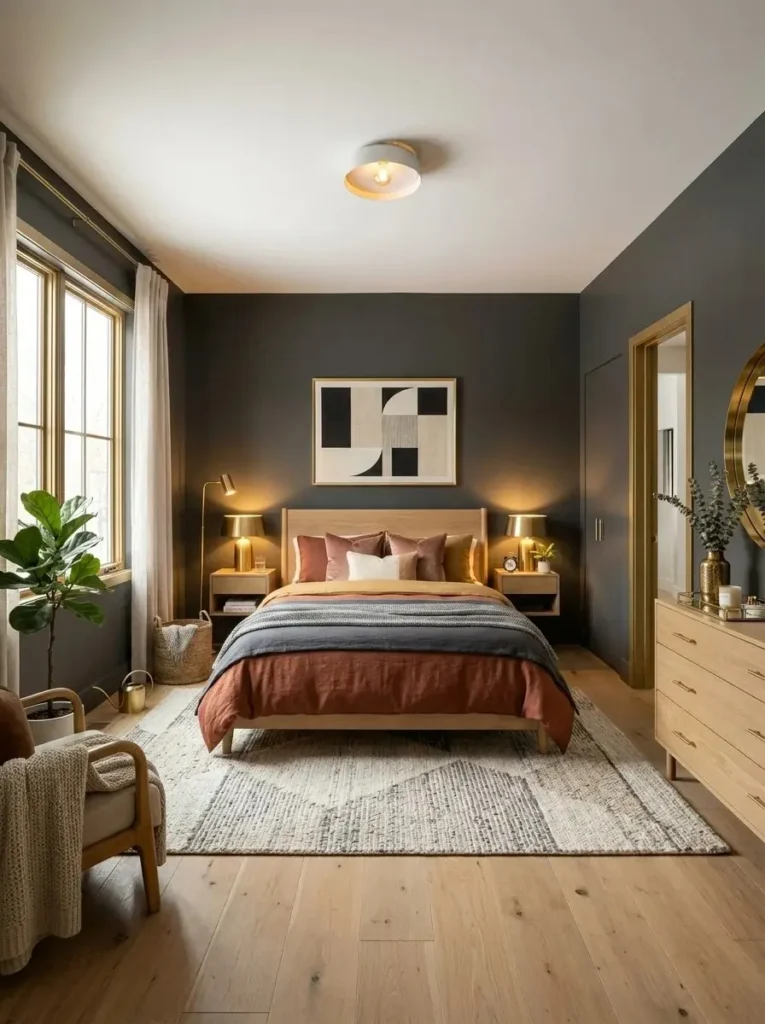
Gold against charcoal is a pairing I never tire of, because the warm metal stops grey from feeling cold and the grey stops gold from feeling flashy. I keep the gold small and deliberate: a pair of brass lamps on the bedside tables, gold frames around two prints, and one drawer pull or tray that catches the light. That is enough. If gold appears in too many places it starts to compete with itself, so I choose two or three moments and let the rest of the room stay quiet. Brushed or aged brass works better than polished gold here, because it glows in lamplight instead of glaring.
This works because metallic finishes reflect light and add warmth against the cool gray tones. The contrast feels elegant and slightly glamorous without being overwhelming. It creates a balanced, high-end look.
Tip: Keep metallic accents minimal to maintain a refined feel.
How to do it: Pick two or three gold moments — lamps, picture frames, or drawer handles — and keep them in the same finish, either brushed or aged brass. Place one on each side of the bed for balance, then add a small tray or vase in the same metal on the dresser. Leave everything else in grey, white, or wood so the gold stands out.
See More Amazing Ideas: 15 Living Room TV Wall Ideas That Instantly Elevate Your Space
5. Minimal Dark Gray Bedroom Ideas with Clean Lines
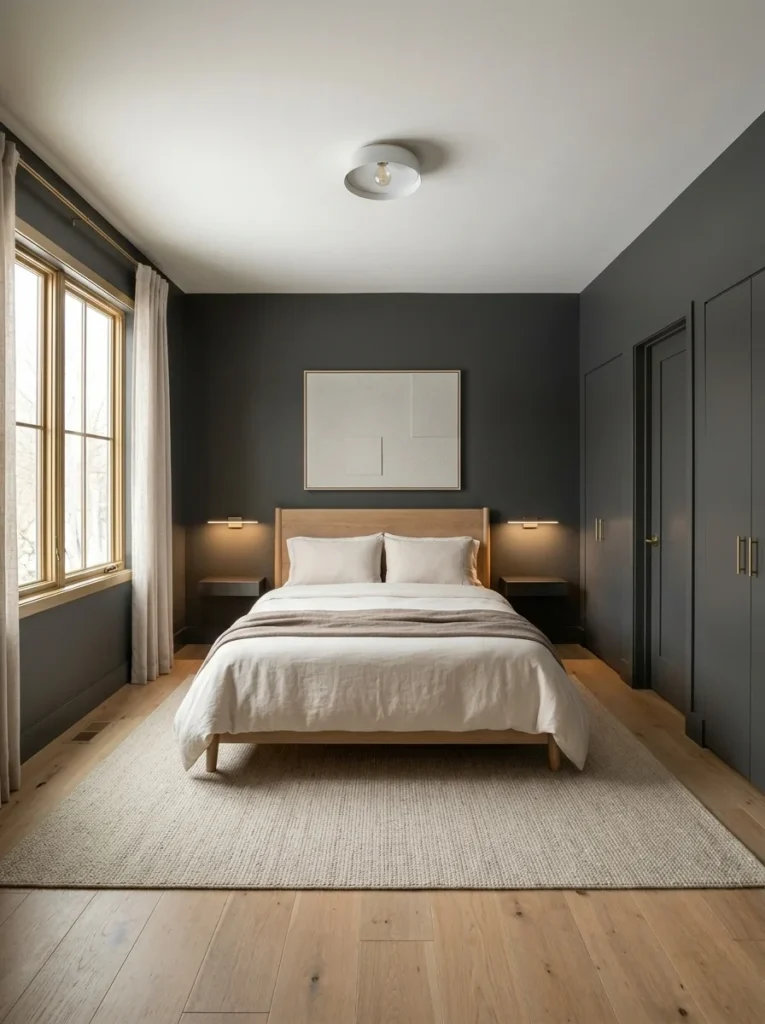
Minimal and dark grey suit each other far better than most people expect, because when there is less in the room, the colour itself becomes the decoration. I keep furniture low and simple — a plain bed frame, one bedside table each, and a dresser only if I need the storage. Everything else I edit out. I choose fewer pieces but better ones, so the room feels intentional rather than empty. I plan the pieces together — these bedroom furniture set ideas show how a coordinated set keeps a dark room calm instead of cluttered. One soft rug and warm light finish it.
This works because gray naturally supports a calm and structured environment. Removing excess items allows the color to stand out beautifully. The space feels modern, peaceful, and intentional.
Tip: Choose quality over quantity when selecting furniture pieces.
How to do it: Remove everything from the room that you have not used in the past month, then put back only what the room needs to function. Keep surfaces mostly clear, choose furniture with clean straight lines, and let one soft rug and one warm lamp provide the cosiness. If a piece does not earn its place, it lives somewhere else.
6. Dark Gray with Warm Wood Elements
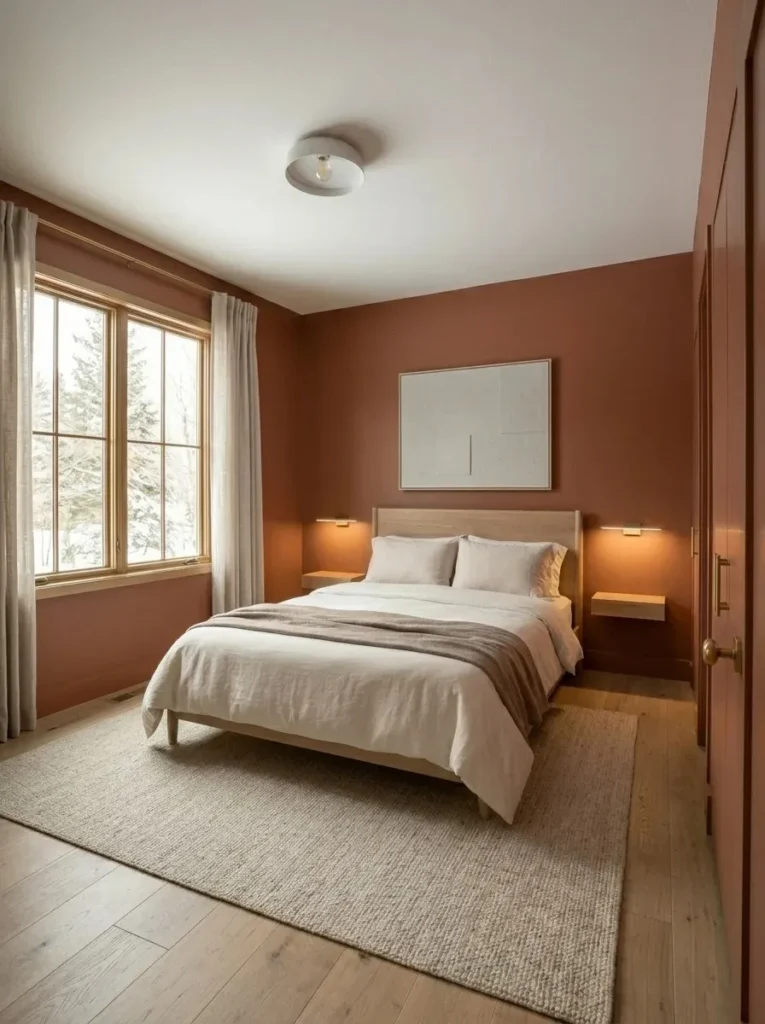
Wood is the ingredient that stops a dark grey bedroom from feeling cold, and I reach for it whenever a grey room feels stark. I love oak for a lighter, Scandinavian feel and walnut when I want something richer and moodier, but the rule I always follow is to stick to one wood tone across the bed frame, bedside tables, and any shelving. Two competing woods fight each other, while one repeated tone pulls the room together. I like to echo the wood somewhere, like a picture frame or a tray, so it feels woven through the room rather than dropped in. Against charcoal walls, a little warm timber glows.
This works because wood softens the coolness of gray, adding natural warmth. The combination feels grounded and cozy rather than cold. It’s perfect for creating a relaxed, lived-in atmosphere.
Tip: Stick to one wood tone for a more cohesive design.
How to do it: Choose one wood tone and repeat it in at least three places — the bed frame, one bedside table, and a frame or tray. Keep the wood finish warm rather than grey-washed so it contrasts with the walls. If your floor is already wood, match its tone and let the furniture echo it.
7. Soft Lighting for a Cozy Gray Atmosphere
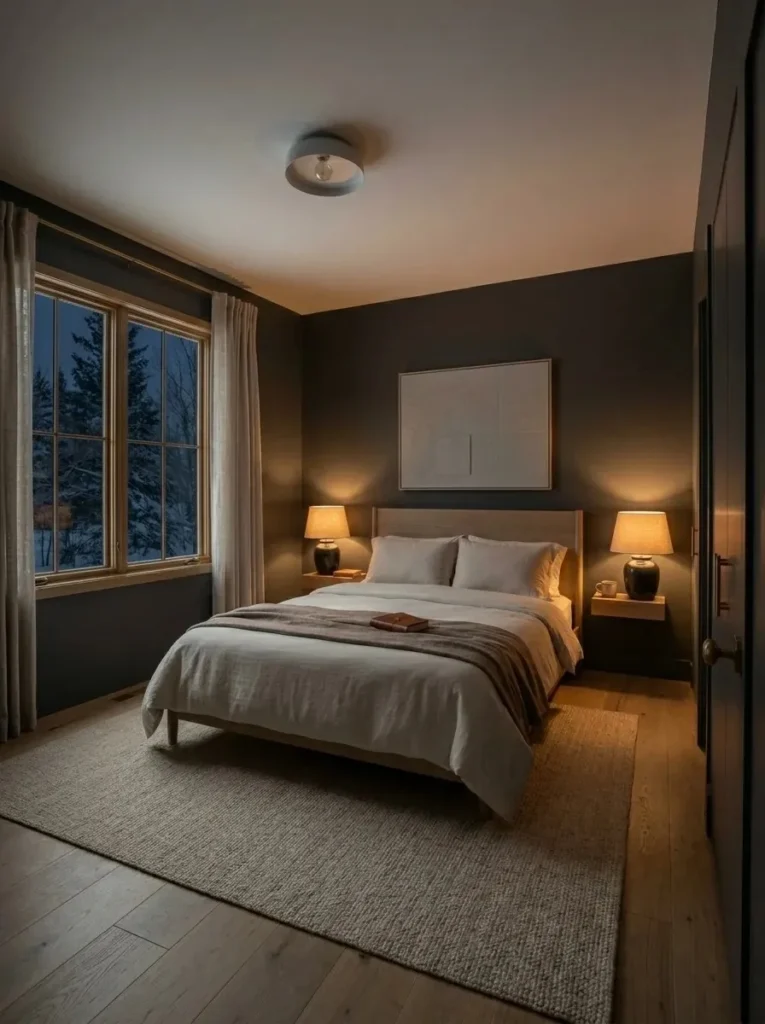
I am convinced lighting matters more than paint in a dark grey bedroom, because the same charcoal walls can feel gloomy under one cold ceiling light and cosy under three warm ones. I never rely on a single overhead fitting. Instead, I put a lamp on each bedside table, add a floor lamp or wall sconces if the room allows, and choose warm white bulbs everywhere — around 2700K when buying new. A dimmer helps, because it lets you lower the light in the evening until the grey turns soft and cocooning. Fairy lights work too, tucked behind a headboard or along a shelf so they glow rather than dazzle.
This works because warm lighting softens the intensity of dark walls and creates a cozy, inviting mood. It transforms the space from dark to comforting. It’s essential for making the room feel relaxing.
Tip: Use warm white bulbs instead of cool lighting for a softer effect.
How to do it: Plan three layers of light — bedside lamps for reading, one floor or wall light for general glow, and a dimmer on the ceiling fitting. Swap every bulb for warm white, then test the room after dark and move lamps until no corner feels black. Keep one small light on a low setting for evenings.
See More Amazing Ideas: 16 Accent Walls in Living Room Ideas That Instantly Transform Your Space
8. Dark Gray Bedroom Ideas with Soft Pink Accents
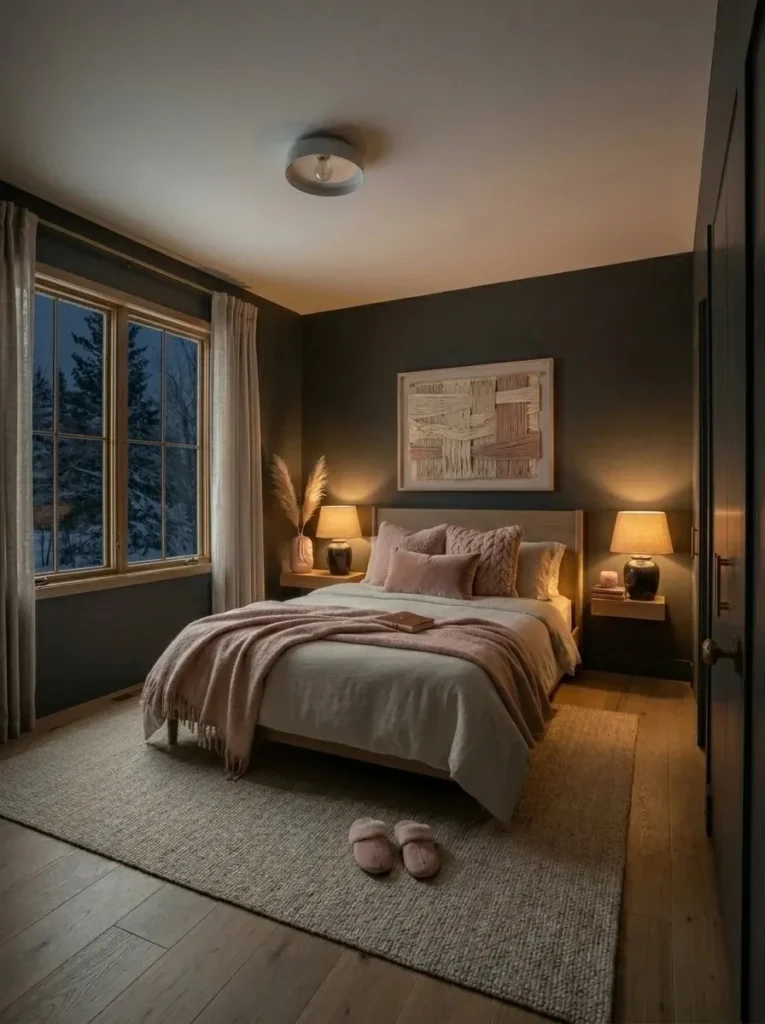
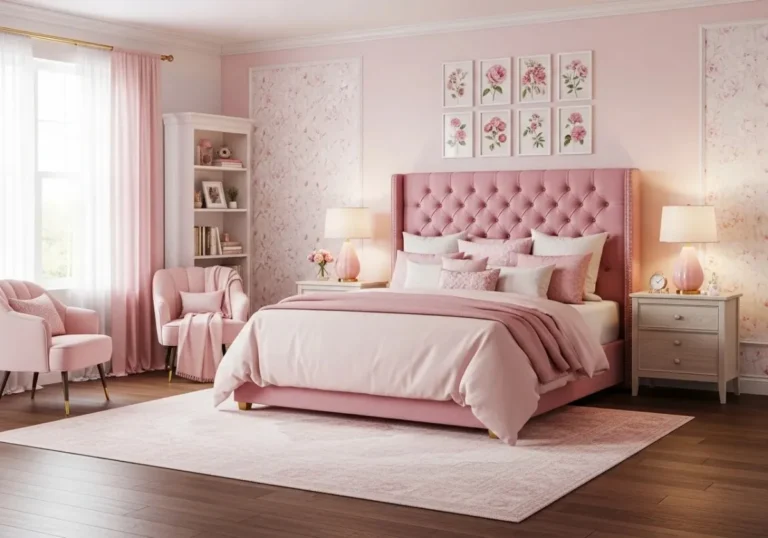
Blush pink is the colour I suggest when someone loves dark grey but worries the room will feel too serious, because pink softens charcoal without arguing with it. I keep the pink muted — a pair of cushions, a throw folded at the foot of the bed, and a vase of dried flowers on the dresser. Bright bubblegum pink would clash, so I look for shades with grey or beige in them; they sit calmly against the walls. I repeat the pink at least twice, because one lonely pink cushion can look like a mistake, while two or three touches look like a decision. It feels gentle, romantic, and still grown-up.
This works because pink softens the depth of gray, adding warmth and a touch of calm elegance. The contrast feels modern yet inviting without being overly feminine. It brings a cozy, relaxed energy into the space.
Tip: Stick to muted pink tones for a more sophisticated and balanced look.
How to do it: Choose one muted blush — dusty pink, rose, or a pale terracotta-pink — and use it in three small places, such as cushions, a throw, and a vase. Hold fabric samples against the grey wall in daylight before buying, and keep the pink to soft furnishings so you can swap it out if you tire of it.
9. Monochrome Dark Gray Color Palette
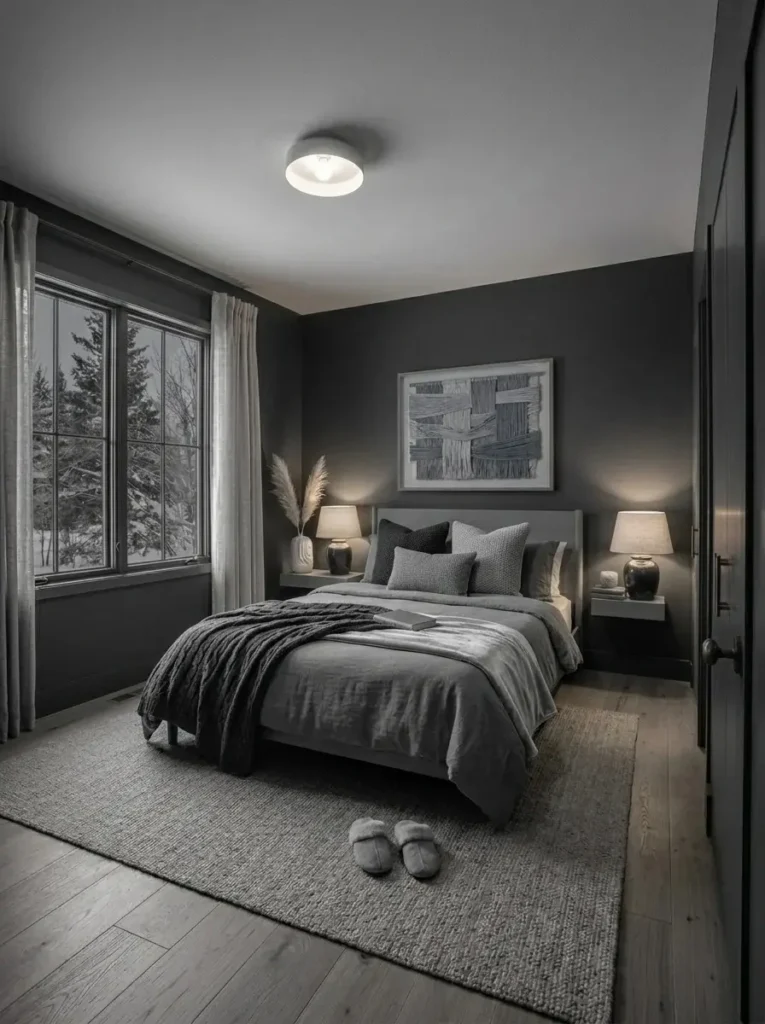
A monochrome grey bedroom sounds simple, but the difference between flat and fabulous is how many greys you use. I aim for at least four: deep charcoal on one wall or the headboard, a mid grey on the bedding, a pale ash on the rug or curtains, and a touch of white to keep the edges crisp. The trick is to vary the shades enough to see each layer, while keeping the undertones consistent — all warm or all cool — so they blend rather than clash. I add one black detail, like a picture frame or lamp base, because it sharpens the palette. It feels calm, expensive, and quietly confident.
This works because tonal variation adds depth without introducing too many colors. It keeps the space calm while still visually interesting. The result feels modern, clean, and effortlessly stylish.
Tip: Add texture to avoid the room feeling flat or one-dimensional.
How to do it: Collect paint and fabric samples in four greys, from charcoal to pale ash, and check that their undertones match — all warm or all cool. Put the darkest grey lowest or behind the bed, the palest near the window, and add one black accent for definition. If two greys look identical, push one darker.
10. Dark Gray with Crisp White Trim and Details
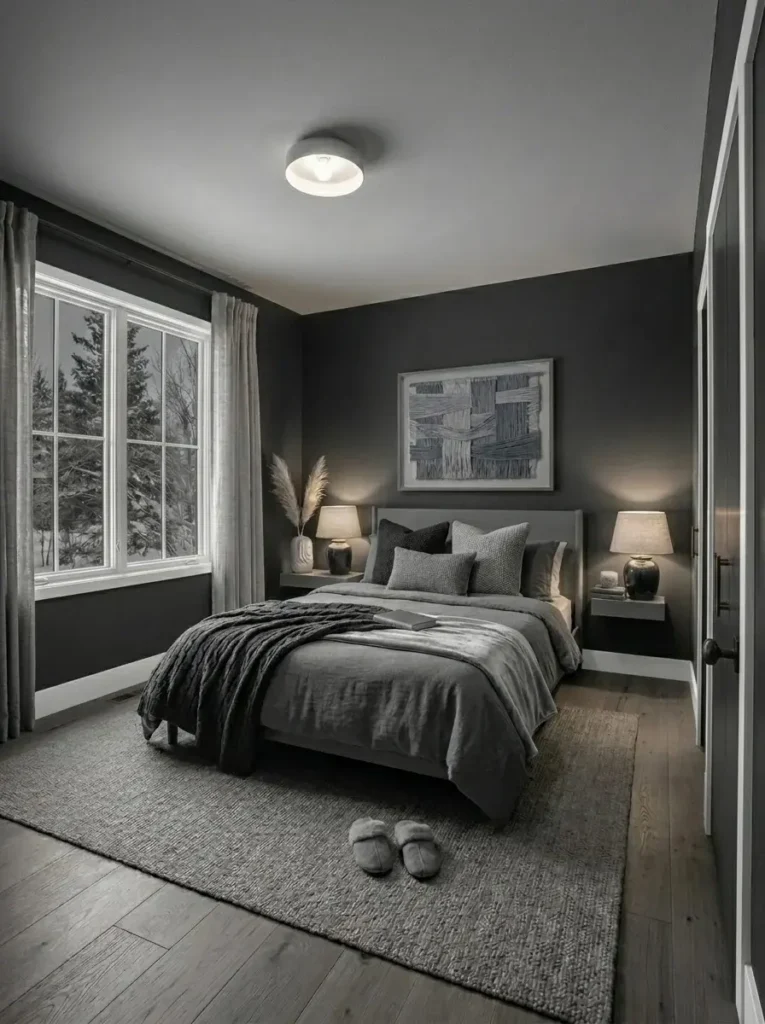
White trim is my favourite way to keep a dark grey bedroom feeling crisp, because those pale lines around the doors, windows, and skirting give the eye somewhere to rest. I paint the trims, architraves, and skirting boards in the same clean white throughout the room — mixing whites is the one mistake that shows up immediately, since one can look creamy and another look blue. A bright white against charcoal makes the wall colour look deliberate, almost like a frame around the room. I also paint the inside of the window recess white, because it bounces daylight back into the room and stops the darkest corner from feeling gloomy.
This works because white outlines the structure of the room, making everything feel more defined and balanced. It keeps the dark tones from feeling too heavy. The look feels clean, classic, and slightly architectural.
Tip: Keep whites consistent throughout the room for a cohesive finish.
How to do it: Choose one bright white and use it for every trim, skirting board, and door frame in the room. Paint trims in a satin or semi-gloss finish so they stand out from matte walls, and paint the window recess white too. Step back and check the whites match in daylight before moving on.
11. Velvet Upholstery for a Rich Look
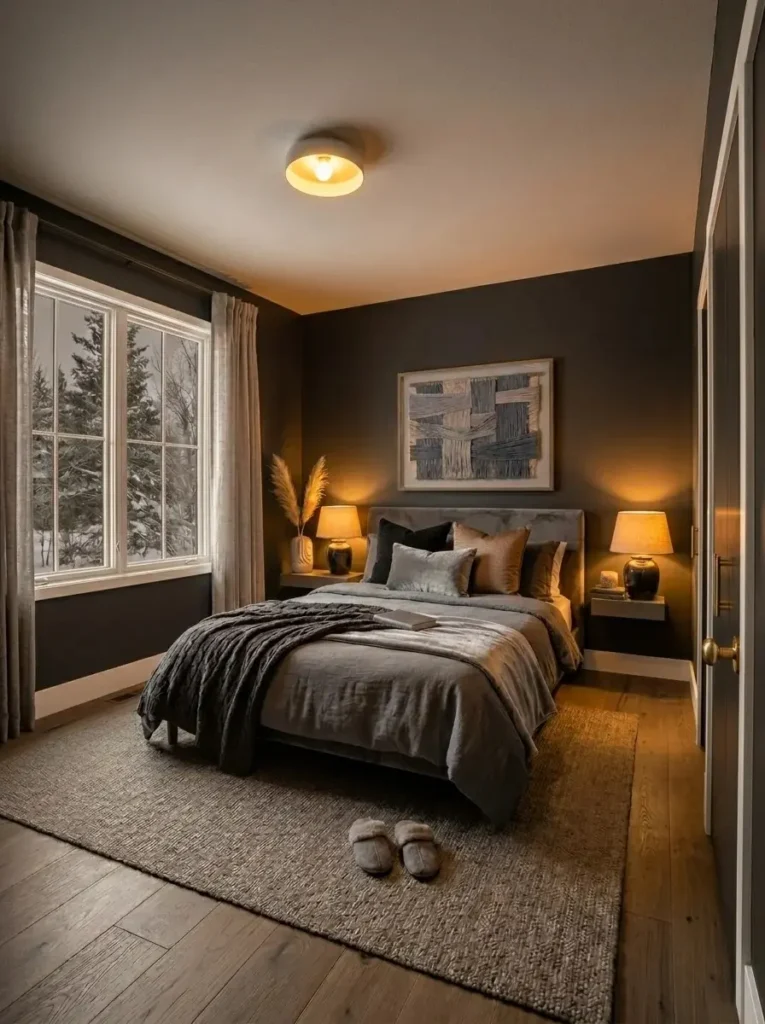
Velvet in a dark grey bedroom feels instantly luxurious, because of the way the fabric catches the light — the pile looks lighter where the light hits it and deeper where it falls away, so the colour never sits flat. I start with a velvet headboard in charcoal or slate, then add one or two cushions to match. If velvet covers too much of the room it can feel heavy, so I balance it with cotton or linen bedding and keep the walls simple. A velvet bench at the foot of the bed is my favourite finishing touch, because it makes the room feel like a boutique hotel every morning.
This works because velvet reflects light subtly, creating depth and richness within the dark color palette. It feels warm, soft, and inviting. It adds elegance without needing bold decor.
Tip: Pair velvet with simpler fabrics to keep the balance right.
How to do it: Start with one velvet piece, usually the headboard, in charcoal or slate grey. Add one or two matching cushions, then balance the shine with plain cotton or linen bedding. Run your hand across the fabric before buying — good velvet changes shade as you brush it, which is exactly the effect you want.
12. Dark Gray Bedroom with Statement Artwork
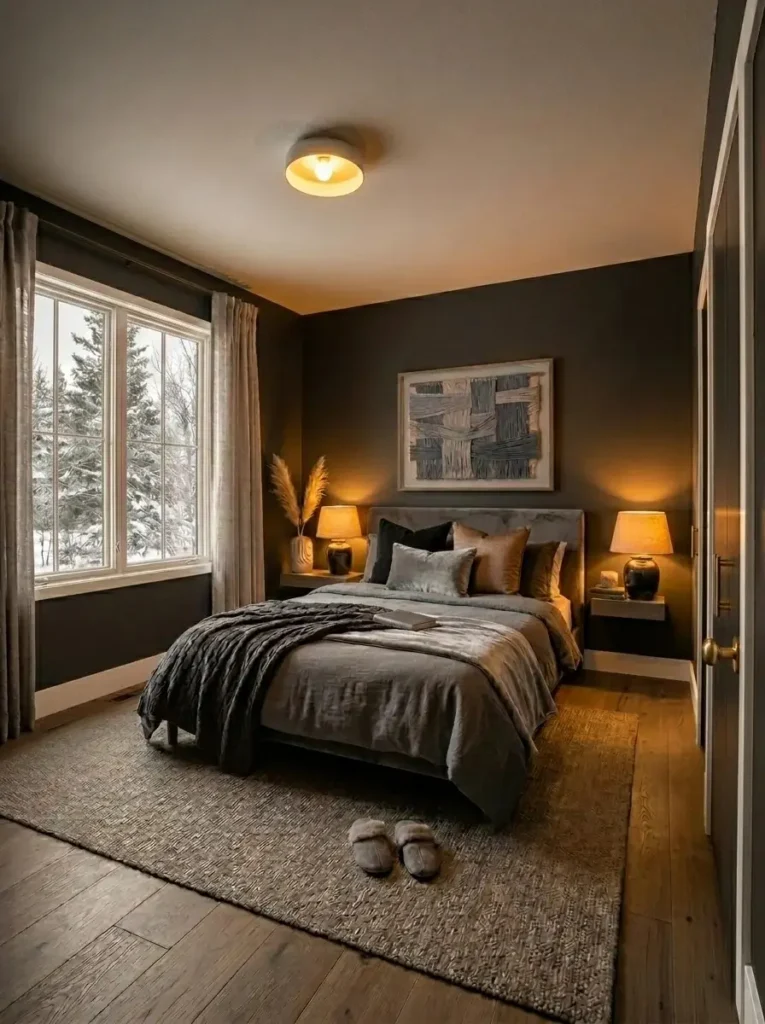
Dark grey walls are the best backdrop I know for artwork, because pale and colourful pieces glow against them as they never do on white walls. I hang one oversized piece above the bed or build a gallery of three or four frames, keeping the frames simple — thin black, pale wood, or white — so the art does the talking. I always leave space around each piece, because cramming frames together on a dark wall makes the room feel busy. If you are unsure where to start, choose one picture you love, hang it at eye level, and let the rest of the room stay quiet around it.
This works because dark backgrounds naturally highlight art, making it the focal point of the room. It adds personality and visual interest. The space feels curated and expressive.
Tip: Keep frames simple to let the artwork shine.
How to do it: Choose one large piece or a set of three frames and hang them above the bed at eye level, leaving at least a hand’s width of bare wall around each frame. Keep frames thin and simple, and pick art with pale or warm colours so it lifts off the dark wall. Step back and check the arrangement from the doorway.
13. Cozy Dark Gray Bedroom with Layered Bedding

I dress the bed the way I would dress for cold weather — in layers — because a dark grey bedroom should feel like somewhere you want to climb into. I start with crisp white or pale grey sheets, add a duvet in a mid grey, then fold a chunky knit or waffle throw across the foot and finish with cushions in three different textures. The layers keep you warm and stop the bed from looking like one flat block of grey. I mix the tones, so there is a pale layer, a mid layer, and a dark layer, which gives the bed depth.
This works because layering adds depth and comfort, making the bed feel like the heart of the room. It balances the darker tones with softness. It creates a warm, restful environment.
Tip: Use different fabric types to enhance the layered effect.
How to do it: Start with pale sheets, add a mid-grey duvet, and fold a textured throw across the foot of the bed. Add cushions in three different fabrics — for example, linen, velvet, and knit — and vary the shades so there is a light, a mid, and a dark tone. Fluff the pillows and leave the throw slightly rumpled so the bed looks inviting, not staged.
14. Dark Gray with Indoor Plants for Fresh Contrast

Plants are the finishing touch I add to every dark grey bedroom, because nothing softens charcoal quite like green. I keep it simple: a tall plant in one corner, like a fiddle leaf fig or a snake plant, and a trailing plant on the dresser or shelf. The green lifts the whole palette and stops the room from feeling flat or closed in, and the pots are a chance to add warmth — I like terracotta, woven baskets, or pale ceramic against grey walls. If you worry about keeping plants alive, choose low-maintenance varieties and water them on the same day each week, because a routine makes it almost effortless.
This works because plants introduce freshness and natural color, preventing the room from feeling too heavy. It creates a calming, balanced atmosphere. It makes the space feel more alive and welcoming.
Tip: Choose low-maintenance plants for easy care and long-lasting style.
How to do it: Place one tall plant in the brightest corner and one trailing plant on the dresser or a shelf, keeping them away from radiators and cold draughts. Choose low-maintenance varieties such as snake plants or pothos, and water on the same day each week. Use terracotta or woven pots to add warmth against the grey.
Frequently Asked Questions
Will a dark gray bedroom feel gloomy?
Not if you balance it properly. Dark grey only feels gloomy when the room has too little light or too few contrasting tones, so pair charcoal walls with pale bedding, warm lamps, and at least one light surface, such as white trims or a pale rug. In my experience, a dark bedroom actually feels more restful than a pale one, because the colour wraps around you and shuts out the day.
What lighting works best with dark gray walls?
Warm light is the answer. Choose warm white bulbs, around 2700K, and layer them — bedside lamps for reading, a floor lamp or sconces for general glow, and a dimmer so you can soften the room in the evening. Avoid a single cold ceiling light, which is the fastest way to make charcoal walls feel harsh.
What colours go well with charcoal in a bedroom?
Charcoal is surprisingly generous, and it pairs beautifully with warm white, soft blush, sage green, warm wood tones, and touches of brass or gold. I keep one calm neutral as the main partner, then add one accent colour in small doses so the room stays restful. If you want a bolder look, mustard or deep teal both sit happily against dark grey, but use them sparingly.
Can I use dark gray in a small bedroom?
Yes, and it can actually make a small bedroom feel cosier and more cocoon-like, as long as you keep the rest of the room light. Paint the wall behind the bed dark and leave the others pale, use a mirror to bounce light around, and keep furniture low and simple so the room does not feel crowded. Dark grey works beautifully in attic bedrooms too — these attic bedroom ideas show how to make the most of a sloping ceiling and a cosy, tucked-away space.
What colour bedding looks best against dark gray walls?
Crisp white is the classic choice, because the contrast keeps the room feeling fresh and stops the grey from weighing the bed down. I also love pale grey, soft cream, and muted blush for a gentler look, especially layered with a darker throw so the bed has depth. Whatever you choose, add one textured layer — linen, knit, or waffle — so the bedding feels soft rather than flat.
Your Dark Gray Bedroom Checklist
Tick off each step as you go, and come back to this list whenever the room needs a refresh.
- ☐ Choose your charcoal shade and test it on the wall in daylight and lamplight
- ☐ Decide whether to paint all four walls or one accent wall behind the bed
- ☐ Pick warm white bulbs (around 2700K) for every lamp
- ☐ Layer three kinds of light: bedside lamps, a floor or wall light, and a dimmer
- ☐ Dress the bed in pale bedding with one textured throw
- ☐ Add three different textures, such as velvet, linen, and knit
- ☐ Choose one wood tone and repeat it in at least three places
- ☐ Add one metallic accent in brushed or aged brass
- ☐ Hang one piece of art, or a small gallery, above the bed
- ☐ Paint trims, skirting boards, and door frames in a single clean white
- ☐ Place one tall plant and one trailing plant in the room
- ☐ Keep surfaces mostly clear and edit out anything the room does not need
- ☐ Add a mirror to bounce light into the darkest corner
- ☐ Step back, check the room after dark, and adjust the lighting until it feels cosy
Conclusion
Dark grey asks for a little more thought than pale colours, but it gives so much back: a bedroom that feels calm, cocooning, and quietly elegant, whether you paint every wall or start with a single accent. The ideas in this post all work the same way — balance the depth of charcoal with pale bedding, warm light, honest texture, and one or two personal touches, and the room will feel designed rather than dark.
Start with the change that excites you most, whether that is a tin of charcoal paint, a new set of lamps, or simply a pile of soft cushions, and build from there. Your bedroom should be the easiest room in the house to relax in, and with dark grey done well, it will be the one you look forward to coming home to.


5 Comments