14 Murphy Bed Ideas That Instantly Transform Small Spaces
You love your home — but that spare room is basically a storage graveyard, and your studio apartment makes you feel like you’re living inside a shoebox. Sound familiar? Murphy bed ideas have completely changed the way real people design small spaces. And honestly, they’re not just “practical anymore.” Today’s wall beds are stylish, clever, and totally transformative. If you’ve been sleeping on this idea (pun intended), it’s time to wake up.
1. Minimalist White Murphy Bed Wall
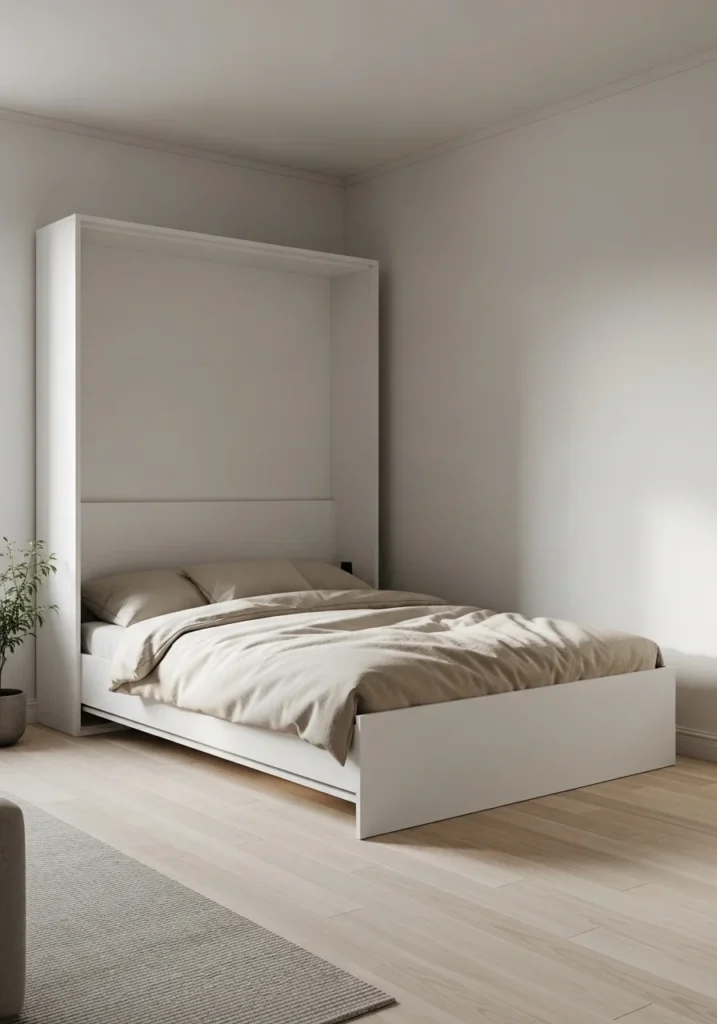
I fell for a clean white Murphy bed wall the first time I saw one folded flat, because it made a spare room feel calm instead of crowded. I chose flat-front panels with no visible handles, so when the bed is up it reads as a smooth, quiet wall rather than furniture waiting to be used, and push-to-open catches keep the lines clean. Light wood flooring, soft beige linen bedding and one low basket for spare pillows finish the look for me. I fold it up every morning, and that two-minute habit is what keeps the room usable as a reading nook all day.
Tip: Use handle-less panels for a truly seamless, built-in look.
How to do it: Choose flat-front, handle-less panels in a warm white. Fit push-to-open catches and check the panels sit flush when closed. Lay light wood flooring and add soft beige linen bedding. Fold the bed up each morning and keep one low basket nearby for spare pillows.
2. Murphy Bed with Built-In Bookshelves

I love framing a Murphy bed with open bookshelves, because it turns a plain fold-down bed into a library wall I actually enjoy looking at. When the bed is closed, the shelves hold my novels, a trailing plant and a few framed prints, so the wall feels lived-in instead of blank. I keep the lower shelves for books I reach for often and the top ones for lighter decor, which keeps the whole unit from feeling top-heavy. My rule is simple: leave a little breathing room on every shelf, and the bed will disappear into the room instead of shouting about itself.
Tip: Mix books with decorative objects to avoid a cluttered feel.
How to do it: Measure the wall and choose shelving the same depth as the bed cabinet. Anchor the unit to wall studs and leave a clear gap for the bed to fold down. Style the lower shelves with books and the upper shelves with plants and prints. Keep a small gap on each shelf so the display looks curated, not crowded.
3. Cozy Sofa Murphy Bed Combo
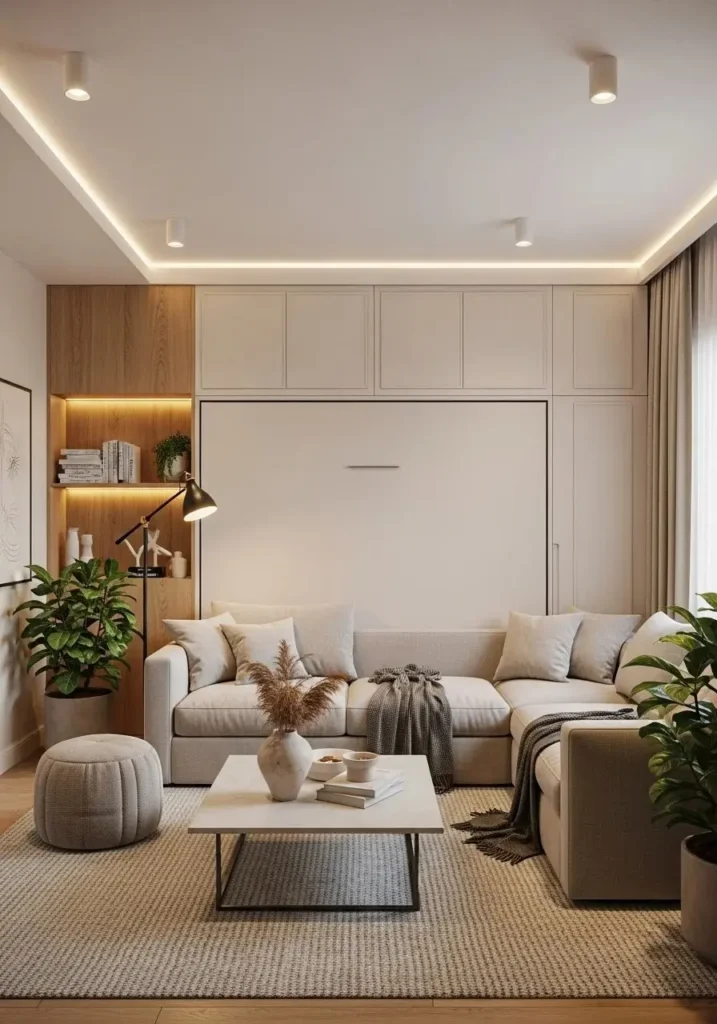
My sofa Murphy bed is the hardest-working corner of my living room, and I would not give it up now. By day it is a proper sofa where I read, drink my coffee and host friends, and by night the bed folds down over it without me dragging cushions across the room or hunting for somewhere to put them. I chose a sofa with removable back cushions and a slim frame, because anything bulky fights the fold-down mechanism. A soft linen slipcover, a folded throw and one lumbar pillow make it feel like a real lounge, not a compromise I am tolerating until bedtime.
Tip: Choose a neutral sofa color so it blends with both day and night setups.
How to do it: Pick a slim sofa with removable back cushions and a washable slipcover. Measure the bed’s fold-down arc so the sofa sits clear of it. Keep throws and pillows in a basket beside the sofa. Test the fold twice before guests arrive so cushions and bedding never collide.
4. Dark Wood Statement Murphy Bed

I went dark with the walnut Murphy bed in my guest room, and it changed the whole mood of the space. The espresso finish reads as a piece of fine furniture rather than a space-saving trick, and against pale walls it gives the room a focal point that does not need much else. I keep the bedding simple — crisp white sheets, a charcoal throw, no busy pattern — because the wood is doing the decorating. Warm brass lamps and a small framed print beside the cabinet soften the edges, and at night the bed feels like a proper boutique hotel room.
Tip: Balance dark tones with warm lighting to keep the space inviting.
How to do it: Choose a walnut or espresso cabinet with a matte finish. Pair it with pale walls and crisp white bedding so the wood stands out. Add warm brass lamps and one small framed print. Keep patterns quiet so the dark wood stays the focal point.
5. Murphy Bed with Hidden Desk
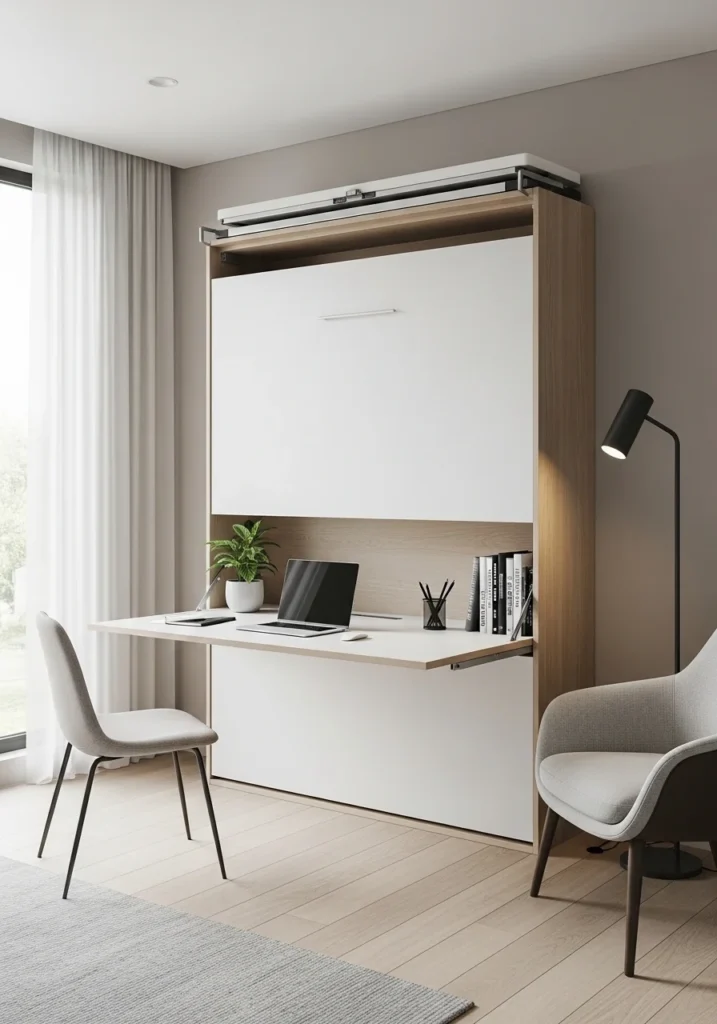
Working from my studio meant my desk used to eat the whole room, until I hid it inside the Murphy bed cabinet. When the bed folds down, the desk stays level, so my laptop, notebook and lamp ride along without me clearing everything away first. I keep only the essentials on the desk — laptop, a small lamp, one pen pot — because a cluttered desk makes the fold feel heavy and awkward. In the morning I fold the bed up, and I have an office again. I borrowed the layout from these Murphy bed office ideas when I planned where the desk, the sockets and my chair would go.
Tip: Keep desk accessories minimal so the transition stays smooth.
How to do it: Choose a bed cabinet with a desk that stays level as it folds. Place a socket and a small lamp on the desk and keep cables short. Keep only a laptop, notebook and pen pot on the surface. Fold the bed up each morning to reclaim the office.
6. Kids’ Room Playful Murphy Bed
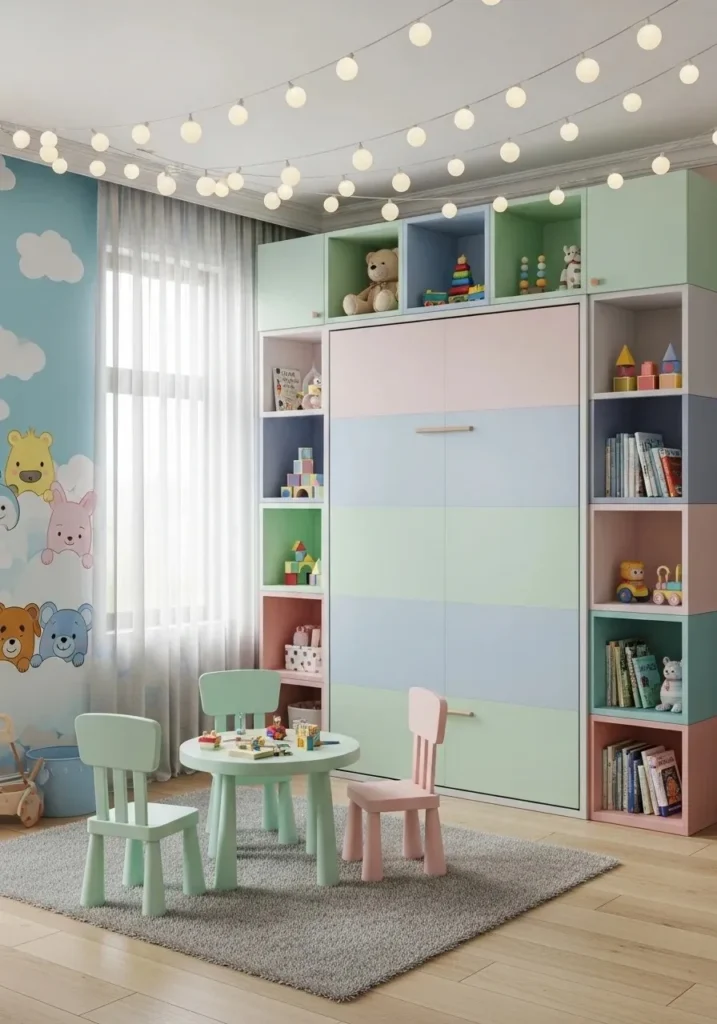
My kids treat their Murphy bed like a magic trick, and honestly, so do I. Folded up, the wall is a cheerful panel in soft sage with their name in wooden letters, and the floor is free for Lego, dancing and the occasional picnic. At bedtime the bed comes down in seconds, and I love that I can change the bedding without climbing over toys. I chose washable cotton bedding and rounded corners, because small hands and sharp edges do not mix. When cousins stay over, I look at bunk bed ideas for small rooms, but for everyday play space the Murphy bed still wins in this room.
Tip: Add built-in storage for toys underneath or beside the bed.
How to do it: Pick a bed with rounded corners, washable bedding and a lock your child cannot release alone. Paint the front panel in a soft colour and add their name in wooden letters. Keep toy storage beside the bed, not under it. Test the fold with an adult present until it feels easy.
7. Vertical Murphy Bed for Narrow Rooms
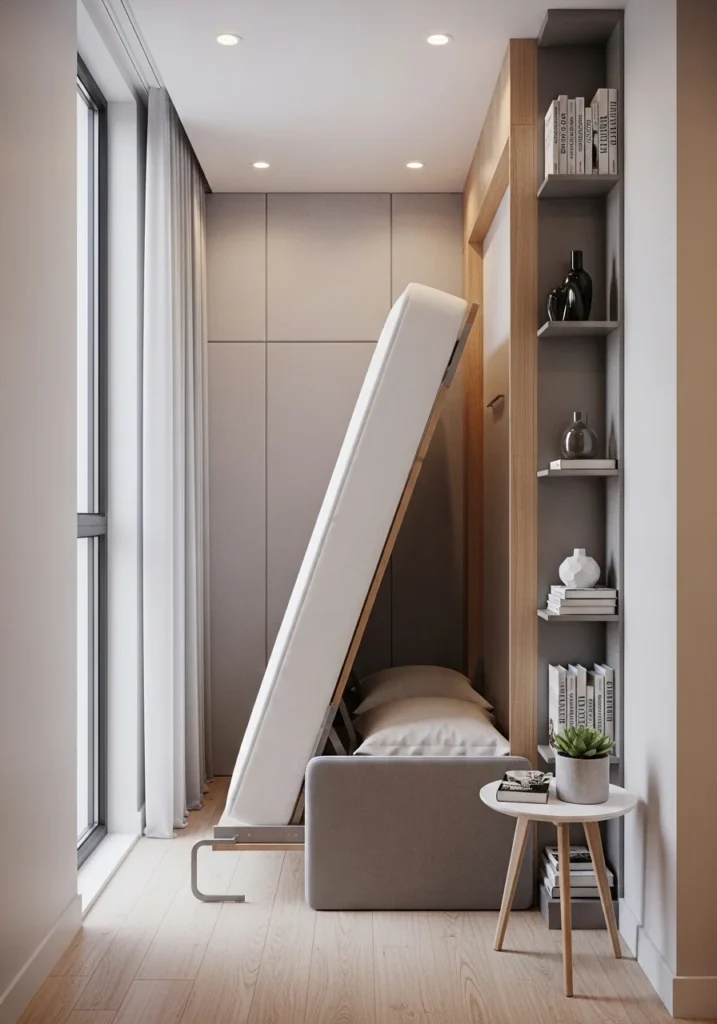
My hallway-wide bedroom only worked once I chose a vertical Murphy bed, because a horizontal one would have swallowed the whole wall. Folding down lengthwise means the bed needs height rather than width, and my narrow room suddenly had a clear path from the door to the window. I measured twice — wall height, ceiling light, even the rug — before ordering, because a vertical bed that is an inch too tall is a very expensive mistake. A slim rug under the foot of the bed marks the sleeping zone, and a single wall light keeps the room from feeling like a corridor.
Tip: Place a slim rug underneath to define the sleeping area without bulk.
How to do it: Measure the wall height, ceiling light and floor space before ordering. Choose a vertical frame that leaves a clear walking path when down. Place a slim rug at the foot of the bed. Keep the wall beside the bed free so the fold never bumps furniture.
Also More Amazing In the Below For You More:
Pink Bedroom Decor Ideas: 20 Dreamy Ways to Create a Soft, Stylish Space
19 Bedroom Lamp Ideas That Instantly Make Your Space Feel Cozy & Beautiful
Wallpaper Bedroom Ideas: 20 Stunning Ways to Transform Your Space
16 Teal & Pink Bedroom Ideas That Feel Stylish, Cozy, and Totally You
8. Murphy Bed with Sliding Panels

I added sliding panels in front of my Murphy bed because I wanted the room to feel finished even when the bed was down. During the day the panels glide across to hide the bedding and make the wall look like a sleek wardrobe, and at night they slide back without me wrestling with doors. Frosted glass is my favourite here — it lets light through while keeping the bed area private, which matters in a room that doubles as a home office. I wipe the tracks once a week, because a single crumb in the track is all it takes to turn a smooth glide into a stuck panel.
Tip: Use frosted or textured panels to add privacy and soften the overall look.
How to do it: Choose light panels on smooth tracks, in frosted glass if you want privacy. Check the panels glide clear of the bed when it folds down. Keep the tracks free of dust and crumbs. Slide the panels across each morning to hide the bedding.
9. Farmhouse Style Murphy Bed

My farmhouse Murphy bed is the cosiest corner of the house, and it started with distressed wood and a lot of linen. I chose a weathered oak cabinet with black iron handles, then layered cream bedding, a plaid throw and a cushion in soft sage, because farmhouse style is really about texture rather than fuss. Shiplap around the cabinet makes the bed look built-in, like it has always belonged there, and a small bunch of dried lavender on the shelf above it is the finishing touch I never skip. When guests stay, they always comment on how the room smells faintly of lavender and feels like a country cottage.
Tip: Add shiplap panels around the bed for that classic farmhouse touch.
How to do it: Pick a weathered oak or distressed wood cabinet with black iron handles. Add shiplap around the cabinet for a built-in look. Layer cream linen bedding, a plaid throw and a sage cushion. Finish with dried lavender or greenery on the shelf above.
10. Murphy Bed with Wardrobe Storage

When my bedroom had no built-in wardrobe, a Murphy bed with wardrobe storage saved me from buying a separate chest that would never have fitted. The cabinet beside the bed holds my hanging clothes, folded jumpers and shoes, so everything I need in the morning is within arm’s reach and the room stays tidy. I added internal lighting inside the wardrobe sections, which sounds like a luxury until you are dressing in a dark room at six in the morning. My rule is to keep everyday clothes at eye level and seasonal pieces up high, so the wardrobe works as hard as the bed does.
Tip: Use internal lighting inside the wardrobe sections for a more premium feel.
How to do it: Choose a cabinet with wardrobe sections beside the bed, sized for your hanging clothes. Add internal lighting to the wardrobe sections. Keep everyday clothes at eye level and seasonal pieces up high. Leave a clear space in front of the wardrobe for the bed to fold down.
11. Floating Murphy Bed Design

I love the floating Murphy bed because it makes my small bedroom feel like it has more air in it. The bed is mounted so a sliver of light passes underneath, and that little gap tricks the eye into thinking the furniture is lighter than it is. I keep the floor completely clear beneath it — no boxes, no shoes, nothing — because one cluttered corner would ruin the illusion in a second. A slim mirror on the wall opposite bounces light across the room, and pale bedding keeps the whole look soft. It is the one design in this list that makes guests ask how the bed is held up.
Tip: Keep surrounding furniture minimal to maintain that airy, floating look.
How to do it: Choose a wall-mounted frame and have it fixed to solid studs by a professional. Keep the floor beneath the bed completely clear. Hang a slim mirror on the opposite wall to bounce light around. Use pale bedding to keep the floating look soft and airy.
12. Murphy Bed with Accent Wall Backdrop
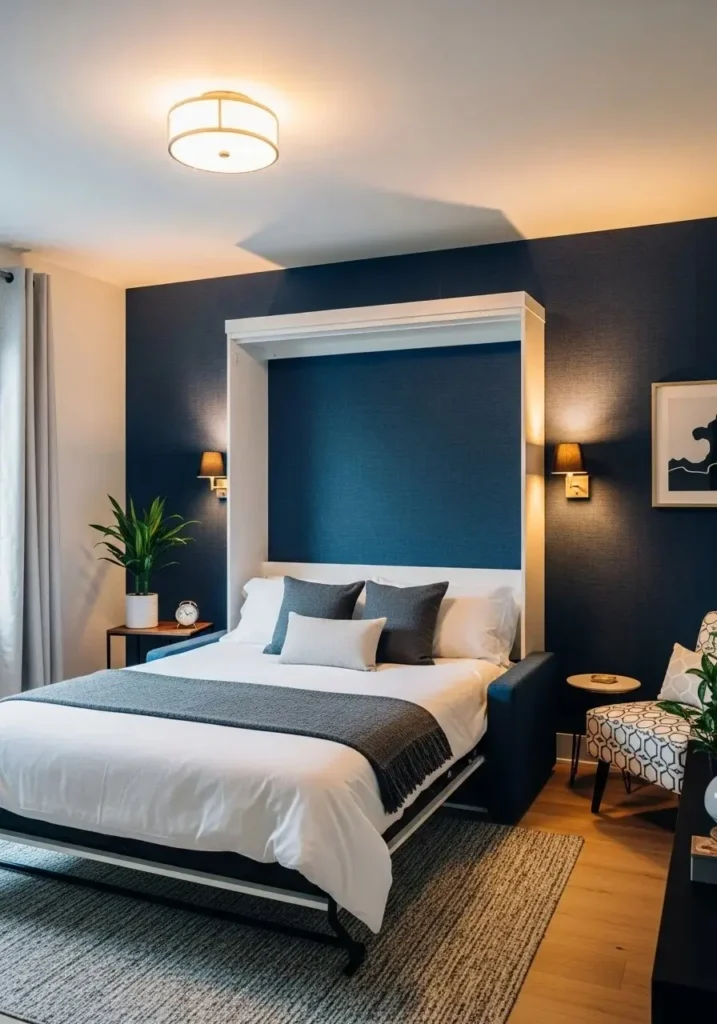
My Murphy bed finally became a design feature instead of something to hide when I put it against a deep navy accent wall. The dark wall makes the pale cabinet pop, and the bed looks intentional, like a piece of art that happens to fold down. I painted only that one wall — the rest stayed warm white — because a whole navy room would have felt too heavy in such a small space. Brass picture lights above the cabinet and a single framed print pick up the warmth, and I keep the bedding in cream and navy so the colours repeat without matching too neatly.
Tip: Use warm lighting to highlight the texture or color of the wall beautifully.
How to do it: Paint one wall in a deep navy, sage or charcoal and leave the rest warm white. Choose a pale cabinet so it pops against the dark wall. Add brass picture lights and one framed print. Keep the bedding in cream with a touch of the wall colour.
13. Compact Murphy Bed for Studio Living

In my studio, the compact Murphy bed is the difference between living in one room and living on top of everything I own. By day it is my living room and my Murphy bed office, with a folding chair, a small table and a laptop, and by night the bed comes down and the same floor becomes a proper bedroom. I use stackable chairs and a table that folds flat against the wall, because anything that cannot be moved in ten seconds gets in the way of the fold. My favourite part is the ritual: bed up, room tidy, day begins; bed down, lights low, day ends.
Tip: Use foldable or stackable furniture to complement the space-saving setup.
How to do it: Choose the most compact frame that still fits a proper mattress. Use stackable chairs and a table that folds flat against the wall. Keep the floor clear so the bed folds down in seconds. Build a small ritual around folding it up each morning.
14. Murphy Bed with Mirror Front Panels
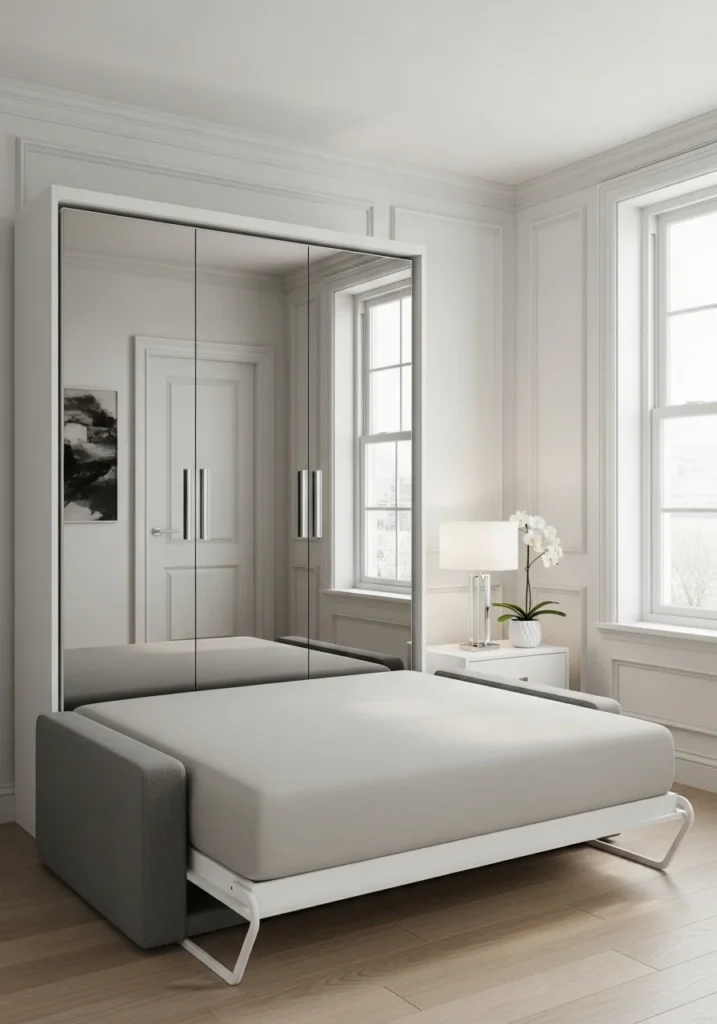
I was sceptical about mirror front panels until I watched a tiny guest room double in the reflection. The mirrors bounce daylight from the window across the room, and when the bed is folded up, the wall looks like a full-length mirror rather than a bed at all. I keep the decor around it very simple — a pale rug, one plant, no busy patterns — because reflections multiply everything, including clutter. A quick wipe with a microfibre cloth once a week keeps the panels clear, and I chose a slim frame so the mirrors read as elegant rather than like a gym wall.
Tip: Keep surrounding decor simple so the reflective surface doesn’t feel overwhelming.
How to do it: Choose mirror panels with a slim frame and safety-backed glass. Hang them where they reflect a window, not a cluttered corner. Keep the surrounding decor simple and pale. Wipe the panels weekly with a microfibre cloth.
Frequently Asked Questions
How much does a Murphy bed cost?
A ready-made Murphy bed usually costs between $1,500 and $4,000, depending on size, materials and whether it includes shelving, a desk or wardrobe storage. A custom-built unit with premium finishes can cost $5,000 or more. DIY kits and hardware start lower, but you still need to budget for a cabinet, a mattress and wall fixings.
Is it better to DIY a Murphy bed or hire a professional?
A confident DIYer can build a Murphy bed from a good hardware kit, but the wall fixings carry the full weight of the bed and the person sleeping in it, so the anchoring must be into solid studs or masonry. I recommend hiring a professional if your wall is plasterboard, the bed is a queen size or larger, or you are adding heavy storage. A professional install usually takes a few hours and includes checking the mechanism and the lock.
Are Murphy beds safe, and how do the mechanisms work?
Modern Murphy beds use spring or piston mechanisms that balance the weight of the bed, so it folds up and down with a gentle pull and stays put in either position. Most also have a leg lock and a safety latch that stops the bed falling down on its own. Check the mechanism once a year, keep children away from the fold, and never let anyone sit on a half-folded bed.
What mattress thickness works best in a Murphy bed?
Most Murphy beds take a mattress between 8 and 12 inches thick, but always check your model’s limit before you buy. A mattress that is too thick will stop the bed folding fully and can strain the mechanism. A medium-firm mattress in the 10-inch range suits most sleepers, and lighter foam or hybrid mattresses fold more easily than very heavy innerspring ones.
Is a Murphy bed comfortable for everyday use?
Yes, if you choose a proper mattress rather than a thin folding one. A Murphy bed uses a standard mattress on a real bed frame, so it sleeps like a normal bed, and many people use theirs every night. Fold it up each morning so the bedding airs, rotate the mattress every few months, and the bed will stay comfortable for years. If you wake up aching, the mattress — not the Murphy mechanism — is usually the problem.
How much room do I need for a Murphy bed?
Measure the bed’s footprint when it is down, then add at least 2 feet of clear space around the foot and sides so you can walk around it and make the bed. A queen Murphy bed needs roughly 5 feet of width and 7 feet of length when down, plus clearance in front. Check the ceiling height too, especially for vertical models, and keep the wall free of radiators, sockets and light switches where the cabinet will sit.
Your Murphy Bed Checklist
Print this list and tick each step as you plan your Murphy bed.
- ☐ Measure the wall, floor space and ceiling height
- ☐ Check the wall is solid or find the studs
- ☐ Choose vertical or horizontal folding
- ☐ Pick a mattress 8–12 inches thick
- ☐ Decide on shelving, a desk or wardrobe storage
- ☐ Match the cabinet finish to your room
- ☐ Plan socket and lighting positions
- ☐ Order the right size bedding
- ☐ Keep the fold-down area clear
- ☐ Test the mechanism and safety latch
- ☐ Add a basket for spare pillows and throws
- ☐ Wipe mirror or glass panels weekly
- ☐ Check fixings and pistons once a year
- ☐ Fold the bed up each morning to air the bedding
A Final Gentle Thought
A Murphy bed is not just a clever way to hide a bed — it is permission to use a small room properly. I have watched a spare room become a guest room, an office and a reading nook in a single day, simply because the bed could disappear when I did not need it. Choose the design that fits how you actually live, measure carefully, and let the bed work around your life instead of the other way round.
Start with one idea from this list, even if it is only measuring your wall tonight. Small rooms reward the people who plan them kindly, and your Murphy bed will repay that planning every morning when you fold it up and get your room back. I hope one of these fourteen ideas is the one that makes your space feel like home again.