14 Kitchen Sink Ideas That Will Make You Actually Enjoy Doing the Dishes
Be honest — your kitchen sink is the most used spot in your entire home, and yet it’s probably the least thoughtfully designed. The right sink changes everything. Great kitchen sink ideas transform that daily chore zone into something genuinely beautiful, functional, and even enjoyable to stand at for twenty minutes every evening. From deep farmhouse aprons to sleek undermounts, there’s a perfect sink waiting for your kitchen right now. Let’s find yours together.
1. Classic White Farmhouse Apron Sink
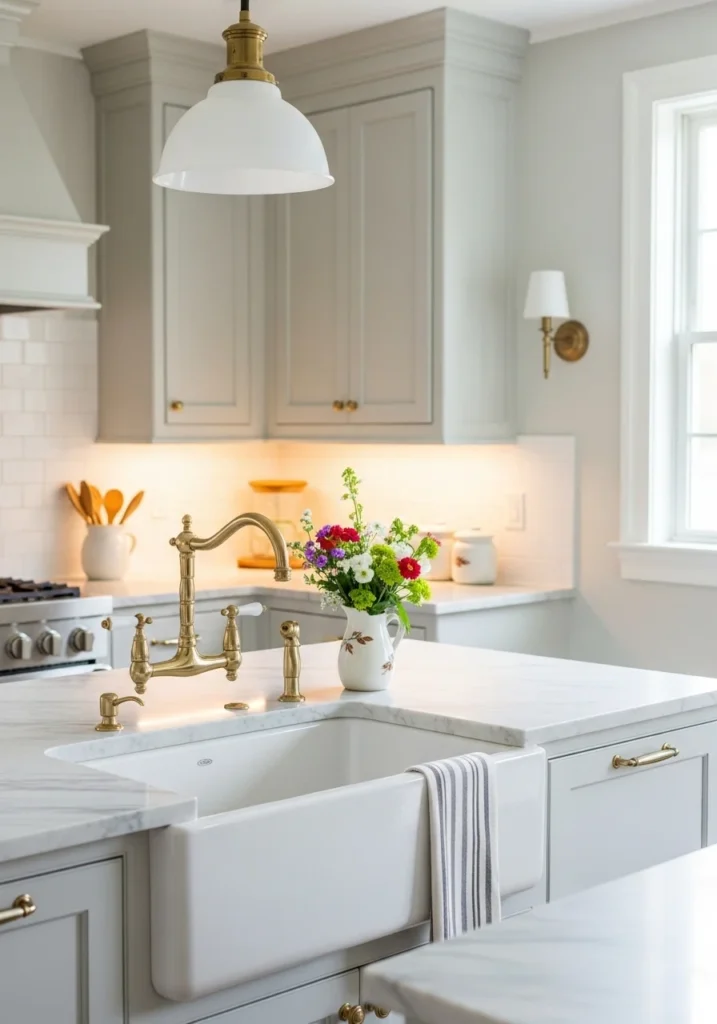
I have washed more dishes in a farmhouse sink than I care to admit, and I still love the ritual. There is something about leaning against that wide apron front, elbows resting, while the steam rises and the kitchen hums around you. Ours is the first thing guests notice, and honestly, it earns the attention. It swallows roasting tins whole, hides a multitude of sins during a dinner party, and somehow makes even a pile of porridge bowls look picturesque. Pair it with shaker cabinets and a brass tap, and the whole room feels calmer, warmer, and a little more like home.
Practical tip: Choose fireclay over cast iron — it’s lighter, chip-resistant, and keeps that brilliant white finish far longer.
How to do it: Measure your cabinet width first, then order a fireclay apron sink to fit, allowing for the exposed front. Ask your joiner to reinforce the base cabinet, fit the tap before the sink goes in, and seal the joint between sink and worktop with silicone. Finish with a dish rack that sits inside the basin so drips stay put.
2. Sleek Stainless Steel Undermount Sink
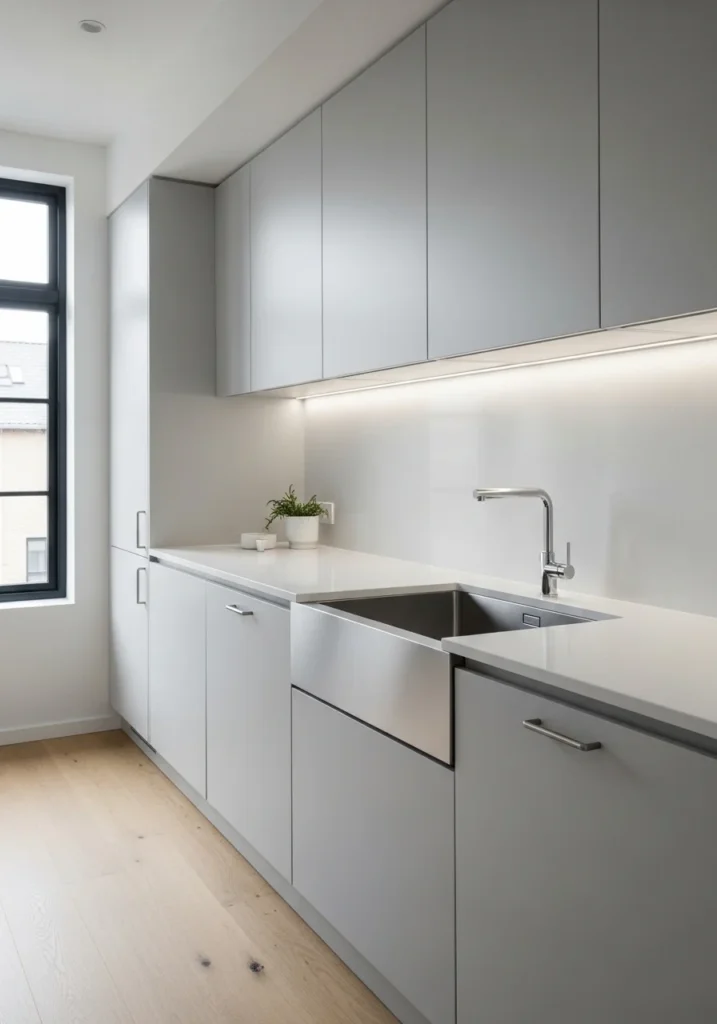
My sister chose an undermount sink for her flat, and the first time I wiped crumbs straight from the worktop into the basin, I understood the fuss. There is no rim to trap food, no lip to scrub around, just one smooth sweep from counter to sink. It suits her small, pale kitchen beautifully, because nothing interrupts the line of the worktop. At night, under the task lights, the brushed steel glows softly, and the whole space feels a little more grown-up. If you hate cleaning around sink edges as much as I do, this is the quiet, practical luxury you have been waiting for.
Practical tip: Choose 16-gauge stainless over 18-gauge — thicker metal resists denting and feels far more substantial daily.
How to do it: Choose a solid-surface or stone worktop, since undermount sinks need a sturdy edge to hang from. Order the sink and tap together, have the worktop cut to the sink template, and ask the fitter to clip and seal the sink underneath before the worktop is fixed. Wipe the join dry each evening to keep it spotless.
3. Matte Black Sink for Bold Modern Drama
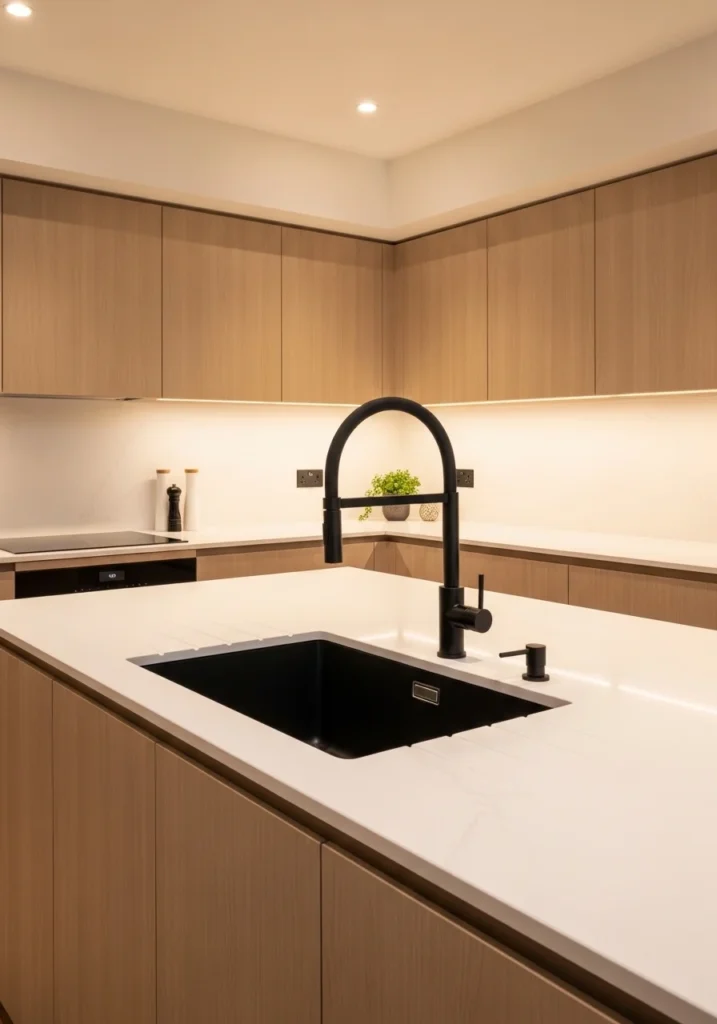
I was nervous about a black sink at first — would it show every mark, would it feel too stark? Then I saw one set into white quartz, with a matching black tap, and I was completely won over. It anchors the room the way a good piece of furniture does, and it makes everything around it look sharper. I love how it picks up the warmth of wooden cabinets, too, so the kitchen never feels cold. If you are already browsing kitchen ideas with black countertops, a matte black sink is the detail that pulls the whole look together without a huge budget or a full renovation.
Practical tip: Dry your matte black sink after each use — water spots show more visibly on dark matte surfaces than any other finish.
How to do it: Pair the sink with a matching matte black tap and dark hardware so the finish looks deliberate. Fit a water softener or filter if your water is hard, keep a soft cloth by the sink, and give the basin a quick wipe after washing up. Avoid abrasive pads, which dull the matte surface.
4. Copper Sink for Warm Artisan Character
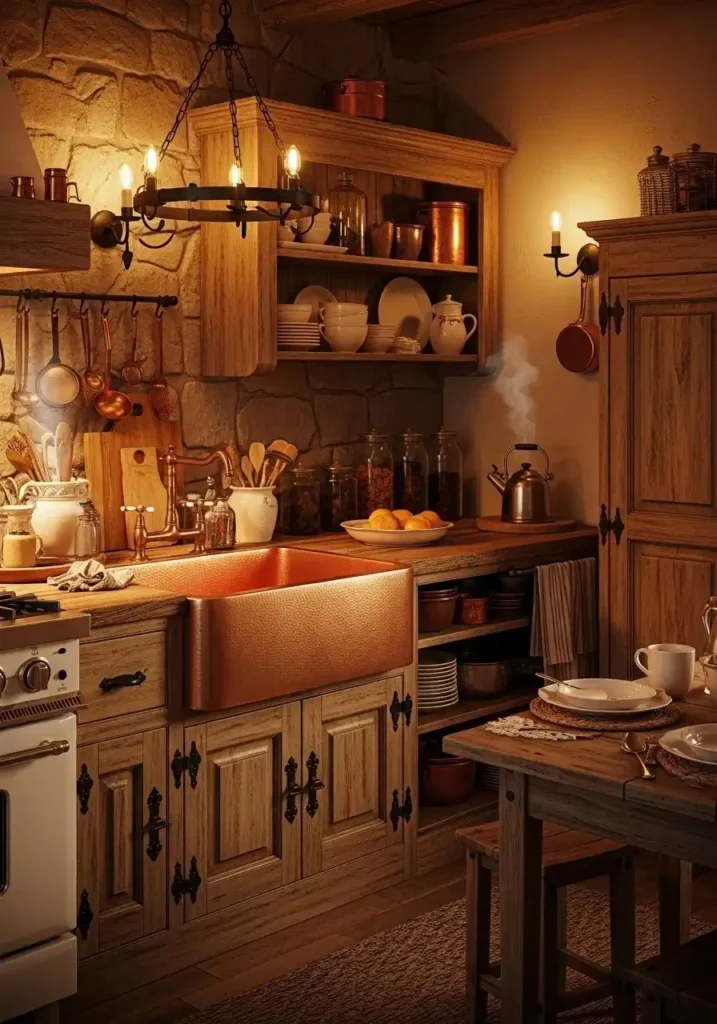
My friend’s copper sink is the first thing I look at whenever I visit her, and it changes colour with the light in the most beautiful way. In the morning it glows amber; by evening it deepens to something richer, almost like old pennies polished by years of use. I love that it is not perfect — the hammered dents catch the light, the patina tells its own story, and the whole kitchen feels hand-made rather than bought off a shelf. It is warm, a little wild, and completely unforgettable. If your kitchen feels too neat and new, copper is the quickest way I know to give it a soul.
Practical tip: Never use abrasive cleaners on copper — warm soapy water preserves the natural patina and keeps it glowing beautifully for decades.
How to do it: Order a hammered copper sink in the size of your existing cabinet, and check the waste and tap holes match your plumbing. Fit it as an undermount or apron front, connect the waste, and seal the edges with silicone. Clean it only with warm soapy water and a soft cloth, and let the patina develop naturally.
5. Best Kitchen Sink Ideas — Deep Single Basin Design
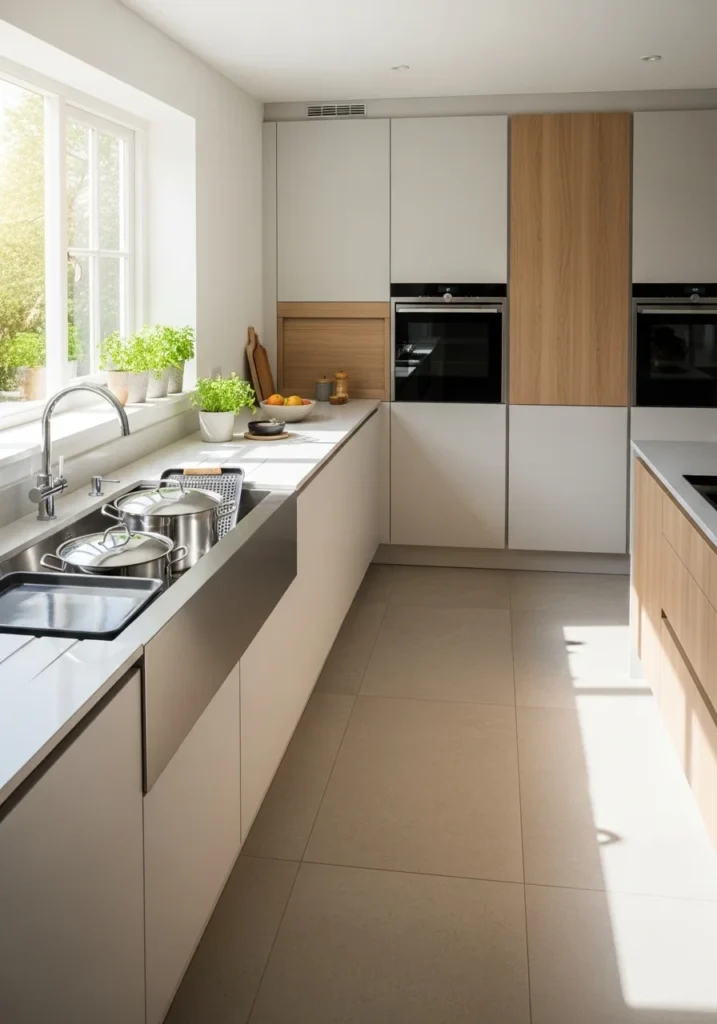
I used to think a divided sink was essential, until I tried to wash a roasting tin in one and ended up with water everywhere. A deep single basin changed my mind completely. Now I can soak the biggest pan, hide a whole meal’s worth of dishes when guests arrive unexpectedly, and still have room to rinse vegetables beside them. It feels calm and generous, like the kitchen finally has enough space to breathe. I especially love it in white fireclay, which brightens a small kitchen, but the same generous depth works just as well in steel or soft grey concrete.
Practical tip: Choose a basin at least ten inches deep — anything shallower causes constant splashing onto countertops and clothing during normal use.
How to do it: Measure your largest pan, then choose a basin at least ten inches deep and wide enough to lay it flat. Check the cabinet below can take the depth, fit a single-lever tap with a pull-out spray, and add a roll-up drying rack that sits across the basin for extra draining space.
6. Double Basin Sink for Multitasking Efficiency
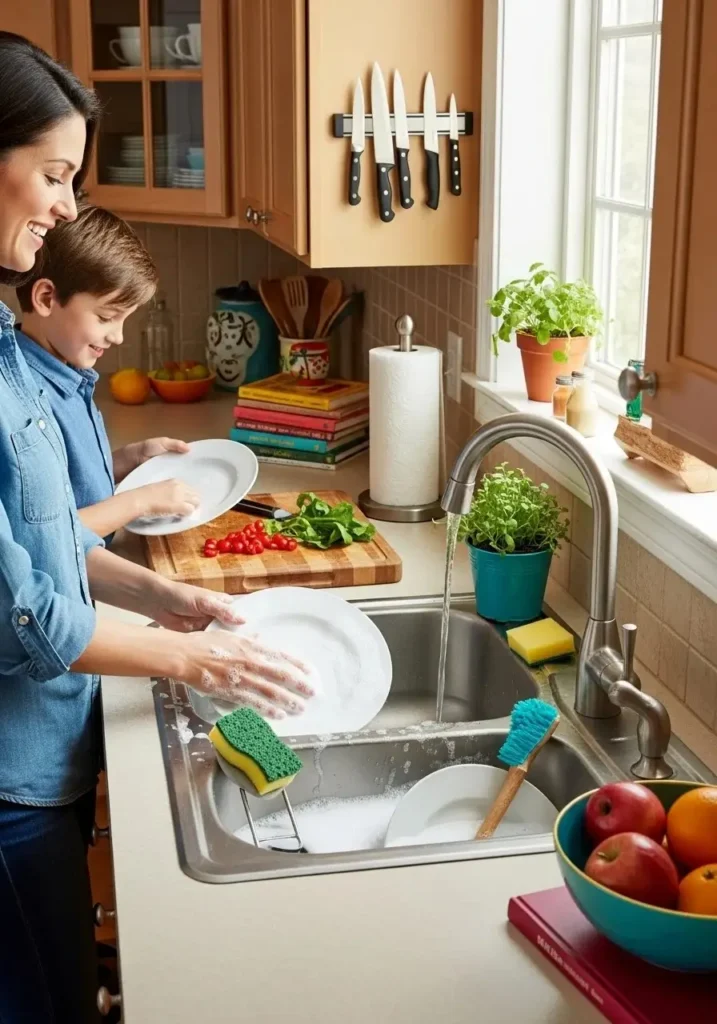
When my children were small, our double basin was the only thing standing between me and total kitchen chaos. One side held hot soapy water, the other held rinsing water, and I could move between the two without thinking. I still miss that rhythm now that they are older, especially after a big Sunday roast. It is the sink for real family life: soaking, rinsing, draining, and starting again, all at once. If you cook most nights and your draining board is always full, two basins will quietly make your evenings easier in a way one basin never quite manages.
Practical tip: Install a cutting board that bridges both basins — it creates instant extra prep surface directly above your sink whenever needed.
How to do it: Choose an offset double basin if you want one side larger for pots. Fit a tap with a swivel spout that reaches both basins, add a bridging chopping board for extra prep space, and keep a small colander in the smaller basin for rinsing vegetables while you wash up.
7. Concrete Sink for Industrial Organic Appeal
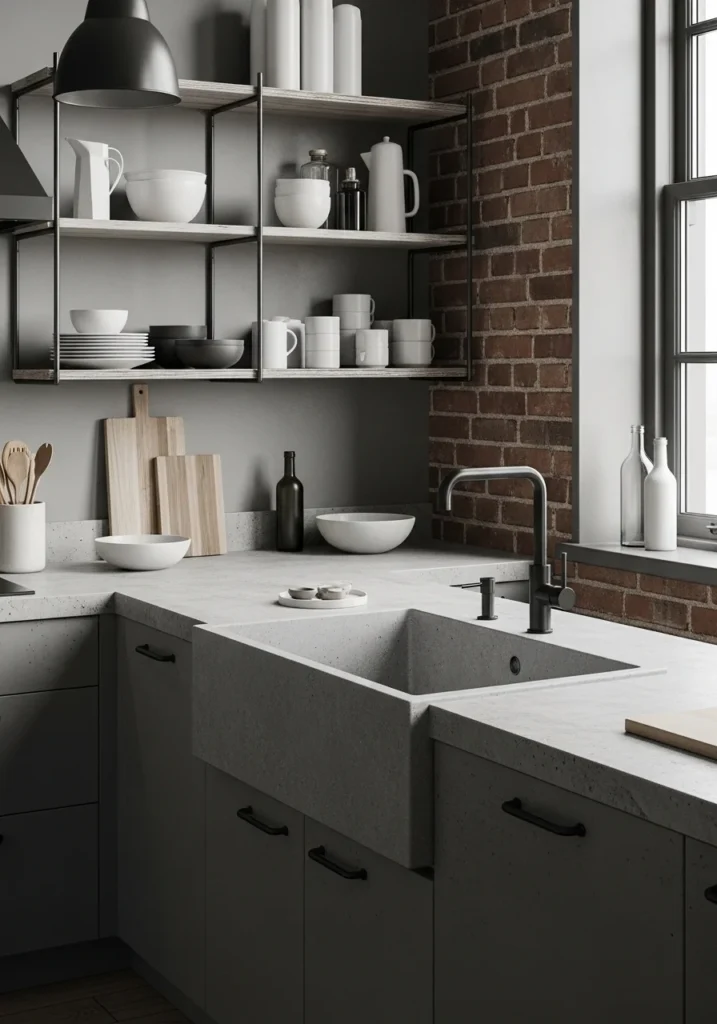
I ran my hand over a concrete sink in a showroom once and was surprised by how soft it felt — cool, smooth, and strangely calming. It is not the sink for everyone, and I like that about it. It suits kitchens with wooden shelves, black steel, and plants, where its quiet grey lets everything else shine. Every one is slightly different, with faint variations in tone that make it feel made for that one room. If you love materials that age honestly and do not mind a little maintenance, concrete will reward you every single day.
Practical tip: Seal concrete sinks with a food-safe penetrating sealer every twelve months — unsealed concrete stains permanently from cooking oils quickly.
How to do it: Order a pre-cast concrete sink to your cabinet size, or have one cast in place by a specialist. Make sure the cabinet is reinforced for the weight, seal it with a food-safe penetrating sealer before first use, and re-seal it every twelve months. Wipe spills quickly and avoid leaving citrus or oil sitting on the surface.
8. Corner Sink for Smart Small Kitchen Layouts
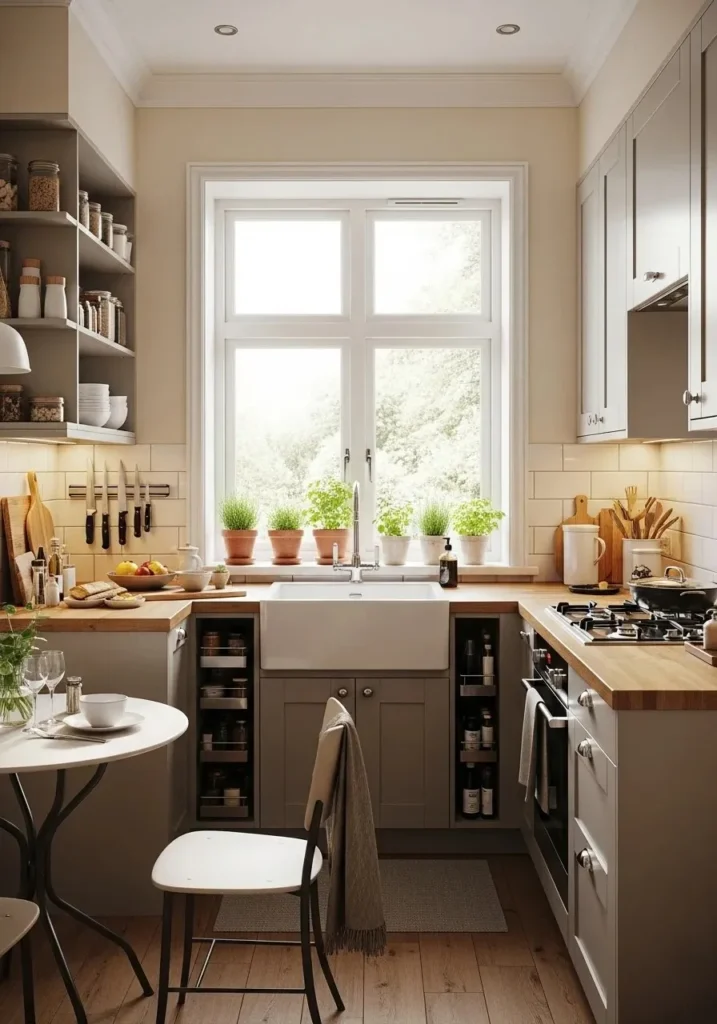
Our first flat had a tiny kitchen, and the corner sink was the best decision we made in it. Suddenly both runs of worktop were free, the washing-up happened in a little pocket of the room, and I could look out of the window while I worked instead of staring at a wall. I still think about that view — the garden, the morning light, the birds on the fence — whenever I wash up now. A corner sink is not a compromise; it is a clever piece of planning. If your kitchen is small, give the corner a proper job to do and let the rest of the room breathe.
Practical tip: Choose an angled corner sink cabinet specifically designed for this configuration — standard cabinets adapted for corners waste significant storage space underneath.
How to do it: Choose an angled corner cabinet made for a corner sink, and check you can reach the tap comfortably from the front. Fit a single-lever tap so you can work it with one hand, add a window or good task light above, and use the cabinet below for cleaning supplies and a small bin.
Also More Amazing In the Below For You More:
25 Kitchen Backsplash Ideas That Instantly Refresh Your Space
25 Beadboard Kitchen Ideas for a Charming Cottage Look
19 Kitchen With Black Countertops Ideas for a Bold, Modern Look
9. Stone Sink for Natural Luxury
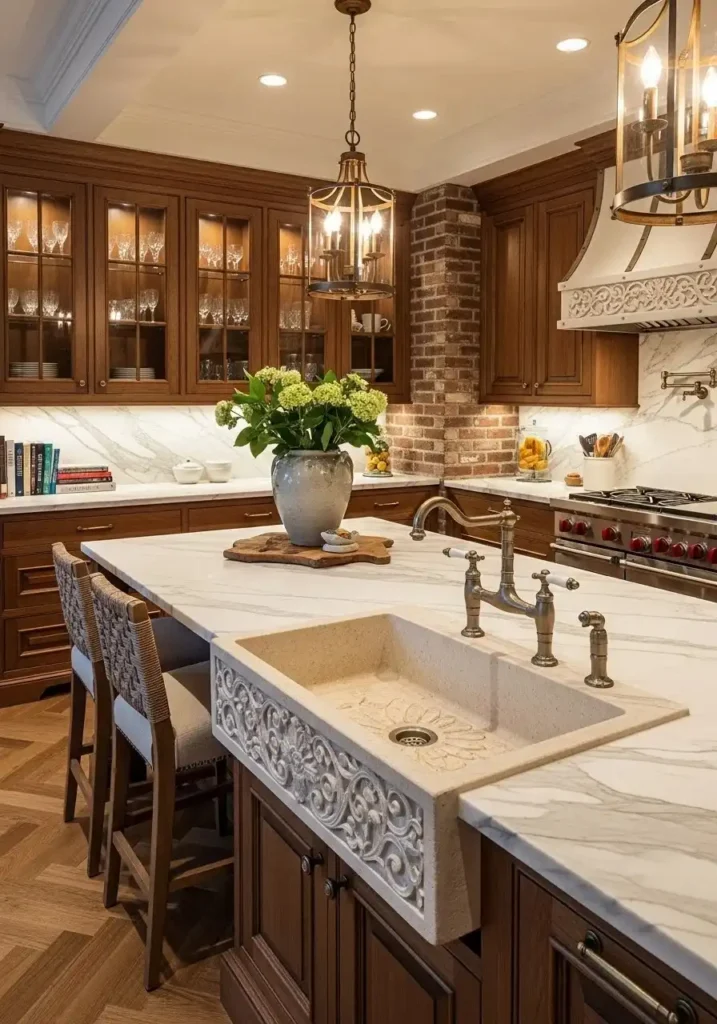
I have always loved stone in a kitchen, because it never tries too hard. A soapstone sink feels cool and silky under your hands, and its dark surface makes pale cabinets look even fresher. Travertine is softer and warmer, almost like sunlight caught in stone, and it suits a Mediterranean-style room beautifully. Both will mark and soften over time, and I think that is part of the pleasure — the sink becomes more yours with every year. If you want luxury that whispers rather than shouts, a stone sink is hard to beat.
Practical tip: Soapstone scratches easily — buff minor surface scratches occasionally with a fine scotch pad to restore smooth invisibility quickly.
How to do it: Choose soapstone for a dark, moody look or travertine for warmth, and order the sink to match your worktop thickness. Have it fitted by a stonemason, seal natural stone before use, and clean it with a pH-neutral soap. Buff out small scratches on soapstone with a fine pad, following the grain.
10. Integrated Sink and Countertop for Seamless Elegance
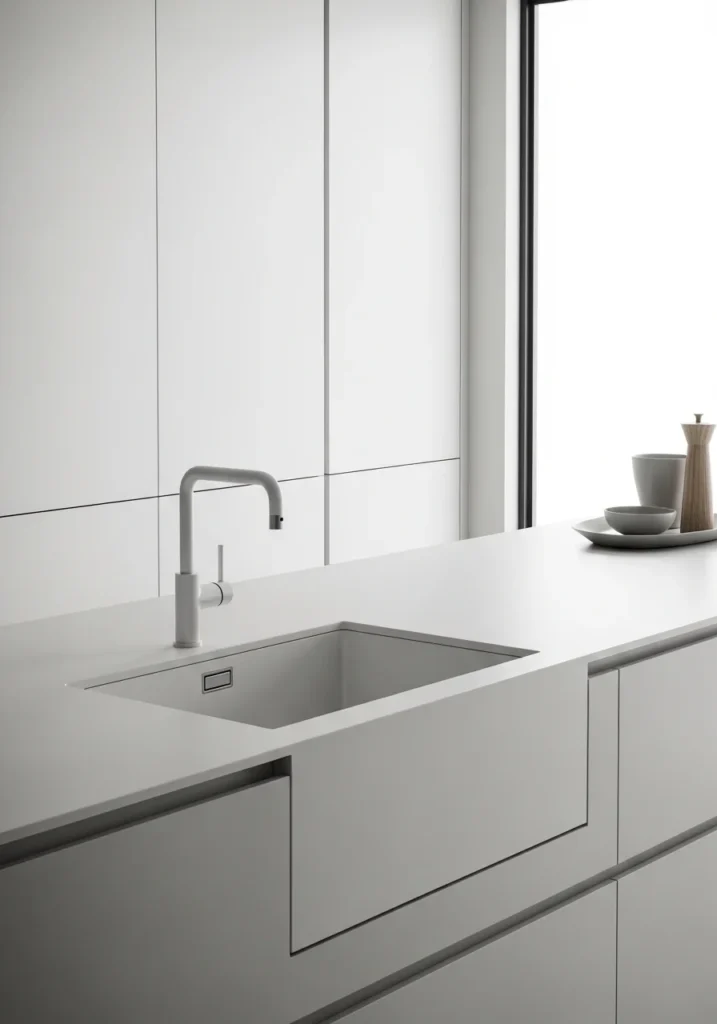
There is a particular calm to a kitchen where the sink simply disappears into the worktop. I stood in one last year — white Corian, no joints, no edges, just one continuous surface — and it felt like the room had taken a deep breath. Wiping down after cooking took seconds, because there was nowhere for crumbs to hide. It suits a minimalist kitchen, certainly, but it also suits anyone who is tired of scrubbing around sink rims. If clean lines and easy cleaning matter more to you than a statement sink, this quiet, seamless design is worth every penny.
Practical tip: Have integrated sinks fabricated by a specialist — amateur cuts through solid surface materials crack and chip expensively without professional precision tools.
How to do it: Choose a solid-surface material such as Corian or quartz, and have the sink fabricated by a specialist from the same slab as your worktop. Agree the basin depth and tap position before cutting, and ask the fabricator to polish the join until it is invisible. Clean it with a non-abrasive cream cleaner and a soft cloth.
11. Vintage Butler Sink for Cottage Character
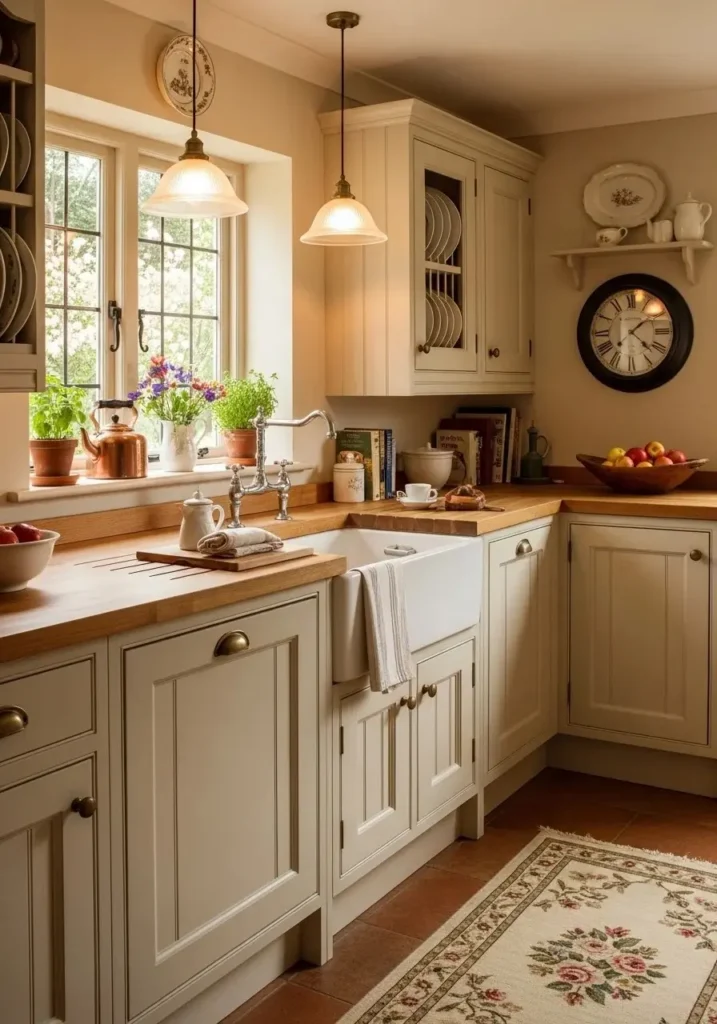
My grandmother had a butler sink, and I can still picture her standing at it, sleeves rolled up, with the radio on and the smell of baking in the air. That memory is why I love this sink so much. It has a weight and dignity that modern sinks rarely manage, and it anchors a cottage kitchen in the loveliest way. Cream ceramic, warm filament bulbs, a wooden draining board — it all adds up to a room that feels lived in and loved. If you want your kitchen to feel like it has a history, even if it is brand new, start here.
Practical tip: Support butler sinks on a reinforced cabinet base — their considerable ceramic weight requires stronger structural support than standard configurations typically provide.
How to do it: Check your floor and cabinet can take the weight, then reinforce the base cabinet before the sink arrives. Fit the ceramic sink first, build the worktop around it, and choose a traditional bridge tap to complete the look. Seal the joints well, and use a soft sponge rather than a scourer on the ceramic.
12. Colorful Enamel Sink for Playful Personality
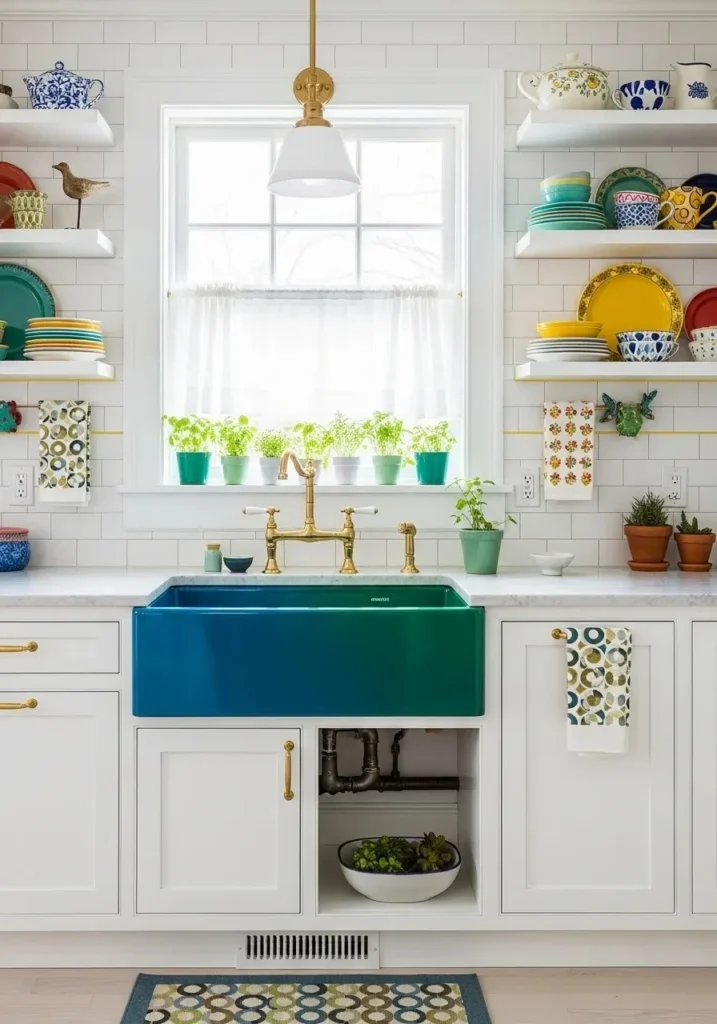
I will admit it: I fell for a cobalt blue enamel sink the moment I saw it against cream shaker cabinets. It was joyful, a little bit brave, and completely impossible to ignore. That is the point of a colourful sink — it turns the most ordinary corner of the kitchen into the happiest one. Cherry red feels playful, forest green feels calm and grown-up, and cobalt blue sits beautifully beside brass taps. If deep blue is your thing, pair it with navy blue kitchen cabinet ideas for a layered, confident look that still feels warm and welcoming rather than loud.
Practical tip: Use a sink grid protector on the basin floor — enamel chips if heavy pots are dropped, causing expensive cosmetic damage over time.
How to do it: Pick your enamel colour against a sample of your cabinet paint, in daylight, before you commit. Fit a sink grid on the basin floor to prevent chips, choose taps in brass or chrome to suit the colour, and avoid dropping heavy cast-iron pans directly into the basin.
13. Workstation Sink for Ultimate Kitchen Functionality
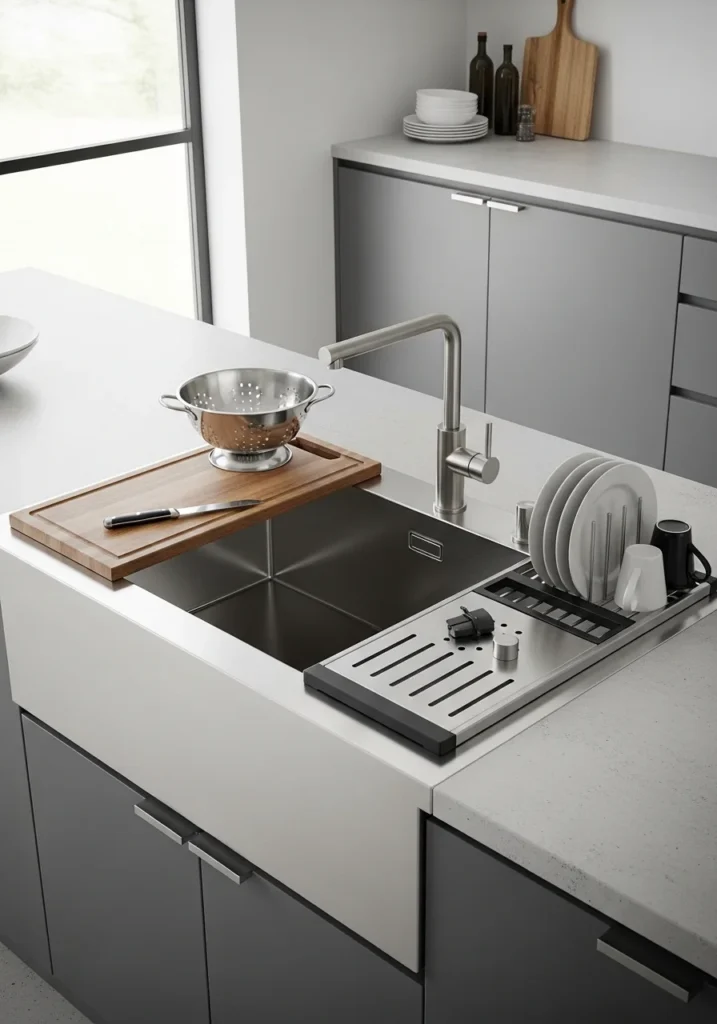
I cook most nights, and my workstation sink is the closest thing I have to a sous-chef. The sliding chopping board, the colander, the drying rack — everything has a place, and everything is within reach. I can chop, rinse, and drain without taking a single step, which sounds small until you have done it on a busy evening. It makes a small kitchen feel organised and a big kitchen feel effortless. If you love a tidy, well-planned kitchen, these kitchen organization ideas pair beautifully with a workstation sink, because the sink itself becomes part of the storage and prep system rather than just a place to wash up.
Practical tip: Buy the sink’s branded accessory kit — third-party accessories rarely fit the integrated ledge rails as securely as manufacturer pieces do.
How to do it: Buy the sink with its branded accessory kit so every piece fits the ledges properly. Fit it level, check the sliding board and colander glide smoothly, and add a pull-out tap with a spray setting. Keep the accessories stacked by the sink so you can set up your prep station in seconds.
14. Unique Kitchen Sink Ideas — Vessel Sink Style in the Kitchen
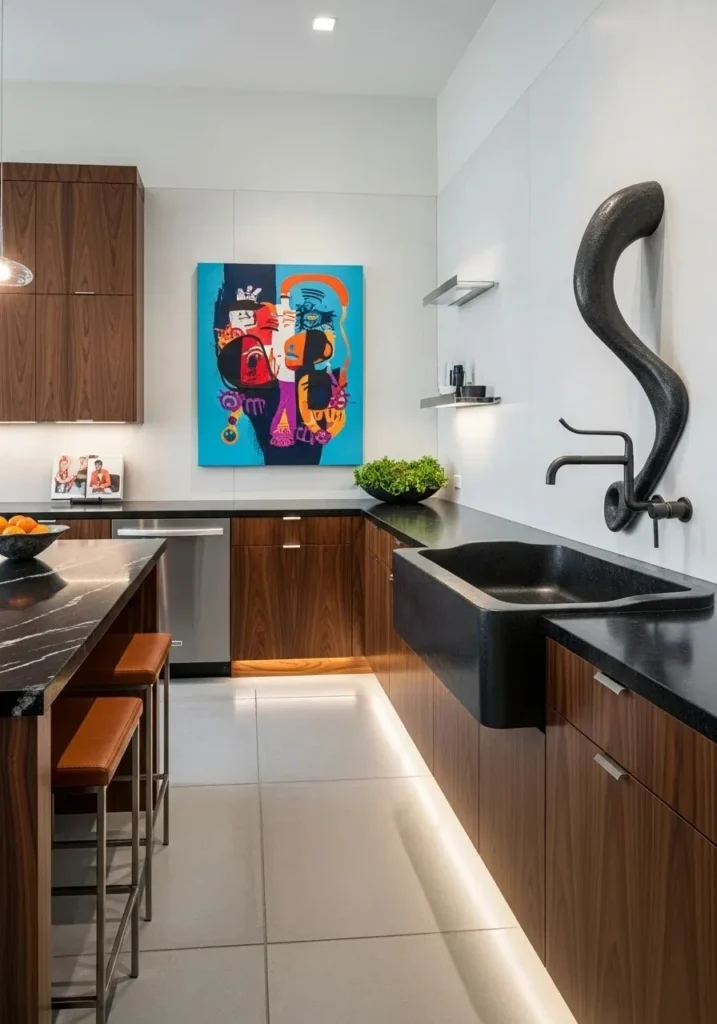
I know a vessel sink in a kitchen sounds unusual — I thought so too, until I saw one in an open-plan home where the sink was part of the living space. Sitting proud of the worktop, in hammered copper, it looked like a beautiful bowl, a piece of sculpture rather than a utility. It made the whole kitchen feel considered, as if someone had chosen every detail on purpose. It is not the most practical sink for a busy family, but for a quieter household, or a showpiece kitchen, it is a genuinely lovely surprise.
Practical tip: Install a tall gooseneck faucet specifically — standard height faucets sit too low for above-counter vessel sink basins to function comfortably.
How to do it: Choose a vessel sink in copper, stone, or matte ceramic, and pair it with a tall gooseneck tap that clears the rim comfortably. Check the worktop can support the weight, seal around the base, and keep the area clear of clutter so the sculptural shape can be seen. Wipe the outside dry to prevent water marks.
Frequently Asked Questions
What is the best kitchen sink material for everyday use?
For most homes, stainless steel or fireclay is the safest choice. Stainless steel is tough, affordable, and easy to clean, while fireclay holds its white finish beautifully and resists chips. If you want warmth and character, copper and stone are lovely, but they need a little more care. Choose the material that suits how you actually cook, not just how it looks in a photograph.
How deep should a kitchen sink be?
Aim for a basin at least ten inches deep. A shallower sink splashes water onto your worktop and clothes, while a deeper basin hides dishes and fits large pans easily. If you are tall, a deeper sink also saves you from stooping. Just check the cabinet below has enough room for the waste and plumbing first.
Is a farmhouse sink practical for a family kitchen?
Yes, and it is one of the most practical choices for a busy household. The wide, deep basin swallows roasting tins, baking trays, and large pans, and the apron front means you can stand closer without leaning over a worktop edge. Choose fireclay for durability, and make sure your cabinet is reinforced to carry the weight.
What sink works best in a small kitchen?
A corner sink or a deep single basin usually works best in a small kitchen. A corner sink frees up both runs of worktop, while a single basin gives you the most usable space in a narrow cabinet. Add a roll-up drying rack and a bridging chopping board, and the sink area can double as extra prep space when you need it.
How do I keep a matte black or copper sink looking good?
Wipe a matte black sink dry after each use, since water spots show easily on dark finishes, and avoid abrasive pads. For copper, use only warm soapy water and a soft cloth, and let the natural patina develop rather than polishing it away. Both finishes look their best with a quick daily wipe and no harsh cleaners.
Your Kitchen Sink Checklist
☐ Measure your cabinet width and the depth below before choosing a sink
☐ Pick a basin at least ten inches deep for large pans
☐ Match your tap height and finish to the sink style
☐ Choose fireclay, 16-gauge steel, or another durable material for daily use
☐ Add a sink grid, drying rack, or bridging board for extra function
☐ Seal stone and concrete sinks, and wipe matte black sinks dry after use
Final Thoughts
Your kitchen sink deserves far more thought than most people give it, because you stand at it every single day, often more than once, for years. The right choice makes those moments genuinely pleasant rather than purely functional — a deep basin that swallows the roasting tin, a tap that reaches exactly where you need it, a finish that makes you smile when the morning light hits it. Whether you fall for a glowing copper basin, a sleek integrated surface, or a classic white farmhouse apron, choose the sink that suits how you really cook and live. Then enjoy the washing-up, just a little, every single day.