
27 Kitchen Ideas With Black Countertops for a Bold, Modern Look
There is something effortlessly striking about a kitchen with black countertops, where the deep, dramatic surface instantly elevates the space. Whether you are working with glossy granite or sleek quartz, the bold contrast can make any kitchen feel more modern, refined, and full of character. Below are twenty seven ideas to help you design a kitchen that is bold, beautiful, and unmistakably yours.
1. Pair With Crisp White Cabinets
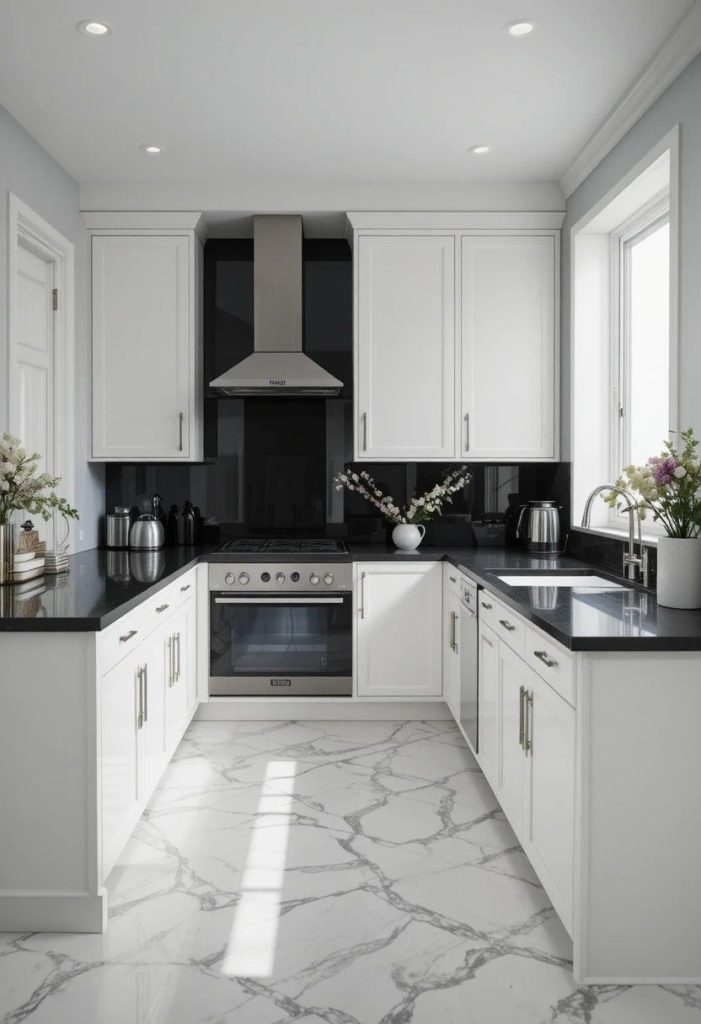
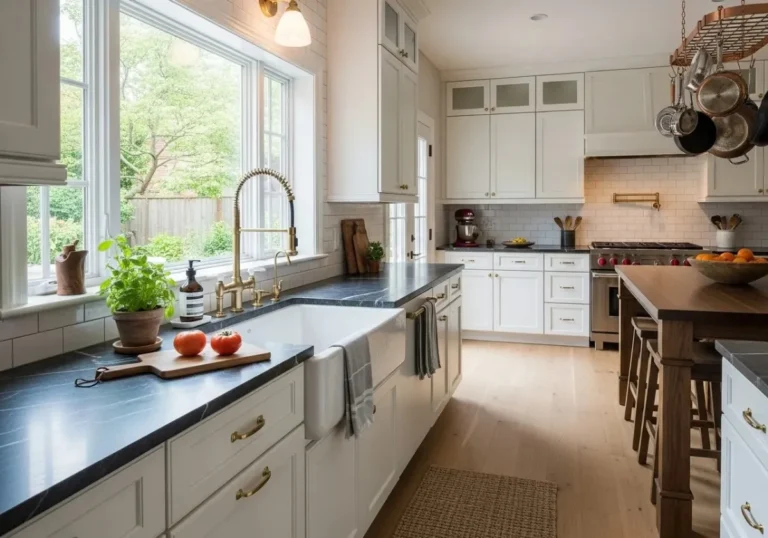
I have always loved white cabinets with black countertops, because the pairing never feels boring to me. The white lifts the room, the black grounds it, and together they leave a clean backdrop that lets everything else breathe. I would keep the cabinet fronts simple and shaker style, then let the countertops do the talking. A pale wall, a light splashback and brushed nickel handles keep the contrast crisp without turning cold. This is also the combination I would choose for a small kitchen, as it bounces light around and makes the dark surface feel deliberate rather than heavy.
How to do it: Start by painting or choosing cabinets in a true bright white, rather than a creamy white that can look yellow beside black. Keep the splashback pale and simple, then add black or nickel handles for definition. Finish with a light rug or pale wood chopping boards so the contrast feels soft at eye level.
2. Add Warm Wood Cabinets
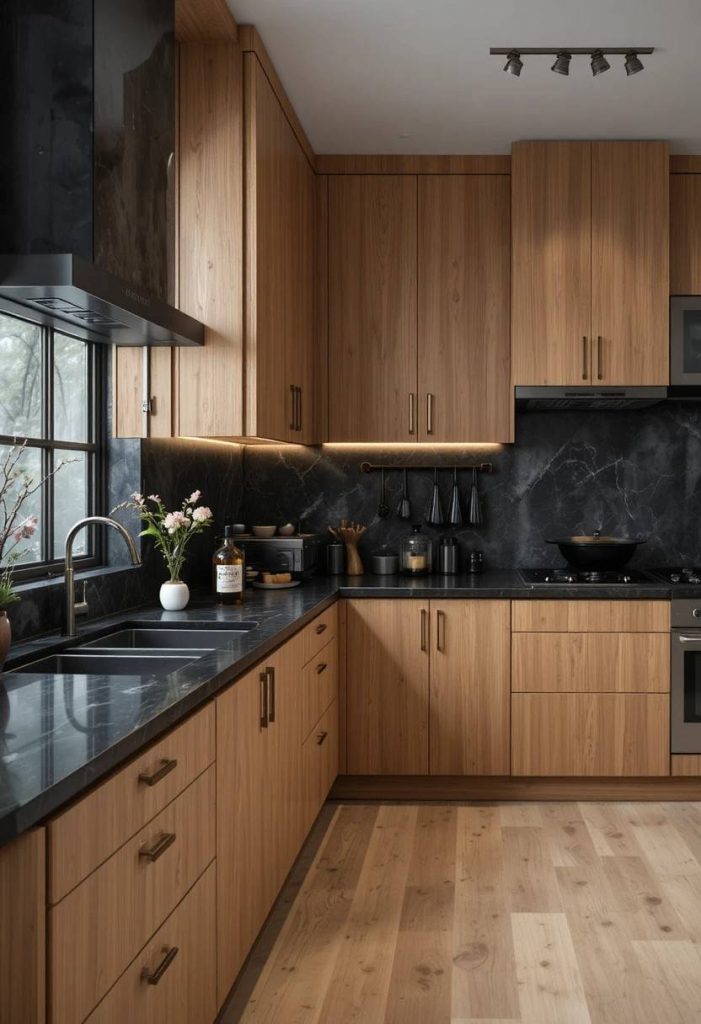
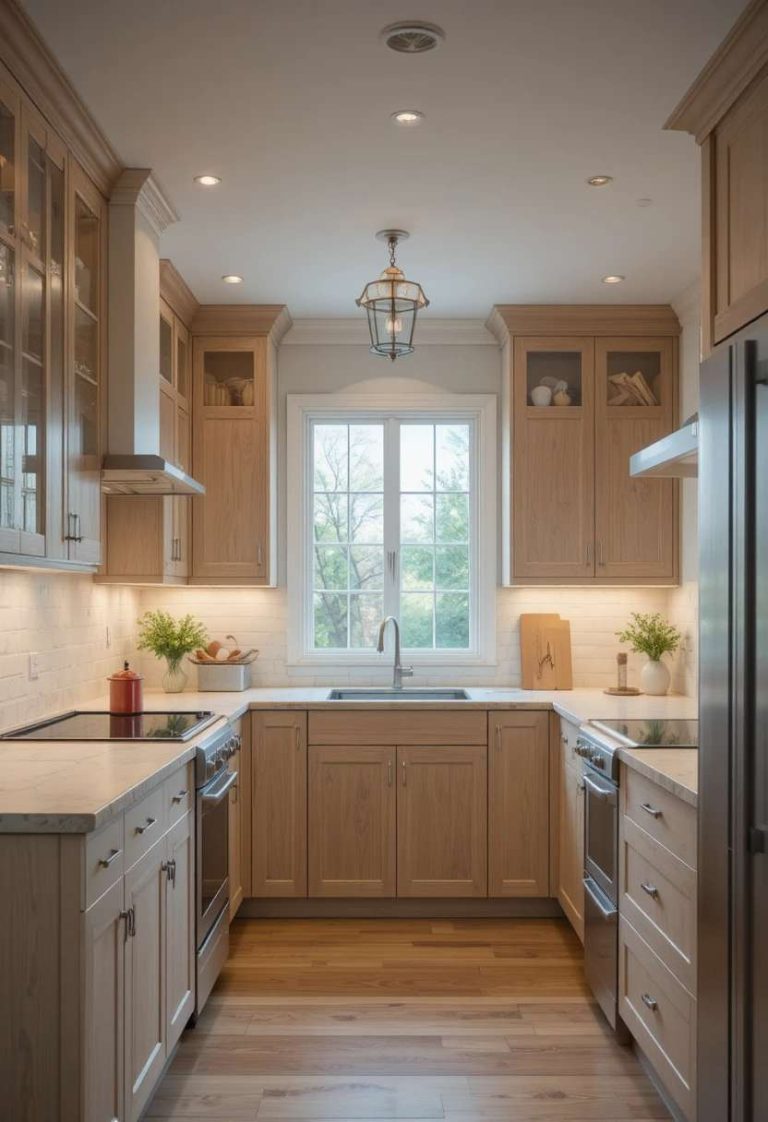
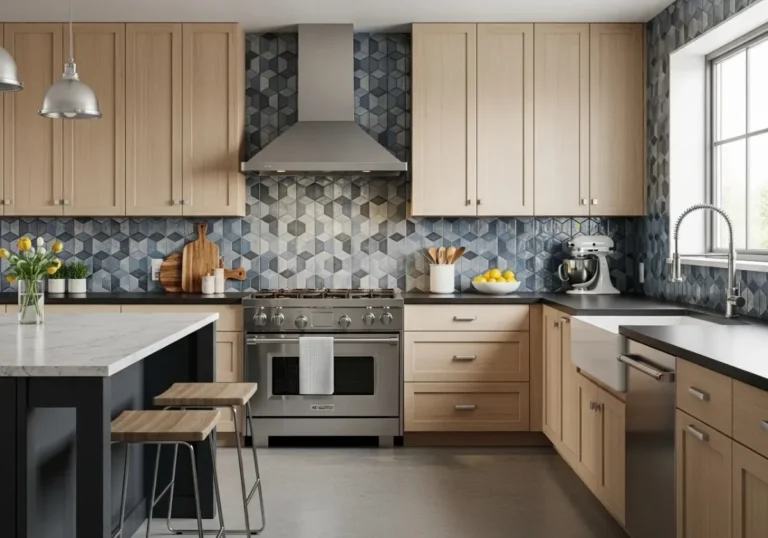
Warm wood cabinets soften black countertops without losing any of their drama, and the grain brings a natural, lived-in feeling to the room. I find wood stops the black from looking stark, especially in a north-facing kitchen where light is already in short supply. I would choose oak or walnut with a clear, warm finish, and keep the cabinet lines plain so the timber can shine. A few woven baskets, a wooden chopping board left out on the worktop, and warm brass taps all help the two materials feel as if they belong together. Sample the wood beside the black stone in daylight, because some timbers pull orange, and you want honey, not rust.
How to do it: Choose two or three wood samples and hold them against your countertop sample in the room itself, morning and evening. Pick the warmest sample that still looks calm, then repeat that timber on open shelves or a chopping board. Keep wall paint pale and warm, and choose brass or black hardware to tie the wood and stone together.
3. Go Bold With Black Cabinets Too
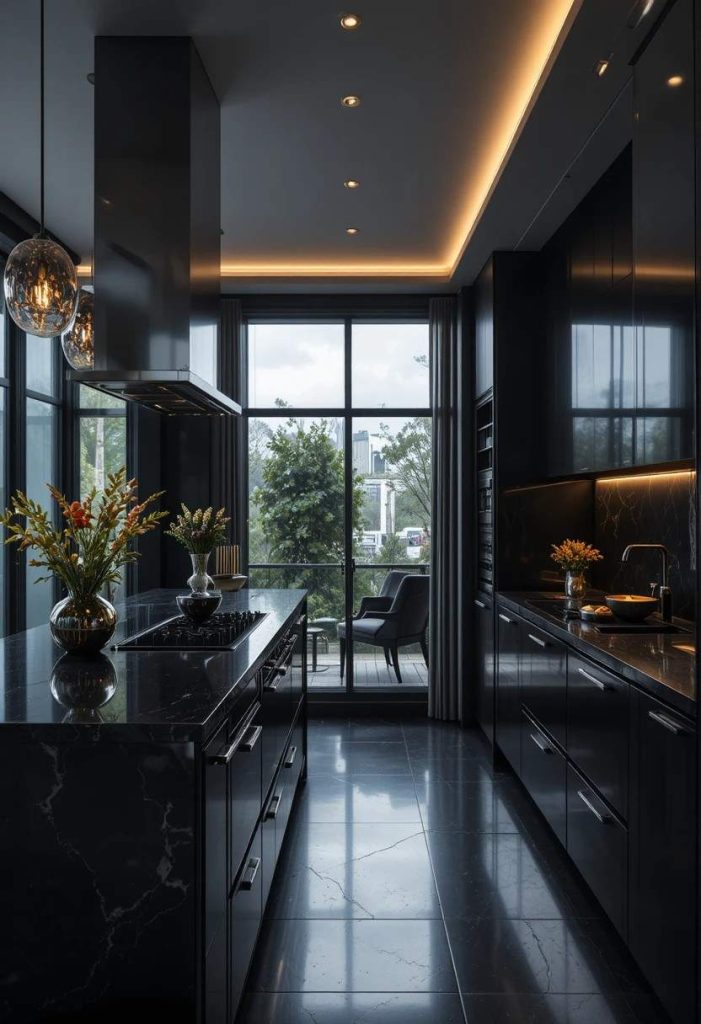
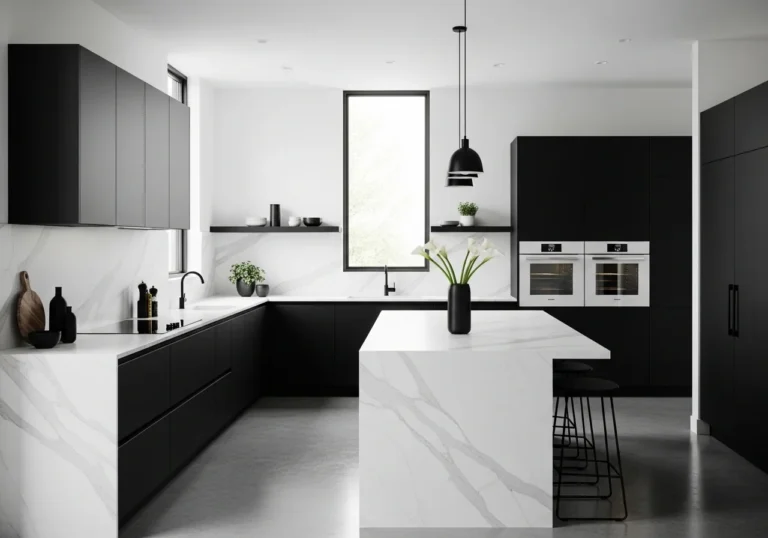
Going black on black is the boldest choice in this whole list, and I would only do it if the room has good light and a little breathing space. When it works, it feels like a smart hotel kitchen, calm, seamless and quietly luxurious, with the worktop and cabinets reading as one continuous surface. I love the effect with a pale floor, a white or marble splashback, and a single warm metal accent to stop the room from feeling flat. Texture matters here more than colour, so mix matt cabinets with a softly veined stone and a little brushed brass. If you are nervous, try the darkest charcoal first, then step down to true black once you know the light can carry it.
How to do it: Paint a large sample board in your chosen black and prop it beside the countertop for a few days. Add a pale splashback and a light floor, then introduce one warm metal, such as brass taps, to break up the dark. Finish with under-cabinet lighting so the worktop edge stays visible after dark.
4. Add a White Marble Backsplash
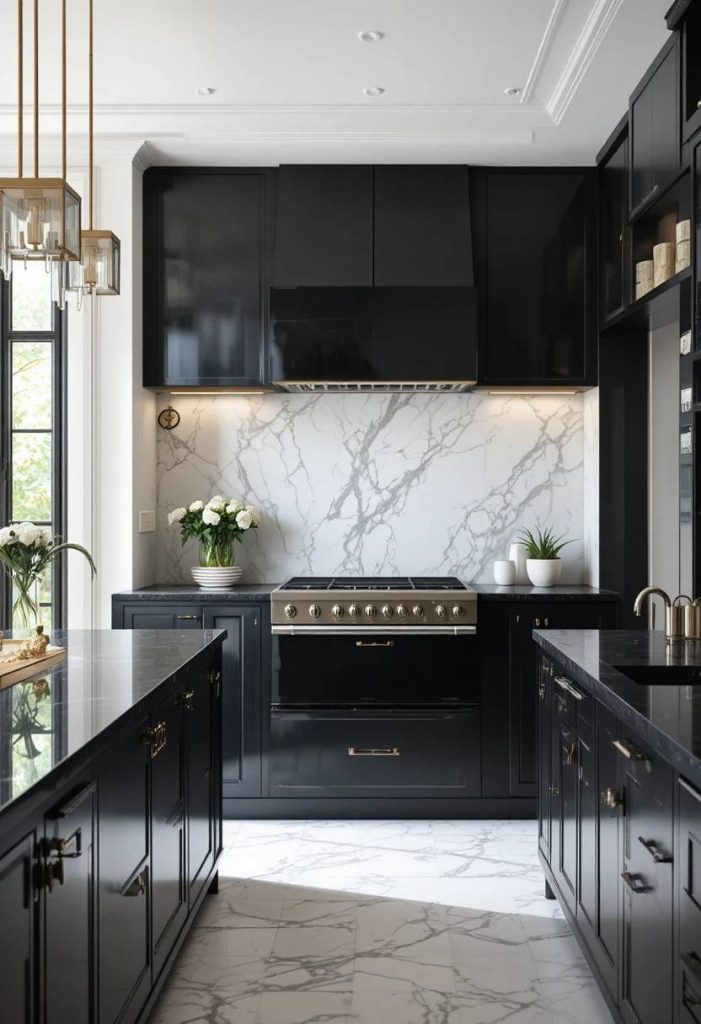
A white marble splashback is the classic partner for black countertops, and I still think it is one of the prettiest combinations you can choose. The soft grey veining picks up the dark stone, while the white lifts the whole wall and stops the kitchen from feeling heavy. I would keep the rest of the room quiet, with plain cabinets and simple handles, so the marble can be the star. In a busy family kitchen, I would choose a marble-look porcelain tile instead of real marble, because it gives the same soft veining without the worry over lemon juice and red wine. Either way, take the splashback up to the cabinets, not just a short strip, for a finished, generous look.
How to do it: Take a sample of your countertop to the tile shop and choose a white marble or marble-look tile whose veining echoes the stone. Lay the tiles in a simple brick or straight stack pattern, use a pale grout, and seal natural marble before you cook. Keep worktop clutter low so the veining stays visible.
5. Brighten With Gold Hardware
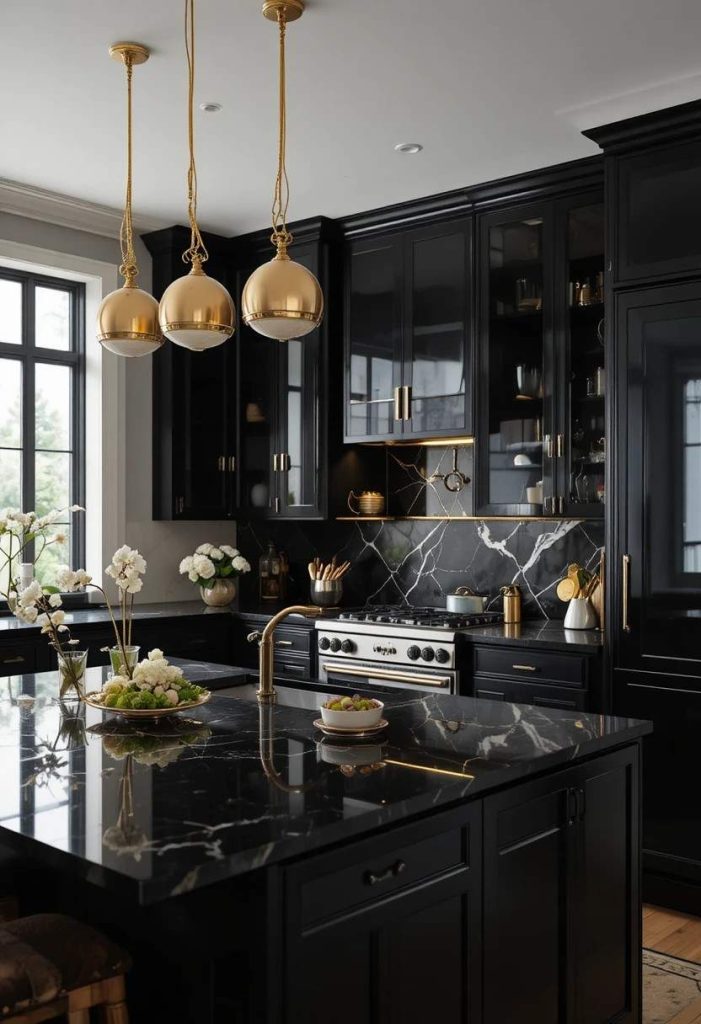
Gold hardware is a small change with an outsized effect beside black countertops, and it is one of the first upgrades I suggest to friends. The warm metal catches the light, softens the hard edge of the black stone, and makes even plain cabinets feel considered and a little glamorous. I prefer brushed or satin brass over bright, mirror-like gold, because it looks softer in daylight and shows fewer fingerprints. Keep the finish consistent across handles, taps and light fittings, or the room can start to feel busy. A little goes a long way here, so let the gold be the jewellery, and let the black countertops stay the main event.
How to do it: Swap one handle first and live with it for a week to check the tone against your countertops. Choose brushed brass in a warm, muted tone, then match the tap and any pendant fittings to it. Keep other metals to a minimum, and wipe the handles with a soft cloth so the finish stays warm, not shiny.
6. Add Greenery for Freshness
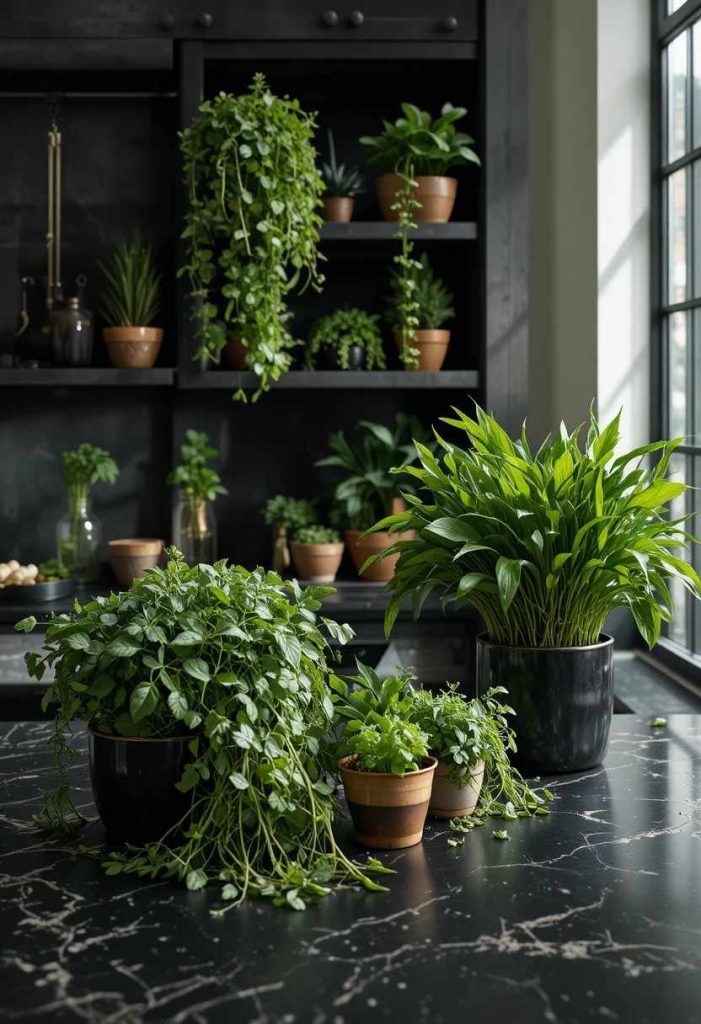
I keep a pot of herbs on my own worktop, and I have noticed how much life a little green brings beside black stone. The colour contrast is immediate, the leaves soften the hard lines, and the kitchen suddenly smells of basil and feels lived in rather than staged. A trailing plant on an open shelf, a small olive tree in the corner, or a bunch of eucalyptus in a jug all do the same job in different ways. I would choose plants that suit the light you actually have, not the light you wish you had, and keep them in simple pots in white, terracotta or pale wood. Water them little and often, and move them off the worktop when you need the full surface for cooking.
How to do it: Start with one herb pot, such as basil or mint, in a plain white or terracotta pot near the sink. Add a trailing plant on a shelf if you have the height, and keep a small jug of fresh stems by the cooker. Choose low-maintenance plants for dark corners, and wipe leaves weekly so they stay bright against the black.
7. Pair With a Light Stone Floor
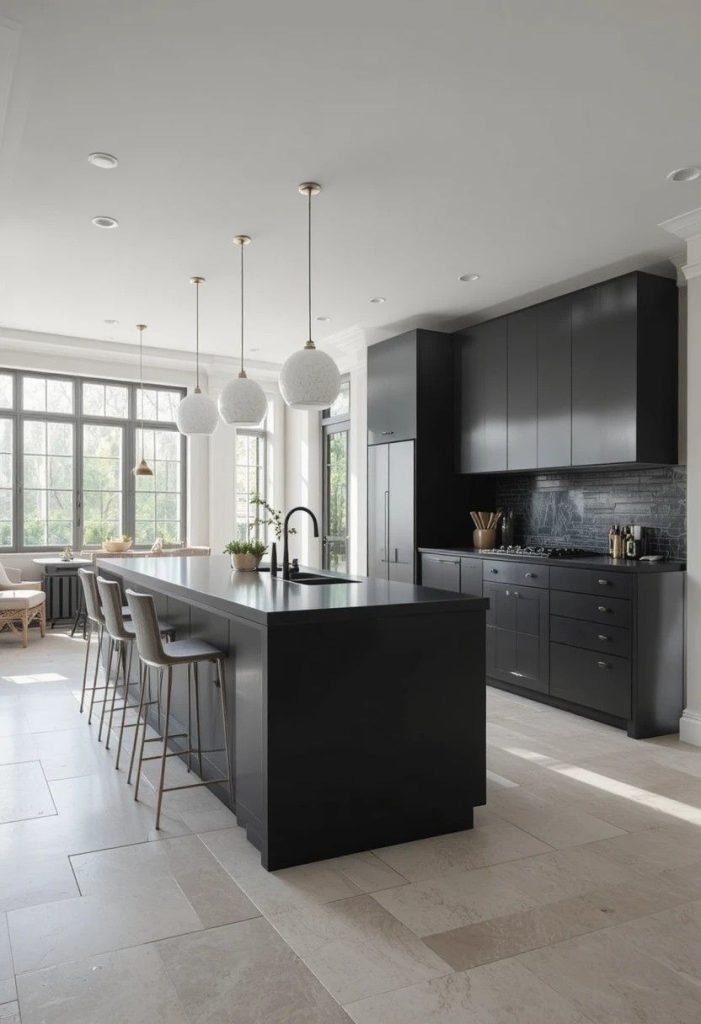
A light stone floor is the quiet hero of a black countertop kitchen, because it does all the balancing work without drawing attention to itself. The pale surface reflects light back up, the room feels taller and wider, and the dark worktop suddenly looks like a deliberate choice rather than a heavy slab. I would choose a warm, pale limestone or a light wood-look tile with a soft, matt finish, and keep the grout close in tone so the floor reads as one calm plane. A runner in a muted pattern can add warmth by the sink, and pale wood stools will pick up the same tones. Avoid a cold, blue-grey floor, as it can make the black feel colder too.
How to do it: Order large floor samples and lay them beside your countertop sample in the room. Choose a warm, pale stone or wood-look tile, keep grout close in tone, and test it barefoot as well as by eye. Add a washable runner by the sink and pale wood stools to echo the floor tones.
8. Add a Waterfall Edge
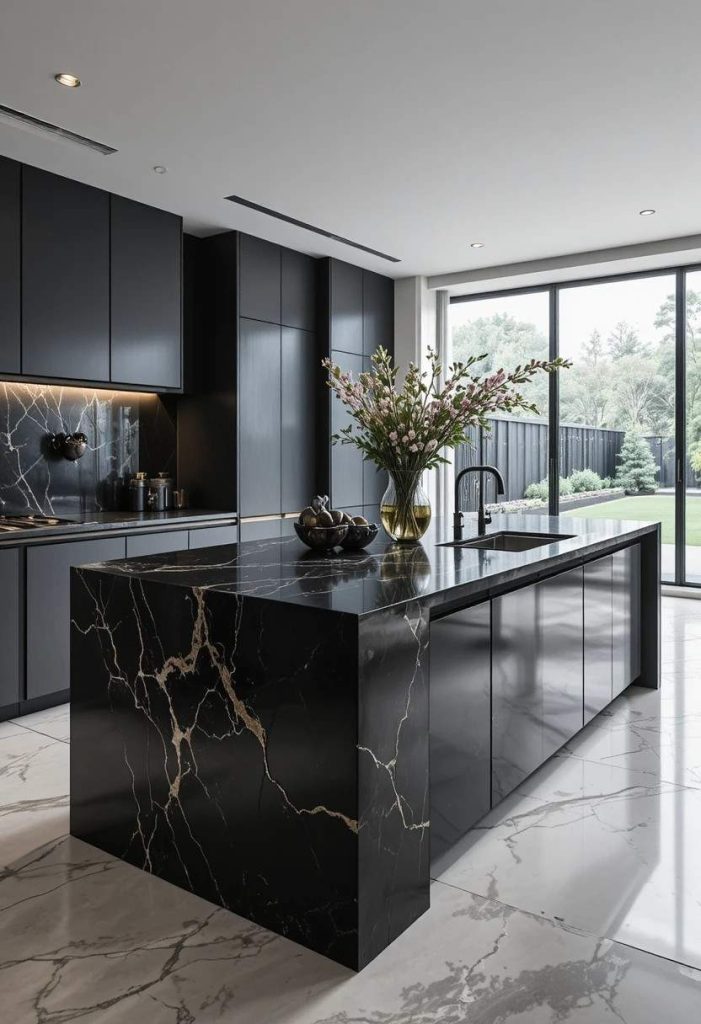
A waterfall edge, where the black stone runs down the side of the island to the floor, is the most architectural idea in this list, and it always makes me pause. It turns the island into a piece of furniture, hides the cabinet ends, and gives the kitchen a clean, sculpted shape that photographs beautifully. I think it works best on a generous island with room to sit, where the side panel is not constantly knocked by chairs. If you are planning the island shape as well, these kitchen peninsula ideas helped me think about seating, overhang and how people actually move around an island. Keep the rest of the island simple, because the stone itself is the decoration.
How to do it: Ask your stone supplier for a book-matched waterfall edge, so the veining flows over the corner. Allow at least 30 cm of overhang for seating, and keep the island front plain so the stone stands out. Protect the corner with a soft edge profile if you have small children, and wipe the vertical face with the same cleaner as the top.
9. Mix With Soft Grey Cabinets
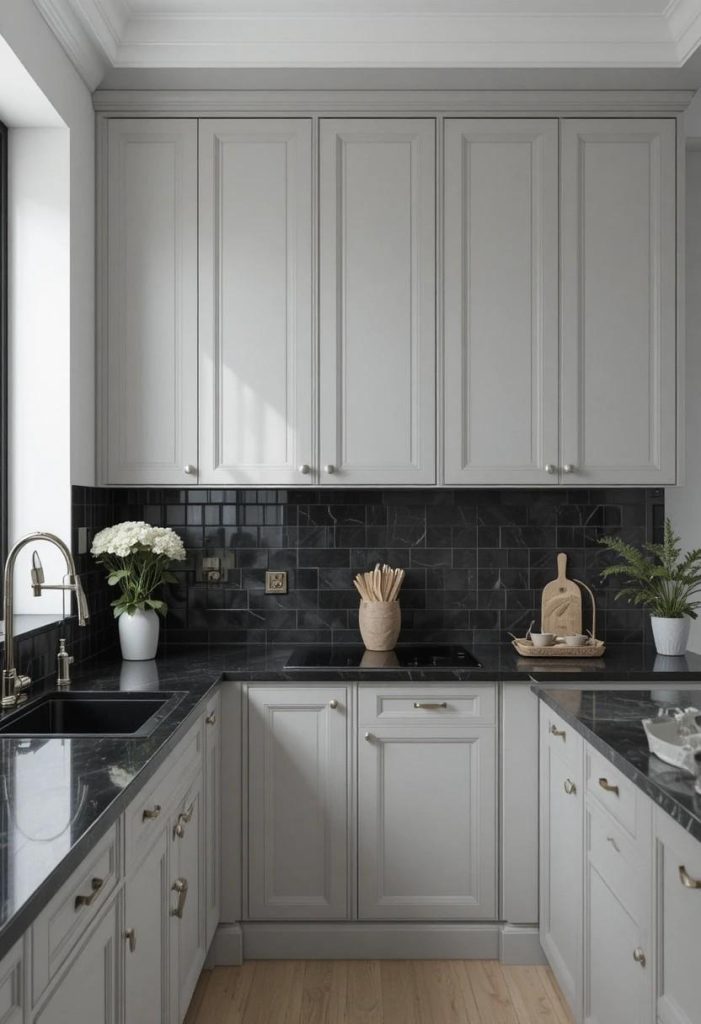
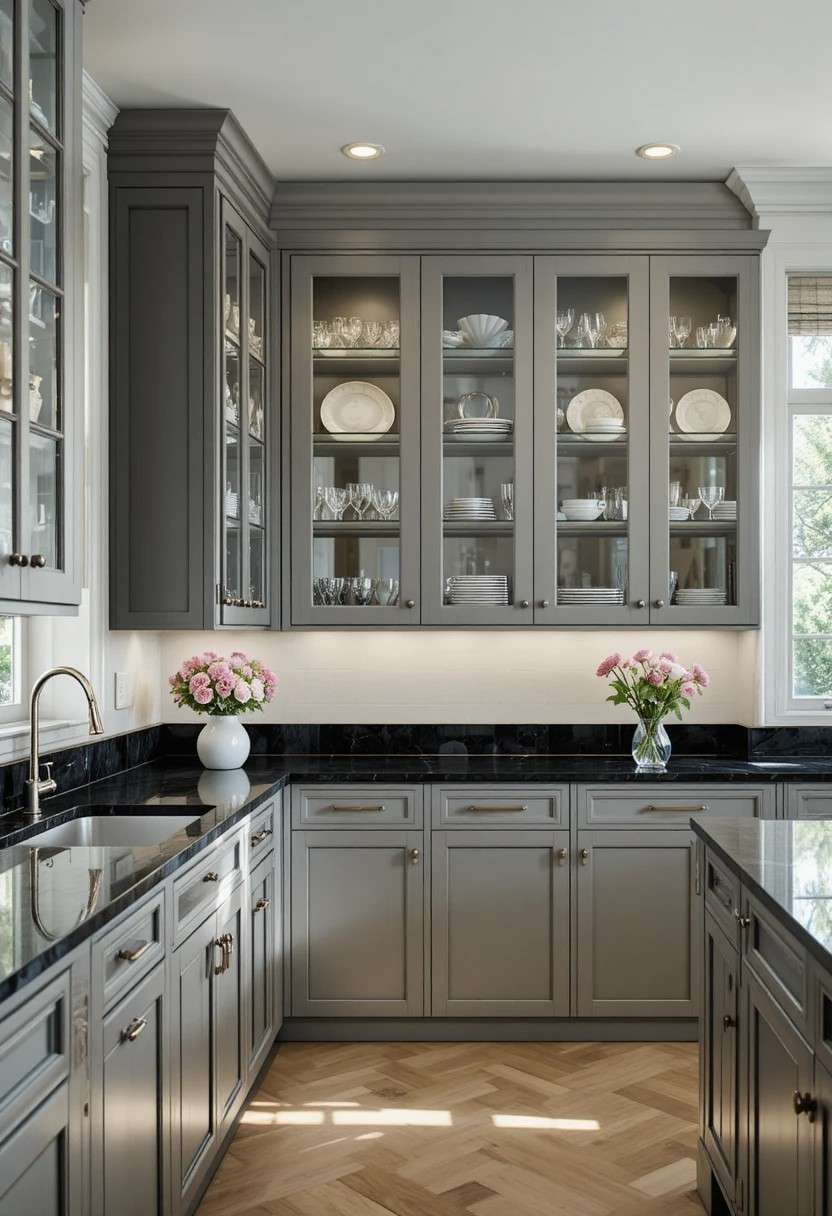
Soft grey cabinets are my calm middle ground between white and black, and they suit black countertops beautifully. The grey takes the edge off the contrast, so the kitchen feels gentle and cohesive, yet still modern and grown up. I would choose a warm, mid-grey rather than a cold blue-grey, and paint a large sample on the wall first, because grey changes dramatically as the light moves through the day. Pale worktop accessories, white crockery and a light splashback will stop the room from drifting too dark. In a small kitchen, I would keep the upper cabinets grey too, rather than mixing too many colours, so the eye moves smoothly across the room.
How to do it: Paint a large sample board in a warm mid-grey and check it morning and evening beside the black stone. Use the same grey on uppers and lowers, add a pale splashback, and choose brushed nickel or black handles. Keep crockery and small appliances pale, so the grey stays soft rather than heavy.
10. Add Warm Pendant Lighting
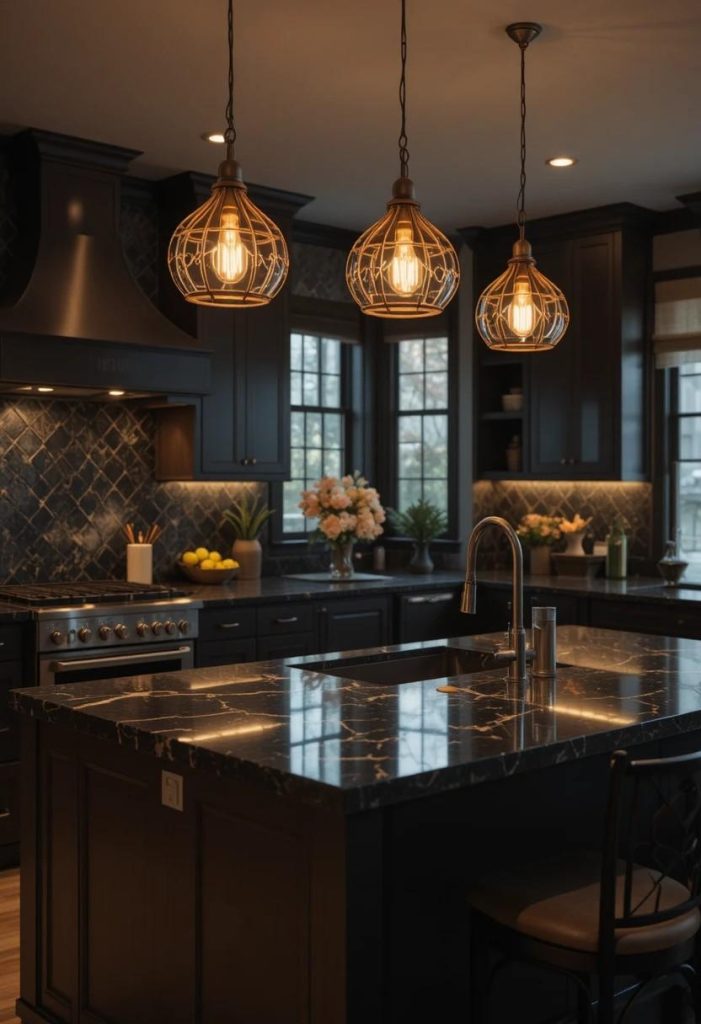
Warm pendant lighting is what makes black countertops glow in the evening, and I would never leave a dark kitchen lit by a single ceiling light. A pair of pendants over the island, or one generous pendant over the sink, pools warm light exactly where you chop and wash up, and the black stone picks up a soft sheen. I would choose warm white bulbs, around 2700K, with a dimmer, so you can turn the light down for supper and up for cooking. Brass, black or rattan shades all suit black worktops, and I like to hang them low enough to feel intimate, but high enough to see across the room. Keep the shades simple, because the light itself is the decoration.
How to do it: Hang two pendants about 75 to 90 cm above the island worktop, spaced evenly over its length. Choose warm white, dimmable bulbs and a simple shade in brass, black or rattan. Add a dimmer switch, then test the light at night before you fix the height for good.
11. Pair With a Subway Tile Backsplash
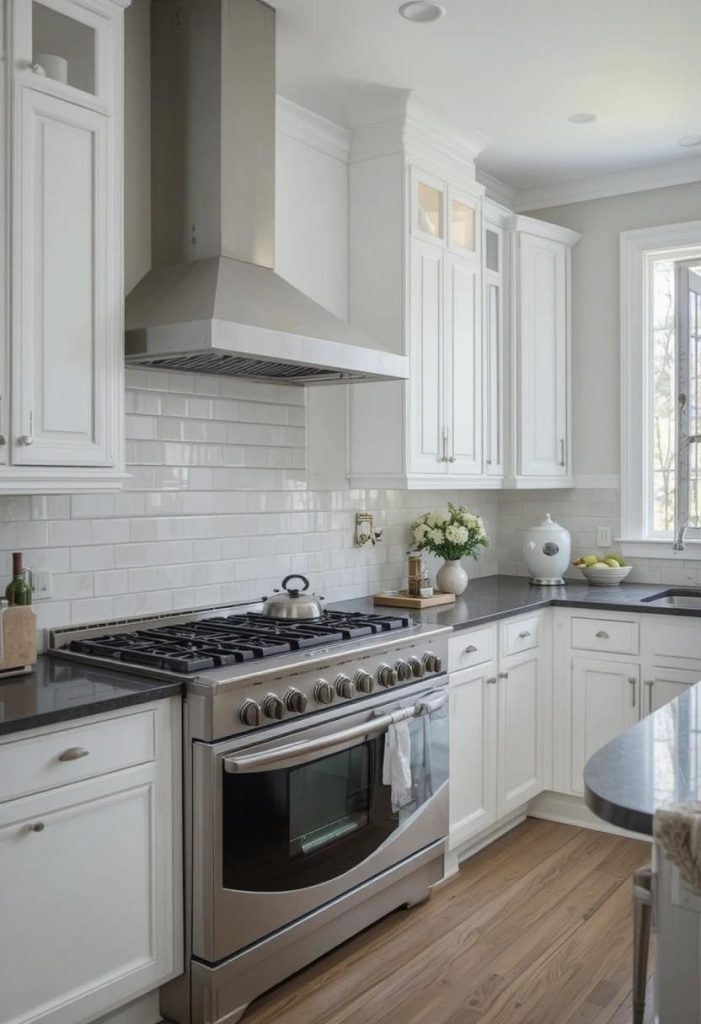
Subway tile is a timeless partner for black countertops, and I reach for it when a kitchen needs pattern without fuss. The small, glossy rectangles bounce light around, the grout lines give the wall a gentle rhythm, and the whole look feels fresh rather than fussy. I would lay the tiles in a classic brick pattern with a pale grout for a calm finish, or a dark grout if you want the pattern to stand out. Keep the tiles white or very pale grey, and let the black worktop provide the contrast. A single row of tiles above the cooker, taken up to the extractor, keeps the look tidy and easy to wipe.
How to do it: Choose a classic white subway tile in a glossy finish and lay it in a brick pattern from worktop to cabinet. Use pale grout for a calm look or dark grout for definition, and seal the grout once dry. Run the tile behind the cooker and sink, where splashes are worst, and keep the top edge straight with a tile trim.
12. Add Open Wood Shelving
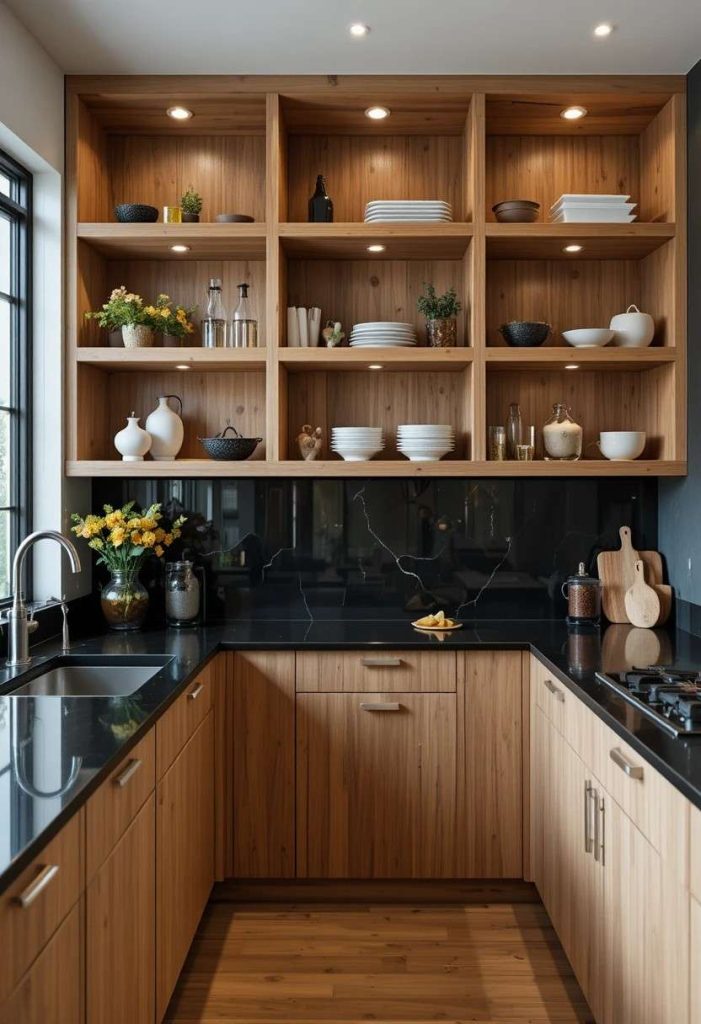
Open wood shelving beside black countertops is one of my favourite ways to stop a kitchen feeling too solid and closed in. The shelves break up a run of wall cabinets, the wood warms the black stone, and the everyday crockery you actually use becomes part of the decoration. I would keep the shelves to two, at most three, and style them loosely, with stacks of plates, a few bowls, a plant and a chopping board leaning at the end. Leave some breathing space on each shelf, because a crowded shelf looks messy rather than charming. I also keep the things I use daily at eye level, and the prettier, rarely used pieces higher up.
How to do it: Fix two solid wood shelves at eye level, with strong brackets that can carry plates and bowls. Style them with everyday crockery in white or pale tones, leave gaps between groups, and add one plant for softness. Keep a step stool nearby for the top shelf, and wipe the shelves weekly so dust does not show against the black.
13. Try a Matte Black Finish
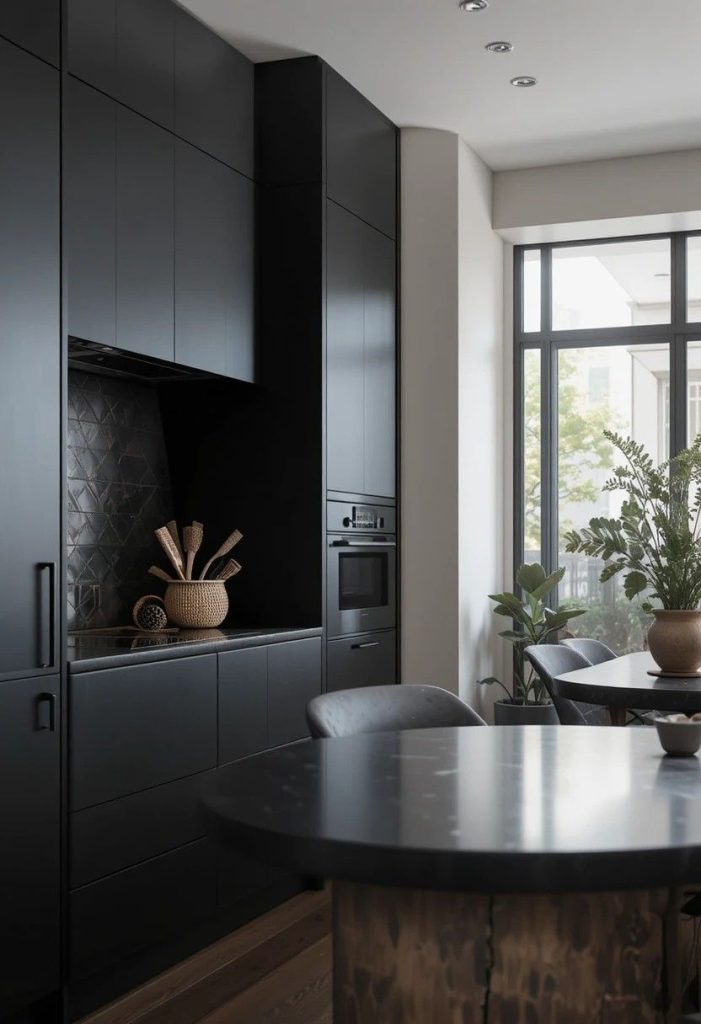
A matt black finish is quieter than gloss, and I think it suits a calm, modern kitchen far better. It absorbs light instead of reflecting it, so fingerprints and smears show less, and the worktop feels soft and velvety to the touch. I would pair it with matt cabinets in a similar tone, or with pale wood for contrast, and keep the splashback simple so the texture can speak. Honed quartz and matt laminate both give this look, and I would choose a honed stone if the budget allows, because it feels more substantial under your hands. Wipe it with a damp microfibre cloth, and it will keep its soft, even finish.
How to do it: Ask for honed or matt quartz, granite or laminate samples and compare them in daylight beside your cabinets. Choose a matt finish for both worktop and splashback if you want a seamless look, and use a soft, non-abrasive cleaner. Wipe with a damp microfibre cloth, and avoid oils and waxes that can leave shiny patches.
14. Add a Pop of Colour
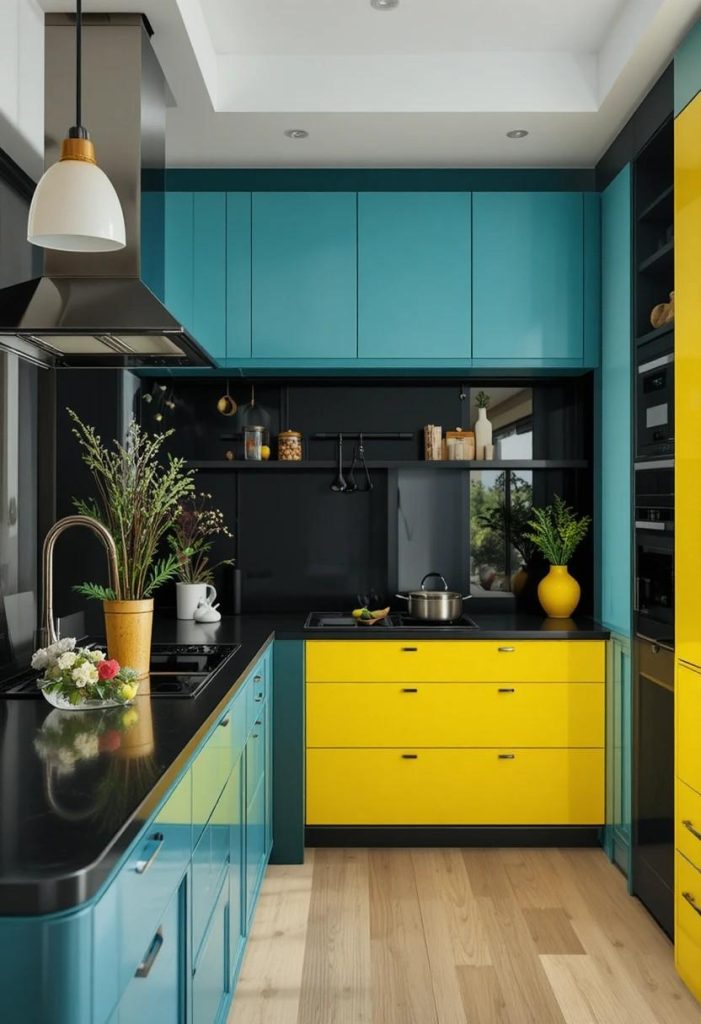
A pop of colour is the easiest way to stop black countertops feeling serious, and I love how one confident shade can lift the whole room. It might be terracotta bar stools, a deep green kettle, mustard yellow tea towels, or a single painted chair pulled up to the island. I would choose one colour and repeat it in two or three small places, rather than scattering five colours around the room. That repetition is what makes it feel intentional, not accidental. If you tire of the shade, you can change towels, stools and a vase in an afternoon, while the black worktops stay put and still look smart.
How to do it: Pick one accent colour you love, such as terracotta, sage or mustard, and buy three small items in that shade. Place them in different spots, for example stools, tea towels and a vase, so the colour travels around the room. Keep everything else neutral, and swap the accents seasonally if you like a change.
15. Pair With Navy Cabinets
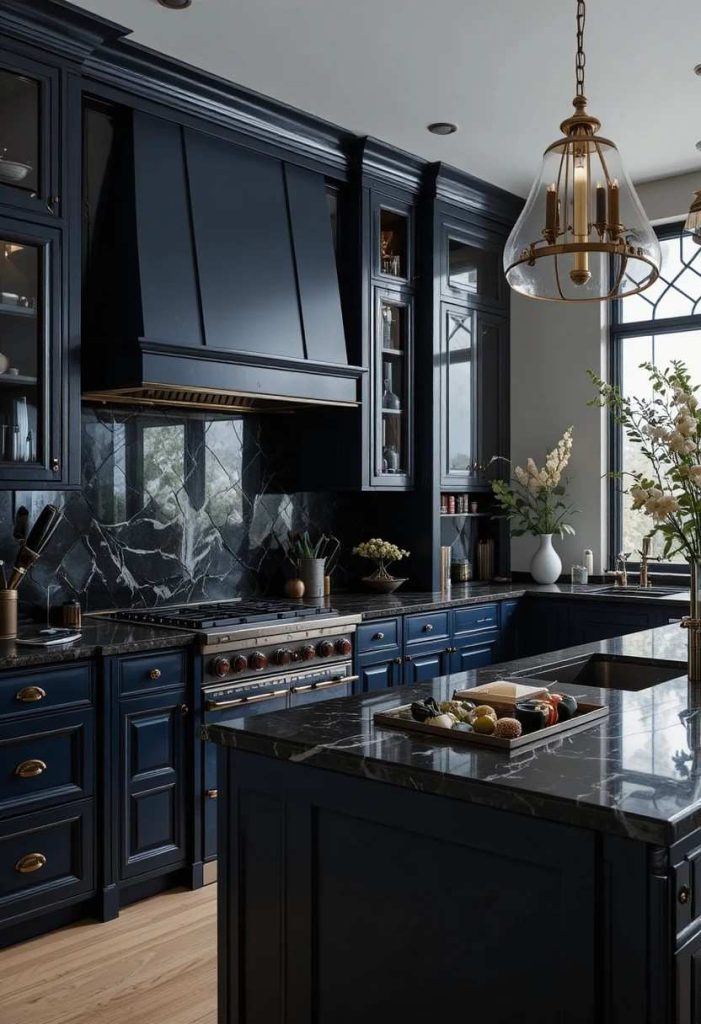
Navy cabinets with black countertops are a rich, grown-up pairing, and I think they suit a kitchen that gets used for long, slow evenings as well as quick breakfasts. The deep blue softens the black, adds a layer of colour without shouting, and works beautifully with brass handles and a pale worktop accessory or two. I would keep the walls pale and the floor light, so the room does not close in, and I would test the navy in daylight first, because some navies pull purple in the evening. If you want more inspiration for this exact pairing, these navy blue kitchen cabinet ideas show how the colour works with pale, wood and metallic finishes. Keep the splashback simple, and let the navy and black do the talking.
How to do it: Paint a large sample board in your chosen navy and check it beside the black stone morning and evening. Pair it with brushed brass handles, a pale splashback and a light floor, and keep wall paint warm white. Add one pale element, such as white crockery on open shelves, to lift the dark cabinets.
16. Keep Cabinets Handle-Free
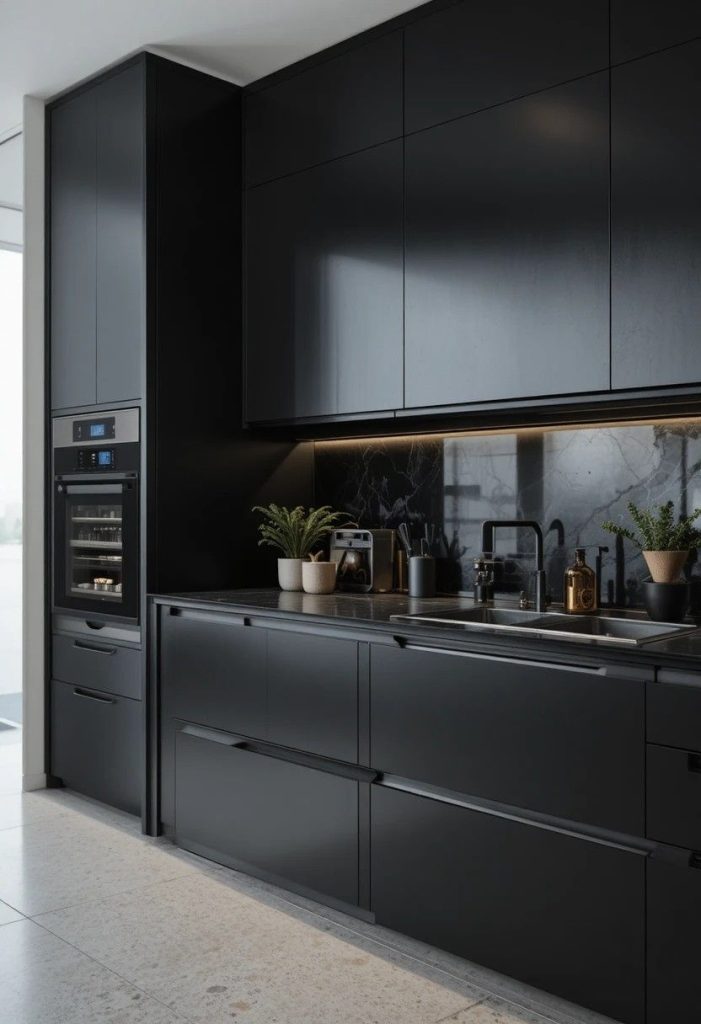
Handle-free cabinets give a black countertop kitchen a wonderfully clean, unbroken line, and I love how calm the room feels without a row of handles catching the eye. The worktop becomes the main horizontal line, the cabinet fronts read as flat planes, and the whole kitchen feels more like furniture than a fitted unit. I would choose push-to-open doors for wall cabinets, and a slim recessed channel for drawers, so you can still open everything with full hands. Keep the cabinet colour consistent, because any change in tone shows up more without handles. It is a look that suits a tidy household, and I would keep a small bowl for keys and clutter, so the clean fronts stay clear.
How to do it: Choose push-to-open mechanisms for wall cabinets and recessed channel handles for drawers and lower cabinets. Test them with wet hands before you commit, and keep the cabinet fronts in one consistent colour. Add a small tray or bowl by the door for keys, so the flat fronts stay uncluttered.
17. Add Under-Cabinet Lighting
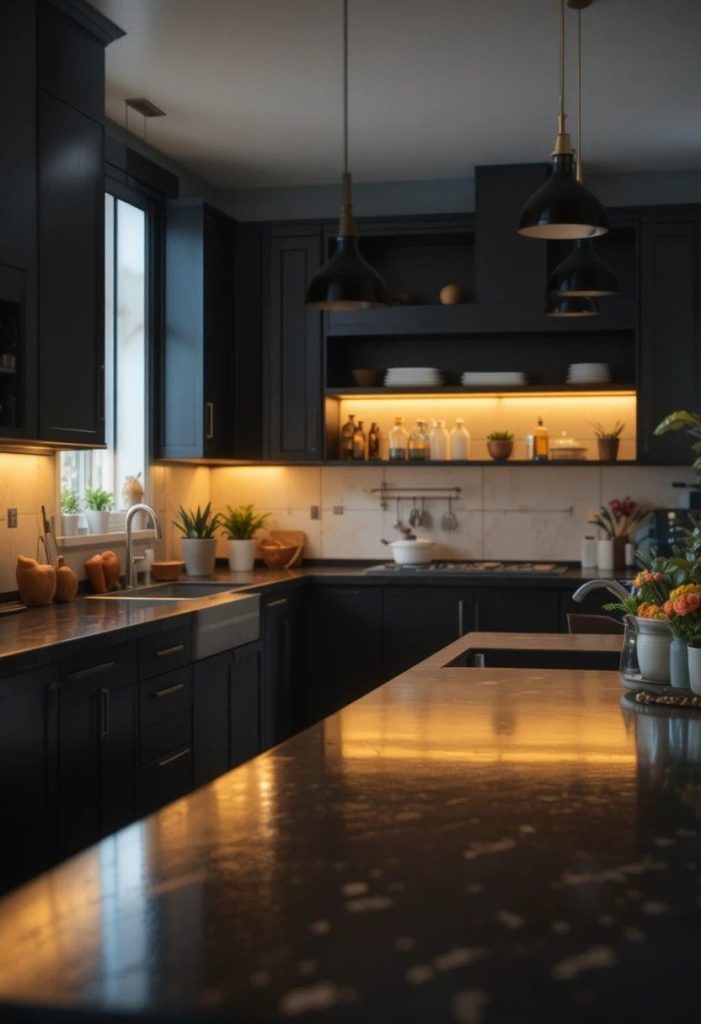
Under-cabinet lighting is the detail I notice most in the evening, because it turns black countertops from a dark slab into a warm, usable surface. A strip of warm light along the underside of the wall cabinets washes the worktop, makes chopping safer, and shows off the stone’s veining. I would choose a warm white strip, hidden behind a small lip so you see the light, not the fitting, and put it on a separate switch or dimmer from the ceiling lights. It also makes the kitchen feel welcoming at night, when a single pendant can leave the corners in shadow. Once you have cooked with it, you will wonder how you managed without it.
How to do it: Fit a warm white LED strip under each wall cabinet, set back so the fitting stays hidden. Connect it to a separate dimmer switch, and test the colour at night beside your countertops. Keep the strip continuous around corners, and wipe it monthly so dust does not dim the light.
18. Pair With Sage Green Cabinets
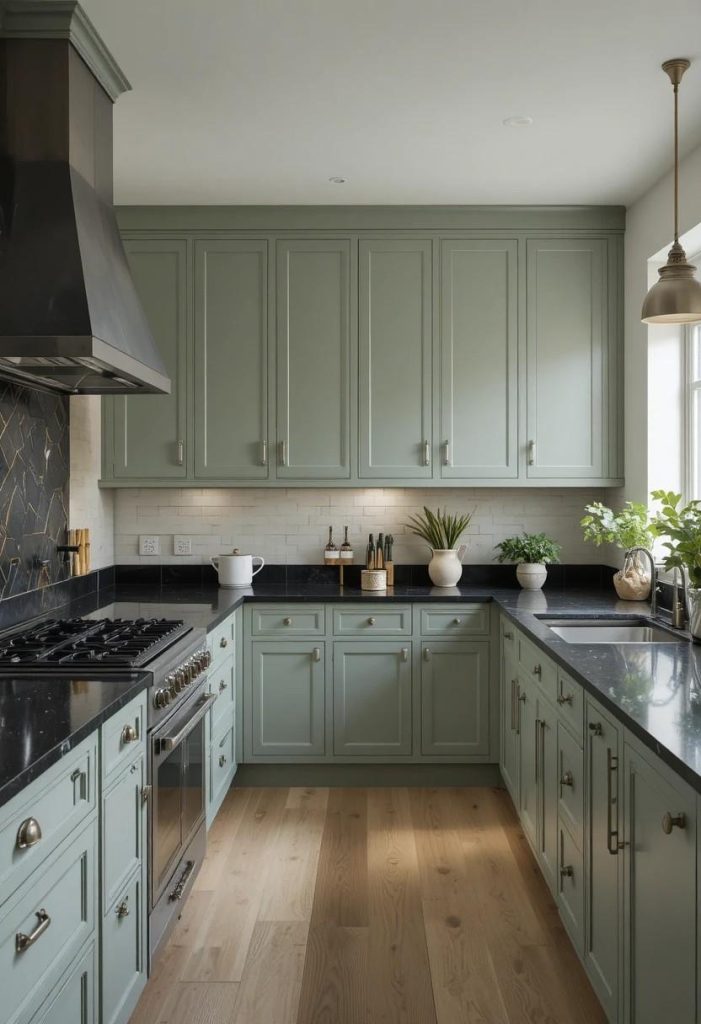
Sage green cabinets are a gentle, nature-inspired partner for black countertops, and they bring a softness I really love in a busy kitchen. The muted green takes the hardness out of the black, yet the pairing still feels modern, especially with pale wood and brushed brass. I would choose a sage with a grey undertone rather than a bright mint, and paint a large sample first, because sage can look very different in morning and evening light. A pale splashback, white crockery and a few herbs on the worktop will pick up the green and make the room feel calm and fresh. It is a colour that works in both country and contemporary kitchens, which is rare.
How to do it: Paint a large sample board in a muted sage with a grey undertone and check it beside the black stone in different lights. Pair it with pale wood, brushed brass handles and a white or pale splashback. Add herbs and pale crockery to echo the green, and keep the floor light so the room stays fresh.
19. Add a Marble-Look Island Top
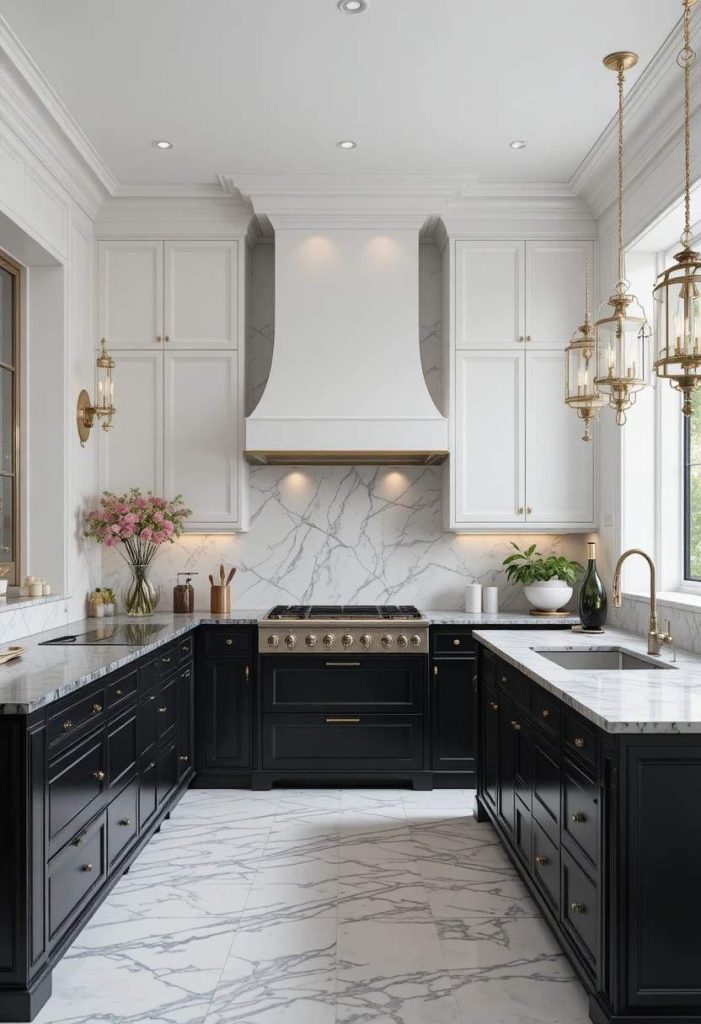
A marble-look island top is a lovely compromise if you love marble but want the practicality of black countertops elsewhere. The island becomes a pale, veined centrepiece, while the black worktops around the edges keep the room grounded and modern. I would choose a quartz with soft grey veining that echoes the black stone, and keep the island cabinets in a pale colour so the top can shine. A couple of bar stools, a simple vase and a chopping board are all the styling it needs. In a family kitchen, I would pick a stain-resistant quartz, because an island top takes the brunt of breakfasts, homework and Sunday roasts.
How to do it: Choose a marble-look quartz with soft grey veining that matches the tone of your black worktops. Keep island cabinets pale and plain, and use the same pale tone on stools or pendants. Seal natural marble if you use it, and wipe spills promptly so the pale top stays bright.
20. Keep Decor Minimal
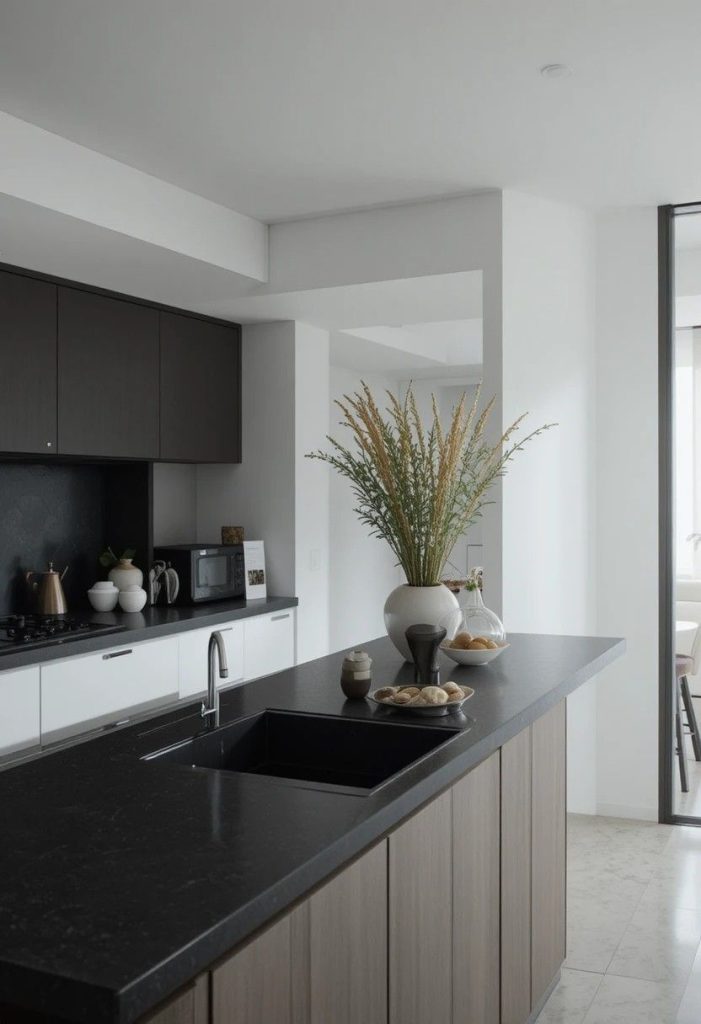
Keeping the decor minimal is the hardest idea on this list for me, because I love a pretty kitchen, but it is also the one that makes black countertops look their best. A clear worktop shows off the stone, the room feels calmer, and cooking becomes easier when you are not moving jars and boards out of the way. I keep only the things I use daily on the surface, such as the kettle, a chopping board and a small herb pot, and everything else lives in a cupboard. If clutter tends to creep back, these kitchen organization ideas are a practical next step for finding a home for every item. A clear worktop, checked each evening, is a small habit that changes how the whole kitchen feels.
How to do it: Take everything off the worktop, then put back only what you use every day. Give every other item a cupboard home, using trays and risers inside cupboards so things stay visible. Do a two-minute clear-up each evening, and keep a single tray for oils and salt by the cooker so the rest stays clear.
21. Add a Warm Wood Island
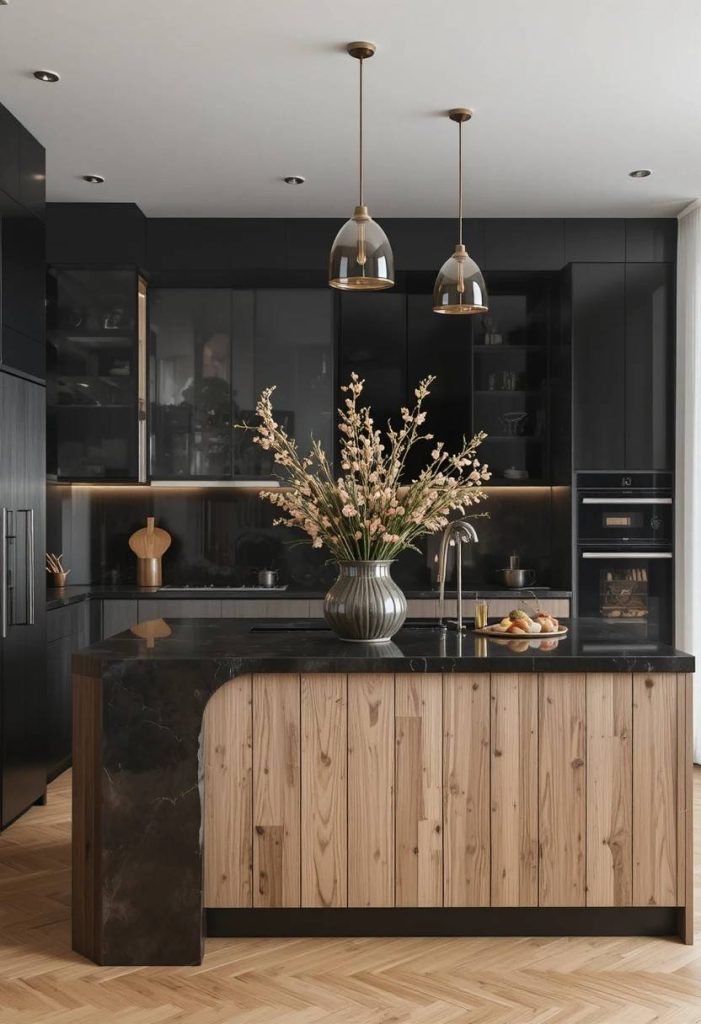
A warm wood island is my favourite way to bring a black countertop kitchen back to earth. The timber adds warmth and texture, the black top keeps it modern, and the island becomes the place where everyone gathers, leans and chats while dinner cooks. I would choose a mid-tone oak or walnut, keep the island front simple with flat panels, and add stools in a pale wood or rattan to echo the timber. A black pendant or two above the island will tie the wood and stone together. Keep the island top clear, because a wooden island with a black top is already a statement on its own.
How to do it: Choose a mid-tone oak or walnut island base and a black quartz or granite top with a soft edge. Keep the front panels flat and plain, add pale wood or rattan stools, and hang one or two black pendants above. Oil or wax the wood regularly, and wipe the black top with a damp cloth after cooking.
22. Pair With Patterned Tile Flooring
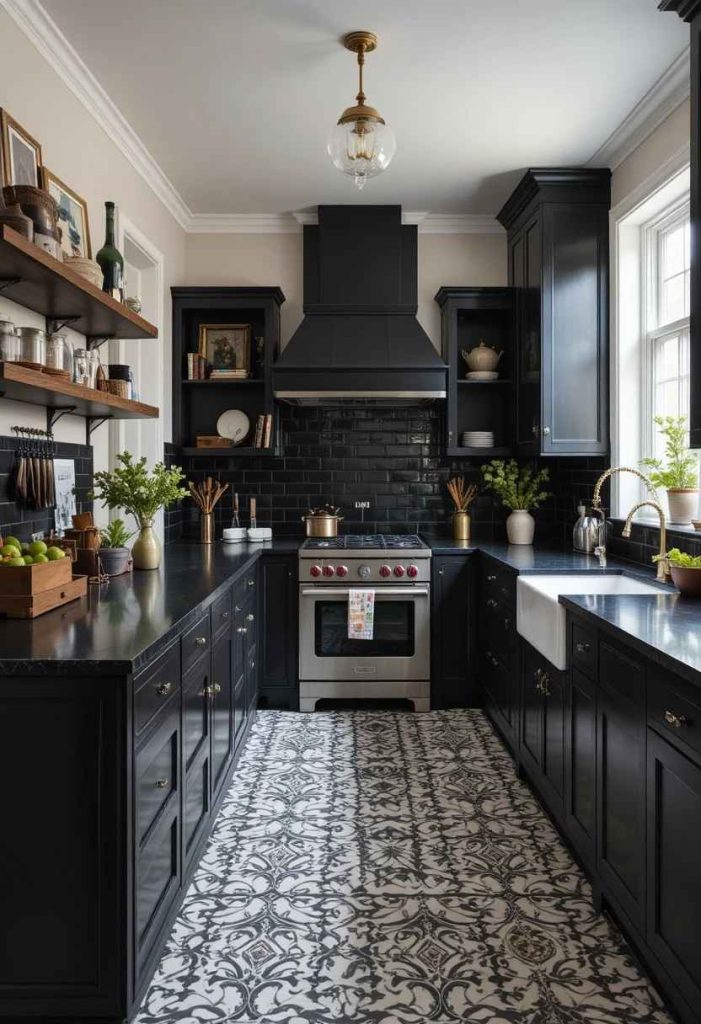
Patterned tile flooring is a brave choice beside black countertops, and I think it works when the pattern is confident but the colours are calm. A black and white encaustic-style tile, or a soft grey pattern, adds movement underfoot and stops a dark kitchen feeling flat. I would keep the cabinets plain and the splashback simple, so the floor can be the pattern in the room. A large-scale pattern suits a bigger kitchen, while a smaller pattern works better in a galley. I also love how patterned tiles hide crumbs and marks, which is a practical bonus in a kitchen that gets used every day.
How to do it: Choose a patterned tile in black, white and a soft grey, and order a full box to lay out at home first. Lay large patterns in open kitchens and smaller patterns in galleys, and keep cabinets and splashback plain. Use a dark grout to hide marks, and seal the tiles if they are natural stone.
23. Add Glass-Front Cabinets
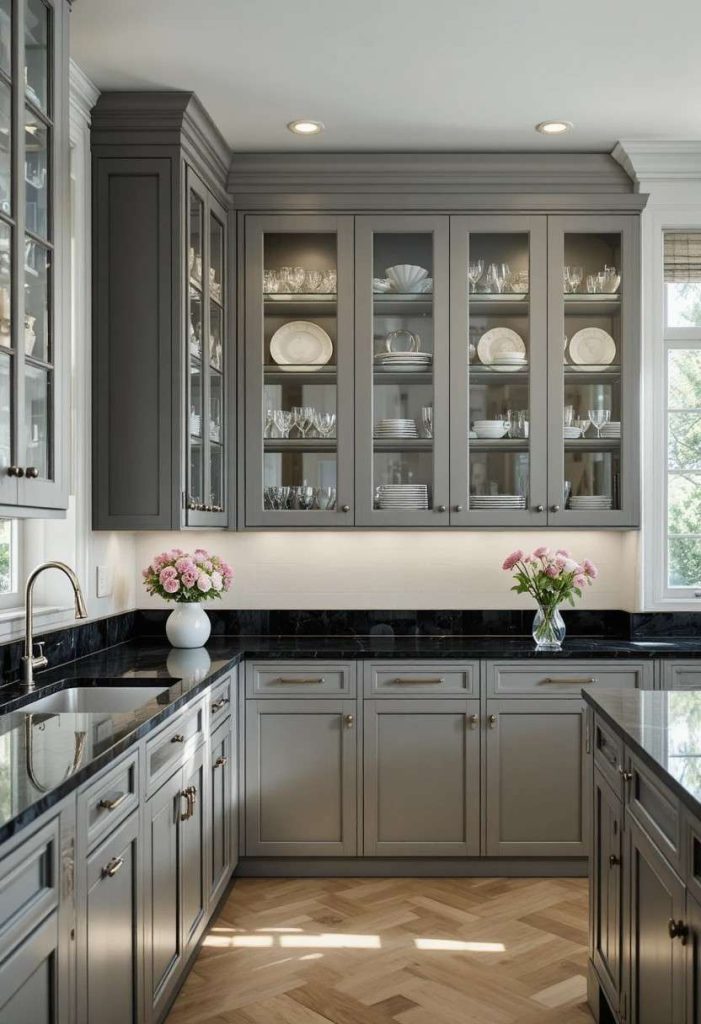
Glass-front cabinets are a gentle way to lighten a kitchen with black countertops, because they break up solid cabinet fronts and let light through. I love seeing pale crockery, glassware and a few pretty bowls behind the glass, and the reflection adds a soft sparkle that black stone alone cannot give. I would use glass fronts on two or three upper cabinets only, rather than the whole run, so the look stays calm. Keep the contents tidy and in one colour family, because clutter shows through glass. A warm light inside one cabinet, switched on in the evening, makes the whole kitchen feel welcoming.
How to do it: Choose glass fronts for two or three upper cabinets, keeping the rest solid. Fill them with pale crockery and glassware in one colour family, leaving space between groups. Add a small warm light inside one cabinet, and wipe the glass weekly so it stays clear against the black.
24. Embrace a Modern Monochrome Look
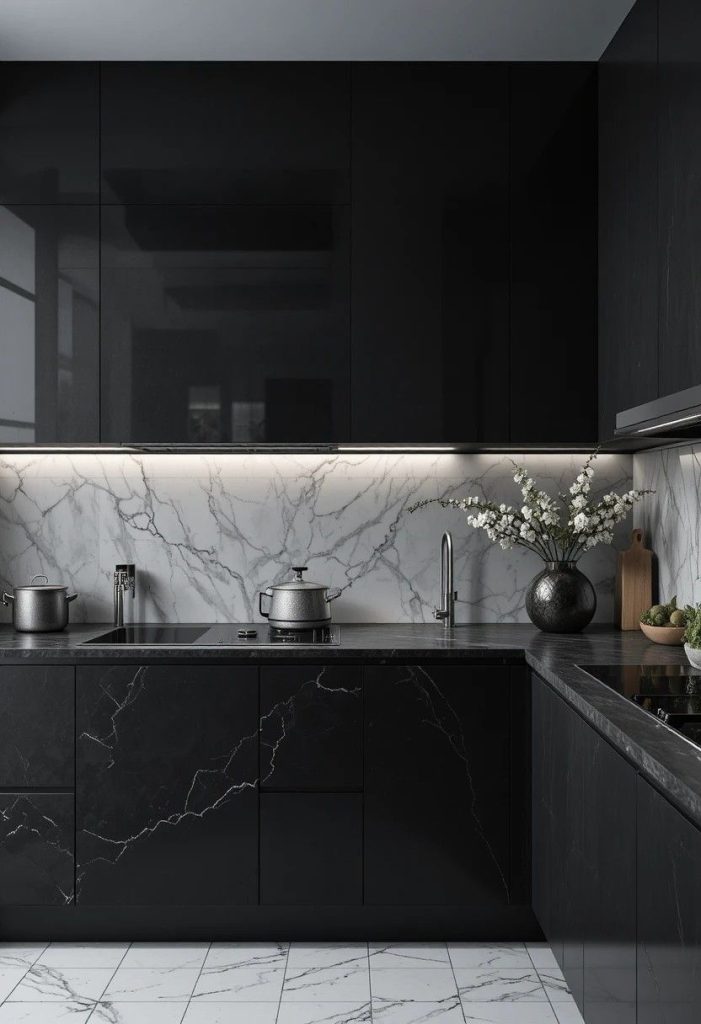
A modern monochrome kitchen, in black, white and grey, is the most graphic look in this list, and I find it surprisingly easy to live with. The palette is limited, so every choice feels deliberate, and the black countertops become the darkest note in a calm, layered composition. I would mix textures to keep it interesting, with matt cabinets, a glossy tile, a soft rug and a little brushed metal. A single plant or a pale wood chopping board stops the room feeling cold, and I would avoid adding a second strong colour. It is a look that suits a small, light kitchen particularly well, because the limited palette makes the room feel larger.
How to do it: Limit the palette to black, white and one grey, and repeat each tone at least twice in the room. Mix matt, gloss and soft textures, add one plant and one pale wood piece for warmth, and keep accessories in the same three tones. Step back and remove anything that introduces a fourth strong colour.
25. Add Warm Metallic Bar Stools
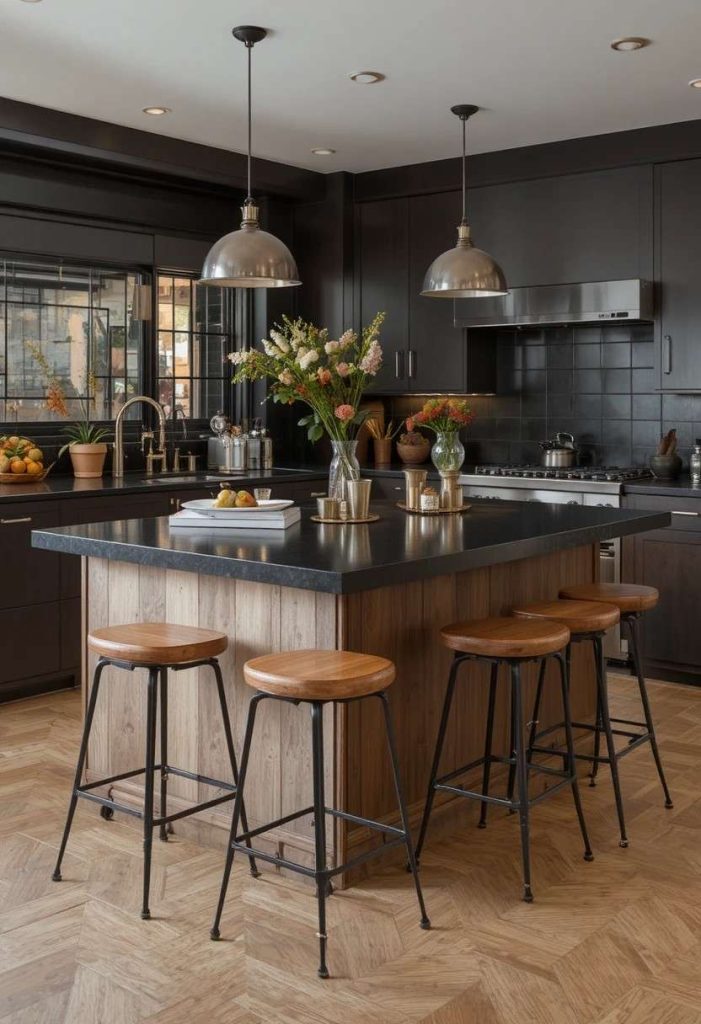
Warm metallic bar stools are a small, joyful detail beside black countertops, and they make an island feel like a place to sit, not just a place to cook. Brass, copper or a soft gold frame catches the light, warms the black stone, and adds a little glamour without a big renovation. I would choose stools with a comfortable seat and a footrest, because an island stool that hurts after ten minutes never gets used. Keep the metal finish consistent with your taps and handles, and add a cushion in a muted fabric if the seat is hard. Two stools are enough for a small island, while a larger island can take three.
How to do it: Measure your island height and choose stools with a seat about 25 cm below the worktop. Pick a warm metallic frame that matches your taps and handles, add a footrest and a comfortable seat, and test the stools for wobble on your floor. Add a washable cushion if the seat is metal, and keep one stool free for bags and coats.
26. Keep It Bright With Big Windows
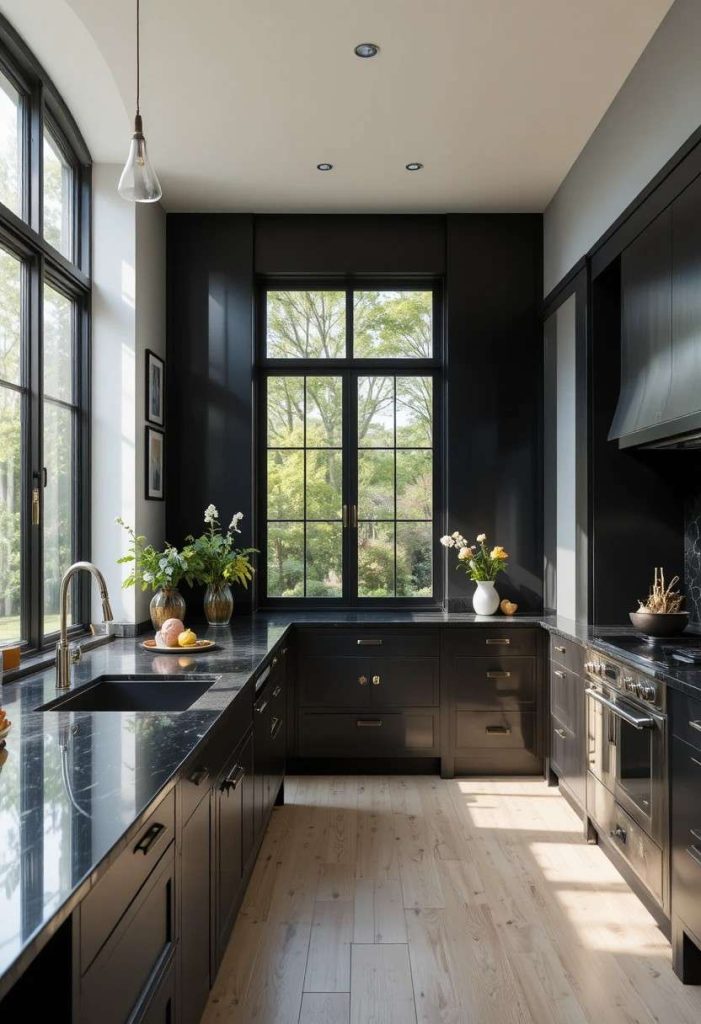
Big windows are the best friend of black countertops, because natural light is what keeps a dark surface feeling bright and alive. I love a kitchen where the worktop sits under a wide window, so you can chop vegetables in daylight and watch the garden while the kettle boils. If your windows are small, I would keep the frames pale, the glass clean, and the windowsill clear, so every bit of light gets through. A sheer blind or a simple cafe curtain gives privacy without blocking light. In a north-facing kitchen, I would also add a mirror on the opposite wall, to bounce the light back across the black stone.
How to do it: Keep window frames pale, glass clean and sills clear of clutter. Choose sheer blinds or cafe curtains that give privacy without blocking light, and place the sink or prep area near the window if you can. Add a mirror on the opposite wall in a dark kitchen, and keep the worktop pale accessories to reflect the light.
27. Add Gentle Personal Touches
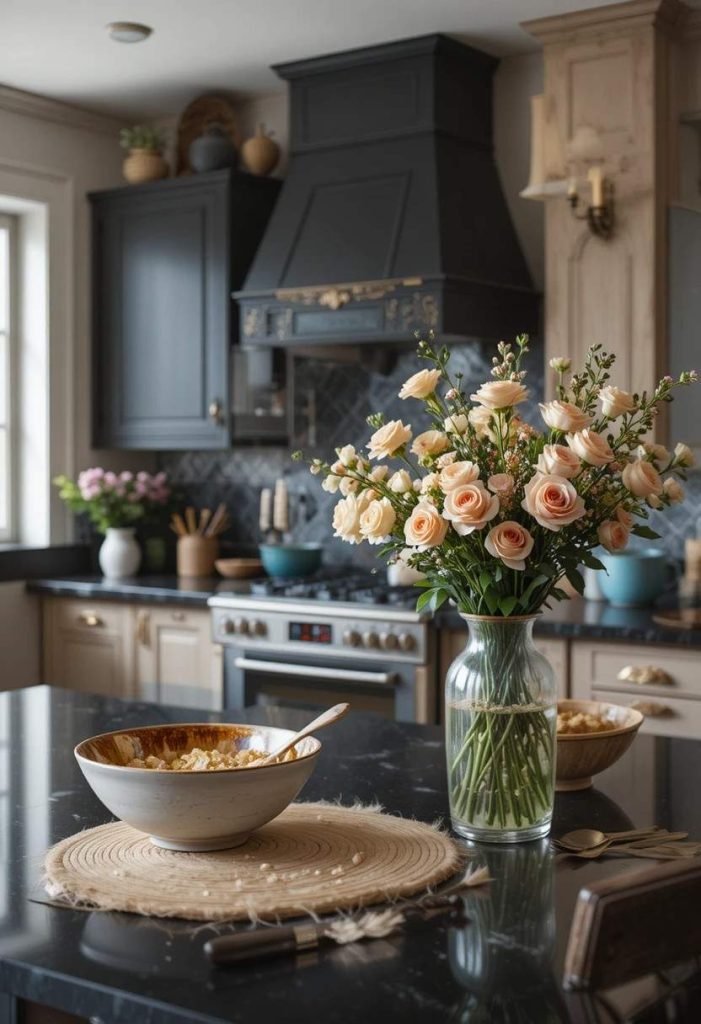
Personal touches are what turn a black countertop kitchen from a showroom into a home, and they are the detail I would never skip. It might be a favourite mug on a hook, a child’s drawing pinned inside a cupboard door, a recipe book with splattered pages, or a vase of flowers from the garden. I keep a few of these small, meaningful things on display, and I change them with the seasons, so the kitchen always feels like ours. The black countertops provide a calm, dark backdrop, and the personal pieces stand out against it. Choose things that make you smile, not things you think you should display, because a kitchen should feel lived in.
How to do it: Choose three personal items you love, such as a favourite mug, a framed family recipe and a vase of garden flowers. Display them in different spots, for example a hook, an open shelf and the island, so they feel spread through the room. Change one item each season, and keep the rest of the worktop clear so the personal pieces stand out.
Frequently Asked Questions
Do black countertops make a kitchen look smaller?
They can do, if the rest of the room is dark as well, but they do not have to. Pair black worktops with pale cabinets, a light floor and good lighting, and the dark surface reads as a deliberate contrast rather than a heavy block. In a small kitchen, keep the splashback pale, use under-cabinet lighting, and leave some worktop clear, so the eye moves across the room instead of stopping at the dark stone.
What cabinet colours work best with black countertops?
White, soft grey, sage green and navy all work beautifully, for different reasons. White gives the brightest contrast, grey softens it, sage adds a gentle, natural feel, and navy adds depth and drama. Warm wood is also a wonderful partner, because it brings warmth to the black stone. I would sample any colour beside your actual countertop, in daylight, before you commit.
Do black countertops show every mark?
Glossy black stone does show dust, water marks and fingerprints more than a pale worktop, but a matt or honed finish hides them far better. I wipe mine with a damp microfibre cloth after cooking, and I keep a small cloth by the sink for quick wipe-downs. Choosing a stone with a little veining or texture also helps, because marks blend into the pattern rather than standing out on a plain surface.
What is the best material for black countertops?
Quartz is my usual recommendation, because it is hard-wearing, non-porous and easy to wipe, and it comes in matt and gloss finishes with veining that suits many kitchens. Granite is also beautiful and very durable, but it needs sealing and a little more care. Laminate is the budget-friendly option, and modern black laminates look far better than older versions, though they can scratch more easily.
How do I stop black countertops feeling too dark?
Light is the answer, in three forms. Use natural light by keeping windows clear, add warm under-cabinet lighting for the worktop, and choose pale cabinets, a light splashback and a pale floor to reflect light back into the room. A few warm metals, such as brass handles, and a plant or two will also soften the dark stone, so the kitchen feels warm and welcoming rather than heavy.
Your Black Countertop Kitchen Checklist
☐ Choose pale or warm cabinets to balance the black worktops
☐ Sample cabinet paint beside the black stone in daylight
☐ Pick a light splashback, such as white marble or subway tile
☐ Add warm under-cabinet lighting on a dimmer
☐ Hang warm pendant lights over the island or sink
☐ Choose brushed brass or black hardware and keep it consistent
☐ Keep the floor light, with a warm stone or wood-look tile
☐ Add one plant or a pot of herbs for freshness
☐ Clear the worktop each evening, keeping only daily essentials out
☐ Use a matt or honed finish if fingerprints worry you
☐ Wipe the worktops with a damp microfibre cloth after cooking
☐ Add one accent colour, repeated in two or three small places
☐ Check the island overhang and seating before ordering stone
☐ Step back and remove anything that does not earn its place
A Final Gentle Thought
Black countertops are a brave choice, and I think that is exactly why they work so well. They give a kitchen a clear anchor, a surface that looks smart in the morning light and warm in the evening, and a backdrop that makes pale cabinets, warm wood and brass shine. Start with the pairing that feels most like you, whether that is crisp white, soft sage or deep navy, then add light, texture and a few personal touches. Take your time with samples, trust your eye in daylight, and choose the details you will still love in five years. Your kitchen does not need to be perfect, it just needs to feel like home every time you walk in.
6 Comments