25 Stunning Curtain Ideas That Will Transform Your Living Room
The Ultimate Guide to Curtain Styles, Fabrics & Decor Inspiration
Curtains are one of the most powerful and underestimated tools in interior design. They frame your windows, anchor your color palette, control natural light, add texture and warmth, and — perhaps most importantly — they set the emotional tone of a room. The right curtains can make a small living room feel grand, a bare room feel cozy, and a forgettable space feel genuinely beautiful.
With home decor accounting for over 23 billion pins across 682 million boards on Pinterest, curtains remain one of the platform’s most consistently searched categories. Whether you are starting from scratch in a new home or refreshing a space that needs new energy, this guide gives you 25 detailed, actionable curtain ideas — from timeless classics to bold maximalist statements — complete with fabric recommendations, styling tips.
Let’s transform your living room, one window at a time.
5 Golden Rules for Choosing Curtains
- Hang high, hang wide: Always mount your curtain rod close to the ceiling (2-4 inches below) and extend it 6-12 inches beyond the window frame on each side.
- Choose the right length: Floor-length curtains (touching or slightly pooling on the floor) almost always look more intentional and elegant than sill-length or apron-length options.
- Double up on fabric width: For full, luxurious folds, use fabric that is at least 2 to 2.5 times the width of your window.
- Match fabric to function: Heavy velvet for warmth and drama, sheer linen for light and airiness, blackout fabrics for bedrooms and media rooms.
- Layer for depth: Combining a sheer layer with a heavier outer panel gives you flexibility, visual richness, and a truly designed look.
The 25 Curtain Ideas
1. Floor-to-Ceiling Velvet Curtains in Deep Emerald Green
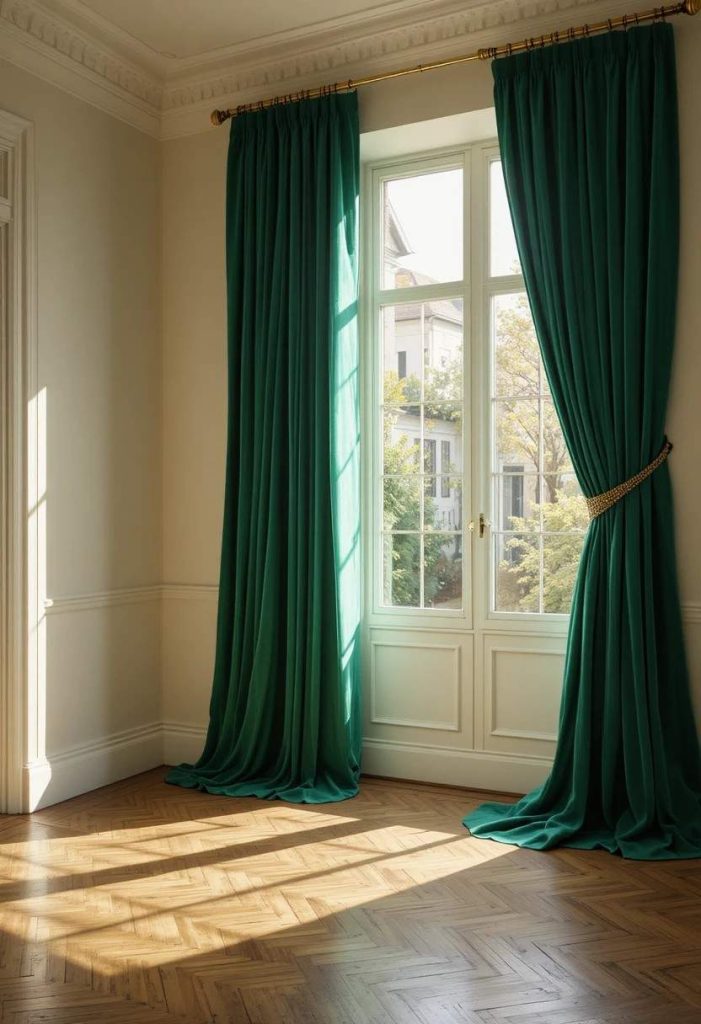
Nothing commands attention in a living room quite like floor-to-ceiling velvet curtains in a rich emerald green. Velvet has a natural depth and sheen that catches light differently throughout the day, making your living room feel alive and dynamic. Hang your curtain rod as close to the ceiling as possible — ideally within 2 to 4 inches — and allow the fabric to pool slightly on the floor for a theatrical, luxurious effect. Emerald green pairs beautifully with brass hardware, warm wood tones, and cream or off-white walls. This look works particularly well in rooms with natural light, as the velvet will shift between deep forest green and a bright jewel tone depending on the angle of sunlight.
Style tip: Add brass curtain rings and a matching emerald throw pillow to tie the look together.
2. Classic White Linen Sheer Curtains for Airy Elegance
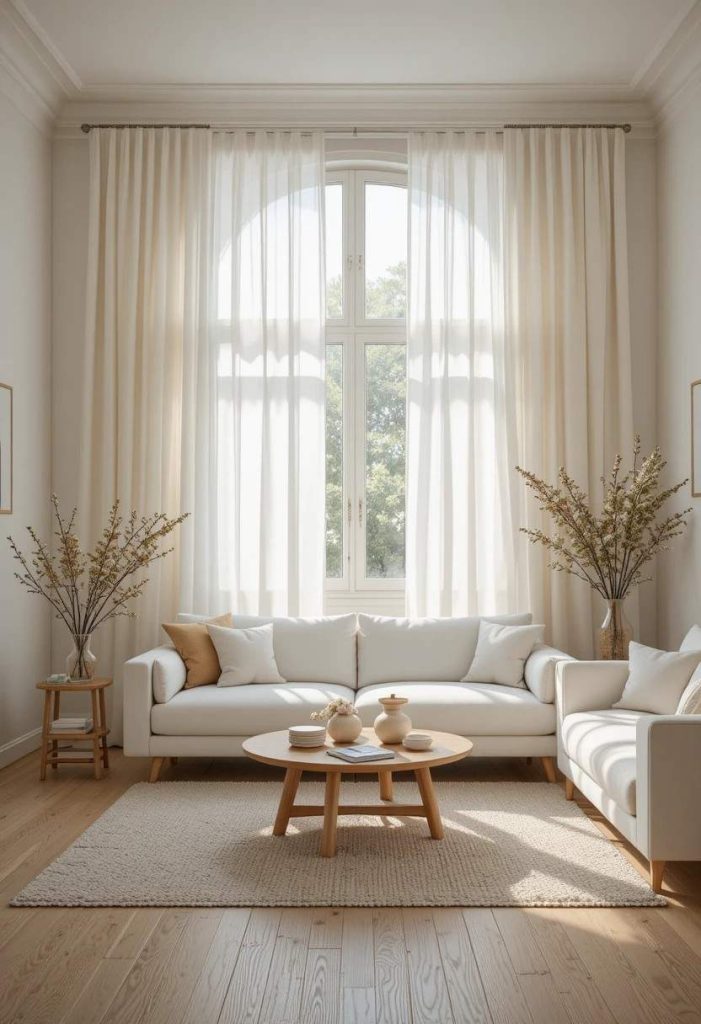
White linen sheer curtains are a timeless choice that works in virtually every living room style — from coastal and Scandinavian to modern farmhouse and minimalist. Sheer linen allows soft, diffused natural light to fill the room while maintaining a sense of privacy during daylight hours. Unlike synthetic sheers, linen has a beautiful natural texture with subtle variations in the weave that add warmth and visual interest without being distracting. The key to making sheers look intentional rather than incomplete is generous fullness — use fabric that is at least 2 to 2.5 times the width of your window for elegant, billowing folds that frame the view beautifully.
Style tip: Layer white sheers behind heavier linen or cotton drapes in a warm neutral tone for a polished, layered look.
3. Bold Geometric Print Curtains for a Modern Statement
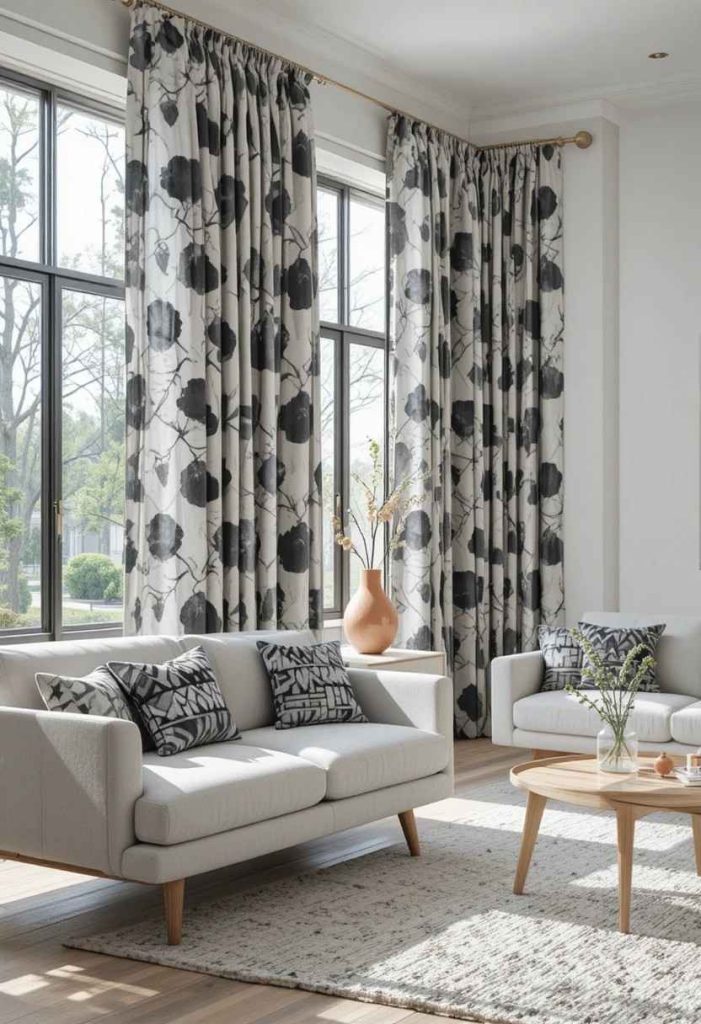
Geometric print curtains bring a graphic, modern energy to any living room. Whether you choose a large-scale diamond pattern, interlocking hexagons, or a bold stripe in contrasting colors, geometric prints turn your windows into works of art. The key to making this work is restraint elsewhere in the room — let the curtains be the hero by keeping your furniture, rugs, and accessories in solid, complementary tones. Black and white geometric curtains create a sophisticated, contemporary feel, while color-blocked geometric prints in terracotta, navy, and cream add warmth and personality. This style works especially well in rooms with large windows, where the pattern has room to breathe and make its full impact.
Style tip: Echo one color from the curtain pattern in a single accent piece — a pillow, a vase, or a throw — to ground the look.
4. Layered Curtains: Sheer Plus Blackout for Style and Function
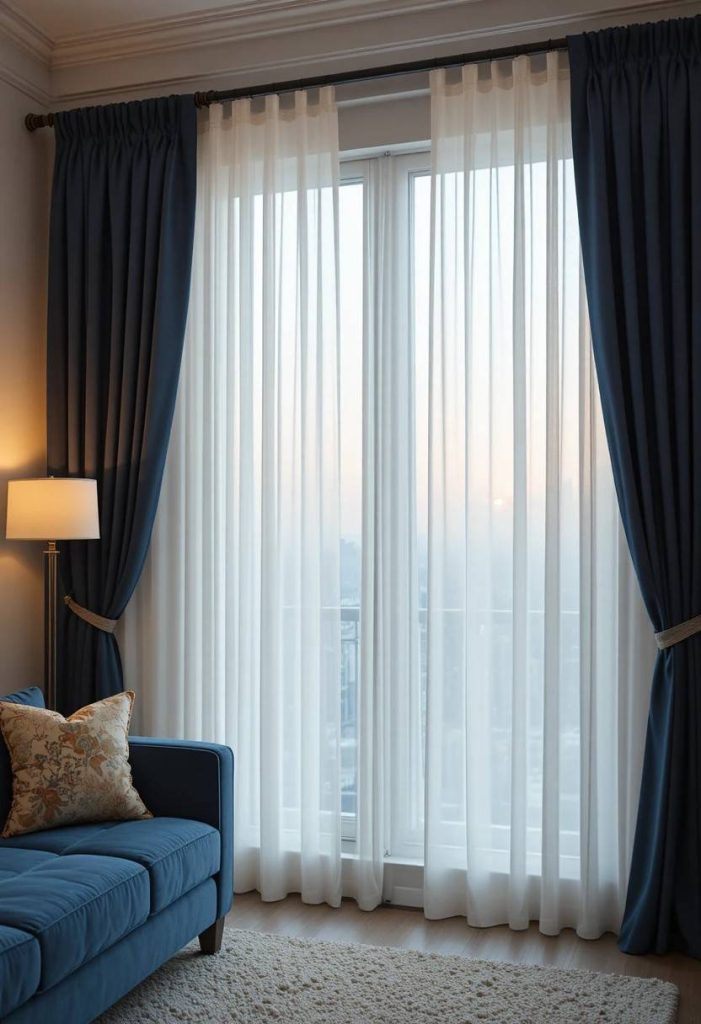
The double-layer curtain technique is one of the most versatile and design-forward approaches to window treatments. By combining a sheer panel closest to the window with a heavier blackout or block-out panel on the outside, you create a flexible system that gives you full light control while looking effortlessly chic. During the day, pull back the outer panels and let the sheers filter soft light. In the evening, close both layers for complete privacy and a sense of cocoon-like warmth. Choose sheers in a light neutral and outer panels in a bold color or rich texture for maximum visual impact. The layers create depth and dimension that a single panel simply cannot achieve.
Style tip: Use a double rod bracket system so both layers hang from the same window frame for a clean, built-in look.
5. Rust and Terracotta Curtains for a Warm, Earthy Vibe
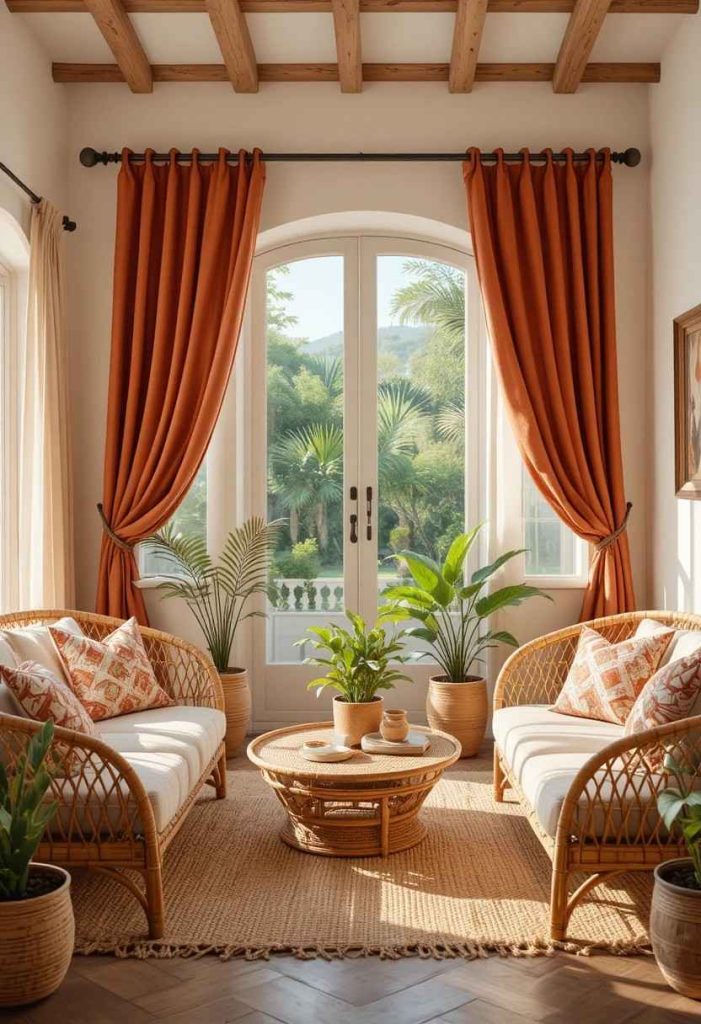
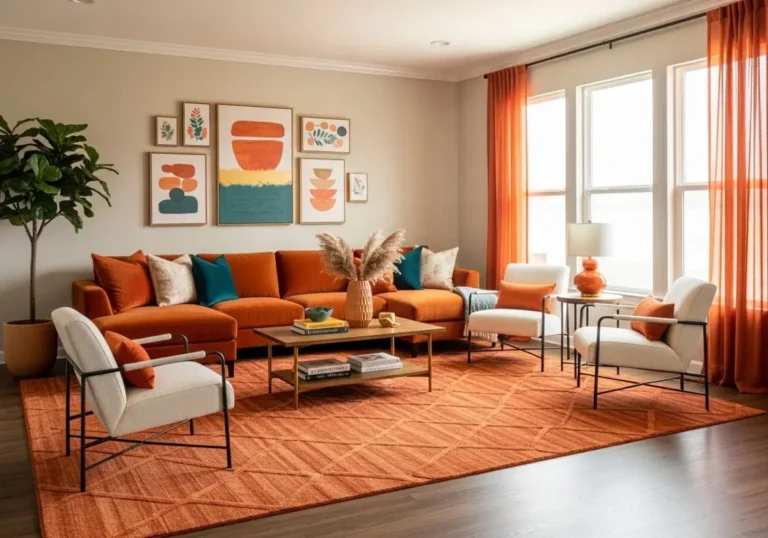
Earthy tones like rust, terracotta, burnt sienna, and clay are among the most searched home decor colors on Pinterest right now, and for good reason. These warm, grounded hues bring the comfort and calm of nature indoors and create an instantly cozy atmosphere. Rust or terracotta curtains work beautifully with natural materials like rattan furniture, jute rugs, and raw wood shelving. They pair particularly well with warm white or sand-colored walls. In terms of fabric, linen and cotton are the most natural fit for this earthy palette — their texture echoes the organic warmth of the color itself. This style draws heavily from Mediterranean, Moroccan, and boho design traditions that are hugely popular in contemporary interior trends.
Style tip: Combine rust curtains with green plants and wicker furniture for a full earthy, organic living room palette.
6. Dramatic Black Curtains for a Bold, Sophisticated Look
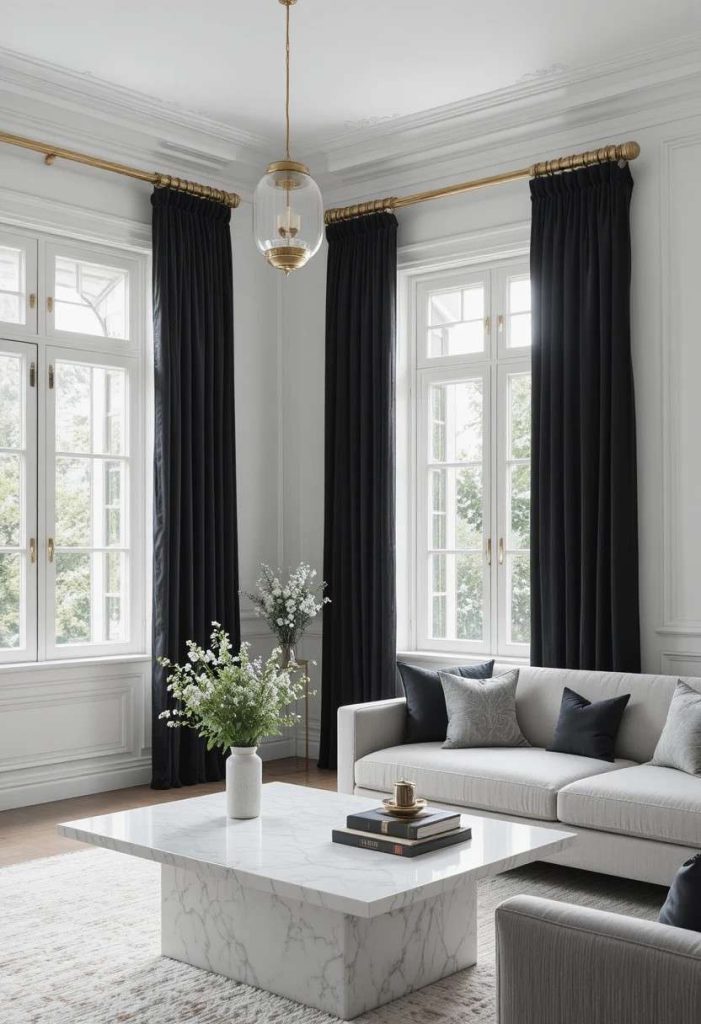
Black curtains are a power move in interior design — bold, dramatic, and undeniably sophisticated. Far from making a room feel dark or heavy, black curtains can actually make a room feel more defined and elevated when used correctly. They create a stunning contrast against white or light gray walls, frame artwork and furniture beautifully, and add a moody, editorial quality to a living room. Black velvet curtains are particularly striking, while black linen offers a more relaxed, organic take on the look. The secret to making black curtains work is balance: pair them with plenty of light surfaces, reflective accessories like mirrors and metallic accents, and warm lighting to prevent the space from feeling oppressive.
Style tip: Black curtains look especially sharp against pure white walls with gold or brass hardware for a high-contrast, luxe aesthetic.
7. Floral Print Curtains for a Romantic, Cottage-Core Feel
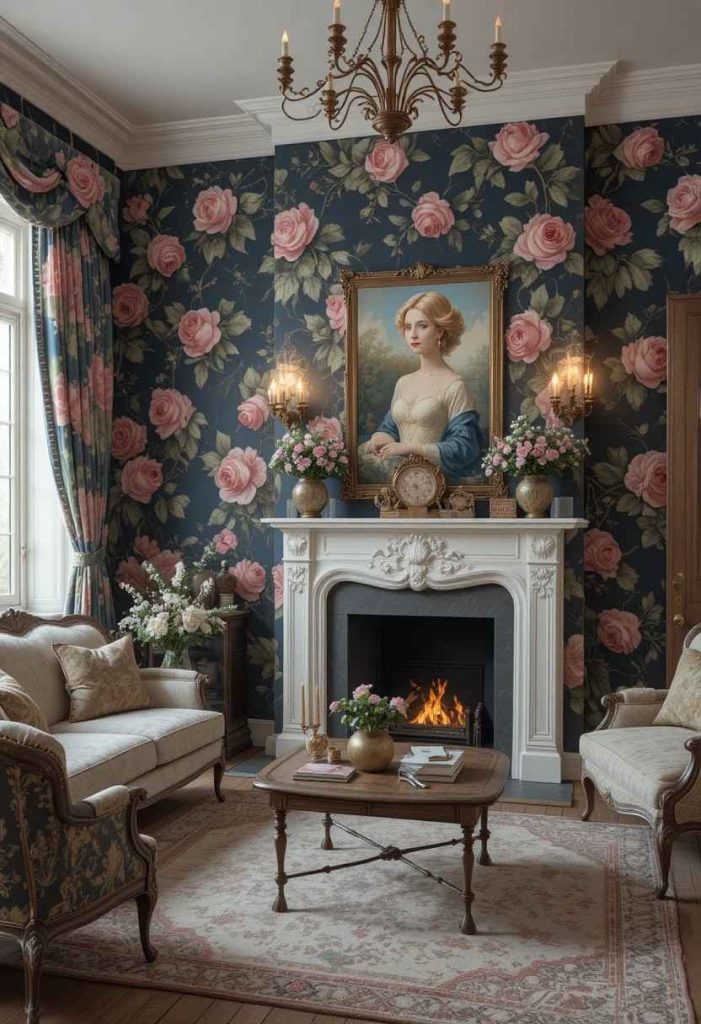
Floral curtains have experienced a massive resurgence in interior design, especially in the context of the cottage-core, grandmillennial, and romantic maximalism trends that dominate Pinterest home decor boards. Large-scale botanical florals in rich colors — think blowsy roses, peonies, tropical leaves — bring warmth, personality, and a sense of narrative to a living room. The key to making floral curtains feel fresh and current rather than dated is scale and contrast. Oversized, painterly florals on a dark background (navy, forest green, or charcoal) feel deeply chic, while smaller, scattered prints on a cream base feel lighter and more casual. Either way, florals signal a room that is curated, personal, and lived-in.
Style tip: Let the floral curtains set the color palette for the whole room — pull accent colors from the print into your cushions and artwork.
8. Bamboo Beaded Curtains as Boho Room Dividers
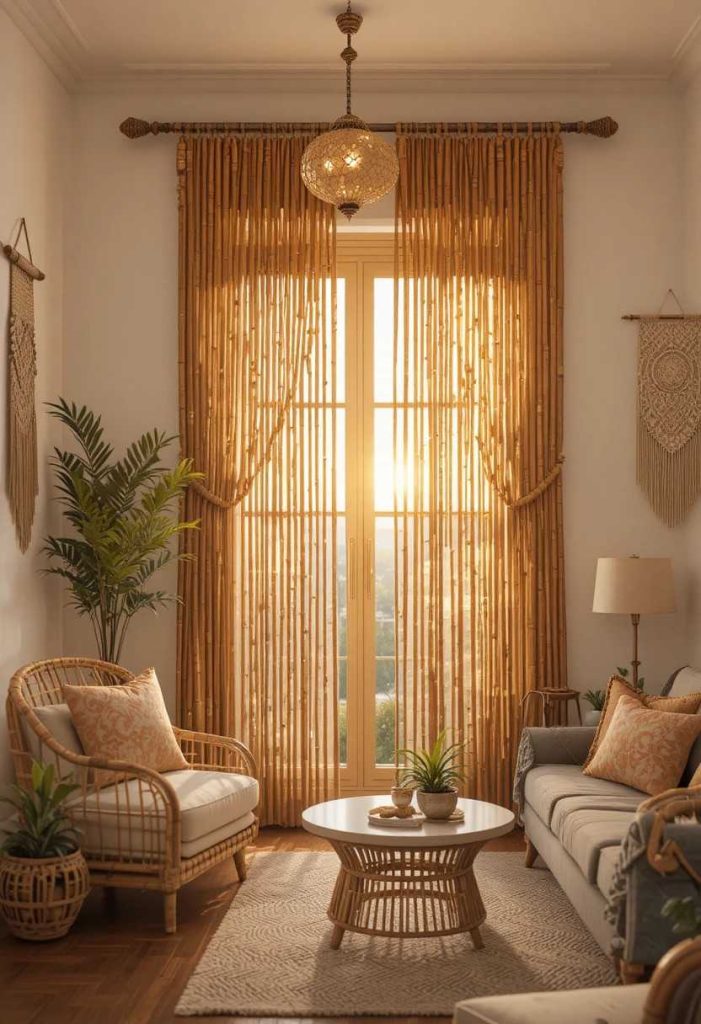
One of the breakout curtain trends of 2025 and 2026 according to Pinterest Predicts data, bamboo beaded curtains add an unmistakable bohemian, handcrafted quality to a living room. While traditionally used as doorway dividers, they work beautifully as window treatments in relaxed, eclectic interiors. Natural bamboo beads in raw or lightly stained wood tones complement every warm color palette and pair perfectly with rattan, macrame, and woven textiles. They filter light in a gorgeous dappled, almost magical way, casting interesting shadow patterns across the room. For a more curated look, combine bamboo bead curtains with soft linen drapes on the outer panels.
Style tip: Use bamboo beaded curtains as a stylish living room-to-dining room divider to add texture and bohemian character without a hard wall.
9. Navy Blue Curtains for a Classic, Timeless Scheme
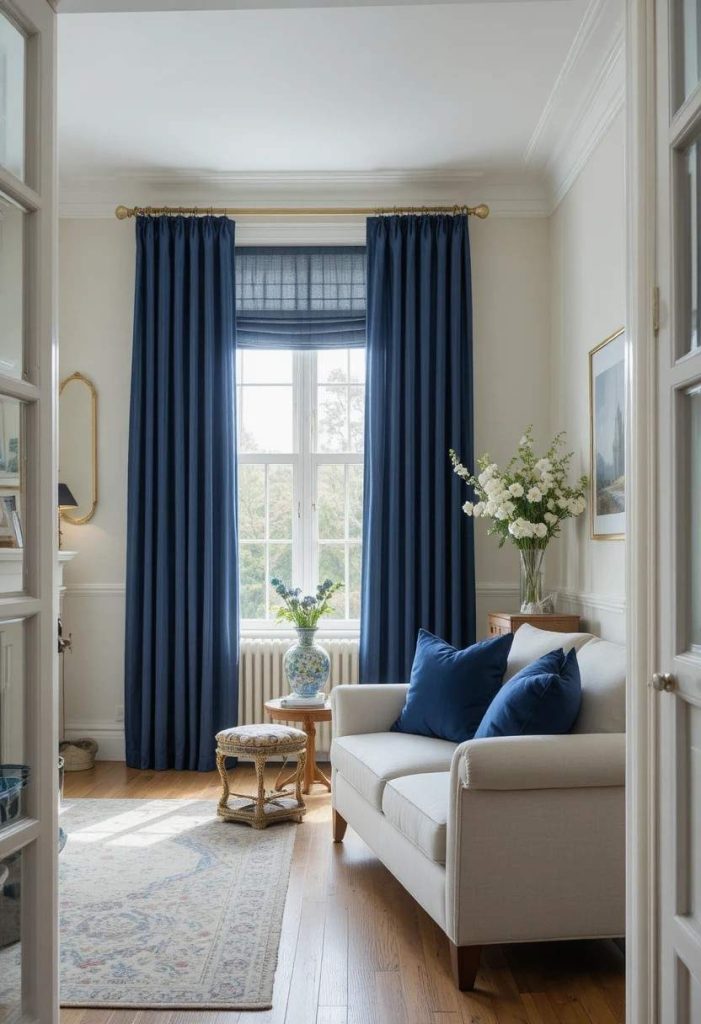
Navy blue is one of the most enduringly popular curtain colors for good reason — it is simultaneously classic and versatile, working as well in a traditional drawing room as it does in a modern, minimal living space. Navy curtains ground a room with a sense of depth and calm that is particularly effective in rooms that receive a lot of natural light, where the richness of the color really comes alive. In fabric terms, navy looks exceptional in velvet (for maximum drama), cotton (for a crisp, tailored feel), or linen (for a relaxed coastal quality). Navy pairs beautifully with white, sand, warm wood, brass, and coral accents — an almost endlessly flexible anchor color for a living room palette.
Style tip: Navy curtains with a thin white stripe or subtle texture add depth without the risk of looking too flat or heavy.
10. Silk or Faux Silk Curtains for Pure Glamour
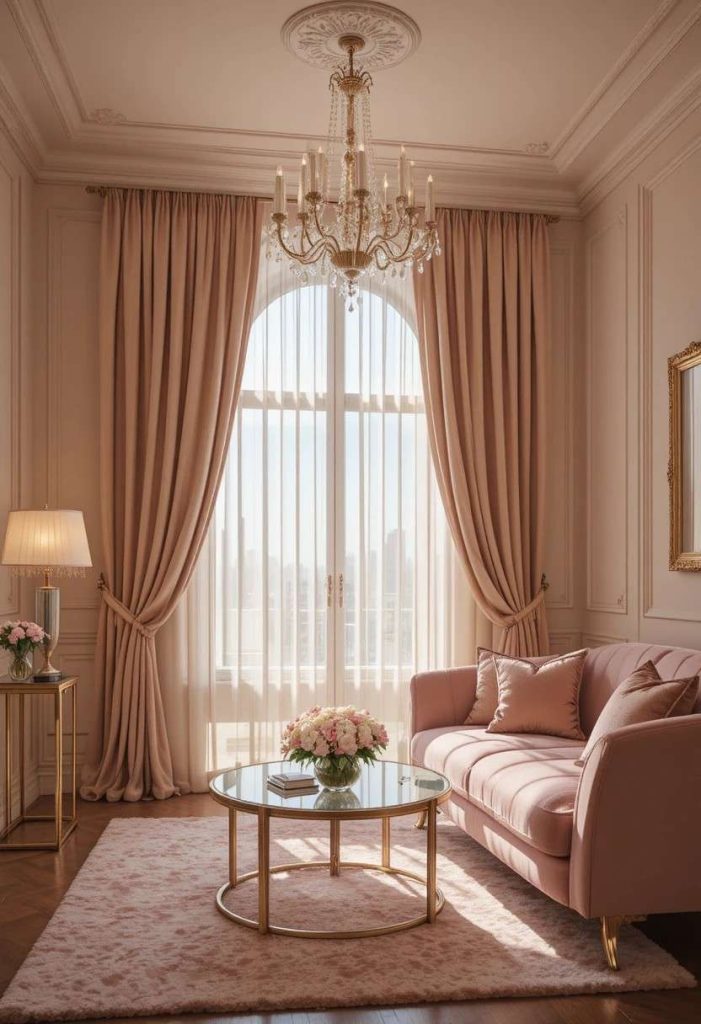
Silk and faux silk curtains are the ultimate luxury window treatment — nothing else catches and reflects light in quite the same way. The characteristic sheen of silk creates a sense of movement and luminosity that transforms a living room into something genuinely glamorous. Real silk is one of the most expensive fabric options available, but high-quality faux silk (also called dupioni or polyester silk) provides a very similar visual effect at a fraction of the cost. Both work best in calm, neutral tones — champagne, blush, ivory, silver, or pale gold — where the shimmer of the fabric becomes the statement. For maximum effect, hang silk curtains high and wide and allow them to puddle generously on the floor.
Style tip: Pair silk curtains with crystal or glass accessories, mirrored furniture, and warm ambient lighting for a fully realized glamorous aesthetic.
11. Striped Curtains for Graphic, Tailored Personality
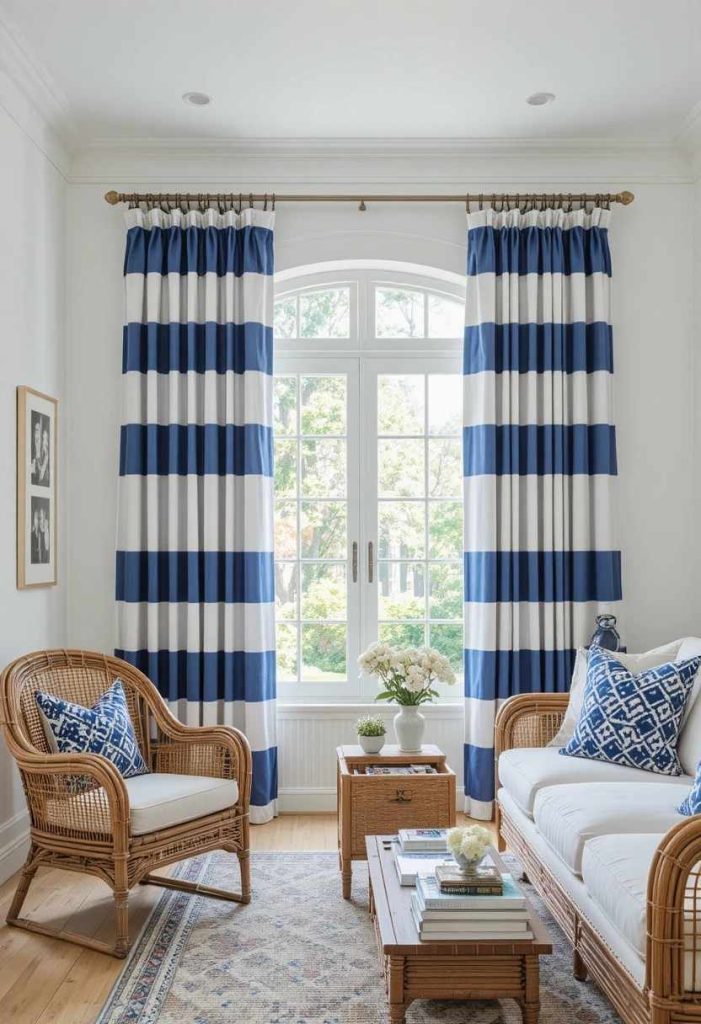
Vertical stripes on curtains are a smart design trick — they draw the eye upward, making ceilings feel taller and rooms feel more spacious. Bold stripes in two or three colors can transform a plain window into a graphic focal point, while subtle tonal stripes on a single color base add texture and visual interest without overwhelming the room. Wide bold stripes in navy and white give a crisp nautical or Hamptons beach house feel. Narrow pencil stripes in gray and white feel more urban and sophisticated. For a maximalist approach, consider unexpected color combinations: ochre and teal, coral and stone, or forest green and cream.
Style tip: Hang striped curtains wider than the window frame to maximize the visual elongation effect and let in more light when open.
12. Sage Green Curtains for a Calm, Nature-Inspired Room
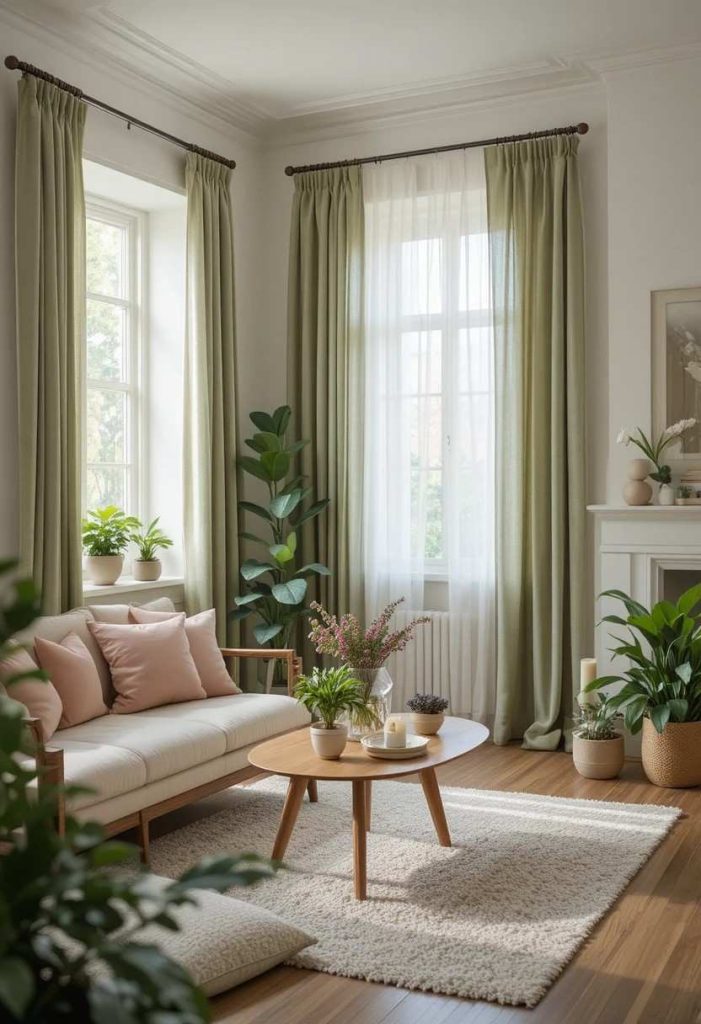
Sage green is one of the most universally beloved paint and fabric colors of recent years — a muted, dusty green with gray undertones that feels simultaneously fresh and calming. Sage green curtains bring the restorative quality of nature indoors without the boldness of a brighter green, making them one of the easiest curtain colors to incorporate into almost any living room. Sage works beautifully against warm whites, cool grays, terracotta tones, and natural wood finishes. In linen or cotton, sage green curtains feel relaxed and organic. In velvet, the color takes on a richer, more sophisticated depth. This is the curtain choice for anyone who wants color but finds bold shades intimidating — sage is approachable, calming, and endlessly tasteful.
Style tip: Combine sage green curtains with blush pink or dusty rose accents and warm brass hardware for a soft, romantic color palette.
13. Roman Blinds with Matching Curtain Panels for a Tailored Look
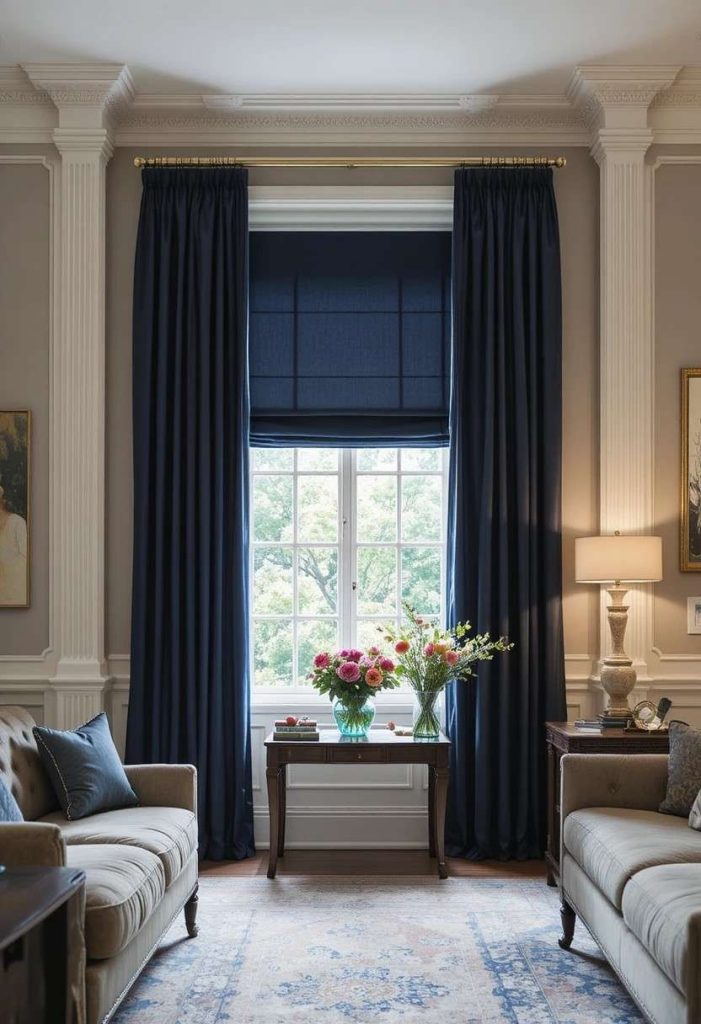
Roman blinds used in combination with floor-length curtain panels create one of the most architecturally refined and tailored window treatments in interior design. The blind handles functional light control, while the curtain panels add softness, drama, and visual height. When made from matching or coordinating fabrics, the two elements together create a cohesive, built-in look that feels custom and considered. Choose Roman blinds in a structured fabric like cotton or linen, and pair with full-length curtain panels in the same fabric or a complementary texture. This treatment works particularly well in living rooms with large sash or casement windows where you want to maintain a neat window reveal.
Style tip: For a designer finish, line your Roman blinds in blackout fabric so they provide complete light control when paired with sheer side panels.
14. Mustard Yellow Curtains for a Retro, Joyful Energy
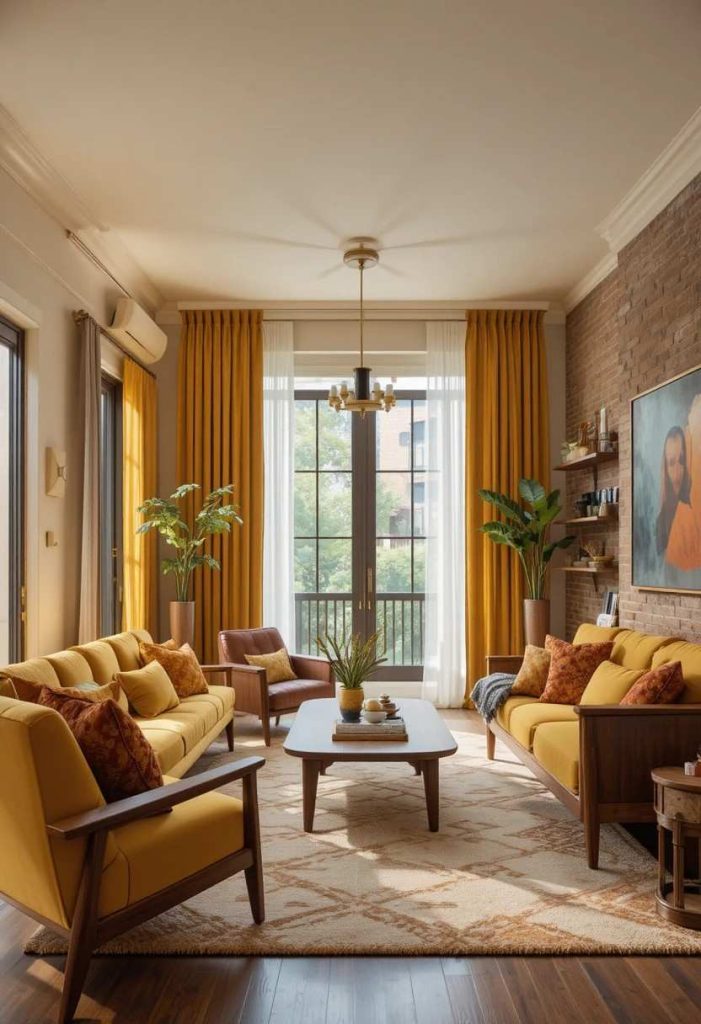
Mustard yellow is a color that brings instant joy and warmth to a living room — bold enough to make a statement but grounded enough by its earthy undertones to feel sophisticated rather than garish. Mustard curtains are a popular choice in mid-century modern, Scandi-boho, and eclectic interior styles, where their vintage warmth complements walnut wood furniture, brick or exposed plaster walls, and warm-toned textiles. In a white or light gray living room, mustard curtains act like a ray of sunshine — instantly energizing and uplifting the space. In a room with warm wood and leather tones, mustard feels deeply cozy and grounded, evoking the warmth of autumn light.
Style tip: Ground mustard curtains with charcoal gray or navy accents to prevent the color from feeling overwhelming in a smaller room.
15. Sheer White Curtains with Embroidered Detailing
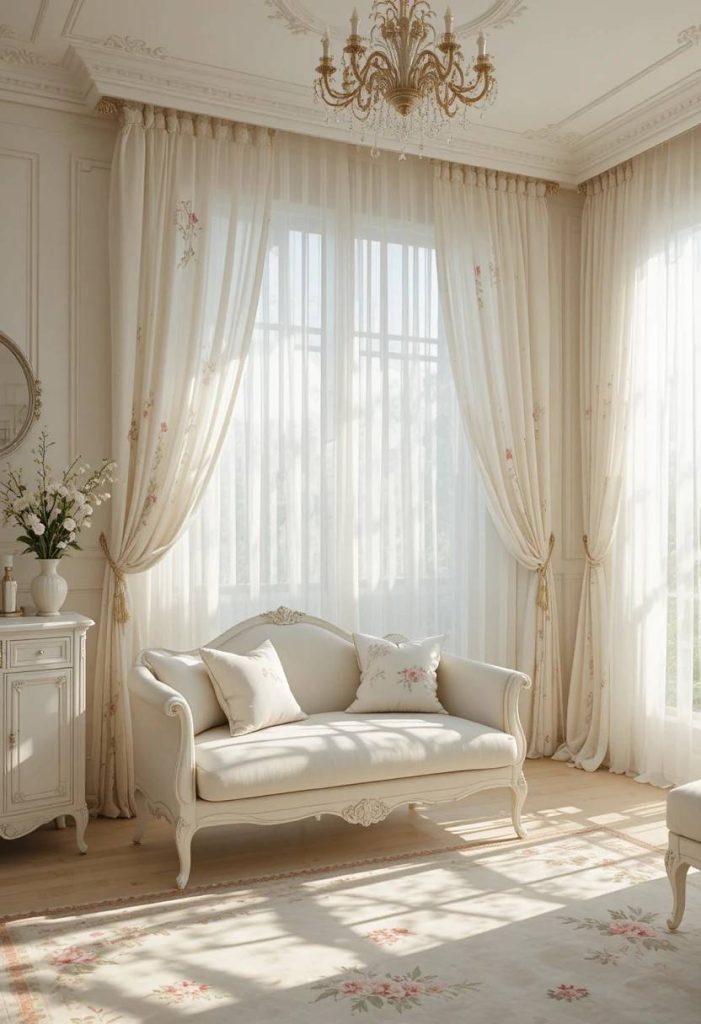
Embroidered sheer curtains represent the perfect meeting point between delicate femininity and understated elegance. Unlike plain white sheers, embroidered panels add a layer of visual storytelling — botanical embroidery with trailing vines and flowers, geometric cut-work borders, or tonal white-on-white stitch work that only reveals itself when light passes through. This style draws from traditional European and South Asian textile traditions and translates beautifully into modern interiors that value handcraft and detail. The embroidery creates beautiful shadow patterns on the floor and walls when direct sunlight hits, turning the whole room into a softly illuminated work of art. These curtains work especially well in rooms with a romantic, eclectic, or globally inspired aesthetic.
Style tip: Hang embroidered sheers over a darker solid blind or shutter so the embroidery detail is outlined by the contrast behind it.
16. Moody Dark Plum or Aubergine Curtains for Drama
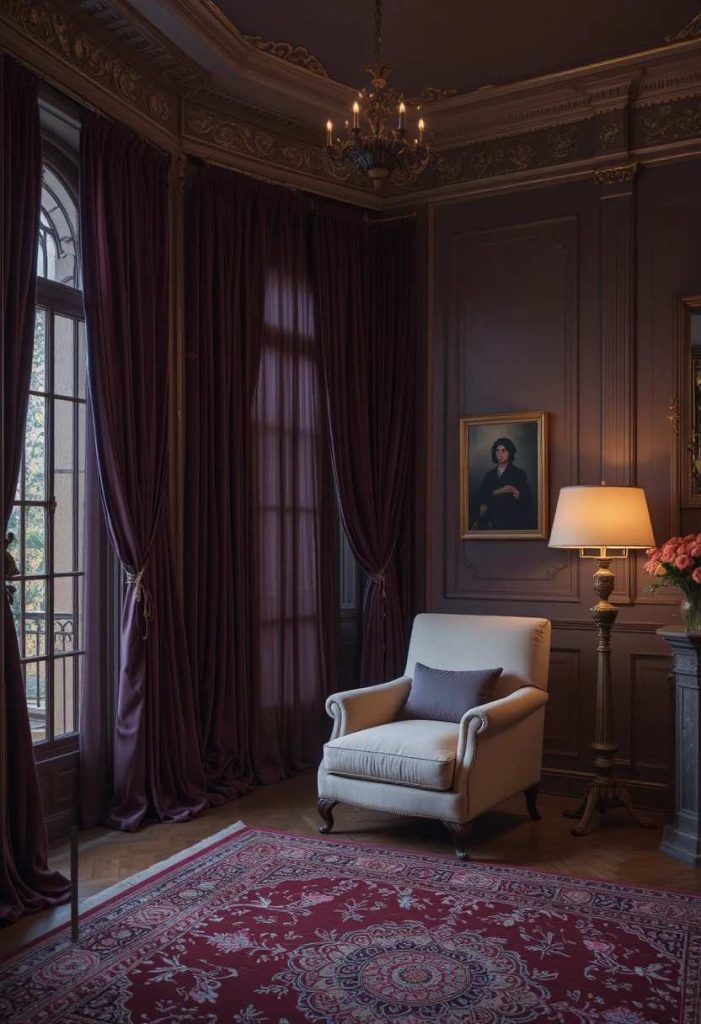
Dark plum and aubergine curtains occupy a uniquely sophisticated space in the color spectrum — deeper and moodier than burgundy, richer and warmer than navy, they have a theatrical, almost jewel-like quality that makes a living room feel deeply intimate and glamorous. These colors work at their best in rooms with warm ambient lighting, where the depth of the fabric absorbs and reflects the light in ever-changing ways throughout the evening. Aubergine velvet curtains in particular are one of the most opulent-looking window treatments available, especially when paired with antique gold or bronze hardware. This is the curtain choice for someone who wants their living room to feel like an experience.
Style tip: Balance the depth of aubergine curtains with blush pink, dusty rose, or warm cream furnishings to prevent the room from feeling too cave-like.
17. Tab Top Curtains for a Relaxed, Casual Aesthetic
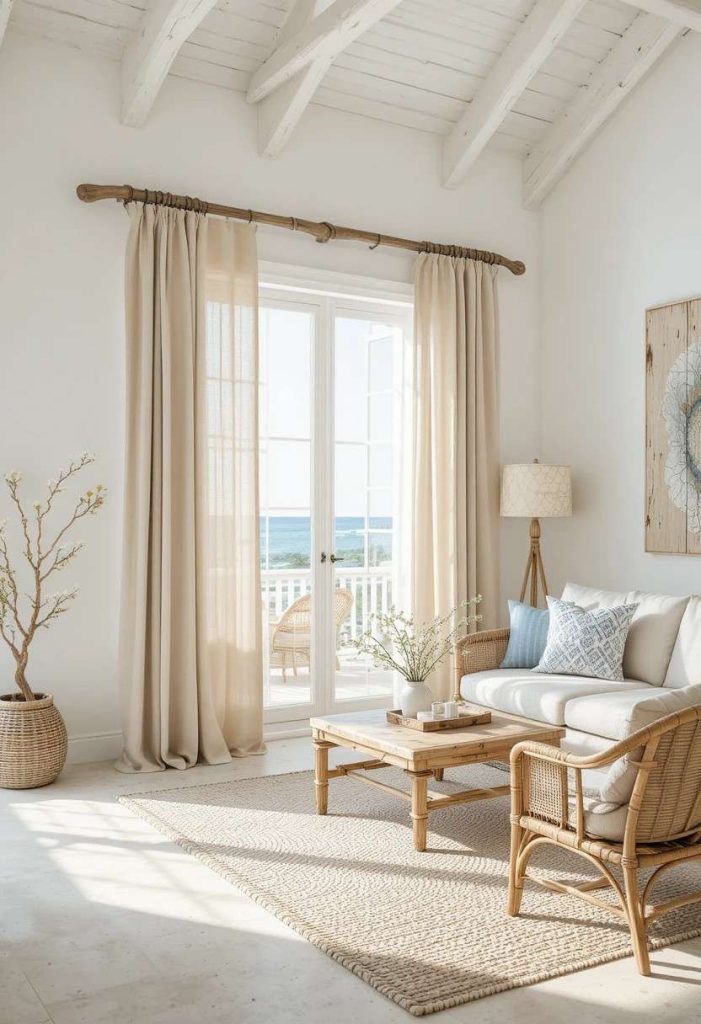
Tab top curtains — where the fabric loops directly over the rod rather than using rings or hooks — have a characteristically relaxed, unfussy quality that suits casual, comfortable living rooms perfectly. The look is informal and approachable, making this style particularly popular in beach houses, family rooms, Scandinavian-inspired spaces, and homes that prioritize ease and comfort over formality. In natural fabrics like linen, canvas, or cotton, tab top curtains look authentically relaxed and handmade in the best sense. The tabs themselves can be a design feature — wider tabs create a more architectural look, while narrow tabs feel more delicate and feminine. Tab tops hang with a naturally gentle, informal drape that suits lightweight to medium fabrics best.
Style tip: Use extra-long tab top curtains in natural linen and hang them from an oversized driftwood or raw steel rod for maximum casual-coastal impact.
18. Patterned Ikat Curtains for a Global, Eclectic Look
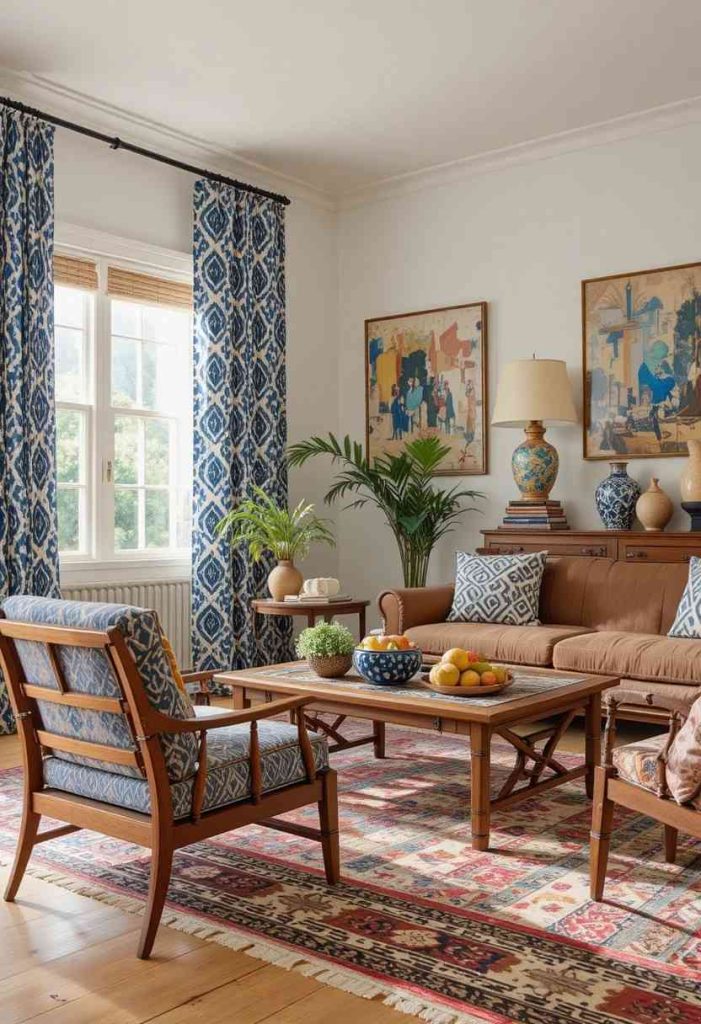
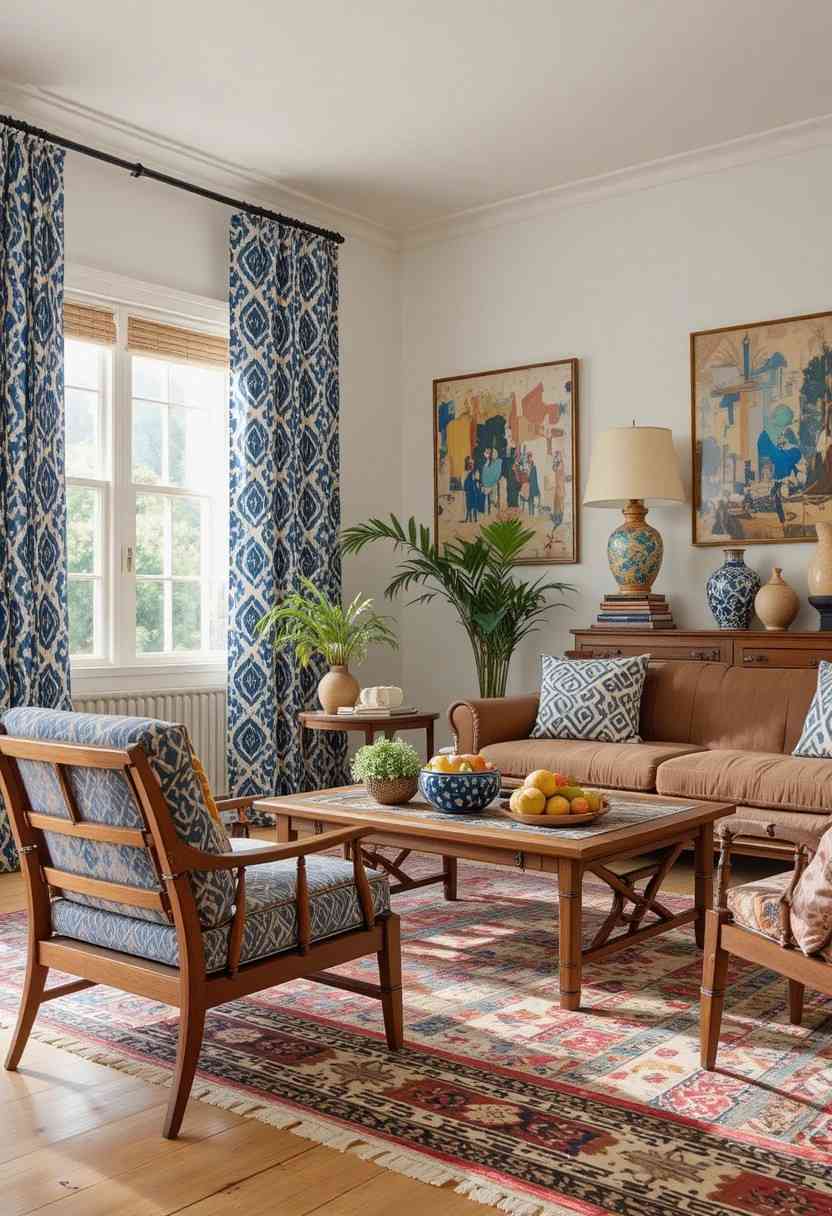
Ikat fabric — characterized by its distinctive blurred, feathered patterns created by a traditional resist-dyeing technique — is one of the most globally beloved textile patterns in interior design. Found in the weaving traditions of Central Asia, South Asia, Southeast Asia, and Latin America, ikat brings an authentic sense of craft and culture to a living room. Ikat curtains in bold color combinations — navy and white, coral and cream, forest green and gold — become genuine conversation pieces that add warmth, history, and personality. Modern ikat prints on crisp cotton or linen work particularly well in eclectic, maximalist, or globally inspired interiors alongside woven rugs, handmade ceramics, and natural wood furniture.
Style tip: Mix ikat curtains with solid-colored furniture and let the pattern do all the talking — ikat is a focal point, not a background.
19. Eyelet Curtains for a Clean, Contemporary Look
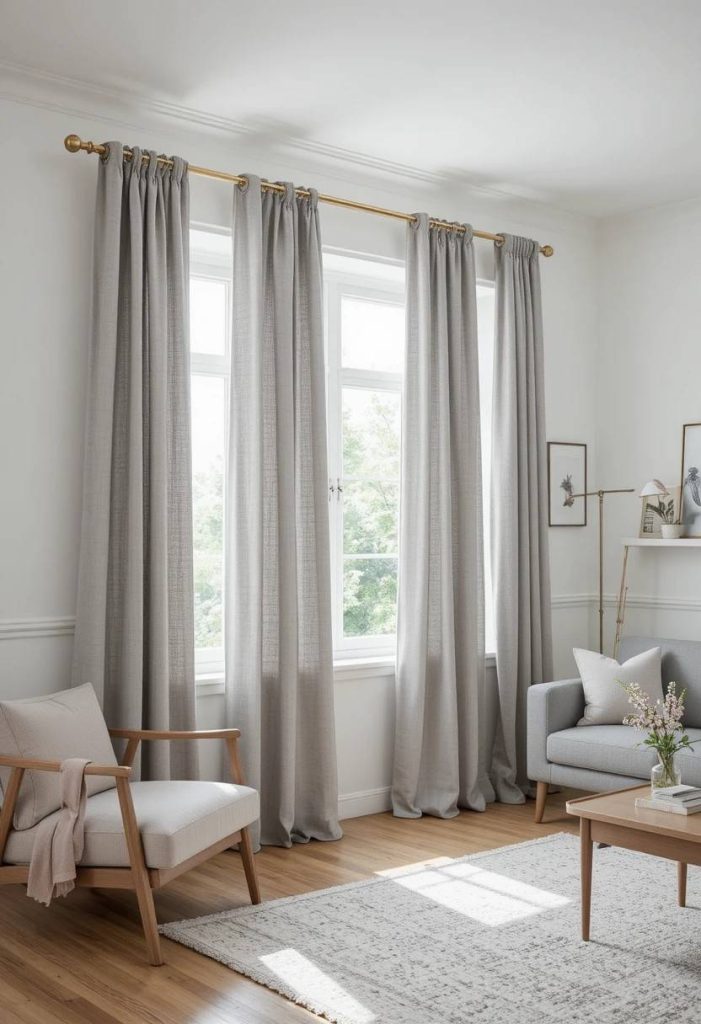
Eyelet curtains — also known as grommet curtains — thread directly through large metal rings that are set into the fabric at the top, creating evenly spaced, uniform folds that hang in a very controlled, contemporary way. The clean, architectural pleat that eyelet curtains create is one of the reasons they remain one of the most popular curtain styles for modern and contemporary homes. The metal grommets themselves add a subtle industrial detail that works particularly well in urban, modern, or Scandinavian-inspired interiors. Eyelet curtains are also among the easiest to hang and slide open and closed, making them a highly practical choice for busy family rooms and frequently used spaces.
Style tip: Choose grommet rings in a matte black or brushed brass finish and match them to your other hardware — door handles, light switches, and lamp bases — for a fully cohesive modern look.
20. Two-Tone Color Block Curtains for a Modern Art Effect
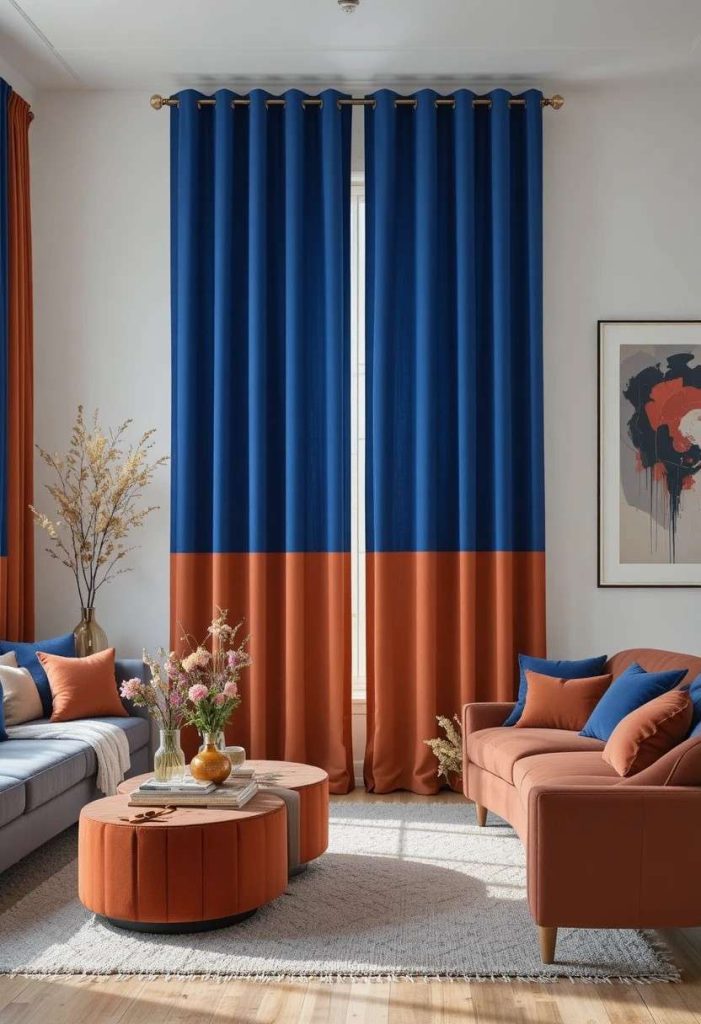
Color blocking — the technique of combining two or more bold, contrasting solid colors — is a trend that has moved from the fashion world into interior design with tremendous success. Color block curtains, where the panel is divided horizontally or vertically into two distinct color zones, turn your window treatment into a piece of abstract art. The most striking combinations include cobalt blue over terracotta, forest green over cream, or coral over teal. Horizontal color blocking visually widens a window, while vertical blocking emphasizes height. For the most graphic effect, choose colors with high contrast between them — the bolder the color combination, the more impactful the result.
Style tip: Repeat the color from each block somewhere else in the room — one color in the rug, the other in the sofa cushions — to create a fully realized color-blocked interior.
21. Linen Curtains in Warm White for a Clean, Organic Feel
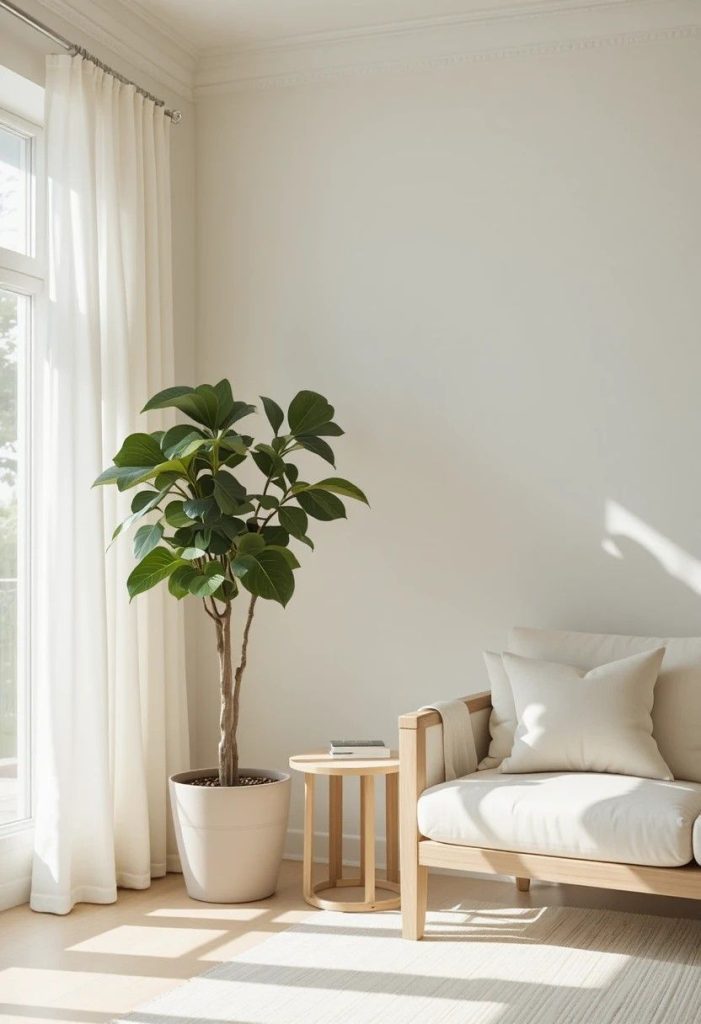
Warm white linen curtains are the interior design equivalent of a blank canvas — they work in every style, with every furniture choice, in every room size. Unlike bright white which can feel clinical, warm white linen has a natural, organic quality that reads as clean without feeling cold. Linen is a naturally textured fabric with a beautiful irregularity of weave that prevents it from ever looking sterile or synthetic. It is also one of the most sustainable fabric choices available, making warm white linen curtains a popular choice among environmentally conscious decorators. These curtains photograph beautifully, which explains their enduring dominance on Pinterest home decor boards — they create an effortlessly aspirational look that is both achievable and affordable.
Style tip: Wash your linen curtains on a gentle cycle before hanging — pre-washing softens the fabric and gives them a beautifully relaxed, lived-in drape.
22. Patterned Damask Curtains for Traditional Grandeur
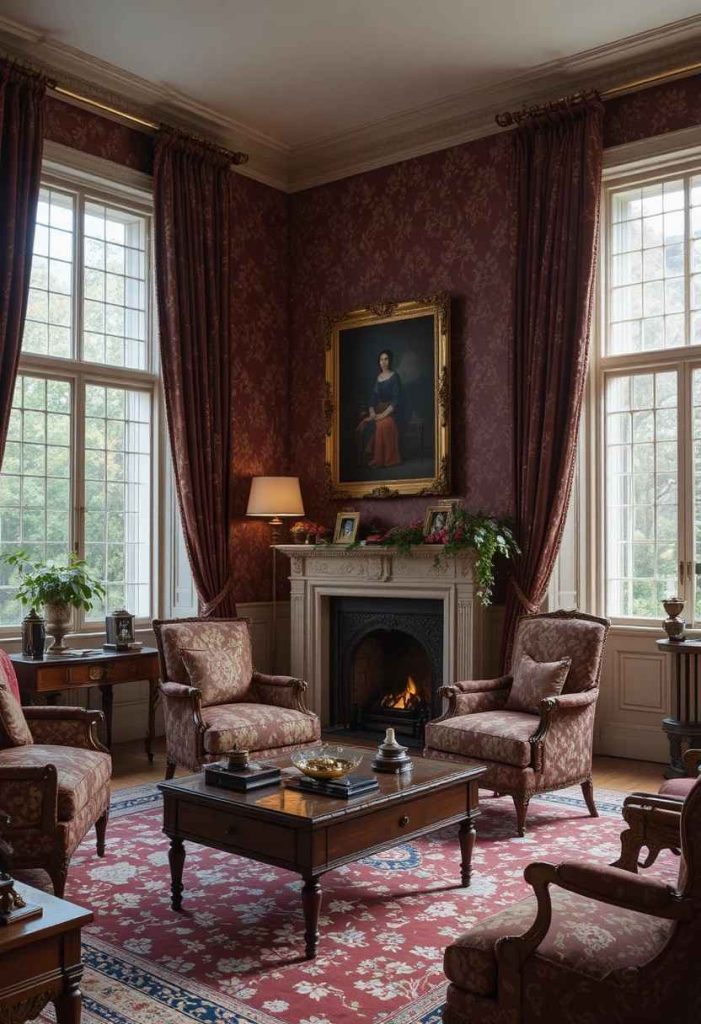
Damask fabric — with its characteristic woven self-pattern that creates a subtle, tone-on-tone effect of scrolling florals and geometric motifs — is one of the oldest and most prestigious textile patterns in the world, with roots in the silk-weaving traditions of medieval Damascus. Damask curtains bring an unmistakable sense of traditional grandeur and formal elegance to a living room, making them the natural choice for period homes, traditional interiors, and rooms that celebrate heritage and craftsmanship. In a single rich color — deep red, royal blue, hunter green, or charcoal — damask curtains feel genuinely timeless. In silver or gold on an ivory base, they achieve an almost palatial quality. Pair with antique furniture, oil paintings, and ornate gilded mirrors for a fully realized traditional look.
Style tip: Soften the formality of damask curtains by pairing them with relaxed linen upholstery and natural accessories so the room feels curated rather than stiff.
23. Burnt Orange Curtains for Autumn-Inspired Warmth
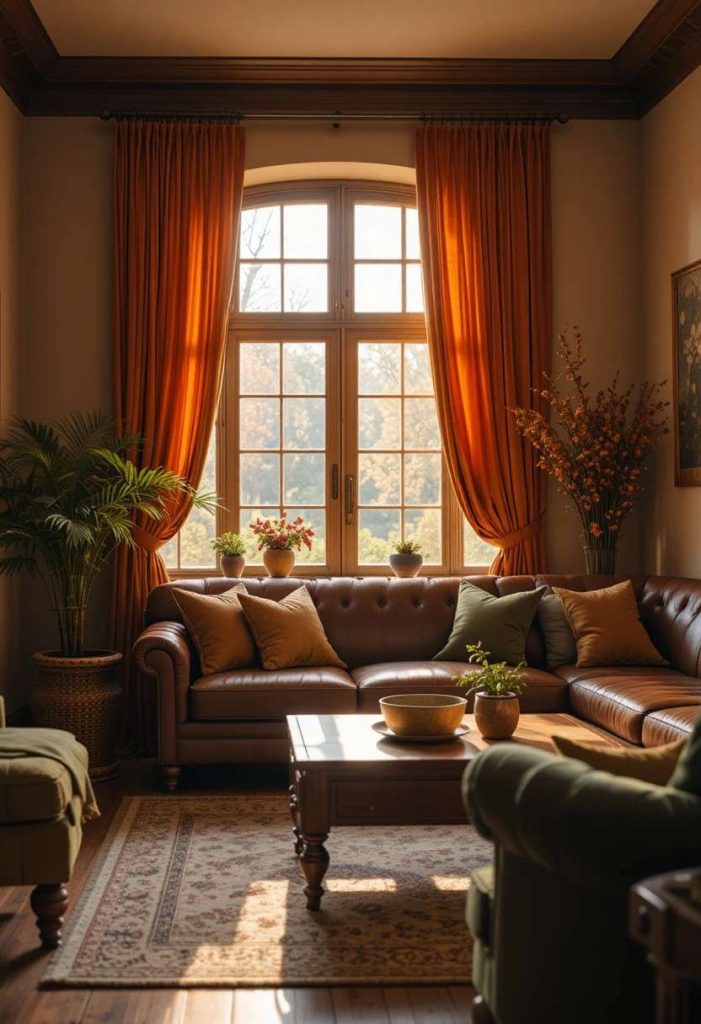
Burnt orange is a color that immediately evokes warmth, comfort, and the cozy abundance of autumn — and burnt orange curtains bring that energy into a living room all year round. This is one of the most popular home decor color searches on Pinterest in both 2025 and 2026, reflecting a broader cultural shift toward warmer, earthier palettes that feel grounding and restorative. Burnt orange curtains work exceptionally well in rooms that receive afternoon or evening light, when the sun’s warm golden tones deepen the richness of the fabric. They pair beautifully with warm mustard, cream, olive green, and brown leather, creating an autumnal palette that feels both current and timeless. In velvet, burnt orange is particularly dramatic and luxurious.
Style tip: Ground burnt orange curtains with dark charcoal or espresso furniture to prevent the color palette from feeling too sweet or overwhelming.
24. Curtains with Tassels and Fringe Trim for Maximalist Flair
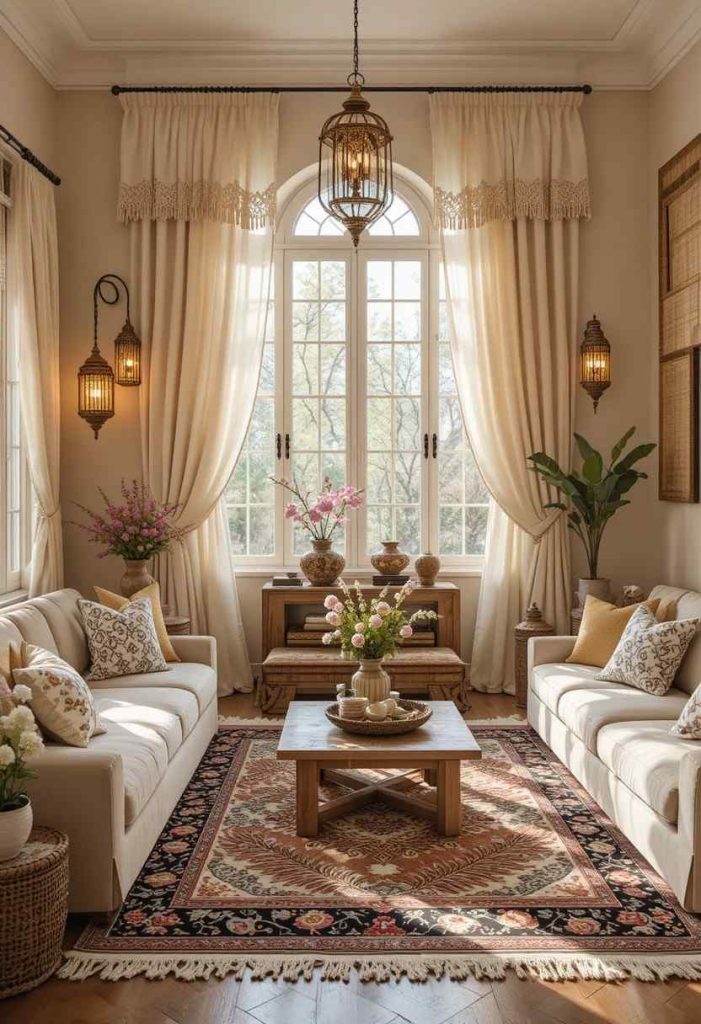
Tassel trim and fringe are the accessories of the curtain world — a detail that elevates a simple panel into something truly decorative and personal. Whether it is a thick, chunky macrame fringe along the leading edge of a linen curtain, delicate silk tassels suspended from the hem, or a bold contrast fringe in a complementary color, embellished curtains signal a room that embraces personality, craft, and maximalist joy. This trend is strongly linked to the global bohemian, Moroccan, and artisan-inspired interior movements that have dominated Pinterest home boards for the past several years. The beauty of fringe and tassel curtains is that they transform an ordinary fabric — even a simple cream linen — into something completely unique and handmade-feeling.
Style tip: Match the fringe color to an accent in the room — a rug, a throw, or a decorative cushion — to ensure the trim feels intentional rather than random.
25. Pinch Pleat Curtains in a Classic Herringbone for Refined Elegance
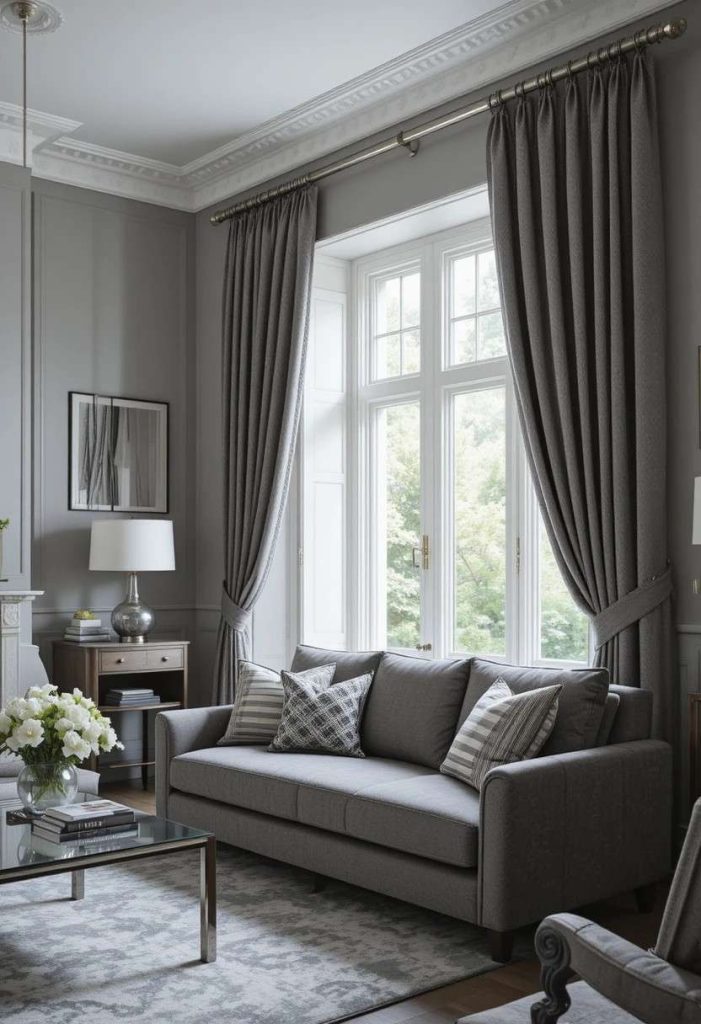
Pinch pleat curtains — where the fabric is gathered into neat, symmetrical triple pleats at the top — represent the gold standard of formal curtain heading styles. The pleat creates a refined, structured drape that hangs beautifully and maintains its shape over time, making pinch pleat the preferred choice of professional interior designers and upscale residential projects. In a classic herringbone weave — a textile pattern of interlocking V shapes that gives a subtle visual texture without being overtly patterned — pinch pleat curtains achieve a level of understated refinement that elevates any living room. Choose herringbone in a warm charcoal, soft taupe, or deep slate for curtains that feel architectural and timeless, working equally well in contemporary and traditional interiors.
Style tip: Dry-clean only pinch pleat curtains and have them professionally steamed after installation to ensure perfect, lasting pleats.
Frequently Asked Questions About Living Room Curtains
What length should living room curtains be?
For the most elegant look, curtains should reach the floor and either just touch it or pool slightly (1–3 inches of extra fabric). Avoid curtains that hang above the sill or stop mid-wall — these proportions tend to look unfinished.
How do I make my living room curtains look more expensive?
Hang the rod higher (close to the ceiling), use wider panels for fuller folds, choose natural fabrics like linen or velvet, add decorative hardware (brass or matte black), and press or steam your curtains after installation.
What curtain color is best for a small living room?
Light neutrals like warm white, soft linen, or pale sage visually expand a small room by reflecting light. Alternatively, hanging curtains that match your wall color (even in a rich tone) creates a seamless, larger-feeling space.
What is the most popular curtain trend for 2025–2026?
According to Pinterest Predicts data, bamboo beaded curtains (up 60%), earthy terracotta and rust tones, botanical and floral maximalist prints, and layered sheer-plus-drape treatments are among the strongest current trends.
How wide should curtains be compared to the window?
As a general rule, your combined curtain panel width should be 2 to 2.5 times the width of your window. This ensures full, gathered folds when the curtains are closed and a generous framing effect when they are open.