Indoor Water Plants Ideas: 12 Beautiful Ways to Bring Life Into Your Home
Struggling to bring nature into your home without the mess of soil and constant maintenance? You’re not alone. Many people want greenery indoors but don’t have the time, space, or patience for traditional plants.
The good news? Indoor water plants are the perfect solution. They’re low-maintenance, visually stunning, and instantly elevate your space with a fresh, calming vibe. In this guide, you’ll discover 12 inspiring indoor water plants ideas that are easy to set up, beginner-friendly, and perfect for modern homes. Whether you live in a small apartment or just want a minimalist aesthetic, these ideas will help you create a peaceful, Pinterest-worthy environment.
1. Glass Jar Water Plants for Minimalist Vibes
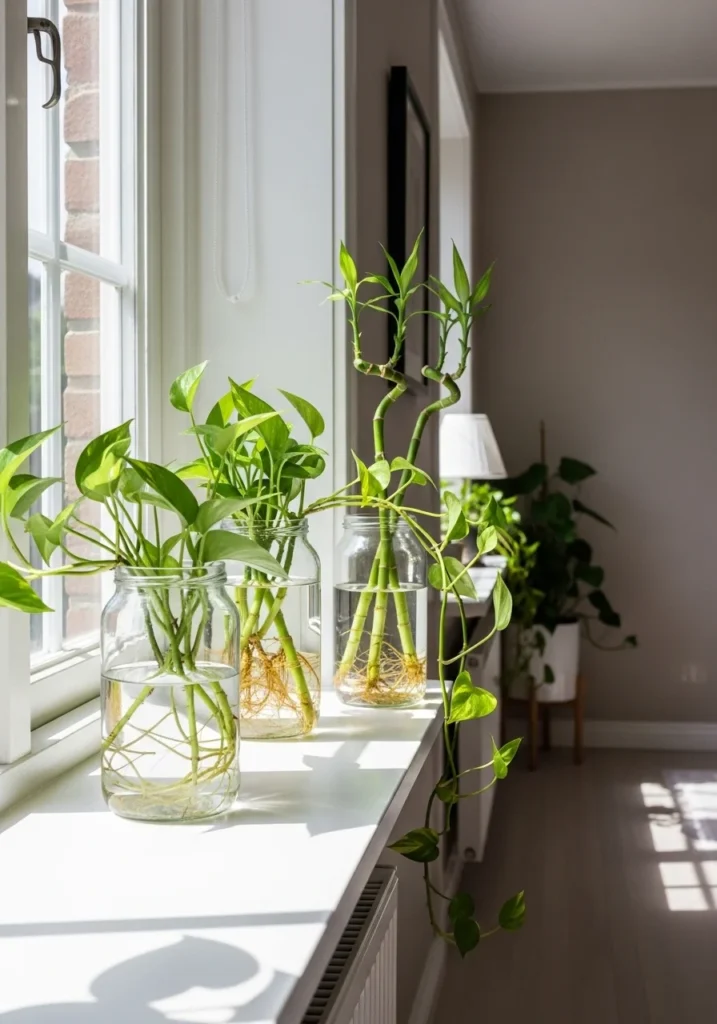
My first water plant lived in a jam jar on the kitchen windowsill, and I still think a plain glass jar is the hardest-working container in the house. I love how the roots become part of the display, pale and feathery against the glass, changing a little every week as they stretch towards the light. Pothos is my usual choice, because one cutting can trail for months, but lucky bamboo suits a taller, neater jar beside a laptop or a bedside lamp. I keep the water just above the lowest nodes, wipe the glass when it clouds, and turn the jar every few days so the leaves do not lean too far in one direction.
How to do it: Choose a clean glass jar and a healthy pothos or lucky bamboo cutting with at least two nodes. Fill the jar with room-temperature tap water that has stood overnight, then lower the cutting in so the nodes sit below the waterline and the leaves stay dry. Set the jar in bright, indirect light, change the water every seven days, and rinse the roots gently if they feel slimy.
2. Hanging Water Plants for Small Spaces
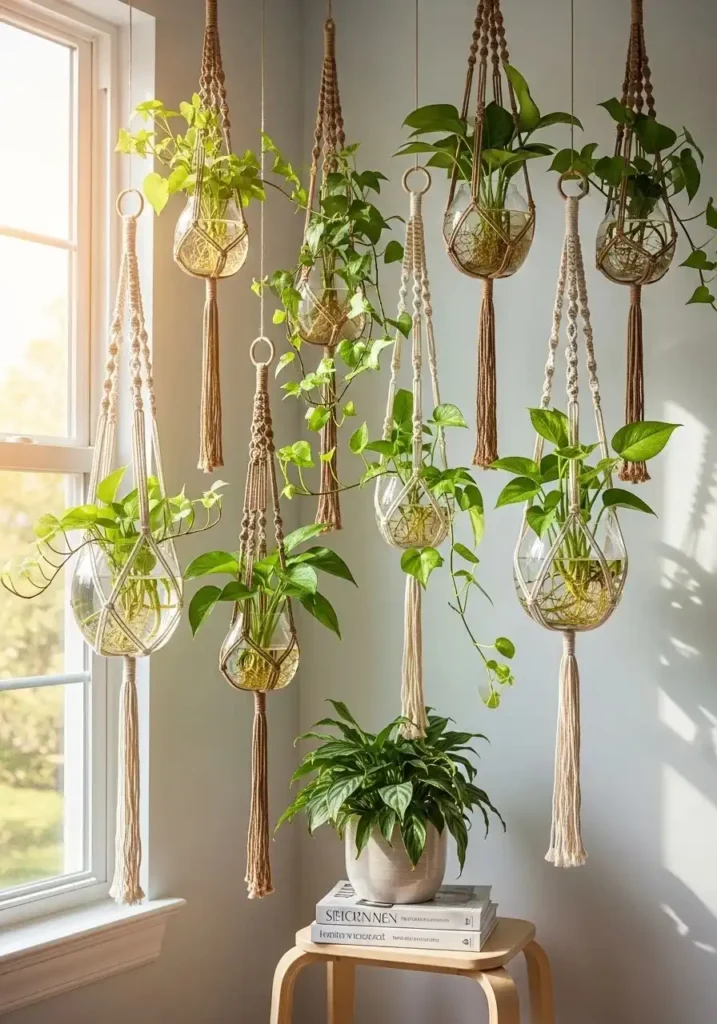
When my floor space ran out, I looked up — literally — and hanging water plants changed how my smallest room feels. A glass bulb or a macramé holder draws the eye upwards, so a plain corner suddenly has movement, especially when a philodendron trails down past the window frame. I hang mine where I can still reach them easily for water changes, because a display I cannot tend soon becomes a chore rather than a pleasure. Ivy works beautifully here too, its small leaves catching the light as they cascade. If you garden outside as well, these balcony garden ideas use the same trick of growing upwards when floor space is scarce.
How to do it: Fix a ceiling hook or a sturdy wall bracket into a joist or a solid fixing, never just plaster. Hang a glass bulb or macramé holder at a height you can reach without a chair. Add a trailing cutting, fill with water to cover the nodes, and check the water level twice a week, since hanging containers warm up and lose water faster than jars on a sill.
3. Table Centerpiece with Water Plants
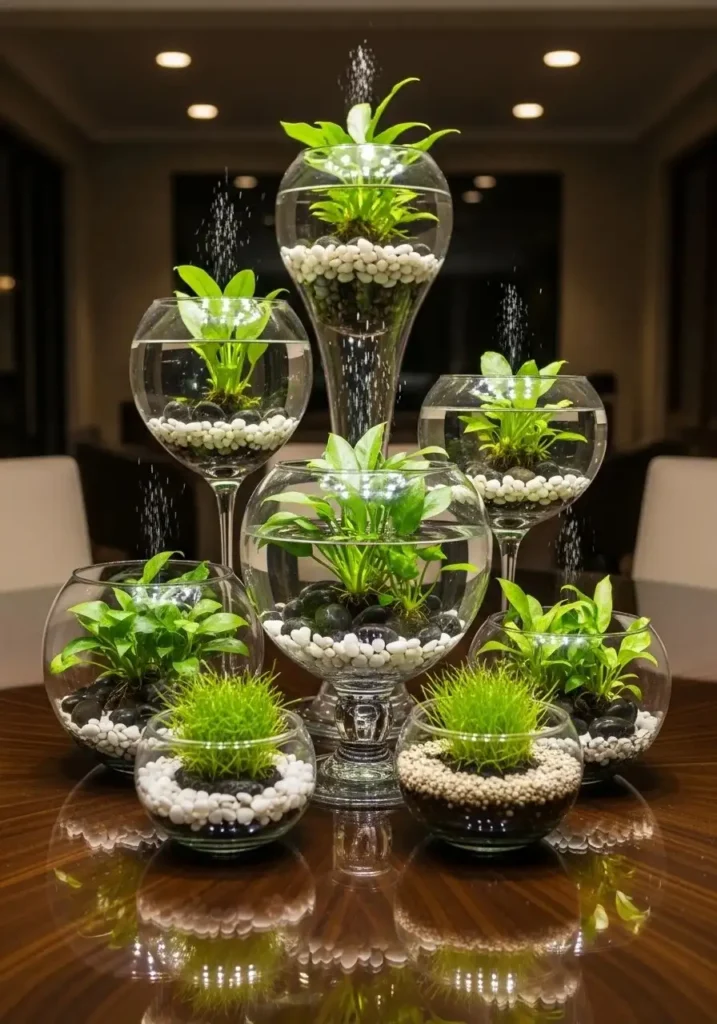
A dining table centrepiece is where I let myself play, because it is the one arrangement guests actually lean over and look at. I group three vessels of different heights — a low bowl, a tall cylinder and something in between — then tuck a few smooth pebbles around the bases so the roots stay anchored and the waterline looks deliberate rather than accidental. Mixing pothos with a single lucky bamboo stem gives me height and softness in the same view, and I swap one vessel for a seasonal sprig, eucalyptus in winter or a flowering cutting in spring, whenever the table starts to feel stale. Before a meal, I wipe the rims and top the water up, which takes two minutes and makes the whole table feel freshly dressed.
How to do it: Pick three glass vessels in different heights and shapes. Add a layer of clean pebbles to each, then arrange one cutting per vessel with the nodes underwater. Place the tallest vessel at the back or centre, step back to check the balance, and refresh the water weekly so the centrepiece stays clear and inviting.
4. Kitchen Window Water Garden
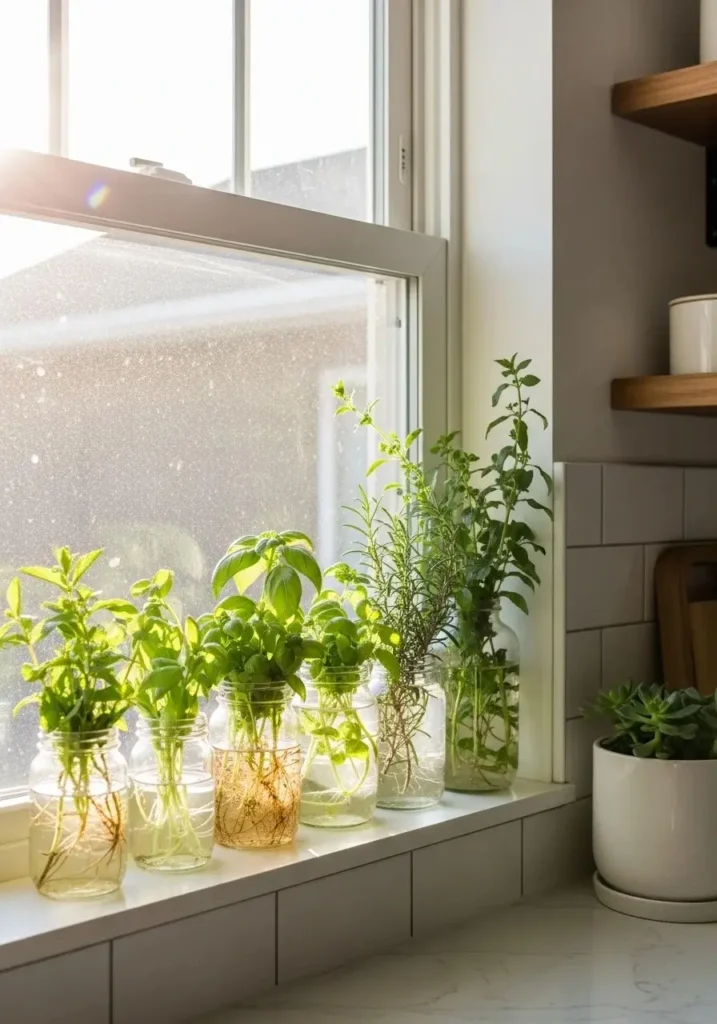
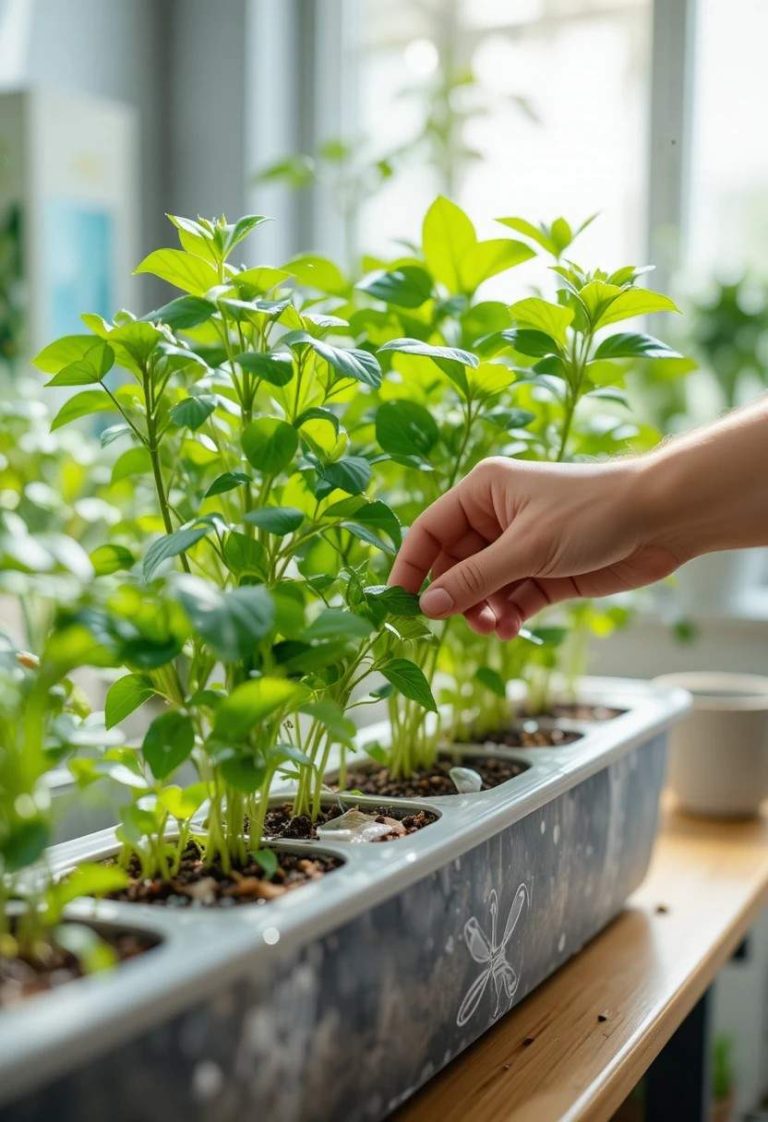
My kitchen window is the happiest spot in the house for water plants, and I think it is because the light there is bright without ever being harsh. A neat row of small jars along the sill turns a working space into somewhere I enjoy standing while the kettle boils, and mint and basil earn their place twice over, looking fresh and flavouring supper. I keep herb cuttings in narrower bottles so their stems stay upright, and I snip from the top so each plant bushes out instead of growing leggy. One practical note I learned early: keep jars away from the hob, because steam and cooking splashes cloud the water far faster than sunlight does.
How to do it: Line up small jars or bottles along the kitchen windowsill, leaving a gap between each for air and light. Take mint or basil cuttings, strip the lower leaves, and stand them in water with the nodes submerged. Change the water every five to seven days, snip the tips regularly to encourage bushy growth, and harvest a few leaves at a time rather than stripping a stem bare.
5. Bathroom Spa-Inspired Water Plants
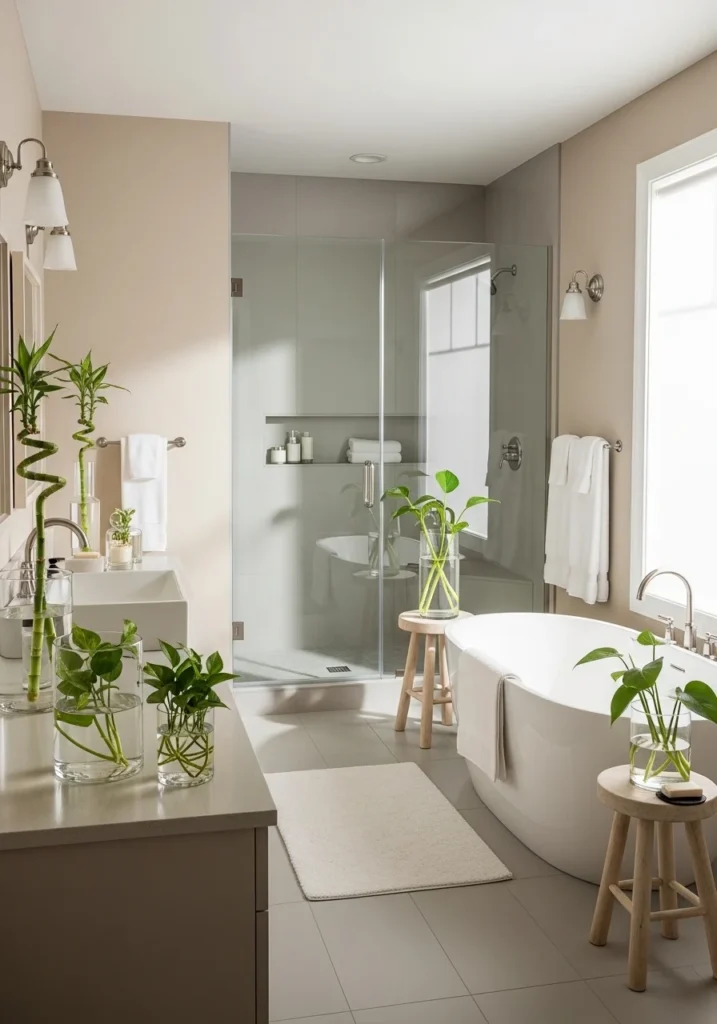
The bathroom was the last room I tried water plants in, and it turned out to be the easiest, because the steam from a shower does half the work for me. Lucky bamboo and peace lily cuttings love that warm, humid air, and their green leaves soften all the hard tiles and chrome in a way no towel or candle ever quite manages. I keep one small jar beside the basin, where I see it every morning, and a taller one on the shelf above the bath, where the leaves catch the light through frosted glass. The trick is choosing a spot that gets some daylight — a windowless bathroom will not suit them — and keeping the containers stable, well away from elbows and swinging doors.
How to do it: Choose a bathroom spot with natural light, such as a windowsill or a shelf near the bath. Place lucky bamboo or a peace lily cutting in a stable glass container, with the roots covered and the leaves clear of the water. Refresh the water weekly, wipe away any soap splashes, and move the plant to a brighter room for a few days if the leaves start to yellow.
6. Wall-Mounted Water Plant Display
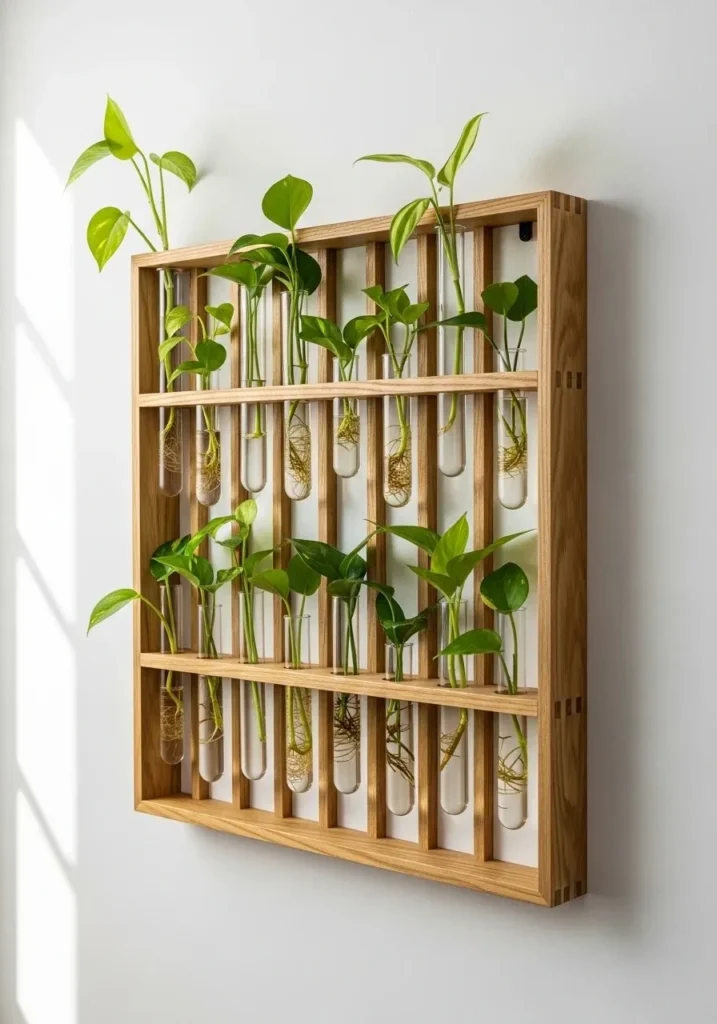
A bare hallway wall bothered me for months until I turned it into a living display, and now it is the first thing visitors comment on. Glass tubes mounted on a slim wooden rail hold single cuttings each, so the wall reads like a piece of art that happens to be alive, with roots on show and leaves at different heights. I planned the layout on the floor first, spacing the tubes so no leaf crowds its neighbour, and I chose cuttings of similar vigour so one does not race ahead and unbalance the whole arrangement. The display needs a drill and proper wall fixings, which is the only fiddly part, but once it is up, watering is simply a matter of topping each tube up with a small jug.
How to do it: Mark the positions for a wooden rail or individual holders, keeping tubes at least 15 cm apart. Drill and fit proper wall plugs, then secure the rail and clip the glass tubes in place. Add one cutting per tube with the nodes underwater, fill each tube two-thirds full, and top them up weekly with a jug, checking that no tube is leaking down the wall.
7. Floating Shelf Water Plant Decor
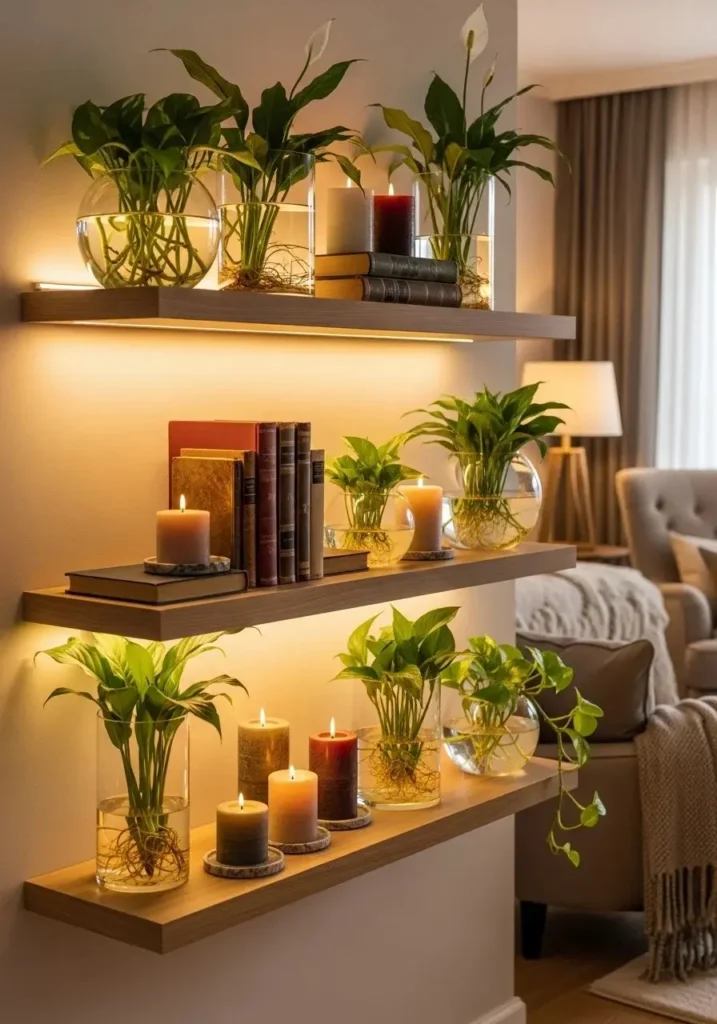
Floating shelves are where my water plants share the stage, and I have learned that restraint makes the whole shelf look better. One glass vessel beside a stack of two books and a small candle is enough; add a second plant and the shelf starts to look like a shop display rather than a home. I favour pale wood or white shelves for this, because the green shows up so clearly against them, and I keep the vessel near the front edge so the roots catch the light. In my home office, that single jar is the thing I glance at when I need a pause, and because there is no soil, there is never a ring of grit on the shelf below it.
How to do it: Fix a floating shelf at eye level, checking it is level and firmly anchored. Place one glass container with a water plant at one end, then style books or a candle beside it, leaving breathing room around each object. Keep the vessel where you can lift it out easily, change the water weekly, and wipe the shelf dry after any spills.
More Amazing Ideas Also For You: 14 Plant Pots Ideas to Instantly Transform Your Home
8. Bedroom Nightstand Water Plants
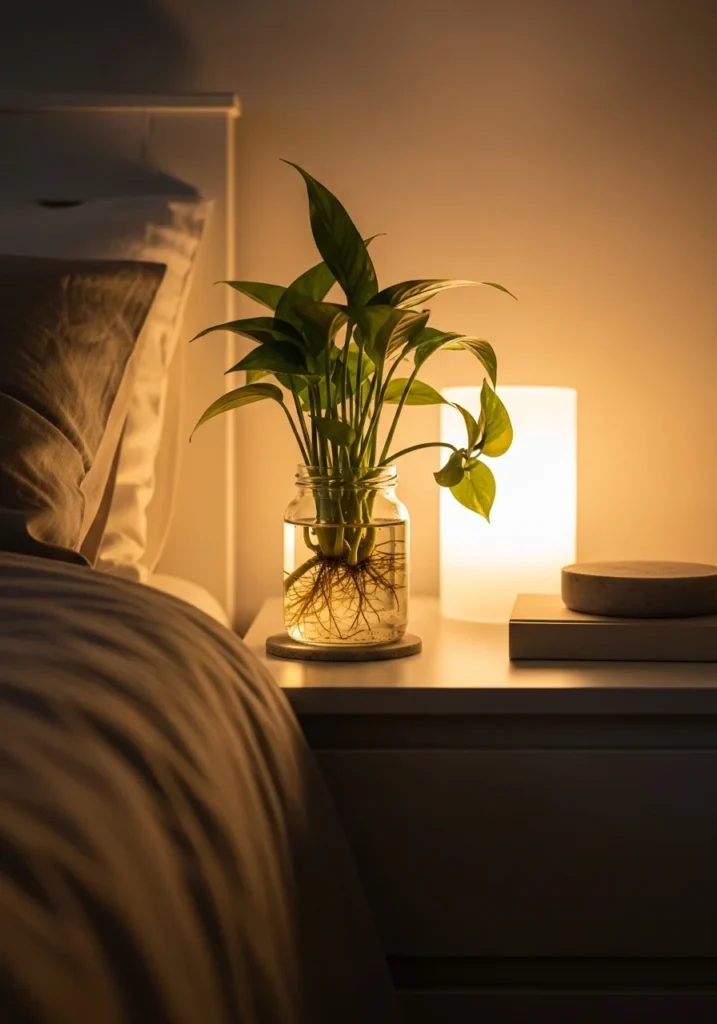
I keep the nightstand jar deliberately small, because the last thing I want to knock over in the dark is a litre of water. A squat glass, a single lucky bamboo stem or a short pothos cutting, is all it takes to make the bedroom feel softer, and I notice it most at night, when the leaves are the last green thing I see before sleep. I chose a heavy-based glass after one wobbly evening taught me the lesson, and I keep it on the far side of the lamp, away from my phone charger and my book. The water needs changing just as regularly as any other jar, but because the container is small, it is a thirty-second job I do while the kettle boils.
How to do it: Pick a small, heavy-based glass that fits your nightstand without crowding the lamp. Add a compact cutting, fill with water to cover the nodes, and place the jar on the side furthest from where you reach for your phone. Change the water every week, keep the leaves out of the lamplight’s heat, and trim the roots if they outgrow the glass.
9. Office Desk Water Plants for Productivity

My desk jar is the smallest plant I own and the one I look at most, which tells me something about how much a little green helps a long working day. A single pothos cutting in a jam jar sits just to the left of my keyboard, far enough from papers that a splash cannot reach them, and close enough that I catch the new leaves unfurling while I think. I chose a plant that forgives neglect, because deadlines do not pause for watering schedules, and I top the water up every Monday as part of starting the week. When the roots get long and tangled, I snip a fresh cutting from the tip and start a second jar, which is how one desk plant quietly became three.
How to do it: Choose a small, stable jar and a low-maintenance cutting such as pothos. Place it to one side of your desk, away from papers and cables, in bright indirect light. Fill with water to cover the nodes, refresh it every Monday, and snip the tip to make new cuttings when the stems grow long.
10. Decorative Bottles for Vintage Style
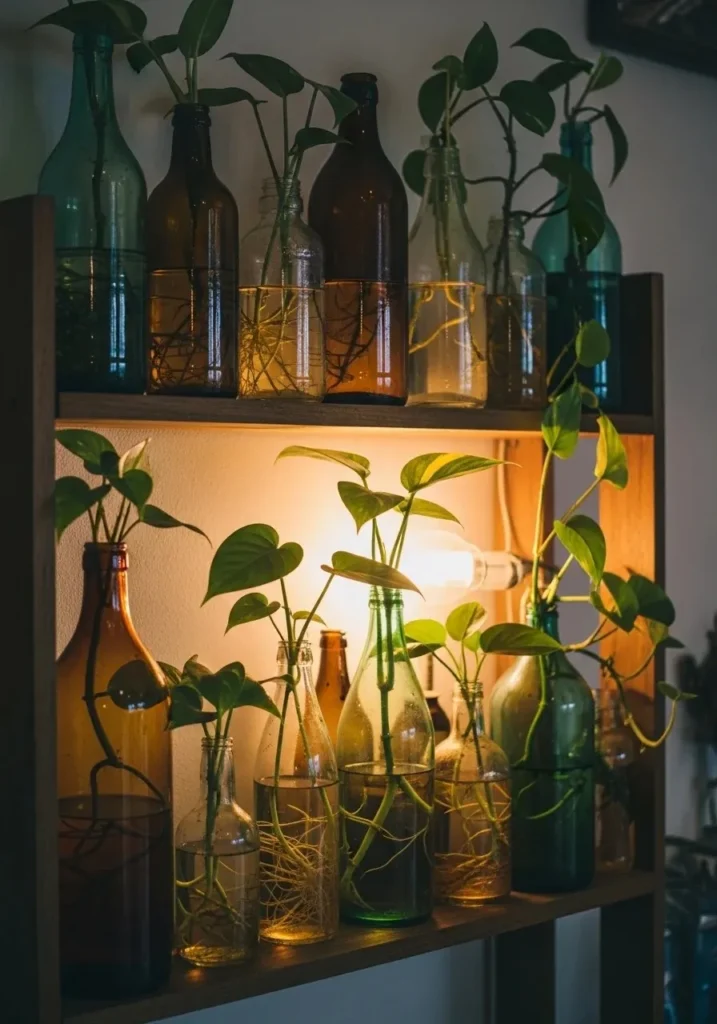
Old bottles are my favourite containers, because each one has a shape and a story that a new jar cannot copy. I rescued a green medicine bottle, a tall clear olive-oil bottle and a squat amber one from the recycling, scrubbed them until they sparkled, and now they stand in a row on the living-room shelf like a little collection. Narrow necks suit single stems perfectly, holding them upright without any fuss, and the coloured glass turns ordinary daylight into something warmer. I label nothing and arrange by height, tallest at the back, and when a friend admires them, I send them home with a cutting of their own, which feels like the right ending for a reused bottle.
How to do it: Collect clean glass bottles in different shapes and colours, and scrub them inside and out with warm soapy water. Rinse well, then add one cutting per bottle, trimming the stem so the nodes sit below the waterline. Arrange the bottles by height on a shelf or sill, top the water up weekly, and scrub the necks with a bottle brush if algae appears.
11. Large Statement Vase with Water Plants
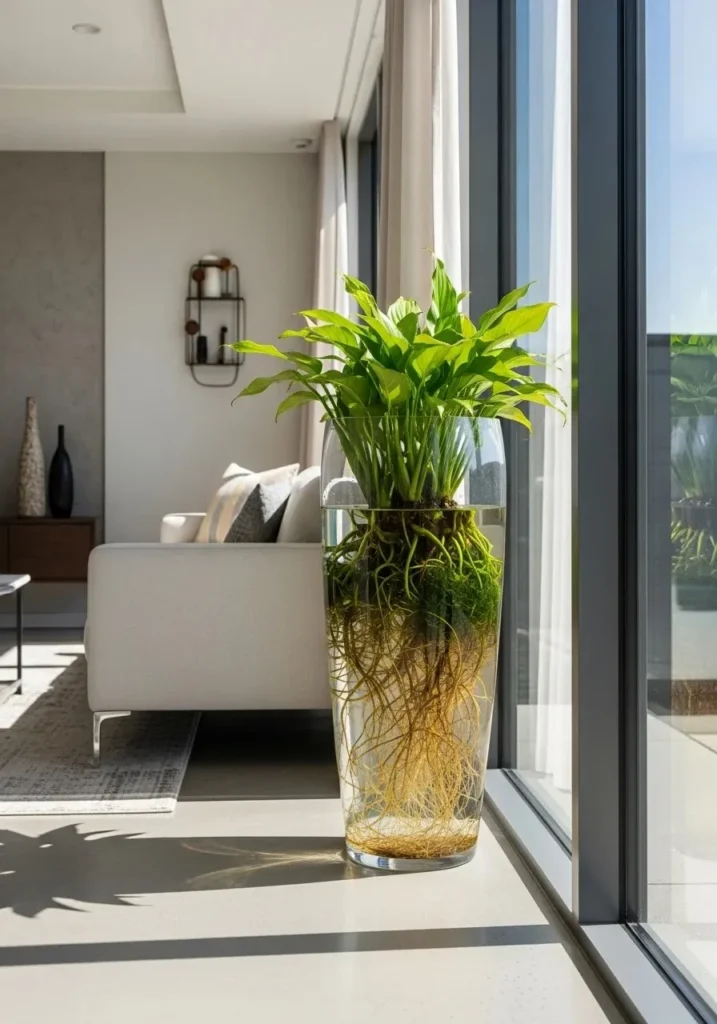
A large vase is a commitment, and I waited until I had a bare corner in the living room that genuinely needed something tall before I tried one. I chose a clear, wide-based vase and filled it with several tall cuttings — monstera and philodendron, with a few pothos stems to soften the edges — so the roots form a pale, sculptural tangle that is as much a feature as the leaves. The scale suits an entryway or a living room, where it can be seen from across the room, and I keep the furniture around it simple so the vase does the talking. It needs more water and a firmer base than a jar, but the effect, especially in evening light, repays the extra care many times over.
How to do it: Choose a large, wide-based clear vase and place it on a stable surface away from doorways. Add three or four tall cuttings, spreading the stems so the leaves do not crowd each other, and fill with water to cover all the nodes. Change the water every week, rinse the vase to prevent clouding, and trim any stem that yellows so the display stays fresh.
12. Mix Water Plants with Stones and Lights
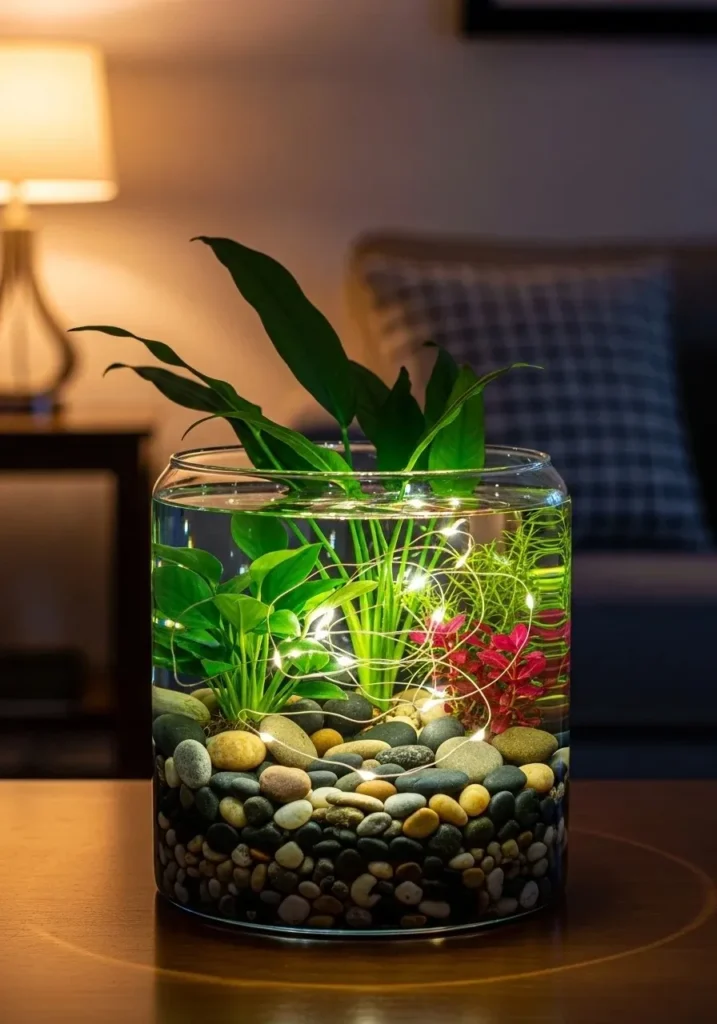
This is the idea I save for evenings, when the fairy lights come on and the whole arrangement glows. I layer smooth river stones at the bottom of a wide glass bowl, settle the cuttings among them so the roots weave through the gaps, then wind a short string of warm-white, battery fairy lights around the rim, keeping the battery pack outside the water and tucked discreetly behind the bowl. The stones hold the stems steady, the glass shows every layer, and the light turns an ordinary corner into the cosiest spot in the room — the same love of stone and texture works outside too, as these gravel garden ideas show. I only use lights rated for indoor use, and I switch them off at night, because even a beautiful display should rest.
How to do it: Layer clean river stones in a wide transparent container, then arrange cuttings among them with the nodes underwater. Wind a short string of warm-white, battery fairy lights around the outside of the container, keeping the battery pack dry and hidden behind it. Add water to cover the roots, change it weekly, and switch the lights off overnight.
Frequently Asked Questions
Which indoor water plants are best for beginners?
Pothos, lucky bamboo and philodendron are the easiest places to start, because they root quickly in plain water and forgive a missed water change. Spider plant cuttings and mint also do well, and they show you clearly when they need attention, through pale leaves or slow growth. Start with one or two cuttings, learn their rhythm, and add more varieties once you feel confident.
How often should I change the water, and how do I stop algae?
Change the water every five to seven days, and rinse the container and roots at the same time. Algae grows fastest in bright, direct sun and in water left unchanged, so keep jars in bright indirect light, use opaque or coloured glass if algae keeps returning, and add a few clean pebbles to shade the roots. Never use bleach or chemicals in the water, as they will harm the plant.
How much light do indoor water plants need?
Most water plants prefer bright, indirect light, such as a few feet from a sunny window or on a well-lit kitchen sill. Direct midday sun can overheat the water and encourage algae, while a dark corner will leave stems leggy and pale. If leaves yellow or growth stalls, move the jar a little closer to the window and watch it for a week.
What containers work best for water plants?
Clear glass jars, vases and bottles are the most popular choice, because they show off the roots and let you see the water level at a glance. Make sure the opening is wide enough to lift the plant out for cleaning, and choose a heavy base for small spaces such as nightstands. Avoid metal containers, which can react with water, and wash any reused container thoroughly before you use it.
Do indoor water plants attract mosquitoes or pests?
They can do, if the water is left unchanged, because still water is where mosquitoes lay eggs. Changing the water weekly breaks that cycle, and a container with a narrow neck makes it harder for insects to reach the surface. If you spot tiny flies, empty the jar, rinse the roots well, scrub the glass, and refill with fresh water. Healthy, regularly refreshed plants rarely have pest problems.
Your Indoor Water Plants Checklist
☐ Choose one or two beginner cuttings, such as pothos or lucky bamboo
☐ Pick clean glass jars, vases or bottles with a stable base
☐ Use room-temperature water that has stood overnight
☐ Keep the nodes underwater and the leaves above the waterline
☐ Place jars in bright, indirect light, away from direct midday sun
☐ Change the water every five to seven days
☐ Rinse the roots and the container at every water change
☐ Wipe the glass when it clouds and scrub away any algae
☐ Trim yellow leaves and leggy stems as they appear
☐ Keep containers away from radiators, hobs and draughts
☐ Snip new cuttings from healthy tips to grow your collection
☐ Use narrow-necked bottles where mosquitoes are a concern
☐ Check hanging and wall-mounted containers twice a week
☐ Step back each month, enjoy the growth, and rearrange what needs it
Conclusion
Water plants have taught me that a home does not need more things to feel alive — it needs a few living ones, tended with a light touch. One jar on a sill, a trailing stem above a desk, a bowl of stones glowing in the evening: each of these is a small, daily reminder that nature fits into ordinary rooms, ordinary budgets and ordinary weeks.
Start with the idea that made you pause, whether that was the simplest glass jar or the boldest vase, and give it a week to settle in. Change the water, watch the roots lengthen, snip a cutting for a friend, and let your collection grow one jar at a time. Before long, the greenery will feel less like decoration and more like part of how your home breathes.