25 Home Office Decor Ideas to Create a Cozy and Productive Space
Where you work has a quiet but powerful effect on how you feel and how much you get done. A home office that feels cluttered or cold can make even simple tasks feel heavy, while a warm, well loved space can make you actually look forward to sitting down. The good news is that creating that kind of space is easier than it sounds.
A cozy and productive office is really about balance. You want it calm enough to help you focus, yet warm enough that it feels like part of your home rather than a stiff corner of work. Over the years I have tried plenty of cozy home office ideas, and the ones that stayed were always the simplest. A few soft touches, some smart organisation, and a little personality go a long way toward making your desk a place you enjoy.
Below you will find 25 home office decor ideas to help you create a space that feels both cozy and productive.
1. Add a Touch of Greenery
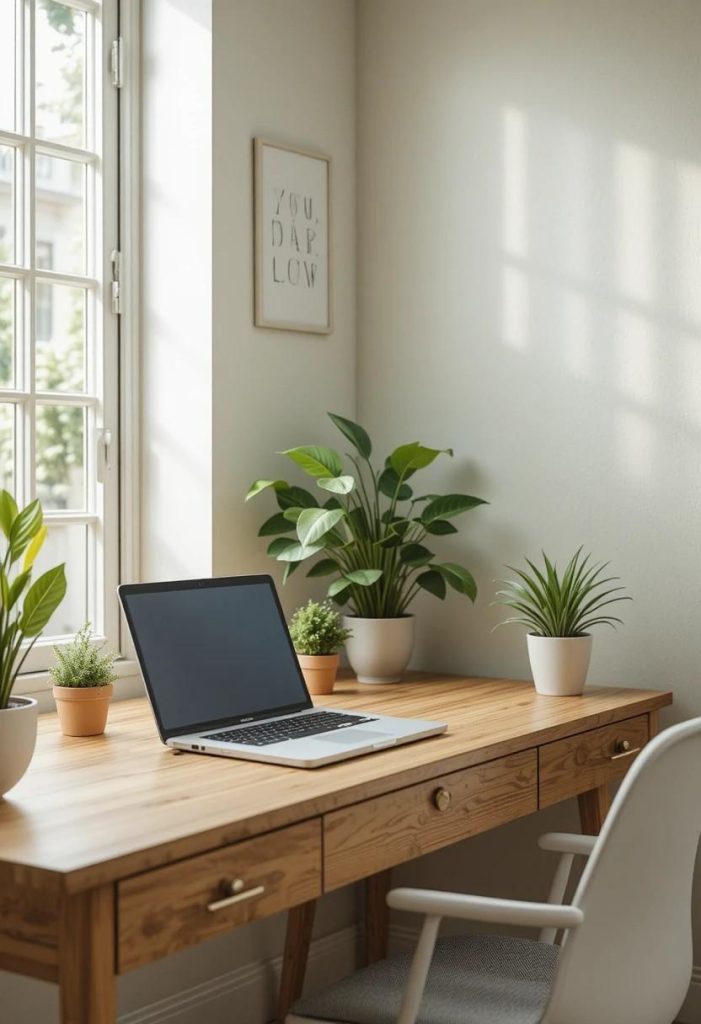
I keep coming back to plants whenever my office starts to feel flat, because nothing else softens a room quite so quickly. A trailing pothos on the shelf, a small snake plant beside the monitor, and a fern in the corner give me three different greens to look at during the day, and the room feels alive rather than assembled. I water them on Sunday mornings, which has become a small ritual I look forward to, and I wipe the leaves when they get dusty so they keep catching the light. If you are new to houseplants, start with one forgiving variety and learn its rhythm before you buy more, because a thriving plant beats a crowded shelf of struggling ones every time.
How to do it: Choose two or three easy plants, such as a pothos, a snake plant, and a fern, and place one on the desk, one on a shelf, and one on the floor. Check how much light each spot gets before you buy, keep the pots in saucers to protect surfaces, and set a weekly watering reminder.
2. Layer in Warm Lighting
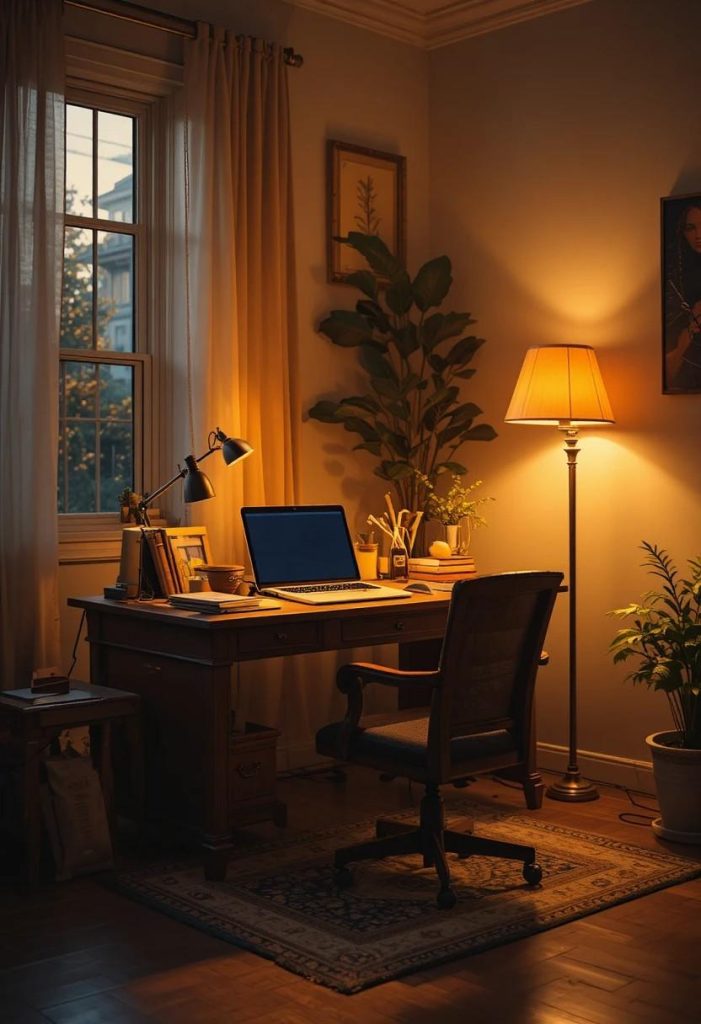
Harsh overhead light used to leave me tired by mid-afternoon, so I switched it off most days and built the light in layers instead. Now a warm desk lamp handles the close work, a small floor lamp fills the corner behind me, and daylight does the rest until the evening. I chose bulbs around 2700K, which glow amber rather than blue, and the difference in how the room feels after dark is remarkable. A dimmer on the desk lamp lets me turn things down for reading and up again for detailed work. When the light is gentle, I stop squinting, my shoulders drop, and the whole room feels more like a study than a storeroom.
How to do it: Add a warm desk lamp for tasks and a floor lamp for the room, both with warm-toned bulbs around 2700K. Angle the desk lamp so it lights your work without shining into your eyes, and put the brightest lamp on a dimmer so you can lower it in the evening.
3. Choose a Comfortable Chair
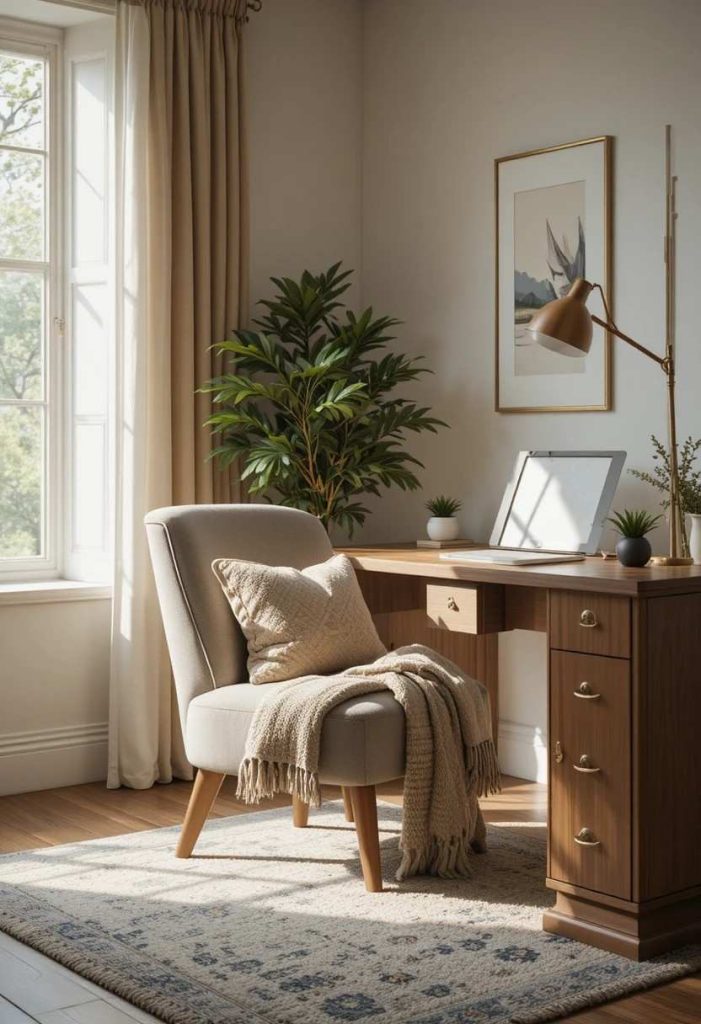
You spend hours in your office chair, so comfort truly matters, and I learned that the expensive-looking chair is not always the comfortable one. Before I bought mine, I sat in it for a good ten minutes, adjusted the height until my feet rested flat, and checked that the back supported my lower spine without pushing me forward. A small lumbar cushion and a seat pad in a soft, washable fabric finished it off, and now I can work through a long morning without fidgeting. Choose a chair you would happily sit in for a whole working day, not just one that photographs well, because your back will notice the difference long before your eyes do.
How to do it: Sit in the chair for at least ten minutes before buying, set the height so your feet rest flat on the floor, and check the lumbar support. Add a small cushion for your lower back, and pick a washable seat pad in a colour you love.
4. Create a Calming Color Palette
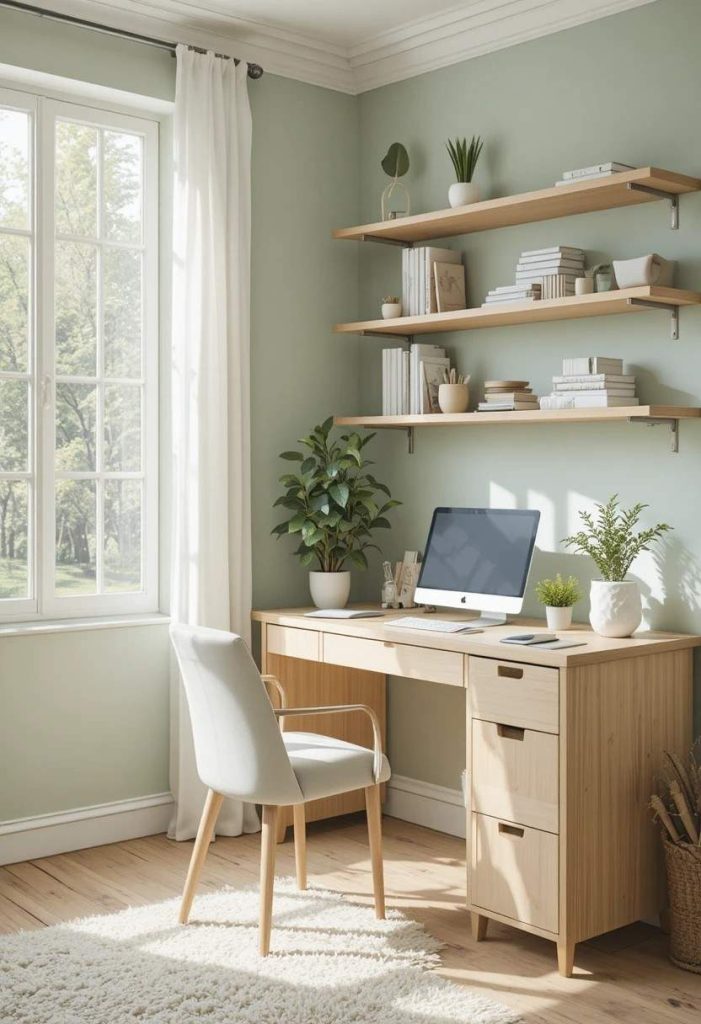
Soft, soothing colours help my mind settle and focus, so I built this room around warm white walls, a sage green cushion, and honey-toned wood. The trick, I found, is to pick just three colours and repeat them: one on the wall, one in the textiles, and one small accent on the desk. I tested paint swatches on the wall beside the window and lived with them for a week, because colours change completely between morning and lamplight. Bold shades have their place, but in a room where I need to think clearly, a gentle palette keeps everything calm and lets the few stronger pieces, like a framed print, stand out properly.
How to do it: Pick three colours, a soft neutral, one gentle green or blue, and one warm accent, then repeat them across the walls, textiles, and desk accessories. Paint large swatches on the wall and live with them for a week before committing.
5. Use a Pretty Pegboard
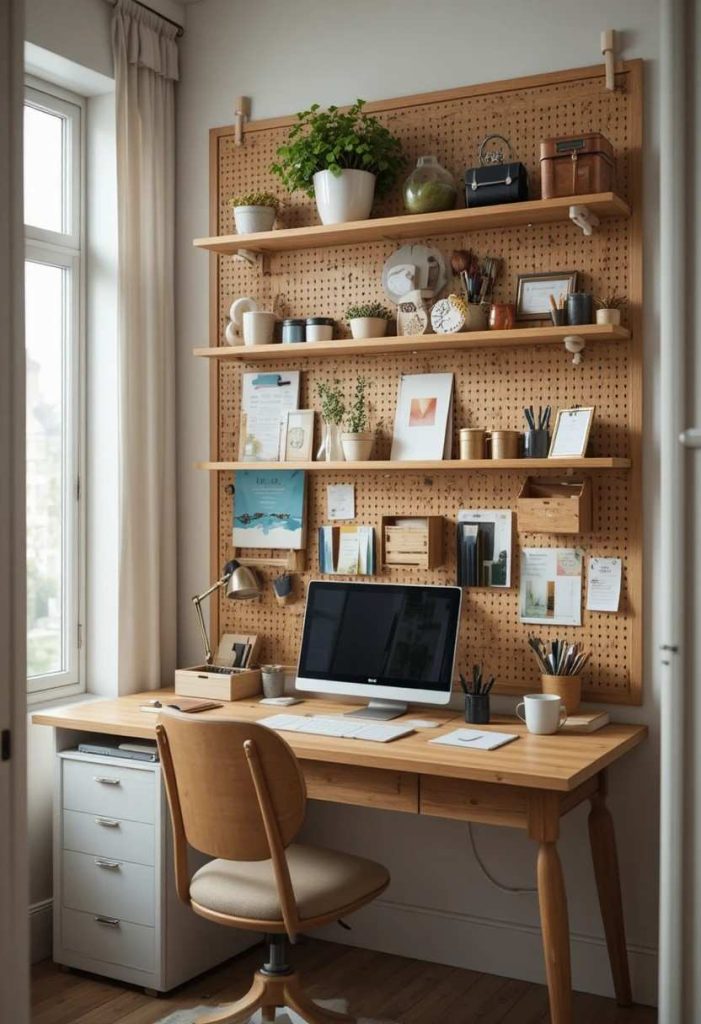
A pegboard turns an empty wall into flexible, attractive storage, and mine has changed shape half a dozen times since I hung it. I started with hooks for scissors and tape, then added a small shelf for my favourite pens and a clip for the week’s to-do list. Painting it the same warm white as the wall made it disappear into the room instead of looking like workshop storage, and a few wooden pegs keep it feeling handmade. When a project ends, I simply move the hooks around, which means the wall grows with the way I work instead of freezing me into one layout I outgrow by spring.
How to do it: Hang the pegboard at eye level beside or above the desk, fixing it firmly into wall studs. Paint it to match the wall, then arrange hooks, small shelves, and clips for the tools you reach for daily, leaving space to move things as your work changes.
6. Add Soft Textiles
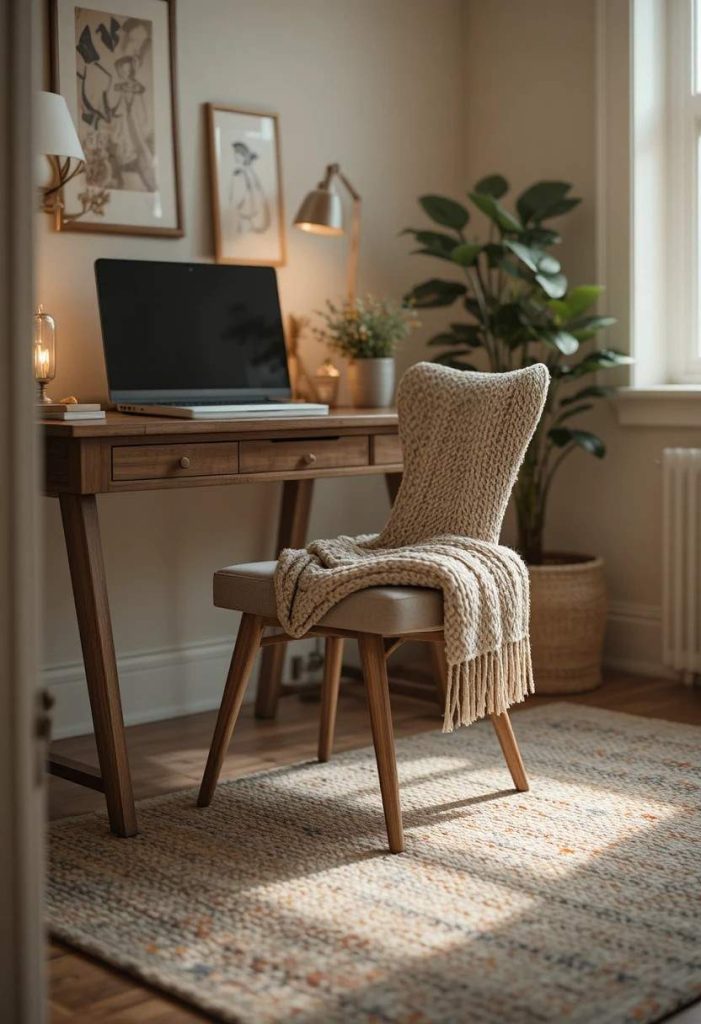
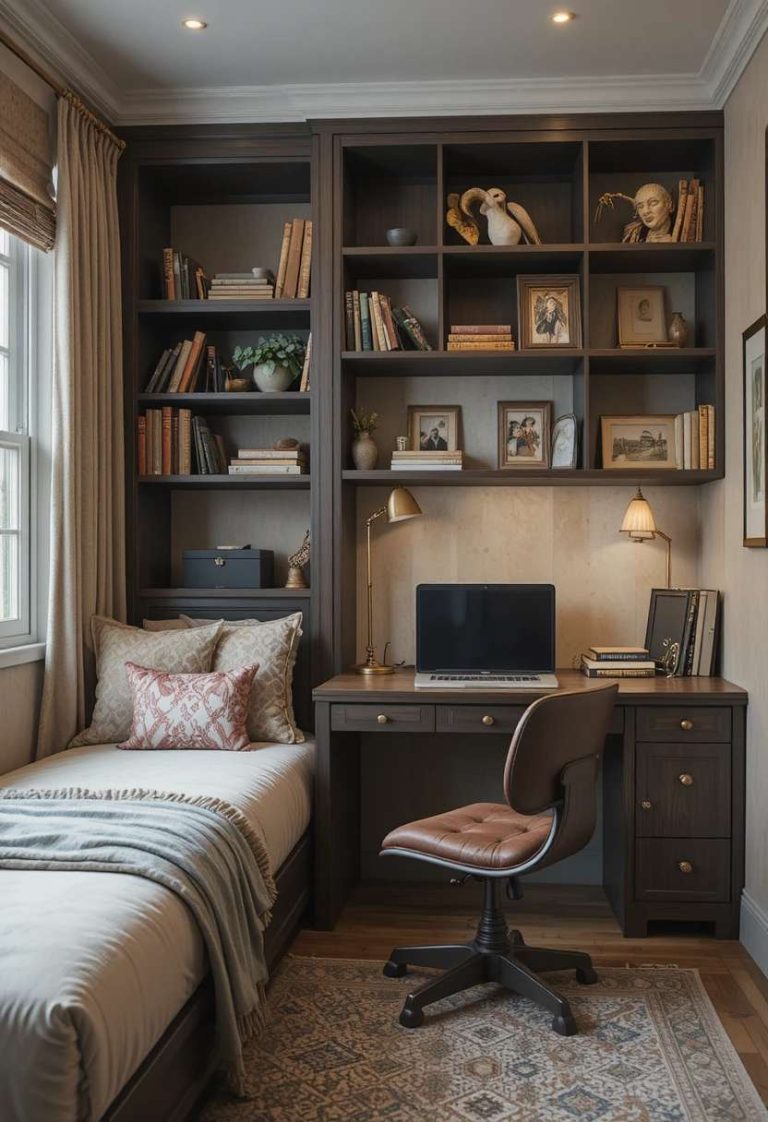
A cosy rug underfoot or a soft throw over your chair makes an office feel warm and homey, and textiles are the fastest change I know when a room feels too hard and echoey. I layered a flat-weave rug under the desk, a linen cushion on the chair, and light curtains that soften the window without blocking the daylight. Natural fabrics suit this room best: linen creases gracefully, wool keeps me warm on cold mornings, and cotton throws wash easily when the cat claims them. Keep the colours in your palette and the textures varied, and the room will feel gathered and comfortable rather than decorated in a single afternoon.
How to do it: Lay a flat-weave rug under the desk and chair, add a linen cushion and a wool or cotton throw, and hang light curtains at the window. Choose washable fabrics where you can, and keep every textile inside your three-colour palette.
7. Display Inspiring Wall Art
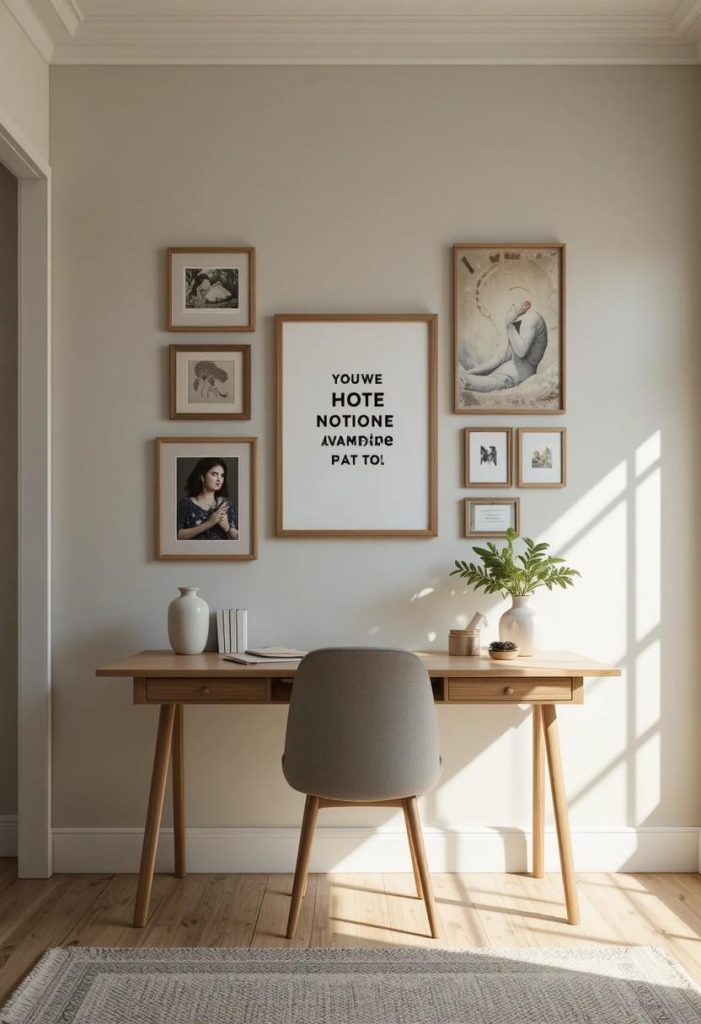
A piece of art or a small gallery wall above your desk gives your eyes something lovely to rest on when you pause between tasks, and I chose pieces that mean something to me rather than prints I merely liked in a shop. There is a watercolour from a holiday, a framed photograph of my grandmother’s garden, and one bold abstract that picks up the sage in my cushions. I hung the largest piece at eye level while seated, then grouped the smaller frames around it with even gaps, stepping back after each one to check the balance. Art you love will keep you company through long afternoons in a way that a blank wall never can.
How to do it: Choose three to five pieces you genuinely love, including one personal photograph or print. Hang the largest at seated eye level above the desk, group smaller frames around it with even gaps, and step back to check the balance before fixing the last nail.
8. Keep Cords Hidden and Tidy
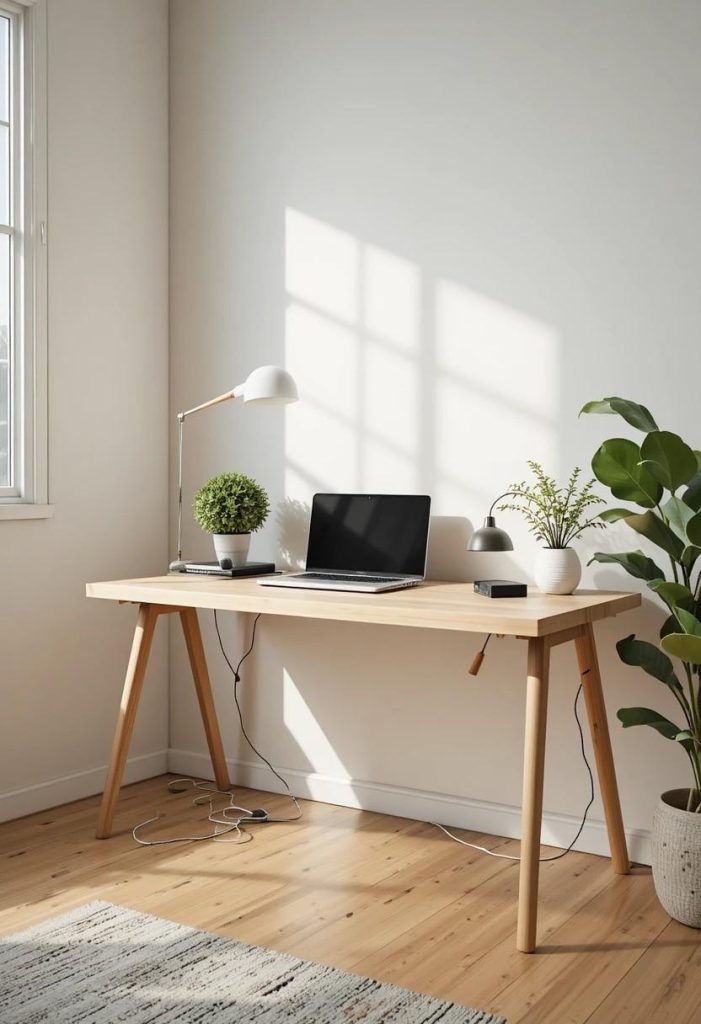
Few things make a desk feel messier than a tangle of cords, and mine used to snake across the floor until I finally spent one Saturday sorting them properly. I labelled every charger with a small tag, bundled the spares with reusable ties, and ran the rest through a slim cable tray fixed under the desk, with the power strip tucked inside a ventilated cable box. Now the only cord I ever see is the one charging my laptop, and dusting takes half the time it used to. It is not a glamorous job, but a tidy underside makes the whole desk feel calmer, and I wish I had done it the week I moved in.
How to do it: Unplug everything, label each charger, and bundle spares with reusable cable ties. Fix a cable tray under the desk, route cords through it to a power strip inside a ventilated cable box, and keep only the charger you use daily within reach.
9. Create a Cozy Reading Nook
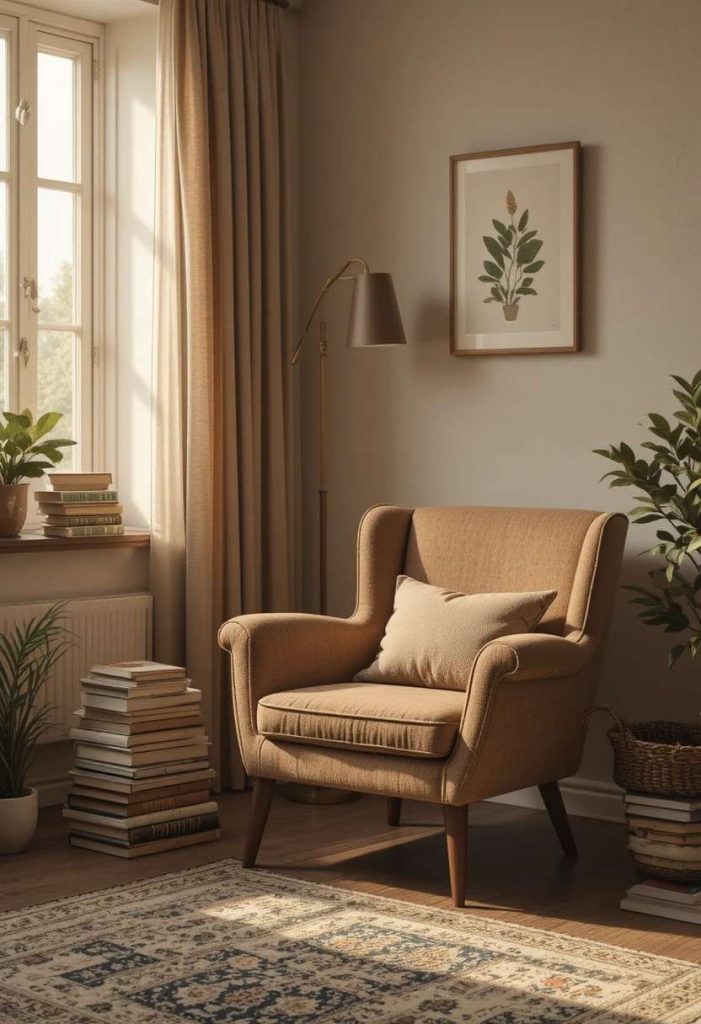
A small reading nook gives you a place to step away from the screen without leaving the room, and mine is just an armchair, a floor lamp, and a low side table in the corner by the window. I keep a folded throw over the arm and a small stack of books I am dipping into, so the corner always looks inviting rather than staged. Ten quiet minutes there with a cup of tea often untangles a problem faster than another hour at the keyboard. If the room doubles as a study space, these study room ideas show how a reading corner can sit happily beside a proper desk. Even the smallest nook earns its place if you actually use it every day.
How to do it: Place a comfortable armchair in a quiet corner with a floor lamp and a small side table. Add a folded throw and two or three books, keep the chair turned slightly toward the window, and leave the space clear of work papers so it stays a place to rest.
10. Use Stylish Desk Organizers
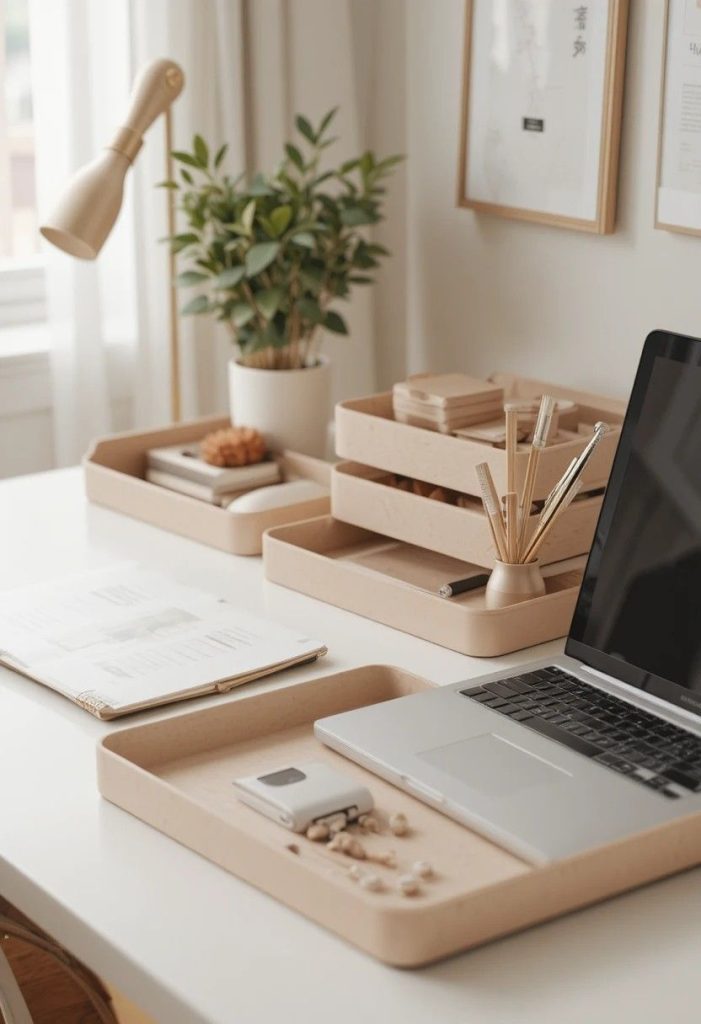
A tidy desk feels calm and makes it easier to find what you need, so I gave every small thing a home instead of letting pens and clips drift across the surface. A wooden tray holds my notebook and phone, a ceramic pot gathers the pens I actually use, and a shallow drawer box swallows the paper clips, spare batteries, and sticky notes. I chose organizers in matching wood and cream so they look like part of the room rather than office supplies that wandered in. Once a week I empty the tray, return anything that has migrated there, and wipe the desk down, which takes five minutes and keeps the whole system working instead of slowly collapsing.
How to do it: Choose a tray, a pen pot, and a small drawer box in matching wood or cream. Give pens, clips, and notes a fixed home, keep only the tools you use daily on the surface, and empty the tray once a week.
11. Add Natural Wood Tones
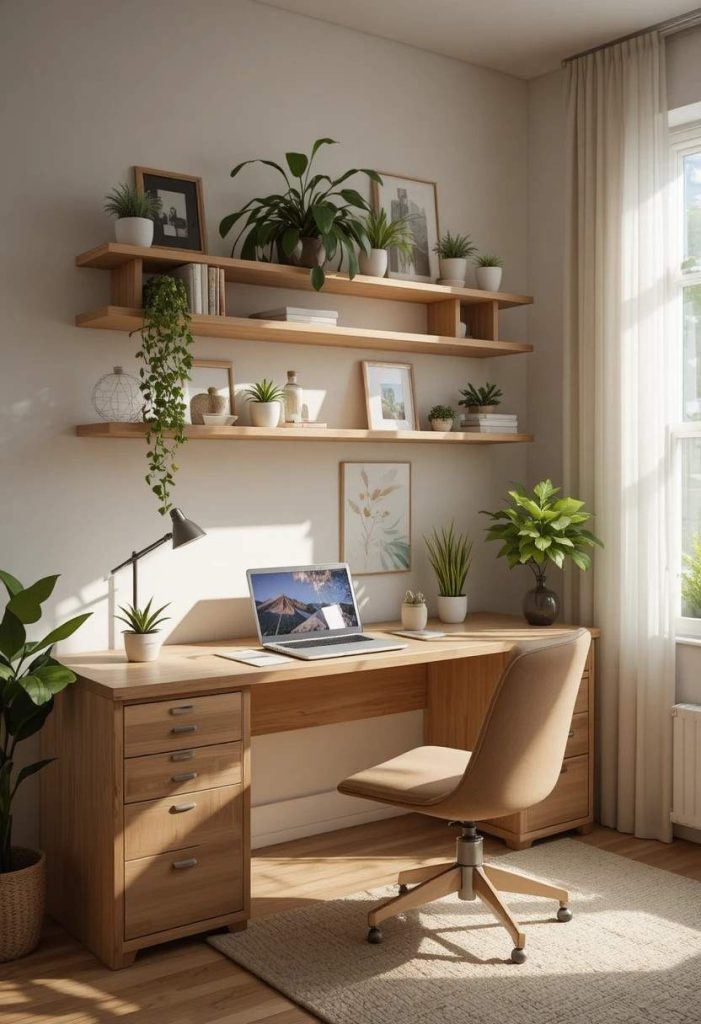
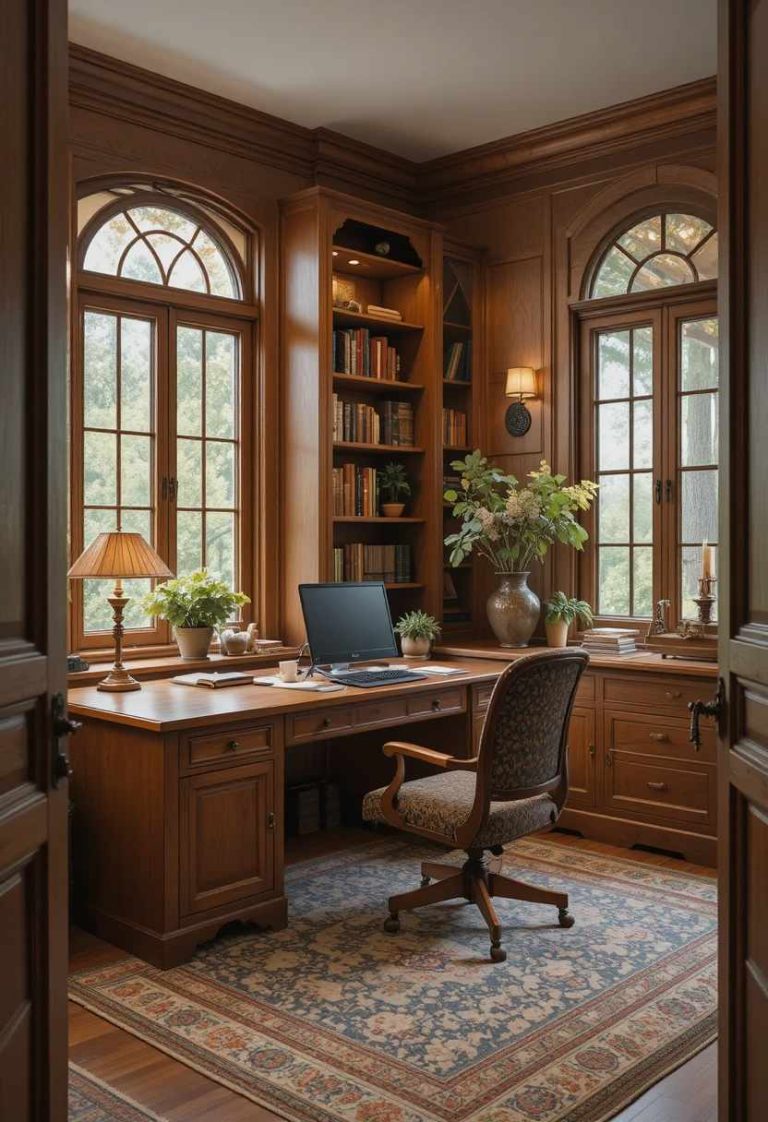
Wood brings warmth and a grounded, natural feel to a room that could otherwise feel cold, and my oak desk is still my favourite piece in the office. I paired it with a walnut shelf and a small beech tray, keeping the tones close enough to feel related without matching exactly, which would look flat. A light coat of oil once a year keeps the desk glowing and hides the faint ring where my coffee mug used to sit, a lesson I learned the hard way. Wood also ages gracefully: a few small marks tell the story of the room, and a quick sand and oil can refresh a tired surface in an afternoon without buying anything new.
How to do it: Choose a desk in a warm wood such as oak or walnut, then repeat a similar tone in one shelf and a tray. Use coasters under every mug, oil the desk once a year, and keep the wood tones close rather than identical.
12. Hang Open Shelving
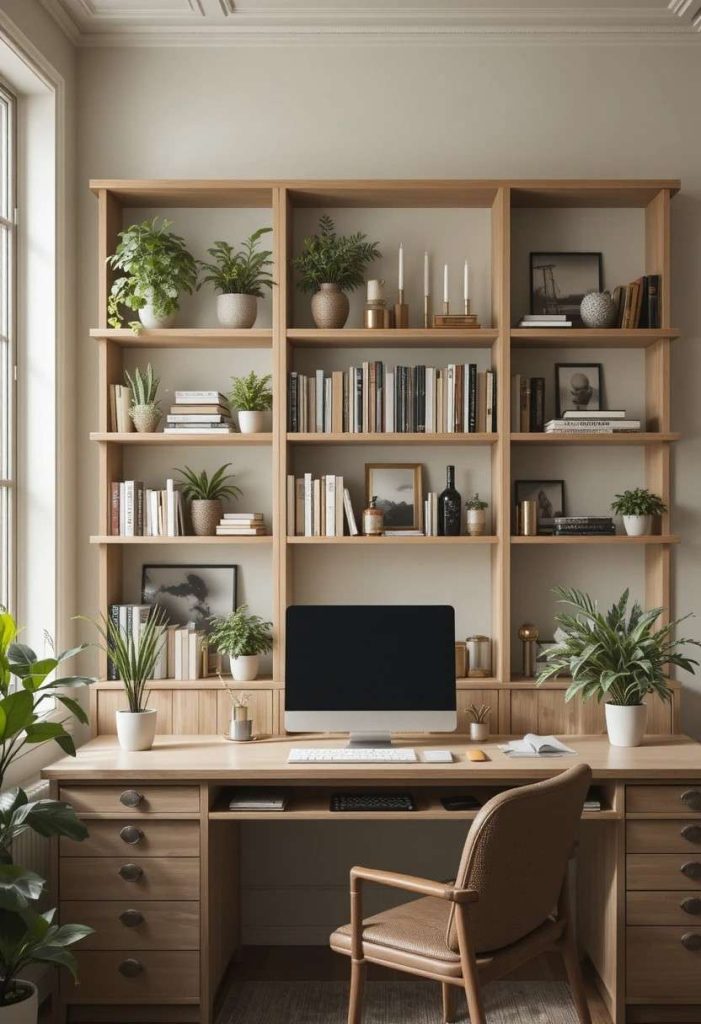
Open shelves make a room feel airy and give you a place to display books, plants, and a few pieces you love, but they only work if you leave breathing room. I keep the shelf nearest the desk for the books I reach for most, the middle shelf for a plant and a framed print, and the top shelf for a basket that hides the less pretty supplies. Every shelf has at least one empty stretch, which stops the whole wall from looking crowded, and I dust them on Fridays so nothing ever looks neglected. When a shelf starts to fill up, I take one thing away before I add another, a small rule that has kept the display calm for years.
How to do it: Fix two or three shelves above or beside the desk into wall studs, keeping them level. Put daily books on the lowest shelf, display a plant and one framed piece on the middle shelf, hide supplies in a basket on the top, and leave empty space on every shelf.
13. Add a Candle or Diffuser
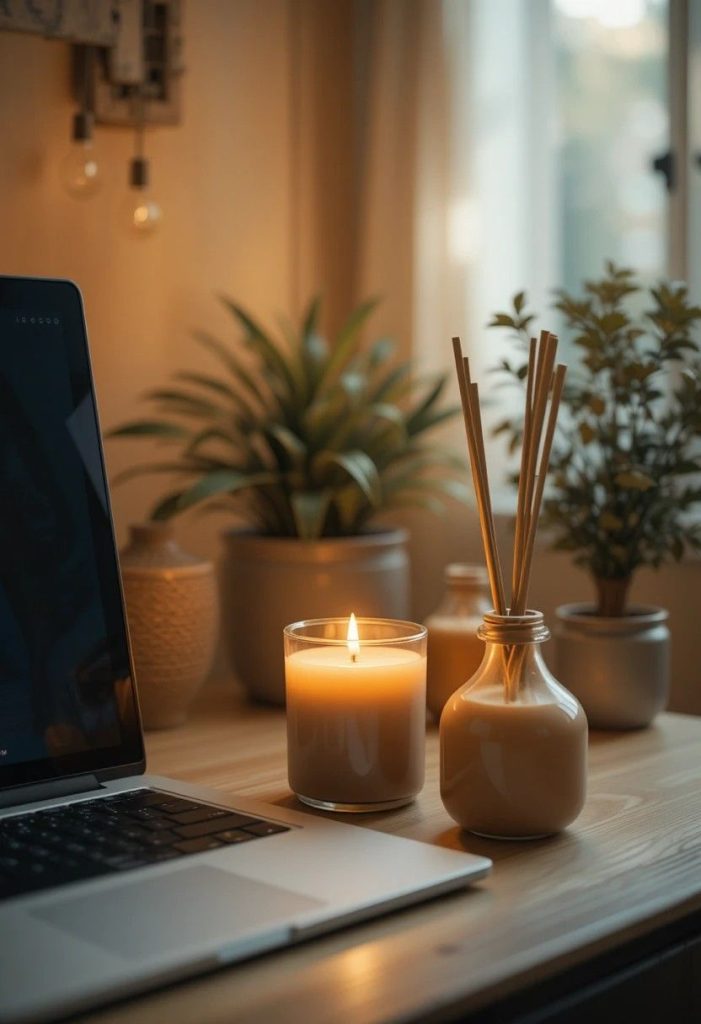
A soft scent can change the mood of a room without changing anything you can see, and I light a candle on grey afternoons when the office needs a little lift. Lavender helps me unwind after a long call, while cedar and orange feel right on cold mornings when I need to wake up gently. On days when I am in and out of the room, a reed diffuser does the same job without a flame, and it keeps the scent steady for weeks. I keep the candle on a ceramic tray, well away from papers and curtains, and I never leave it burning when I leave the house, because a calm room should never come at the cost of peace of mind.
How to do it: Choose one calming scent, such as lavender, cedar, or orange, and use a candle on a ceramic tray or a reed diffuser. Place it away from papers and curtains, trim the wick before lighting, and never leave a candle burning unattended.
14. Place Your Desk Near a Window
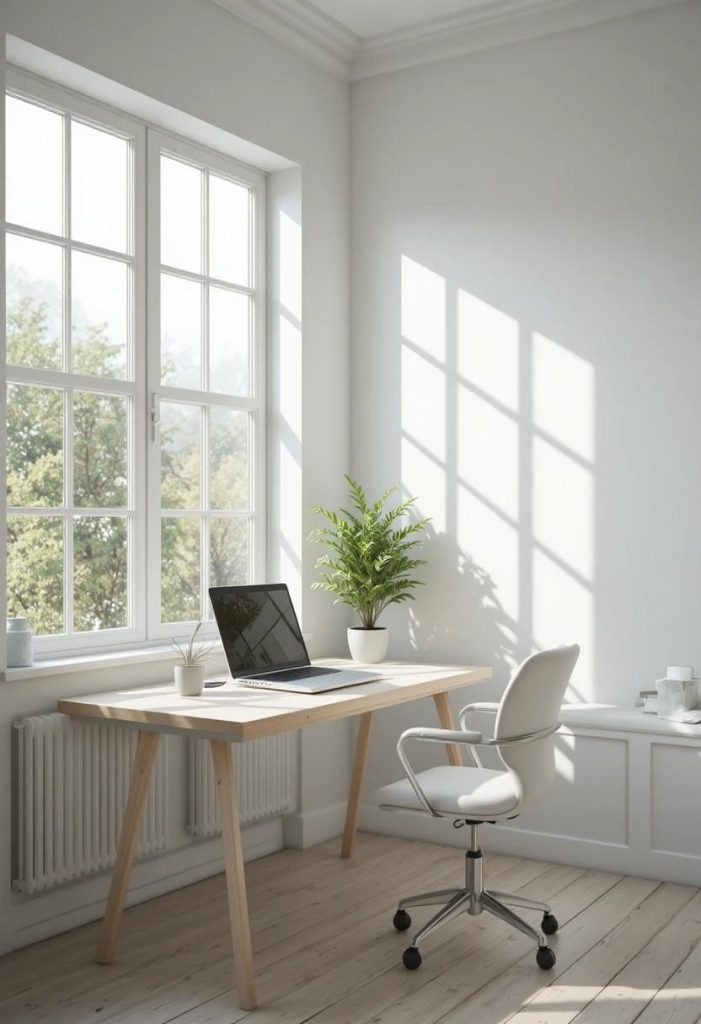
Natural light makes a workspace feel brighter, more open, and far less tiring, so I moved my desk to sit at a right angle to the window rather than with my back to it. Daylight falls across the desk in the morning, I can glance up at the garden between emails, and by late afternoon the room still feels alive. A sheer linen curtain takes the edge off the brightest sun without darkening the room, and I keep the windowsill clear except for one small plant so the light is never blocked. If your window faces a busy street, a tall plant or a sheer panel gives you privacy while keeping the daylight you moved the desk there for.
How to do it: Move the desk to a right angle beside the window so daylight falls across your work without shining into your eyes or onto the screen. Hang a sheer linen curtain to soften glare, and keep the windowsill clear except for one small plant.
15. Create a Vision Board
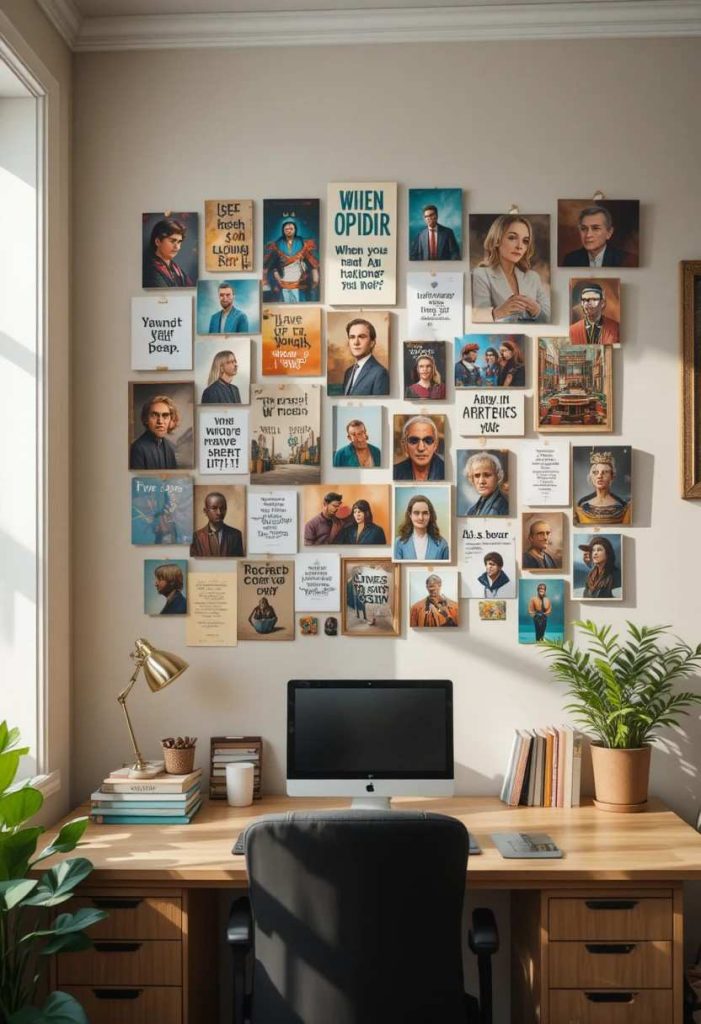
A vision board keeps your goals visible and your mind focused, and mine hangs where I see it every time I look up from the keyboard. I started with a cork board and pinned just a few things: a photograph of a place I want to visit, a colour swatch for the next room I plan to decorate, and a handwritten note with the one goal that matters most this season. Each month I take down anything that no longer fits and add one new image, so the board stays honest instead of turning into wallpaper I stop noticing. Seeing a goal in the morning, even for a few seconds, makes it far more likely I will take one small step toward it that day.
How to do it: Hang a cork or fabric pinboard at eye level above the desk. Pin three or four items only, a goal, an inspiring image, and one personal photograph, then review the board monthly and replace anything that no longer fits.
16. Add a Soft Area Rug
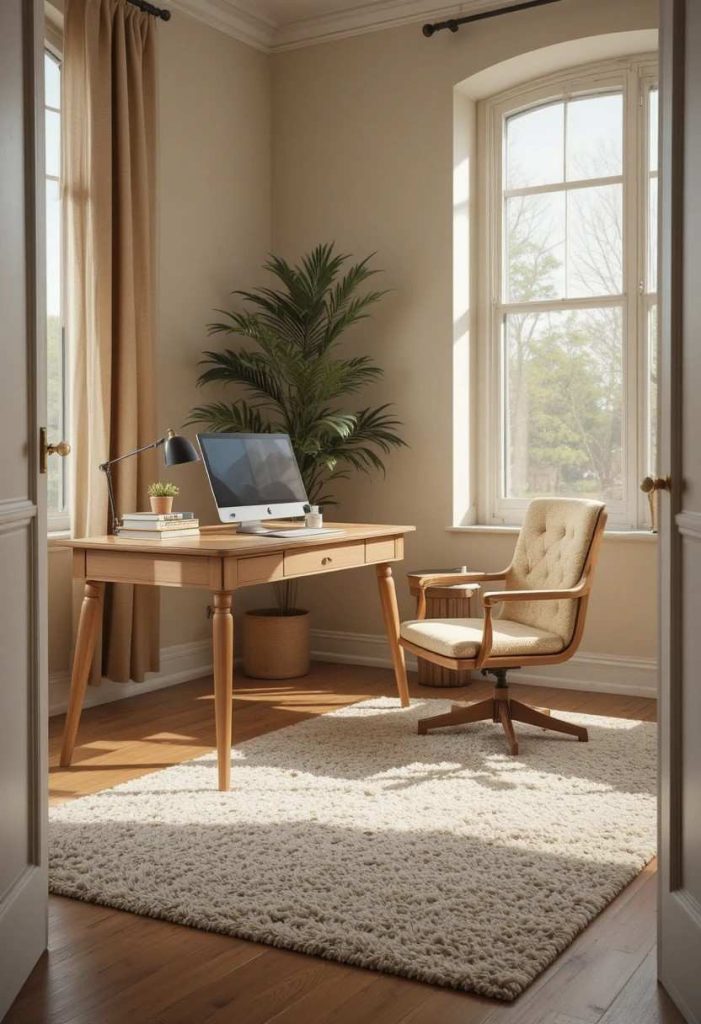
A soft rug under your desk can make the floor feel warmer and the whole room more pulled together, and mine was the piece that finally made the office feel finished. I chose a flat-weave rug in a warm, muted pattern that the chair wheels roll over easily, large enough to sit under both the desk and the chair with room to spare. A non-slip pad underneath keeps it from creeping across the floor, and because it is low pile, I can vacuum it quickly on Fridays. The rug also softens the sound of the chair moving, which matters more than I expected on video calls, and on cold mornings it is the first warm thing my feet touch.
How to do it: Measure the desk and chair area, then choose a flat-weave rug at least 30 cm wider than the desk on each side. Lay a non-slip pad underneath, check that the chair rolls smoothly over it, and vacuum it weekly.
17. Use Woven Baskets for Storage
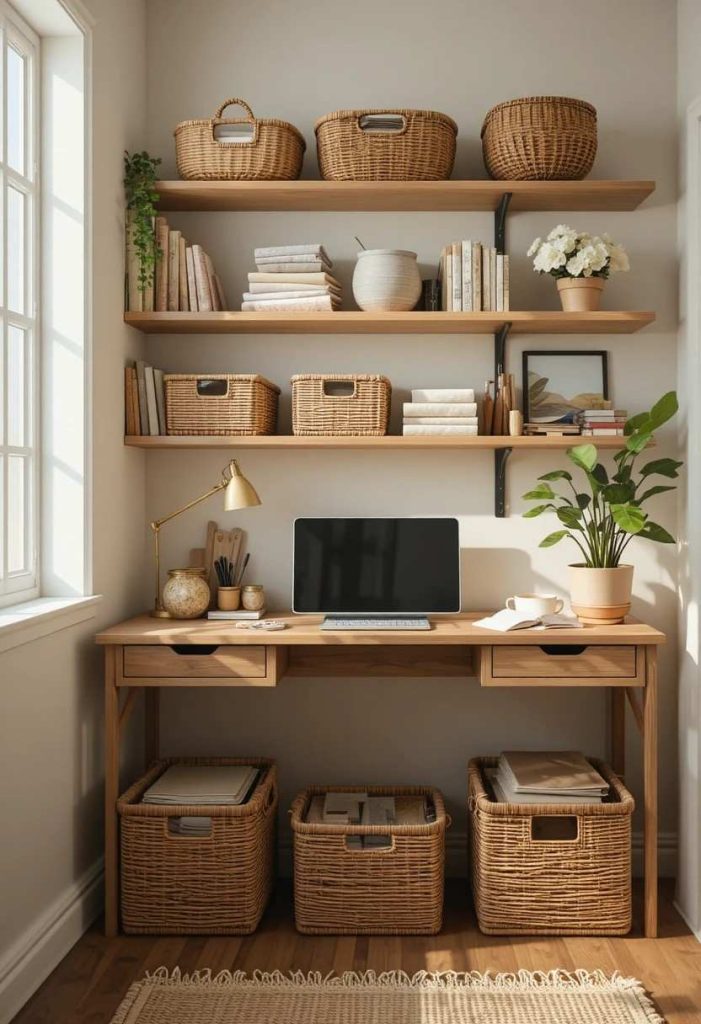
Woven baskets are a beautiful way to hide clutter while adding texture, and I use them for everything the desk does not need to show. One large basket holds spare notebooks and printer paper, a medium one gathers cables and chargers, and a small one on the shelf keeps hand cream, lip balm, and the odds and ends that used to scatter across the desk. Seagrass and rattan suit this room because their warm, natural tones echo the wood desk, and a simple paper label on each basket means I never have to lift three lids to find the spare pens. Baskets also forgive a messy week: I can toss things in, close the lid, and sort them properly on Friday.
How to do it: Choose three seagrass or rattan baskets in different sizes, one for paper, one for cables, and one for small desk items. Label each one, place the largest on the floor, the medium one on a shelf, and keep the smallest within arm’s reach of the desk.
18. Frame Your Favorite Photos
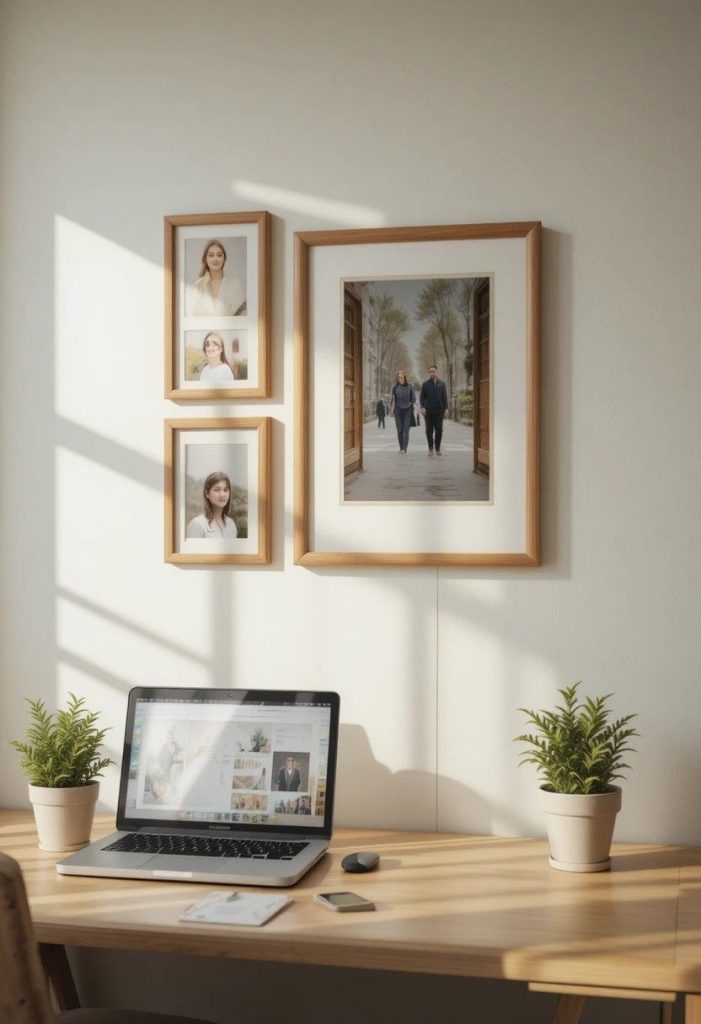
Photos of family, friends, or favorite places make your office feel personal and warm, and I keep just three on my desk so they stay special instead of becoming clutter. One is a black-and-white photograph of my parents on their wedding day, one is a snapshot from a walking holiday in the Lake District, and the third is a small print of my dog asleep on my old office chair. I chose simple wooden frames in the same tone, printed the photographs at home on matte paper, and placed them where I see them when I look up, not where they block the keyboard. Rotating one photograph each season keeps the desk feeling fresh and gives me a reason to look through old albums.
How to do it: Pick three photographs that genuinely make you smile and print them on matte paper. Frame them in matching wooden frames, place them where you see them when you look up from work, and rotate one photograph each season.
19. Add a Small Desk Plant
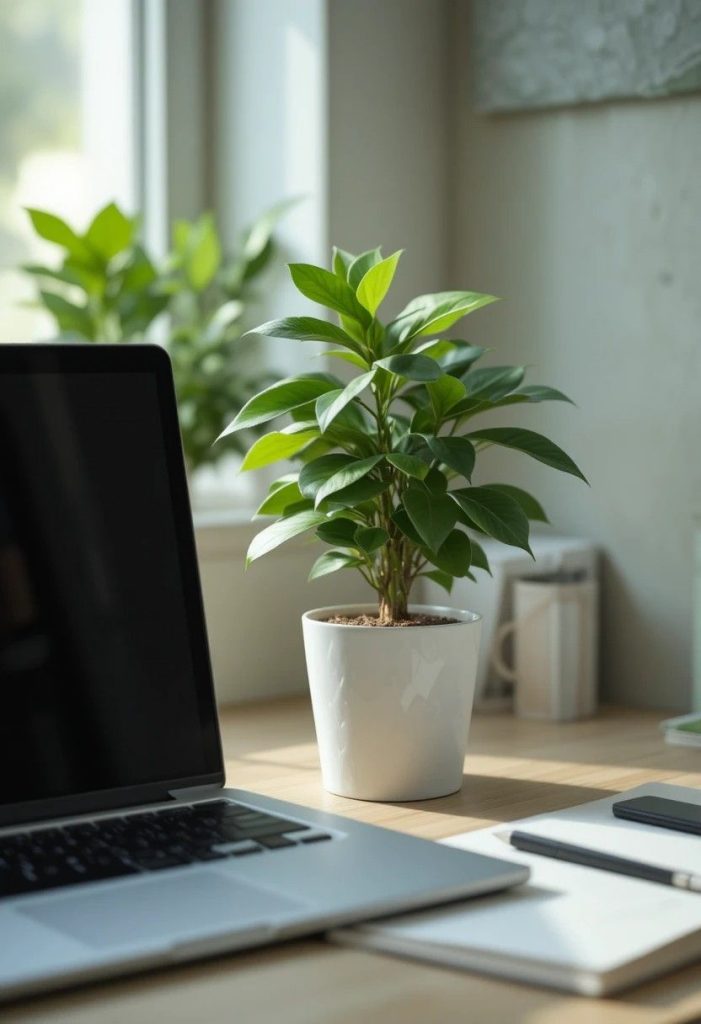
A small plant on your desk brings life and calm to your workspace, and mine sits in a cream ceramic pot at the left-hand corner, where it never crowds the keyboard. I chose a pothos because it forgives a missed watering and trails prettily over the edge of the pot, and I trim it back every few months so it stays neat. Watering it is part of my Monday routine, a two-minute pause before the week begins, and watching new leaves unfurl is a quiet reminder that slow growth still counts. If your desk gets very little light, a snake plant or a small faux plant in a real pot will give you the same green note without the worry.
How to do it: Choose a small pothos or snake plant in a ceramic pot and place it in the desk corner opposite your writing hand. Water it weekly, trim trailing stems every few months, and keep it out of the way of papers and the keyboard.
20. Keep a Cozy Throw Blanket
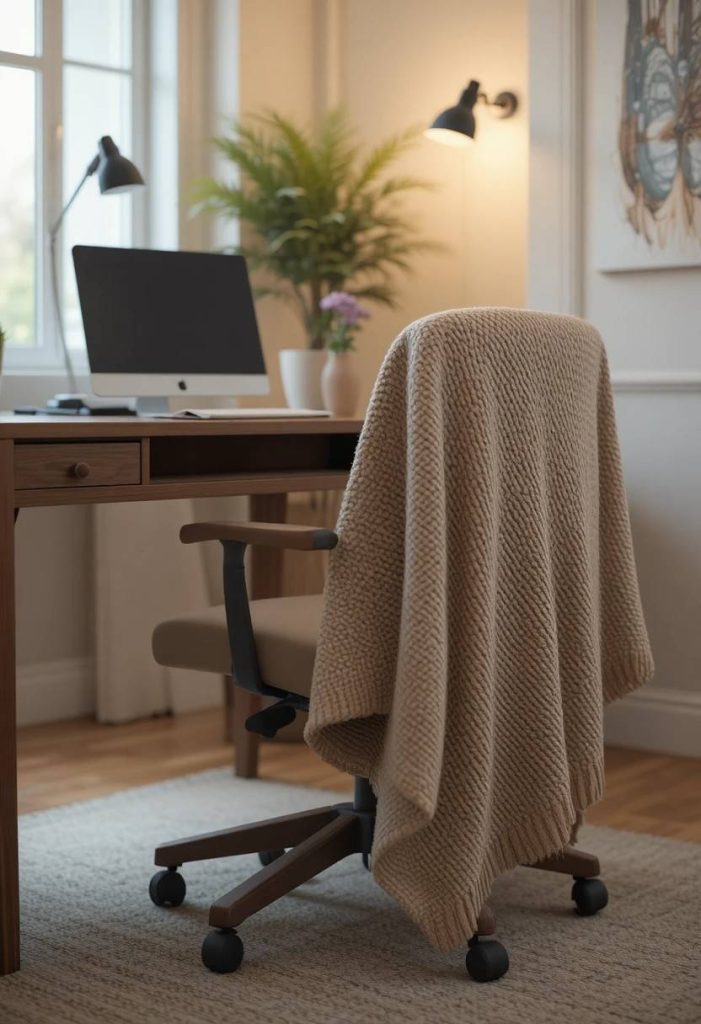
A soft throw draped over your chair or stored in a basket nearby is perfect for chilly mornings, and mine lives folded over the back of my chair from October through April. I chose a wool-blend throw in a warm cream that matches the rug, heavy enough to feel substantial but light enough to fold away in seconds. On cold days I drape it over my knees while I read through emails, and on warmer days it simply adds a soft layer of texture to the chair. I wash it every few weeks so it always smells fresh, and I keep a second, lighter cotton throw in the basket for summer evenings when the room cools down after sunset.
How to do it: Choose a wool-blend throw in a colour from your palette and fold it over the back of your chair. Keep a lighter cotton throw in a basket for warmer months, and wash the throw every few weeks so it stays fresh.
21. Keep the Desk Minimal
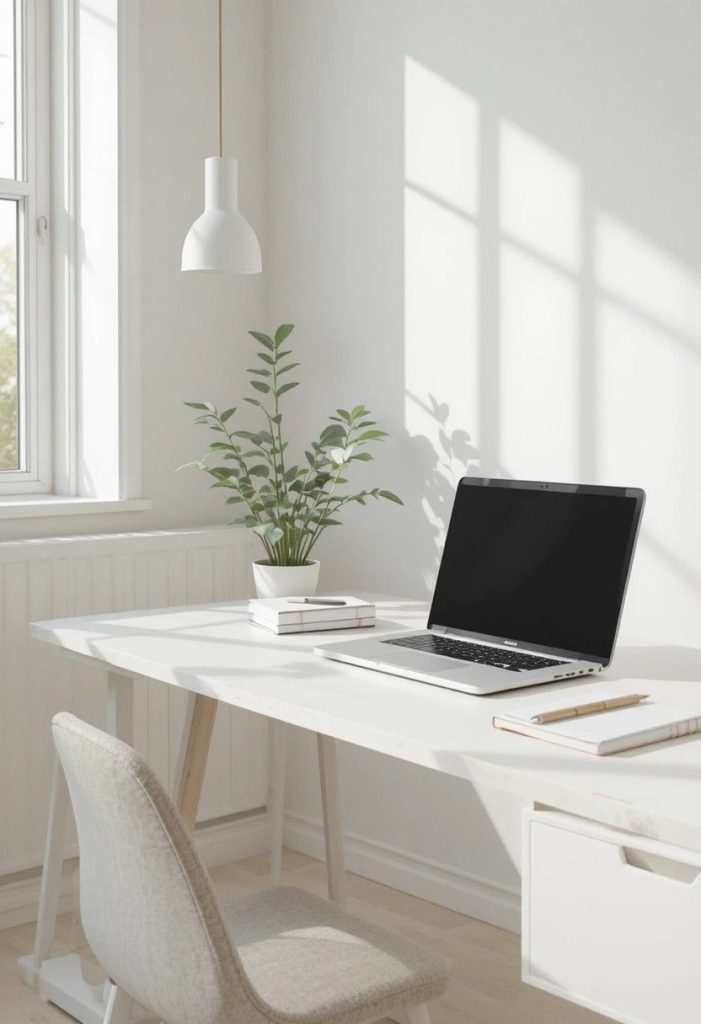
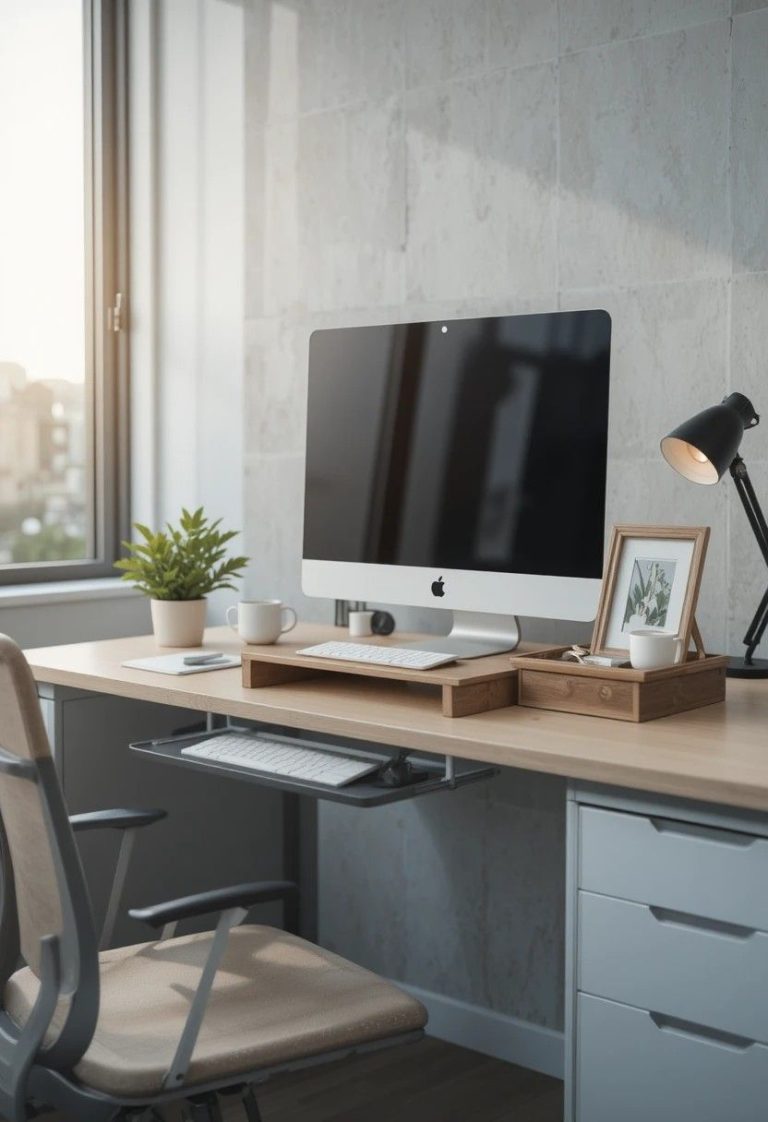
A clean, minimal desk helps your mind stay clear and focused, so I limit mine to the laptop, a lamp, one plant, and the notebook I am working in today. Everything else lives in a drawer or on the shelf, which means I can find what I need in seconds and the surface never looks busy. At the end of each day I spend two minutes clearing the desk, filing the notebook, and placing tomorrow’s first task on a sticky note, and I walk in the next morning to a fresh start instead of yesterday’s clutter. Minimal does not mean empty or cold: the lamp, the plant, and a favourite mug give the desk warmth while leaving plenty of room to think.
How to do it: Clear the desk completely, then return only the laptop, a lamp, one plant, and today’s notebook. Store everything else in drawers or on shelves, and spend two minutes at the end of each day resetting the surface for tomorrow.
22. Add Metallic Accents
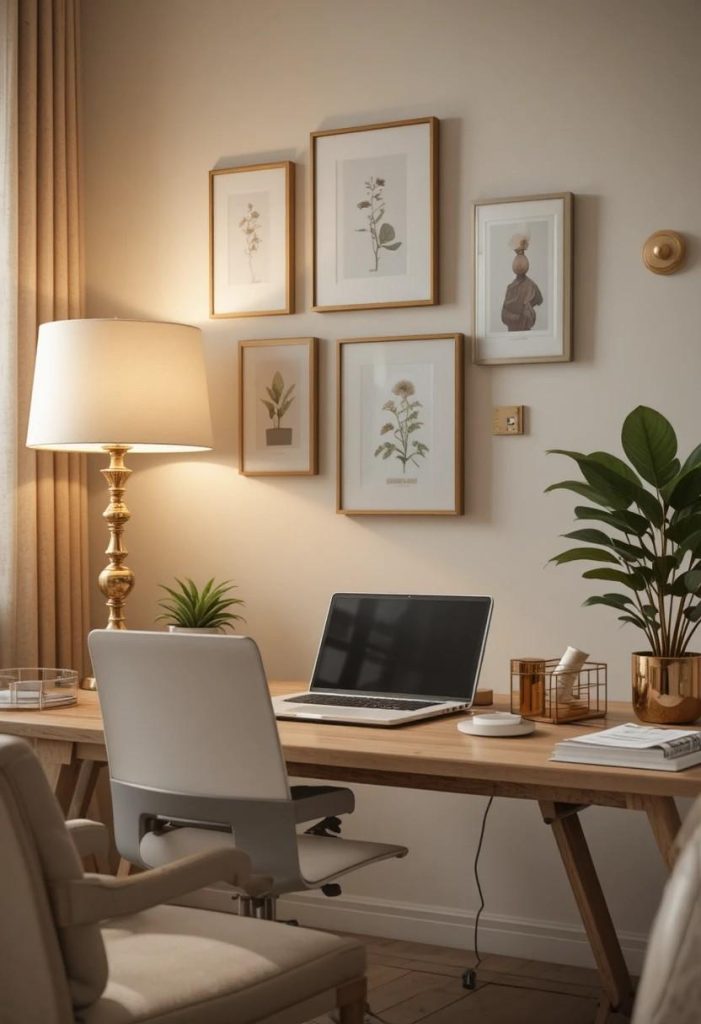
A touch of brass, gold, or copper can add a little sparkle and sophistication, and I use it sparingly so it stays elegant rather than showy. My desk lamp has a slim brass stem, two picture frames are thin gold, and a small copper pot holds my pens, which is enough shine for one room. I kept every metallic piece in the same warm family, because mixing brass with chrome would fight with the wood and the soft textiles. A little metal also catches the lamplight in the evening, so the room glows gently after dark, and a quick polish every month keeps the finishes bright without any fuss.
How to do it: Choose one warm metal, such as brass or copper, and repeat it in three small pieces only, a lamp, a frame, and a pen pot. Keep the finishes matching, place them where lamplight catches them, and polish them monthly.
23. Try a Wall-Mounted Desk
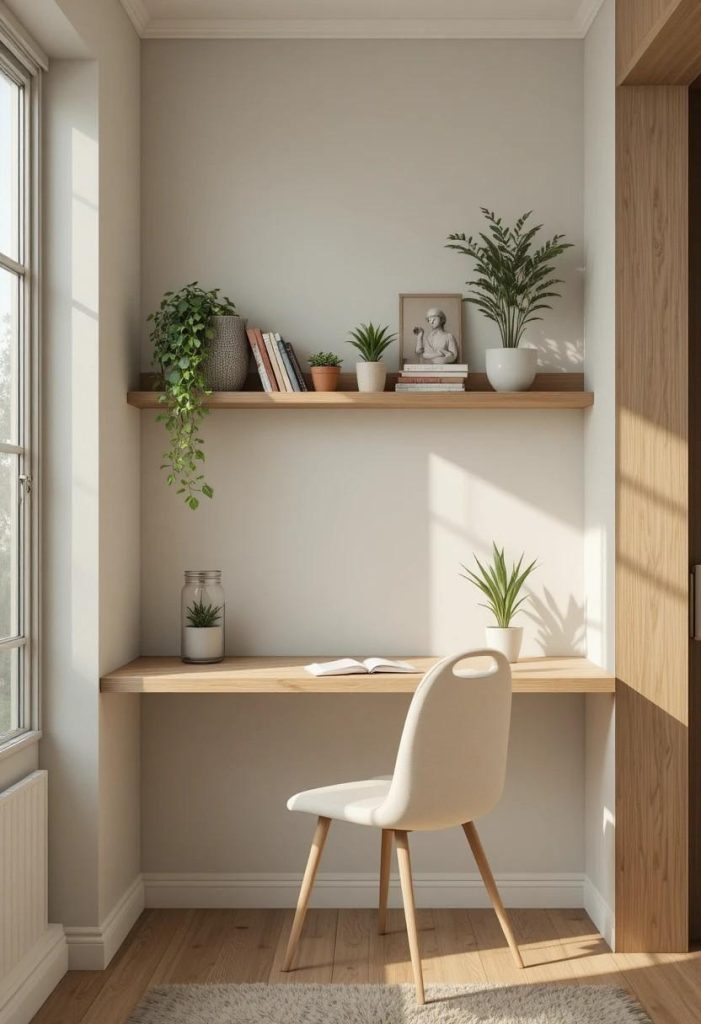
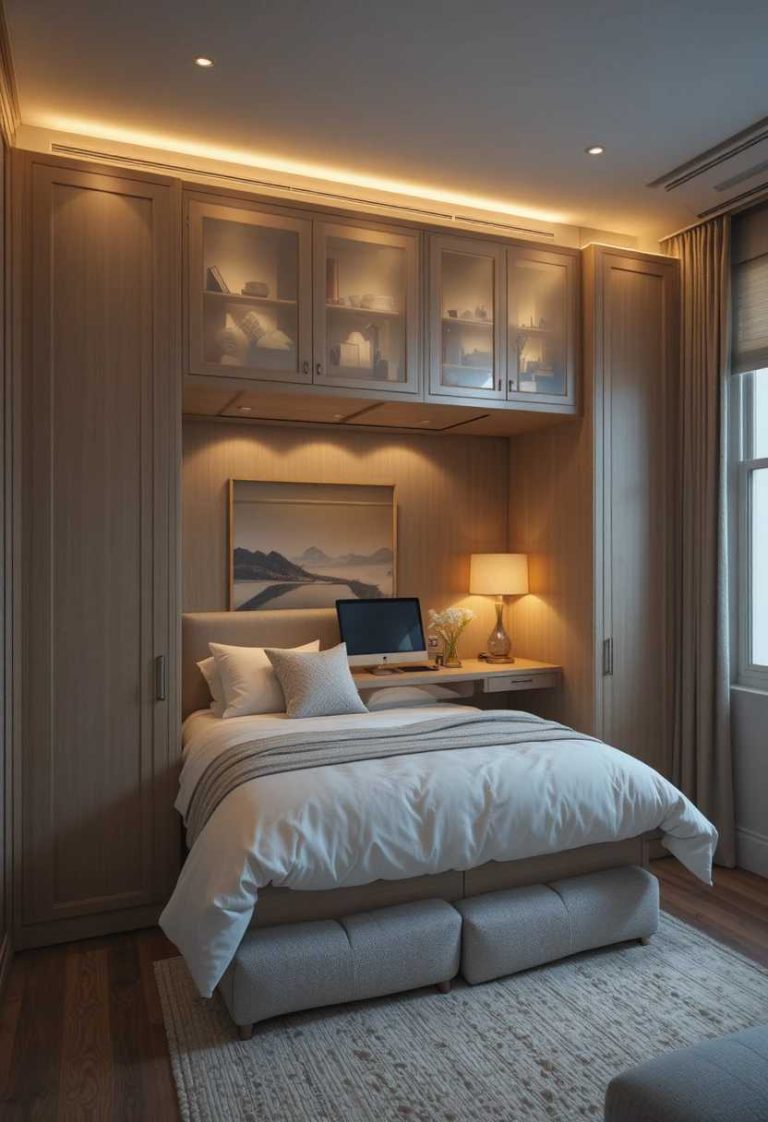
A wall-mounted or fold-down desk is perfect for small spaces and helps keep the room feeling open, and mine folds up flat against the wall when the working day is done. I had it fixed firmly into wall studs with heavy-duty brackets, at a height that lets me sit comfortably with my feet flat, and a shallow shelf above holds the lamp and a notebook. When it is folded away, the room becomes a reading corner or a guest space again, which matters in a small home. If your room also needs to sleep guests, these Murphy bed office ideas show how a fold-away bed and a desk can share one room without either feeling like an afterthought.
How to do it: Choose a fold-down desk sized for your laptop and notebook, fix it into wall studs with heavy-duty brackets at seated elbow height, and add a shallow shelf above for the lamp. Test the fold several times, and keep the floor beneath it clear.
24. Use Sound and Music
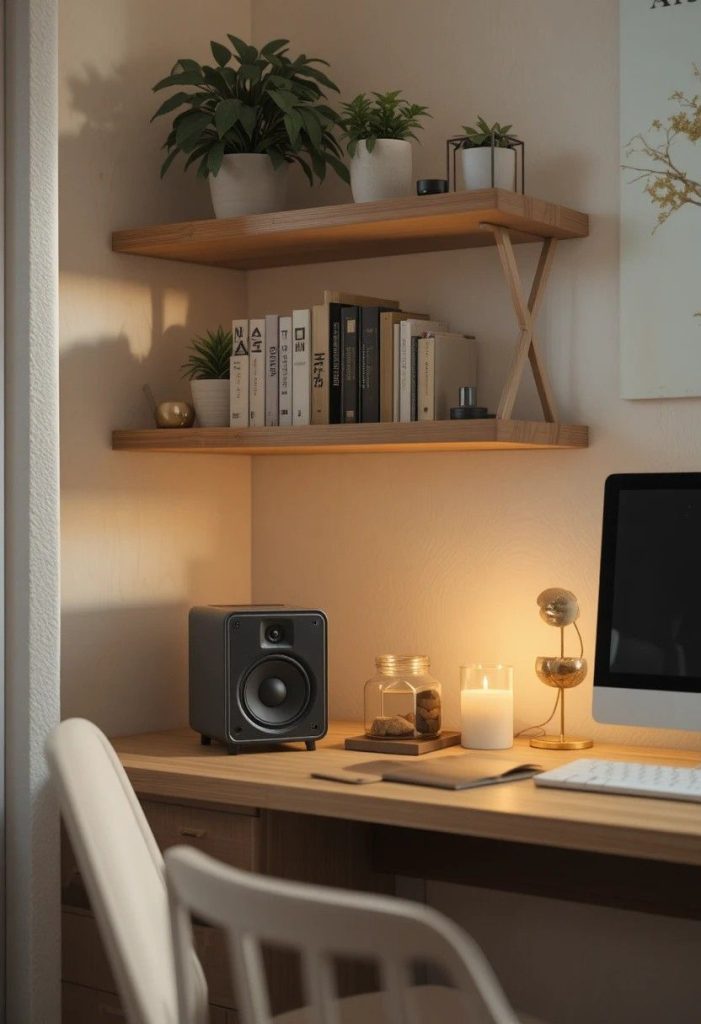
Soft background music or the gentle sound of rain can help you stay focused and calm, and I keep a small speaker on the shelf for exactly that. On writing mornings I play quiet piano, on admin afternoons I switch to gentle rain sounds, and when I need deep concentration I put on noise-cancelling headphones and let the room go silent. I keep the volume low enough that I can still hear the doorbell, and I set a playlist to stop after ninety minutes so a break happens naturally. Sound is personal, so I tried a few styles over a fortnight before settling on the two I use most, and now the right sound tells my brain it is time to work.
How to do it: Place a small speaker on a shelf and try quiet piano, gentle rain, or soft instrumental playlists at low volume. Keep noise-cancelling headphones nearby for deep-focus work, and set playlists to stop after about ninety minutes.
25. Make It Personal
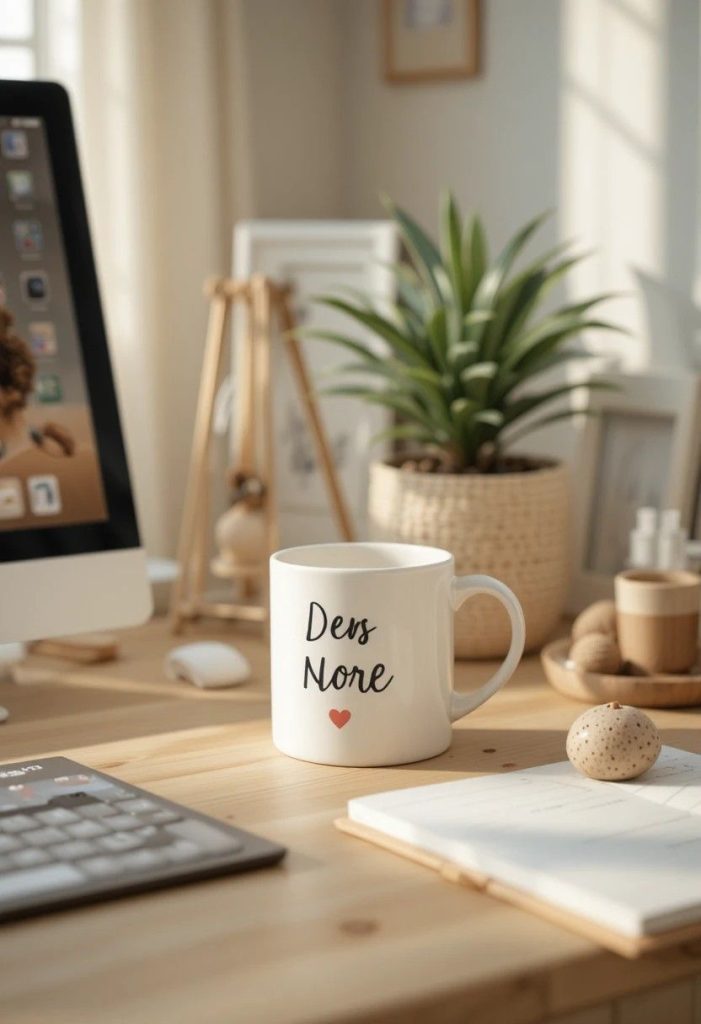
Your office should feel like yours, so add things that reflect your personality, your hobbies, and the life you live outside work. Mine holds a handmade pottery mug from a local maker, a small stack of novels I return to, and a smooth stone I picked up on a beach walk years ago, each one with a story I can tell in a sentence. I limit personal pieces to a handful, because a desk crowded with keepsakes stops being a workspace, and I rotate them when the seasons change so the room keeps feeling like me rather than a museum of me. When a visitor steps in and says the room feels like you, you will know you have got the balance right.
How to do it: Choose three personal pieces, such as a handmade mug, a favourite book, and one small keepsake, and place them where you see them daily. Keep the total small, rotate one piece each season, and remove anything that no longer means something to you.
Frequently Asked Questions
How can I make a small home office feel cosy without crowding it?
Start with light and one soft layer rather than more furniture. A warm desk lamp, a small rug that fits under the desk, and a single plant will warm the room without taking up floor space. Keep the desk mostly clear, use the wall for shelves and a pegboard, and choose a fold-down or wall-mounted desk if the room needs to do another job in the evening.
What is the best lighting for a home office?
Layer three kinds of light: daylight from the window, a warm desk lamp for close work, and a floor or wall lamp for the room. Choose warm bulbs around 2700K for the lamps, keep the desk lamp out of your eyeline, and add a dimmer so you can lower the light in the evening. Good lighting should feel gentle, never harsh or glaring.
How do I keep my desk tidy when I work there every day?
Give everything a fixed home and reset the desk for two minutes at the end of each day. Keep only the laptop, a lamp, one plant, and today’s notebook on the surface, and store the rest in drawers, baskets, or on shelves. A weekly five-minute tidy, emptying the tray and returning anything that has migrated there, keeps the system working instead of slowly collapsing.
Can I make a home office cosy on a small budget?
Yes, the cheapest changes often make the biggest difference. A warm bulb, a thrifted throw, a small plant, and a framed photograph you already own can transform a corner for very little. Paint a pegboard you already have, move the desk nearer the window, and add one soft textile at a time rather than buying everything at once.
Where should I put my desk in a small room?
Put it at a right angle to the window so daylight falls across your work without shining into your eyes or onto the screen. Leave enough room to push the chair back comfortably, keep the wall beside the desk free for shelves, and use a rug under the desk and chair to mark out the work zone. In a very small room, a fold-down wall-mounted desk lets the space change back when the working day ends.
Your Cosy Home Office Checklist
Print this list and tick things off as you go — a cosy office is built one small change at a time.
☐ Add two or three easy plants, one on the desk and one on a shelf
☐ Layer warm lighting with bulbs around 2700K and a dimmer
☐ Choose a supportive chair and add a lumbar cushion
☐ Pick three colours and repeat them across the room
☐ Hang a pegboard and organise daily tools on hooks and shelves
☐ Lay a flat-weave rug under the desk and chair with a non-slip pad
☐ Hide cables in a tray and a ventilated cable box
☐ Create a reading nook with an armchair, lamp, and throw
☐ Move the desk to a right angle beside the window
☐ Hang a vision board with three or four goals and images
☐ Store clutter in labelled woven baskets
☐ Keep a candle or diffuser on a safe tray, and never leave a candle burning unattended
☐ Clear the desk to laptop, lamp, plant, and today’s notebook
☐ Add three personal pieces that make the room feel like yours
☐ Do a two-minute desk reset at the end of each working day
Bringing It All Together
Creating a cozy and productive home office is really about building a space that works for your body, your habits, and the way you like to spend your days. You do not need to try all twenty-five ideas at once, and you certainly do not need to buy everything new. Start with the change that would make tomorrow morning easier: a lamp that flatters the room, a chair that supports your back, a plant on the desk, or a two-minute reset that clears the surface for a fresh start.
Layer the rest in slowly, one idea at a time, and let the room grow into a place you genuinely enjoy sitting in. When the light is warm, the desk is clear, and a few things you love are within reach, work feels lighter and the hours pass more kindly. That is the real test of a home office: not how it photographs, but how it feels at nine in the morning on an ordinary Tuesday.