20 Best Floor-to-Ceiling Curtain Ideas for Every Room
The Ultimate Guide to High-Hang Curtains — Styles, Fabrics, Rooms
Why Floor-to-Ceiling Curtains Change Everything
Ask any interior designer what single change delivers the most dramatic transformation to a room at the lowest cost, and the answer is almost always the same: hang your curtains higher. Specifically, hang them all the way from the ceiling to the floor.
Floor-to-ceiling curtains are not simply a stylistic preference — they are a fundamental reframing of a room’s architecture. When fabric runs in an unbroken vertical line from the ceiling cornice to the floor, the eye travels upward and downward without interruption, creating a perceived height that exceeds the room’s actual dimensions. A room with standard eight-foot ceilings fitted with floor-to-ceiling curtains feels, to most observers, like a room with ten-foot ceilings. The proportions shift. The room feels grander, calmer, and more intentional.
Beyond height, floor-to-ceiling curtains transform the quality of light in a room, add layers of color, texture, and pattern to surfaces that are typically left bare, provide acoustic insulation that reduces echo from hard surfaces, and — in practical terms — offer the most effective possible light control and privacy of any window treatment.
This guide covers 20 carefully chosen floor-to-ceiling curtain ideas across every room in the home — from the living room and bedroom to the home office, dining room, and media room. Each idea includes a full description of fabric, color, and styling approach; with a specific styling tip.
Whether you are starting from scratch in a new home or looking to transform a room that is not quite working, these 20 ideas will show you exactly what floor-to-ceiling curtains can do — and how to do it beautifully.
Why Floor-to-Ceiling? The Design Science Explained
Interior designers consistently recommend floor-to-ceiling curtains for a handful of powerful, evidence-backed reasons:
- Visual height: Unbroken vertical lines trick the eye into perceiving greater room height — one of the most reliable optical illusions in interior design.
- Architectural intention: Curtains mounted close to the ceiling look deliberately designed rather than added as an afterthought. They feel part of the room’s architecture rather than accessories hung on it.
- Light control: Floor-to-ceiling curtains eliminate the light bleed that occurs above, below, and beside shorter panels — critical for bedrooms and media rooms.
- Acoustic improvement: Full-height fabric panels absorb sound reflections from hard floors, walls, and ceilings, significantly reducing echo and improving the acoustic comfort of a room.
- Visual scale: In large rooms with high ceilings, floor-to-ceiling curtains bring scale and proportion to windows that might otherwise look lost. In smaller rooms, they add grandeur without requiring any structural changes.
- Versatility: Floor-to-ceiling curtains can be styled in any room, in any design style, in any budget range — from affordable IKEA linen panels hung at ceiling height to bespoke velvet drapes made by a specialist workroom.
How to Hang Floor-to-Ceiling Curtains: The Essential Guide
Where exactly should the rod be mounted?
Mount the rod two to four inches below the ceiling cornice (or the ceiling itself if there is no cornice). This maximises the perception of height while keeping the installation practical. Use ceiling-mounted brackets if a wall bracket would put the rod too close to the ceiling to allow the curtain rings to move freely.
How wide should the rod extend beyond the window?
Extend the rod six to twelve inches beyond the window frame on each side. This allows the curtains to clear the window completely when open, maximising natural light and making the window appear wider than it actually is.
How much fabric width do I need?
Use panels that together measure two to two-and-a-half times the total rod length for full, gathered folds. For sheers, use three times the rod length for the most luxurious, billowing effect.
Should the curtains touch the floor?
Yes. Curtains should at minimum just touch the floor (a ‘kiss’ length), or pool slightly by one to three inches for a more relaxed, romantic effect. The only exception is in high-traffic areas like doorways where pooling fabric would be a trip hazard.
What weight of curtain needs special hardware?
Heavy fabrics like velvet or lined cotton require heavy-duty rods with brackets rated for the weight, and ideally a centre bracket support for widths over 180 cm. Always check the weight rating of your hardware before hanging full-height velvet or multi-lined panels.
The 20 Floor-to-Ceiling Curtain Ideas
1. Classic White Linen Floor-to-Ceiling Curtains for a Bright, Airy Living Room
Room: Living Room
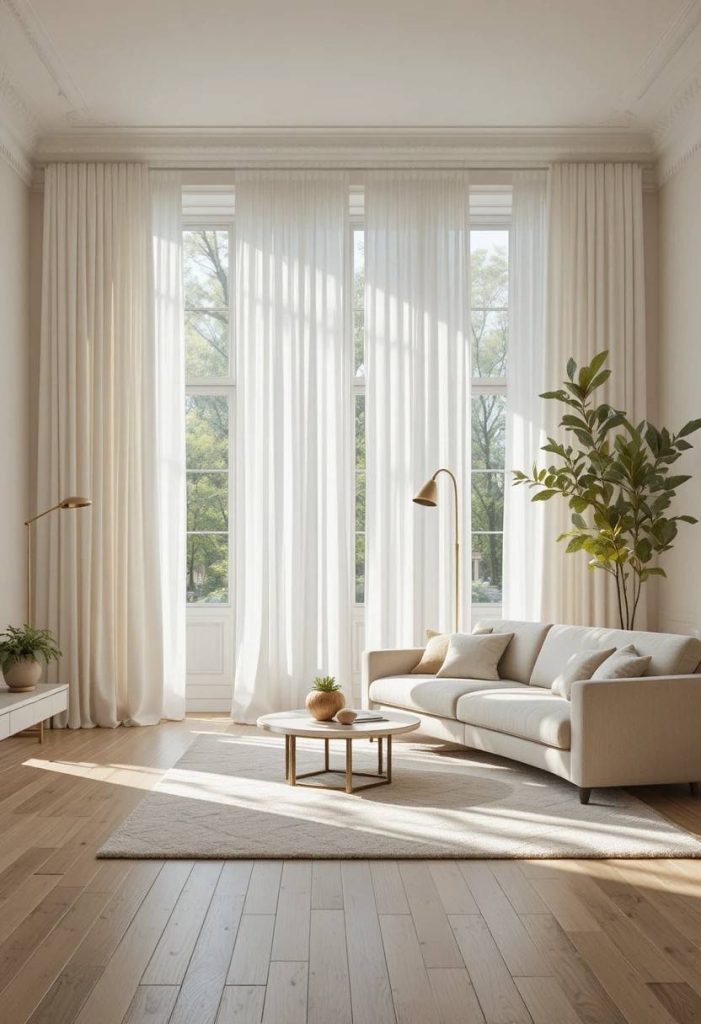
When it comes to floor-to-ceiling curtains, white linen is the undisputed champion of timeless elegance. Mounting your curtain rod just two to four inches below the ceiling cornice and allowing the fabric to fall all the way to the floor — or just graze it — creates an unbroken vertical line that makes any living room feel taller, grander, and more refined without a single piece of additional furniture or artwork needing to change.
White linen is the perfect fabric for this treatment because of its natural texture and slight translucency. Unlike synthetic whites that can look flat or clinical, linen has an organic warmth to it — subtle variations in the weave catch the light differently throughout the day, shifting from cool and crisp in morning light to soft and golden in the afternoon. The fabric breathes naturally, drapes beautifully without too much fullness, and pairs with absolutely every interior style from coastal Scandinavian to relaxed Mediterranean.
For maximum impact, use panels that are at least two to two-and-a-half times the width of your window so the fabric gathers into generous, billowing folds when pulled back. Install a simple wooden or brushed brass rod, choose simple eyelet or tab-top headings, and let the curtains do all the work. This is a look that photographs exceptionally well, which is a significant part of why it consistently dominates Pinterest home decor boards.
Style tip: Pre-wash your linen curtains before hanging to achieve that soft, relaxed drape. Add a simple jute rug and a fiddle-leaf fig for a complete, Pinterest-worthy room.
2. Deep Navy Velvet Floor-to-Ceiling Curtains for a Dramatic Master Bedroom
Room: Master Bedroom
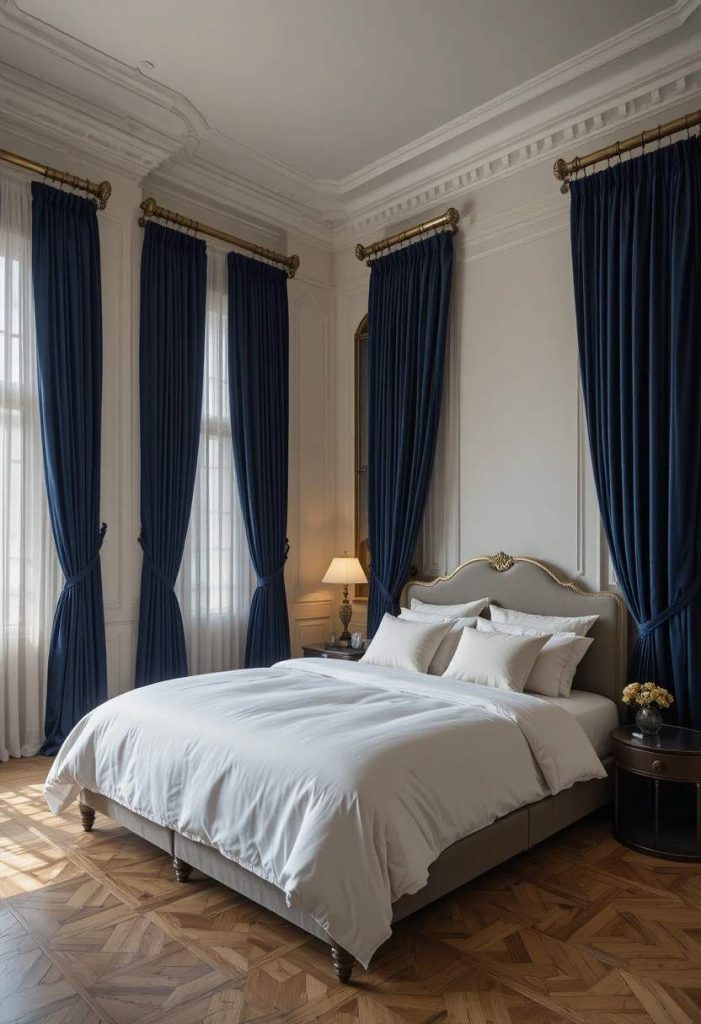
The master bedroom is the one room in the home where you have full permission to be dramatic, indulgent, and unapologetically luxurious — and nothing achieves that atmosphere more effectively than floor-to-ceiling deep navy velvet curtains. Velvet is the most light-absorbing fabric available for curtains, which means that when drawn closed, navy velvet panels create a genuinely cave-like darkness that is perfect for quality sleep. But the functional benefit is almost secondary to the visual one: floor-to-ceiling navy velvet transforms an ordinary bedroom into something that feels like a five-star hotel suite.
The key to making this look work in a bedroom is contrast and light balance. Against warm white or cream walls, navy velvet curtains create a striking tonal contrast that feels considered and deliberate. Pair with brass or antique gold hardware — rings, finials, and holdbacks — and the combination achieves a truly opulent result. Bedding in crisp white linen or warm champagne silk creates a beautiful counterpoint to the depth of the navy fabric.
When hanging floor-to-ceiling velvet curtains in a bedroom, always use a heavy-duty rod and ceiling-mounted brackets to support the considerable weight of full-length velvet panels. Allow the fabric to just touch the floor rather than pooling — pooling velvet in a bedroom can collect dust and become impractical. Steam the curtains in situ after hanging to release any fold marks from packaging and to achieve the full, luxurious drape velvet is capable of.
Style tip: Use navy velvet curtains with blackout lining for complete light and sound insulation — perfect for city bedrooms or shift workers who sleep during the day.
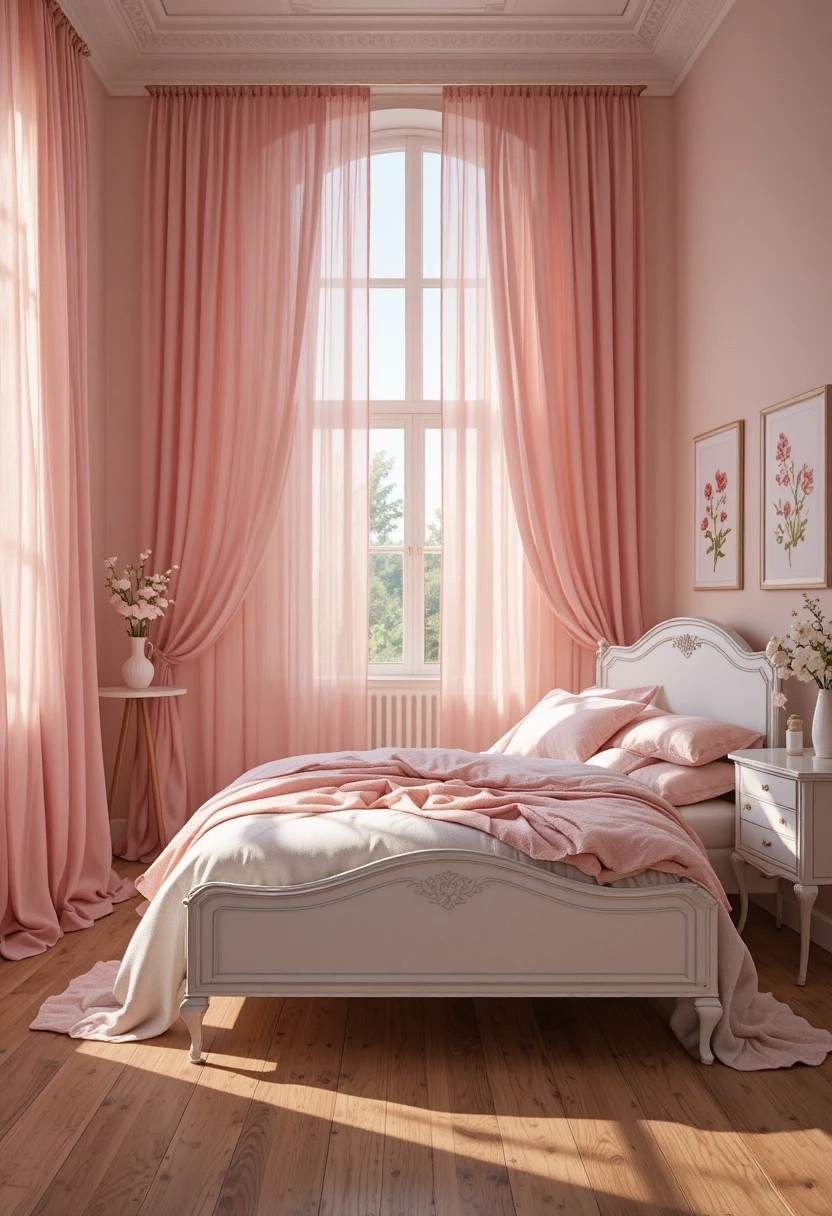
3. Sheer Blush Pink Floor-to-Ceiling Curtains for a Romantic Bedroom or Nursery
Room: Bedroom / Nursery
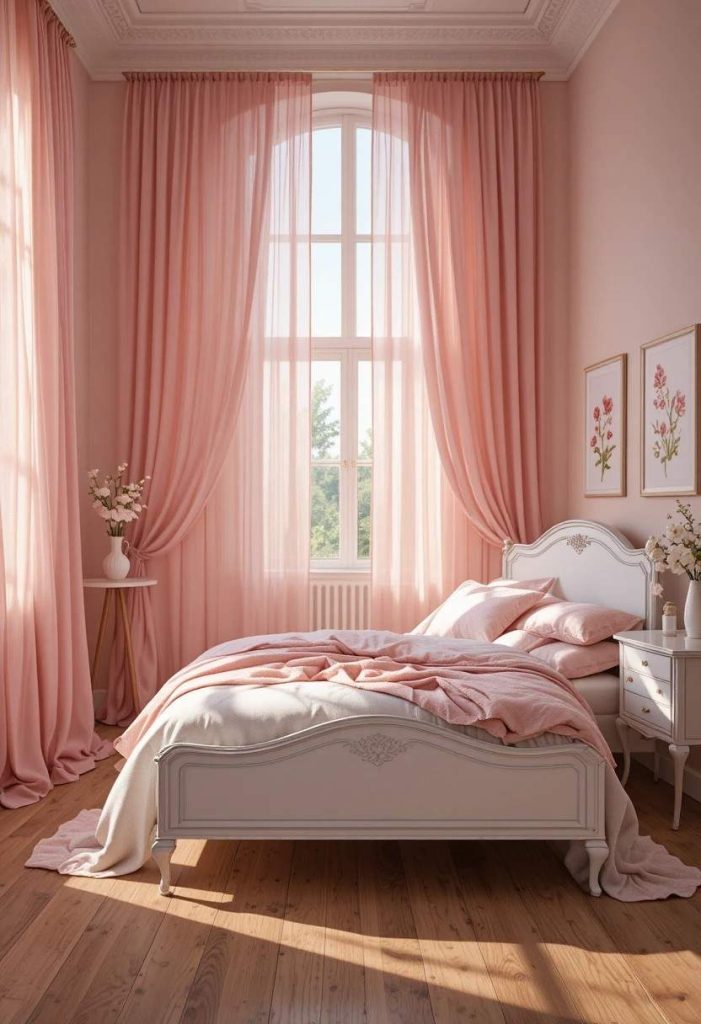
Sheer blush pink floor-to-ceiling curtains create one of the most ethereal, romantic, and visually soft atmospheres achievable in interior design. When sunlight passes through blush or dusty rose sheers, it bathes the entire room in a gentle, warm-toned glow that is simultaneously feminine, calming, and deeply beautiful. This effect is particularly magical in east-facing bedrooms that catch the morning sun, or west-facing rooms that receive the golden warmth of the late afternoon.
For a master bedroom, blush sheers layered behind heavier dusty rose or champagne drapes create an incredibly nuanced, multi-dimensional window treatment that shifts in appearance throughout the day. For a nursery or child’s bedroom, a single layer of floor-to-ceiling blush sheers creates a dreamy, softly glowing environment that children find deeply calming and sleep-inducing. The height of floor-to-ceiling installation in a nursery creates a sense of magic and wonder that shorter curtains simply cannot.
Fabric choice matters enormously with blush sheers. Voile and chiffon are the most ethereal options, creating a gossamer-like movement in any breeze. Sheer linen has a slightly more textured, organic quality that works better in adult spaces. For nurseries, consider a sheer poly-cotton blend that is machine washable — practicality matters when small children are involved. In all cases, choose a soft powder pink or barely-there blush rather than a bright or saturated pink, which will overpower the gentle, romantic effect.
Style tip: In a nursery, combine blush pink floor-to-ceiling sheers with a blackout roller blind behind them — the sheers create the beautiful visual atmosphere while the blind provides the darkness needed for daytime naps.
4. Bold Emerald Green Velvet Floor-to-Ceiling Curtains for a Sophisticated Home Office
Room: Home Office
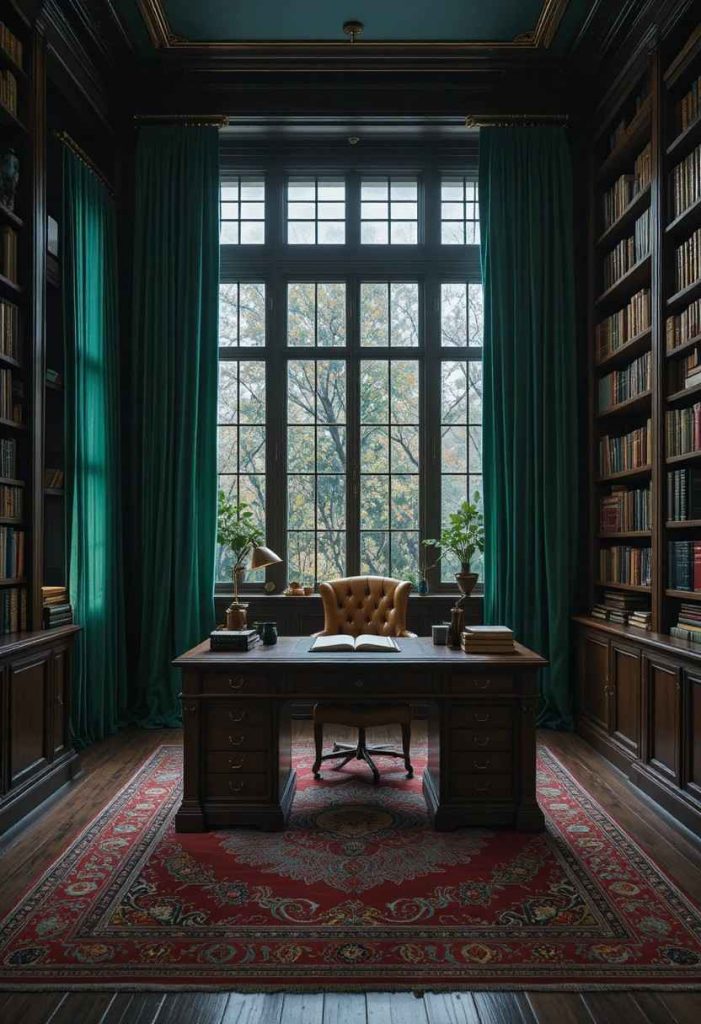
The home office has become one of the most important rooms in the modern home, and one of the most rewarding to design well. Floor-to-ceiling curtains in a bold, saturated color — particularly emerald green velvet — transform a home office from a purely functional workspace into a room that genuinely inspires creativity, focus, and a sense of professional seriousness. There is something about being surrounded by a deep, rich green that is simultaneously energizing and calming — it is not a coincidence that green has long been associated with concentration, balance, and intellectual clarity.
Emerald green velvet floor-to-ceiling curtains work particularly well in home offices that have a wall of built-in bookshelves, dark wood desks, or traditional architectural features like panelling, coving, or picture rails. The combination of emerald green curtains with floor-to-ceiling bookshelves filled with books creates an atmosphere that feels scholarly, productive, and deeply personal. Against a warm white or off-white wall, emerald green pops with a jewel-like intensity. Against a dark wall — deep charcoal, mushroom, or even a complementary forest green — it creates a deeply immersive, moody study aesthetic.
For a home office specifically, consider pairing full-length velvet panels with a sheer inner layer. During the day, the sheer diffuses harsh direct sunlight that causes screen glare while the velvet panels are pulled back to the sides. In the evening or on video calls, the full velvet panels can be drawn for a richly colored, professional backdrop that looks outstanding on camera.
Style tip: Emerald green curtains as a video call backdrop are extraordinarily effective — the rich color is flattering to most skin tones and reads as sophisticated and intentional on screen.
5. Warm White Linen Floor-to-Ceiling Curtains with Blackout Lining for a Modern Bedroom
Room: Bedroom
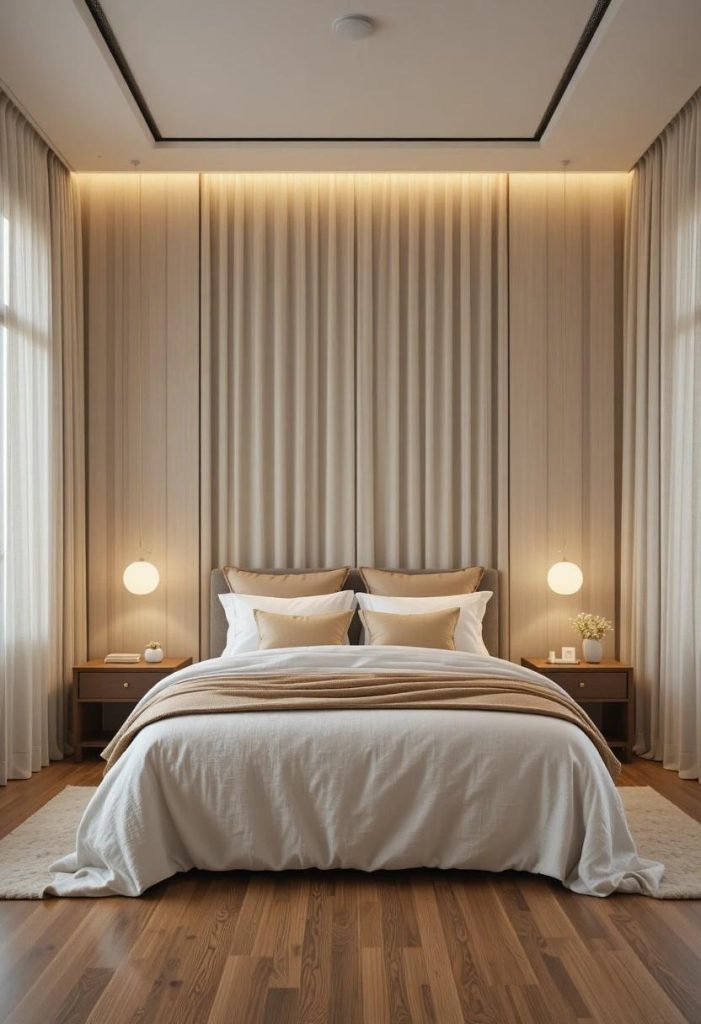
One of the most common misconceptions in curtain design is that you must choose between beautiful aesthetics and practical functionality. The combination of a warm white linen outer layer with a full blackout lining is definitive proof that you can have both simultaneously. From outside the room, you see the natural, beautifully textured linen fabric in a warm neutral tone. From inside, you enjoy complete, hotel-quality darkness when the curtains are drawn — regardless of the time of day or the brightness outside.
This combination is particularly valuable in modern bedrooms in urban environments, where artificial light from street lamps, car headlights, and illuminated signage can severely disrupt sleep quality. The floor-to-ceiling installation is critical here — it eliminates the gaps at the top and sides of the window that allow light to leak in around shorter or narrower curtain panels. When installed correctly, floor-to-ceiling blackout-lined linen curtains create a completely light-controlled environment that dramatically improves sleep quality.
From a design perspective, the warm white linen with blackout lining works in every bedroom style — from minimal contemporary to relaxed boho to traditional country. The fabric itself remains visually beautiful throughout the day, catching light gently and adding texture without demanding attention. Choose a linen in a warm white (with yellow or pink undertones) rather than a cool, bright white for the most flattering and relaxing bedroom atmosphere.
Style tip: When ordering blackout-lined linen curtains, always request the lining to be slightly shorter than the outer fabric — this prevents the darker lining from showing at the hem and maintains the clean linen aesthetic.
6. Sage Green Linen Floor-to-Ceiling Curtains for a Calming Living Room
Room: Living Room
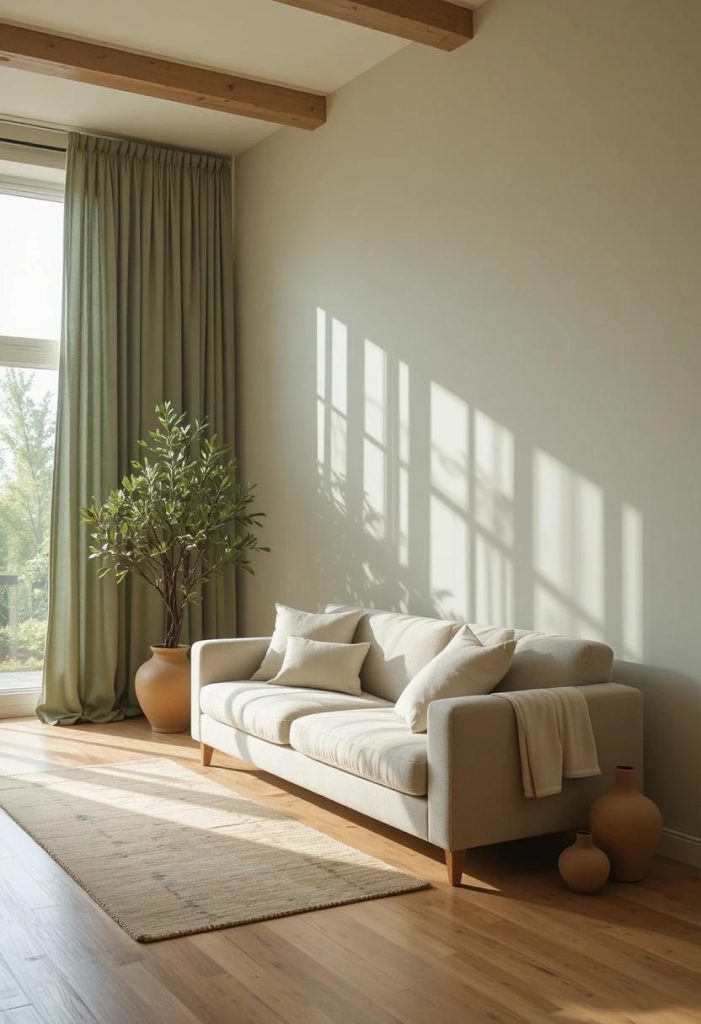
Sage green is the most universally praised muted color in contemporary interior design, and for very good reason. Its combination of gray, green, and occasionally blue undertones creates a color that simultaneously feels fresh, calming, and deeply sophisticated — never shouting for attention, always adding to the harmony of a room. Floor-to-ceiling sage green linen curtains take this quality and amplify it through sheer scale. When panels of sage linen run from just below the ceiling cornice to the floor across a full wall of windows, the effect is of a room that has been enveloped in nature — calm, organic, and deeply restorative.
Sage green works with an unusually wide range of complementary colors and materials. Warm whites and creams create a clean, Nordic freshness. Natural woods — oak, walnut, ash — ground the green with earthy warmth. Blush and dusty rose accents add a romantic softness. Mustard and ochre create a rich, autumnal Mediterranean palette. Even dark charcoal or soft black accessories work beautifully against sage, giving the room a sophisticated edge. The color is also uniquely good at making itself feel ‘right’ in rooms of very different sizes — it doesn’t overwhelm small rooms or disappear in large ones.
In linen specifically, sage green achieves a quality of light and texture that no other fabric can replicate. The natural fiber absorbs and reflects light slightly differently in each individual thread, creating a subtle, shimmering depth to the color that synthetic fabrics simply cannot achieve. For a full living room wall of floor-to-ceiling sage linen, this depth of texture becomes genuinely mesmerizing — a backdrop that is as beautiful as any wallpaper or gallery wall.
Style tip: Pair sage green floor-to-ceiling linen curtains with terracotta ceramic accessories and a warm jute rug for a complete nature-inspired living room palette that feels grounded and effortlessly stylish.
7. Floor-to-Ceiling Curtains in a Dining Room for Intimacy and Drama
Room: Dining Room
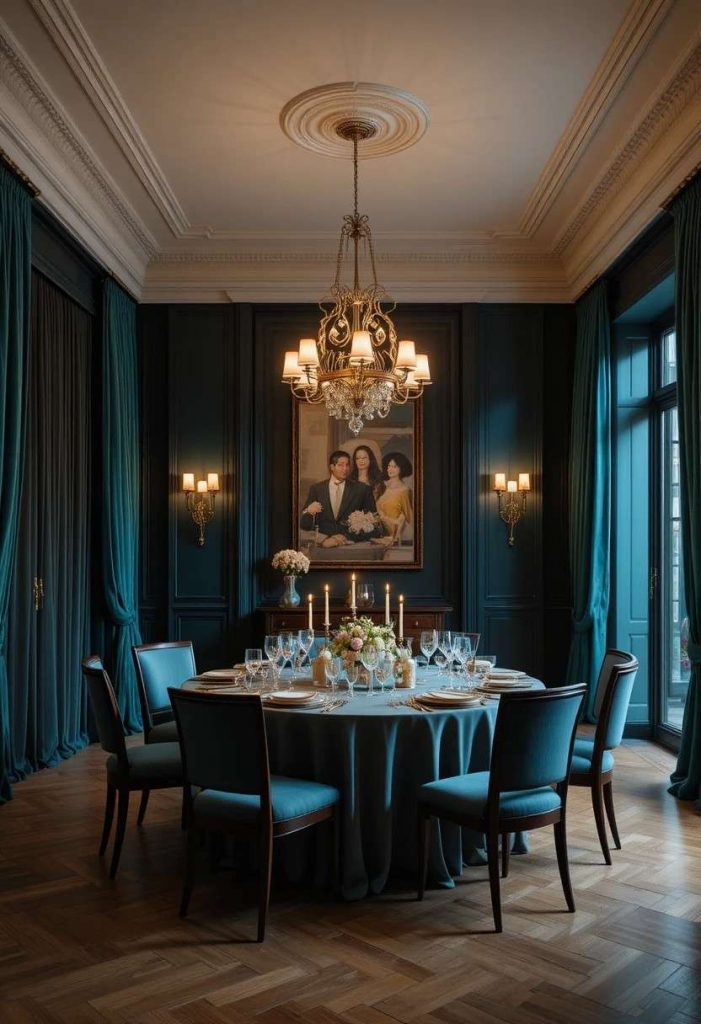
The dining room is a space defined by social ritual — by gathering, conversation, candlelight, and the pleasure of sharing food. Floor-to-ceiling curtains in a dining room amplify all of these qualities by creating a sense of enclosure and intimacy that makes the room feel like a destination in its own right rather than simply a passageway between kitchen and living room. The curtains frame the space, reduce echo from hard surfaces, add warmth and color, and — perhaps most importantly — provide the kind of soft, draped backdrop that makes every dinner party feel effortlessly elegant.
For dining rooms, deep, rich colors work particularly well at floor-to-ceiling scale. Deep teal or peacock blue creates an intimate, jewel-box atmosphere that is especially beautiful by candlelight. Burnt sienna or terracotta brings warmth and a Mediterranean quality that makes meals feel more convivial and appetizing. Charcoal or dark slate creates a moody, sophisticated private dining atmosphere. In any of these colors, velvet is the ideal fabric — it absorbs sound (reducing the hard acoustics typical of dining rooms), has a beautiful drape, and responds to candlelight with a depth and warmth that no other fabric achieves.
A practical consideration for dining rooms: curtains should be chosen in fabrics that do not absorb cooking odors easily. Velvet and heavy synthetic blends can hold smells over time. Tightly woven cotton, linen, or linen blends are more practical choices for rooms adjacent to a kitchen, as they are easier to clean and less prone to odor retention.
Style tip: Install a dimmer switch alongside floor-to-ceiling dining room curtains and use warm-toned bulbs in your light fixtures — the combination of drawn curtains and warm dimmed light creates an almost restaurant-quality dining atmosphere at home.
8. Light Gray Floor-to-Ceiling Curtains for a Minimal, Architectural Living Room
Room: Living Room
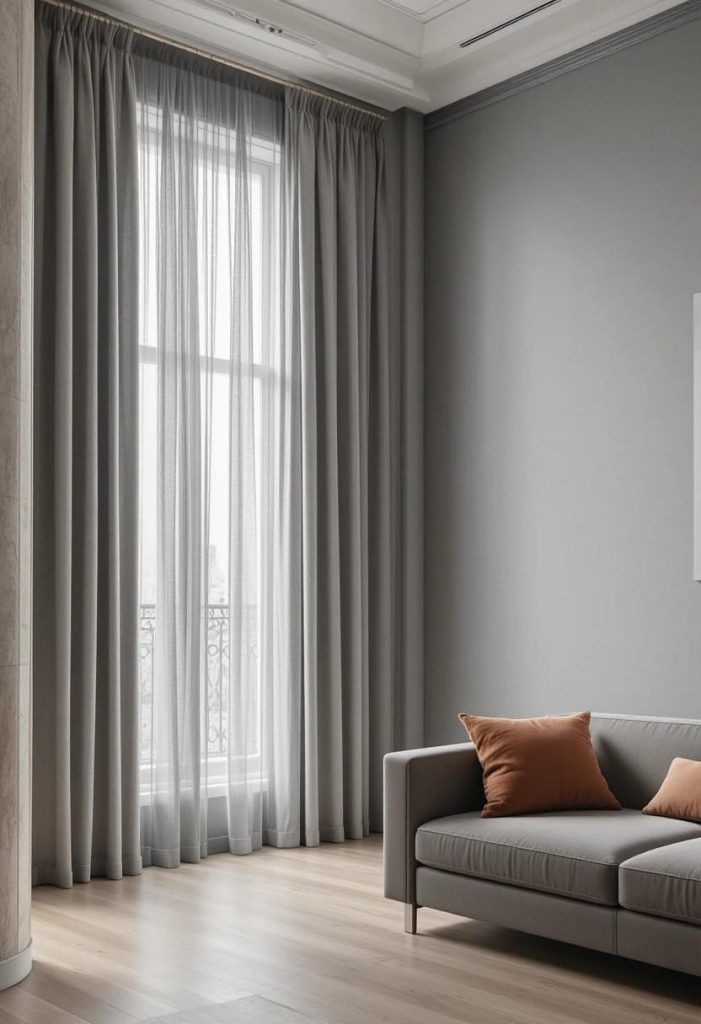
Light gray floor-to-ceiling curtains represent one of the most architecturally refined approaches to window treatment in contemporary interior design. By choosing a curtain fabric in a tone that is closely related to — but distinctly softer than — the wall color, you create a layered, tonal effect where the curtains seem to grow organically from the architecture rather than being applied to it as an afterthought. This is the approach used by the most sophisticated interior designers for high-end residential and hospitality projects, and it is entirely achievable in a domestic living room.
The key to this tonal approach is precision. The curtain fabric should be approximately two to three shades lighter or slightly warmer than the wall color. In a room with warm light gray walls (Farrow & Ball’s ‘Mole’s Breath’ or similar), choose a curtain in a soft warm white-gray like ‘Elephant’s Breath’ or a pale silver linen. The subtle contrast between wall and curtain creates depth and definition without visual disruption. The overall effect is of a room that has been considered and resolved with great care and restraint — a quality that reads as genuinely luxurious.
Fabric choice for this tonal minimal approach should emphasize texture over pattern. A dense, tightly woven linen in a pale gray-taupe has exactly the right quality — it adds visual interest through texture while maintaining the calm color palette. Pinch pleat or pencil pleat headings create precise, structured folds that reinforce the architectural quality of the look. Simple matte metal rods in brushed nickel or pewter complete the understated, refined aesthetic.
Style tip: In a tonal gray-on-gray room, introduce one carefully chosen warm accent — a single terracotta cushion, a warm wood side table — to prevent the palette from feeling too cool or clinical.
9. Rust and Burnt Orange Floor-to-Ceiling Curtains for a Boho Living Room
Room: Living Room / Boho
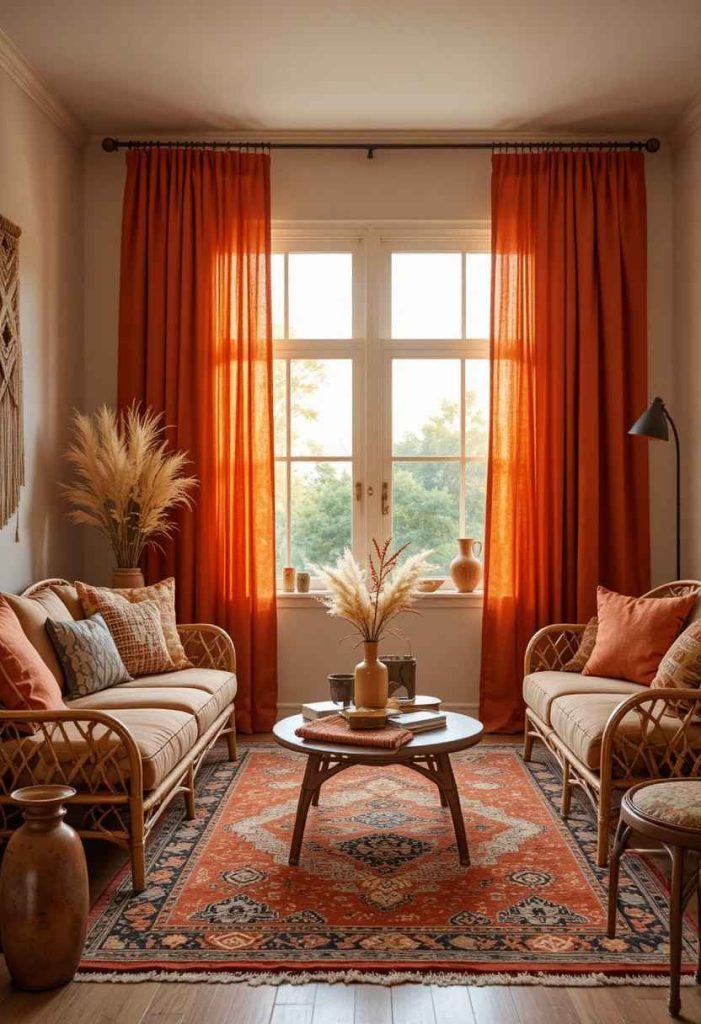
Rust, burnt orange, and terracotta are the defining colors of the boho interior movement — earthy, warm, sun-baked, and deeply connected to the textiles and craft traditions of North Africa, the Middle East, and South Asia. Floor-to-ceiling curtains in these tones bring an immediate sense of warmth, nomadic adventure, and handmade character to a living room that lighter, cooler colors simply cannot provide. The sheer scale of floor-to-ceiling installation transforms what could be a subtle accent color into a major architectural statement — a full wall of rust or terracotta fabric that sets the entire tonal palette of the room.
In a boho living room, rust curtains work best in natural, slightly imperfect fabrics — slubbed linen, raw cotton, or even a loosely woven jute blend. The irregularity of the weave adds to the artisan quality of the look. Pair with Moroccan-inspired rugs in complementary terracotta, amber, and deep red tones, wicker and rattan furniture, macrame wall hangings, and an abundance of warm-toned plants like eucalyptus, pampas grass, and trailing pothos. Brass and copper accessories in organic, handmade-looking forms complete the palette.
One of the great advantages of rust and burnt orange as a curtain color is its flattering relationship with warm artificial light. Under incandescent or warm LED lighting in the evening, rust curtains deepen to a rich, glowing amber that makes the whole room feel like the interior of a Moroccan riad at sunset. This quality makes rust curtains particularly effective in rooms that are used primarily in the evenings — the color comes fully alive when the sun goes down and the warm lights come on.
Style tip: Layer rust floor-to-ceiling curtains with a sheer ivory inner panel for daytime light control — the warm orange hue will tint the filtered light a beautiful golden color throughout the day.
10. Floor-to-Ceiling White Sheer Curtains for a Coastal Bedroom
Room: Coastal Bedroom

There is something universally compelling about the image of white sheer curtains billowing in an ocean breeze — it represents one of the most aspirational and frequently pinned interior images on Pinterest. Floor-to-ceiling white sheers in a coastal bedroom take this idealized image and make it real: the sheer fabric filters the bright coastal light into something soft and painterly, the curtains move in any available breeze creating a constant, gentle sense of movement and life, and the height of the installation frames the view of the sky and landscape outside with genuine architectural intention.
For a coastal bedroom, the choice of sheer fabric matters more than almost any other detail. Natural cotton voile or linen voile have the most authentic, organic quality — they move differently from synthetic sheers, with a more weighted, languid billow that looks genuinely beautiful rather than cheap. They also have a slight translucency that filters light in a warm, slightly yellow-tinted way that feels connected to natural daylight rather than artificially brightening it. If the bedroom faces the ocean or a significant natural view, white sheers allow that view to remain visible from inside the room throughout the day while still softening the brightness of direct sunlight.
Style the coastal bedroom around these curtains with relaxed, natural materials: whitewashed or driftwood-toned wood furniture, linen and cotton bedding in white and sandy tones, woven sea grass or jute rugs, and simple ceramic accessories in whites, blues, and sandy neutrals. The overall effect should feel as if the outdoors has been invited in — natural, breezy, and effortlessly beautiful.
Style tip: Use floor-to-ceiling white sheers in combination with external shutters or a side-mounted roman blind for full light control — the sheers provide atmosphere during the day while additional window coverings provide privacy and darkness when needed.
11. Charcoal Gray Floor-to-Ceiling Curtains for a Moody Home Cinema Room
Room: Home Cinema / Media Room
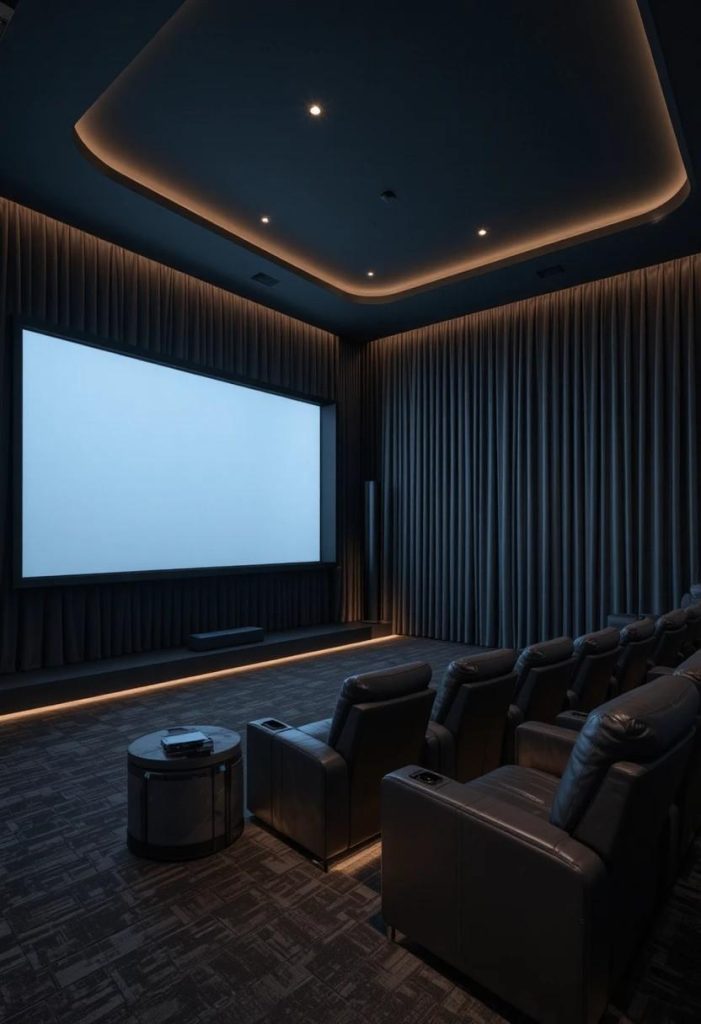
The home cinema or media room has very specific design requirements that floor-to-ceiling curtains in deep, dark tones are uniquely well suited to address. Light control is the first and most critical requirement — any ambient light that enters a media room during screen use creates glare and degrades the viewing experience significantly. Floor-to-ceiling charcoal gray or near-black curtains with a full blackout lining solve this problem completely, covering not just the windows but — if installed across a full wall — any light-reflective surfaces that might interfere with picture quality.
Beyond pure functionality, charcoal floor-to-ceiling curtains create the cinematic atmosphere that makes a home media room feel genuinely special. The deep, light-absorbing gray fabric creates a sense of immersive darkness even before the lights are dimmed — it sets the mood from the moment you enter the room. The floor-to-ceiling scale of the installation adds to this cinematic quality, echoing the architectural proportions of a real cinema auditorium. Against the dark curtains, the illuminated screen appears to float in darkness, maximizing perceived contrast and making the viewing experience genuinely more immersive.
For home cinema applications, choose a curtain fabric with a high thread count and dense blackout lining — the denser the weave, the more effective the light block. Velvet is excellent acoustically as well as visually, absorbing sound reflections that cause echo and improving the perceived quality of the audio system. Install ceiling-mounted tracks rather than rods for the cleanest, most architectural look — tracks allow the curtains to be opened and closed smoothly and precisely without disturbing the room’s calm aesthetic.
Style tip: Install motorized ceiling tracks for your home cinema curtains — being able to open and close them with a remote or voice command is both genuinely practical and deeply satisfying.
12. Mustard Yellow Floor-to-Ceiling Curtains for a Cheerful, Retro Living Room
Room: Living Room
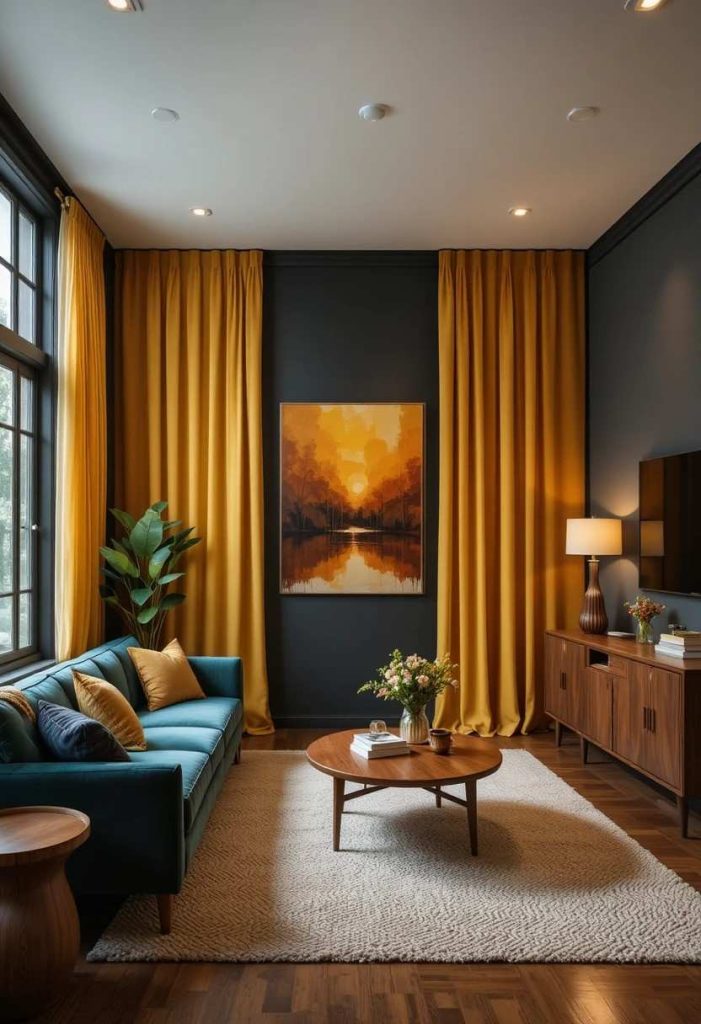
Mustard yellow floor-to-ceiling curtains are a bold, joyful choice that rewards confidence. The color is warm, energetic, and deeply rooted in the mid-century modern design tradition — think of the saturated ochres and golds that characterized the best interior design of the 1950s, 60s, and 70s, interpreted through a contemporary lens. At floor-to-ceiling scale, mustard yellow becomes a genuine interior design statement — a sun-like presence that seems to illuminate the whole room from within, regardless of the actual lighting conditions.
The key to making mustard yellow floor-to-ceiling curtains work is pairing them with the right supporting palette. Dark charcoal or near-black walls create the most dramatic, gallery-like contrast — the mustard pops like a painting against the dark backdrop. Warm medium grays allow the yellow to lead without the starkness of the full black contrast. Natural wood in walnut, teak, or oak tones reinforces the mid-century warmth of the color. For upholstery, choose deep teal, forest green, or warm gray — all of which are classic mid-century complements to mustard yellow and prevent the palette from tipping into visual overwhelm.
In fabric, mustard yellow is most successful in a dense, textured weave — cotton velvet, heavy linen, or a brushed cotton all have the right quality to carry the color without looking thin or cheap. Avoid thin or synthetic fabrics in mustard yellow as they tend to look washed out and slightly sad rather than rich and intentional. The floor-to-ceiling length is also particularly important with this color — shorter mustard curtains can look capricious, but floor-length panels have an architectural seriousness that makes the bold color choice feel deliberate and informed.
Style tip: Balance mustard yellow floor-to-ceiling curtains with a charcoal or dark teal sofa and warm walnut wood furniture for a fully resolved mid-century modern living room palette.
13. Botanical Print Floor-to-Ceiling Curtains for a Maximalist Living Room
Room: Living Room / Maximalist

Botanical print floor-to-ceiling curtains are one of the defining aesthetic statements of contemporary maximalist interior design. When a large-scale botanical print — overblown tropical leaves, painterly florals, dense jungle foliage — runs from ceiling to floor across the full width of a wall of windows, it transforms the interior into something that feels like a living artwork. The plants seem to grow upward from the floor, the printed canopy fills the upper register of the room, and the whole window wall becomes a verdant, teeming tableau that brings the garden indoors at a scale and drama that no houseplant collection could ever achieve.
Scale is everything with botanical print floor-to-ceiling curtains. Small repeat patterns will look busy and cluttered at this scale — you need a bold, large-repeat print where individual leaves or flowers are 20 to 30 centimeters across. The background color of the print significantly affects the room’s atmosphere: a dark background (black, navy, forest green) creates a dramatic, jewel-box quality where the botanical motifs seem to glow with intensity. A light or cream background gives a fresh, greenhouse-like quality that feels simultaneously traditional and contemporary.
The rest of the room should be largely solid in tone — upholstery, rugs, and accessories in the colors drawn from the botanical print, but without competing patterns. The floor-to-ceiling print is the hero of the space. Complement with real plants in large, sculptural forms — bird of paradise, monstera, fiddle-leaf fig — to blur the line between the printed and the real botanicals and create a room that feels genuinely immersive.
Style tip: When using large botanical print floor-to-ceiling curtains, take the main leaf or flower color from the print and use it as the wall paint color — this creates a seamless, wraparound botanical atmosphere rather than curtains that stop at the window frame.
14. Dusty Pink Floor-to-Ceiling Curtains for a Romantic, Feminine Bedroom
Room: Bedroom
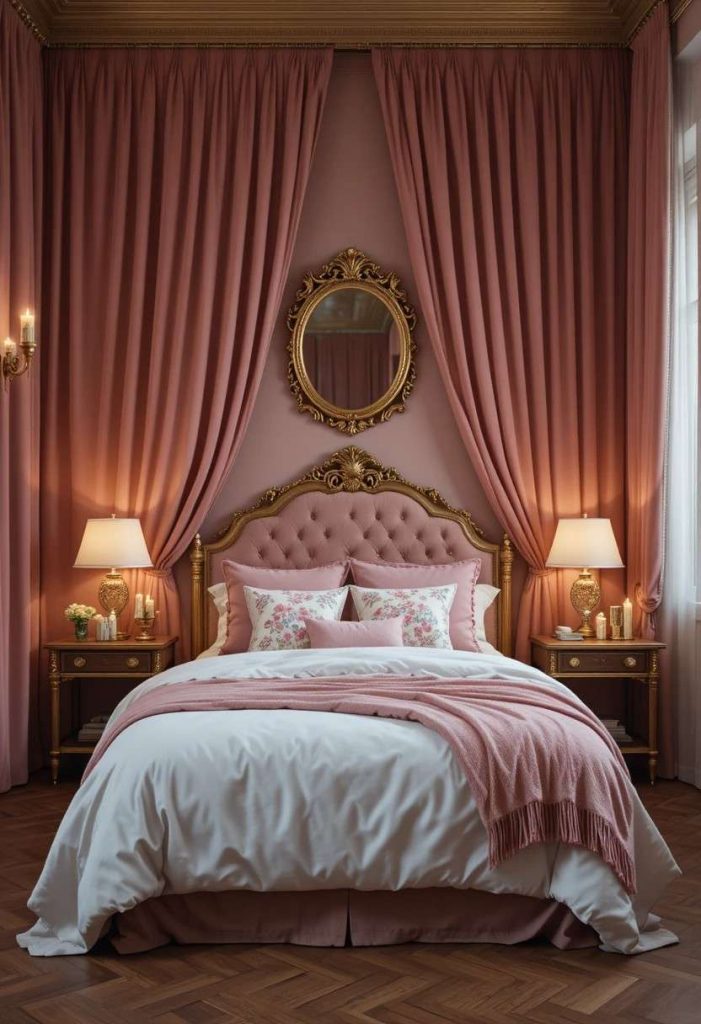
Dusty pink — a muted, chalky rose with gray undertones that prevents it from ever reading as childish or saccharine — is one of the most sophisticated and versatile colors available for floor-to-ceiling bedroom curtains. At full height, dusty pink curtains create a canopy-like effect that envelops the bedroom in a color that has been scientifically associated with relaxation and emotional warmth. The scale of floor-to-ceiling installation makes the color immersive rather than merely decorative, transforming the entire visual atmosphere of the room.
Dusty pink floor-to-ceiling curtains work beautifully in a wide range of bedroom styles. In a minimal, contemporary bedroom with white walls and natural wood, dusty pink curtains add the only color in the room — a single, powerful, quietly romantic statement. In a more layered, eclectic bedroom with pattern mixing, dusty pink grounds the palette with its warm, muted tone. In a fully committed romantic or maximalist bedroom, dusty pink pairs with deep burgundy, antique gold, and botanical prints for a richly layered, deeply feminine aesthetic.
Fabric choice for dusty pink is crucial. Velvet in dusty rose has an incredible depth — the pile catches light differently in each direction, creating a color that shifts between muted pink and warm blush depending on how you look at it. Linen in dusty pink has a more relaxed, organic quality that suits informal, cozy bedrooms. Silk or faux silk in this color creates the most romantic effect of all — the shimmer catches light from candles or bedside lamps and creates a warmly glowing, jewel-like quality that is genuinely breath-taking.
Style tip: Layer dusty pink velvet floor-to-ceiling curtains over warm white sheer inner panels for a beautifully romantic, multi-layered bedroom window treatment that works at every time of day.
15. Striped Floor-to-Ceiling Curtains for a Graphic, Contemporary Living Room
Room: Living Room
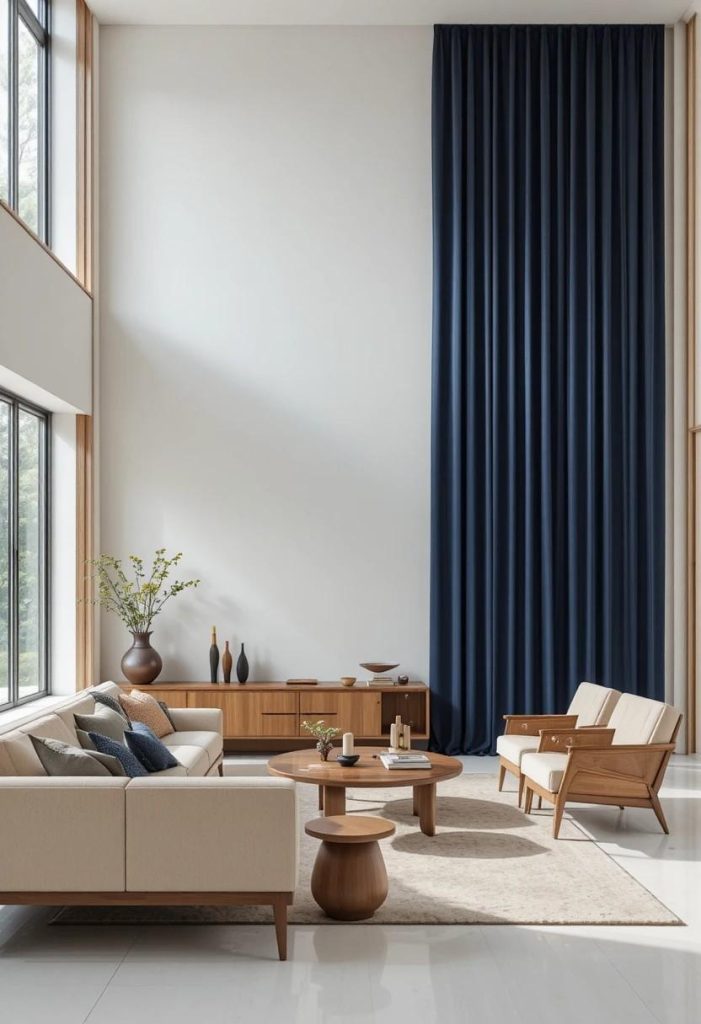
Vertical stripes are one of the oldest and most effective visual tricks in interior design — they draw the eye upward, making ceilings feel taller and rooms feel more spacious. When applied to floor-to-ceiling curtains, this effect is maximized: the vertical lines of the stripe run from the ceiling all the way to the floor, creating a continuous, unbroken visual movement that genuinely elongates the perceived height of the room. In a room with low or standard eight-foot ceilings, striped floor-to-ceiling curtains can create the impression of a room with ten-foot ceilings — without any structural intervention.
The width and color of the stripes significantly affects the mood of the room. Wide, bold stripes in high-contrast colors — navy and white, black and cream, forest green and linen — create a graphic, contemporary statement that reads as confident and design-forward. Narrower pencil stripes in closely related tones create a more refined, almost wallpaper-like effect that is subtler but equally sophisticated. For the most current, maximalist interpretation, consider three-color stripes in bold combinations: cobalt, terracotta, and cream; forest green, mustard, and white; or burgundy, blush, and charcoal.
Fabric choice for striped floor-to-ceiling curtains should prioritize clean structure over drape — the stripe pattern needs to hang straight and true for the geometric effect to work properly. Tightly woven cotton or a cotton-linen blend are ideal. Avoid fabrics with too much give or drape (like heavy velvet) as the stripe will lose its graphic precision. Use simple eyelet or pencil pleat headings and ensure the panels are hung exactly level for a crisp, architectural result.
Style tip: When using bold striped floor-to-ceiling curtains, keep all other patterns in the room to a minimum — stripes are strong enough to carry the full decorative weight of the window, and competing patterns will create visual noise.
16. Aubergine Velvet Floor-to-Ceiling Curtains for a Glamorous Living Room
Room: Living Room / Glam
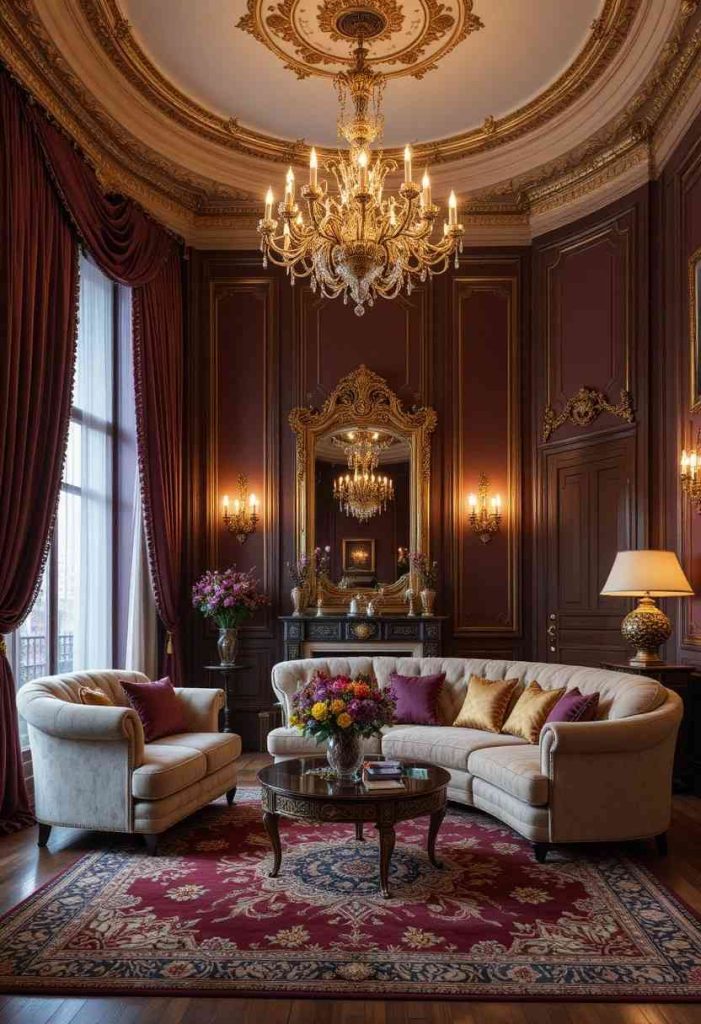
Aubergine — the deep, jewel-like purple-gray-brown of ripe eggplant — is one of the most underused and underappreciated colors in interior design, and one that rewards boldness most generously. At floor-to-ceiling scale in velvet, aubergine creates an atmosphere of profound glamour and intimacy: the deep, complex color absorbs light in a way that makes a room feel like an intimate boudoir or a private members’ club — somewhere exclusive, curated, and deliberately beautiful. This is not a subtle choice, but it is an extraordinarily rewarding one for those with the confidence to commit to it.
Aubergine velvet floor-to-ceiling curtains work their most powerful magic in rooms with warm, low-level artificial lighting. Under chandeliers, wall sconces, and table lamps with warm-toned bulbs, aubergine velvet seems to glow from within — the pile catches the light and creates an almost liquid depth that shifts between purple, brown, and gray depending on the angle. Against warm white or cream walls, this effect is breathtaking. Against dark walls in a complementary tone — deep charcoal, moody slate, or a dark mushroom — aubergine creates a fully immersive, jewel-box atmosphere that feels genuinely theatrical.
The supporting palette for aubergine velvet floor-to-ceiling curtains should be built entirely around warmth and luxury. Antique gold or bronze hardware. Cream, champagne, or warm white upholstery that creates a flattering contrast. Deep Persian or Oriental rugs in complementary burgundy, gold, and deep blue tones. Antique mirror, crystal accessories, and warm ambient lighting from multiple sources at different heights. This is a room that should feel like an experience from the moment you enter it.
Style tip: Aubergine velvet floor-to-ceiling curtains pair extraordinarily well with a single bold artwork above a fireplace or sofa — the rich curtain color creates a gallery-like frame that makes any artwork feel more important and considered.
17. Layered Sheers and Drapes Floor-to-Ceiling for a Sophisticated Bedroom
Room: Bedroom
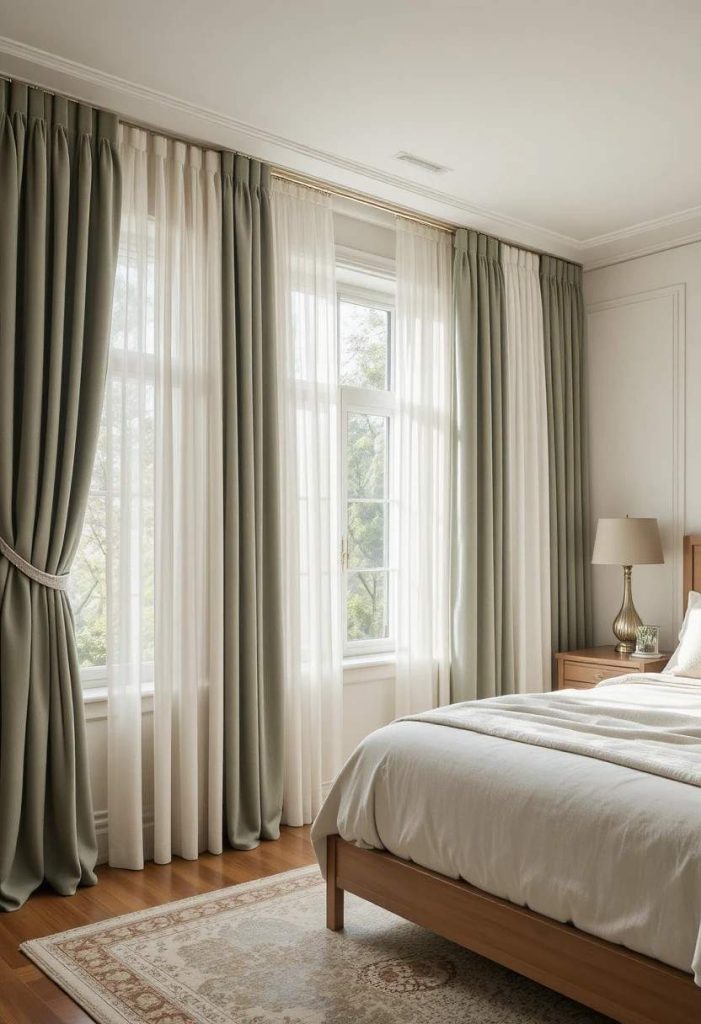
The layered curtain treatment — combining a sheer inner panel with a heavier outer drape, both running floor-to-ceiling — is the approach that professional interior designers use most frequently for bedrooms in high-end residential projects. The reason is simple: it provides the maximum range of light conditions (from fully light-filled with sheers only, to partially filtered with both layers, to completely dark with the outer drapes drawn), the greatest visual depth and interest, and the most architectural quality of any single window treatment approach.
For a bedroom, the most effective layering combination uses a warm white or cream linen sheer as the inner layer — always floor-to-ceiling, always full — and a richer, heavier fabric for the outer panels in a color that complements the room’s palette. The outer panels do not need to cover the full window width; they can be styled as generous side panels that frame the sheer layers without completely covering them. This creates a beautiful staging effect where the sheer layer is visible between and behind the drapes, adding multiple planes of texture and light.
The key to making layered floor-to-ceiling curtains look professional rather than cluttered is discipline with the supporting hardware. Use a double rod system with both rods mounted at the same height close to the ceiling. Choose matching or deliberately coordinated rod finishes for both layers — mixing brushed brass with chrome, for example, will look accidental rather than intentional. Keep the finials simple and elegant. The layering of fabrics provides more than enough visual interest without the hardware needing to make a statement of its own.
Style tip: For the outer layer of a floor-to-ceiling bedroom layered treatment, choose a fabric that is slightly more than twice the window width — the extra fullness creates the generous, gathered side panels that make this look feel truly luxurious.
18. Ikat Patterned Floor-to-Ceiling Curtains for a Global-Inspired Living Room
Room: Living Room
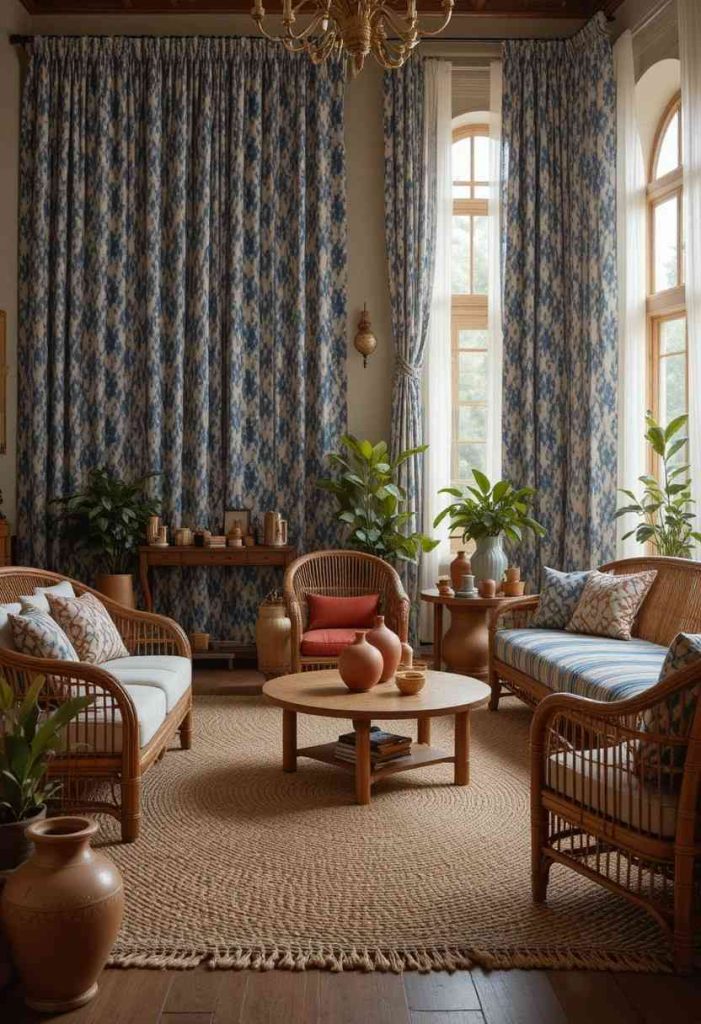
Ikat fabric — with its characteristic blurred, feathered edges where the pattern meets the background, created by the ancient resist-dyeing technique of binding and dyeing individual threads before weaving — is one of the most visually compelling and culturally rich textile patterns in the world. At floor-to-ceiling scale, ikat print curtains become genuine statement pieces: artisan textiles of the highest visual impact, connecting the room to weaving traditions that span centuries and continents — from the suzani workshops of Uzbekistan to the silk ikat weavers of Cambodia.
For maximum impact, choose an ikat in bold color contrasts: deep indigo and cream for a South Asian quality; cobalt blue and white for a Moroccan feel; burnt sienna, ochre, and ivory for a Central Asian warmth. The larger the repeat of the ikat pattern, the more impressive the floor-to-ceiling effect — small repeat ikats can look busy at scale, while large, bold repeats create a genuinely graphic, wallpaper-like quality. For the most authentic look, choose a fabric where the blurring of the pattern edges — the defining characteristic of true ikat — is clearly visible rather than a printed simulation.
The room around floor-to-ceiling ikat curtains should be largely solid in tone to give the pattern the space it needs. Natural materials — rattan furniture, jute rugs, raw wood shelving, handmade ceramics in the tones drawn from the curtain pattern — create the most authentic, global-inspired atmosphere. Avoid contemporary, highly designed furniture that will clash with the artisan quality of the ikat fabric. The goal is a room that feels collected and personal, as if the curtains were brought back from a market in Bukhara or Jaipur and given pride of place in the home.
Style tip: Use the main background color of your ikat curtains as the wall paint color — if the ikat is indigo and cream on a white background, paint the walls a soft warm white for a seamless, immersive global-inspired interior.
19. Neutral Taupe Floor-to-Ceiling Curtains for a Timeless, Elegant Living Room
Room: Living Room
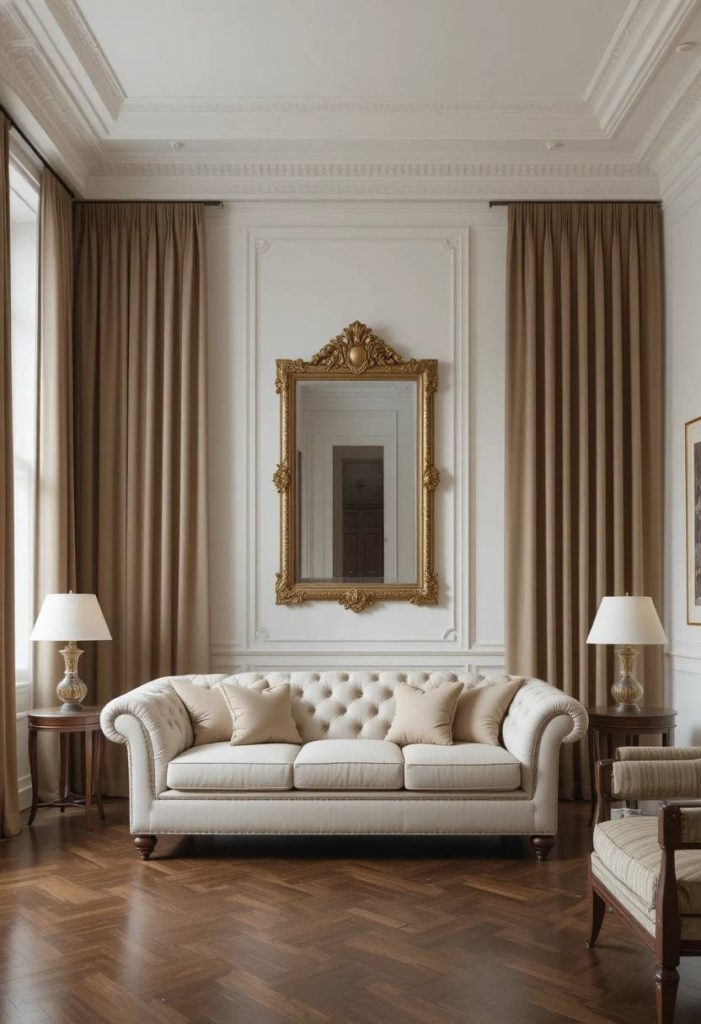
Taupe — that elusive, perfect neutral that sits between warm beige, soft gray, and dusty brown — is the secret weapon of the most considered and enduring interior designs. Unlike beige, which can feel tired and dated, or gray, which can feel cold and corporate, taupe has a warmth and sophistication that feels genuinely timeless. Floor-to-ceiling curtains in a well-chosen taupe are perhaps the single most versatile and universally successful curtain choice available — they complement every furniture style, work in every room size, and remain beautiful through multiple rounds of redecorating as the rest of the room evolves around them.
The secret to taupe floor-to-ceiling curtains is choosing the right tone for your specific room. Warm taupe (with pink or yellow undertones) suits rooms that receive warm, south or west-facing light and rooms with warm wood furniture and warm-toned accessories. Cool taupe (with gray or blue undertones) suits rooms with north or east-facing light, contemporary furniture, and a cooler overall palette. Testing a sample of fabric in the actual room at different times of day is essential — taupe shifts dramatically in different lighting conditions and what reads as the perfect warm neutral in the shop can appear muddy or cool at home.
In fabric, taupe achieves its best quality in a mid-weight linen or a luxurious, tightly woven cotton blend. A subtle texture — a fine herringbone weave, a barely-there stripe in the same tonal range, or a simple slub texture — adds visual interest without disrupting the essential calm of the color. Pinch pleat or pencil pleat headings give the most refined, traditional quality. Simple eyelet or tab-top headings suit more relaxed or contemporary interpretations. In all cases, the floor-to-ceiling installation is what elevates taupe from background element to considered design choice.
Style tip: Test three or four taupe fabric samples in your actual room at morning, midday, and evening light before committing to floor-to-ceiling curtains — the right taupe will look beautiful in all conditions, while the wrong one will appear muddy or oddly pink in certain lights.
20. Bold Red Floor-to-Ceiling Curtains for a Confident, Statement-Making Living Room
Room: Living Room
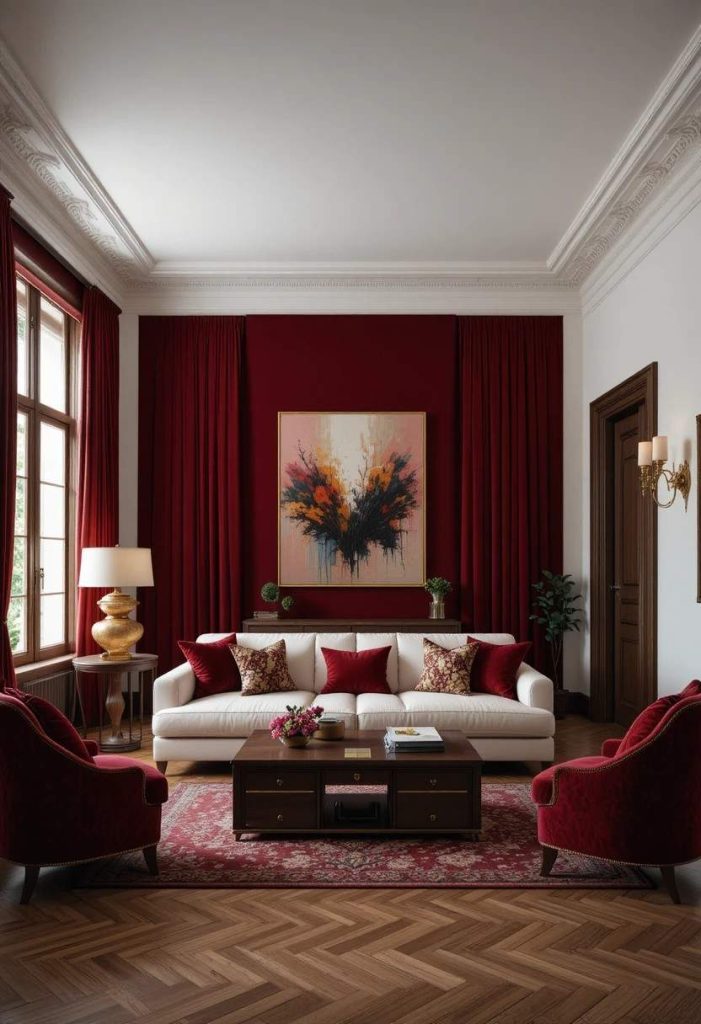
Red curtains have been a symbol of power, warmth, and theatrical drama in interior design for centuries — from the grand draping of Renaissance palazzos to the velvet theater curtains that have defined the staging of performance since the Baroque period. At floor-to-ceiling scale in a living room, bold red curtains make an unmistakable statement of confidence and intention. This is not a timid choice, and it does not produce a timid result. A living room with floor-to-ceiling red curtains is a room that has decided what it wants to be — rich, warm, dramatic, and completely unforgettable.
The specific tone of red matters enormously in choosing floor-to-ceiling curtains. Deep crimson (with blue undertones) has an aristocratic, almost formal quality that suits traditional and grand interior styles. Warm scarlet (with orange undertones) is more energetic and playful, working well in contemporary and eclectic spaces. Terracotta red is the most relaxed and Mediterranean of the reds, feeling earthy and warm rather than formal. Dark burgundy or wine red sits at the border between red and purple and has the deepest, most intimate quality — excellent for evening rooms and spaces where dramatic atmosphere is the primary goal.
The supporting palette for red floor-to-ceiling curtains requires care. Red is a dominant color and will assert itself over almost everything else in the room. White walls create the most striking contrast and allow the red to shine without competition. Charcoal, deep gray, or warm black walls create a more enclosed, theatrical atmosphere. Natural wood tones in walnut or dark oak complement the warmth of most reds beautifully. For upholstery, choose cream, warm white, dark charcoal, or deep navy — all of which provide the contrast needed to prevent the red from overwhelming the room.
Style tip: Red floor-to-ceiling curtains work best in rooms with good levels of natural light — in dark rooms they can feel oppressive. If your room lacks natural light, choose a warm scarlet rather than a deep crimson to keep the atmosphere energizing rather than heavy.
Frequently Asked Questions
What is the best fabric for floor-to-ceiling curtains?
The best fabric depends on the room and desired effect. Linen is the most versatile — natural, textured, and beautiful in both light and heavy weights. Velvet is the most dramatic and luxurious, with the best light-blocking properties. Sheer cotton voile or linen voile creates the softest, most ethereal light filtering effect. For a budget-friendly option, a quality cotton or cotton-linen blend offers excellent drape and durability.
How do I stop floor-to-ceiling curtains from looking cheap?
Three things make all the difference: use enough fabric width (minimum 2x the rod width), ensure the fabric reaches the floor or pools very slightly, and choose a heading style (pinch pleat, pencil pleat, or eyelet) that creates consistent, structured folds. Even an inexpensive fabric will look intentional and considered when hung at the correct height with sufficient fullness.
Can I use floor-to-ceiling curtains in a small room?
Absolutely — in fact, floor-to-ceiling curtains are one of the most effective tools for making small rooms feel larger. The key is to choose a fabric in a color that is close to the wall color (tonal dressing) or a very light neutral, and to hang the rod at ceiling height with panels that extend beyond the window frame. This creates a seamless backdrop that expands the perceived dimensions of the room.
What curtain heading style looks best at ceiling height?
Pinch pleat and pencil pleat headings create the most structured, tailored look at ceiling height. Eyelet/grommet headings create clean, contemporary folds. Tab-top headings give the most relaxed, casual quality. For maximum height enhancement, avoid goblet pleat headings — the bulk of the pleat at the top can interrupt the clean vertical line.
How often should floor-to-ceiling curtains be cleaned?
Heavy, full-length curtains should be professionally cleaned or carefully hand-washed once every one to two years in normal use. More frequently in kitchens or rooms with smokers. Shake them out and steam them lightly every few months to remove dust and restore the fabric’s natural drape. Always follow the care instructions specific to your fabric — linen, velvet, and silk all have different cleaning requirements.
Conclusion
Floor-to-ceiling curtains are the single highest-impact change you can make to a room without structural renovation. They add height, drama, warmth, color, texture, light control, and acoustic comfort — all at once, and in every room of the home. Whether you choose the quiet elegance of warm white linen sheers in a coastal bedroom, the theatrical drama of floor-to-ceiling aubergine velvet in a glamorous living room, or the focused energy of emerald green in a home office, the floor-to-ceiling installation is what transforms each choice from a curtain into a design statement.
The 20 ideas in this guide span every room, every budget, every style, and every mood. Use the AI image prompts to visualize each look before you commit, use the alt text on your Pinterest pins and blog posts for maximum search performance, and follow the installation guidance to ensure your curtains hang beautifully from the very first day.
Hang high. Hang long. Transform the room.