College Apartment Bedroom Ideas: 25 Cozy Setups for Your First Off-Campus Place
Moving from a dorm into your first college apartment is one of the most exciting upgrades of student life — but it’s also a styling challenge nobody really prepares you for. You finally have a real bedroom with actual walls, a full-size bed, and the freedom to own real furniture instead of surviving on bed risers and Command strips. The pressure to make it feel “adult” suddenly becomes very real.
A college apartment bedroom sits in a strange in-between zone: too grown-up for the dorm-room aesthetic (tapestries with thumbtacks, plastic drawer towers, fairy lights duct-taped to the ceiling), but usually still on a student budget that can’t quite stretch to West Elm or Restoration Hardware. The trick is knowing which dorm habits to leave behind and which apartment-level upgrades actually matter.
These 25 college apartment bedroom ideas are designed for upperclassmen, off-campus renters, roommates splitting rent in old houses near campus, and first-time apartment dwellers who want a space that feels grown-up, cozy, and Pinterest-worthy — without the dorm-room aesthetic and without bankrupting themselves on furniture.
Every idea here is renter-friendly, budget-conscious, and pulled from the styling moves that consistently appear in the most-saved college apartment bedrooms on Pinterest right now. Whether your space is a converted attic in an old house, a modern studio, or a shared apartment with a bedroom barely larger than your dorm, this guide has you covered.
What Changes When You Move From a Dorm to an Apartment
The single biggest mistake students make in their first apartment bedroom is treating it like a slightly bigger dorm. They bring all their dorm habits with them — the same tapestry hung the same way, the same Amazon bedding, the same plastic storage drawers — and wonder why the room still feels like college housing.
An apartment bedroom needs upgrades the dorm never required: a real bed frame instead of a metal-rail twin XL, matching nightstands instead of one milk crate, proper curtain rods mounted into the wall (yes, most leases allow small holes that you’ll patch with spackle at move-out), and actual lamps instead of just LED strips.
The good news is that these upgrades are cheaper than you’d think. A platform bed frame on Amazon runs $150-$200. Two matching nightstands from Target are $80-$120 for the pair. A good rug is $80-$150. Spread out the spending across move-in month and your first apartment bedroom can look genuinely grown-up for under $500 total — which is dramatically cheaper than what your parents would estimate.
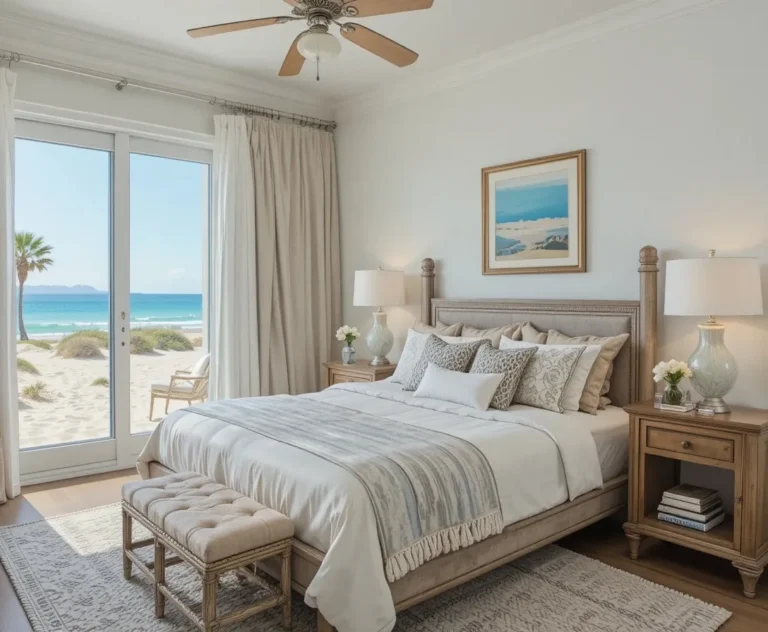
1. Invest in a Real Bed Frame (Get the Mattress Off the Floor)
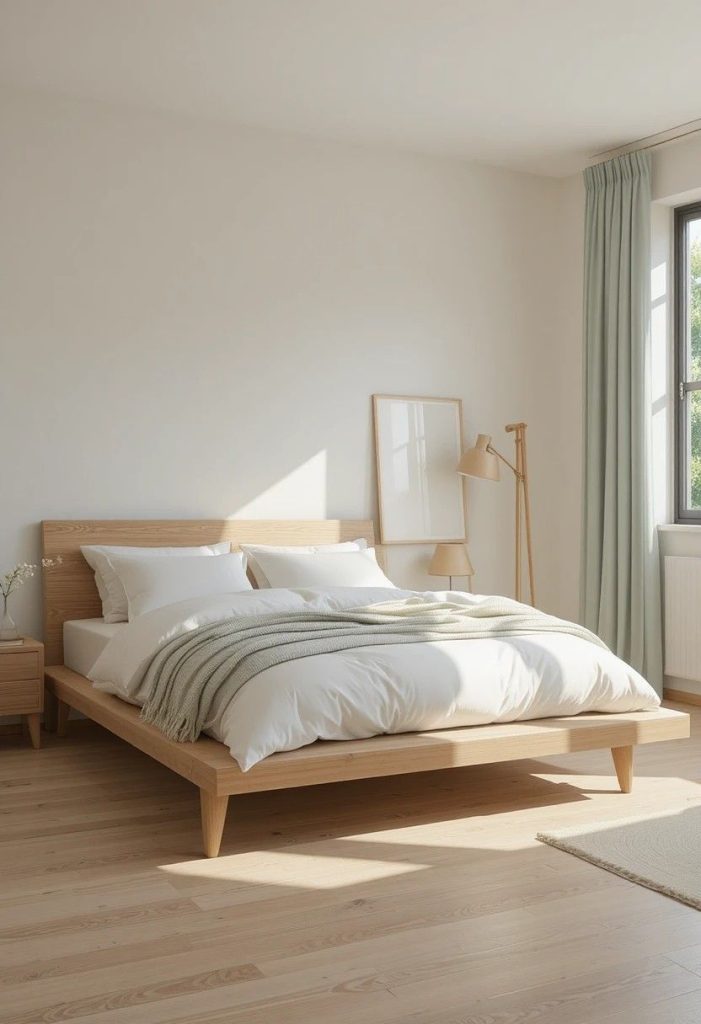
Step one of making any college apartment bedroom feel actually adult: get the mattress off the floor. A mattress on the floor signals “college” louder than almost anything else, even when the rest of the room is well styled. It’s the single biggest visual upgrade you can make.
A simple wood platform bed, low-profile frame, or upholstered bed frame from Amazon, Wayfair, IKEA, or Target usually runs $130-$250 for a full or queen size. Look for platform frames that don’t require a box spring — they’re cheaper, look more modern, and skip an entire $100+ expense.
The most-pinned styles right now: low-profile slatted wood platforms, simple metal frames with clean lines in matte black, and upholstered frames in cream linen or beige boucle. Avoid ornate carved headboards or anything chrome — they age fast and clash with most apartment styles.
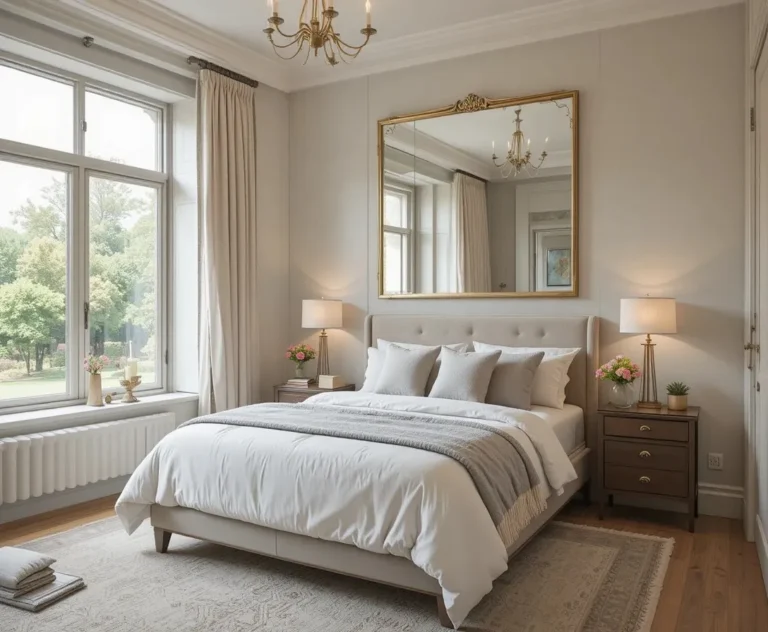
2. Add an Upholstered or Statement Headboard
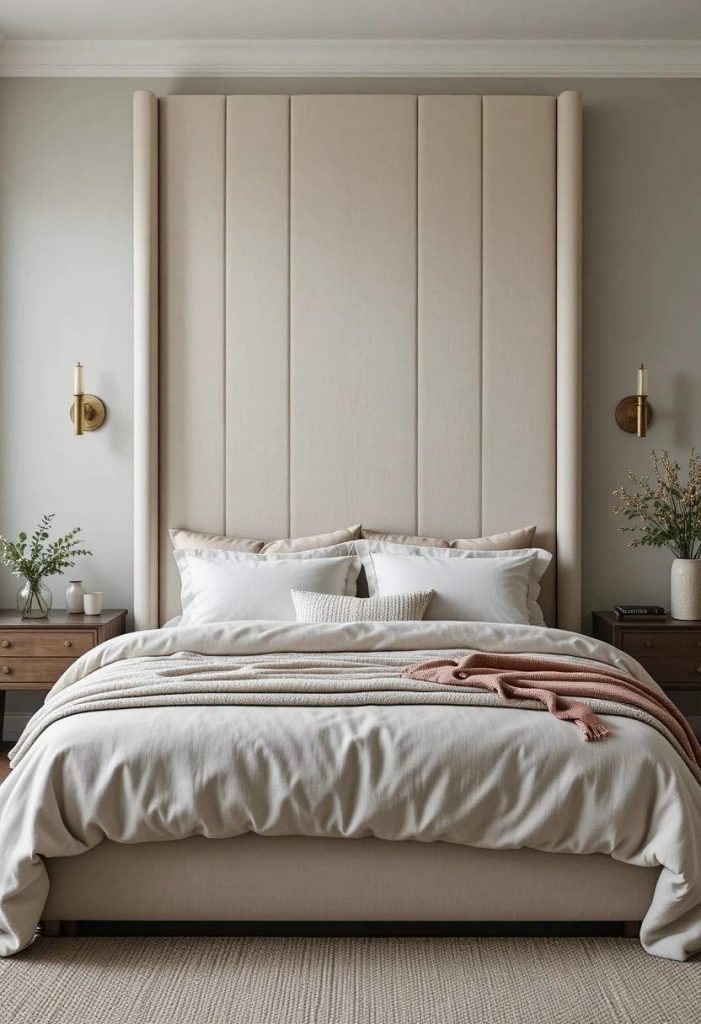
An upholstered headboard — velvet, linen, or boucle — adds softness, architectural interest, and the single most adult-looking detail a bedroom can have. It’s the difference between a bed and a bedroom.
If your bed frame didn’t come with a headboard, you have three budget options: a tall standalone headboard that leans or mounts to the wall ($60-$120 on Amazon), a fabric panel mounted directly to the wall behind the bed ($25-$40 DIY), or a tall woven seagrass headboard for that coastal-apartment look ($90-$150).
Leaning headboards are the most renter-friendly choice — no drilling required. Just prop the headboard against the wall behind the mattress and the bed frame will hold it in place.
3. Define Zones in a Studio or Tiny Bedroom
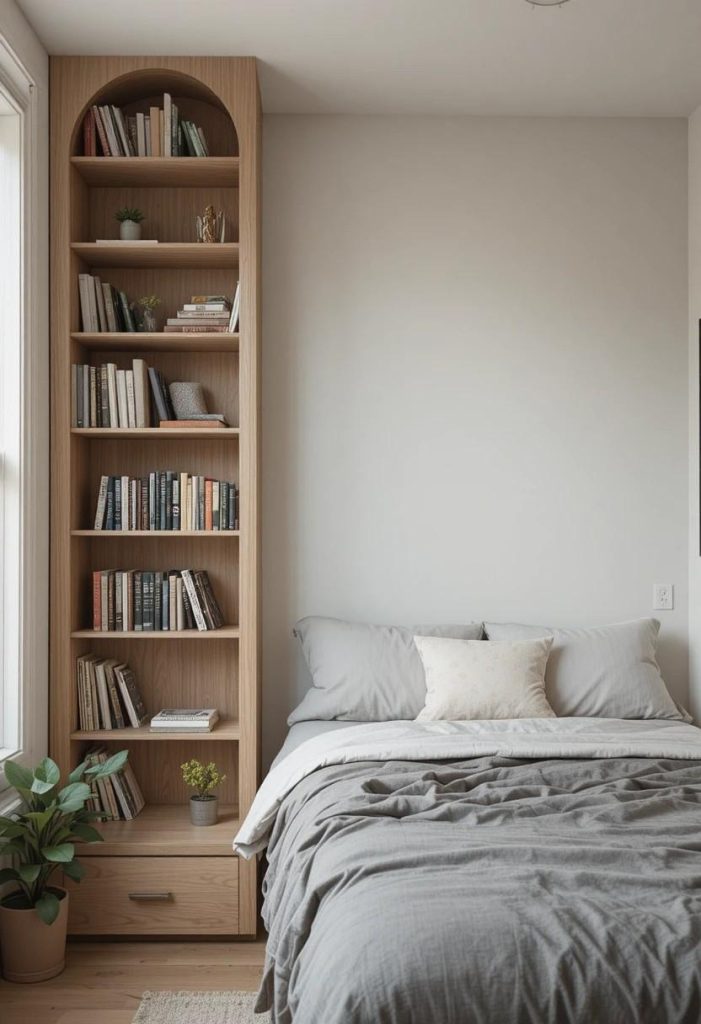
If your apartment bedroom doubles as a study space, lounge area, or living room (looking at you, studio renters), use a tall bookshelf, a curtain divider, an open shelving unit, or a strategic rug placement to visually separate the room into sleep and work zones. Visual separation makes any small apartment feel significantly more functional and intentional.
The most-pinned zoning trick: place a tall open bookshelf perpendicular to the wall, creating a partial divider between the bed and the desk area. The bookshelf is functional (storage and decor display) while serving as a soft visual wall.
If a bookshelf is too much, a single ceiling-mounted curtain rod with a linen panel can divide a studio’s sleeping nook from the rest of the space for under $40.
4. Hang Curtains High and Wide
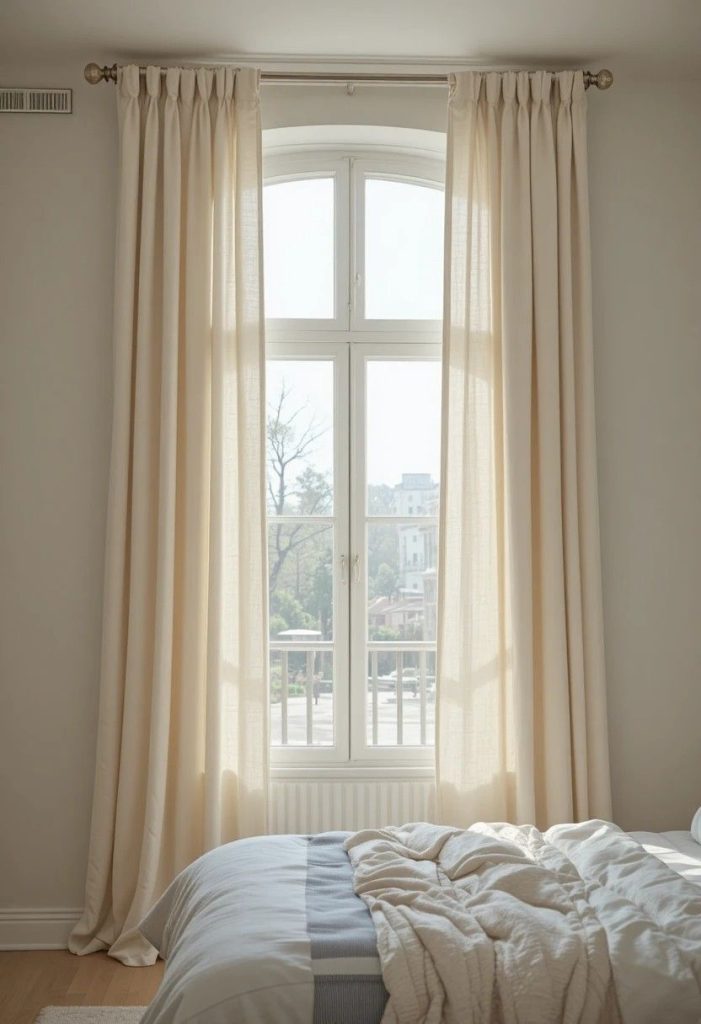
Apartment windows can be awkward — too small, oddly placed, or framed with ugly builder-grade molding. The single fastest curtain trick that works in any apartment: mount the curtain rod 4-6 inches above the window frame, and extend the rod 4-6 inches wider on each side than the window itself. This trick makes the window look 30% bigger and the ceiling feel taller.
Floor-length curtains in cream or oatmeal linen are the universal Pinterest standard. Buy curtains long enough that they just barely touch or puddle slightly on the floor — never let them hover 6 inches above the floor like an ill-fitted pair of pants.
Most leases allow small mounting holes that you spackle at move-out. If you can’t drill at all, use tension rods or 3M Command-strip curtain hooks (yes, they exist) for damage-free mounting.
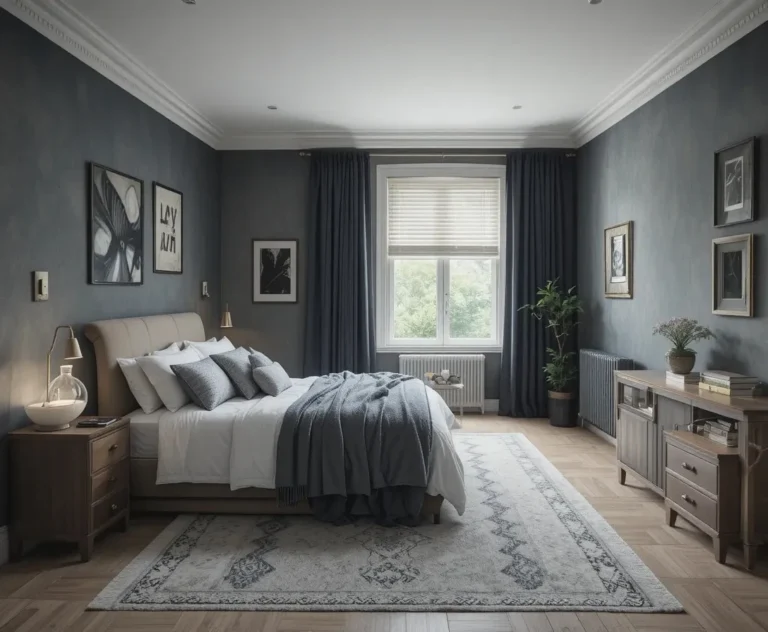
5. Anchor the Room With a Large Area Rug
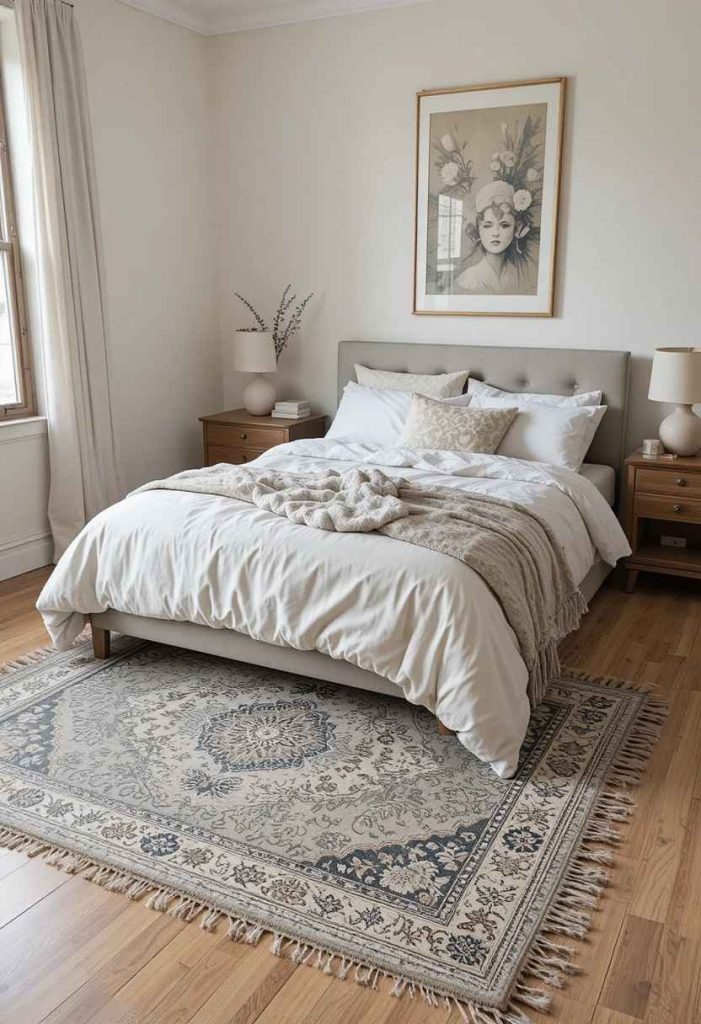
An 8×10 or 9×12 area rug placed so it extends 18-24 inches past the sides and foot of the bed grounds the entire room and is one of the single most defining elements of a Pinterest-worthy apartment bedroom. Skip the small 4×6 rugs you used in your dorm — apartment bedrooms need real rugs.
For renter-safe and budget-friendly options: jute, washable cotton, low-pile wool blends, and synthetic flatweaves from Target, Wayfair, or Amazon all work beautifully. Choose neutral cream, oatmeal, warm beige, or natural jute as your base.
Pro layered move: place a smaller textured rug (faux sheepskin, vintage-style Persian-inspired runner, or chunky woven) on top of a larger neutral jute rug for designer-level depth. This costs about the same as a single large rug but looks twice as expensive.
6. Style Two Matching Nightstands
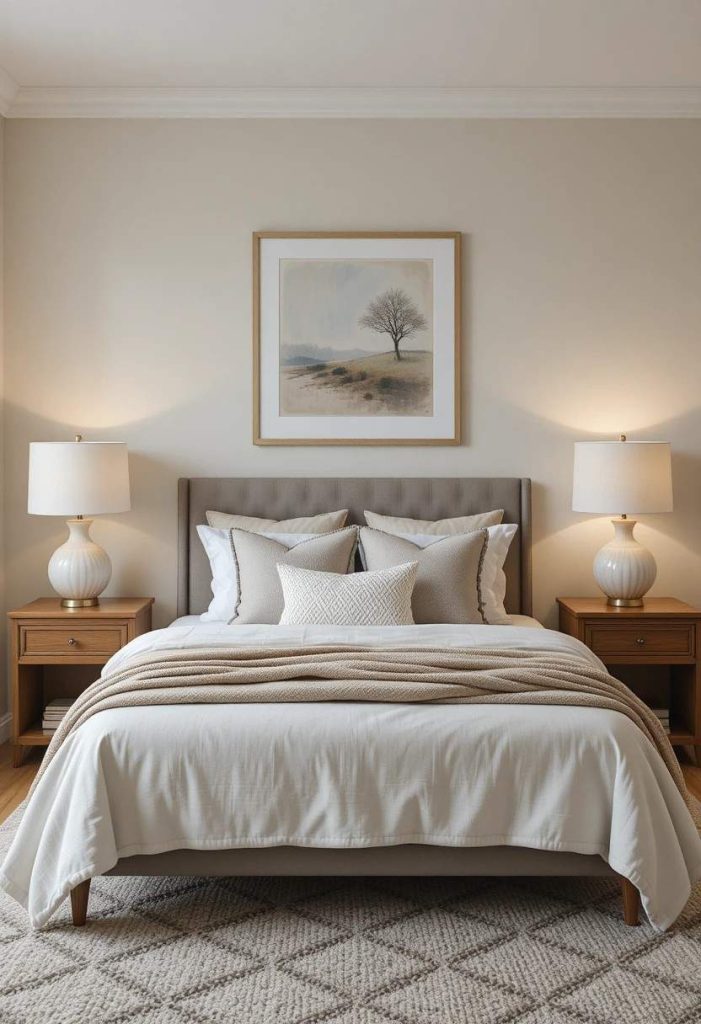
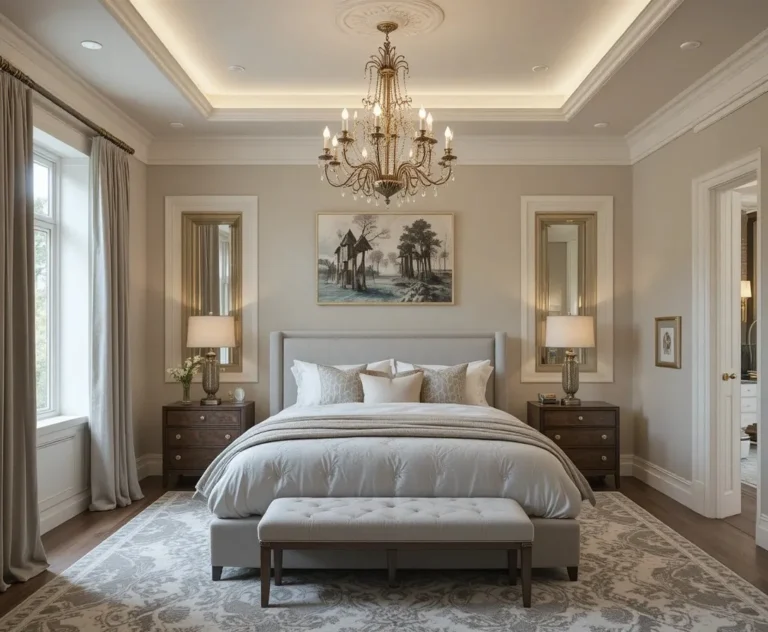
Two matching nightstands flanking the bed with two matching lamps signals “adult bedroom” louder than almost any other styling move. Even if the rest of the room is mismatched, this single symmetry trick pulls everything together visually.
Affordable matching nightstand sets from Target, Amazon, and IKEA cost $80-$150 for the pair. Look for warm wood, matte black, or cream painted finishes — these blend with any aesthetic. Skip ornate carved styles or glossy white plastic.
If buying two new nightstands isn’t in the budget, two matching small dressers, two thrifted side tables painted the same color, or even two wooden stools work as nightstand alternatives. The matching is what matters; the form is flexible.
7. Add Layered Warm Lighting
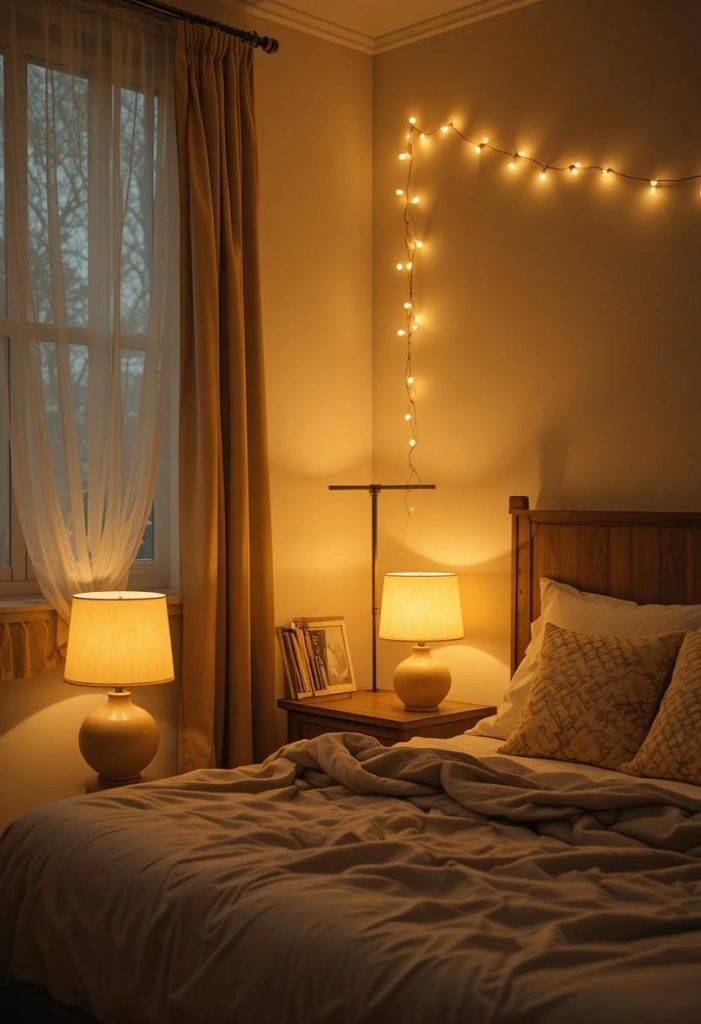
Apartment bedrooms with only one overhead light source feel cold and clinical no matter how well you style the rest of the room. Layered warm lighting is non-negotiable — aim for at least three separate light sources beyond the overhead.
The formula: one bedside lamp on each nightstand (two total), one desk lamp, and one floor lamp or string light setup for ambient lighting. All bulbs should be 2700K (warm white) — never cool white or daylight.
Plug-in wall sconces beside the bed free up nightstand space and look incredibly intentional. Cordless rechargeable sconces also exist for renters who can’t or don’t want to manage cords on the wall.
8. Mount Wall Sconces or Plug-In Pendant Lights
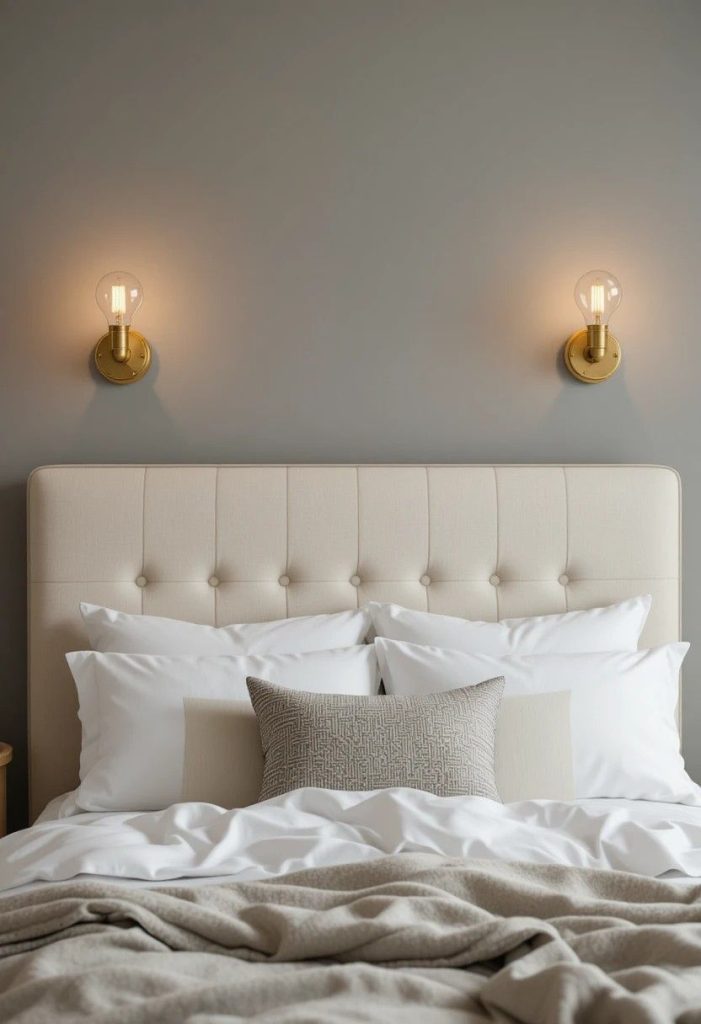
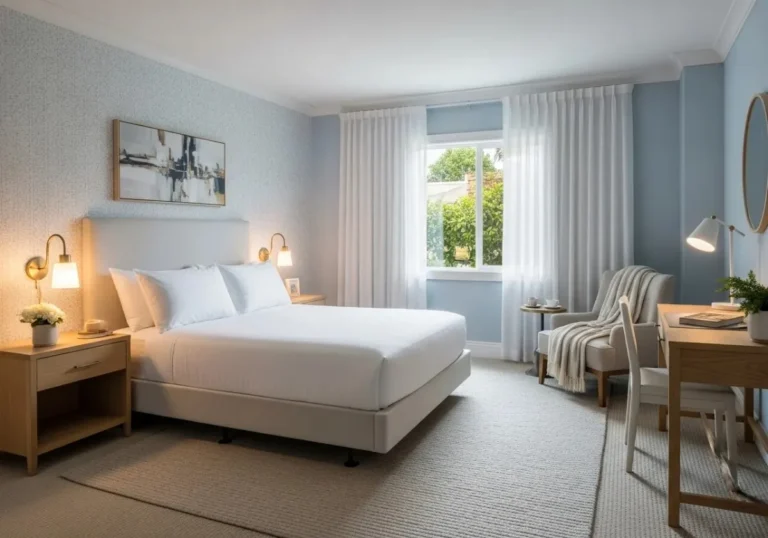
If drilling is allowed in your apartment, hardwired or plug-in wall sconces beside the bed are the single most adult-looking lighting upgrade you can make. They free up nightstand space, photograph beautifully, and replace ugly nightstand lamps with intentional architecture.
Plug-in versions exist for renters who can’t hardwire — they look exactly the same but have a small fabric-wrapped cord running down to a wall outlet. Amazon and Wayfair carry good options for $30-$60 per sconce.
Choose matte black, warm brass, or natural wood finishes. Avoid shiny chrome — it reads cold and modern in a way that fights with cozy apartment aesthetics.
9. Use a Bench at the Foot of the Bed
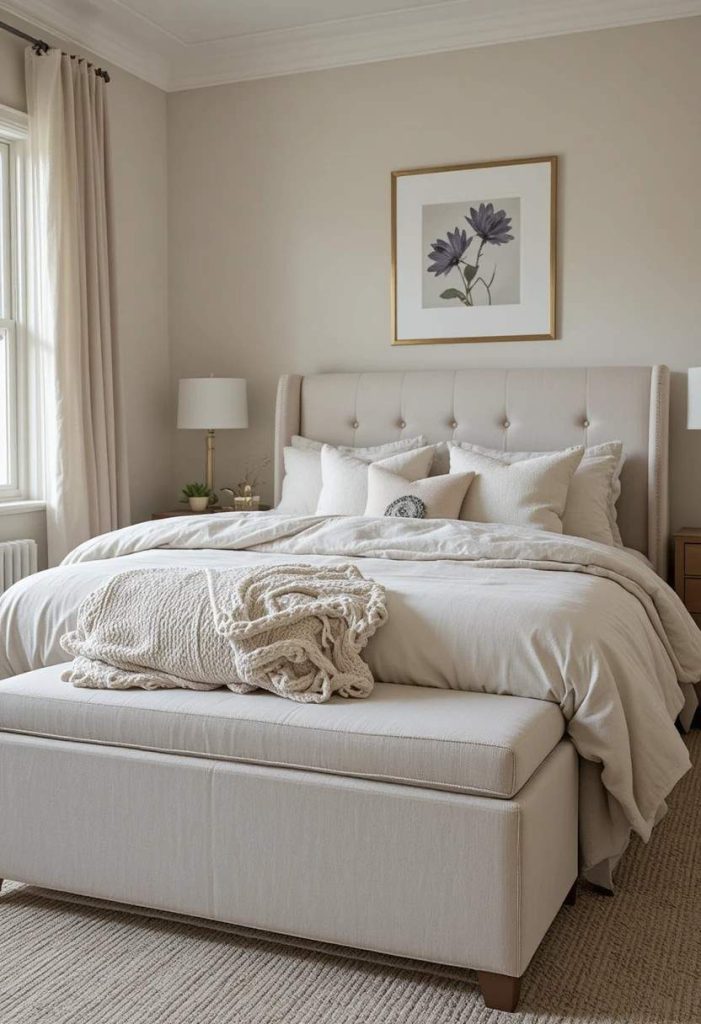
A small upholstered bench, ottoman, or even a vintage wooden trunk at the foot of the bed adds three things simultaneously: hidden storage for extra blankets and out-of-season items, a styling moment that elevates the bed’s presentation, and a practical place to sit while putting on shoes in the morning.
Budget options: a cream linen storage ottoman from Amazon ($60-$90), a thrifted wooden trunk painted matte black or natural ($20-$50), or a low backless cushioned bench from Target ($80-$120).
Style the bench with a folded throw blanket or a single decorative pillow to tie it visually into the bed above. The repetition of textiles is what makes the bench look like part of the bed setup rather than a random extra piece of furniture.
10. Layer One Large-Scale Piece of Art
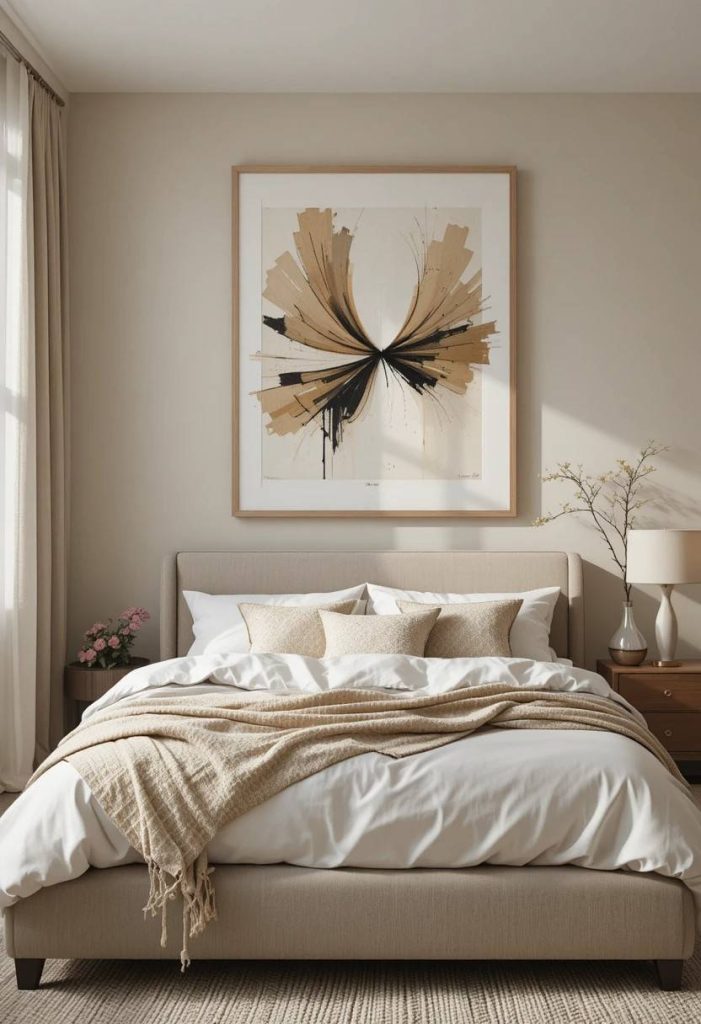
One large piece of art is dramatically more sophisticated than five small scattered ones. Above the bed is the most-photographed wall in any bedroom, so it deserves a single confident statement piece rather than a busy gallery.
Affordable oversized prints exist on Etsy, Society6, Amazon, and Minted in 24×36 or larger sizes for $30-$80. Frame in a simple wood, black, or natural canvas wood frame ($40-$80 from Michaels with their constant coupon codes, or DIY from Home Depot).
Best subject matter for apartment bedrooms: abstract minimalist paintings in neutral tones, large-scale black-and-white photography, vintage botanical illustrations, or a single oversized abstract figure drawing. Skip motivational quotes — they read as dorm.
11. Add a Cozy Reading Chair in the Corner
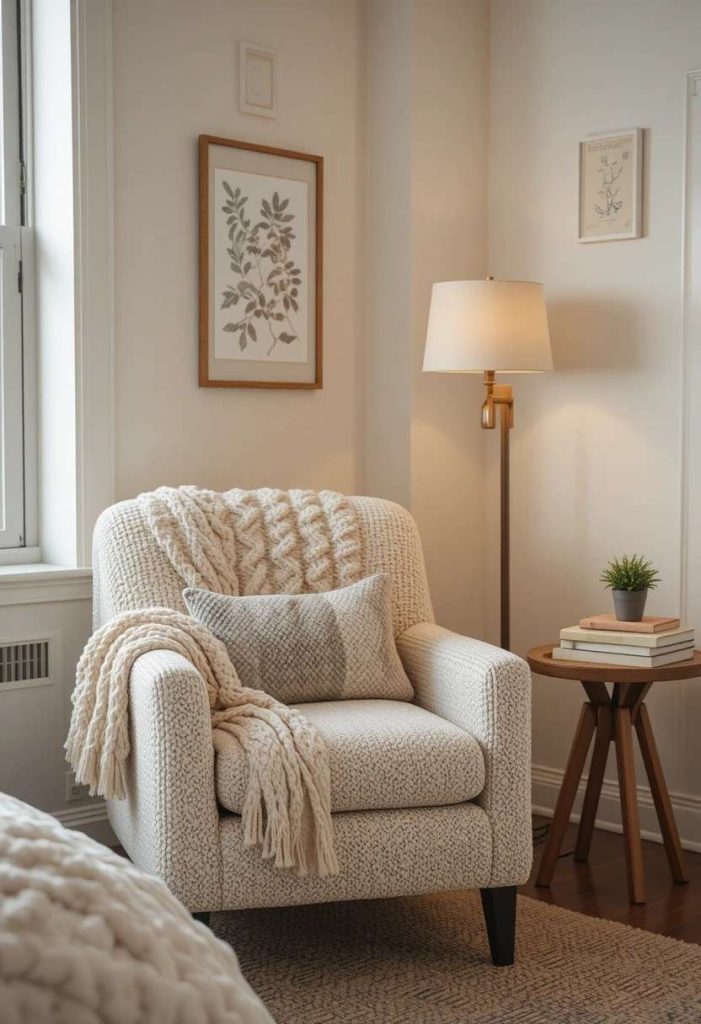
If your apartment bedroom has the floor space, a single armchair with a throw and a small side table turns an unused corner into a reading retreat — and signals more loudly than almost anything else that you live in an actual apartment, not a dorm.
Budget-friendly chair options: IKEA STRANDMON ($179), AllModern occasional chairs ($150-$250 on sale), Target accent chairs ($120-$200), or a thrifted vintage armchair reupholstered with a slipcover ($40-$80 total).
Style the chair with one or two small pillows in textures that match the bed, a draped throw blanket, and a small side table with a lamp and a stack of books. The whole corner becomes its own micro-room.
12. Use Open Shelving for Curated Displays
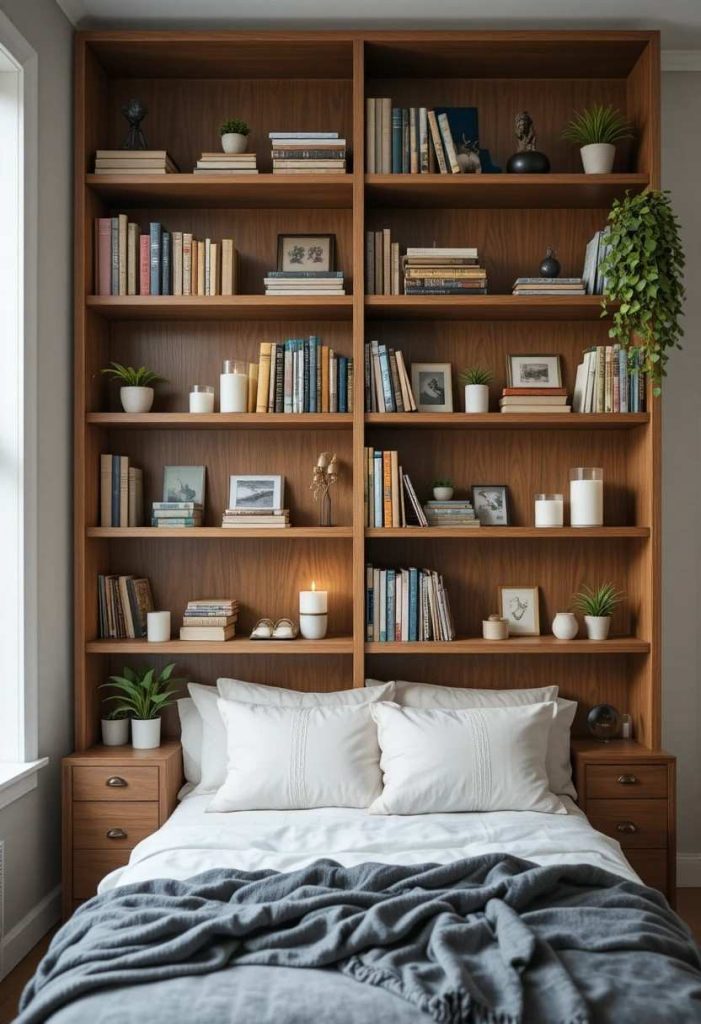
A tall slim shelf, a wall-mounted floating shelf, or a vintage ladder shelf styled with books, small plants, candles, ceramics, and personal objects adds significant personality and storage. Open shelving is what separates curated apartments from generic ones.
Style with the rule of three: three objects per shelf, varying heights and textures. Leave plenty of empty space — overstuffed shelves read as clutter, not curation. The empty space is part of the design.
Wall-mounted floating shelves are ideal for small apartments. They use the vertical wall space without taking floor space. Bedford-style mounted shelves from Amazon cost $25-$40 for a set of three and install with brackets that patch easily at move-out.
13. Add a Full-Length Mirror
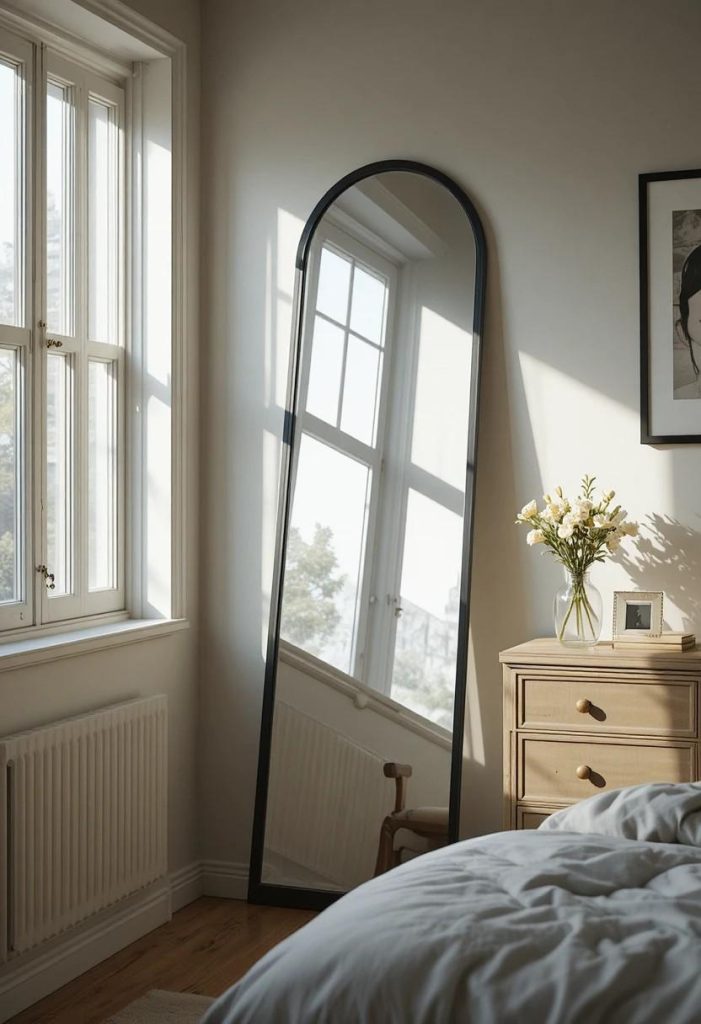
A leaning full-length mirror is one of the highest-impact, lowest-effort upgrades any apartment bedroom can have. It reflects natural light to make the room feel significantly bigger, serves a real daily function (outfit checks), and adds an architectural element to plain walls.
Lean rather than mount it — the standing mirrors from IKEA, Amazon, Target, and West Elm all rest safely against the wall without any hardware. Budget options run $40-$80; mid-range $90-$160.
Choose simple frames: thin black metal, natural oak wood, brushed brass, or arched cream-painted wood. Avoid ornate gilt frames at this price point — they read as costume rather than antique.
14. Choose a Cohesive Three-Color Palette
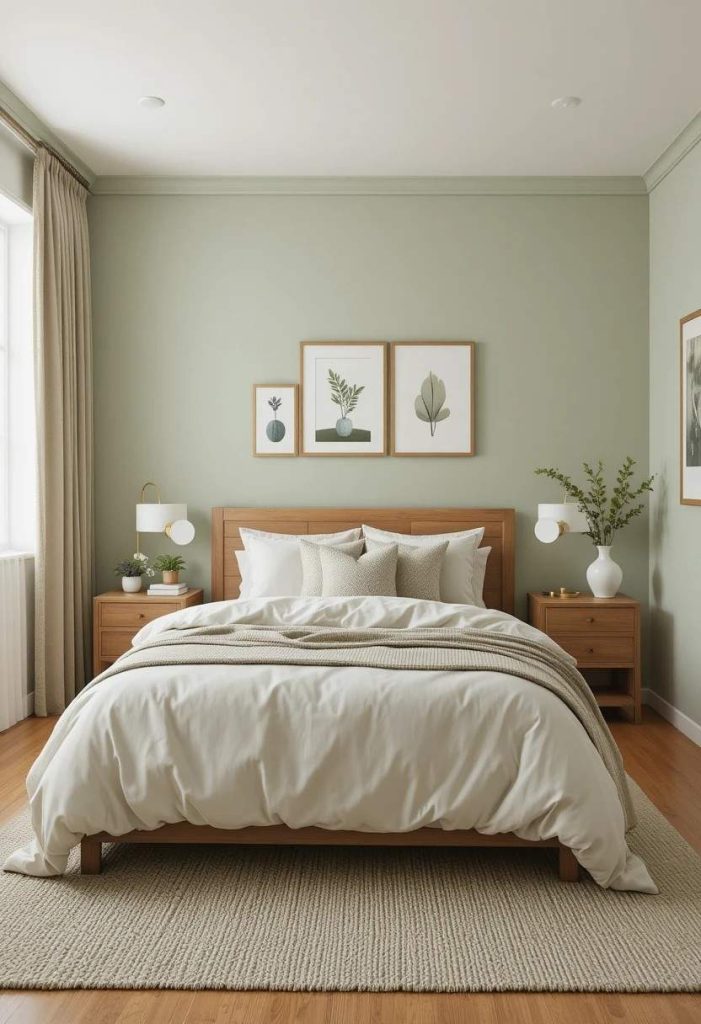
Apartment bedrooms have significantly more surfaces than dorms (more walls, more furniture, more storage), which means more potential for color chaos. The fix: pick three colors maximum and repeat them across every surface in the room.
The most-saved apartment bedroom palettes on Pinterest right now: cream + sage green + warm wood; oatmeal + dusty rose + matte black; warm white + caramel + brass; or beige + terracotta + cream. Pick one and commit to it across bedding, art, rug, curtains, and accessories.
When in doubt, look at your bedding first — whatever colors are in your duvet and pillows become the foundation. Build everything else around those colors.
15. Layer Bedding Like a Hotel Room
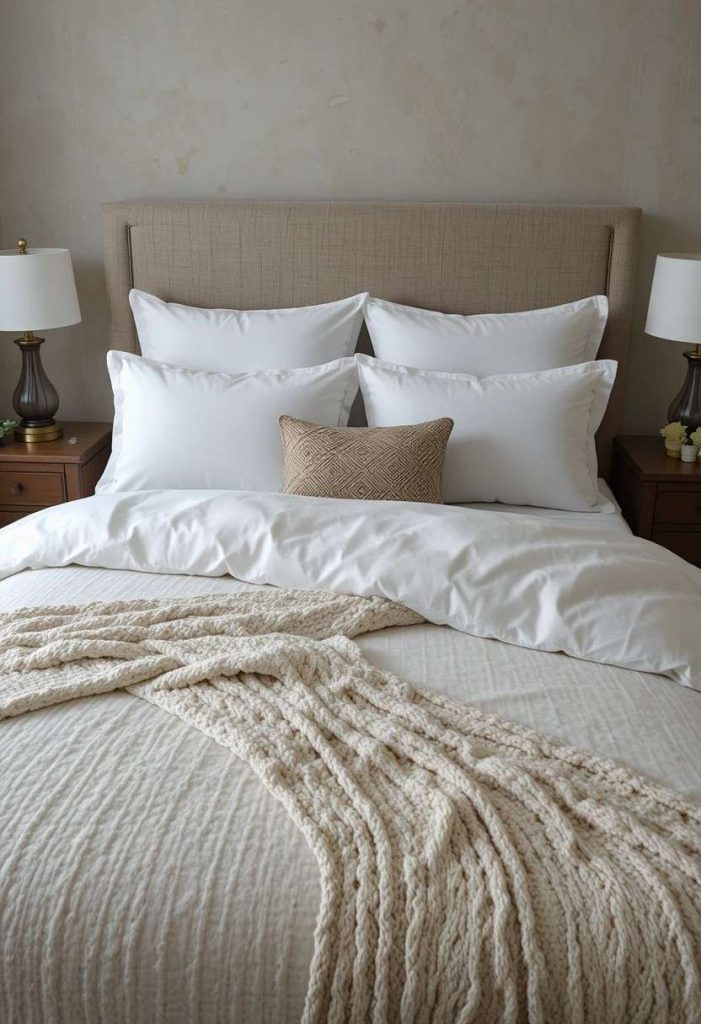
Apartment bedrooms deserve hotel-quality bedding layering. The formula that works every time: fitted sheet, top sheet (yes, even if you skipped it in your dorm), duvet or comforter folded back to reveal contrast, two euro pillows, two standard pillows, two decorative throw pillows, and one chunky throw draped diagonally at the foot.
Stick to neutral tones with one or two textural accents. Mix at least three textures: washed linen, chunky knit, faux fur, bouclé, or waffle weave. Texture variation is what separates Pinterest-worthy beds from generic ones.
Iron or steam the duvet cover before putting it on — wrinkles destroy the entire styling effect. This single 5-minute habit makes cheap bedding photograph like expensive bedding.
16. Use a Dresser as a Styling Surface
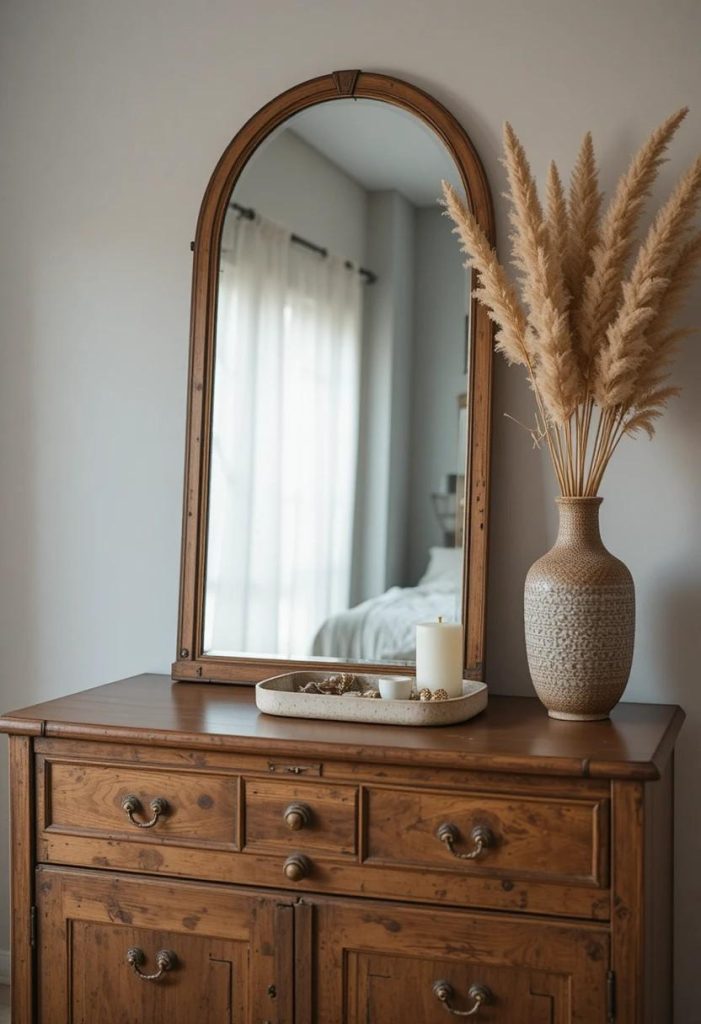
A real dresser — not just a plastic drawer tower — is one of the apartment-bedroom upgrades that pays off most. It provides serious storage, replaces the need for closet organization, and creates a major styling surface for decor.
Budget dresser sources: IKEA HEMNES ($199-$299), thrifted vintage dressers painted matte cream or black ($40-$120), Facebook Marketplace ($60-$150 for solid wood), and Target ($150-$250). A solid wood thrift find painted in your accent color is the highest-impact, lowest-cost option.
Style the dresser top with three groupings: a mirror or art piece, a small tray with jewelry or a candle, and a styled plant or vase arrangement. Three styled zones across the dresser top look intentional; random scattered objects look cluttered.
17. Add Plants in Varied Sizes
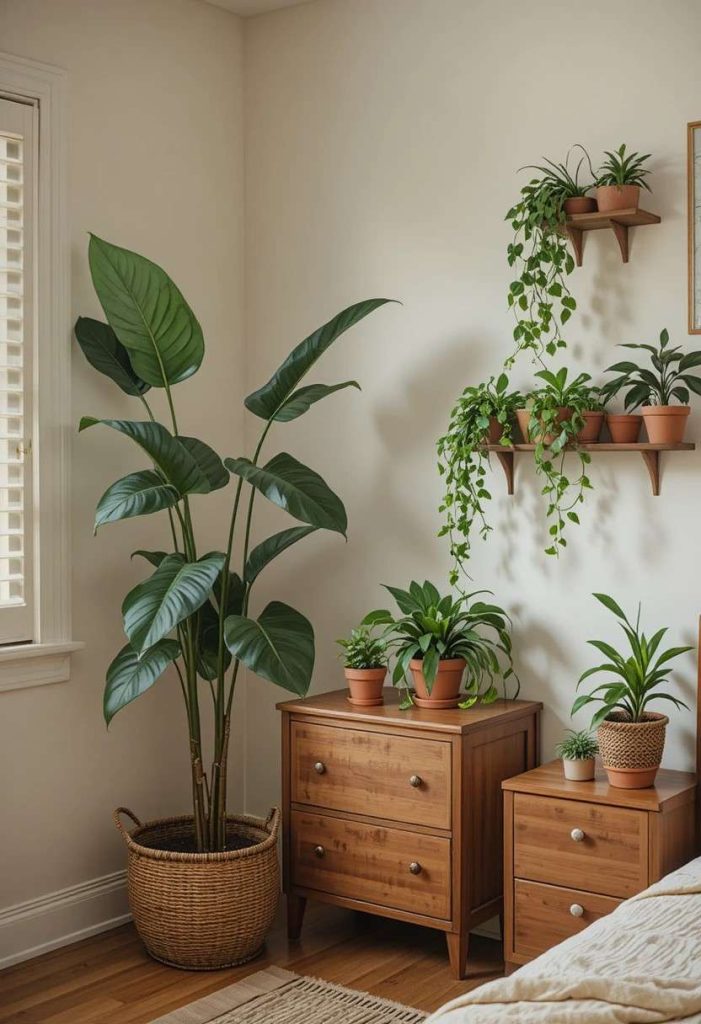
Apartment bedrooms can handle more plants than dorms because there’s actual floor space and natural light is usually better. Aim for 5-8 plants of varied heights distributed throughout the room — a tall floor plant in a corner, a medium plant on the dresser, a small plant on the nightstand, trailing plants on a high shelf.
Easy beginner picks that survive student life: snake plant (low light, low water), pothos (trailing, easy), ZZ plant (nearly indestructible), monstera (statement floor plant), and rubber plant (medium care, dramatic leaves).
Choose pots in matching tones: terracotta, matte black, cream ceramic, or natural woven baskets. Mixing pot materials within a single tone family looks intentional; mixing actual colors looks like a thrift store explosion.
18. Mount Floating Shelves Above the Desk
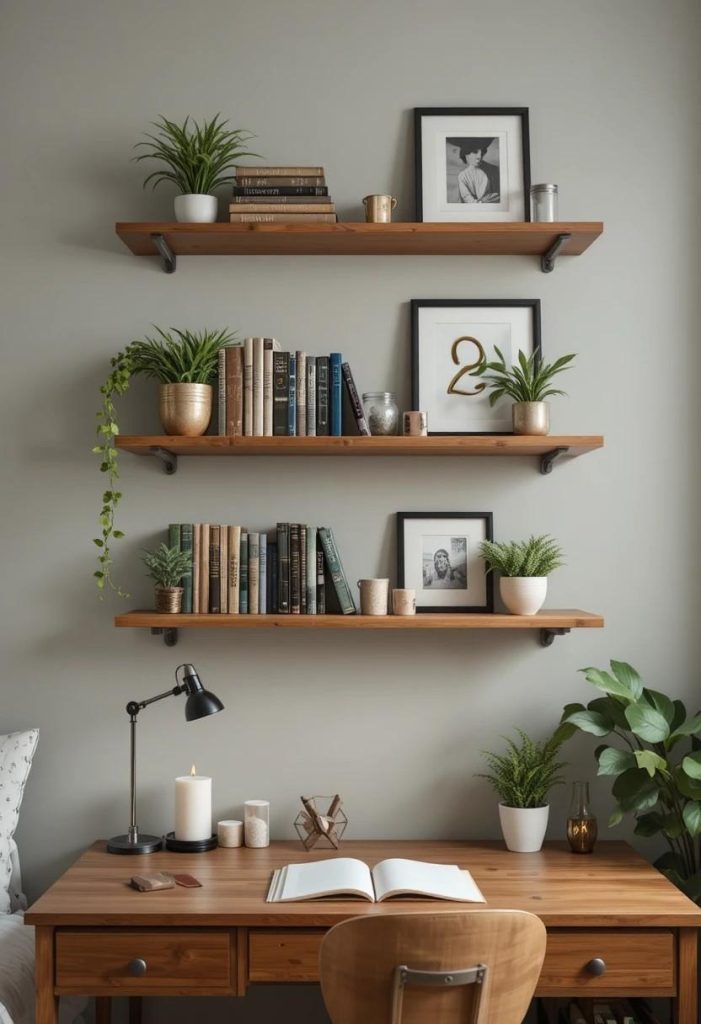
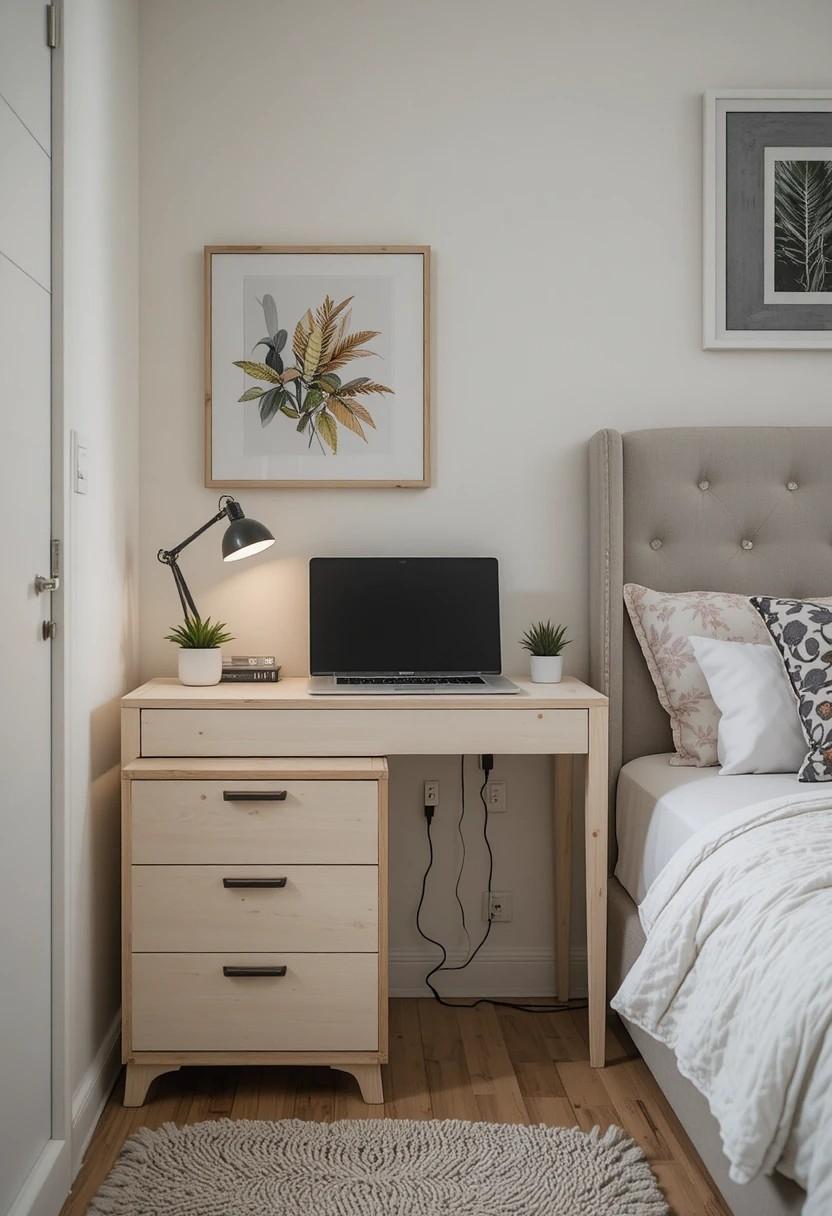
If your apartment bedroom doubles as a study space, two or three floating shelves mounted above the desk add storage and styling space without taking floor square footage. They also draw the eye upward, which makes the desk feel like a designed workspace rather than a homework dumping ground.
Style with books, small plants, candles, framed photos, and ceramic objects. Use the rule of three per shelf and leave plenty of empty space between objects.
Pre-cut floating shelves from IKEA, Target, or Amazon run $15-$35 each and install with hidden bracket systems that patch easily at move-out.
19. Use a Statement Light Fixture
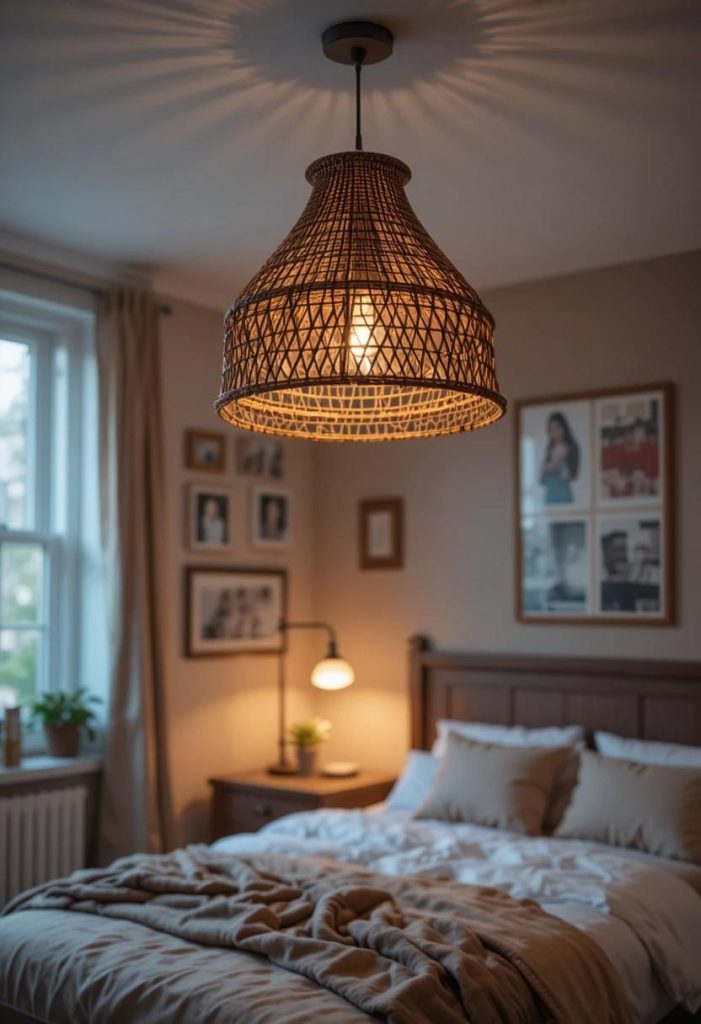
Most apartment bedrooms come with the most depressing builder-grade ceiling lights imaginable. A simple swap to a statement fixture — a woven rattan pendant, a fabric drum shade, or a vintage-style brass fixture — instantly upgrades the entire room.
If you can’t replace the fixture (some leases prohibit it), use a swag-style plug-in pendant light that hangs from a ceiling hook and plugs into a wall outlet. These cost $40-$80 and require no electrical work.
Alternative: cover the existing ugly fixture with a fabric ceiling drape or a paper lantern shade that hangs over it. This costs about $15 and dramatically softens the visual impact.
20. Hide Cords and Hardware
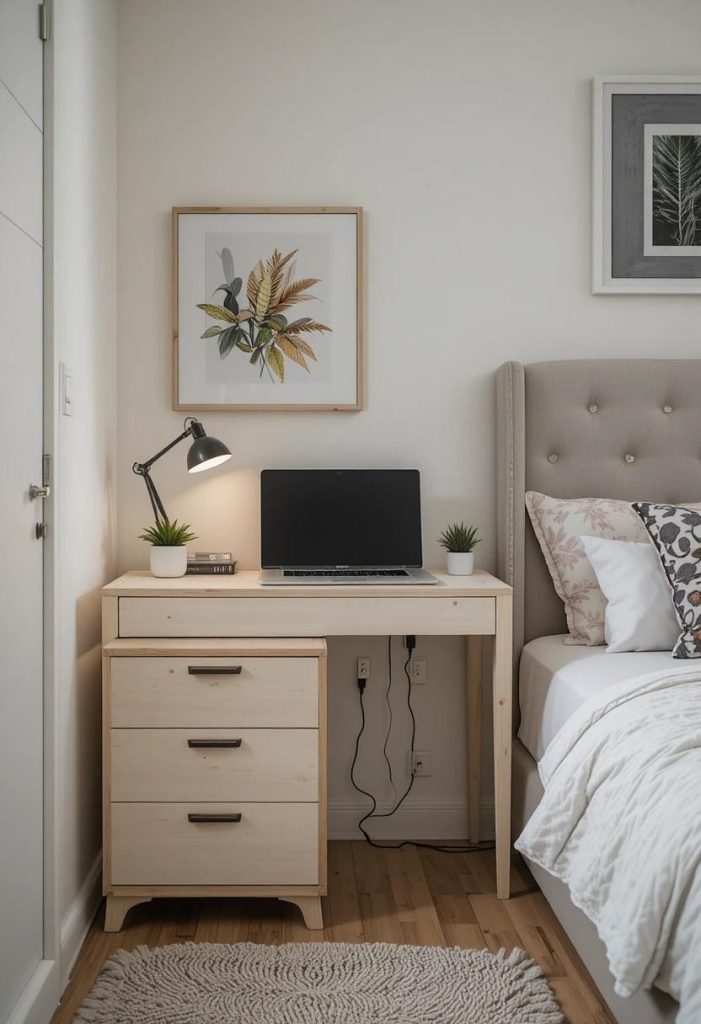
Apartment bedrooms have significantly more cords than dorms: TV cords, lamp cords, multiple charger cords, sometimes a printer cord, often a sound bar or speaker cord. Visible cords are the single biggest tell that a room is unstyled.
Buy a cable management kit ($15 on Amazon) and run all cords along baseboards or behind furniture. Use cord covers, cable clips, and Velcro ties to keep everything organized and out of sight.
Power strips should always live behind furniture or inside a designated basket. Never have a visible white power strip on the floor — it kills the entire styling effort.
21. Add a Bedroom Door Hook System
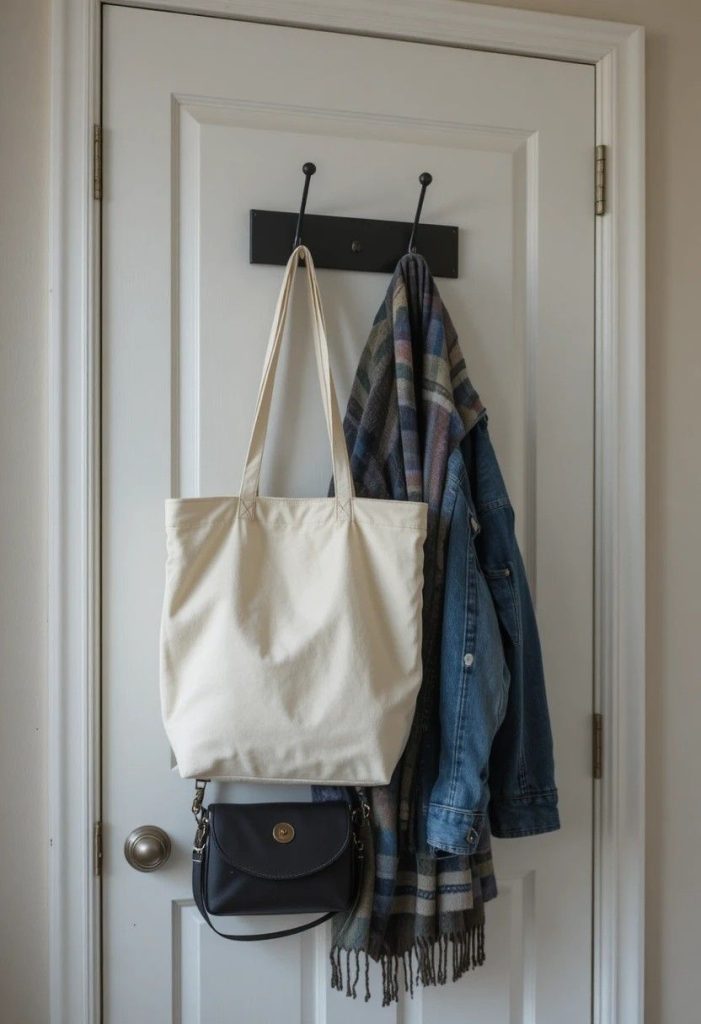
The back of the bedroom door is one of the most underutilized surfaces in any apartment. A matte black or natural wood over-the-door hook rack (no drilling required) turns it into prime real estate for bags, jackets, hats, scarves, and daily-use items.
Choose a hook rack with five or six hooks for the most flexibility. Avoid plastic dollar-store versions — the matte black metal options from Amazon ($15-$25) blend with most aesthetics and look intentional.
Hooks on the back of the door dramatically reduce visible clutter throughout the rest of the room by giving daily-use items a home that isn’t “the desk chair” or “the floor.”
22. Layer Throw Pillows With Intentional Mixing
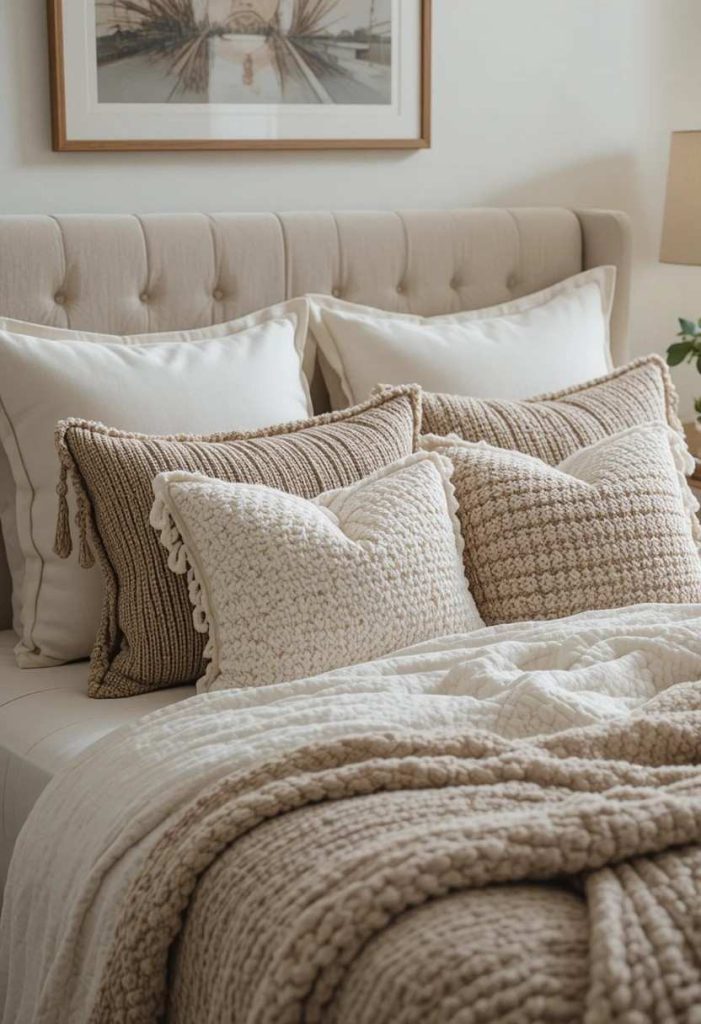
Apartment bedrooms support more pillows than dorms because the bed is bigger. The formula: two euro pillows (24×24 squares) in a textured neutral cover, two standard pillows in matching shams, and two decorative throw pillows in coordinating accent colors and varied textures.
Mix at least three different textures: a linen-look pillow, a chunky knit pillow, and a bouclé or velvet pillow. Same color family, different materials. This is what reads as designer.
Skip novelty pillows (slogans, cartoons, anything ironic). They date instantly and undermine the rest of the styling effort.
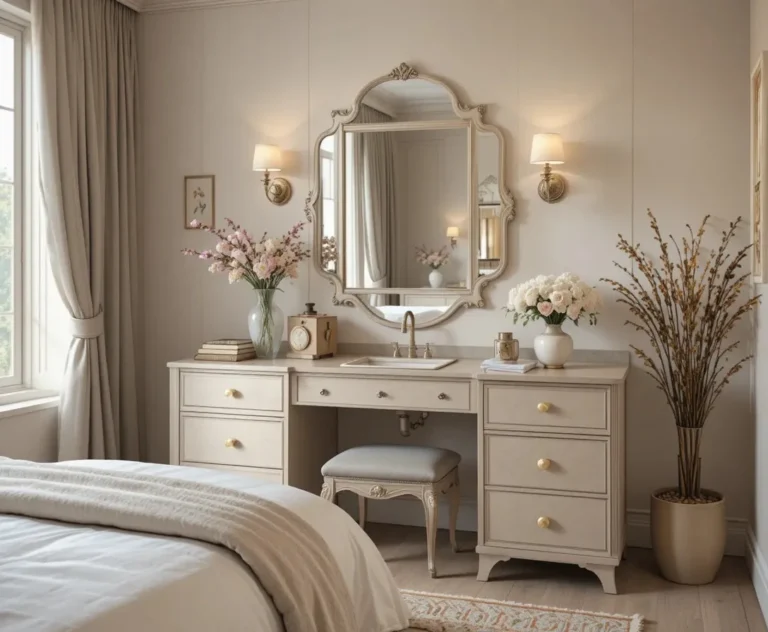
23. Style a Bedroom Vanity Corner
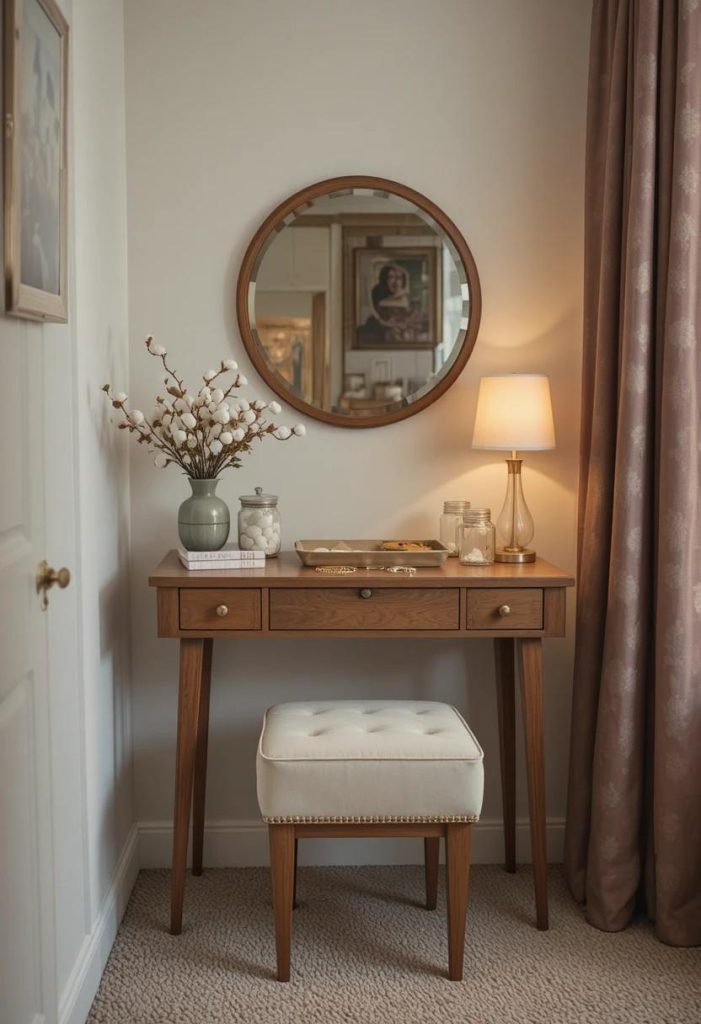
If you don’t have a separate bathroom mirror with counter space, carve out a small vanity corner in the bedroom: a small desk or thrifted vanity table, a round wall mirror or tabletop mirror, a small upholstered stool, and one warm-toned vanity lamp.
Style the vanity surface with a ceramic tray for everyday jewelry, a small glass jar for cotton rounds and Q-tips, a candle, and your most-used skincare or perfume bottles arranged like decor.
A bedroom vanity is one of the most-pinned apartment bedroom features because it adds function and significant aesthetic value without much square footage.
24. Add a Soft Floor Lamp in an Empty Corner
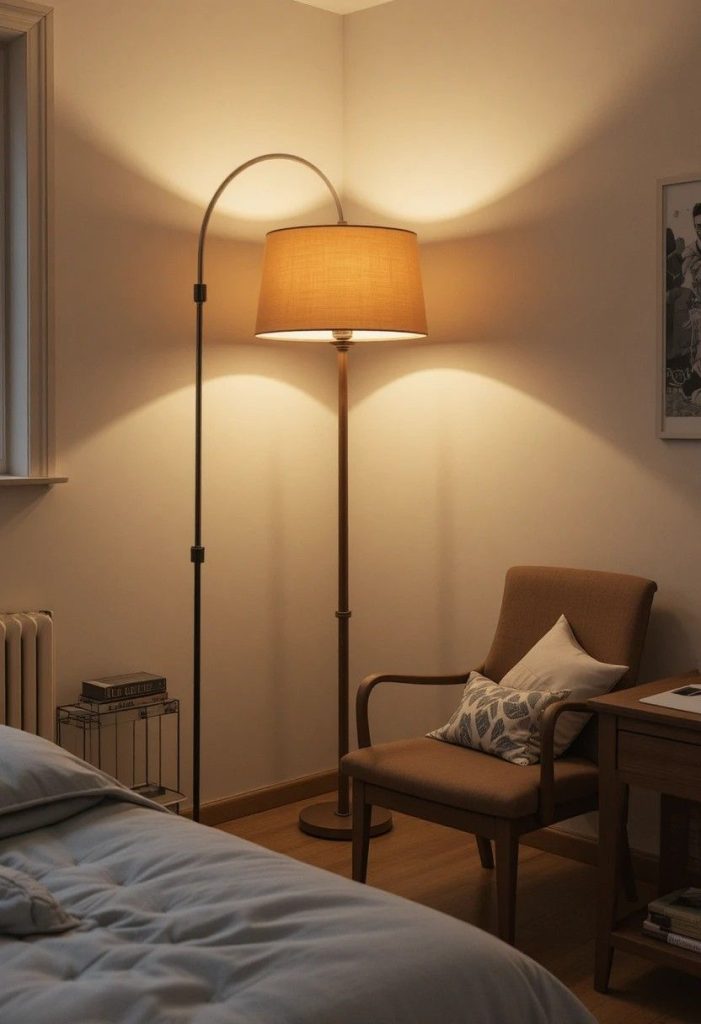
Empty corners in apartment bedrooms photograph as wasted space. A soft floor lamp — arc, tripod, or column — in an empty corner adds layered lighting and fills the space with intentional design.
Budget-friendly floor lamps: IKEA NÄVLINGE arc lamp ($35), Amazon tripod floor lamps ($60-$90), Target column floor lamps ($70-$120). Warm-bulb compatible only.
Place the floor lamp behind the reading chair, beside a dresser, or in a corner near the window. Avoid placing it directly beside the bed unless you don’t have nightstand lamps.
25. Use a Statement Rug Beneath the Bed
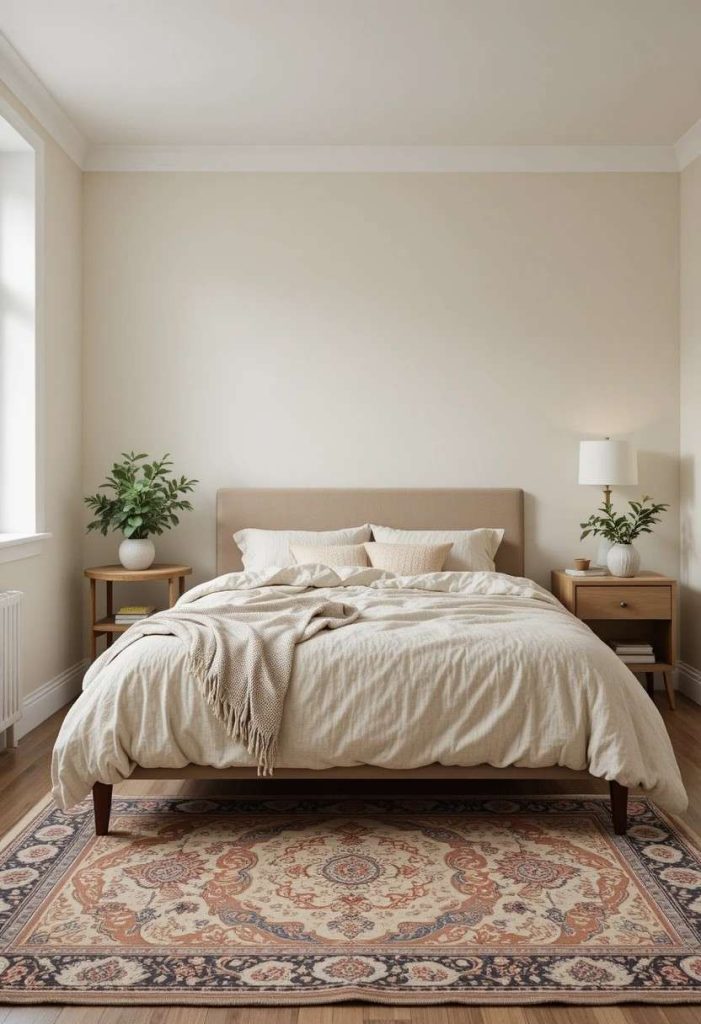
If you can’t afford a 9×12 large area rug, a single statement rug placed under just the front two-thirds of the bed delivers significant visual impact at a fraction of the cost. The rug shows on the sides and at the foot of the bed but doesn’t need to extend the full length.
Vintage-style rugs, kilim flatweaves, or Persian-inspired patterned rugs (5×8 or 6×9) work especially well as bed accent rugs. Look for budget options on Amazon, Wayfair, or Target Project 62.
The pattern should coordinate with your bedding palette — pull at least one color from the rug into your throw pillows or art to tie the room together.
The Realistic First-Apartment Bedroom Budget Guide
Here’s a realistic full breakdown for furnishing and styling a first college apartment bedroom from scratch. If you already own bedding, a desk, or some decor, subtract those amounts.
Bed frame ($150-$250), full or queen mattress ($200-$400 from Costco, Amazon, or campus mattress drop-off services), two matching nightstands ($80-$120), two matching lamps ($40-$60), an 8×10 area rug ($80-$150), curtains and rod ($40-$80), upholstered headboard or fabric panel ($60-$120), one piece of large art ($50-$100), one full-length mirror ($50-$100), plants and pots ($40-$80), bedding set including layered pillows and throw ($80-$150), and small decor and styling items ($50-$100).
Total: approximately $920-$1,710 for a complete, styled, Pinterest-worthy first apartment bedroom. Spread across move-in month and split where possible with roommates (for shared items like curtains in common spaces), this is genuinely achievable on a student budget. Thrift the dresser and headboard for an extra $200 savings.
Frequently Asked Questions
What is the difference between dorm bedroom decor and college apartment bedroom decor?
College apartment bedrooms typically allow real furniture (full or queen beds, dressers, nightstands), wall mounting in most cases (with small holes patched at move-out), and longer-term investment pieces you can actually take with you to your next place. They lean more adult and grown-up than dorms, with significantly less reliance on Command strips, tapestries, and bed risers. The styling shifts from ‘making the best of institutional housing’ to ‘building your first real bedroom.’
How do I make a college apartment bedroom feel like an adult space?
Five moves: get the mattress off the floor with a real bed frame, add two matching nightstands with two matching lamps, hang curtains high and wide above and beyond the window frame, layer a large 8×10 area rug under the bed, and stick to a cohesive three-color palette throughout the room. These five upgrades alone will transform any apartment bedroom from college-house chaos to adult bedroom.
What furniture do I actually need for a college apartment bedroom?
Essentials: a bed frame, a mattress, two nightstands, two lamps, a dresser or open shelving for clothing storage, a desk (if your bedroom doubles as a study), a rug, curtains and rod, and one statement art piece. Bonus additions: a reading chair, a storage bench at the foot of the bed, a full-length mirror, and a small bedroom vanity. Anything beyond that is extra.
How much should I budget for my first college apartment bedroom?
A realistic complete-setup budget is $500-$900 if you shop thrift stores and Facebook Marketplace for the dresser, headboard, and side chair; Amazon and IKEA for the bed frame, mattress, nightstands, lamps, and rug; Target and HomeGoods for bedding and decor accents; and Dollar Tree for small decor and frames. Spreading the spending across move-in month and the first month of school makes this budget significantly more manageable.
Can I have a Pinterest-worthy apartment bedroom while renting?
Yes — absolutely. Every Pinterest-worthy apartment bedroom you see on the platform is almost always rented. The styling tricks (layered bedding, warm lighting, cohesive palette, statement headboard, large rug, plants) are all renter-friendly. Even the wall art, peel-and-stick wallpaper, and plug-in sconces are designed specifically for renters. Don’t let the rental status stop you from styling the room you want.
What is the single highest-impact upgrade for a first college apartment bedroom?
A real bed frame. Nothing — not even gorgeous bedding or expensive curtains — transforms a college apartment bedroom faster than getting the mattress off the floor. A $150 platform bed frame from Amazon does more for the room than $300 of decor accessories. If you only do one thing on this list, do this one.
Final Thoughts
Your first off-campus apartment bedroom is your chance to design a space that feels genuinely yours — not just temporary, not just dorm-grade housing, but an actual adult bedroom that reflects who you are and how you want to live. The investment in furniture, lighting, and styling pays off every single morning you wake up in a space that feels intentional.
Invest in a real bed frame and matching nightstands first, then anchor the room with a large area rug, hang curtains high and wide, layer in warm lighting from multiple sources, and stick to a cohesive three-color palette throughout. The rest — the plants, the art, the styling details, the carefully arranged throw pillows — falls into place once the bones are right.
Even a small college apartment bedroom can look like a designer interior with the right layering and intention. Start with the bones, build the personality on top, and give yourself permission to evolve the space slowly over the year. By the end of the first semester, you’ll have a bedroom that genuinely feels like your first real home.