20 Minimalist Front Yard Landscaping Ideas That Will Make Your Neighbours Stop and Stare
Save this pin — your future low-maintenance, magazine-worthy front yard starts here.
Here’s a confession: most front yards try way too hard. Too many shrubs, too many garden gnomes, too many random flower beds shoved into corners. The result? A yard that looks busy but somehow still feels boring.
Minimalist landscaping is the opposite. It’s about doing less, but doing it really well. Clean lines, intentional plant choices, a calm color palette, and the kind of curb appeal that makes someone walking by actually slow down. The best part? It’s almost always lower maintenance than the cluttered version you’re probably working with now.
If you’re ready to ditch the yard chaos, here are 20 minimalist front yard ideas to inspire your next weekend project.
What Makes a Front Yard Truly Minimalist?
Before we dive in, let’s set the vibe. Minimalist landscaping isn’t just rocks and one sad shrub. It follows a few key principles:
- A limited plant palette — usually 3 to 5 plant varieties max, repeated throughout.
- Clean geometric lines — straight edges, defined borders, no wavy 1990s flower beds.
- Negative space is intentional — empty lawn, gravel, or mulch is part of the design.
- A tight color story — usually greens, whites, and one accent color.
- Quality over quantity — fewer pieces but each one chosen with care.
Got it? Good. Let’s get into the ideas.
1. Embrace the Power of a Single Specimen Tree
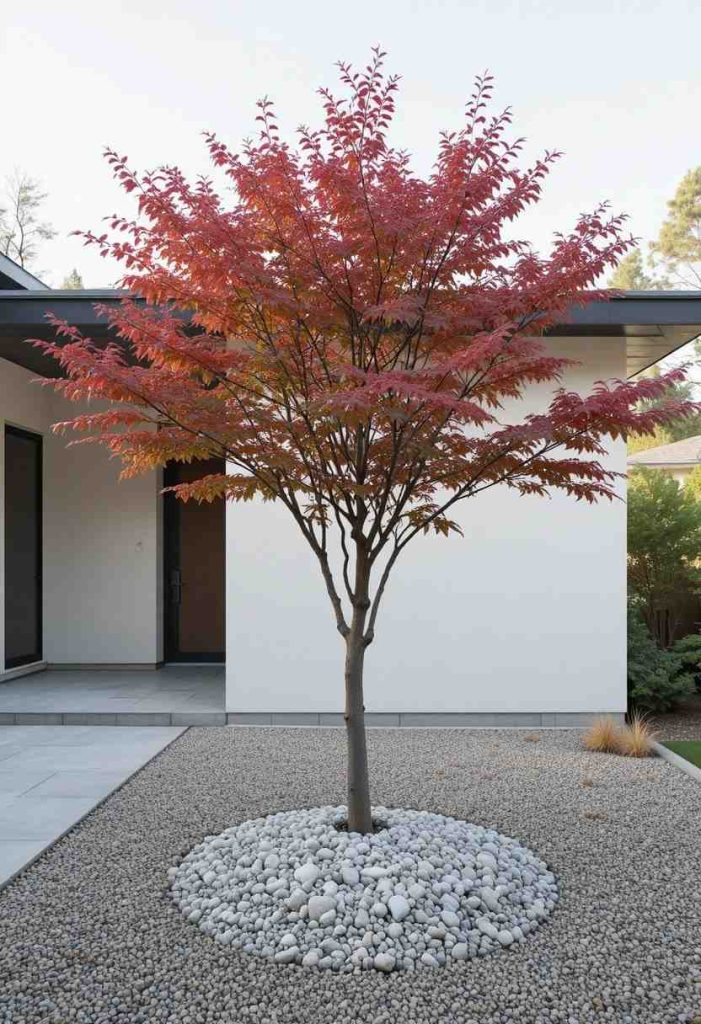
Skip the cluttered mix of shrubs and let one beautiful tree do the talking. A Japanese maple, olive tree, or single ornamental crabapple becomes the focal point of the entire yard. Underplant with a simple groundcover or river rock and call it done. It’s the easiest way to instantly make a yard feel curated.
2. Replace the Lawn With Gravel or Decomposed Granite
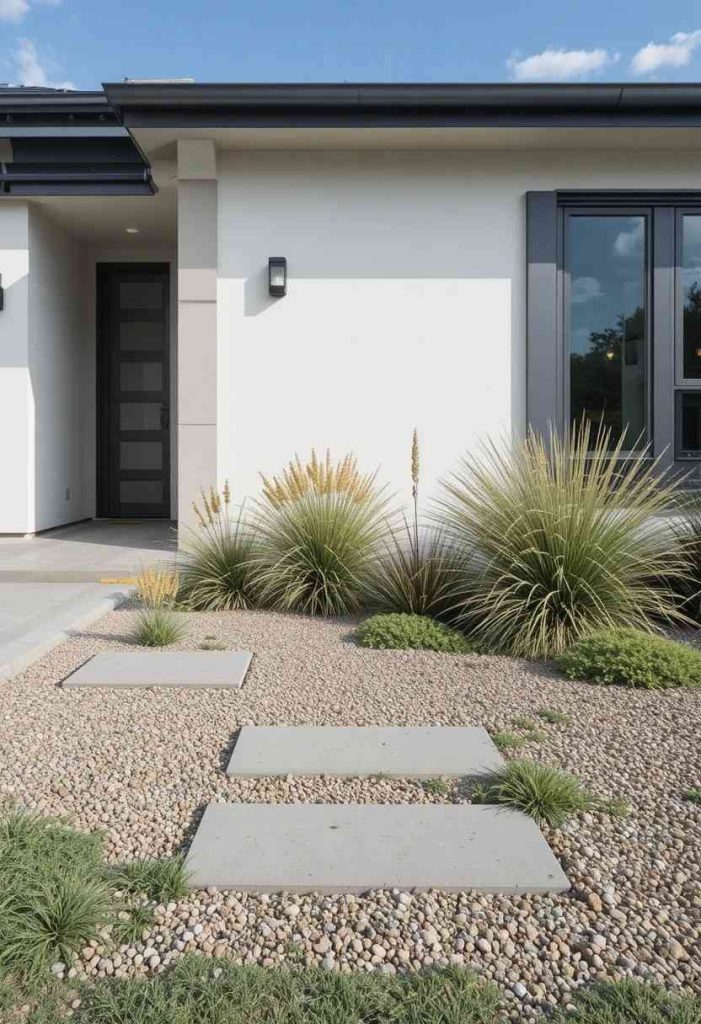
If you live somewhere dry (or just hate mowing), swap part or all of your lawn for pea gravel, crushed granite, or smooth river rock. It looks intentional, drains beautifully, and you’ll never touch a lawn mower again. Pair with concrete stepping stones and a few sculptural plants.
3. Use Concrete Pavers in a Clean Grid Pattern
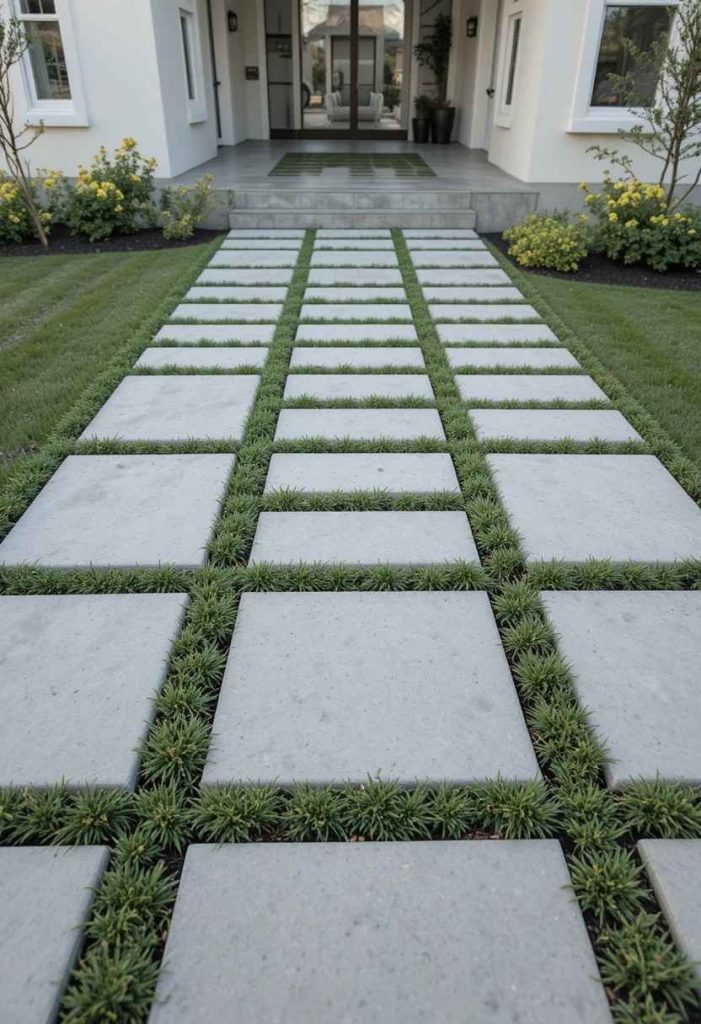
Large-format concrete pavers laid in a clean grid pattern across the front walkway are pure modern minimalist energy. Leave gaps for grass, gravel, or low-growing groundcover like creeping thyme to soften the look without losing the architectural feel.
4. Plant Ornamental Grasses in Repeating Drifts
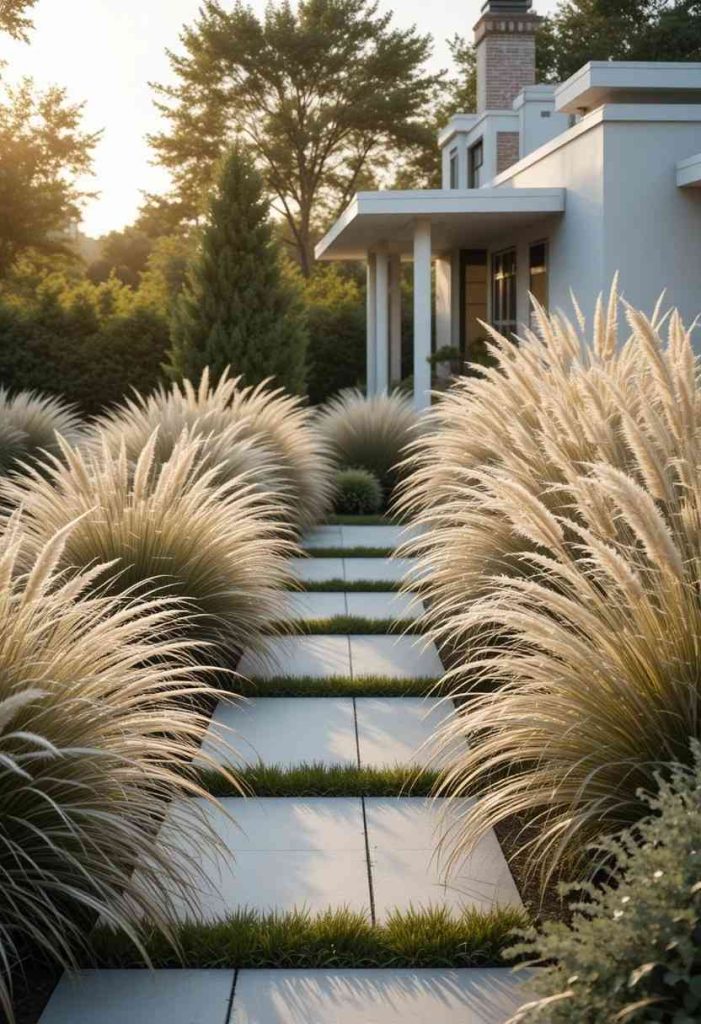
Ornamental grasses (think feather reed, blue fescue, or muhly grass) are the backbone of minimalist landscaping. Plant them in repeating clusters of the same variety rather than one of everything. The repetition creates calm; the movement in the breeze adds life.
5. Define Beds With Steel or Aluminum Edging
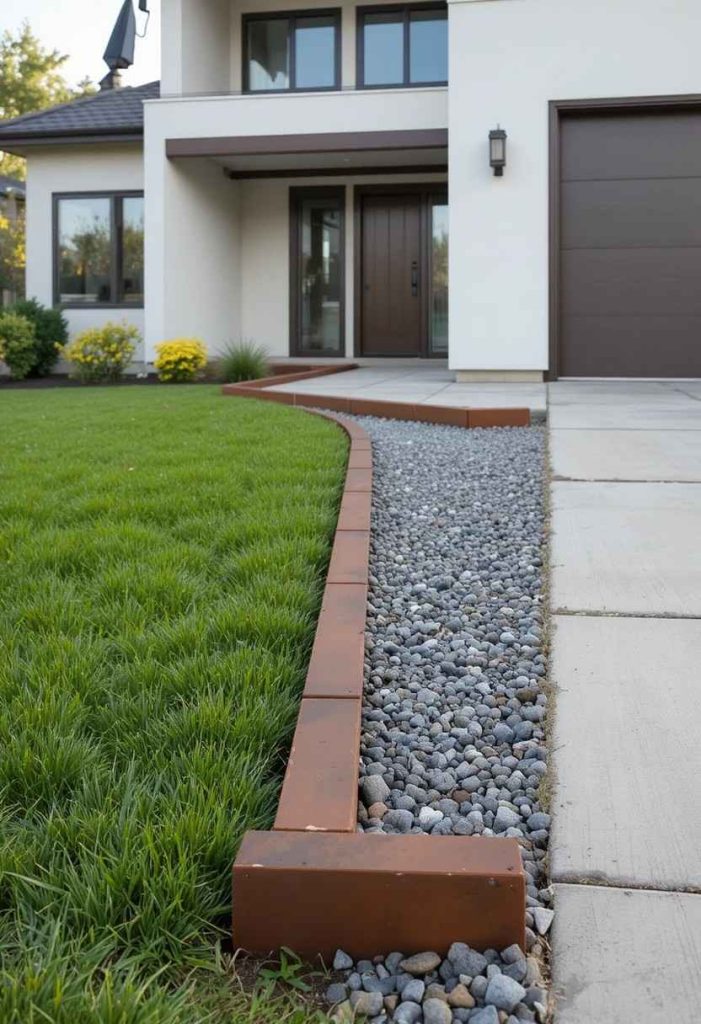
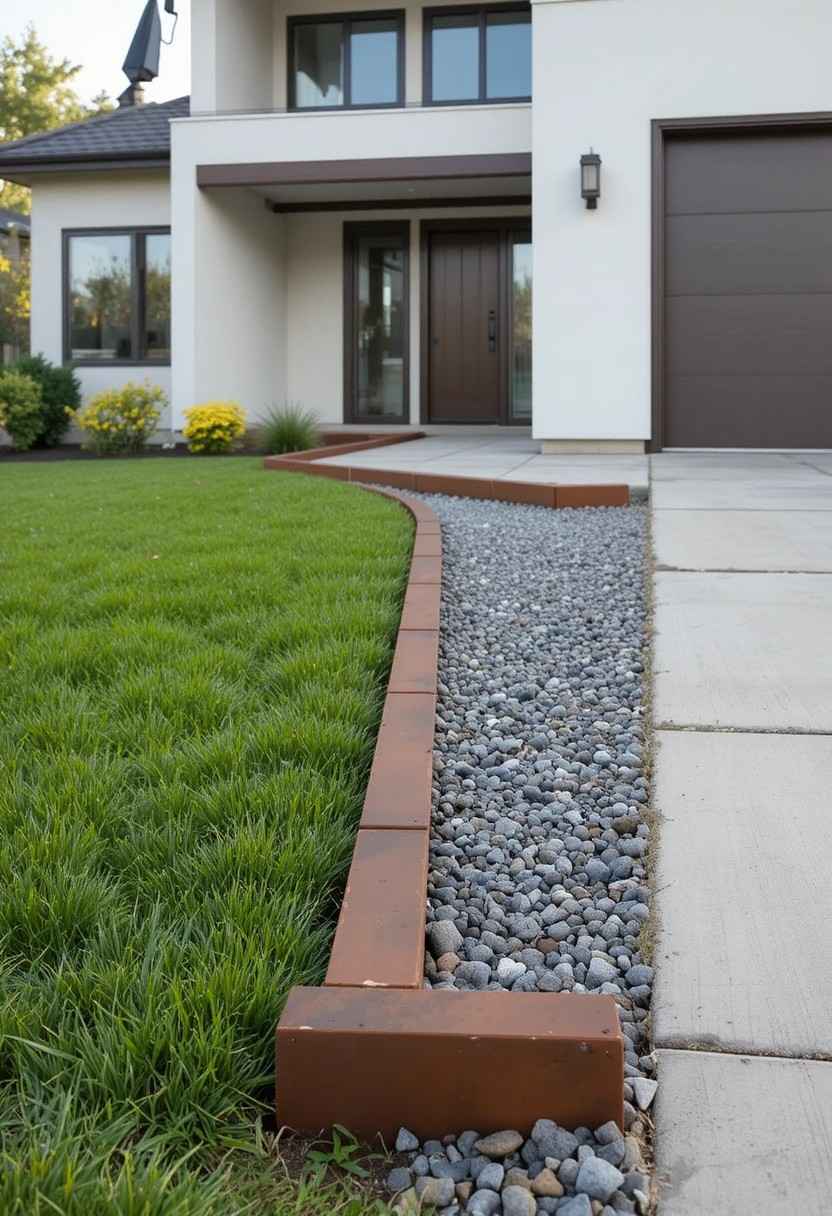
Forget plastic edging or those scalloped bricks from the early 2000s. Use slim Corten steel or black aluminum edging to create crisp, geometric borders between your lawn, beds, and walkway. It’s the smallest detail that gives the biggest ‘designed’ feel.
6. Go All-In on a Boxwood Hedge
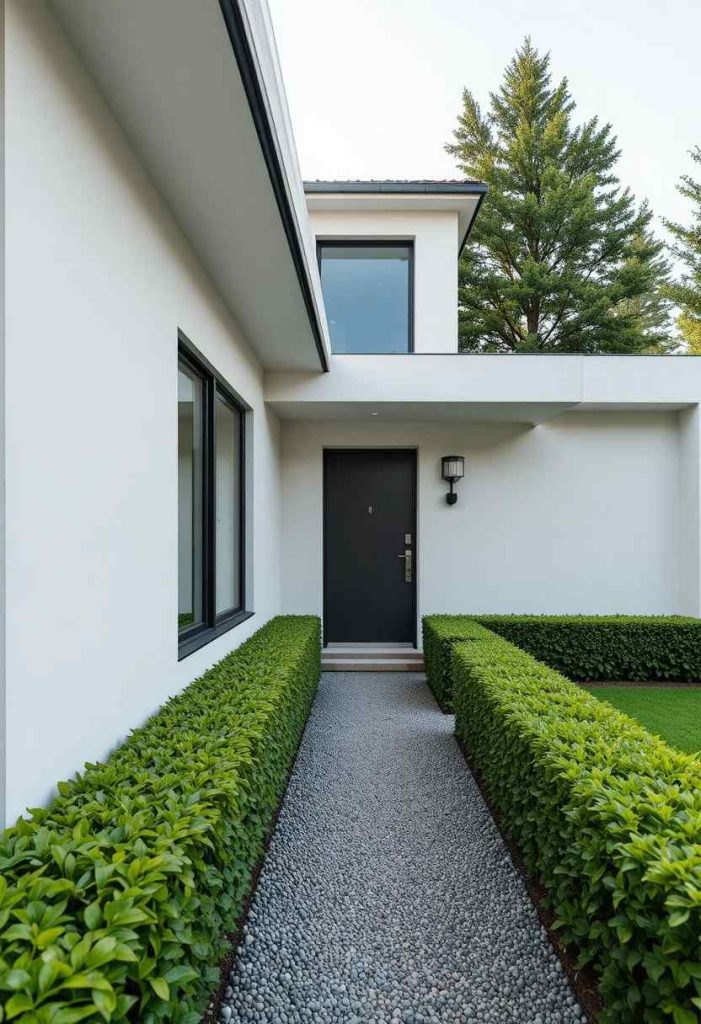
A single low boxwood hedge running along the front of your house or walkway is the most timeless minimalist move there is. Choose one variety, trim it cleanly, and let that horizontal line do the work. Pair with one matching shrub on either side of the door for symmetry.
7. Add a Single Sculptural Planter by the Door
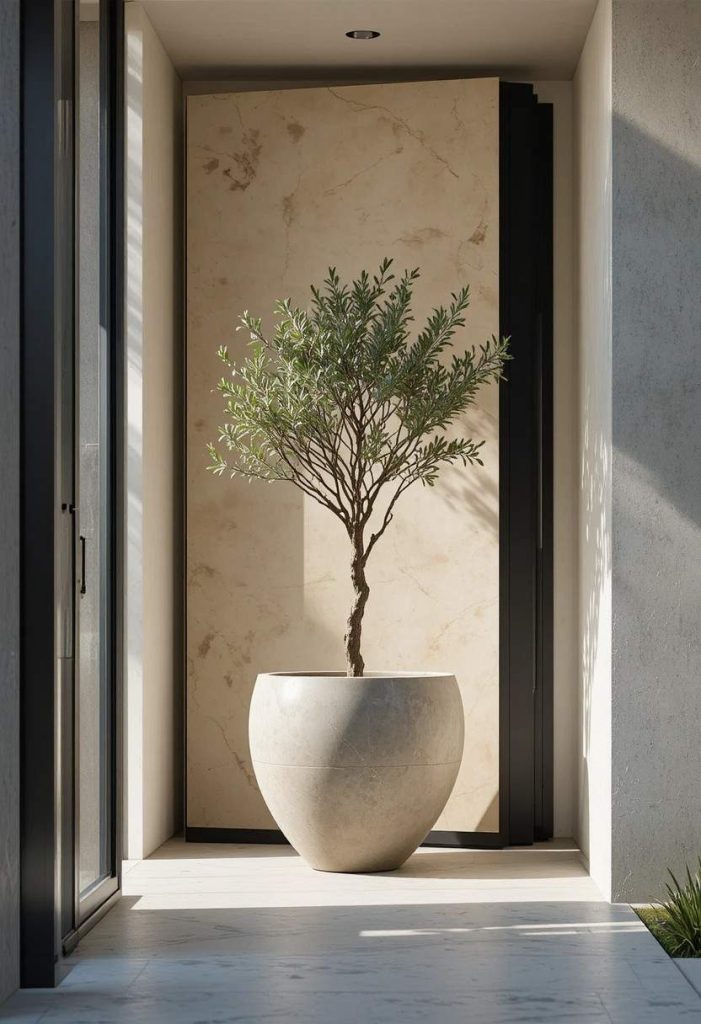
Skip the cluttered porch flower display. One oversized sculptural planter (concrete, fiber stone, or matte black metal) with a single architectural plant — a snake plant, olive tree, or agave — is all the front-door decoration you need.
8. Create a Dry Stream Bed With River Rock
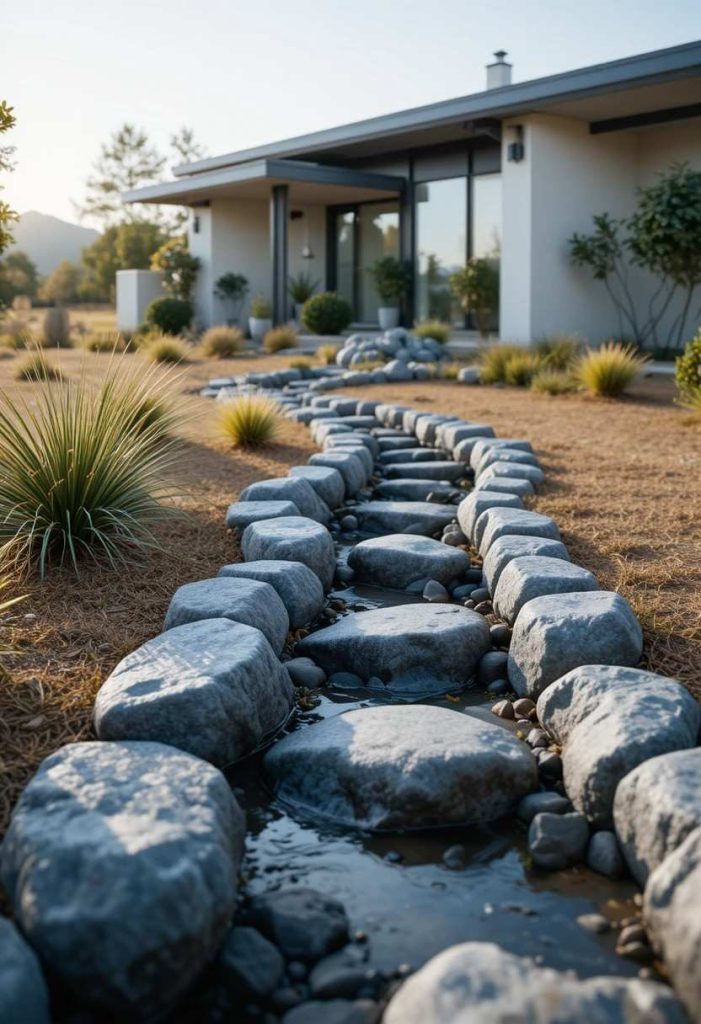
Run a curved bed of river rocks through your front yard like a dry stream. It looks intentional, helps with drainage, requires zero maintenance, and adds a Japanese-garden quality that pairs beautifully with minimalist architecture.
9. Stick to a Green-and-White Plant Palette
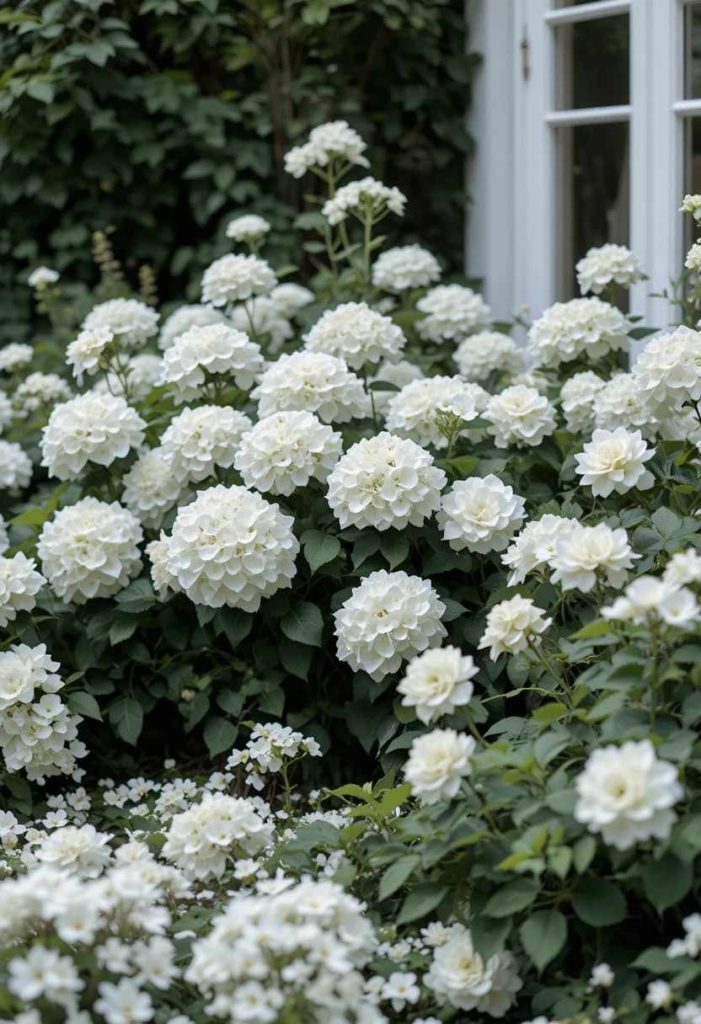
A simple way to make any front yard feel high-end: limit your flowering plants to white only. White hydrangeas, white roses, white iceberg roses, or white salvia against a sea of green foliage looks expensive even if you spent twenty dollars at the garden center.
10. Use Architectural Plants Like Agave or Yucca
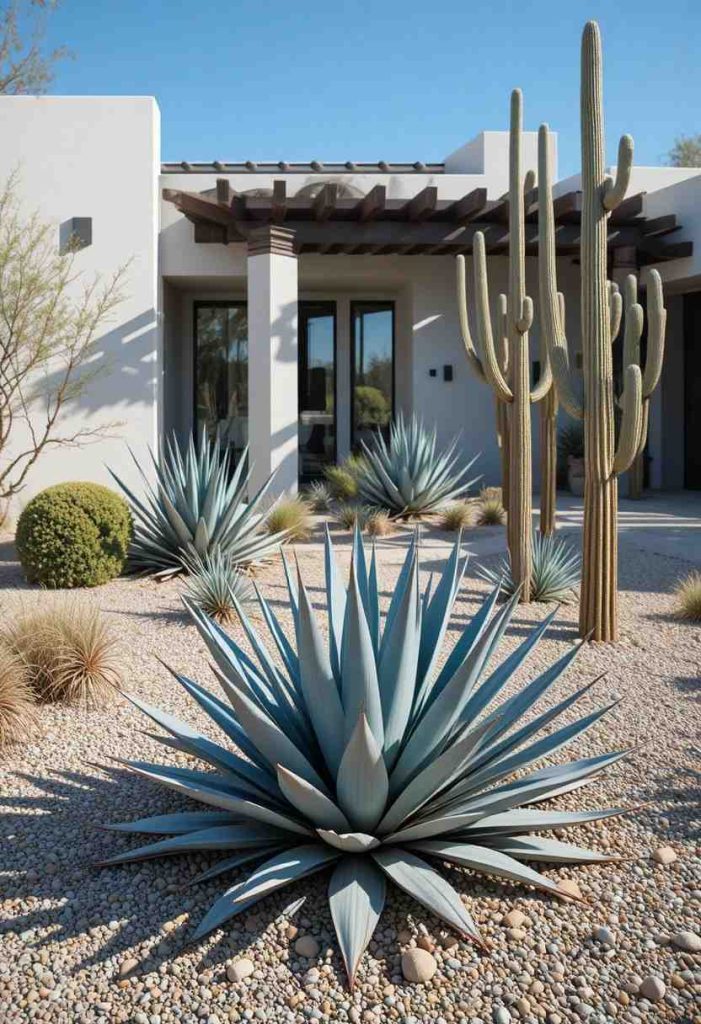
If you live in a warm or dry climate, lean into architectural succulents and desert plants. One large agave, a cluster of yucca, or sculptural cactus reads as intentional and modern in a way that traditional shrubs simply do not.
11. Install a Modern Black Mailbox or House Numbers
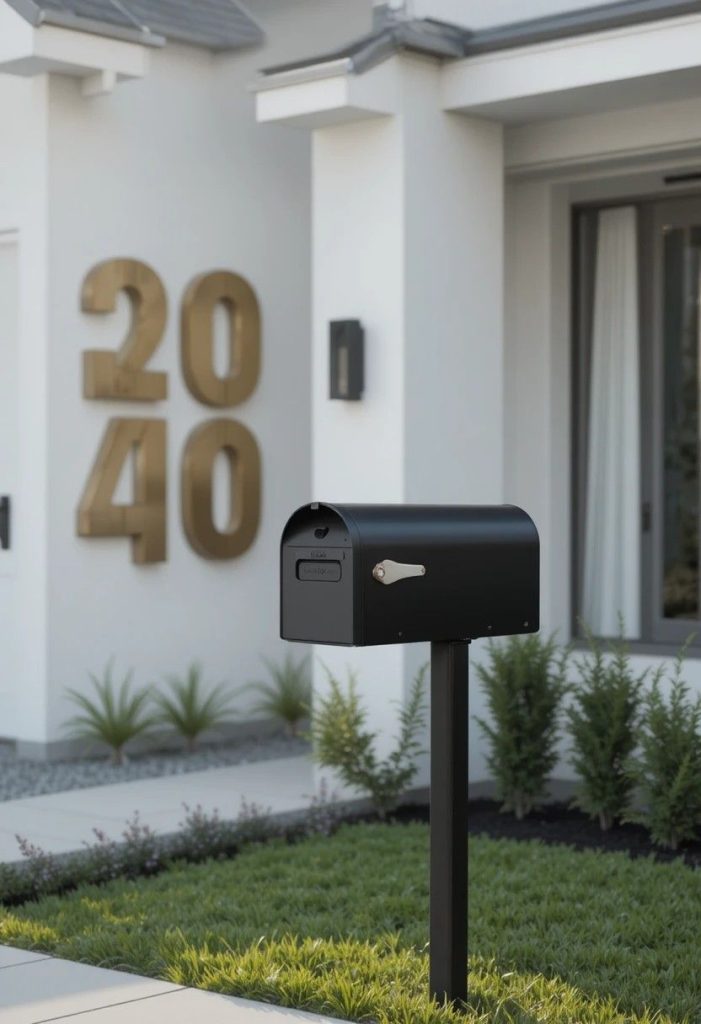
Sometimes minimalist landscaping is about what you remove and replace. Swap that beige plastic mailbox for a slim modern black one. Upgrade your house numbers to large brushed brass or matte black numerals. Tiny changes, huge curb appeal upgrade.
12. Add Low Bollard Path Lighting
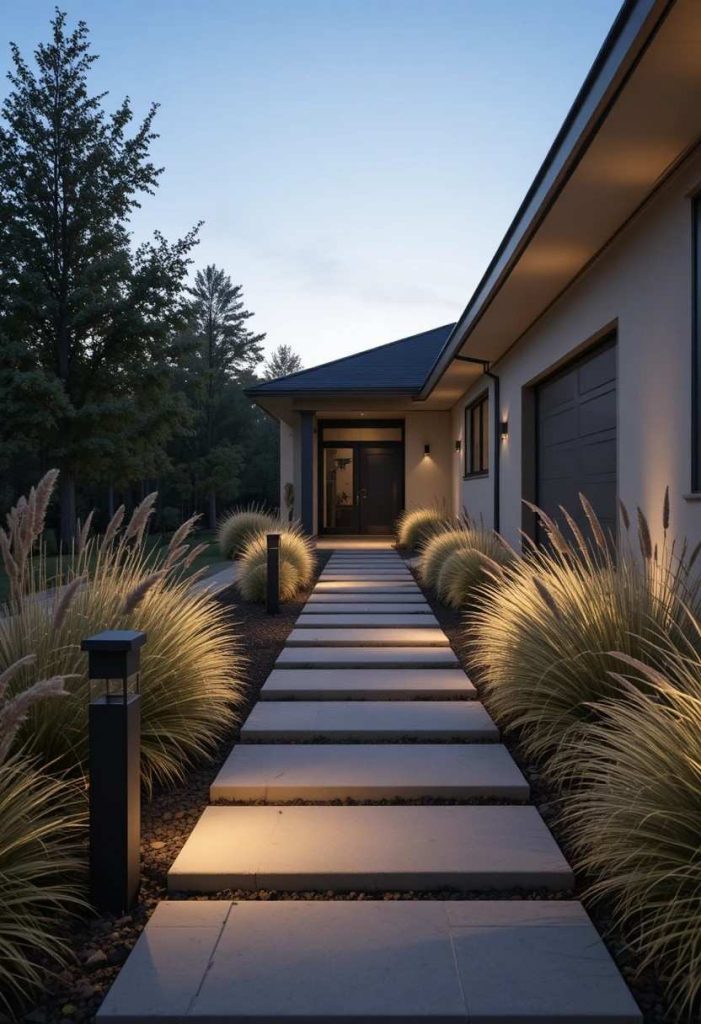
Skip the cheap solar lanterns. Low matte-black bollard lights or in-ground uplights along your walkway add subtle drama at night and look like architectural sculpture during the day. Less is more — space them generously, not every two feet.
13. Try a Monochrome Mulch Look
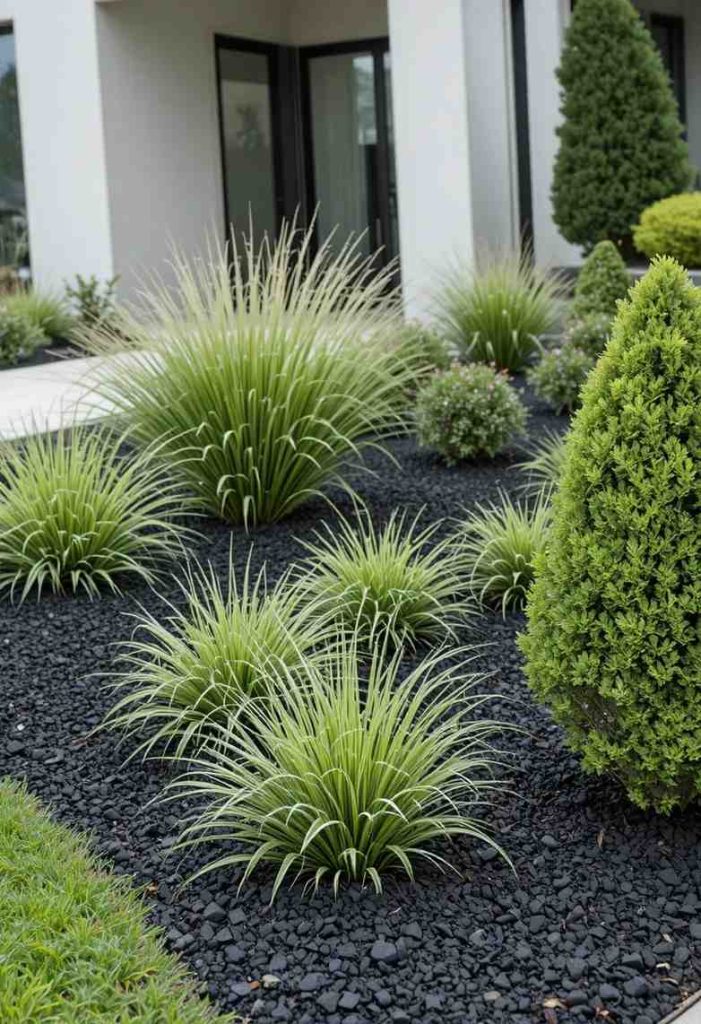
Skip the orange-dyed mulch (please). Use a uniform black or natural dark brown bark mulch — or even crushed black lava rock — for a cohesive, modern look. The dark base makes green foliage pop and gives the whole yard a finished feel.
14. Use a Single Bold Accent Color
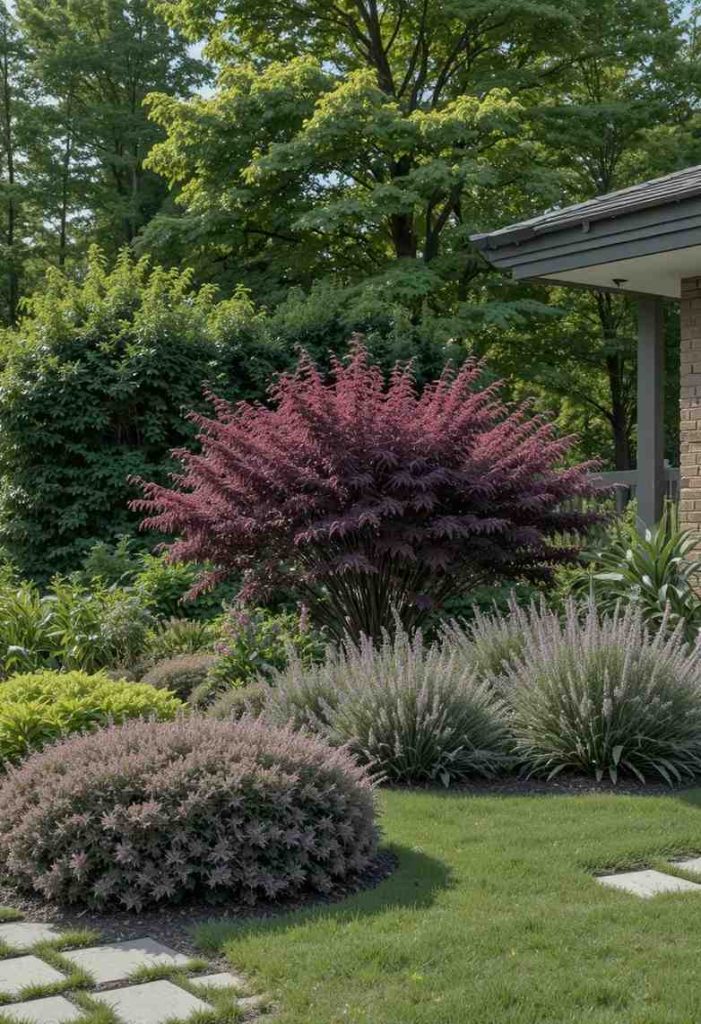
If you want a pop of color, pick ONE and use it everywhere. Maybe it’s a deep plum smoke bush, a row of black mondo grass, or a single chartreuse Japanese forest grass. One accent color repeated throughout reads as designed; ten different colors read as chaotic.
15. Embrace Negative Space (Empty Lawn Is OK)
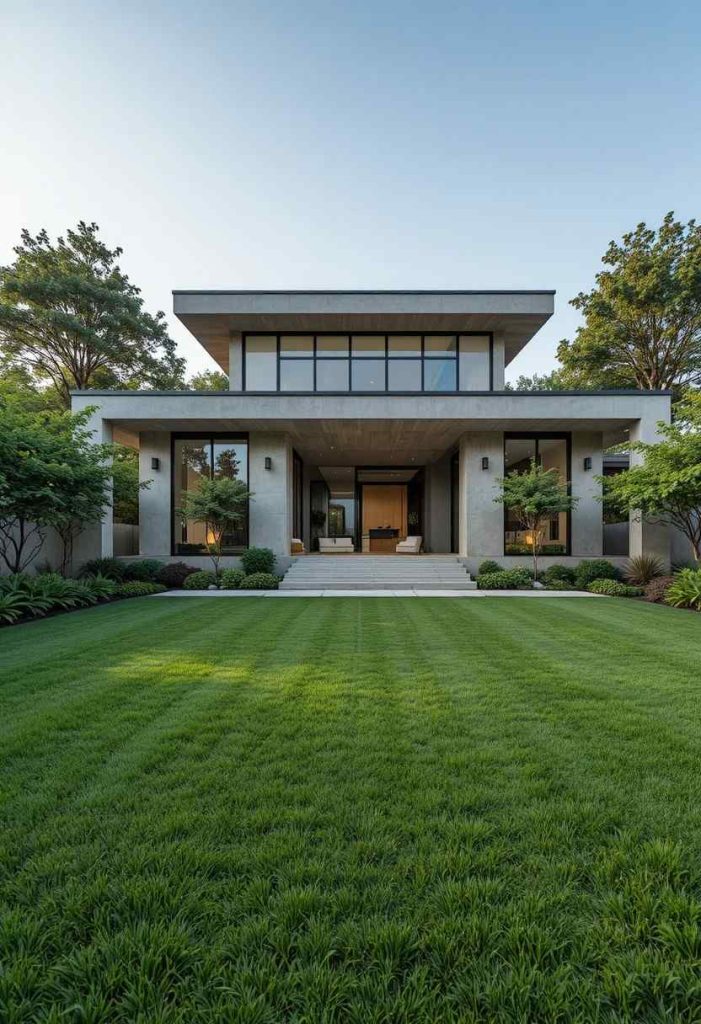
You don’t have to fill every square foot. A clean, open expanse of lawn or gravel with plantings only along the edges is sometimes the most striking move. Think of negative space the way an architect does — as part of the design, not a problem to solve.
16. Add a Concrete or Stone Bench
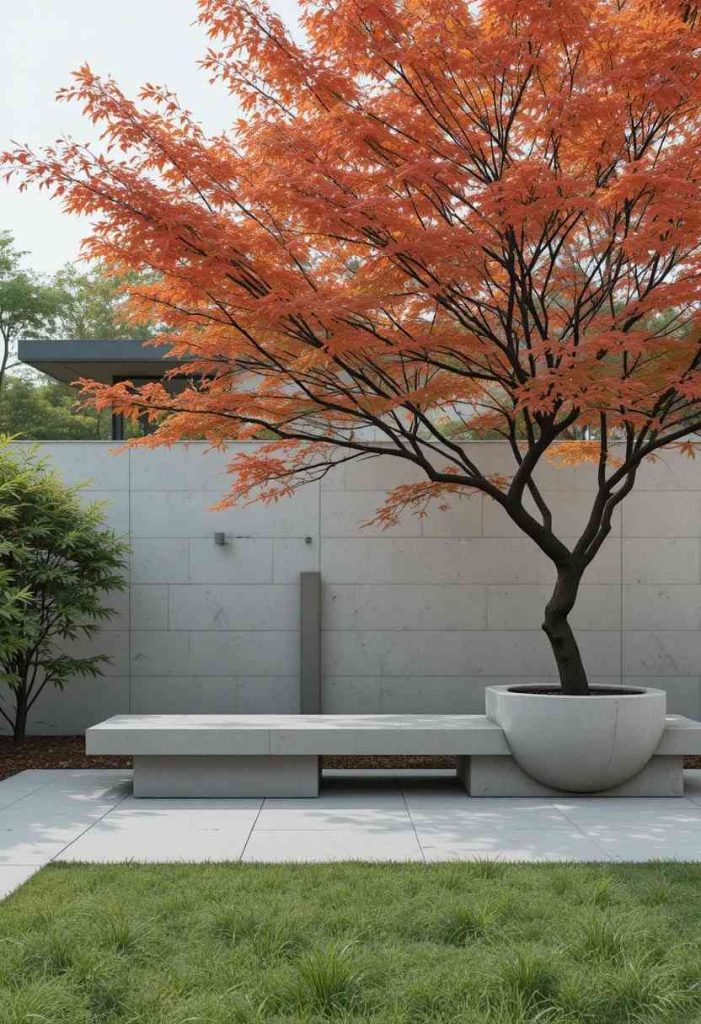
A single low concrete or stone bench near the entryway or under a tree adds function and sculptural beauty. It doesn’t even have to be used much — just sitting there, it does design work. Pair with one large planter and call it done.
17. Frame the Entry With Matching Planters
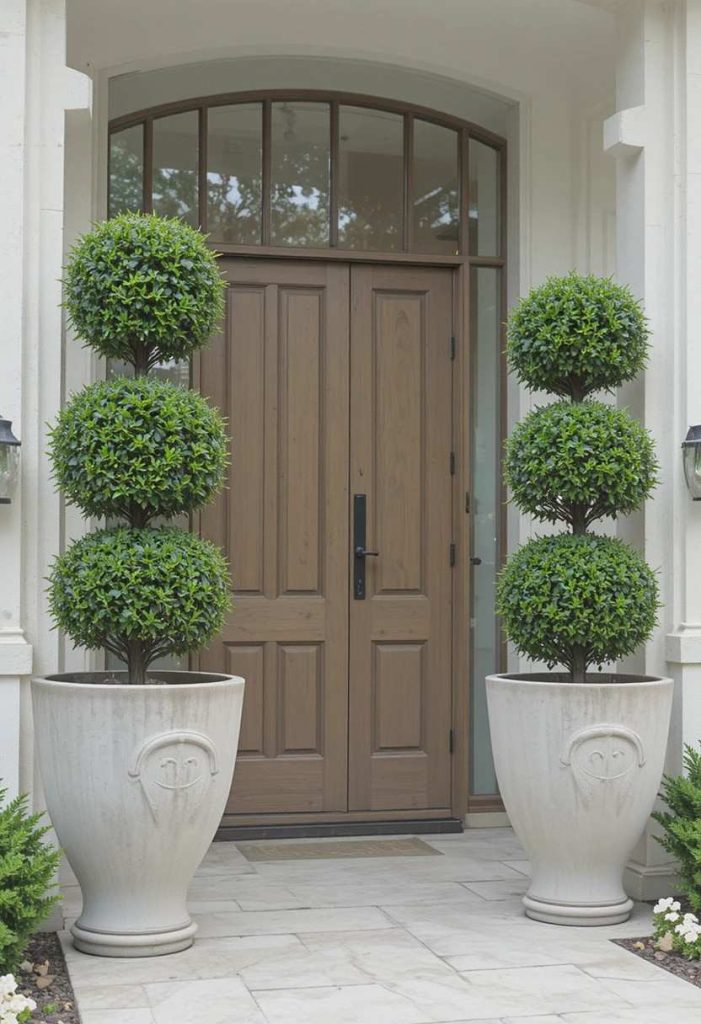
Two identical large planters on either side of the front door is the easiest, most foolproof minimalist landscaping move. Choose one architectural plant (boxwood balls, topiary, or cypress) and plant it in both. Symmetry instantly reads as designed.
18. Use Stepping Stones in Lawn or Gravel
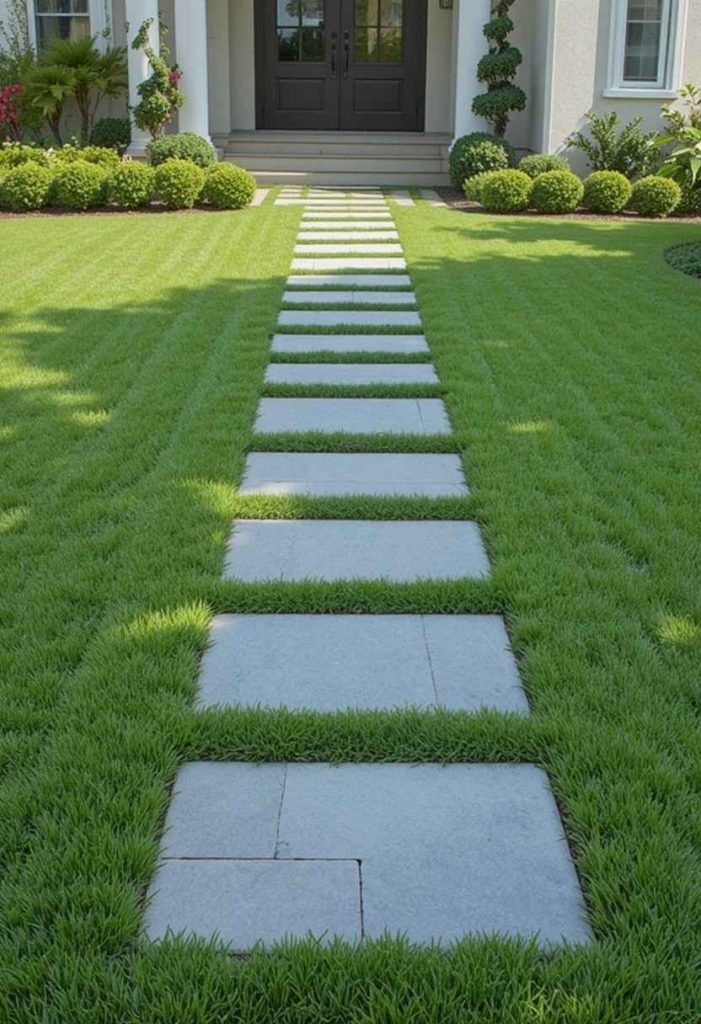
Large rectangular concrete or bluestone stepping stones set into a clean lawn or gravel base create a path that feels modern and intentional. Space them so you can actually walk on them comfortably — usually about 24 inches apart from center to center.
19. Plant Trees in a Single Straight Line
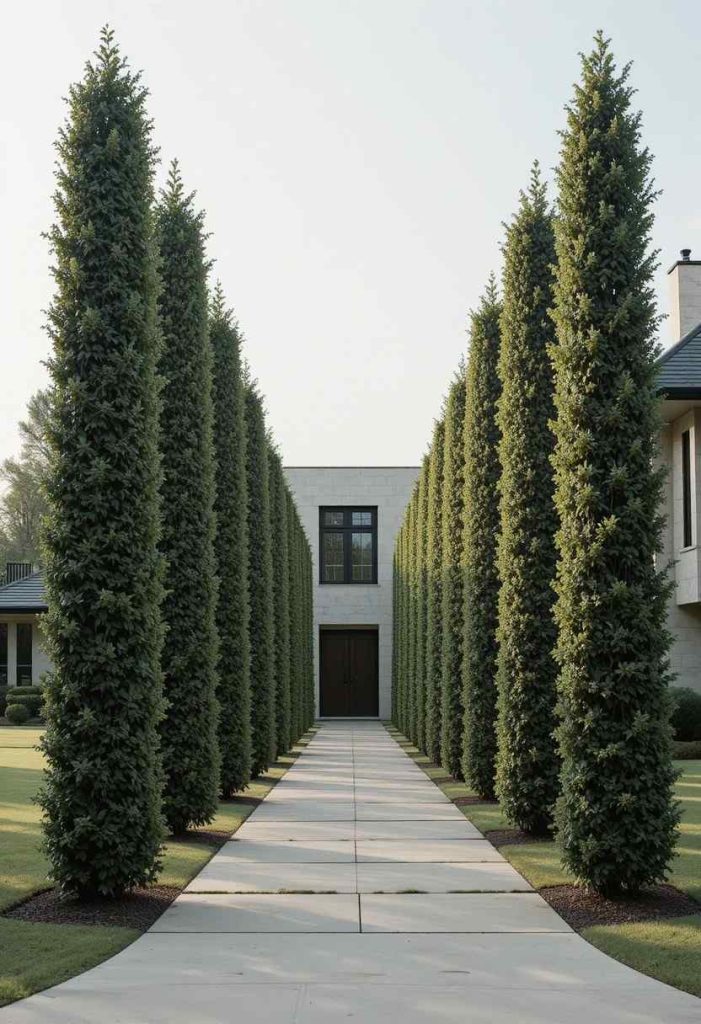
Rather than scattering trees randomly, plant a single line of matching trees parallel to your driveway, walkway, or front property line. Crepe myrtles, columnar hornbeams, or olive trees all work beautifully. The repetition turns ordinary trees into an architectural feature.
20. Let Lighting Be the Final Layer
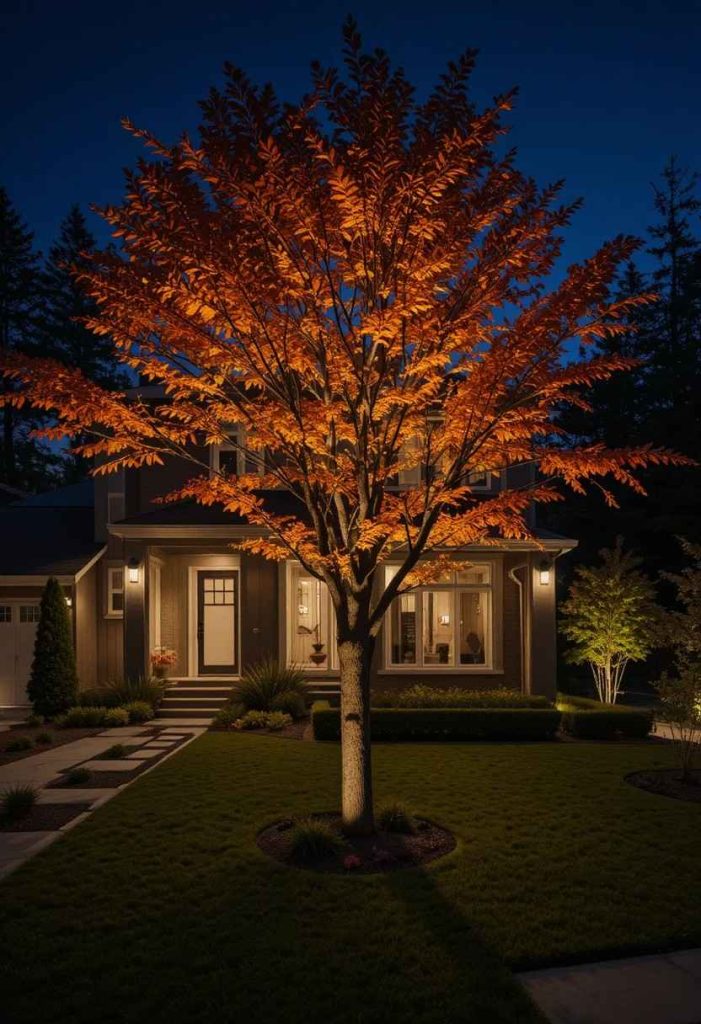
Once everything else is done, add subtle landscape lighting as the finishing touch. A single uplight on your specimen tree, a soft wash on the house, and low path lights along the walkway. At night, your minimalist yard becomes a quiet masterpiece. Skip the colored bulbs — warm white only, always.
How to Plan Your Minimalist Front Yard Makeover
Don’t go ripping out your entire yard this weekend. Here’s a saner approach:
- Step 1: Subtract first. Remove anything overgrown, half-dead, or that doesn’t match your future vision. You’ll be surprised how much closer you already are.
- Step 2: Pick your palette. Choose 3 to 5 plant varieties max, and decide on one accent color (or stick to green-and-white).
- Step 3: Define your lines. Straight edges, clean borders, and clear pathways. Geometry first, plants second.
- Step 4: Anchor with one statement piece. A specimen tree, one large planter, or a sculptural bench.
- Step 5: Add lighting last. It’s the easiest way to make a finished yard feel high-end.
Common Minimalist Landscaping Mistakes to Avoid
A few things that quietly ruin the minimalist look even when everything else is right:
- Using too many plant varieties (more than 5 starts to feel busy).
- Wavy or curved bed edges instead of clean geometric ones.
- Mixed mulch colors in different parts of the yard.
- Tiny plantings that get lost in the space — go bigger.
- Cluttered porch decor that fights with the clean landscape.
- Solar stake lights spaced two feet apart along every path (you don’t need that many).
Quick FAQs
Is minimalist landscaping low maintenance?
Usually, yes — but not always. The fewer plant varieties and the more gravel, mulch, or hardscape you use, the lower the maintenance. A yard heavy on lawn or topiary still requires regular work. If low maintenance is your top priority, lean into gravel, drought-tolerant plants, and ornamental grasses.
What plants work best for a minimalist front yard?
Boxwood, ornamental grasses (feather reed, blue fescue, muhly), Japanese maple, olive tree, lavender, agave, yucca, hydrangea (white varieties), creeping thyme, and mondo grass are all minimalist-friendly choices. Pick 3 to 5 and repeat them throughout the space.
Can minimalist landscaping work for small front yards?
It’s actually ideal for small front yards. Limited space + limited plant palette = a designed look that feels bigger than it is. Skip the temptation to cram in variety and instead focus on 2 to 3 great elements.
How much does a minimalist landscape makeover cost?
It depends entirely on scale and materials. A simple makeover (new mulch, edging, a few plants, a planter) can be done for a few hundred dollars. A full hardscape overhaul with pavers, lighting, and mature plants can easily run into the tens of thousands. The good news: minimalist designs usually need fewer plants than traditional ones, which can save money long-term.
What’s the best mulch for a modern minimalist yard?
Dark brown or black natural bark mulch is the most popular minimalist choice. Avoid orange-dyed mulch. For an even more modern look, use crushed black lava rock or dark gravel instead of organic mulch — it lasts longer and never fades.
The Final Word on Minimalist Front Yard Design
Here’s what nobody tells you about minimalist landscaping: the hardest part isn’t choosing the right plants or finding the perfect planter. It’s resisting the urge to add more. Every time you walk past the garden center and want to grab one more thing, remember that the secret to that magazine-worthy yard is restraint.
Pick a clear vision. Stick to your palette. Repeat your plants. Leave space empty on purpose. That’s pretty much the whole formula.
Save this pin, screenshot the ideas you love, and start with just one this weekend. Your future front yard — the one that makes neighbors slow down when they walk by — is closer than you think.
If this helped you, save it to your landscaping or curb appeal board so you can come back when you’re ready to plan. Happy designing.