20 Small Fish Tank Ideas That Look Like Tiny Underwater Worlds
From Iwagumi nano tanks to vintage TV conversions — your complete guide with 20 aesthetic setups
Why Small Fish Tanks Are Pinterest’s Most Searched Aquarium Trend
Small fish tank ideas have quietly exploded across Pinterest, TikTok, and home decor feeds — and for good reason. Tiny aquariums fit in apartments, dorm rooms, and tight desk corners where a full-size tank can’t go, but they deliver the same calm, meditative magic of watching life unfold underwater. The best part is that a beautifully designed nano tank often looks more like living art than the 55-gallon monsters of the 2000s ever did.
The current small tank trend is being driven by aquascaping culture — Iwagumi, Walstad, blackwater biotopes, wabi-kusa, and Dutch-style planted tanks have all gone mainstream. Add to that the viral popularity of vintage TV conversions, mason jar shrimp tanks, and wall-mounted picture frame aquariums, and you get an aquarium aesthetic moment unlike any before.
The 5 Rules of a Great Small Fish Tank Setup
Before you fill your first nano tank, these are the foundational principles every successful small aquarium follows:
- Match livestock to tank size — bettas in 1-5 gallons, neon tetras in 10+, no goldfish under 20.
- Plant heavily — live plants stabilize water chemistry and look ten times better than fake decorations.
- Less hardscape, more impact — one beautiful piece of driftwood beats five mediocre ones.
- Hide the equipment — heaters, filters, and wires should never be the first thing you see.
- Light it well — quality LED lighting transforms even the simplest tank into a showpiece.
Now, the 20 ideas — from minimalist Iwagumi setups to whimsical fairy castles and viral vintage TV conversions.
1. Iwagumi Nano Tank with Stone Hardscape
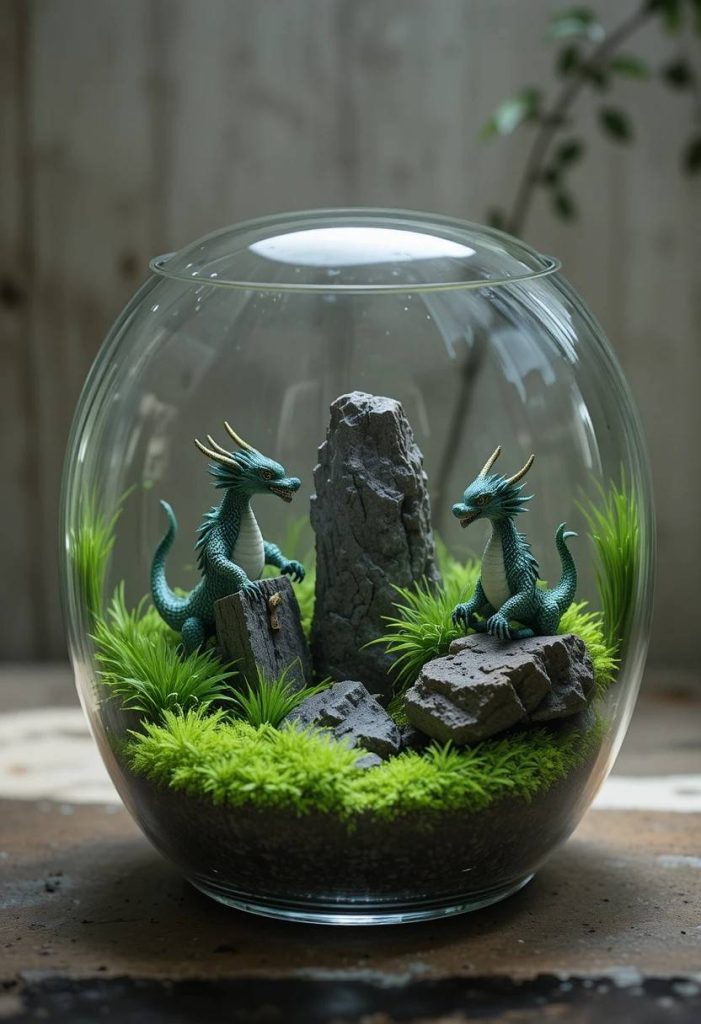
The Iwagumi style is the gold standard of small aquascaping — a Japanese-inspired layout featuring an odd number of stones (usually 3, 5, or 7) arranged in a deliberate composition, surrounded by a carpet of low-growing plants like dwarf hairgrass or Monte Carlo. The result is calm, minimalist, and looks like a tiny mountain landscape underwater.
Best for: Minimalists who want a museum-quality nano tank with serious zen energy.
Pro tip: Use one dominant ‘father stone’ that’s clearly larger than the others — Iwagumi compositions fall apart when stones are similar sizes.
2. Mini Jungle-Style Planted Tank
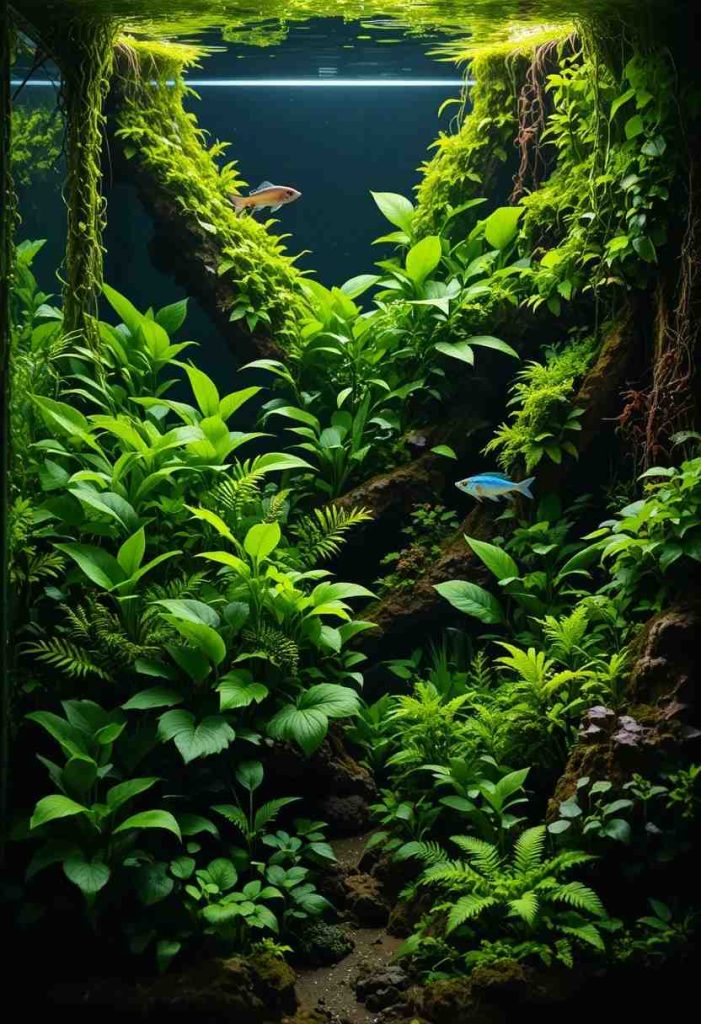
The opposite energy of Iwagumi — pack the entire tank with lush, overgrown plants until barely any open water shows. Use Amazon swords, java fern, anubias, rotala, and trailing moss to create a wild, untamed micro-jungle. Small tetras or rasboras peeking through the foliage complete the effect.
Best for: Plant lovers who want maximum greenery in minimum space.
Pro tip: Layer plants by height in three zones — tallest in the back, mid-height in the middle, carpeting plants up front — for instant visual depth.
3. Vintage TV Aquarium Conversion
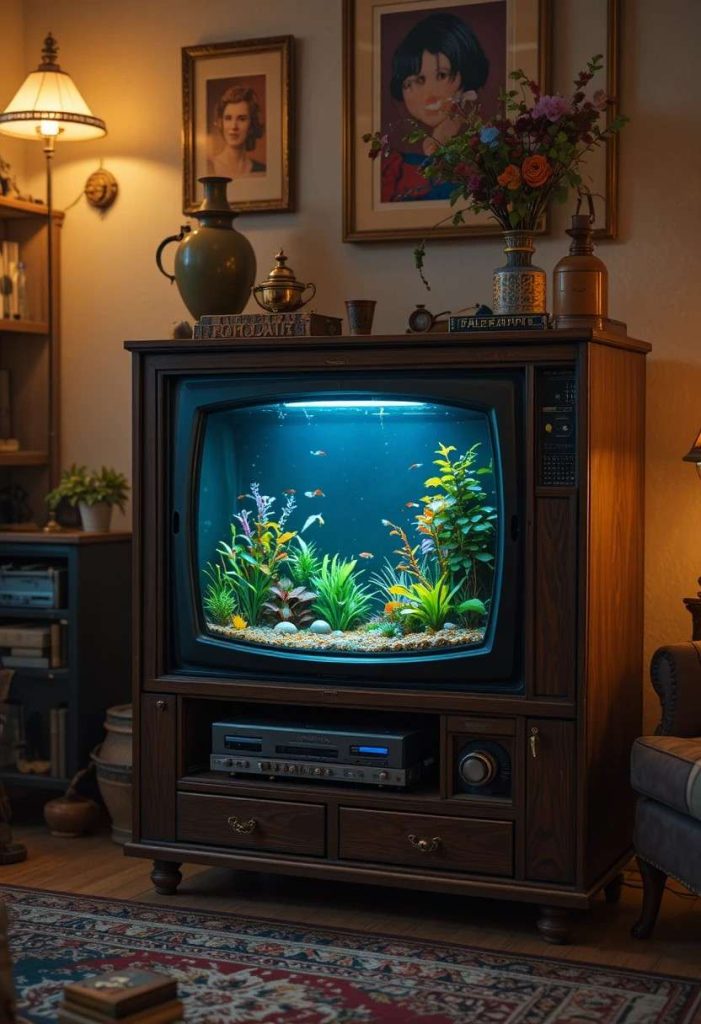
Hollow out an old CRT television cabinet and slot a small acrylic or glass tank inside where the screen used to be. The retro wood-and-knobs framing around a glowing planted tank is one of the most viral aquarium trends right now. Thrift stores still sell perfect candidates for under $30.
Best for: Maximalist, retro-aesthetic, eclectic rooms.
Pro tip: Choose a wood-cabinet TV from the 60s or 70s — plastic-shell TVs from the 80s look cheap and can’t support the tank weight.
4. Mason Jar Mini Aquarium
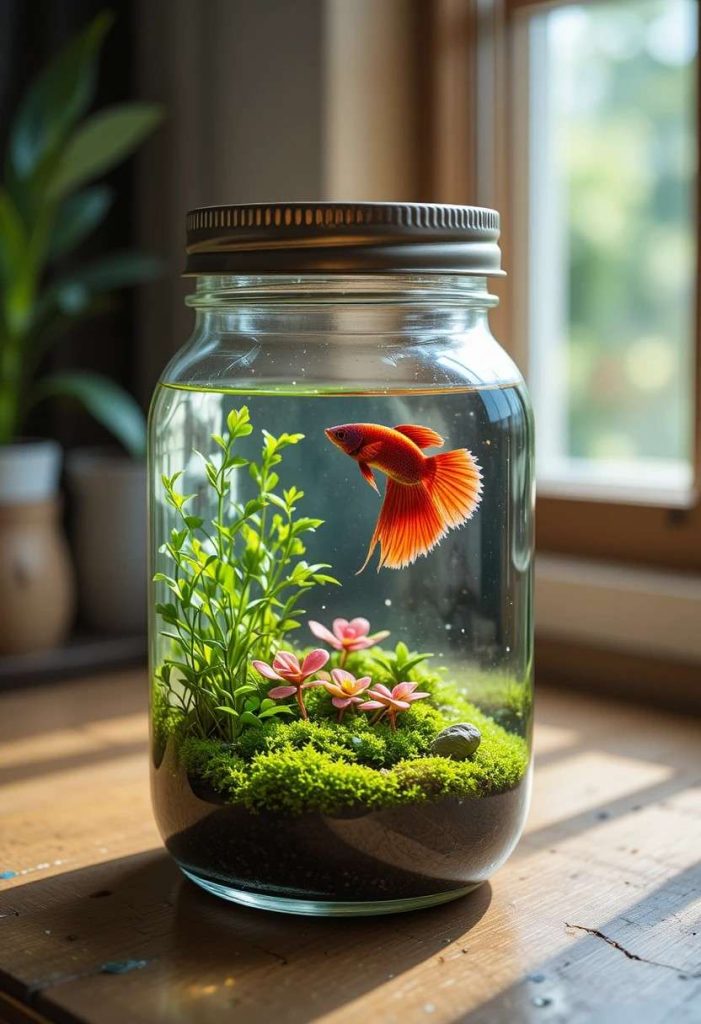
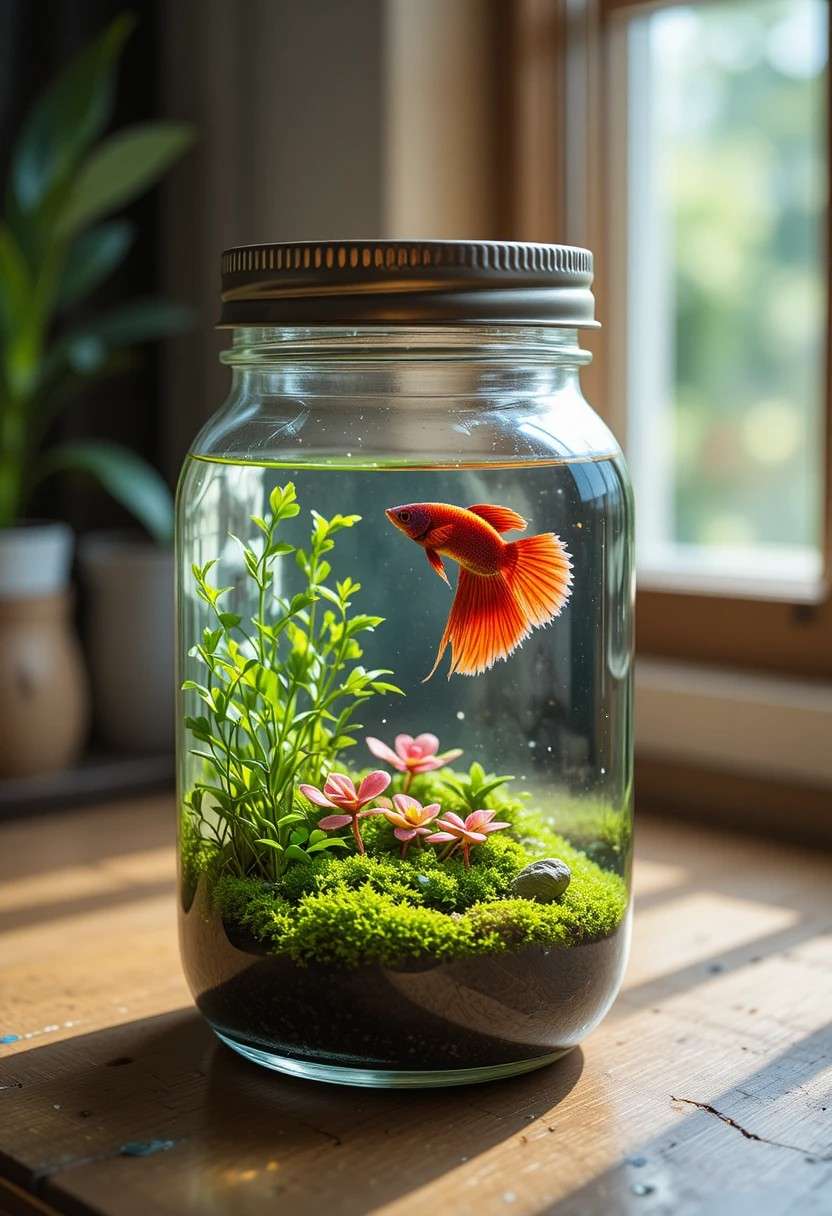
A large mason jar (1 gallon or bigger) can host a single betta or a small group of cherry shrimp with a few hardy plants. No filter, no electricity — just substrate, water, plants, and one resident. This is the most beginner-friendly micro tank you can build, and it costs under $15 in materials.
Best for: Desks, kitchen counters, and absolute beginners.
Pro tip: Stick to shrimp or a single betta — never a goldfish or schooling fish. The bioload has to match the volume.
5. Japanese Pagoda Themed Tank
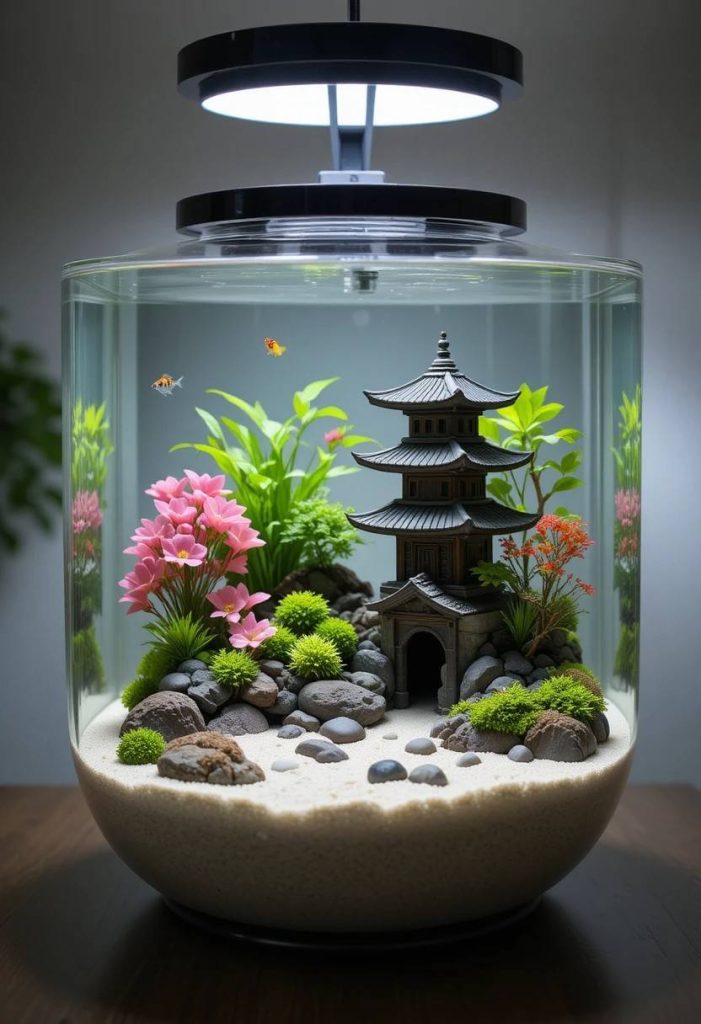
Drop a small ceramic pagoda decoration into a sand-substrate tank, surround it with smooth river pebbles, soft moss, and a few miniature bonsai-style aquarium plants. Add three or four pearl gouramis or harlequin rasboras for movement. The effect is a tiny Kyoto garden under glass.
Best for: Zen-themed rooms, meditation corners, and Japanese aesthetic lovers.
Pro tip: Use pale sand substrate, not dark gravel — the contrast against the pagoda is what sells the look.
6. Fairy Castle Fantasy Tank
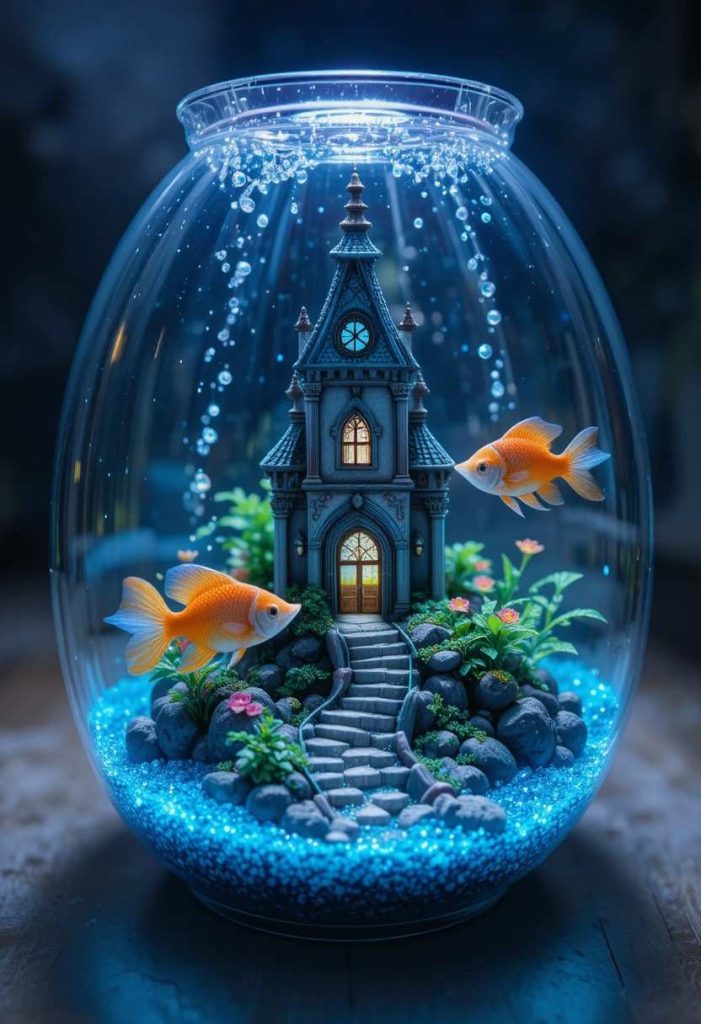
Channel full childhood-dream energy with a tiny aquarium featuring a fairy castle centerpiece, glowing blue gravel, bubbling treasure chest, and a few brightly colored fish. Yes, it’s classic — but a modern minimal version (one beautiful resin castle, no clutter) actually looks stunning.
Best for: Kids’ rooms, nostalgia-driven adults, and themed bedrooms.
Pro tip: Skip the multi-colored gravel — stick to one color (white or deep blue) and let the castle be the only loud piece.
7. Shrimp-Only Botanical Tank
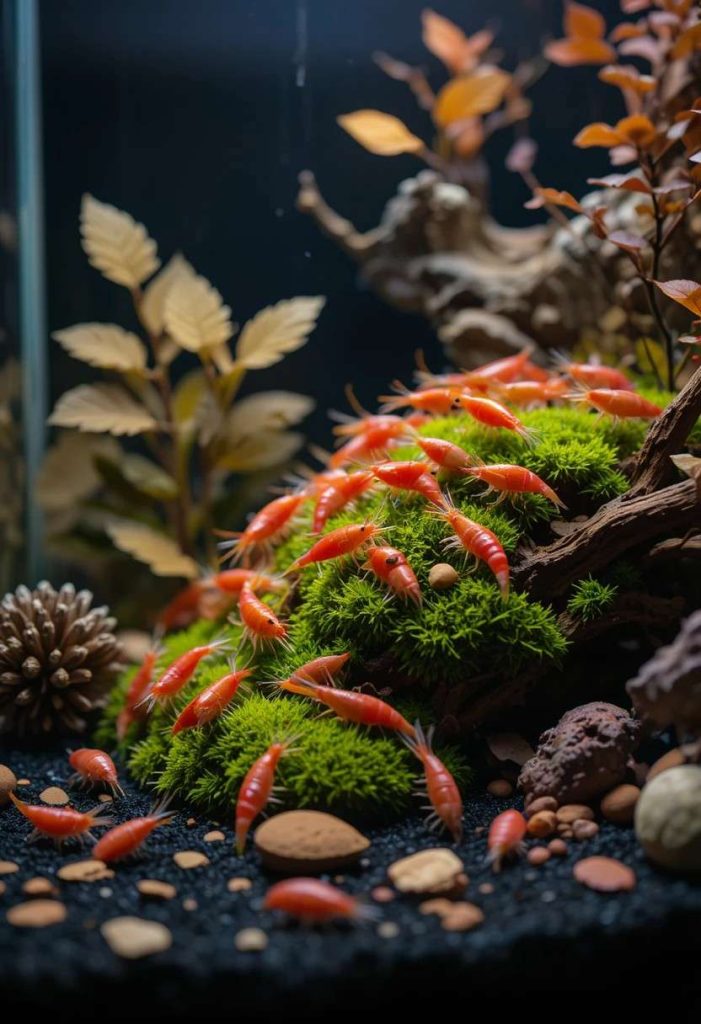
A tank dedicated to cherry shrimp, crystal shrimp, or amano shrimp — no fish, just dozens of tiny colorful invertebrates. Add Indian almond leaves, alder cones, and small driftwood pieces for a ‘botanical’ blackwater look. Shrimp tanks are low maintenance and absolutely mesmerizing up close.
Best for: Quiet, contemplative spaces and shrimp-keeping hobbyists.
Pro tip: Cherry shrimp breed easily — start with 10 and you’ll have 50 within months, all visible against dark substrate.
8. Floating Plant Wonderland
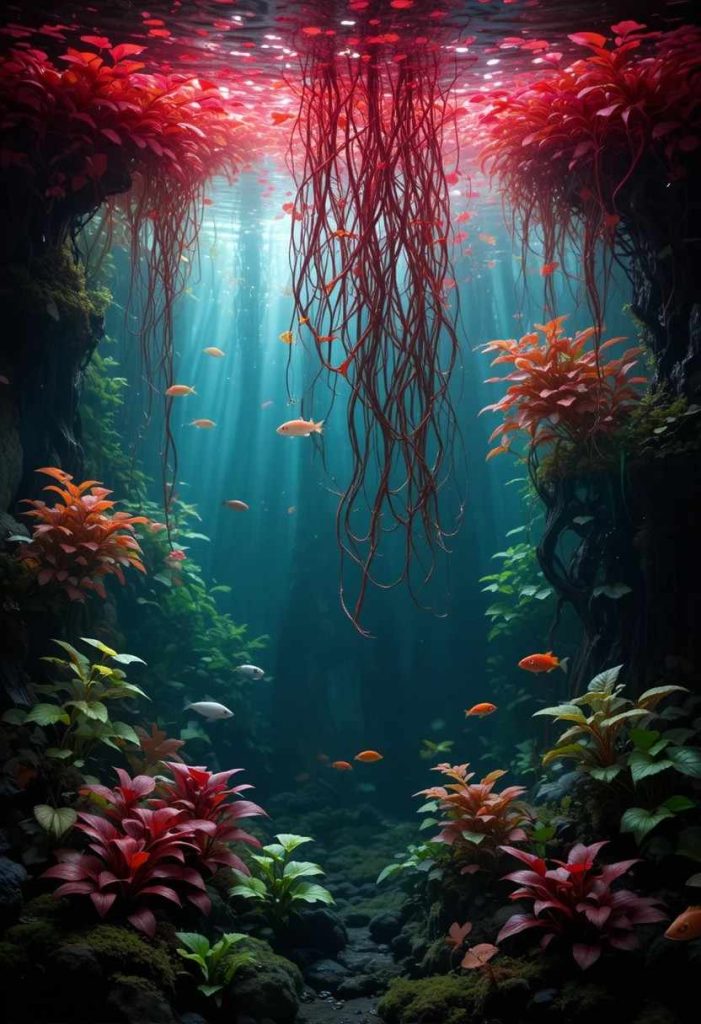
Cover the surface of a small tank with floating plants — red root floater, salvinia, frogbit, or duckweed — until only patches of water peek through. The dappled light filtering down through floating plants is some of the most beautiful effect in aquascaping.
Best for: Anyone obsessed with mood lighting and natural water effects.
Pro tip: Floating plants block top light, so house your tank near a window or use a stronger overhead light to keep the rooted plants below happy.
9. Cube Tank on a Wooden Stand
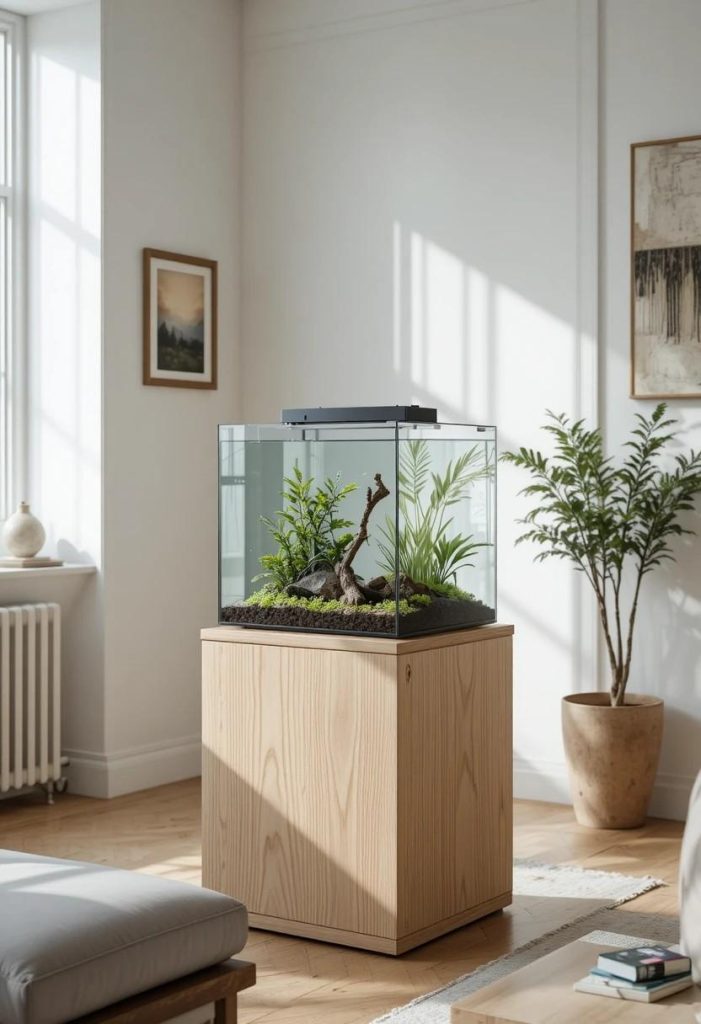
A small cube aquarium (around 5 to 10 gallons) on a custom wood stand becomes a piece of furniture, not just a fish tank. Cube proportions look more like an art installation than a traditional rectangular tank, and they fit beautifully into modern minimal interiors.
Best for: Modern, Scandinavian, and minimalist home decor.
Pro tip: Match the stand wood to other furniture in the room — light oak with light oak, walnut with walnut — and the tank reads as built-in.
10. Beach and Coral Reef Mini Tank
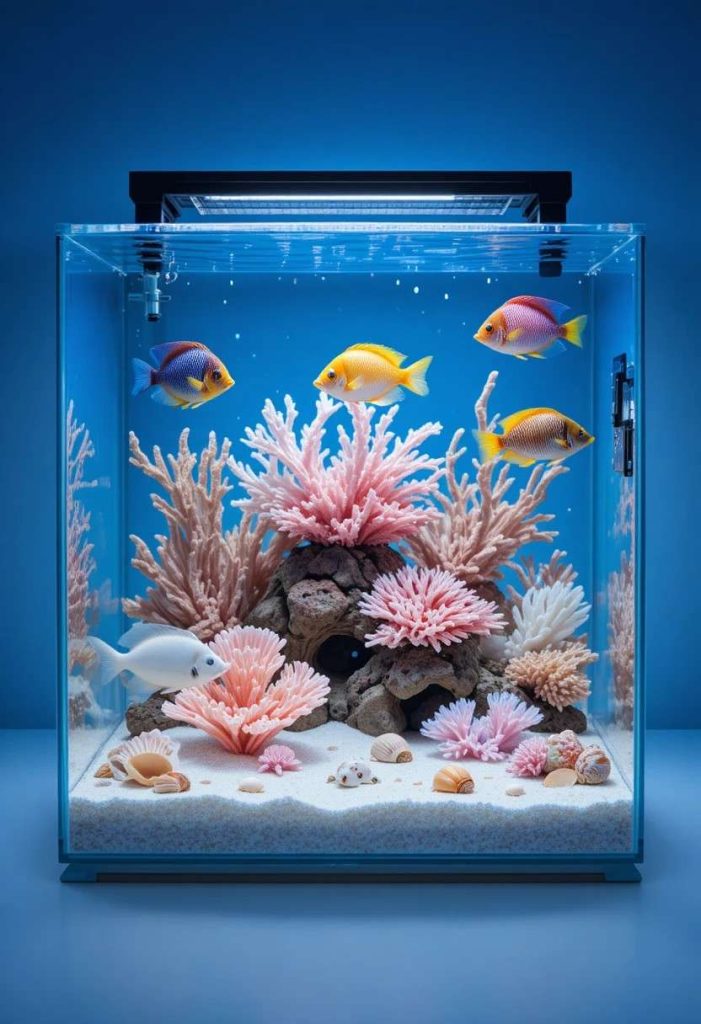
Recreate a tiny tropical beach scene with white sand substrate, faux coral pieces, a few brightly colored shells, and aqua-blue background. While true saltwater reefs need more space, a freshwater ‘beach themed’ tank with platies or guppies achieves the look for a fraction of the cost.
Best for: Coastal aesthetic rooms and tropical vibes year-round.
Pro tip: Stick to faux coral in white, pink, and pale orange — neon coral colors look like plastic toys.
11. Bookshelf Built-In Aquarium
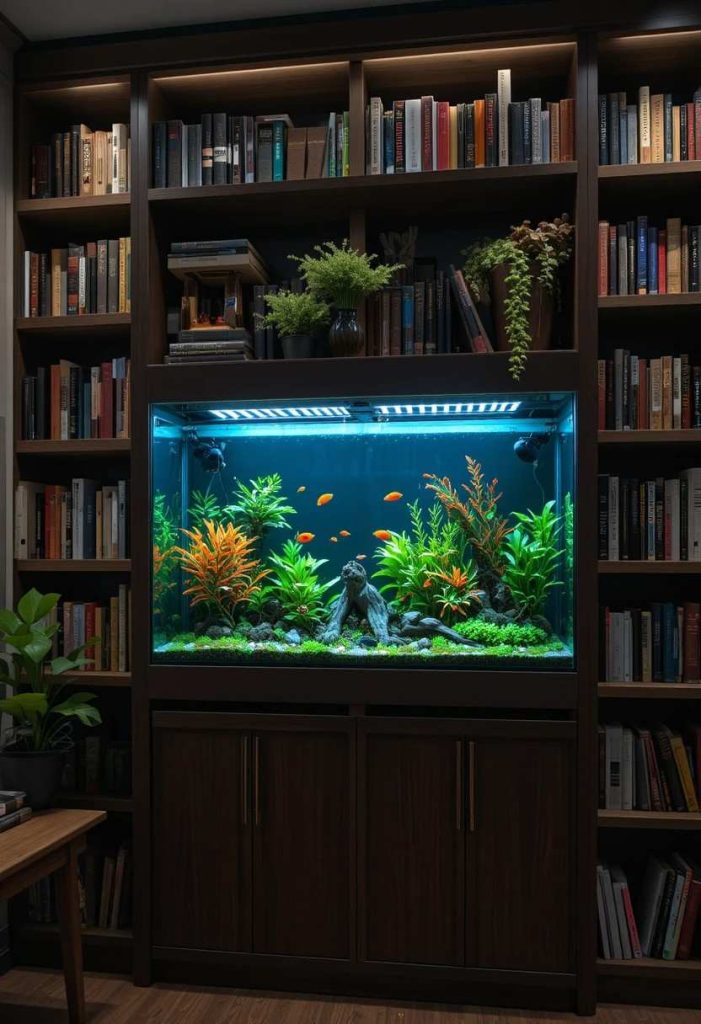
Slot a long, low rectangular tank into one shelf of a bookcase, treating it as a single ‘book’ in the shelf. The aquarium becomes part of your library composition. Both freestanding tanks and wall-cut versions work, depending on whether you rent or own.
Best for: Book lovers and apartment dwellers maximizing every inch.
Pro tip: Use LED strip lighting hidden behind the front lip of the shelf above — overhead lighting on a shelf-tank looks awkward; hidden strip lighting looks built-in.
12. Walstad-Method Soil-Substrate Tank
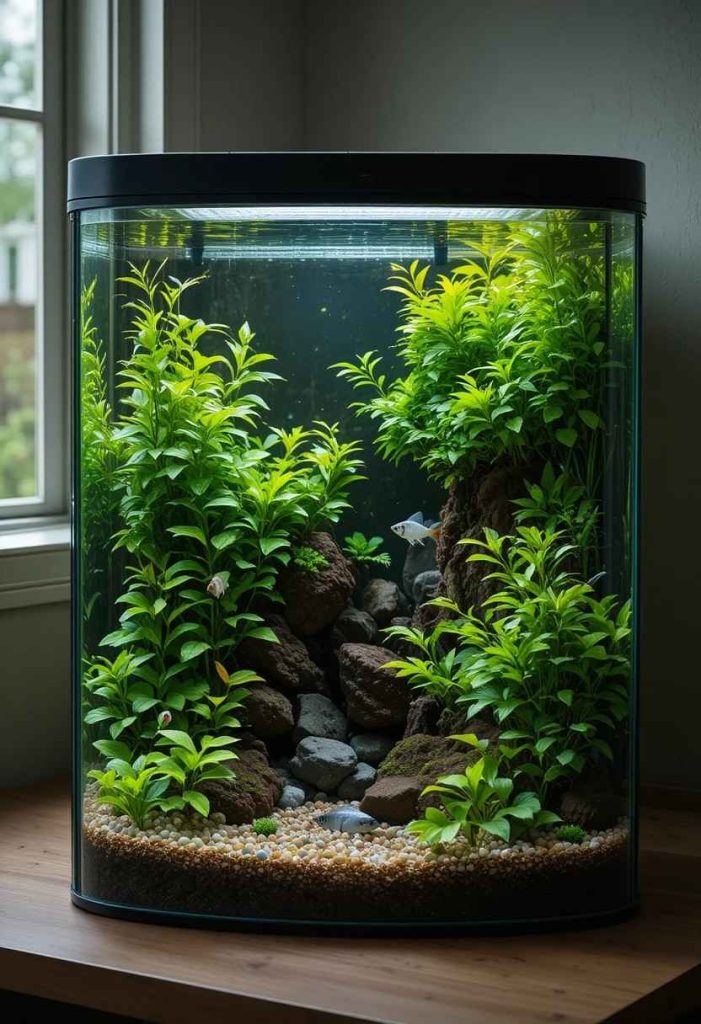
A Walstad tank uses a layer of regular potting soil capped with gravel as its substrate — no filter, no CO2, no fancy equipment. Plants grow lush, the tank self-balances biologically, and you get a beautiful low-tech micro ecosystem. This is the ‘set it and forget it’ aquascaper’s dream.
Best for: Low-maintenance keepers and natural-method enthusiasts.
Pro tip: Heavily plant the tank on day one — at least 70% plant coverage prevents algae from taking over while the system establishes.
13. Hexagonal Tower Tank
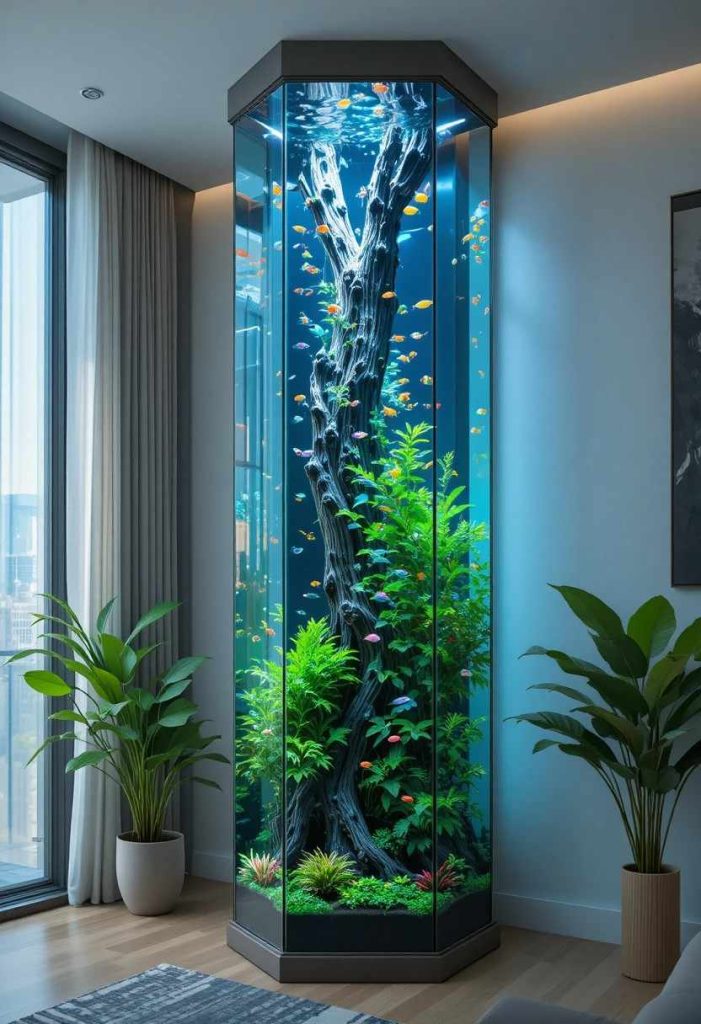
A tall hexagonal aquarium occupies almost no floor space but creates massive visual height. Use a single tall piece of driftwood or one tall plant variety as the centerpiece, with mid-water schooling fish like neon tetras filling the vertical column. Perfect for tight corners.
Best for: Small apartments, hallways, and narrow spaces.
Pro tip: Hexagonal tanks need lots of mid-water swimmers — bottom-dwellers waste 80% of the visual real estate.
14. Wabi-Kusa Open-Top Bowl
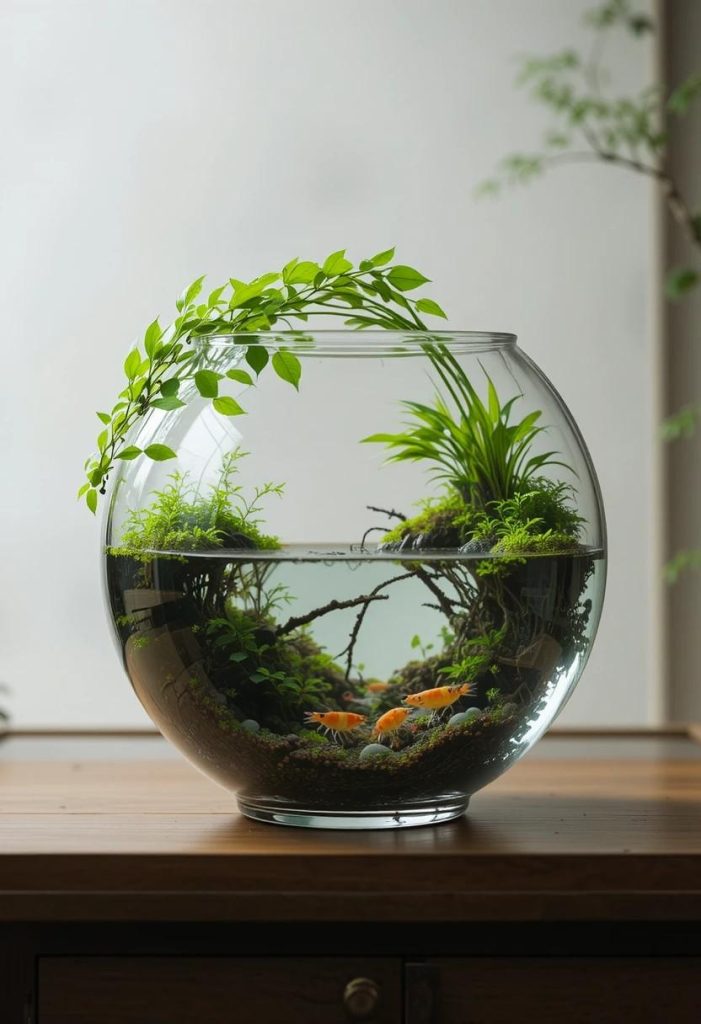
Wabi-kusa is a Japanese style where aquatic plants grow emersed (with leaves above water) in an open glass bowl with shallow water. The plants drape over the edges like a houseplant, while a few shrimp or no livestock at all live in the water below. It bridges aquarium and terrarium.
Best for: Plant-first hobbyists and aesthetic-driven minimalists.
Pro tip: Spray the leaves daily for the first two weeks while plants transition between submerged and emersed growth.
15. Dark Blackwater Amazon Biotope
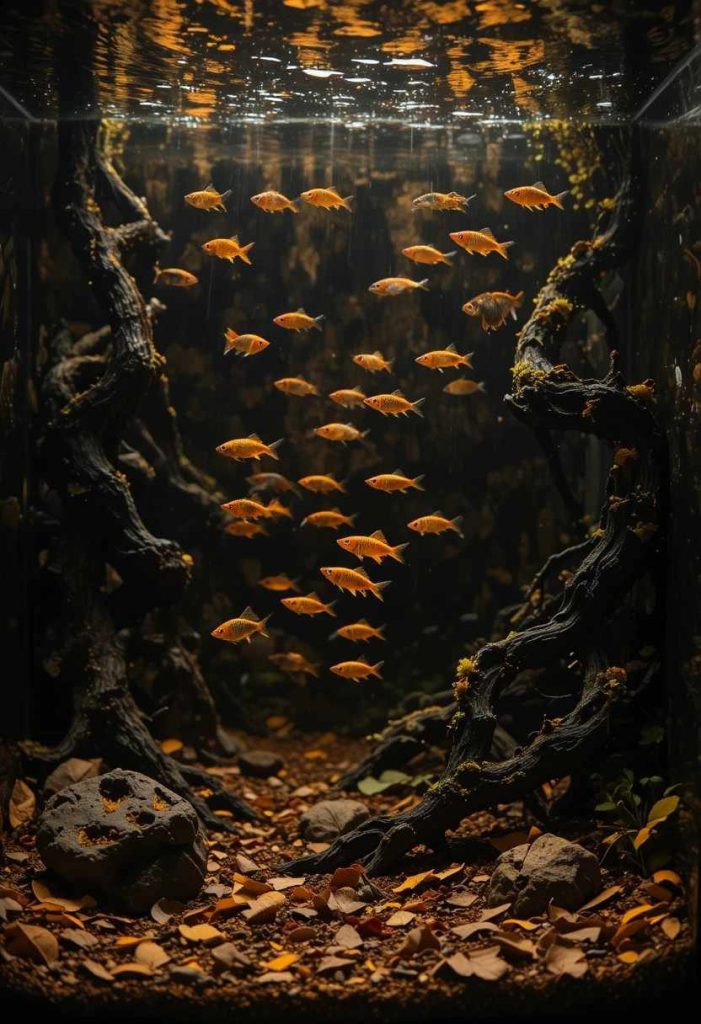
Recreate a small Amazon basin tributary — tannin-stained tea-colored water, scattered leaf litter on the bottom, dark driftwood roots, dim lighting, and South American fish like ember tetras or pencilfish. The dark water and dramatic lighting make this look like a piece of nature documentary in your room.
Best for: Mood-driven dark aquatic aesthetics.
Pro tip: Use catappa leaves (Indian almond leaves) to naturally stain the water — they’re cheap, fish-safe, and look gorgeous decomposing slowly.
16. Snail Garden Tank
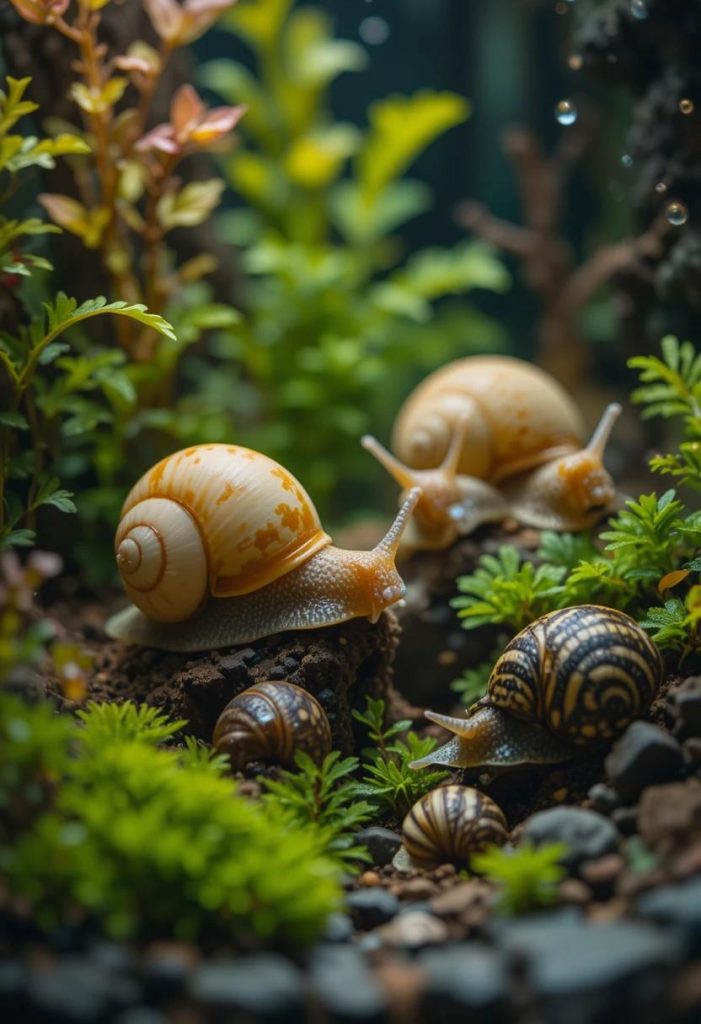
A small tank dedicated entirely to ornamental snails — mystery snails in cream and gold, nerite snails with striped shells, ramshorn snails in red and blue. Plant heavily, skip the fish, and watch the slow-paced underwater world unfold. Snail tanks are mesmerizing in a completely different way than fish tanks.
Best for: Patient observers and shrimp-and-snail-only setups.
Pro tip: Add cuttlebone or crushed coral to the substrate — snails need calcium for healthy shell growth.
17. Crystal Clear Bare-Bottom Minimalist Tank
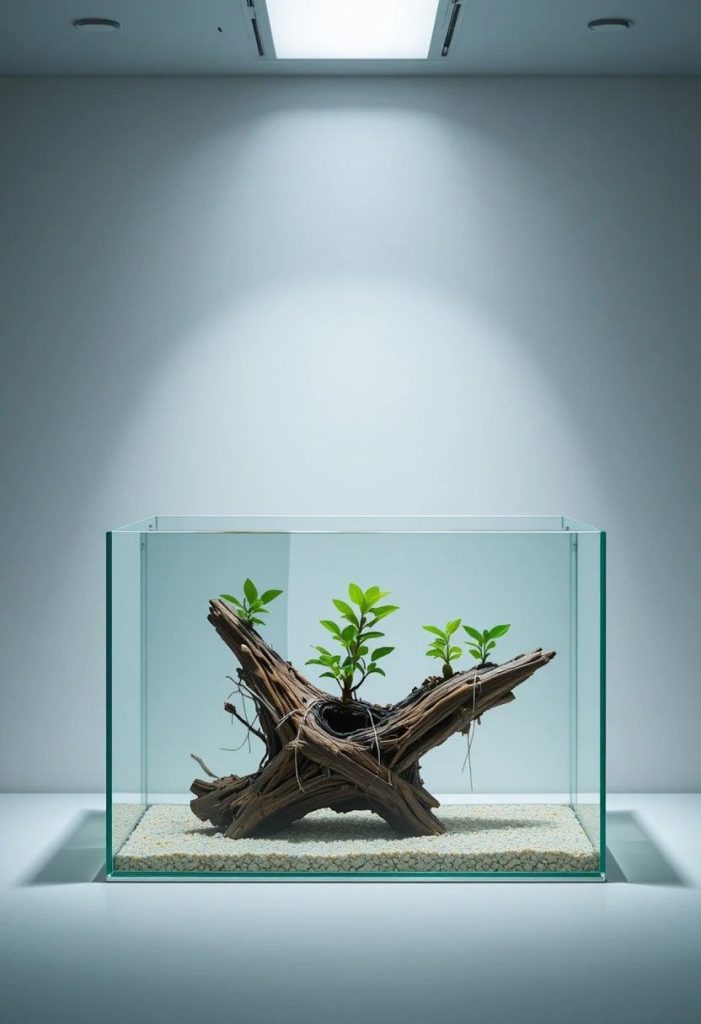
Skip substrate entirely. A bare-glass-bottom tank with just one or two precisely placed stones or driftwood pieces, a few choice plants tied directly to the wood, and clear water creates a strikingly modern, gallery-like look. It also makes maintenance ten times easier.
Best for: Modern minimalist interiors and easy-cleaning lovers.
Pro tip: Use a thin matte black mat under the tank (visible through the glass bottom) for the cleanest possible look.
18. Tiny Paludarium (Half Land, Half Water)
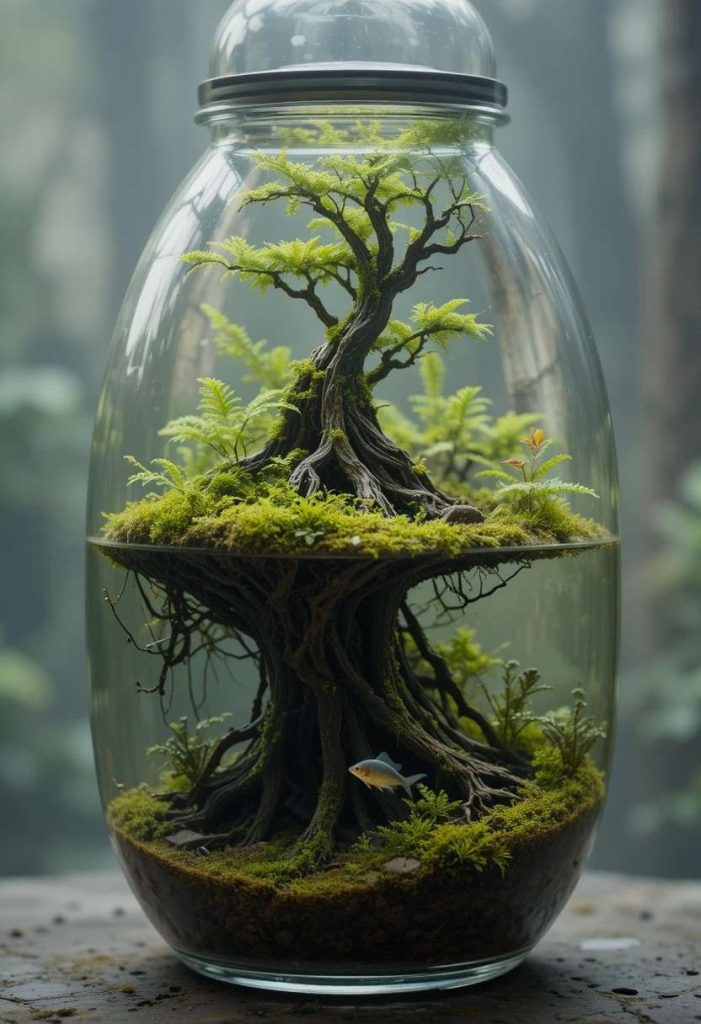
A paludarium splits the tank between water below and land above — aquatic plants and small fish in the water, mosses and miniature land plants growing up driftwood and a dry shore. The result is two ecosystems in one container, and it looks like a Lord-of-the-Rings forest scene.
Best for: Adventurous hobbyists wanting something more than a standard tank.
Pro tip: Use spider wood that breaks the water surface — it gives moss and plants a vertical climbing structure to colonize.
19. Wall-Mounted Picture Frame Tank
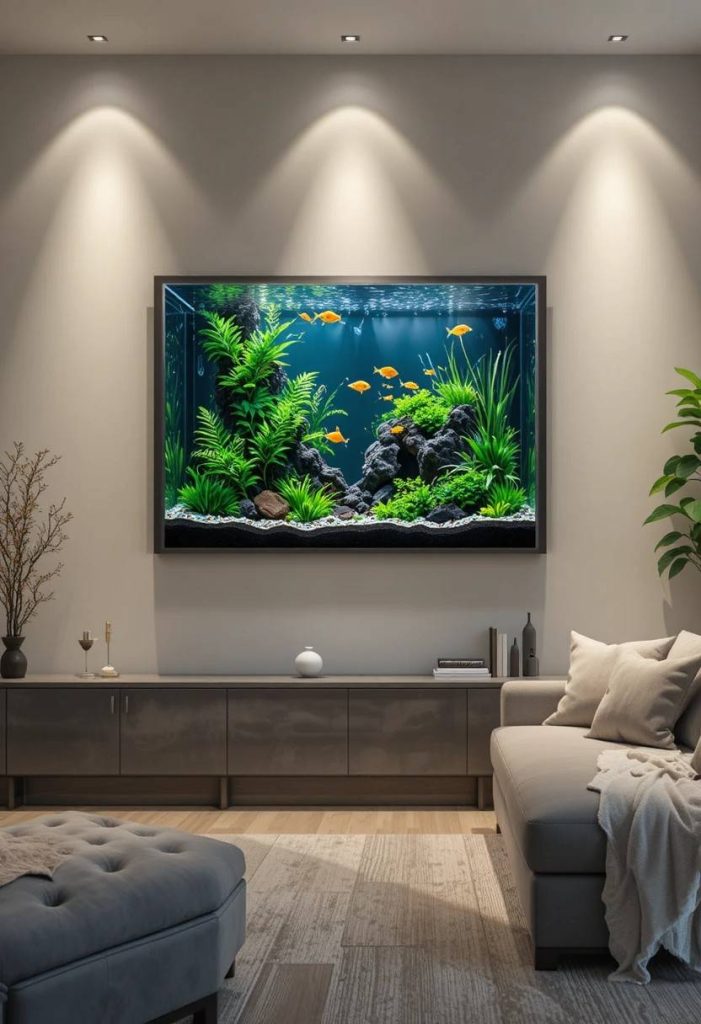
A flat, ultra-thin wall-mounted aquarium hung like a framed painting becomes living art in any room. Modern designs are only 4 to 6 inches deep but can be 2 to 3 feet wide. They’re best stocked with small flat-bodied fish like angelfish (for larger versions) or neon tetras and shrimp for compact ones.
Best for: Statement walls and visitors who never see it coming.
Pro tip: Pick a spot away from direct sunlight — the slim profile heats up quickly and algae will explode if it’s sunlit.
20. Magical Glow Tank with Black Light
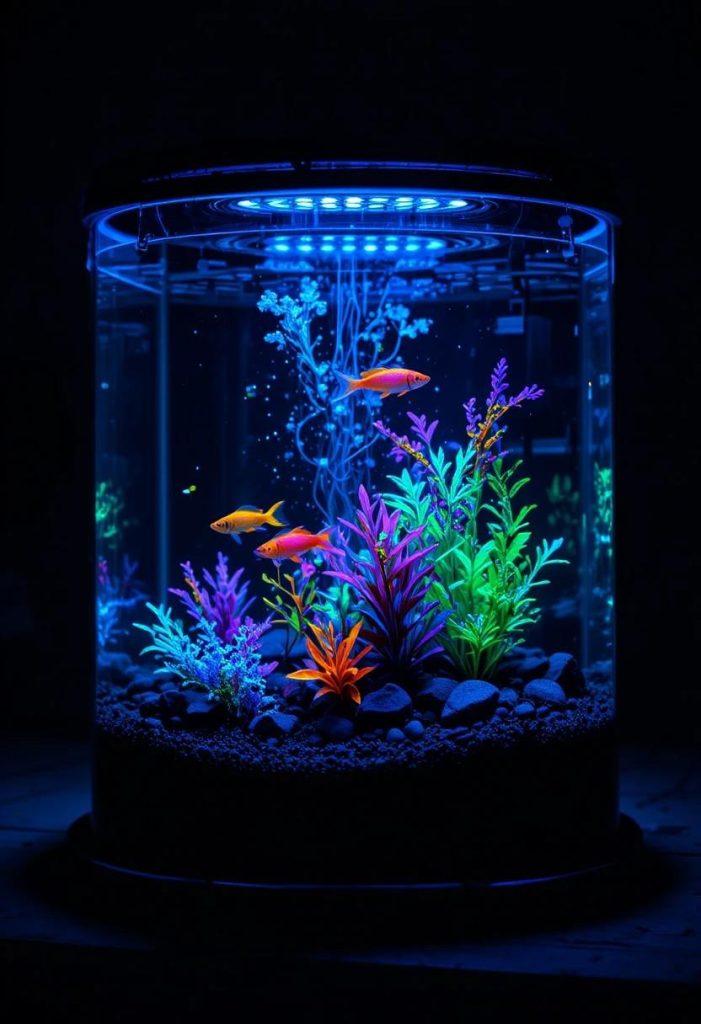
Stock a tank with naturally fluorescent fish — black mollies, GloFish (where legal), and bright neon tetras — set against a fully black substrate and background, then light it with a UV or actinic LED. The fish glow brilliantly while everything else recedes into darkness. Pure magic at night.
Best for: Dramatic night-room ambiance and showpiece tanks.
Pro tip: Add bright white river stones to the dark substrate — under UV they glow softly, giving the fish a ‘path’ to swim along.
How to Set Up Your Small Fish Tank in 7 Steps
Once you’ve picked your favorite idea from the 20 above, here’s the proven order to set it up successfully:
- Step 1 — Choose your tank size and shape. Match it to the idea you picked and the space you have.
- Step 2 — Buy substrate, hardscape, and plants before the fish. Equipment first, livestock last.
- Step 3 — Rinse substrate thoroughly until water runs clear, then layer it into the tank.
- Step 4 — Place hardscape and plants. Take your time — this is the artistic moment of the whole build.
- Step 5 — Fill with dechlorinated water slowly using a plate to avoid disturbing the layout.
- Step 6 — Cycle the tank for 2 to 4 weeks before adding any fish. Skipping this step kills more fish than anything else.
- Step 7 — Add fish slowly, one species at a time, with at least a week between additions.
The Best Fish for a Small Tank
Not every fish belongs in a small tank. These are the species that genuinely thrive in nano setups:
- Betta fish — single male in 3-5+ gallons, the king of small tank centerpieces.
- Neon tetras and ember tetras — small schoolers, beautiful color, peaceful temperament.
- Chili rasboras and celestial pearl danios — tiny, peaceful, and incredibly colorful.
- Cherry and amano shrimp — the perfect invertebrate for any planted nano tank.
- Endler’s livebearers — tiny, hardy, colorful, and breed easily.
- Sparkling gourami — small labyrinth fish with personality and shimmer.
Where to Shop for Small Fish Tank Supplies
You don’t need to overspend to build a beautiful nano tank. The best sources for small aquarium supplies are:
- Amazon — nano tanks, LED lights, mini filters, heaters, and substrate.
- Etsy — handmade driftwood, sculptural stones, and custom aquascape kits.
- Local fish stores (LFS) — by far the best for live plants, healthy fish, and aquascaping advice.
- Online plant sellers — Aquarium Co-Op, Buce Plant, and Modern Aquarium ship high-quality plants overnight.
- Thrift stores — vintage TVs, glass vases, and old display cabinets for unique tank conversions.
Final Thoughts: Your Tiny Underwater World Awaits
The most beautiful small fish tanks aren’t necessarily the most expensive — they’re the ones with the most intention. A simple Iwagumi composition or a heavily planted Walstad tank built for $80 can look more stunning than a $500 tank crammed with mismatched ornaments.
Start with one idea from the 20 above, take your time setting it up, and let the tank evolve over months. Plants grow in, fish develop personalities, and the underwater world becomes uniquely yours. That slow patience is what makes small fish tanks one of the most rewarding decor pieces you’ll ever own.